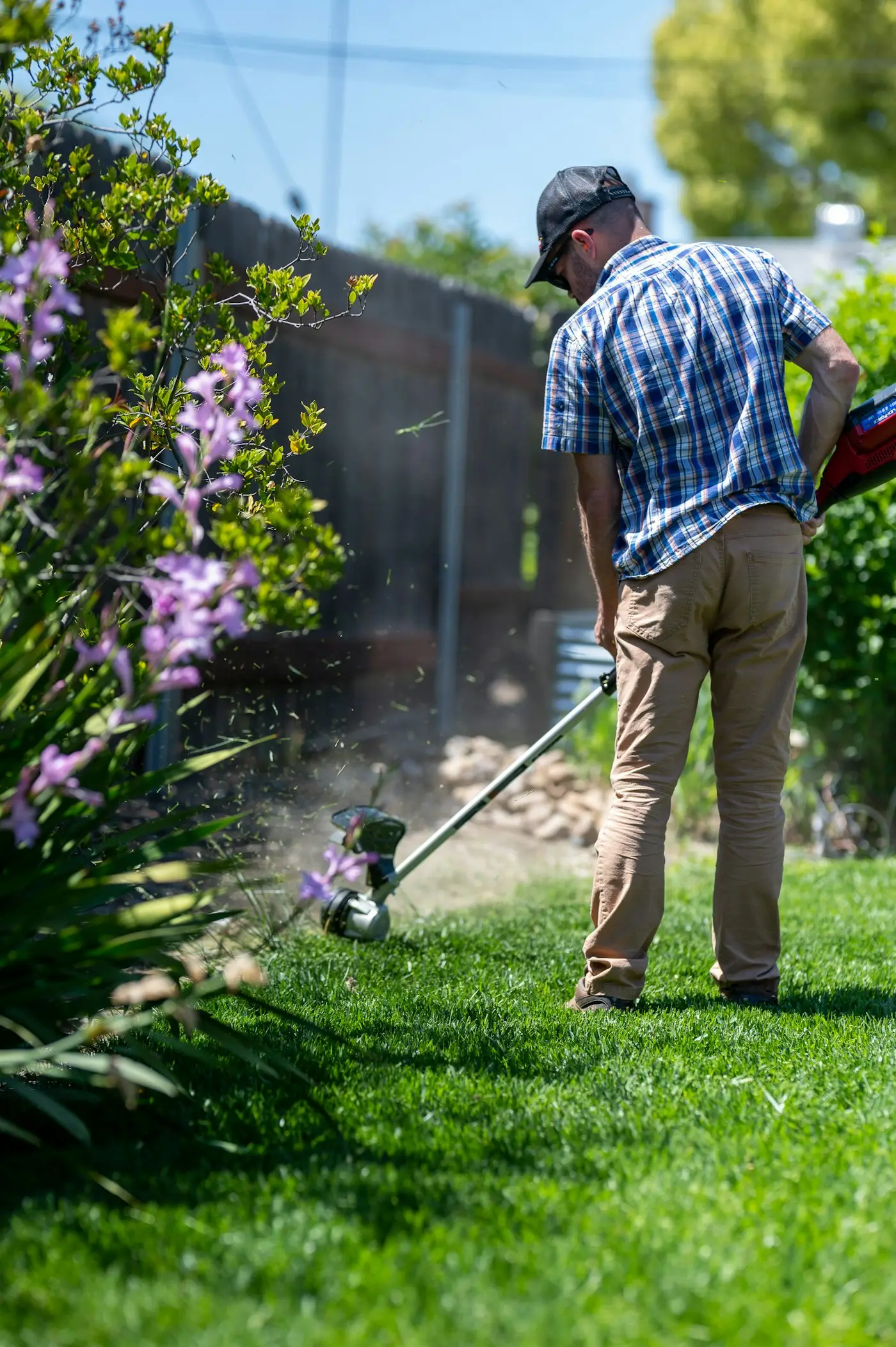
If your garden feels like it goes from bare earth to weed jungle every spring, you are not imagining it, and you are not doing something wrong. Yorkshire's particular combination of clay soils, high winter rainfall, and a compressed growing season creates conditions that favour weeds over almost everything else you are trying to grow. The annual weed flush in late May is strikingly fast here compared with drier counties. Bramble colonises a neglected plot in two seasons. Bindweed seeds in from the canal bank, the railway cutting, and next door's untended corner without any help from you at all.
This guide is not a quick fix. There is no quick fix for most Yorkshire garden weeds, and anyone who tells you otherwise is selling something. What this guide gives you is an honest picture of what you are dealing with, which removal methods actually work for which weeds, and how a professional weed control programme addresses what DIY approaches almost always miss. Whether you want to handle it yourself or decide it is time to book someone, you will come out with a clearer plan either way.
Why Yorkshire gardens struggle with weeds
To understand why weeds behave the way they do in Yorkshire, it helps to understand the soil and climate they are exploiting.
Heavy clay soil underlies much of Yorkshire: the Vale of York, the South Yorkshire coalfield, the Pennine foothills from Halifax to Huddersfield, and large areas of the East Riding away from the Wolds chalk. Clay soils are nutritionally rich and hold moisture well - which sounds positive until you realise that those are exactly the conditions that annual weeds and deep-rooted perennials thrive in. Clay also compacts over winter as frost and rain work on the surface, which weakens turf and creates the thin, stressed grass that weeds colonise most easily in spring. The companion guide on clay soil gardens in Yorkshire goes into this in more detail if you want the full picture on why clay makes everything harder.
Yorkshire's rainfall pattern compounds the problem. The county gets between 600mm and 1,500mm of rain a year depending on where you are, with the Pennine west receiving significantly more than the Wolds and East Riding. That moisture keeps the weed seed bank active. Annual weeds germinate in a wide range of conditions and get multiple opportunities across the season: an unseasonably warm February starts the first flush, the main spring flush runs from April to June, and a second autumn flush follows the August warmth. By the time you have dealt with one wave, the next is starting.
Yorkshire's geography also seeds weeds into gardens that would not naturally be there. The county has an extensive network of canals, former railway lines, and reclaimed industrial land, particularly across West and South Yorkshire. These corridors are hotbeds for bindweed, Himalayan balsam, Japanese knotweed, and other persistent plants that spread from seed and root fragments over decades. If your garden backs onto one of these features, or if you are in Barnsley, Rotherham, Wakefield, Leeds, or Bradford, you are contending with weed pressure from outside your boundary as well as within it. Sound garden fencing along boundary lines can help reduce the incursion of weeds and self-seeded plants from neighbouring plots or wild margins, particularly where the boundary adjoins scrubland or an unkempt neighbouring garden.
Abandoned or neglected gardens return to scrub faster here than in drier parts of England. A garden left untended for three years in North Yorkshire will need what amounts to a small clearance operation before any meaningful weed control can begin. You cannot spray or mulch your way past a garden that needs clearing first.
The most common Yorkshire garden weeds
Not all weeds respond to the same treatment, and knowing what you have is the first step to actually dealing with it. These are the plants that come up most often in Yorkshire gardens, along with an honest assessment of how hard they are to remove.
Bindweed
Calystegia sepium (hedge bindweed) / Convolvulus arvensis (field bindweed) Very hard to eradicateThe one that causes more frustration than almost anything else in a Yorkshire garden. Bindweed is a perennial climber with a root system that can extend five metres or more into the soil. It spreads by root fragments as well as seed, which means cultivation - digging the border over - tends to make it worse rather than better, as each fragment left in the soil regenerates a new plant.
Hedge bindweed (the one with large white trumpet flowers) is particularly common along railway and canal corridors across Yorkshire. If you are near the Leeds-Liverpool Canal, the Aire and Calder Navigation, or any disused rail line, you will get bindweed volunteering from outside your boundary every season regardless of what you do inside it.
Hand-pulling removes the top growth but does essentially nothing to the root system - the plant regrows from whatever is left below ground, which is almost everything. The most effective chemical approach is repeated glyphosate application to the leaves during active growth (late spring through summer), allowing the chemical to translocate down into the root. This needs doing for two to three seasons before you see significant reduction. Dense ground cover planting - geraniums, pulmonaria, hardy ferns - that shades the soil and outcompetes the bindweed shoots is the only long-term garden answer.
Couch grass
Elymus repens Hard to eradicateThe bane of every village garden near arable farmland in Yorkshire. Couch grass is a perennial grass that spreads by underground rhizomes - white, fleshy, jointed roots that run horizontally through the soil and send up shoots every few centimetres. It invades borders from field edges, neighbouring plots, and anywhere that rough grassland adjoins your garden.
The problem with couch grass is that cultivation spreads it. Every time you dig through an infested border you chop the rhizomes into fragments, each of which generates a new plant. Hand-removal on a small scale can work if you are meticulous about following every rhizome and removing every fragment, but on any significant area it is almost impossible to do completely enough. Glyphosate applied during active growth in late spring and summer is the most practical chemical approach, but it will kill everything it touches, so it needs careful spot application in planted borders. In unplanted areas you can do a full spray, wait for regrowth, and spray again - two or three rounds across a season gets on top of it.
Ground elder
Aegopodium podagraria Hard to eradicate from mixed bordersGround elder is everywhere in Yorkshire's older gardens. It was originally brought to Britain by the Romans and planted as a medicinal herb, spread widely in monastic gardens in the medieval period, and has been escaping into adjacent land ever since. In the Victorian and Edwardian suburban gardens that make up a large proportion of Yorkshire's residential housing stock - in Harrogate, York, Leeds, Sheffield and the smaller market towns - ground elder is almost a given in any established border.
It spreads by underground rhizomes in a similar way to couch grass, but the rhizomes tend to be finer and more brittle, making hand removal even more incomplete. It is also strikingly good at growing through and around the root systems of established perennials and shrubs, making chemical treatment difficult without damaging plants you want to keep.
The practical approach in a mixed border with ground elder: repeated removal of top growth to exhaust the plant over time (it takes two to three seasons), combined with glyphosate spot treatment on any regrowth that emerges in clear areas. Dense planting that shades the soil is the long-term solution - ground elder needs reasonable light to thrive. In a border you are prepared to clear completely, a full glyphosate treatment followed by a season of fallowing before replanting is the most effective reset.
Japanese knotweed
Reynoutria japonica Specialist removal requiredJapanese knotweed deserves its own section later in this guide because it is a legal issue as much as a gardening one. Briefly: it is not just a very persistent weed. It is listed on Schedule 9 of the Wildlife and Countryside Act, making it an offence to allow it to spread. It must not be composted or put in a green waste bin (that is also a criminal offence under the Environmental Protection Act). It can affect your ability to sell your property. And it requires a PCA-registered specialist contractor, not a standard gardener, for proper eradication.
Yorkshire has significant knotweed pressure in the old industrial areas: the former pit towns of Barnsley, Rotherham, and Wakefield, the canal banks and rail corridors of Leeds and Bradford, and river banks across the county. It was historically spread by Victorian landscape contractors who used it as an ornamental and stabilising plant on railway embankments, from which it has spread steadily ever since.
We do not handle Japanese knotweed. If you think you have it, read the dedicated section below before doing anything.
Dandelion
Taraxacum officinale Persistent but manageableThe most democratic of garden weeds. Dandelions are a problem in every Yorkshire garden type because their tap root, which in clay soil can go 30-40 cm deep, regenerates from any fragment left in the ground. You can pull the top off a dandelion fifty times and the root will keep sending up new growth. A proper removal requires getting the entire tap root out intact, which on clay soil is genuinely difficult without a long-bladed daisy grubber.
In lawns, selective weed-and-feed treatments kill dandelions effectively and are the practical solution at scale. In borders, individual hand removal with the right tool is the best approach for light infestations. On a heavily infested border, a targeted spot spray of glyphosate on the rosettes before border plants emerge in spring is faster and more thorough. One dandelion going to seed produces several hundred seeds - the case for catching them before flowering is strong.
Nettles
Urtica dioica Persistent but manageableNettles are an indicator plant as much as a weed. Dense nettle growth on a patch of ground almost always means nitrogen-rich, disturbed soil - the kind of ground that follows building work, clearance of long-term composted material, or garden beds that have never been cultivated. If your first-clearance garden is full of nettles, they are telling you the soil is fertile and recently disturbed: that is actually good news for growing other things once you get rid of them.
Nettles spread by underground rhizomes as well as seed, so cutting them back alone does not solve the problem. Repeated cutting exhausts the root system over time, but a full chemical treatment in spring when growth is vigorous is faster. Glyphosate applied at 15-20 cm height gives good translocation to the roots. Multiple treatments across a season are usually needed. Wearing thick gloves is advisable even with dead nettles - the sting persists after the plant is dead and dried.
Bramble
Rubus fruticosus Hard to eradicate; clearance required firstBramble colonises neglected plots faster than almost any other plant in Yorkshire, particularly in the wetter areas west of the A1. A garden left for three to five years in Calderdale or the Pennine foothills can develop bramble root systems several feet deep, with canes that have self-layered to produce new root systems wherever they touch the ground. What looks like a few canes might have eight or ten interconnected root systems beneath it.
Chemical treatment is possible but requires the canes to be cut back first so the herbicide can be applied as a stump treatment or stem injection to a fresh cut. A contact herbicide applied to cut stems (triclopyr-based products) penetrates efficiently before the wound seals. Multiple treatments are generally needed as bramble also spreads by seed, so new seedlings appear even after the existing root system is killed. This is clearance work as much as weed control - see the garden clearance service for how we handle heavily overgrown plots.
Marestail / horsetail
Equisetum arvense Among the hardest to eradicateHorsetail is not just hard to remove - it is one of the most structurally primitive plants still growing, with relatives in the fossil record 300 million years ago. It has evolved before herbicides existed, and its biology reflects that. The outer surface of the stems is coated with silica, which acts as a near-impermeable barrier to most chemical treatments. Roots go three to six feet into the soil on established plants. It thrives on poorly drained, compacted ground - exactly the clay soils that dominate much of Yorkshire.
Horsetail is common on former arable land (frequent in village gardens across the Vale of York and the East Riding where gardens were previously field margins), on heavy clay with poor drainage (everywhere across the Pennine foothills), and on disturbed ground where subsoil has been brought to the surface during construction.
The only chemical treatment with any efficacy involves bruising or crushing the stems before applying glyphosate, to break the silica barrier and allow absorption. Even so, translocation to the deep root system is inconsistent. Repeated treatment over multiple seasons is the realistic approach. Improving drainage, which horsetail strongly prefers, slows regrowth over time. Honest assessment: you are managing horsetail, not eradicating it.
Moss
Symptom of a soil problemMoss is not technically a weed but is treated as one in lawn contexts, and it is endemic on Yorkshire clay lawns. It is worth including here because the approach to moss is fundamentally different from other lawn problems: moss is a symptom, not the primary cause. A lawn with moss has a drainage, compaction, shade, or soil pH problem. Killing the moss without fixing the underlying conditions means it will be back within one wet winter.
Ferrous sulphate (lawn sand) kills moss effectively and quickly. Apply it in autumn or early spring, let it blacken and die (usually two to three weeks), then scarify it out and overseed the bare patches. But also: aerate the lawn in autumn to address compaction, improve drainage where possible, address shade from overhanging trees or fences, and consider a lime application if a soil test shows acidic pH. The grass is the long-term solution to moss - dense, healthy turf leaves no room for moss to establish. See the clay soil garden guide for more on drainage and soil improvement.
What actually works: weed control methods
The method that works depends entirely on the weed and where it is. The mistake most homeowners make is applying the same approach to every weed problem - usually either hand weeding everything or spraying everything - when the reality is that different plants need different strategies.
Hand weeding: when it works and when it doesn't
Hand weeding is the right choice for annual weeds in borders (chickweed, groundsel, annual meadow grass) where the plants are young and the root system is shallow. A hoe used weekly during April and May, cutting annual weed seedlings just below the soil surface, is one of the most efficient things you can do in a border. The soil disturbance is minimal, you are not touching plants you want to keep, and annual weeds have no capacity to regrow from root fragments.
Hand weeding is almost useless for established perennial weeds with deep root systems: bindweed, ground elder, couch grass, dandelions in clay soil. You remove the top growth and the plant regrows from the root. The labour input is high and the result is temporary. For these weeds, hand weeding buys you a tidy border for two weeks and nothing more.
The one partial exception is in established mixed borders where chemical use would damage desired plants. Here, repeated hand removal of perennial weed top growth - accepting you will not eradicate the plant - does reduce its vigour over time by preventing photosynthesis. It takes two to three seasons of consistency, and you need to be genuinely consistent rather than doing it once a month.
Mulching to suppress annual weeds
Mulch is one of the most effective tools available for preventing annual weed germination in borders, and one of the most underused. A 7-10 cm layer of bark chip, garden compost, or woodchip mulch on weed-free soil blocks light to the soil surface and prevents the weed seeds from germinating. It does not stop established perennial weeds from growing up through it, but it dramatically reduces the annual weed burden in a planted border.
The key words are "weed-free soil" and "7-10 cm." Mulching over existing weeds traps them in and creates warm, moist conditions that accelerate their growth. Mulching at 3-4 cm depth looks good in April but is too thin by August. Annual topping-up as the mulch breaks down is necessary - a mulched border needs roughly one refresh every 18-24 months to maintain effective suppression depth.
Weed membrane (fabric) under bark mulch is sometimes used but tends to fail over a five to ten year period. Weed seeds germinate in debris on top of the membrane, roots from desired plants get tangled in it, and replacing it disrupts the entire border. Bark mulch without membrane, refreshed regularly, is more practical and better for soil health.
Flame weeding
Flame weeding - using a propane torch to briefly heat weed leaves and cause cell collapse - is effective for annual weeds on paths, gravel, and hard surfaces where you cannot use chemical sprays (near drains, in sensitive areas). It works by causing the cells to rupture rather than burning the plant, which is why a brief pass is sufficient - you are not trying to incinerate the weed. It does not work on established perennial roots, which simply regrow from underground. It is a reasonable chemical-free option for path and drive maintenance but is slower and more fuel-intensive than glyphosate for the same result.
Chemical options: glyphosate
Glyphosate is the most widely used non-selective herbicide for garden use in the UK, and when applied correctly and at the right time, it is the most effective tool available for killing established perennial weeds. It works by inhibiting an enzyme pathway that plants - but not animals - use to produce certain amino acids. Applied to actively growing leaves, it translocates through the plant to the root system and kills the entire plant, not just the top growth.
The caveats matter. It is non-selective: it kills anything with green leaves, including grass and the perennials you want to keep. It needs active growth to work - applying it during drought or dormancy is largely ineffective. It needs to remain on the leaf for several hours before rain, or it washes off before absorption. And for deep-rooted perennial weeds, a single application is rarely sufficient. Bindweed in a Yorkshire clay soil may need three or four separate treatments across two growing seasons to significantly deplete the root system.
Glyphosate is still legal for domestic use in the UK. It should not be applied within 5 metres of a watercourse or drain. Keep children and pets off treated areas for 24-48 hours until fully dry. If you prefer to avoid it, acetic acid-based alternatives are available for hard surfaces and young annual weeds, but they are less effective on established perennial roots and need more frequent application.
Soil cultivation timing
This one most homeowners do not know: cultivating soil brings dormant weed seeds to the surface where light triggers germination. The weed seed bank in Yorkshire garden soil can contain thousands of viable seeds per square metre, some dormant for decades. Digging in spring, just before the main weed flush, exposes a fresh batch of seeds to ideal germination conditions. If you need to cultivate a border, do it in autumn, or do it and then wait two weeks for a flush of seedlings to emerge before raking them off and planting without further cultivation. The "stale seedbed" technique - cultivate, allow germination, destroy seedlings, plant without disturbing again - significantly reduces weed pressure in the first season.
Cover planting
The long-term answer to bindweed and ground elder in established borders is dense ground cover planting that shades the soil and outcompetes weed growth. Geranium macrorrhizum, Epimedium, Pulmonaria, Waldsteinia, Ajuga, and hardy ferns all work well in Yorkshire conditions and provide soil coverage dense enough to suppress most weed growth once established. This is a two to three year process rather than an instant fix - the planting needs time to establish and close the canopy - but once it has done so, the weed pressure drops significantly without chemical input. Cover planting pairs well with border design and planting to create something that looks intentional while doing practical work.
Lawn weeds vs border weeds: different strategies
The approach to weed control in a lawn is fundamentally different from the approach in a border, and conflating them is one of the most common mistakes in garden weed management.
Lawn weeds
A lawn with broadleaf weeds - dandelions, clover, plantain, daisies, buttercup - responds well to selective herbicide treatment. Weed-and-feed products kill broadleaf weeds while leaving grass unaffected. Applied correctly in late April to May when weeds are actively growing, a single application deals with most of the active weed population. A follow-up in August or early September handles any resurgence through summer.
Clover specifically is often a sign of nitrogen deficiency in the lawn - clover is a nitrogen fixer and thrives in poor, thin grass. A weed-and-feed product addresses both problems simultaneously: the herbicide kills the clover, the fertiliser component thickens the grass and shifts the competition in its favour. If clover keeps returning year after year, look at the lawn's feeding regime before blaming the weeds.
Improving the lawn itself is the permanent answer to lawn weeds. Weeds colonise thin, weak, compacted turf. A dense, healthy sward outcompetes most broadleaf weeds without chemical help. The programme is: scarify in spring or autumn to remove thatch and surface debris, overseed thin patches, aerate compacted areas with hollow tines or a garden fork, apply a balanced fertiliser, and keep the lawn at a slightly higher cutting height (not scalped). A lawn that has been through this programme for two or three years is naturally more weed-resistant than one that has not. Our garden maintenance service covers full seasonal lawn programmes.
For moss in lawns, see the moss section above. The treatment is different from broadleaf weeds and the underlying causes need to be addressed rather than just the symptom.
Border weeds
Borders require a combination of approaches because the presence of plants you want to keep makes wholesale chemical treatment impossible. The general strategy is: hand-remove weeds between plants where you can, use targeted spot treatment with glyphosate on persistent perennial weeds in areas where you can apply it without contact with desired plants, and suppress annual weed germination with mulch.
The timing of border weeding matters more than most people realise. The best time to weed a border is early spring, before herbaceous perennials have come through and when the ground is still workable. You can see the weeds clearly, access the soil easily, and deal with the problem before the first flush sets seed. A second session in late summer - before August's weed seeds drop - prevents next year's problem compounding. Weeds that have gone to seed in August are planting next spring's problem.
In borders with a severe perennial weed problem (ground elder throughout, couch grass in every clump), sometimes the right answer is a hard reset: remove the plants you want to keep (pot them up or heel them in somewhere else), treat the entire border with glyphosate through one full season, then replant on clean soil. This is a two-season project but it works. Trying to manage ground elder around established plants in a mixed border is a permanent battle that you will not fully win.
When weeds are a symptom, not the problem
Some weed populations are telling you something about your soil or garden conditions that is worth listening to before you go in with a sprayer.
Moss in a lawn means drainage or compaction problems, not just moss. Treating the moss fixes the symptom but not the cause - the moss will be back the following winter. Investigate drainage, aeration, shade levels, and soil pH before committing to an annual moss treatment bill.
Dense nettles on recently cleared ground mean nitrogen-rich disturbed soil. That is a sign of fertile ground that will grow things well once it is under control - not a problem in itself. First-clearance gardens full of nettles often turn into excellent kitchen gardens or productive borders once the nettles are removed and the ground is cultivated properly.
Annual weeds in borders mean bare soil that needs planting or mulching. Bare soil in a Yorkshire climate will always be colonised. If you are spending significant time hand-weeding an under-planted border, the long-term answer is more planting, not more weeding.
A garden that has been badly neglected and needs clearing before any weed control programme can begin is a different job from a maintained garden with a weed problem. If your garden needs garden clearance first, that is the right starting point - trying to apply a standard weed control programme to an overgrown garden delays the project and adds cost. See the garden clearance cost guide for what a clearance visit typically involves and what it costs.
Japanese knotweed in Yorkshire: a special case
Japanese knotweed (Reynoutria japonica) is in a different category from every other weed discussed in this guide. It is not just a very difficult plant to remove. It is a plant with legal implications, property implications, and financial implications that make it something you need to handle correctly from the start.
Why it is serious
Japanese knotweed can cause structural damage to buildings. Its rhizomes - horizontal underground stems - are strong enough to exploit existing weaknesses in foundations, drainage, and hard landscaping, widening cracks over time. This is particularly relevant for older properties in Yorkshire's Victorian terraced housing stock, where original foundations were laid to standards that assumed the ground would behave differently.
More immediately relevant for most homeowners: knotweed affects property sale and mortgage approval. You are legally required to declare the presence of Japanese knotweed on the TA6 property information form when selling a property. Many mortgage lenders will decline or restrict lending on properties where knotweed has not been professionally treated under a credible management plan from a PCA-registered contractor. If you buy a property with undeclared knotweed, you may have a claim against the seller, but that is a legal dispute rather than a garden solution.
Under the Wildlife and Countryside Act 1981 (Schedule 9), allowing Japanese knotweed to spread into the wild or onto adjacent land is an offence. Under the Environmental Protection Act 1990, knotweed material is classified as controlled waste - it cannot be put in a skip, a green waste bin, or composted. If you attempt to move or dispose of knotweed material without using a licensed waste carrier and registered disposal facility, you are breaking the law.
Where knotweed is most prevalent in Yorkshire
The pattern of knotweed distribution in Yorkshire follows the old industrial and transport infrastructure where it was historically planted or spread during Victorian-era construction. The heaviest concentrations are around:
- Former pit sites and colliery land in Barnsley, Rotherham, and Wakefield - where it was used as landscaping material on tips and spoil heaps
- Railway embankments and cuttings across the county, particularly on the lines running through Leeds, Bradford, and the Calder Valley
- Canal banks on the Aire and Calder Navigation, the Leeds-Liverpool Canal, and the Calder and Hebble
- River banks on the Aire, Calder, Ouse, Wharfe, and Don - knotweed spreads rapidly by watercourse as rhizome fragments are carried downstream
- Old industrial sites in York's Terry's and Rowntree's era industrial areas and the former steel and engineering zones across South Yorkshire
If your garden is near any of these features, it is worth knowing what knotweed looks like before it becomes established rather than discovering it once you have already done something that makes the problem worse.
How to identify Japanese knotweed
The key identifying features of Japanese knotweed:
- Hollow stems with distinctive raised nodes (like bamboo) and red-purple speckles on the green stem
- Large, shovel-shaped leaves with a completely flat base (unlike most plants whose leaf base tapers to the stem) - typically 10-15 cm long
- Vigorous spring growth: new shoots emerge as distinctive red-purple asparagus-like spears in April and can grow 5-7 cm per day in warm conditions
- Dense, creamy-white flower clusters in late summer (August to September)
- Brown, bamboo-like hollow dead canes persisting through winter - these are often the first thing noticed in a garden
- Strong, orange-tinged rhizomes underground, visible if you carefully excavate around the plant's base
If you think you have Japanese knotweed
Do not dig it up, strim it, or try to compost it. Do not put any material in a skip or green waste bin. Do not attempt DIY herbicide treatment without understanding the legal requirements around waste disposal. Photograph the plant and contact a PCA-registered invasive species contractor for a professional assessment. Yorkshire Lawn and Garden does not handle Japanese knotweed - we will point you in the right direction when you fill in the estimate form, but this is specialist work that requires specific qualifications and legal knowledge.
What a proper knotweed management plan looks like
A PCA-registered contractor will typically follow a multi-year programme. The standard approach is herbicide injection directly into the hollow canes in late summer, which delivers high concentrations of chemical to the root system without the risk of drift onto other plants. This is repeated across two to three consecutive seasons, as the extensive rhizome system cannot be killed in a single treatment.
The contractor provides documentation - a management plan and insurance-backed guarantee - that satisfies mortgage lender requirements. This documentation is what makes the property saleable. A management plan without the documentation is incomplete from a property transaction perspective.
Full knotweed eradication, including excavation of the rhizome mass and disposal at a licensed facility, is more expensive but provides a faster resolution. The decision between treatment-in-situ and excavation depends on the extent of the infestation, the proximity to building foundations, and whether you are planning to sell in the near term.
The cost range for professional knotweed management in Yorkshire is wide: from around £500-1,500 for a small infestation treated with an annual herbicide programme, to £3,000-10,000 or more for excavation and disposal on a significant infestation near a building. It is expensive, and there is no shortcut around it. The cost of ignoring it and trying to sell a property with undeclared knotweed is higher.
Professional weed control: what a gardener actually does
If you have decided that a professional approach is what you need - whether because the problem is beyond what you want to tackle yourself, or because you want consistent results without the time investment - it helps to understand what a professional weed control programme actually involves. This is not the same as a one-off spray.
First visit: assessment and clearance
For any garden that has not been professionally managed before, the first visit is an assessment visit. The gardener walks the site, identifies the weed species present, assesses the extent of the problem in different areas (lawn, borders, hard surfaces), and gives you a clear picture of what approach is appropriate where. For a neglected garden, this first visit may need to be a clearance visit rather than a treatment visit - if borders are heavily overgrown, there is clearing to do before weeding makes sense. See the garden clearance service for how that first visit is handled.
The first treatment visit for a maintained garden with a weed problem typically covers: selective herbicide applied to the lawn if broadleaf weeds are present, targeted spot treatment of perennial weeds in borders using glyphosate applied carefully with a hand-held lance to avoid contact with desired plants, and hard surface treatment if driveways or patios need work. The gardener notes what was treated and gives you realistic expectations for what you will see and when, and when the next treatment visit should be scheduled.
Follow-up visits and monitoring
Perennial weed control is not a one-visit job. Bindweed, ground elder, and couch grass require multiple treatment rounds across a season to exhaust the root system. A professional programme typically involves three to four visits spread across the growing season: a spring visit in April or May, a mid-season visit in July, and a late-summer visit in August or September before weed seeds drop. Each visit assesses what the previous treatment achieved, retreats any regrowth, and adjusts the approach if needed.
Monitoring is part of the value of a professional programme. A gardener who visits consistently can catch problems before they re-establish. A border that was cleared of ground elder in May needs a follow-up in July to deal with regrowth from surviving root fragments - miss that visit and you are back to square one by September.
Ongoing maintenance
The most cost-effective long-term approach to weed control is not an annual one-off treatment but consistent ongoing maintenance that prevents weeds from re-establishing in the first place. A garden that is visited regularly, with borders weeded as part of each visit, hard surfaces treated each season, and lawn weed-and-feed applied at the right time of year, never reaches the state where a major clearance operation is needed. The garden maintenance service page explains how ongoing visits work and what is included.
Cost of weed control in Yorkshire
Weed control pricing in Yorkshire covers a wide range depending on what is being treated, how severe the problem is, and whether you are booking a one-off treatment or an ongoing programme. These are the ranges we see regularly.
| Treatment type | Typical Yorkshire cost | Notes |
|---|---|---|
| Single weed control visit | £50–£150 | Most standard jobs. Price depends on size and what is being treated. |
| Lawn weed-and-feed treatment | £40–£90 | Selective herbicide. Small terrace to large detached lawn. |
| Driveway / patio spray | £60–£120 | Glyphosate or natural alternative into joints and cracks. |
| Border weed clearance | £80–£200 | Hand-weeding plus targeted spray. Heavily overgrown borders at the higher end. |
| Annual weed control programme | £150–£400 | Three to four spaced visits across the year. Best long-term value. |
| First clearance visit (neglected garden) | £180–£400+ | Day rate work. Depends on size and severity. See gardener day rate guide. |
| Nettles / brambles removal | £80–£200 per session | Cut back plus root treatment. Multiple visits usually needed. |
| Japanese knotweed | £500–£10,000+ | Specialist contractor only. Depends on extent and method. |
For detailed pricing on day rate work - which is how most first clearance visits on neglected Yorkshire gardens are priced - see the gardener day rate guide. For a broader picture of what gardening services cost across Yorkshire, the UK gardener cost guide and garden clearance cost guide cover the full picture.
When to DIY vs when to hire
DIY is the right answer for: annual weed control in a border you visit regularly (weekly hoeing is highly effective), individual dandelion removal in a lawn or border, lawn weed-and-feed treatment on a straightforward lawn, and driveway or patio spraying on a modest area where you have time to do it carefully.
Professional help makes more sense when: the problem has built up over multiple seasons and involves established perennial weeds across a large area; you have an invasion of bindweed, ground elder, or couch grass that requires chemical treatment near plants you want to keep (the precision of professional application matters here); you want a consistent annual programme without having to track timing yourself; or the garden has not been maintained for several years and needs a clearance visit before any weed programme can begin.
The honest calculation: an hour of professional time costs roughly the same as two to three hours of your own time when you factor in the value of your weekend. For weeds that respond well to the right approach applied at the right time, professional treatment saves time and usually produces better results than multiple DIY attempts.
Frequently asked questions
How do I get rid of bindweed permanently?
Permanently is the wrong word for bindweed - you manage it rather than eliminate it. The most effective approach combines repeated glyphosate treatment applied to leaves in late spring and summer (when the plant is actively translocating chemicals to the root) with smothering the ground through dense planting or heavy mulch. Bindweed roots can go five metres or more into the soil, so hand-pulling without chemical follow-up does almost nothing. Expect two to three seasons of persistent treatment before you significantly reduce the population. If the bindweed is coming in from a neighbouring garden or a railway bank, it will keep reseeding from the boundary regardless of what you do in the bed.
Is Japanese knotweed in my garden a legal problem?
Having Japanese knotweed in your garden is not itself a criminal offence, but allowing it to spread onto adjacent land or into the wild is an offence under the Wildlife and Countryside Act 1981. More practically, it is a serious problem for property sale: you are required to declare it on the TA6 property information form, and many mortgage lenders will decline to lend on properties where knotweed has not been professionally managed with a credible treatment plan. Do not disturb or attempt to compost it (that is a criminal offence under the Environmental Protection Act). Get a PCA-registered specialist contractor to assess and treat it properly.
How much does professional weed control cost?
In Yorkshire, a single weed control visit typically costs £50-150 depending on what is being treated. Lawn weed-and-feed runs £40-90. Driveway and patio spraying is usually £60-120. Border hand-weeding or targeted spray falls between £80 and £200 for a full session. For a full annual programme of three or four spaced visits, expect £150-400 total. First clearance visits on neglected gardens are priced differently - day rate work on a badly overgrown medium garden typically costs £180-250 for a gardener's day, and multiple visits may be needed before a standard programme can begin. See the weed control service page for full pricing detail.
What kills weeds but not grass in a lawn?
Selective broadleaf herbicides, sold as weed-and-feed products, kill broadleaf weeds (dandelions, clover, plantain, daisies) while leaving grass unaffected. They work by exploiting the physiological difference between monocot plants (grasses) and dicot plants (most lawn weeds). Common active ingredients include MCPA, mecoprop-P, and dicamba. Do not use glyphosate on a lawn - it is non-selective and will kill grass as well as weeds.
Why do weeds keep coming back?
Usually more than one reason. Perennial weeds like bindweed, couch grass, and ground elder regrow from root fragments that survive in the soil - even a small piece left behind regenerates the plant. Annual weeds set seed prolifically: one dandelion produces several hundred seeds, many of which lie dormant in the soil for years. Bare soil in a border is always an open invitation for germination. And boundary pressure is real: if the land adjoining yours has weeds seeding into your garden, you will never stop incoming seed regardless of how well you manage your own soil.
How long does it take to get a garden under control?
For a garden left for one to two years: an initial clearance plus consistent follow-up visits should get things under reasonable control within one full growing season. For a garden neglected for five or more years: expect two full seasons before perennial weeds are significantly reduced. The worst mistake is clearing the ground and then leaving it bare - bare soil refills with weeds faster than you expect. Planting or mulching immediately after clearance is essential to hold the ground.
Can I spray weeds myself?
Yes, for most garden situations. Glyphosate is legal for domestic use in the UK. The main risks of DIY spraying are wind drift onto plants you want to keep, rain washing it off before absorption, and incorrect concentration. For persistent perennial weeds like bindweed and ground elder, professional application with a calibrated knapsack sprayer tends to give better results than a watering can. The bigger advantage of professional treatment is timing: applying glyphosate at the right stage in the plant's growth cycle makes a significant difference to effectiveness.
What is the best time of year to treat garden weeds?
It depends on the weed and location. For lawn weeds: late April to May, with a possible follow-up in August. For border weeds: early spring (March to April) before perennials cover the ground, and again in late summer before weed seeds drop. For driveway and patio weeds: any time from March onwards when weeds are actively growing. Glyphosate needs active growth to work - spraying dormant or stressed plants in a drought is largely ineffective.
Will mulch stop weeds?
Mulch suppresses annual weed germination very effectively when laid at 7-10 cm depth on weed-free soil. It does not stop established perennial weeds (bindweed, ground elder, couch grass) from growing through it - those need to be eradicated from the roots before mulching. Bark chip mulch needs topping up every 18-24 months as it breaks down. A mulched border on good soil with regular top-ups is one of the most effective long-term strategies for reducing annual weed labour.
Is horsetail really that hard to remove?
Yes, genuinely. Horsetail has a waxy, silica-coated surface that resists most chemical treatments. Its roots go several metres deep. It evolved before herbicides existed and its biology reflects that. The only approach with any efficacy involves bruising the stems before applying glyphosate. Repeated treatment over multiple seasons is the realistic expectation. Improving drainage, which horsetail strongly prefers poor drainage, slows regrowth over time. The honest answer is that you are managing horsetail, not eliminating it.
What causes moss in a Yorkshire lawn?
Almost always a drainage, compaction, shade, or soil pH problem rather than bad luck. Yorkshire's clay soils across much of the county hold water after rain, providing the ideal moss environment. Ferrous sulphate kills moss effectively but it will return the following winter unless you also address drainage, aerate in autumn, reduce shade where possible, and improve turf density through overseeding. The grass is the long-term solution to moss - dense, healthy turf leaves no room for it. See the clay soil garden guide for more on the drainage side of this problem.
Get a weed control quote for your garden.
60-second assessment. If a local Yorkshire gardener takes your enquiry, they call you with a real plan and a price for your specific situation.
Start the assessmentRelated guides
- Professional weed control service across Yorkshire
- Garden clearance service: reset before you start
- Garden maintenance: ongoing weed prevention
- Border planting: the long-term answer to persistent weeds
- Garden clearance cost: what a first visit costs in Yorkshire
- Gardener day rate UK: how clearance visits are priced
- How much does a gardener cost? UK prices 2026
- Clay soil gardens in Yorkshire: drainage, moss and what grows well
Gardeners in your town
We cover the whole of Yorkshire. Click through to the local page for your area: