The quick answer: A borders and planting service covers everything from soil preparation and plant sourcing to installation and first-year maintenance. Typical costs: planting design consultation 150-400, planting-only service 200-600 per border (labour, not plants), ongoing maintenance contract 40-80 per visit. The most important step in Yorkshire is soil preparation before planting - clay soil that has not been improved will restrict root growth and limit plant performance regardless of what you plant.
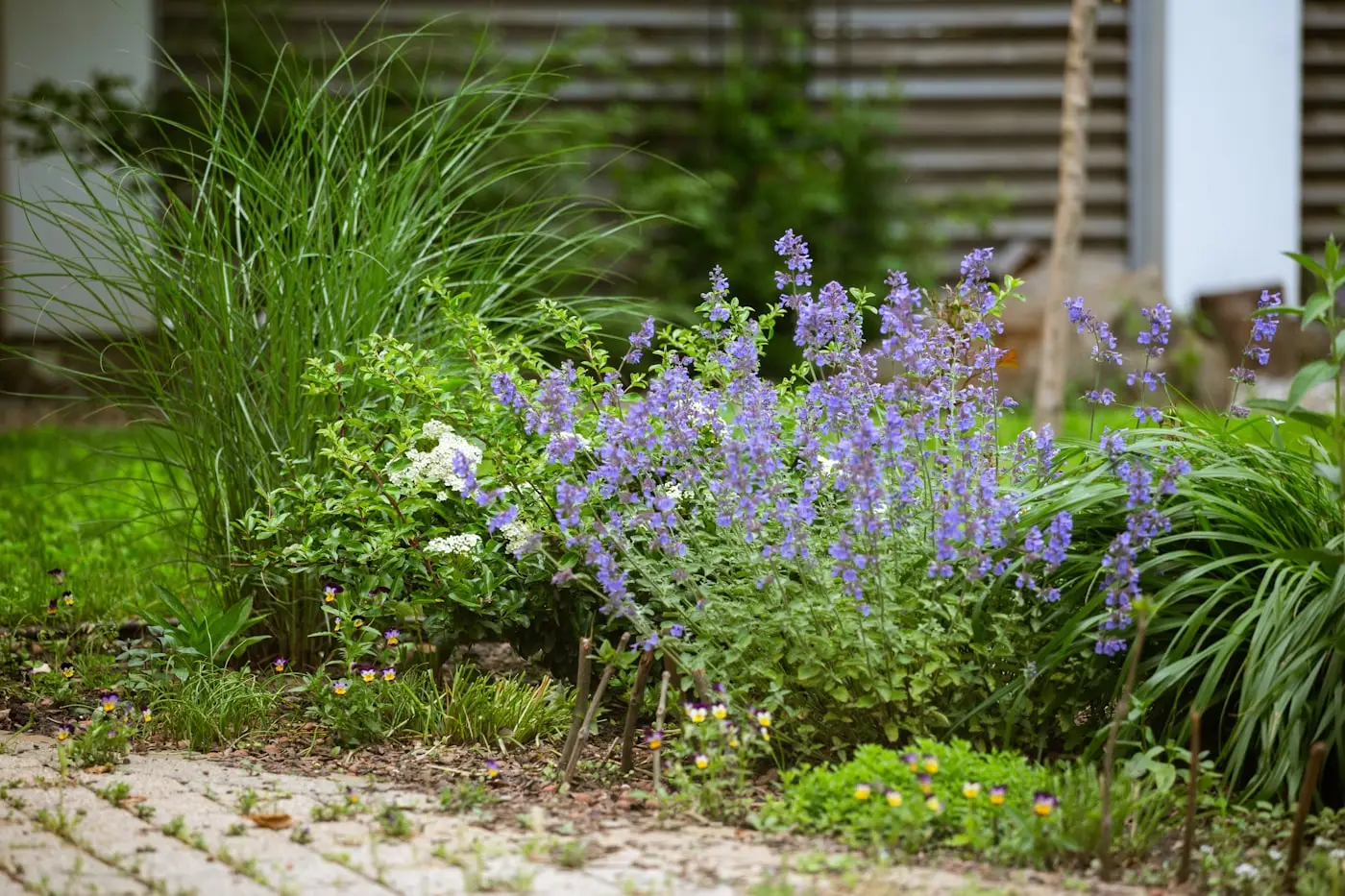
Why do Yorkshire borders need a different approach?
Yorkshire's combination of cold winters, late springs, clay soils, and high rainfall means the standard advice written for southern England does not transfer reliably - you need to select plants and plan maintenance around Yorkshire's specific conditions.
Plant a Mediterranean garden in a Keighley terraced house and half of it will be dead by March. Follow the planting advice in a glossy gardening magazine written in Surrey, and you will wonder why your borders look disappointing after two years. Yorkshire's growing conditions are distinctive enough to need distinctive choices.
The county spans a remarkable range of conditions within a relatively small area. The North Yorkshire Moors have thin, acidic soils and cold, exposed conditions that kill soft perennials reliably. The Dales valleys are wetter and cooler than most of England with late springs and early frosts. The Pennine west - Calderdale, Craven, the upland parts of West Yorkshire - receives significantly more rain than the national average, with clay soils that retain moisture through winter. The East Riding Wolds have free-draining chalk soils that dry out fast in summer. The sheltered Vale of York sits in a rain shadow that makes conditions noticeably more benign than 30 miles to the west.
What unites most of Yorkshire is this: cold winters, late springs (typically two to three weeks behind the south), clay or heavy loam soils in most of the county's gardens, and high rainfall from September through to April. Borders that work well here are planted with hardy plants that handle moisture at the root, can recover from frost in late April or even May, and will not sulk in a wet June.
How do I prepare soil before planting a Yorkshire border?
Dig organic matter into the full border depth (30-40cm) before planting anything - well-rotted compost or manure transforms Yorkshire clay structure within one season and is the single highest-return preparation task you can do.
The single most important thing you can do for a new border in Yorkshire is improve the soil before planting anything. Plants put into unimproved Pennine clay will grow, but they will grow slowly, sit in waterlogged conditions through winter, and under-perform relative to their potential. An hour spent improving the soil before planting saves years of disappointment.
Clay soil: the Yorkshire standard
Heavy clay is the dominant soil type in most of Yorkshire's garden borders. It has genuine advantages - it retains moisture and nutrients well, and does not dry out in summer drought the way light soils do. But it also compacts easily, drains slowly, and in winter can become waterlogged to the point where roots cannot access oxygen.
To improve clay soil for a new border, dig the area to at least 30 to 40cm depth, breaking up any hardpan layer at the bottom of the spade's depth. Work in generous quantities of organic matter - well-rotted garden compost, farmyard manure (not fresh), or green waste compost. A layer 10 to 15cm deep across the border surface, dug in thoroughly, transforms the structure and drainage of clay significantly within the first season. Repeat the organic matter addition every year as a top-dress mulch and the soil will continue improving over time.
For plants that require sharper drainage - lavender, rosemary, salvias, Mediterranean herbs - incorporate horticultural grit at roughly 30 percent by volume alongside the organic matter. For a whole bed, raising the planting level by 15 to 20cm above the surrounding ground level provides immediate drainage improvement for the most moisture-sensitive plants. A low retaining edge of stone, sleepers, or brick holds the raised soil in place.
Chalk and limestone soils: the East Yorkshire situation
Gardeners on the Wolds, in the limestone belt around Malham and Settle, or on the magnesian limestone strip of South and West Yorkshire face a different problem: thin, free-draining soil that dries fast and struggles to hold nutrients. The fix is the same organic matter treatment, but the aim is the opposite - adding water-retention and body rather than improving drainage. Chalk soils are naturally alkaline (high pH), which limits the range of acid-loving plants (no rhododendrons, no pieris, no camellia) but suits a wide range of ornamentals including lavender, roses, clematis, and many traditional cottage garden perennials.
Yorkshire note: On chalk Wolds gardens, summer drought stress is the main threat to borders, not winter waterlogging. Mulching thickly in late March or April with a 5 to 8cm layer of organic matter significantly reduces moisture loss through summer. Watering newly planted stock through the first dry summer is essential on chalk - do not assume Yorkshire rain will do the job automatically on free-draining ground.
Which plants work best in my part of Yorkshire?
The right plant choice depends on which part of Yorkshire you garden in - Dales uplands, West Yorkshire clay, East Riding chalk, and sheltered South Yorkshire all have meaningfully different conditions, so sub-regional selection is more reliable than any single Yorkshire-wide plant list.
Because conditions vary so significantly across Yorkshire, plant selection that works in one part of the county can be unreliable in another. The following guide covers the main sub-regions and which plants consistently perform well in borders.
Yorkshire Dales and North York Moors
- Hardy geraniums (cranesbill)
- Sedums / hylotelephium
- Salvias (hardy varieties)
- Echinacea purpurea
- Rudbeckia fulgida
- Ornamental grasses (miscanthus, pennisetum)
- Foxgloves (self-seeding)
- Lupins and delphiniums
West Yorkshire (Calderdale, Craven, Pennine)
- Astilbe (loves moisture)
- Hostas in partial shade
- Crocosmia (spreads freely)
- Acanthus mollis
- Ferns (dryopteris, osmunda)
- Helenium (sneezeweed)
- Persicaria
- Ligularia
East Riding and Wolds (drier, chalk)
- Lavender
- Catmint (nepeta)
- Alliums
- Phlomis russeliana
- Roses (chalk suits them)
- Verbena bonariensis
- Stachys byzantina
- Echinops (globe thistle)
South Yorkshire and urban West Yorkshire
- Achillea (yarrow)
- Persicaria amplexicaulis
- Carex (sedge grasses)
- Brunnera macrophylla
- Pulmonaria (lungwort)
- Bergenias
- Euphorbias
- Roses (floribundas, shrub)
A few universal picks that perform reliably across the whole of Yorkshire regardless of sub-region: hardy geraniums in most forms (Rozanne is a standout), rudbeckias, heleniums, ornamental grasses in the miscanthus family, hawthorn and elder as structural shrubs, and climbing roses on any wall with some shelter.
When is the best time to plant borders in Yorkshire?
Mid-April to late May for spring planting (typically two to three weeks later than southern England), and September to October for autumn bare-root planting - both windows work well in Yorkshire, with spring planting preferred on unimproved clay where winter waterlogging is a risk.
Yorkshire's late springs and early autumns shift the planting calendar compared to most national gardening advice.
Spring planting: mid-April to late May
The last frost date varies considerably across Yorkshire. In the Vale of York and sheltered South Yorkshire gardens, the risk of ground frost typically passes by mid-April. In the Dales, on the Moors, and on the Pennine uplands above 200 metres, late frosts into May are a real risk and have been known to occur into early June in exceptional years. The rule of thumb for Yorkshire: wait until mid-April before planting any tender stock, and until after the last May bank holiday for any plants labelled half-hardy. Hardy perennials and shrubs can go in from March onwards - they can handle frost, though a late hard frost can damage fresh new growth on newly planted specimens even if established plants in the same border shrug it off.
Spring planting on Yorkshire clay should happen when the soil has dried out enough to work without compaction. Attempting to plant in wet clay in March or early April risks smearing the soil structure, creating an airless layer that roots struggle to penetrate. The soil is ready to work when it breaks apart rather than smearing when squeezed. If it sticks to your boots and forms a smooth paste when worked, wait another two weeks.
Autumn planting: September to November
Autumn is an excellent planting time in Yorkshire for bare-root shrubs, roses, and hardy perennials. The soil is still warm from summer and root growth continues until temperatures drop below 5 degrees. Plants put in during September and October establish root systems through the winter, giving them a significant head start over spring-planted equivalents.
On heavy clay, autumn planting carries a risk that spring planting does not: newly planted stock can sit in waterlogged soil through a wet Yorkshire winter, which can cause root rot on plants that resent wet feet. Choose autumn planting for robust perennials, shrubs, roses, and bare-root trees on well-drained or improved clay. On unimproved, poorly draining clay, spring planting is safer for borderline-hardy or moisture-sensitive plants.
Which trees and shrubs thrive in Yorkshire garden borders?
Dogwood, amelanchier, hawthorn, rowan, viburnum, and elder all perform reliably across the different soil types and conditions found in Yorkshire gardens - and all provide structure and winter interest that pure perennial borders cannot.
A border without structural plants is a collection of perennials that looks bare from November to March. Trees and shrubs provide the backbone of a Yorkshire border: year-round form, winter interest, and the scale that stops a garden looking flat.
Dogwood (Cornus) is one of the best shrubs for Yorkshire conditions. The winter stem colour varieties - Cornus sanguinea 'Midwinter Fire', Cornus alba 'Sibirica' - produce spectacular orange, yellow, or red winter stems. They handle clay and wet conditions well and require simple annual hard pruning in spring to maximise stem colour. Plant in groups of three or five for the most impact in a border.
Amelanchier lamarckii (snowy mespilus) is widely planted in Yorkshire gardens for good reason. It produces clouds of white flowers in April just as the leaves emerge, then good autumn colour. It tolerates clay and is unfazed by Yorkshire winters. It can be grown as a multi-stem shrub or trained as a small tree, and it fits gardens of almost any size.
Hawthorn (Crataegus) is a Yorkshire native and requires no persuasion to grow. As a garden tree or large shrub it gives wildlife value (berries for birds, nectar for bees), structural interest, and remarkable wind and cold tolerance. Native single-flowered hawthorn is most useful; the ornamental forms like Paul's Scarlet are also reliable but less wildlife-friendly.
Rowan (Sorbus aucuparia) is the archetypal tree of the Yorkshire uplands - it grows naturally on moorland and valley slopes across the county. In a garden context it offers spring flowers, summer berries (red or yellow depending on variety), and reliable autumn colour. Small enough for most gardens, fully hardy, and works beautifully with cottage garden plantings.
Viburnum in various forms - Viburnum opulus (guelder rose), Viburnum tinus (winter flowering), Viburnum x bodnantense 'Dawn' (fragrant winter flowers) - all grow well in Yorkshire conditions. Viburnum x bodnantense 'Dawn' is particularly useful as it flowers from November to March, providing scent and interest through the months when most of the garden is dormant.
Elder (Sambucus) grows naturally in Yorkshire hedgerows and woodland edges. The ornamental forms, particularly Sambucus nigra 'Black Lace' and 'Black Beauty', have deeply cut dark purple foliage that provides a dramatic backdrop in a border. Cut hard in spring to keep them compact and to produce the best foliage.
Why is cottage garden style so well suited to Yorkshire gardens?
Cottage garden style uses densely planted mixed borders with hardy flowering perennials, self-seeding annuals, and climbing roses - exactly the plants that handle Yorkshire's cool, wet conditions best, making it the style most naturally aligned with what grows well here.
Cottage garden style is the dominant aesthetic in North Yorkshire villages and across much of rural Yorkshire, for good reason: it is the style that fits the landscape, the architecture, and the climate most naturally. Stone-built farmhouses in Wharfedale or Swaledale, terraced houses in Hebden Bridge, Victorian villas in Harrogate - cottage garden borders complement all of these far better than formal parterres or contemporary minimalism.
The cottage garden approach is not really a style so much as a practical philosophy: pack the border densely with a mix of plants at different heights, allow self-seeding, prioritise flowers over foliage, and accept that some informality and overlap is part of the look. The dense planting suppresses weeds naturally once established, which reduces maintenance once the border is mature.
The plant palette for a Yorkshire cottage garden border builds around a structure of shrubs (roses, shrubby salvias, lavender where drainage allows), mid-height perennials (geraniums, salvias, achillea, helenium, echinacea, rudbeckia, scabious), and tall back-of-border plants (delphiniums, lupins, verbascum, foxgloves, sanguisorba). Allow self-seeding annuals to fill gaps - calendula, nigella, aquilegia, and sweet rocket will all seed themselves around a Yorkshire cottage border without intervention.
Roses are central to the cottage garden style and deserve special mention. Yorkshire gardens are good rose-growing territory in most of the county - the cool, moist conditions suit roses, which do not like extreme heat. The main risk is blackspot fungal disease, which is worse in wet years. Choosing resistant varieties (David Austin's English roses have improved enormously in disease resistance, and varieties like 'Gentle Hermione', 'Olivia Rose', 'Tottering-by-Gently', and 'Harlow Carr' are consistently healthy in Yorkshire conditions) makes the difference between a rose collection that needs constant spraying and one that largely looks after itself.
How do I maintain Yorkshire garden borders through the seasons?
The core Yorkshire border maintenance calendar is: cut back in late February, stake tall plants in April, deadhead through summer, and divide clumps in autumn - with mulching after each cut-back as the single most time-saving weed-suppression step.
Once planted, Yorkshire borders need a consistent seasonal maintenance programme to stay healthy and looking good. The following covers the key tasks by season.
Late winter and early spring (February to March)
Leave perennial stems standing through winter - they provide structure, harbour beneficial insects, and the seed heads feed birds. Cut everything back in late February or early March before new growth emerges and makes cutting back difficult. Cut to about 10cm above the ground. Remove the cut material from the border to reduce fungal disease risk. Apply a thick mulch of garden compost or bark immediately after cutting back to suppress the early weeds that exploit the cleared ground, and to retain moisture through the dry spring months. This is also the time to divide any clumps that have become overcrowded - lift, split, and replant the vigorous outer portions, discarding the exhausted centre.
Spring (April to May)
Staking is the critical spring task. Tall perennials - delphiniums, lupins, verbascum, tall salvias - need support in place before they need it, not after they have flopped. A tall delphinium that has fallen over and been staked upright looks artificial; one staked at 30cm height that grows through the support looks natural. Use hazel pea sticks, bamboo canes with string, or purpose-made plant supports depending on the plant type.
Check new plantings from autumn are establishing well. Any that look stressed or have not put on new growth by late April may need attention - check the root ball has not dried out on free-draining soils, or become waterlogged on heavy clay.
Summer (June to August)
Deadheading extends flowering for many perennials including roses, geraniums, salvias, and scabious. On hardy geraniums, once the main flush is over in June, cut the whole plant back hard with shears - it will produce a fresh mound of foliage and often a second flush of flowers by August. Water newly planted stock if there is a dry spell, particularly on chalk Wolds soils where drought stress arrives fast.
Autumn (September to November)
Plant new additions in September and October, particularly bare-root shrubs and roses as nurseries begin to supply them. Divide perennials that have outgrown their space. Leave cutting back until late February - autumn cutting back removes the structural interest and wildlife value of standing stems through winter, and is unnecessary on most perennials. Apply a layer of compost around the base of roses and shrubs in October to protect roots from frost and provide a slow-release nutrient feed over winter.
How does companion planting reduce maintenance in a Yorkshire border?
Dense three-layer planting - tall plants, mid-height perennials, and low ground-covering plants like hardy geraniums or pulmonaria beneath them - shades out annual weed seedlings, meaning a well-established Yorkshire border needs a fraction of the weeding a thin-planted one requires.
One of the most practical strategies for Yorkshire borders that you do not want to spend every weekend in is dense companion planting that suppresses weeds through canopy coverage. The principle is simple: if the ground is covered with desirable plants, annual weeds cannot establish because they need light to germinate at the soil surface.
Ground-covering perennials that work particularly well in Yorkshire borders as the understory layer beneath taller plants: hardy geraniums (especially Geranium macrorrhizum, which is almost indestructible), pulmonaria (valuable for early spring flower in shade), persicaria affinis, brunnera macrophylla, and bergenia. These do not compete aggressively with upright perennials but cover the soil between clumps and significantly reduce the weed burden once established.
A well-planted cottage garden border in Yorkshire, with three height layers and good ground coverage at the base, reduces ongoing weeding to roughly 20 minutes per metre of border per season once mature. In the first two years while plants are establishing and gaps remain, weeding is more intensive. The investment in the first season's preparation and planting density pays off in dramatically reduced maintenance from year three onwards.
What does a professional border planting service include in Yorkshire?
A professional planting service typically covers soil preparation, a planting plan, plant sourcing, installation at correct depth and spacing, and first-year aftercare - with total costs for a 20-30 sqm border ranging from around 400 to 1,200 pounds depending on which elements are included.
A professional borders and planting service from a Yorkshire gardener typically covers some or all of the following, depending on what you agree:
- Site assessment and soil analysis
- Planting plan showing plant names, positions, and quantities
- Soil preparation: digging, organic matter incorporation, grit where needed
- Plant sourcing from reputable nurseries (or planting your own purchased plants)
- Installation: planting at correct depth and spacing, watering in
- First-year aftercare: watering during establishment, weed removal, staking if needed
Costs vary widely depending on which elements are included and the scale of the project. Planting design consultation as a standalone service from a qualified garden designer in Yorkshire costs 150 to 400 pounds for a site visit, soil assessment, and written planting plan. Planting-only services (supplying labour to plant a plan you have already prepared, or plants already delivered to site) cost approximately 40 to 60 pounds per hour, with a typical border of 20 to 30 square metres taking a half-day to a full day to plant properly including soil preparation.
See our borders and planting service page for what is included in our service, and our garden design service for full planting design from initial brief to installed border. For a full guide to gardener costs in Yorkshire, see our guide to gardener costs in the UK.
Get your Yorkshire borders planted right
Tell us about your garden and what you are hoping to achieve and we put your enquiry in front of a local gardener who knows Yorkshire conditions.
Request a planting quote →Frequently Asked Questions
What plants grow well in Yorkshire clay soil borders?
Hardy geraniums, hostas in shade, heleniums, rudbeckias, achilleas, persicarias, and ornamental grasses all handle Yorkshire clay well. Shrubs that establish reliably on clay include dogwood, viburnum, hawthorn, and elder. Avoid Mediterranean plants like lavender and rosemary on unimproved heavy clay - they need free drainage to survive Yorkshire winters.
How do I improve clay soil for planting borders in Yorkshire?
Dig in generous quantities of well-rotted organic matter (compost, manure, or green waste) to the full border depth of 30 to 40cm. For moisture-sensitive plants, incorporate horticultural grit at about 30 percent by volume. Raising the border surface 15 to 20cm above surrounding ground level provides immediate drainage improvement for the most sensitive plants.
How much does professional border planting cost in Yorkshire?
Planting design consultation 150 to 400 pounds. Planting-only service (labour) 200 to 600 pounds per border depending on size and soil preparation required. Ongoing maintenance contract 40 to 80 pounds per visit. These figures cover labour; plant material is additional.
What is the best planting style for a Yorkshire garden?
Cottage garden style is the most naturally suited to North and North West Yorkshire's stone architecture and cool climate. It uses densely planted mixed borders with flowering perennials, self-seeding annuals, and climbing roses. More contemporary prairie and grasses-led styles work well in new-build gardens across South Yorkshire and urban areas.
Which plants survive Yorkshire winters in borders?
Hardy perennials including geraniums, sedums, echinacea, rudbeckia, helenium, achillea, crocosmia, and ornamental grasses are reliable. Shrubs including dogwood, viburnum, hawthorn, amelanchier, and roses are fully winter-hardy across Yorkshire. Treat anything labelled half-hardy as a summer annual in Yorkshire rather than risking it overwintering.
How do I maintain cottage garden borders in Yorkshire?
Cut back in late February before new growth. Divide clumps every 2 to 3 years in spring or autumn. Stake tall perennials in April before they need it. Mulch with compost in late March to suppress weeds and retain moisture. Deadhead roses, geraniums, and salvias through summer. A well-planted, densely covered border needs far less maintenance than a thin or gap-ridden one once established in year three.
Can I grow vegetables in a Yorkshire border alongside ornamentals?
Yes. Kale, chard, runner beans on a wigwam, courgettes, and cut flowers like sweet peas and dahlias integrate well into mixed borders. Wait until mid-May to plant out tender crops like courgettes and tomatoes in Yorkshire, particularly in exposed northern or upland gardens where late May frosts are possible.
What plants grow well in Yorkshire clay soil?
Hardy geraniums, heleniums, rudbeckias, achilleas, persicarias, hostas in shade, and ornamental grasses such as miscanthus all perform well on Yorkshire clay once the soil has been improved with organic matter. Shrubs that establish reliably on clay include dogwood (cornus), viburnum, hawthorn, amelanchier, elder, and roses. The key is improving the clay structure with generous organic matter before planting - well-drained clay is genuinely fertile and retentive once its structure is improved with compost or manure.
When should I plant a new border in Yorkshire?
The two main planting windows are mid-April to late May (after last frost risk passes - typically two to three weeks later than southern England) and September to October for bare-root shrubs, roses, and hardy perennials. On unimproved Yorkshire clay, spring planting is safer than autumn as it avoids new plants sitting in waterlogged soil over winter. On improved or free-draining soil, autumn planting gives roots time to establish over winter and often produces stronger growth in the following spring.
How do I design a low-maintenance border for my garden?
Choose long-lived perennials that do not need frequent dividing or staking (hardy geraniums, heleniums, rudbeckias, sedums, ornamental grasses), plant densely so weeds cannot establish once the border matures, and apply a 5-8cm bark or compost mulch each spring to suppress annual weeds. A well-designed dense border - once established after three years - typically needs only 2-3 hours of maintenance per 10 square metres per season. See our borders and planting service for professional design and installation.
Related Guides
- Garden Drainage in Yorkshire: Solving Wet and Waterlogged Gardens
- Raised Bed Vegetable Gardens in Yorkshire
- Garden Composting in Yorkshire: Making and Using Compost
- How Much Does a Gardener Cost in the UK? (2026 Guide)
- Borders and Planting Services
- Garden Design Services
- Cottage Garden Design in Yorkshire