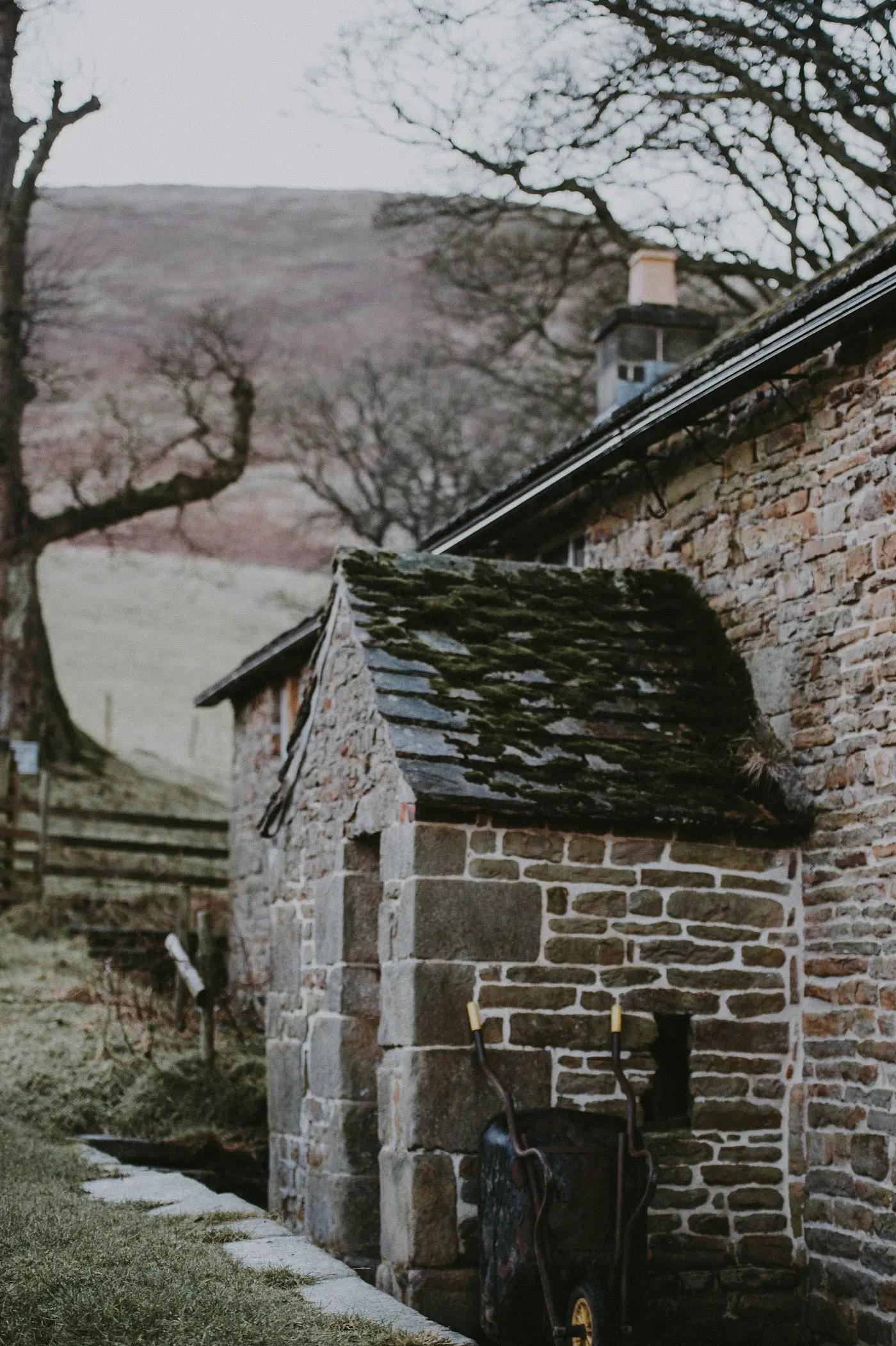
The cottage garden style suits Yorkshire's rural landscapes beautifully, from the villages near Ripon to the Dales fringes around Knaresborough and Northallerton.
The cottage garden style has been popular in Yorkshire for as long as there have been cottage gardens in England. The county has the stone walls, the climate, and the horticultural heritage for it - Harlow Carr in Harrogate has been growing cottage-style planting to RHS standards in Yorkshire conditions for decades, and the north of England's tradition of show-quality sweet peas, dahlias, and exhibition-grade roses speaks to a region that takes its plants seriously. But Yorkshire also has heavy clay, Pennine rainfall patterns, and winters cold enough to kill plants that would sail through in Gloucestershire or Kent. Understanding which side of that line your chosen plants fall on determines whether your cottage garden thrives or disappoints.
The Yorkshire advantage: why this climate suits cottage perennials
The received wisdom is that you need a warm, sheltered garden to grow a good cottage border. That is true for some plants - but the core of the cottage garden palette is northern European in origin, and it performs better in cool, moist conditions than it does in the hot dry summers of the south-east. Delphiniums reach their best where summers are cool and they do not dry out at the roots. Lupins are genuinely more floriferous in Yorkshire than in Surrey. Foxgloves, aquilegia, and hardy geraniums are native or near-native plants that evolved in exactly the kind of temperate, high-rainfall, moderately cold climate that most of Yorkshire provides.
Yorkshire's growing season is shorter than the south, but that does not mean the plants are less happy - it means they work harder in a compressed window. A June-August peak in a Yorkshire cottage border is often denser and more saturated in colour than the same plants in a warmer climate, where they tend to bolt and go over quickly. The reliable summer rainfall that Yorkshire receives - rather than the drought-stress cycles more common in the south-east - means cottage perennials are rarely under water stress during flowering. You will not be watering an established cottage border through dry July spells in most Yorkshire seasons. That is a significant advantage.
The main challenge is winter drainage. Heavy clay soils in winter - much of Leeds, Bradford, Wakefield, and the lower valley towns - can leave borderline-hardy plants sitting in cold wet soil for months. That combination kills more plants in Yorkshire than frost alone. The solution is soil preparation and careful plant selection, both of which this guide covers in detail.
Cottage garden plants that work in Yorkshire
Tough cottage perennials
The following are the backbone of a reliable Yorkshire cottage border. All are fully hardy to at least -15C (well within Yorkshire's range except in extreme upland conditions), tolerant of clay soil, and capable of performing in a cool, wet growing season.
- Hardy geraniums (Geranium): the single most useful group for Yorkshire cottage gardens. G. phaeum (mourning widow) is superb in shade and damp soil; G. 'Rozanne' flowers from June to October in most Yorkshire conditions; G. sanguineum tolerates dry-ish spots once established. All spread to fill gaps, suppress weeds, and knit the border together.
- Lupins: perform better in cool, moist climates than in warm ones. On clay they need good initial drainage through incorporated grit or organic matter, but once established they are vigorous. Cut back after first flowering to encourage a second flush. Short-lived (3-5 years) but reliably self-seed on open soil.
- Delphiniums: the aristocrat of the Yorkshire cottage border. Needs staking in exposed positions, but rewards the effort with spikes of exceptional quality. Pacific Giant hybrids and the Elatum group both perform strongly in Yorkshire. Cut to the base after first flowering for a second flush in September.
- Foxgloves (Digitalis purpurea): native to Yorkshire's woodland edges and completely at home in a cottage border. Biennial rather than perennial - they set seed and die - but self-seed freely enough that a colony establishes itself once you start. The bold vertical spike in June and July is irreplaceable.
- Aquilegia: another self-seeder that colonises a cottage border efficiently once established. Flowers May-June on Yorkshire clay; self-hybrid colours are charming. Cut back after seeding to prevent excess seedlings.
- Phlox (Phlox paniculata): performs very well in Yorkshire's cool summers. Needs moisture-retentive soil (clay suits it). Fragrant in the evening. Watch for powdery mildew in dry spells - select resistant cultivars like 'David' or 'Eva Cullum'.
- Achillea (yarrow): thrives in free-draining spots within a Yorkshire border; less happy on heavy wet clay. Excellent for the Magnesian Limestone fringe gardens near Wetherby and Boston Spa.
- Helenium: late-season gold, flowering August-October in Yorkshire. Loves moisture-retentive soil - Clay Measures gardens suit it well. The 'Moerheim Beauty' and 'Sahin's Early Flowerer' cultivars are both reliable.
- Echinacea (coneflower): performs in Yorkshire but needs a well-drained position. On pure clay, incorporate generous grit before planting. The straight species E. purpurea is more reliable in Yorkshire than the newer complex hybrids, which can struggle with cold wet winters.
Plants to approach with caution in Yorkshire
Lavender is the most frequently cited cottage garden disappointment on Yorkshire clay. It is not that lavender will not grow in Yorkshire - in a well-drained position with full sun on lighter soils, it can thrive - but on the Coal Measures clay that underlies most of Leeds, Bradford, Wakefield, and much of the West and South Riding, lavender sits in cold wet soil from November to March and frequently dies back severely or completely. On the Magnesian Limestone fringe around Wetherby and Boston Spa, where drainage is naturally good and the soil is alkaline, lavender works far better. Assess your specific soil and drainage before committing to a lavender planting scheme.
Cistus (rock rose) will not survive a Yorkshire winter in most situations. It is a Mediterranean shrub that requires both sharp drainage and mild winters, and Yorkshire routinely fails on both counts in exposed positions. Leave it out entirely unless you have an exceptionally sheltered south-facing microclimate with near-gravel drainage. For gardeners who are drawn to the look of gravel, lavender, and sun-loving plants rather than the classic cottage border, the Mediterranean garden design guide for Yorkshire gives a realistic plan for achieving that aesthetic without the plant losses.
Salvias present a spectrum. Salvia officinalis (culinary sage) is hardy enough for most Yorkshire gardens. Salvia nemorosa and its cultivars ('Caradonna', 'May Night') are fully hardy and excellent in cottage borders. But the tender South American salvias - Salvia guaranitica, Salvia involucrata, Salvia microphylla in most forms - are borderline in Yorkshire. They may survive mild winters in sheltered spots with a thick mulch, but they cannot be relied upon to overwinter and are best treated as expensive annuals unless you are on the limestone fringe with a very sheltered garden.
Roses for Yorkshire: the David Austin selection
Roses are central to the cottage garden look, and Yorkshire grows good roses - the county has a strong tradition of rose cultivation and the cool, moist summers prevent the hot-and-dry stress cycles that weaken many roses in southern gardens. The key considerations for Yorkshire are disease resistance (wet seasons promote blackspot and mildew if the variety is not resistant) and the ability to cope with heavy, moist soil without root rot.
David Austin roses have become the dominant choice for cottage-style planting across Yorkshire, and several varieties are particularly well-suited to the county's conditions. Gertrude Jekyll is the benchmark: strong, upright growth, exceptional fragrance, good disease resistance, and it handles wet Yorkshire summers without complaint. Olivia Rose Austin is compact enough for smaller gardens and has excellent disease resistance. Gentle Hermione produces flat, quartered flowers in the most traditional cottage style and copes well with wet conditions on the petals. Desdemona is particularly good on clay - deep roots, strong constitution, repeat-flowering, and very resistant to blackspot. All four are worth considering as the structural roses in a Yorkshire cottage border.
For the specific selection challenges of Yorkshire conditions and the soil preparation roses need before planting, see the borders and planting service page.
Native and near-native additions: blending cottage with naturalistic
Some of the most successful Yorkshire cottage gardens incorporate native and near-native plants alongside the traditional cottage palette, creating a naturalistic thread that works particularly well in the county's Pennine stone garden settings and in gardens adjacent to fields or woodland. Ox-eye daisy (Leucanthemum vulgare) self-seeds through borders and lawn edges freely and is a genuinely good companion to cottage perennials. Red campion (Silene dioica) is native to Yorkshire's hedgerows and woodland edges, and its vivid pink flowers in May and June complement the early cottage border before roses and delphiniums take over. Field poppy (Papaver rhoeas) and cornflower (Centaurea cyanus) are annual self-seeders that bring a meadow quality to the front of a cottage border without requiring annual replanting once established on open ground.
For a more deliberate naturalistic treatment of a whole area, the Yorkshire wildflower meadow guide covers how to establish and manage a flowering meadow alongside or as part of a garden.
Getting the soil right: preparing Yorkshire clay for a cottage border
Cottage garden planting on well-prepared clay is far more reliable than cottage planting on unprepared clay. The preparation investment - done once before planting - determines whether your border performs for years or struggles from the start. For a comprehensive treatment of Yorkshire clay gardening, see the clay soil Yorkshire guide. The key steps specific to a cottage border are:
- Dig in organic matter generously. Two full spades' depth of well-rotted garden compost or composted bark, incorporated throughout the planting area, does more to transform clay soil structure than any other single action. Clay with good organic matter content drains better, warms faster in spring, and holds nutrients well through the growing season. Do not skimp on this step.
- Add horticultural grit for genuinely drainage-sensitive plants. The general border does not need grit if organic matter is well incorporated. But for echinacea, achillea, and Mediterranean-adjacent plants (salvias, bearded iris), add grit to the planting hole at a ratio of one part grit to three parts amended soil.
- Consider raised beds if drainage is very poor. On low-lying Coal Measures clay that stays waterlogged from October to April, even a 20-30cm raised bed above the existing soil surface can transform what is plantable. Railway sleepers, stone, or rendered brick all work as edging. Fill with a mixture of topsoil and compost. The extra height shifts the root zone into consistently draining soil and opens up the planting palette significantly.
- Check pH before planting ericaceous or acid-loving species. Coal Measures clay in Yorkshire is typically neutral to slightly alkaline. Rhododendrons and azaleas will fail in the open ground on this soil - grow them in containers with ericaceous compost if you want them. Most cottage border plants prefer neutral to slightly alkaline pH, so the clay is generally appropriate without amendment.
Layout principles that work for Yorkshire cottage gardens
The classic cottage garden is deliberately informal - plants spill forward over paths, self-seeders appear in unexpected places, heights vary without rigid structure. But that informality requires underlying organisation to work, particularly in a Yorkshire context where the growing season is compressed and you need the border to carry its visual weight from May through September.
Dense planting is the first principle. A cottage border with gaps between plants looks unfinished and is quickly colonised by weeds. The goal is to close the canopy over the soil surface within two seasons of planting, using a mix of fast-establishing ground-covering plants (hardy geraniums are invaluable for this) alongside the slower-developing perennials and shrubs that form the backbone. Once the canopy is closed, the weed problem largely disappears - light cannot reach the soil surface to germinate weed seeds.
Layered heights make the border readable from a distance. Place the tallest plants - delphiniums, tall phlox, large shrub roses - towards the back of a one-sided border or in the centre of a double-sided border. Mid-height plants (lupins, medium roses, helenium) occupy the middle zone. Low-growing plants (hardy geraniums, dianthus, front-of-border aquilegia) weave through the front, softening the edge. This structure does not need to be rigid - some tall self-seeders threading forward through shorter plants is part of the style - but the general gradient from tall to low creates coherence.
Allow and encourage self-seeding. Foxgloves, aquilegia, red campion, and field poppy all self-seed readily on open soil. Rather than treating self-seeders as weeds, selectively remove those in the wrong place and allow those in good positions to develop. Over two or three seasons, the border acquires a self-renewing quality that reduces the replanting and gap-filling that more structured borders require. This is particularly valuable in Yorkshire's stone garden settings, where plants threading through gaps in paving or wall bases creates the most authentic cottage feel.
Harlow Carr as a reference point
The RHS Garden Harlow Carr in Harrogate is one of the most important reference gardens for what actually works in Yorkshire conditions. It sits at 175 metres on Millstone Grit with exposure similar to the Pennine fringe towns. The cottage-style borders in Harlow Carr's Kitchen Garden and the perennial planting in the main borders demonstrate what thrives without protection in the north of England. A visit between May and September is worth more than any plant catalogue for identifying reliable performers in genuine Yorkshire conditions.
Seasonal succession in a Yorkshire cottage garden
A well-planned cottage border carries interest from April through to the first frosts in October or early November, though the peak intensity varies by season.
April-May: Aquilegia, red campion, early hardy geraniums, tulips if planted in autumn, and the fresh foliage of emerging perennials. The border is still relatively open at this stage, but colour begins.
June-July: The peak season. Delphiniums, lupins, foxgloves, roses in first flush, phlox beginning, hardy geraniums at their most floriferous. This is the month when a Yorkshire cottage border justifies the work. Cut back delphiniums after the first flush for a September repeat.
August-September: Helenium, echinacea, later phlox, repeat-flowering roses, and the seed heads of earlier plants beginning to add texture. August is the month most often underplanted in Yorkshire borders - the focus on June-July peak planting can leave a gap. Adding helenium, rudbeckia, and late salvias fills this period.
October: The last roses, seed heads, and the beginning of autumn colour in any woody plants. Leave seed heads standing through winter - they feed birds and are an architectural feature on frosty mornings. Cut back in February, not November, to preserve that winter interest and protect the crowns of borderline-hardy plants with insulating dead material. For the broader annual cycle of garden care, the Yorkshire lawn care guide covers seasonal timing across the whole garden.
When to use a professional gardener for cottage border planting
Soil preparation for a new cottage border - particularly double-digging a significant area of Yorkshire clay and incorporating generous organic matter - is physically demanding work. Most homeowners underestimate both the effort involved and the time it takes to do properly. A professional gardener with the right tools (rotavator for initial breaking, fork and spade for amendment) can prepare a 20-square-metre border in a day that would take an inexperienced homeowner a weekend and leave the soil less thoroughly worked. Getting the preparation right once is worth the cost.
Planting design - selecting varieties that complement each other in height, season, and colour, and specifying quantities for the density required - is another area where professional input pays dividends. A good planting plan is not just a list of plants. It is a layered scheme that accounts for seasonal succession, considers the specific soil and aspect of the site, and produces a result that looks intentional rather than accumulated. The garden design service covers both full redesigns and more targeted border planting plans. For the planting installation itself, the borders and planting service handles soil preparation and plant installation to a professional standard.
Ongoing maintenance - cutting back spent growth at the right time, dividing congested perennials every three years, feeding in spring - is manageable as a DIY task for most cottage borders once they are established. Where professional help is most valuable is in the first season after planting, when a visit in July or August to assess what has established well, identify any failures, and recommend replacements can save significant replanting costs in year two.
For low-maintenance approaches to the garden more broadly, that guide covers how to structure a garden that does not require constant professional input once established.
Frequently Asked Questions
Do cottage gardens work in Yorkshire clay soil?
Yes, provided you choose the right plants and prepare the soil properly. Hardy geraniums, lupins, delphiniums, foxgloves, and most David Austin roses actually perform better on moisture-retentive clay than on thin free-draining soils. The problems arise when people try to grow Mediterranean plants - lavender, cistus, rosemary in quantity - that demand sharp drainage. Focus on cottage perennials that evolved in temperate, moist climates and Yorkshire clay becomes an asset. See the clay soil Yorkshire guide for full soil preparation advice.
Which David Austin roses grow best in Yorkshire?
For Yorkshire conditions, prioritise varieties with proven disease resistance and the ability to cope with wet soil and wet weather on the petals. Gertrude Jekyll is the benchmark for reliability. Olivia Rose Austin, Gentle Hermione, and Desdemona all perform well in wet Yorkshire summers without the petal-balling that affects more delicate varieties. Avoid varieties with very large, many-petalled blooms that open slowly, as they are more vulnerable in Yorkshire's wetter seasons.
What cottage garden plants struggle in Yorkshire?
Lavender is the biggest disappointment on Yorkshire clay - it needs sharp drainage and mild winters to thrive, conditions that Coal Measures clay rarely provides. Cistus will not survive a Yorkshire winter. Half-hardy salvias (S. guaranitica, S. involucrata) are borderline and should be treated as expensive annuals unless you have a very sheltered spot. Mediterranean herbs including thyme and sage will grow but perform less vigorously than in warmer climates.
When should I plant a cottage garden border in Yorkshire?
The best planting windows are autumn (mid-September to early November) and spring (mid-April to late May). Autumn planting gives perennials and shrubs time to establish roots before growth starts in spring, and the soil is still warm enough for root development. Avoid planting in cold, wet conditions in February and March when Yorkshire clay is waterlogged - disturbing the soil structure at that point does more harm than good.
Related reading
- Gardening on Yorkshire clay soil - the complete guide
- Yorkshire lawn care guide - seasonal timing and tasks
- Creating a wildflower meadow in Yorkshire
- Planting trees in Yorkshire - species and timing
- Low-maintenance garden ideas for Yorkshire
- Borders and planting service
- Garden design across Yorkshire
- North-facing garden planting guide for Yorkshire - shade-tolerant plants overlap with cottage style
Get help with your cottage border.
A local Yorkshire gardener can handle soil preparation, planting design, and installation. Get a quote in 60 seconds.
Start the assessment