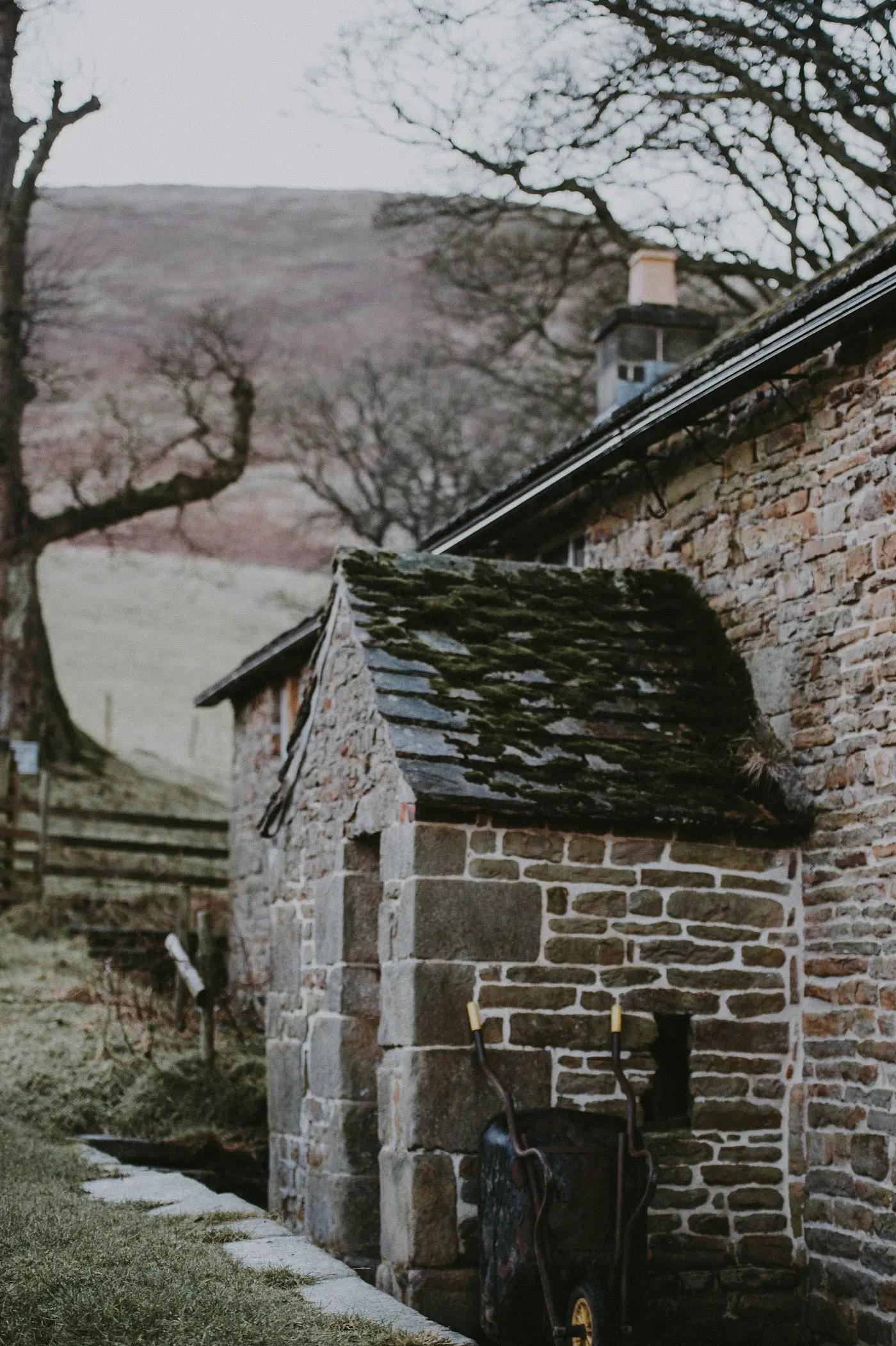
If you're working with a north-facing garden in Harrogate, Ripon, or Northallerton, local garden designers understand the lower light levels and wetter conditions typical of this part of Yorkshire and can recommend plants that will genuinely thrive.
At latitude 53 to 54 degrees north, Yorkshire sits at the same latitude as Moscow and the southern tip of Hudson Bay. This is not academic: it means that in midwinter, the sun rises low in the south-east, arcs briefly and low across the sky, and sets in the south-west before 4pm. A garden that faces north does not receive any direct sunlight from October through to late February - not a single ray. Even in June, when the days are longest, a north-facing Yorkshire garden receives only oblique, indirect light for much of the day. Understanding this as a fixed physical reality, rather than a problem to be solved with the right plants, is the foundation of gardening successfully in these conditions.
North-facing gardens are extremely common in Yorkshire. The reason is straightforward: the Victorian and Edwardian terrace rows that make up much of Leeds, Sheffield, Bradford, Huddersfield, Wakefield, and Hull were often built in parallel east-west runs. Every house on one side of a street gets a south-facing garden; every house on the other side gets a north-facing one. The north-facing properties are not unusual or unlucky - there are as many of them as there are south-facing ones. What is unusual is getting consistently honest advice about what that means for gardening.
How does Yorkshire shade differ from a garden in the south of England?
Yorkshire gardens at latitude 53-54 degrees north receive significantly less light intensity and fewer winter daylight hours than gardens in London or the south-east, meaning shade-tolerant plant lists written for southern gardens often do not translate reliably to Yorkshire conditions.
Most of the planting advice for shade gardens is written from a southern England or even a continental European perspective. Plants described as suitable for shade in an RHS guide or a mainstream gardening programme were often trialled in gardens around London, at latitude 51 degrees, where even a north-facing garden receives more light intensity and more hours of winter light than the equivalent in Leeds or Sheffield. When a plant label says "tolerates shade" it may be referring to conditions that simply do not exist in a Yorkshire north-facing garden for half the year.
There is also the temperature factor. Yorkshire winters are colder than southern England. The Pennine towns see harder frosts more reliably; even the relatively sheltered city centres of Leeds and Sheffield regularly dip to -5C or below, and -10C events are not rare. A north-facing garden that is also enclosed by walls or neighbouring buildings creates a frost pocket - cold air settles in the lowest point and stays there. The combination of low light and cold air is more limiting than either factor alone.
The practical consequence is that even some genuinely shade-tolerant plants from southern catalogues will struggle in Yorkshire north-facing conditions if they are not also genuinely winter-hardy. The selection of plants that is both shade-tolerant and reliably winter-hardy to -10C or below is narrower than most books suggest, and this guide focuses on that narrower, proven set.
Which plants genuinely work in a north-facing Yorkshire garden?
The most reliable plants for north-facing Yorkshire gardens are ferns (particularly Dryopteris filix-mas and Polystichum setiferum), hostas in raised beds, astilbe, hellebores, foxgloves, pulmonaria, epimedium, aquilegia, and hardy geraniums such as Geranium phaeum - all genuinely shade-tolerant and winter-hardy to -10C or below.
Ferns
Ferns are the gold standard for north-facing Yorkshire gardens and they are, frankly, underused. The male fern (Dryopteris filix-mas) is one of the most tolerant plants in British horticulture - it grows in deep shade, in poor clay soil, in exposed cold sites, and comes back reliably year after year without any particular care. It is semi-evergreen, which means it provides some winter structure rather than disappearing entirely from October to April. The soft shield fern (Polystichum setiferum) is fully evergreen and particularly attractive - the fronds are finely divided and hold their form through the worst Yorkshire winters. Both of these ferns can be planted directly into improved clay soil in a north-facing bed and will establish with minimal intervention.
For a more decorative option, Dryopteris erythrosora (autumn fern) has coppery-bronze new growth that is genuinely striking in spring - unusual in a shade plant. It is fully hardy in Yorkshire and tolerates the clay and cold combination that eliminates most showier plants. The royal fern (Osmunda regalis) will grow in moist north-facing conditions and becomes a substantial architectural plant over time, though it needs consistent moisture to perform well.
Hostas
Hostas are well-suited to north-facing Yorkshire gardens in principle, but with one important caveat: they do not always thrive in undrained clay soil. The crown of a hosta sitting in waterlogged clay through a Yorkshire winter can rot. The solution is to plant hostas in raised beds with improved soil, or in large containers. Given this, they are best approached as part of a design that already incorporates raised beds rather than as a ground-level border plant in heavy clay.
For large-leaved architectural impact: Hosta sieboldiana 'Elegans' (blue-grey, enormous leaves). For a more contained space: 'Halcyon' (steel-blue, medium), 'Patriot' (dark green with wide white margins), or any of the Sum and Substance types for big impact. Variegated hostas also help with the brightness problem in a shaded yard - a large white-margined hosta picks up whatever indirect light is available and gives the sense of luminosity that solid green planting in shade does not.
Hellebores
Hellebores (Helleborus x hybridus, the Lenten rose) are one of the most useful plants for a north-facing Yorkshire garden for a specific reason: they flower from December to March, exactly when everything else has given up. A well-established hellebore clump in the corner of a shaded yard produces flowers through January and February when the garden would otherwise have nothing happening. They are fully winter-hardy in Yorkshire, tolerant of clay, and once established they require virtually no maintenance. The leaves are semi-evergreen and provide some ground-level structure even out of flower. Named varieties with upward-facing flowers (the 'Wedding Party' series, the 'HGC' hybridised strains) are worth the extra cost for better display, though the basic Helleborus orientalis mixes are reliable workhorse plants at lower price.
Astilbe
Astilbe produces feathery flower plumes in pink, red, and white through June and July, making it one of the few plants that gives visible summer colour in deep shade. It is fully hardy through Yorkshire winters and actually prefers the consistently moist soil conditions that come with north-facing clay - where it would struggle in a sunny dry garden, it performs well in the conditions that cause problems for most other plants. Varieties for Yorkshire north-facing beds: 'Fanal' (deep red, 60cm), 'Deutschland' (white, 60cm), 'Montgomery' (crimson, 75cm). After flowering, the russet-brown seed heads are ornamental through autumn, adding a further season of interest.
Foxgloves, pulmonaria, tiarella, and epimedium
Foxgloves (Digitalis purpurea) are native to Yorkshire woodlands and genuinely at home in a north-facing shaded garden. They are biennial, which means they flower in their second year and self-seed freely - once established in a border, they will continue appearing without replanting. The tall flower spikes add vertical interest that is otherwise hard to achieve in shade planting. Pulmonaria (lungwort) flowers from February to April, often before hellebores finish, in pink, blue, and white. It has attractively spotted foliage that holds through summer and gives ground cover under taller plants. Tiarella (foam flower) produces delicate white flower spikes in May and June and makes good ground cover. Epimedium is probably the most indestructible ground cover for difficult shaded positions in Yorkshire - it grows in dry shade under established trees, in poor soil, in cold exposed sites. It is not spectacular, but it fills space where almost nothing else will, and some varieties (Epimedium x versicolor 'Sulphureum', Epimedium x perralchicum 'Frohnleiten') have attractive spring foliage.
Geranium (hardy)
Hardy geraniums are among the most versatile plants for Yorkshire gardens in general, and several species perform well in partial shade. Geranium phaeum (dusky cranesbill) is specifically suited to north-facing conditions - it flowers in May and June in deep maroon and comes from shaded woodland margins, making it genuinely tolerant of the low light conditions that rule out most flowering perennials. Geranium nodosum is another species that tolerates deep shade and flowers reliably. Geranium macrorrhizum is semi-evergreen and spreads as ground cover in shade, producing pink flowers in June.
Aquilegia
Aquilegia (columbine) is a native British plant and genuinely at home in Yorkshire conditions. It flowers in May and June in a range of colours from white to deep blue-purple and self-seeds freely in a well-planted border, naturalising over time. It tolerates north-facing conditions and partial shade, though it flowers better with some indirect light. Once established it is completely self-sustaining.
What should I avoid planting in a north-facing Yorkshire garden?
Lavender, most herbs, fruiting plants, most roses, sun-dependent ornamental grasses, and Mediterranean plants will all fail in a north-facing Yorkshire garden regardless of soil preparation - they need sun that the aspect cannot provide.
The following plants will not perform reliably in a north-facing Yorkshire garden, regardless of how much effort goes into soil preparation. They appear frequently in general gardening advice but are either sun-dependent, frost-tender, or both:
- Lavender - requires full sun and excellent drainage; will survive but barely flowers and is prone to die-back in a shaded Yorkshire garden
- Most herbs - rosemary, thyme, sage, and oregano all need sun and sharp drainage; in a north-facing Yorkshire position they will produce little aromatic growth and rot in wet winters
- Most fruiting plants - tomatoes, peppers, courgettes, cucumbers, and most soft fruit require full sun for fruiting; entirely unsuitable for a shaded position
- Roses (most varieties) - need good sun to flower; some climbing varieties tolerate a lightly shaded wall but hybrid teas and shrub roses rarely flower properly in deep shade
- Most ornamental grasses - Miscanthus, Stipa, Calamagrostis all need sun to perform; the notable exception is Hakonechloa macra (hakone grass) which tolerates shade and looks attractive in a shaded setting
- Mediterranean plants generally - cistus, penstemon (most), salvia (except S. nemorosa in partial shade), agapanthus - all sun-dependent and often frost-tender
How do wall colour and paving make a real difference in a north-facing garden?
Painting boundary walls white or cream and choosing pale paving surfaces both reflect the limited indirect light back into the space - genuinely improving growing conditions and making the garden feel brighter, not just look different. These are the two design changes with the highest impact in a shaded garden.
Plant selection matters, but it is not the only tool for improving a north-facing Yorkshire garden. Two design decisions have a disproportionate impact on how a shaded garden feels: wall colour and paving surface.
White or light-coloured walls
A north-facing garden enclosed by dark brick walls absorbs the already-limited light and feels correspondingly gloomy. Painting or rendering those walls in white, light cream, or pale grey reflects indirect light back into the space and genuinely changes the quality of the garden environment - not just aesthetically, but in terms of the amount of light reaching plant foliage. This is not a placebo effect; it is a real improvement in growing conditions in the space immediately adjacent to the white wall. The paint for external masonry (Sandtex, Dulux Weathershield, or a masonry paint with similar durability) is widely available and the cost of painting a typical garden wall is modest - £100-£300 for materials on a standard terraced yard, plus the labour of the application.
Pale paving or gravel
The same principle applies to the ground surface. Dark tarmac, dark slate, or heavily weathered grey paving absorbs light and makes a shaded garden feel darker than it is. Light-coloured paving - pale sandstone, buff porcelain, or pale gravel - reflects indirect light upward. In a garden that gets no direct sun for six months of the year, this reflected light is the growing environment. A pale resin-bound gravel surface in a north-facing York or Harrogate garden is a better choice than dark grey porcelain, not just aesthetically but practically. For the range of paving options, the small garden Yorkshire guide has a full cost and material comparison.
When should I give up on grass in a north-facing Yorkshire garden?
In most north-facing Yorkshire gardens, paving, gravel, or shade planting is a better choice than lawn. Grass in deep shade grows thin, attracts moss, and looks poor for ten months of the year in exchange for a brief acceptable period in June - the maintenance effort is simply not worth the result.
Grass in a fully north-facing Yorkshire garden is rarely worth maintaining. A lawn needs somewhere between four and six hours of direct sunlight per day to grow and recover properly. A north-facing garden in Yorkshire during the six months from October to March gets zero hours of direct sunlight per day. Even through summer, a deeply shaded north-facing plot may receive only two to three hours of oblique direct sun.
The result is predictable and consistent across Yorkshire north-facing gardens: thin, mossy grass that never recovers from winter, that becomes muddy and compacted with any foot traffic, and that looks poor for ten months of the year in exchange for looking acceptable in June. The lawn care work - mowing, moss treatment, scarifying, overseeding, aerating - consumes time and money that would be far better spent on an alternative ground treatment. For a clear assessment of when to stop fighting a struggling lawn, the Yorkshire lawn care guide covers the diagnostic in full.
The alternatives that work in north-facing Yorkshire gardens are: hard paving with planting pockets (most practical and lowest maintenance), bark chip or gravel ground cover under shade planting (good for larger spaces, looks naturalistic), or a fern and ground cover planting that eliminates the lawn entirely. None of these options requires mowing, moss treatment, or aerating. All three look better year-round than thin shade-damaged grass.
What does it cost to turn a shaded Yorkshire yard into a usable space?
A full transformation of a north-facing Yorkshire garden - paving, raised beds, shade planting, and wall treatment - typically costs £2,500-£7,000, while smaller changes such as painting walls and adding a raised bed with shade planting can be achieved for £500-£1,500.
| Transformation element | Typical cost (Yorkshire, 2026) | Notes |
|---|---|---|
| Painting boundary walls (white/cream) | £80-£300 materials + labour | Per standard terraced yard; masonry paint with UV resistance |
| Replacing lawn with pale paving (10-15sqm) | £800-£2,200 | Pale sandstone or buff porcelain; includes sub-base and edging |
| Raised beds for hostas/ferns (two beds) | £350-£800 | Timber construction, good topsoil/compost fill |
| Shade planting scheme (per sqm border) | £25-£60 | Supply and plant ferns, hellebores, astilbe; depends on plant selection |
| Climbing hydrangea (Hydrangea petiolaris) | £35-£80 | Supply and plant single trained specimen for north wall; slow but excellent long-term |
| Full north-facing garden redesign | £2,500-£7,000 | Paving + planting + wall treatment; size and material dependent |
For overall gardener and contractor rates in Yorkshire, the UK gardener cost guide gives the national context. A garden design consultation for a challenging north-facing plot is worth the investment before any construction work begins - the design decisions (especially paving material and wall treatment) are difficult to reverse once installed, and getting them right first time is considerably cheaper than changing them later.
How do I create seasonal interest in a north-facing Yorkshire garden?
A shaded Yorkshire garden builds its seasonal interest around structure and texture rather than flower colour: evergreen ferns for winter form, hellebores for December-to-March flower, astilbe for summer colour in shade, and garden lighting to extend usability through the autumn evenings when the growing season is compressed.
A north-facing Yorkshire garden will never be a riot of summer colour in the way that a sunny south-facing border can be. The plants that survive the conditions are, as a group, less floriferous than sun-loving species. This means that the garden design has to work harder through structure, texture, and form rather than flower colour, particularly through the eight months outside of the main flowering season.
The structural plants that carry a north-facing garden through the year are: evergreen ferns (Polystichum setiferum provides frond structure even in January), hellebores (dark leathery leaves hold well outside of flowering), the glossy leaves of epimedium and the spotted pattern of pulmonaria, and any topiary or clipped evergreen that provides geometric form. Box is increasingly problematic due to blight, but alternatives such as Ilex crenata (Japanese holly) or Buxus microphylla can substitute for small clipped shapes in a shaded courtyard.
Garden lighting is a design tool that gets overlooked in discussions of north-facing gardens but makes a significant difference to how a shaded space is used. A well-lit garden at dusk and into the evening extends the seasons in which the space is pleasant to be in. Up-lights on a large fern planting, a string of warm-white festoon lights across a paved area, or path lighting along the edges of a raised bed all transform the character of a space that might otherwise feel dark and uninviting. This is particularly relevant in Yorkshire, where evenings are cool and the gardening season is compressed - lighting allows the garden to be used well into September and October even when active gardening has largely stopped.
The borders and planting service can advise on the right plant combination for a specific north-facing plot. The garden makeover service handles the full transformation from struggling shade-damaged garden to a well-designed shaded space. For ongoing maintenance after the redesign, the regular garden maintenance service covers the seasonal plant care that keeps a shade garden looking its best.
Frequently Asked Questions
What plants grow in a north-facing garden in Yorkshire?
The most reliable plants are: male fern (Dryopteris filix-mas), soft shield fern (Polystichum setiferum), hostas in raised beds, astilbe, hellebores, foxgloves, pulmonaria, tiarella, epimedium, aquilegia, and hardy geraniums such as Geranium phaeum. For walls: Hydrangea petiolaris and ivy. These are all genuinely shade-tolerant and winter-hardy to the temperatures that Yorkshire regularly produces. See the borders and planting service for help with implementation.
Should I give up on grass in a north-facing Yorkshire garden?
In most cases, yes. Grass in deep Yorkshire shade grows weakly, attracts moss, and becomes muddy and compacted through the long winter. Paving, gravel, or shade planting are lower-maintenance and better-looking alternatives for the ten months of the year when a shade lawn looks poor. The Yorkshire lawn care guide covers the full assessment of when a lawn is worth maintaining and when to replace it.
How can I make a north-facing garden feel brighter?
Paint or render boundary walls in white or pale cream to reflect indirect light back into the space. Use pale-coloured paving or gravel rather than dark surfaces. Choose variegated or light-coloured foliage plants. Install warm-white garden lighting for evening use. These are practical changes that make a measurable difference to both the appearance and the usability of a north-facing garden.
How much does it cost to redesign a north-facing Yorkshire garden?
A full redesign including paving, raised beds, shade planting, and wall treatment typically costs £2,500-£7,000 depending on the size and material choices. Smaller changes - painting walls and adding a couple of raised beds with shade planting - can be done for £500-£1,500. The garden design service can provide a site-specific assessment and design before any work begins.
Is it possible to have a nice garden if it faces north?
Yes - absolutely. Ferns, hellebores, astilbe, hostas, Sarcococca, and climbing hydrangea are all genuinely beautiful plants that thrive without direct sun. A north-facing garden that leans into shade planting rather than fighting it can be cool, atmospheric, and interesting across all four seasons. The key is giving up on plants that need sun and investing in the ones that do not.
What are the best shrubs for a north-facing garden?
The most reliable shrubs for north-facing Yorkshire conditions are Hydrangea anomala subsp. petiolaris (climbing hydrangea for walls), Mahonia aquifolium (yellow winter flowers, deep shade tolerance), Sarcococca (intensely fragrant January-February flowers), Fatsia japonica (bold evergreen architecture), and Aucuba japonica (spotted laurel, indestructible in deep shade). All fully winter-hardy across Yorkshire.
How do I get more light into a north-facing Yorkshire garden?
Paint or render boundary walls in white or pale cream to reflect indirect light back into the space. Use pale paving or gravel rather than dark surfaces. Choose plants with light-coloured or variegated foliage. Install warm-white garden lighting for evenings - this transforms a shaded garden from April through to October in a way no amount of daytime planting adjustment can. See the garden maintenance service for help with ongoing upkeep of a north-facing plot.
Related reading
- Small garden design in Yorkshire: terraced plots and tiny yards
- Clay soil gardening in Yorkshire
- Low maintenance garden design in Yorkshire
- Yorkshire lawn care guide
- Garden drainage in Yorkshire: solving waterlogging
- Garden design service
- Borders and planting service
Get expert advice on your shady Yorkshire garden.
60-second assessment. If a local gardener who understands Yorkshire shade and clay takes your enquiry, they call you with a plan.
Start the assessment