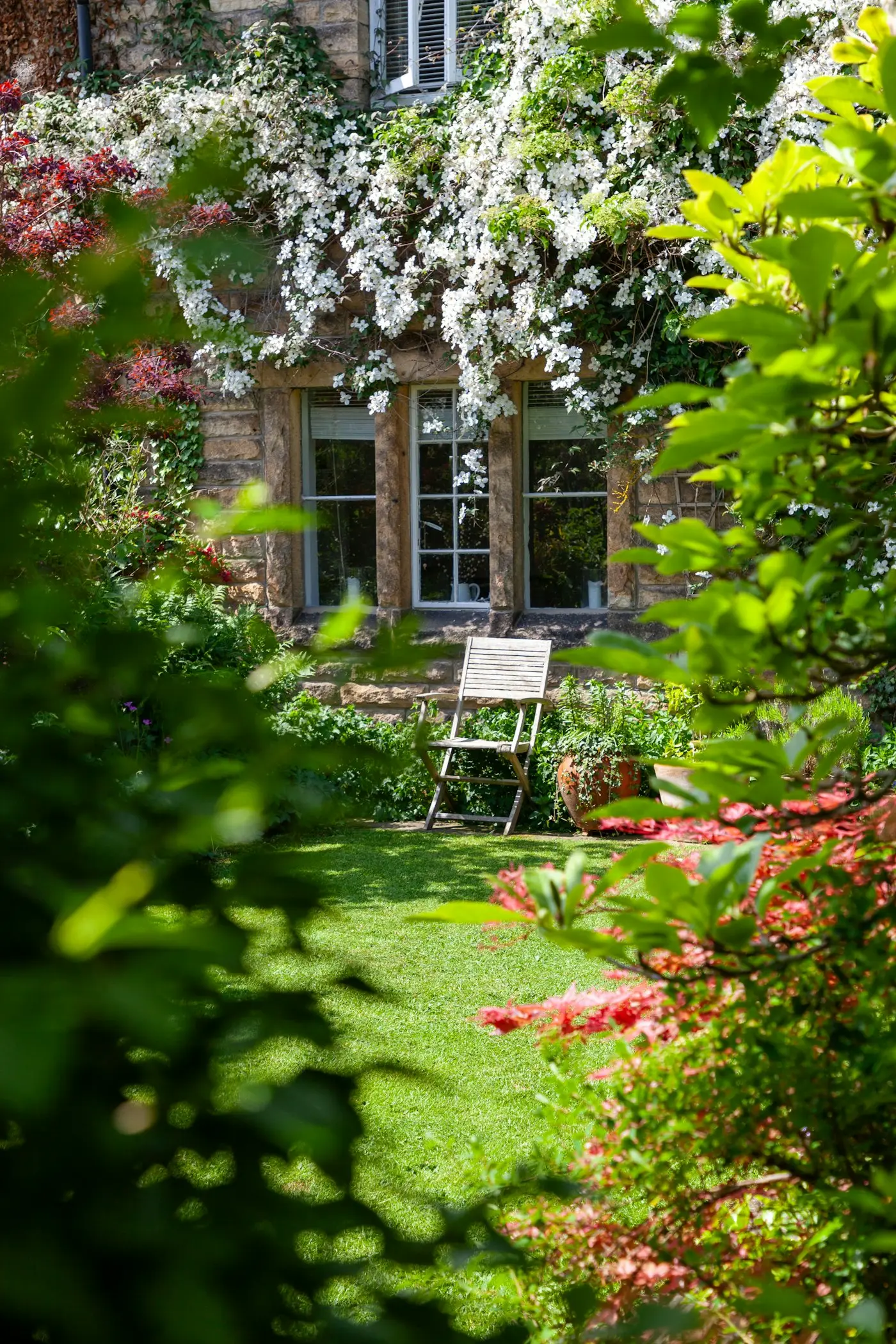
Wakefield's garden design market is shaped by two things that rarely sit together in the same city: a serious arts institution and a working-class landscape with deep roots. Yorkshire Sculpture Park, in the grounds of the Bretton Hall estate just outside the city, has been one of the UK's most visited open-air art venues since the 1970s. Its influence on the surrounding area is real - Wakefield homeowners who have spent afternoons watching how Henry Moore or Barbara Hepworth bronzes sit in the landscape bring a different visual sensibility to their own garden projects than those who have not. At the same time, the district's mining heritage - Featherstone, Castleford, Normanton, Hemsworth - produced communities with strong productive garden traditions and a practical no-nonsense attitude to outdoor space that shapes what many Wakefield clients actually want from a designer.
The result is a design market that runs from practical family gardens on the newer Durkar and Kettlethorpe estates through to ambitious sculptural schemes on the large Victorian villa plots of Sandal and the rural villages of Crofton and Heath. A designer who covers Wakefield needs to be comfortable across that range, and the best local designers are.
Wakefield's Landscape: Vale of Calder to the Pennine Fringe
Wakefield Metropolitan District covers a large and varied area. At its northern and western edges - toward Horbury, Ossett, and Dewsbury - the land rises toward the Pennine fringe, with more varied topography and the millstone grit soils that characterise the upland West Yorkshire landscape. Through the Vale of Calder itself, the land is relatively flat, following the course of the River Calder westward from its junction with the Aire at Castleford. Wakefield city sits on low ground beside the Calder, with the southern suburbs of Sandal climbing onto slightly higher Coal Measures ground.
Most residential gardens in the Wakefield area sit on Coal Measures geology: the alternating clays, sandstones, and coal seams laid down during the Carboniferous that underlie much of West and South Yorkshire's former mining district. The soils produced by these rocks are typically heavy, slow-draining clays that are fertile when managed well but can be difficult to work and prone to waterlogging in wet winters. Understanding this soil character is fundamental to any design project in the Wakefield area.
Wakefield's Soils and What They Mean for Planting
The Coal Measures clay that dominates Wakefield's soil profile is one of the heavier growing media in Yorkshire. When wet - which in a Wakefield winter can mean most of October through to March - it is cold, heavy, and effectively impermeable. When dry, it can shrink and crack to a degree that stresses plant roots. Neither condition is ideal, but both can be managed with the right approach at the design stage.
The key interventions are: organic matter incorporation (composted bark, garden compost, or well-rotted manure dug into planting beds before planting), which improves drainage and aeration over time; raised beds for any kitchen garden areas, which bypass the clay issue entirely; and careful plant selection that favours species with good wet-soil tolerance for the heavier parts of the plot. Raised beds for vegetables are not optional on Wakefield clay - they are effectively essential for growing anything other than the most robust brassicas and leeks.
Clay soil: the case for patience and organic matter
Wakefield's coal-measure clays respond very well to consistent organic matter application over several years. A garden that receives a 5-7cm mulch of composted bark each spring, every year for 3 to 5 years, will have noticeably better drainage and workability than it did at the start of the programme. This is not a quick fix, but it is a permanent one that improves the garden's long-term growing capacity without the ongoing cost of drainage infrastructure. A good designer will incorporate a soil improvement plan as part of the design process.
What Garden Design Costs in Wakefield
| Scope | Typical Cost | What's Included |
|---|---|---|
| Concept drawings only | £400-£850 | Site visit, measured survey, initial concept sketches. Good starting point before committing to a full design. |
| Full design (plan only, no build) | £600-£2,200 | Measured survey, scaled planting plan, hard landscaping layout, materials specification, plant list. |
| Small to medium garden (central Wakefield, inter-war estates) | £4,500-£10,000 | Design and build. Typically 60-150 sqm. Patio, paths, planted borders, structural planting, lawn area. |
| Larger suburban garden (Sandal, Crofton, Horbury, Durkar) | £10,000-£20,000 | Design and build. Typically 150-300 sqm. More extensive hard landscaping, sculpture or water feature integration, kitchen garden area, comprehensive planting. |
| Large detached property (rural villages, large Sandal plots) | £20,000-£35,000+ | Full design and build on larger plots. May include significant drainage works, specimen tree planting, formal structure planting, and sculptural focal points. |
| Soil improvement and drainage (before design) | £1,500-£5,000 | French drains, raised bed construction, organic matter incorporation. Often the necessary first step on severely waterlogged clay sites. |
Wakefield's design costs are influenced by clay soil management requirements. Projects that require drainage work before any design elements can succeed will see that reflected in the total cost. It is worth budgeting for drainage at the outset rather than discovering the need for it after planting has already been done. See our Yorkshire garden landscaping cost guide for a broader breakdown.
The Yorkshire Sculpture Park Influence on Wakefield Garden Design
Yorkshire Sculpture Park is one of the most visited outdoor art venues in the UK, and its presence on Wakefield's doorstep has had a genuine effect on how local homeowners think about outdoor space. Regular visitors to YSP develop an intuitive understanding of how sculpture functions in landscape: how scale and material affect a piece's relationship with its setting, how sightlines and approach routes change how you encounter a work, and how the best outdoor art pieces reveal different aspects of themselves as you move around them.
This translates into domestic garden design in several ways. Wakefield clients are, on average, more receptive to sculptural focal points as design elements than clients in many other Yorkshire cities. They are also more likely to have opinions about proportion and the relationship between hard and soft elements. A designer working in Wakefield should be prepared for clients who are visually articulate and who may reference specific YSP pieces when describing what they want - or what they do not want. The best outcome is to use that visual literacy as a positive design conversation, not to treat it as a client management problem.
In practical terms, Wakefield gardens with sculptural ambitions need a designer who thinks about the setting as much as the object: where will the piece be seen from first, how does the approach route work, what is the backdrop (wall, hedge, open sky?), and how does the scale of the piece relate to the surrounding planting? A badly placed sculpture in a garden is just as wrong as a badly placed one at YSP.
Garden Design Across the Wakefield District
Sandal and the southern suburbs
Sandal has the highest concentration of large Victorian villa-style properties in the Wakefield area, with substantial plots that often include mature trees, established hedges, and the remnants of earlier formal garden structures. Redesigning these gardens requires decisions about what to keep and what to start again - a mature copper beech or a well-established yew hedge is a significant asset that should only be removed for compelling design reasons. Many Sandal gardens benefit from a partial redesign that builds on the existing structure while updating the planting scheme and adding contemporary elements. The large plots suit sculptural focal points particularly well.
Crofton, Heath, and the rural villages
The villages to the south and east of Wakefield - Crofton, Heath, Ryhill, Wintersett - have a mix of older stone cottage properties and newer detached houses, many with generous plots. Heath village in particular is notable for its well-preserved 18th and 19th century character; garden design in this context needs to be sympathetic to the historic setting while still meeting contemporary functional requirements. Crofton's newer development areas have more scope for contemporary design approaches.
Durkar, Kettlethorpe, and newer estates
Wakefield's newer residential estates to the south-west have a strong demand for family-focused garden design: good-quality paving for outdoor entertaining, safe and practical surfaces for children, low-maintenance planted areas, and outdoor lighting. These are practical, use-focused briefs that reward designers who can deliver functional clarity and good material quality without over-complicating the design concept. On newer-build plots, the main design challenge is often that the garden starts as a blank slate - flat, poorly drained, with no existing structure - which requires building all the design interest from scratch.
Horbury and the Pennine fringe
Moving west from Wakefield toward Horbury and Ossett, the topography becomes more varied and the soil character changes toward the millstone grit that dominates further west in Kirklees. Gardens in this area face different conditions from the Vale of Calder - more rainfall, more slope, and sometimes more acid soils. Horbury has a mix of older stone-built properties and newer developments, and garden design here bridges the Wakefield and Kirklees design geographies.
What does a good garden designer do that a landscaper cannot?
A garden designer creates the spatial plan: how the garden is laid out, where focal points sit, how spaces connect, what the proportions feel like, which plants to use and why. A landscaper builds it. These are genuinely different skills. For a Wakefield garden with ambitions for sculptural elements, considered planting, and a coherent design concept, a designer is worth the fee. For a straightforward patio and border refresh on a plot with a basically sound layout, a trusted local landscaper may be all you need. Our garden design service can help you decide which approach suits your project.
Ready to design your Wakefield garden?
Tell us about your plot and we put your enquiry in front of local designers who cover Wakefield and the WF postcode area.
Start the assessmentFrequently Asked Questions
How much does garden design cost in Wakefield?
For a typical Wakefield garden design and build, expect to pay £5,000 to £14,000 for a medium-sized garden. Larger detached properties in Sandal, Crofton, or Horbury run from £13,000 to £25,000 or more. Victorian and inter-war gardens in central Wakefield areas typically cost £4,000 to £9,000. Design-only fees are usually £600 to £2,200. Clay soil drainage work may add to the overall budget.
What plants grow well in Wakefield's clay soil?
Astilbe, Persicaria, Ligularia, Hemerocallis (daylily), Hosta, Rodgersia, Cornus (dogwood), Weigela, and most roses all perform well in Wakefield's fertile coal-measure clay. Mediterranean drought-tolerant plants will struggle without raised beds with free-draining compost. Raised beds for vegetables are effectively essential for productive growing on heavy clay.
How does the Yorkshire Sculpture Park influence Wakefield garden design?
Regular YSP visitors develop an intuitive understanding of how sculpture and designed landscape interact. Wakefield clients are typically more receptive to sculptural focal points, more visually articulate about proportion and scale, and more likely to have specific aesthetic references. A good Wakefield designer will use this visual literacy as a positive design conversation - treating it as an asset, not a complication.
Do I need planning permission for garden changes in Wakefield?
Most domestic garden landscaping does not require planning permission. Standard permitted development limits apply: walls over 1 metre adjacent to a highway, hard surfaces on front gardens over 5 sqm using non-permeable materials, and works on listed buildings require consent. The district contains conservation areas in central Wakefield, Sandal village, and some rural settlements. Check with Wakefield Metropolitan District Council before proceeding if your property may be within a conservation area.
What garden style works best in Wakefield?
Wakefield's range of property types supports a wide range of styles. Contemporary gardens with strong structural planting and sculptural elements suit the larger Sandal and Crofton properties. Practical family gardens with good entertaining spaces and low-maintenance planting suit the newer Durkar and Kettlethorpe estates. Productive kitchen gardens are popular across all property types. See our hard landscaping guide for Yorkshire for material recommendations that suit Wakefield's clay conditions.
How do I deal with clay soil in my Wakefield garden?
Incorporate generous organic matter into planting beds before planting; install French drains on sites with serious waterlogging; use raised beds for kitchen garden areas; and specify permeable paving. Annual mulching with composted bark, repeated over 3 to 5 years, is the most cost-effective long-term improvement for Wakefield clay gardens.
How long does a garden design project take in Wakefield?
From initial site visit to completed garden, allow 3 to 9 months. The design phase typically takes 4 to 10 weeks. Hard landscaping takes 1 to 4 weeks for a typical garden. Planting is best done in autumn or spring. Wakefield's clay soils can remain cold and wet late into spring - waiting until the soil has warmed before planting perennials is worth the patience.
Can I create a productive garden in Wakefield?
Yes - Wakefield's climate suits a wide range of food crops, and the district has a strong productive growing tradition. Raised beds are essential on clay soil for vegetable growing. A designed kitchen garden on a Wakefield plot can include raised beds, a greenhouse or cold frame, fruit trees against south-facing walls, soft fruit, and a composting area. The relatively flat Vale of Calder topography makes laying out a productive garden particularly straightforward.
For regular garden upkeep after your design is complete, see our guide to finding gardeners in Wakefield - what maintenance costs across WF postcodes, and how Coal Measures clay shapes ongoing care.