Garden Privacy in Yorkshire: Screening, Hedges and Trellis Options (2026)
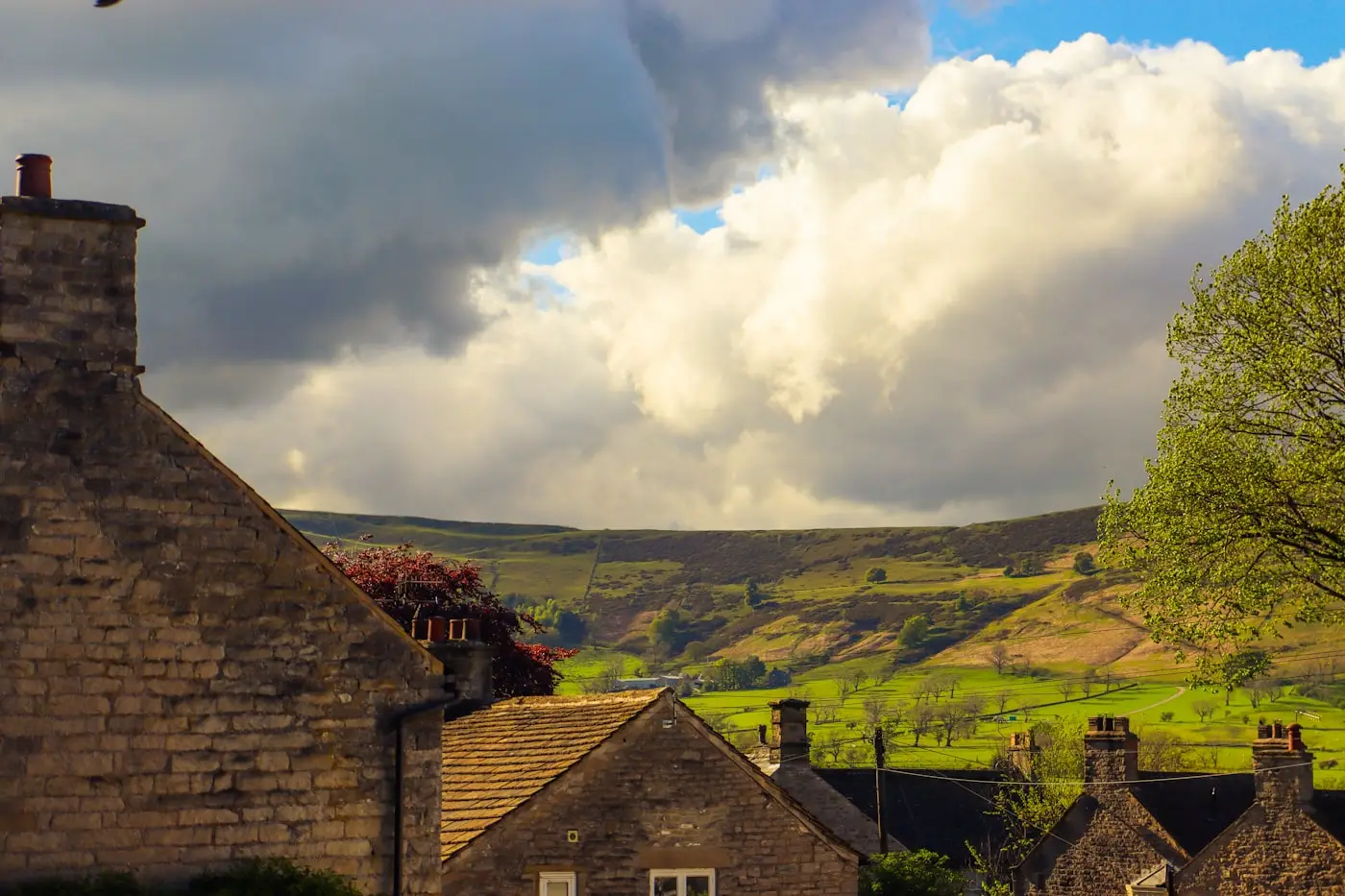
Yorkshire has a lot of houses built close together. Victorian and Edwardian terraces in Bradford, Leeds, Hull, and Sheffield put rear gardens within easy view of neighbours on three sides. Post-war semi-detached estates are hardly more generous. New-build developments in towns like Selby, Harrogate, and Beverley often place gardens close to upstairs windows. Getting privacy in a Yorkshire garden is a genuine challenge for a significant proportion of homeowners.
This guide covers the realistic options: what plants grow fast enough in Yorkshire to be genuinely useful for screening, how structures (trellis, fencing, pergolas) work alongside planting, what everything costs, and what the planning rules actually say about how high you can go. For a broader look at screening approaches specifically - from trellis and willow hurdles to living walls - the garden screening ideas guide for Yorkshire covers the full range of options at different price points.
Why Yorkshire Gardens Have a Particular Privacy Problem
The density of housing in Yorkshire's major towns and cities is a direct consequence of the industrial history of the county. Mill towns like Huddersfield, Halifax, and Keighley were built to house large workforces in a small area, producing the back-to-back and terraced houses that still characterise much of West Yorkshire's residential fabric. Even in areas built more recently, land values in and around Leeds, Sheffield, and York have driven dense development that leaves garden areas small and overlooked.
Back-to-back houses present a particular challenge. The rear garden - often a short yard or small plot - is overlooked from the house behind, from houses on either side, and sometimes from upstairs rooms at the rear of the same terrace. Conventional fencing at 1.8m solves the ground-level problem but does nothing for overlooking from upstairs windows.
New-build developments sometimes site windows of adjacent houses so that they face each other across narrow side passages or look down into rear gardens. This is increasingly common as developers work to maximum plot density. Yorkshire's planning authorities have guidance on overlooking (a minimum separation of around 21 metres is the general principle for rear-facing windows in many Local Plans), but this is not always enforced strictly, and older property has no such protection.
Fast-Growing Evergreen Screening: The Key Options
The most-asked question is always about speed. Which hedge can I plant now and have proper screening from in two or three years rather than ten? The honest answer is that there is a genuine trade-off between growth speed and long-term manageability. The fastest-growing plants are also the ones most likely to cause future problems if not maintained correctly.
Cherry Laurel (Prunus laurocerasus)
Cherry laurel is the workhorse of the Yorkshire privacy hedge. It grows at 45-60cm per year in reasonable conditions, is fully evergreen with large glossy leaves, tolerates shade well, and copes with Yorkshire's clay soils better than many alternatives. A 60cm plant from a nursery will be at 1.8m in 2-3 years under good growing conditions. It responds well to trimming and can be maintained at any height from 1.5m to 4m.
The downsides: it is a large-leaved plant, so it looks slightly coarse when regularly trimmed (the cut leaves turn brown at the edges). It spreads outward as well as upward, so a laurel hedge takes up 60-90cm of ground width at the base. And it is not the most exciting plant aesthetically. But for straightforward, fast, evergreen screening on a Yorkshire clay soil, it is probably the most reliable choice available.
Cost: £5-12 per 60-90cm plant, planted at 2-3 per metre. A 10-metre hedge at 2-metre spacing costs £100-240 in plants plus labour. Alternatively, instant semi-mature laurel hedging at 1.2-1.8m ready-grown costs £30-70 per metre plus labour - expensive upfront but provides immediate screening.
Portuguese Laurel (Prunus lusitanica)
Slightly slower than cherry laurel (30-45cm per year) but more refined in appearance, with smaller leaves, reddish stems, and a denser, more elegant habit. It is also more tolerant of alkaline soils and exposed conditions, making it a better choice for gardens in limestone areas of North Yorkshire (Harrogate, Ripon, the Yorkshire Dales) where cherry laurel sometimes struggles. It is evergreen and can be clipped formally or left to grow in a more natural shape.
Hornbeam (Carpinus betulus)
Hornbeam is not evergreen - it is deciduous - but it retains its dead golden leaves through most of the winter, providing year-round visual screening even when technically leafless. This characteristic makes it one of the most useful deciduous hedging plants for privacy. It grows at 30-40cm per year, is very tolerant of Yorkshire's clay soils, copes well with exposed and semi-shaded conditions, and is much more manageable long-term than any conifer.
For gardeners who want a more natural, less formal appearance, a hornbeam hedge trimmed once a year in late summer is an excellent choice. It is slower than laurel to establish as a privacy screen, but less demanding over its lifetime. It also supports far more wildlife than an evergreen screen.
Beech (Fagus sylvatica)
Similar in character to hornbeam: deciduous but leaf-retaining through winter, 30-40cm per year growth, very effective once established. Beech prefers well-drained soil and struggles more than hornbeam on heavy Yorkshire clay with poor drainage. On free-draining soils (sandy loams, chalky soils in East Yorkshire) beech is excellent. On the wet clay soils of West Yorkshire, hornbeam is generally more reliable.
Thuja Plicata (Western Red Cedar) - The Leylandii Alternative
If you want fast evergreen screening but are wary of leylandii's reputation, thuja plicata is the best alternative. It grows at 40-60cm per year (slower than leylandii but still fast), has a similar dense, feathery evergreen appearance, smells pleasantly of cedar, and - critically - responds much better to hard trimming than leylandii, which can brown badly if cut back into old wood. Thuja can be maintained at any height from 1.5m upward with annual trimming.
Thuja is sometimes available from Yorkshire nurseries and online hedging suppliers at similar prices to laurel: £5-12 per plant, planted at 60-90cm apart.
Bamboo (Contained)
Clumping bamboo (Fargesia species) provides outstanding screening - evergreen, dense, upright growth to 2-4m depending on species, with a contemporary appearance that works well in modern Yorkshire gardens. The key rule is to use clumping varieties only. Running bamboo (Phyllostachys) spreads aggressively by underground rhizome and can cause expensive disputes with neighbours if it crosses the boundary line.
Fargesia murielae, Fargesia nitida, and Fargesia robusta are the most reliable for Yorkshire conditions. They are hardy down to -20C, tolerant of wind, and grow well in partial shade. Plant in containers or with a solid root barrier installed around them (60cm deep polypropylene sheeting) as a precaution even with clumping varieties.
Trellis with Climbers: Faster Privacy, Lighter Weight
For homeowners who want screening faster than any hedge can provide, trellis with established climbers is the quickest option that still looks like a garden rather than a construction site.
A trellis panel fixed to the top of an existing 1.8m fence adds 30-60cm of height and provides a structure for climbing plants within a season. The total height (fence plus trellis) of 2.1-2.4m is above the standard 2m planning permission threshold, but many councils treat lightweight open trellis differently from solid fencing - check locally before installing anything above 2m.
The right climbers for Yorkshire conditions:
Clematis montana is vigorous, hardy, and covers a large area quickly. It flowers profusely in May-June (pink or white depending on variety) and provides good summer screening. It dies back slightly in winter on exposed Yorkshire sites. Prune immediately after flowering to keep it manageable.
Climbing roses provide summer colour and fragrance, and can be trained to a trellis or fence effectively. Rosa 'New Dawn', 'Climbing Iceberg', and the repeat-flowering varieties like 'Compassion' all perform well in Yorkshire. They are deciduous, so winter screening is limited, but they combine well with an evergreen hedge behind.
Honeysuckle (Lonicera) grows vigorously, tolerates shade, is fragrant, and provides wildlife value. It is deciduous. For a shaded north-facing fence, Lonicera japonica (Japanese honeysuckle) is semi-evergreen and covers ground quickly.
Ivy (Hedera) is fully evergreen and grows in conditions that defeat most other plants - deep shade, clay soil, dry conditions under a tree canopy. It provides year-round screening and wildlife habitat. The downside is that mature ivy on fences can be heavy and increase wind loading, which is a concern in exposed Yorkshire gardens.
Pergolas and Overhead Structures: Dealing with Upper-Floor Overlooking
Boundary hedges and fencing address overlooking from ground level. Upstairs windows are a different problem. If a neighbour's first-floor or second-floor window looks directly into your garden and seating area, no amount of boundary planting at 2m will fix it - you would need trees 4-6 metres high, which take years to establish and can cause issues of their own with planning, tree roots, and shade.
A pergola over the main seating area provides overhead screening without touching the boundary. Even a basic timber pergola with climbing plants creates a shaded canopy that blocks the view from above while leaving the garden open to the sides. Shade sails are a faster and cheaper alternative - stretched fabric panels that provide overhead cover and partial privacy from above.
A simple timber pergola (3m x 3m) costs £800-2,000 depending on the timber grade and whether you want it professionally installed or as a DIY flatpack. A freestanding pergola on a patio does not typically require planning permission if it is under 3m in height. Adding a solid roof element may change the planning position, so check before committing to anything more substantial.
Pergola climbers that work well in Yorkshire: Wisteria (spectacular but slow to establish, needs 3-5 years before first flowers), Humulus lupulus (hop, grows fast and is native), grape vines (less reliably productive in Yorkshire than further south, but the foliage is attractive and covers a pergola in one season), and the reliable Clematis montana.
Cost Comparison: Instant Hedging vs Grown from Small
| Approach | 10m hedge - plant cost | 10m hedge - total installed | Time to effective screening |
|---|---|---|---|
| Bare-root whips (hornbeam/beech) | £15-50 | £200-400 | 4-6 years |
| Small pot-grown plants (60-90cm) | £100-250 | £350-650 | 3-5 years |
| Medium pot-grown (90-120cm) | £200-500 | £500-900 | 2-3 years |
| Instant/semi-mature laurel (1.2-1.8m) | £400-800 | £700-1,400 | Immediate to 1 year |
| Instant root-balled (1.8-2.5m) | £800-2,000 | £1,400-3,000 | Immediate |
The best value for most Yorkshire homeowners is medium pot-grown plants (90-120cm). They establish reliably in Yorkshire's climate, take 2-3 years to reach effective screening height, and cost a fraction of instant hedging. Only if you need screening this season is the premium for instant hedging justified.
Planning Rules for Boundary Structures Over 2m
The key rule in England: fences, walls, and gates up to 2 metres do not require planning permission in most residential locations. Over 2 metres, you need to apply. Adjacent to a highway (road or public footpath), the limit is 1 metre.
Trellis is a grey area. If it is lightweight and open (less than 50% solid), some local planning authorities treat it differently from solid fencing and permit it at heights slightly above 2m. This varies by council and sometimes by inspector, so do not assume - ask your local planning authority before installing anything above 2m.
Hedges are not subject to planning permission in the same way as fences. You can plant a hedge at any height in principle. However, under the Anti-social Behaviour Act 2003, if a hedge grows over 2 metres and causes a "reasonable obstruction" to a neighbour's light or amenity, the council can serve a remediation notice requiring it to be cut back. This applies to evergreen and semi-evergreen hedges specifically (leylandii disputes were the driving force behind the legislation). The process is slow (councils are reluctant to act) but it exists.
In conservation areas, national parks (including the Yorkshire Dales and North York Moors), and Areas of Outstanding Natural Beauty, additional restrictions may apply to structures even below 2m. Check with North Yorkshire Council or the relevant park authority.
Our border and planting service can help with hedge installation and plant selection. For fencing, see our fencing service. Our garden fencing guide covers the structural options in more detail.
Frequently Asked Questions
What is the fastest growing privacy hedge for a Yorkshire garden?
Cherry laurel gains 45-60cm per year and is the most reliable fast evergreen for Yorkshire clay soils. Portuguese laurel is slightly slower but more tolerant of exposed conditions and alkaline soils. For deciduous screening with winter leaf retention, hornbeam is the best Yorkshire choice. Thuja plicata is the most manageable fast conifer, growing 40-60cm per year and responding well to trimming.
Is leylandii a good choice for Yorkshire gardens?
Leylandii grows 60-90cm per year and screens quickly, but its ultimate size (25-35 metres left uncut) makes annual maintenance non-negotiable. If that lapses, cutting back becomes very difficult. Thuja plicata is a better alternative: similar growth rate, denser appearance, more pleasant scent, and tolerates hard trimming better. Hornbeam and beech are better still for long-term manageability.
How do I screen an overlooked garden quickly without planting?
Trellis fixed to the top of an existing fence can be installed in a day and planted with climbers that cover it within one season. Annual climbers like sweet peas and morning glory cover a trellis rapidly in summer. Clematis montana and honeysuckle establish permanent coverage within 2-3 years. Bamboo in large containers provides instant screening from eye level if you start with mature plants.
Do I need planning permission for a garden screen over 2 metres?
Yes, for solid fences and walls over 2 metres. Lightweight open trellis is a grey area - some councils permit it above 2m if it is less than 50% solid. Hedges are not subject to planning permission rules in the same way, but a hedge over 2m that blocks a neighbour's light can be subject to the high hedge legislation. Always check with your local planning authority before installing anything above 2m. In conservation areas, check even for structures below 2m.
What is the cost difference between instant hedging and growing from small plants?
Instant semi-mature laurel at 1.2-1.8m costs £700-1,400 installed for a 10-metre hedge. Medium pot-grown plants at 90-120cm cost £500-900 installed and provide effective screening in 2-3 years. Small plants from bare-root whips cost £200-400 installed but take 4-6 years to screen effectively. For most homeowners, medium pot-grown plants offer the best balance of cost and waiting time.
Can I use bamboo as a privacy screen in a Yorkshire garden?
Yes, but use clumping Fargesia varieties only, not running Phyllostachys bamboo. Fargesia grows to 2-4m, is fully hardy in Yorkshire, provides excellent year-round screening, and does not spread invasively. Plant in large containers or with a root barrier installed. A container-grown Fargesia at 1.5-2m costs £30-60 per plant and provides screening immediately at that height.
What can I do if a neighbour's upper-floor window overlooks my garden?
Boundary hedges and fences at 2m address ground-level overlooking only. For upstairs windows, the most practical solution is an overhead structure over the main seating area: a pergola with climbers, or shade sails, blocks the view from above without touching the boundary. A 3x3m pergola costs £800-2,000 installed and does not usually require planning permission below 3m in height.
Need help with screening or hedges in your Yorkshire garden?
60-second assessment. If a local gardener takes your enquiry, they call you with a price.
Start the assessment