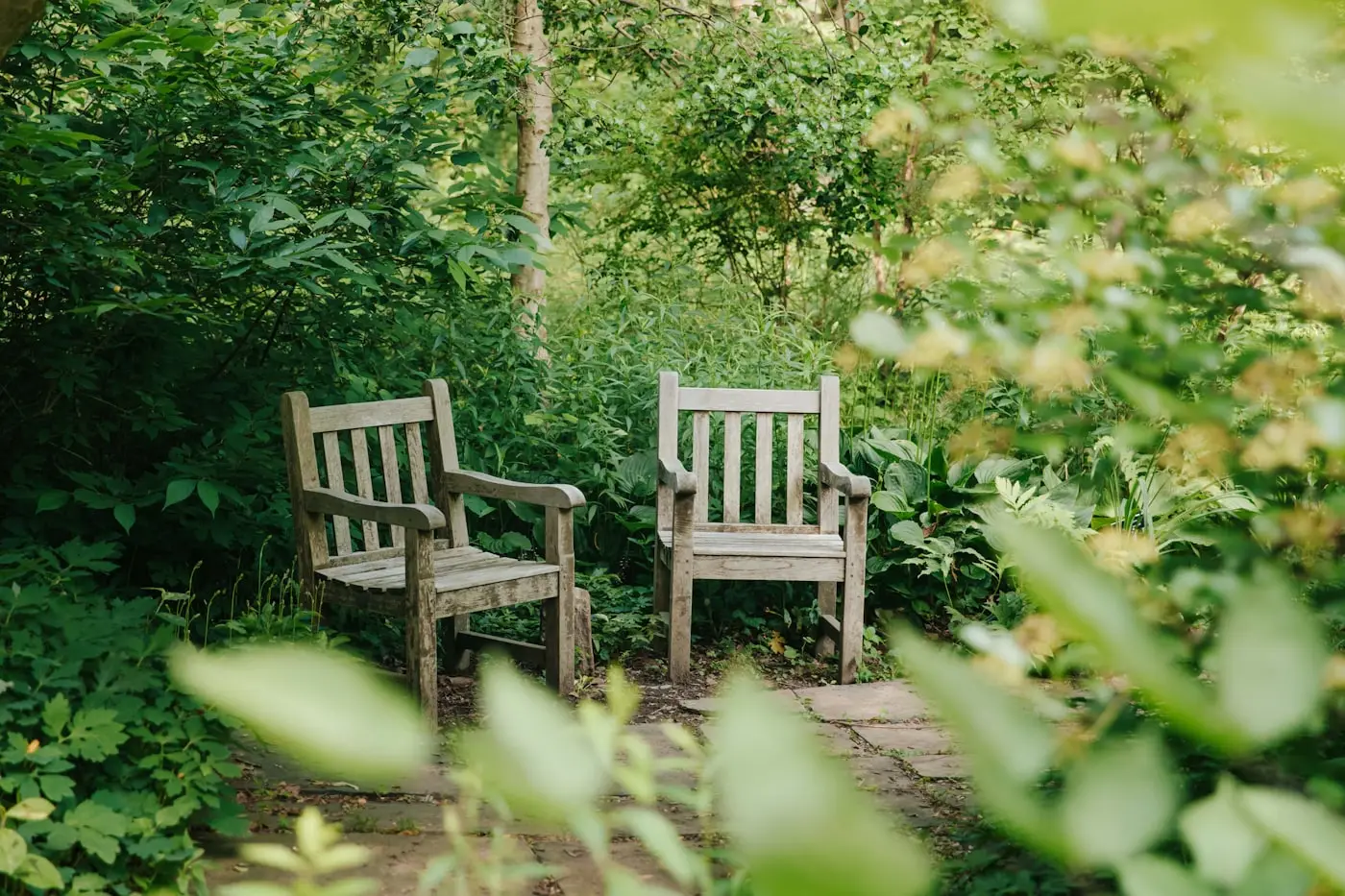
Your garden does not have to look immaculate to need a proper tidy. Most Yorkshire homeowners who search for a garden tidying service near them are dealing with the same basic situation: the garden has slipped behind over winter, or work got in the way, or a few missed weeks of maintenance has turned into a few missed months. The borders are overgrown. The lawn has gone to seed in patches. The paths are lost under moss and leaves. It is not a jungle. But it is past what you want to deal with on a Saturday afternoon with a pair of secateurs and a bin bag. That is exactly what a one-off garden tidy-up is for. This guide covers what you should expect from a garden tidying service in Yorkshire, what it costs, when to book, and how to tell a good local gardener from a bad one.
What Does a Garden Tidy-Up Service Include?
A garden tidy-up is a catch-all visit to bring your outdoor space back to a manageable state. It is not a single defined service with a fixed scope - the work varies with the season, the state of your garden and what you ask for - but most tidy-up visits cover the same core tasks.
Lawn work
If your lawn has not been cut recently, the first job is usually mowing. For a lawn that has got very long, the gardener may need to cut it in two passes - a high cut first to take the top off, then a lower pass to get it to a reasonable length. Cutting too low in one go scalps the grass and leaves it looking worse than before. After mowing, edging along borders and paths makes the biggest visual difference for the least time: a clean edge transforms how a lawn looks even when the lawn itself is not in great shape. Strimming around fence bases, walls and around tree bases follows.
Border weeding
This is usually the most time-consuming part of a tidy-up, especially if the borders have been left for a season or more. Annual weeds (chickweed, hairy bittercress, groundsel) pull out easily and come away clean. Perennial weeds with established root systems - bindweed, ground elder, creeping buttercup - take more time and may not be fully controlled in a single visit. A good gardener will tell you honestly if a border needs follow-up treatment rather than claiming the problem is solved after one pull-over. For persistent weed problems, a targeted treatment approach works better than repeated hand-weeding.
Cutting back shrubs and perennials
Overgrown shrubs, leggy perennials and spent flowering stems all get cut back as part of a standard tidy. The aim is not a full hard prune - that is a separate job with its own seasonal timing - but a tidy up of anything that is encroaching on paths, shading out other plants, or just making the border look messy. Roses that have put on vigorous growth, buddleia that has flopped, ornamental grasses that are going over - these all get a trim back to a tidy shape.
Sweeping and clearing
Fallen leaves, debris on paths and patios, moss on hard surfaces, dead flower heads, twigs and small branches - these all get swept and cleared. On a larger garden with tree cover, this alone can take an hour. Moss on paving and paths is swept back rather than pressure washed as part of a standard tidy; pressure washing is usually a separate job.
Waste removal
What happens with the green waste depends on the job and what you have agreed. For a light tidy, the gardener will often bag the waste for your council green bin or leave neat bags at the side for collection. For heavier jobs with more volume, they will usually take it away in their van and dispose of it at a licensed green waste site. This is priced separately - usually £30-£50 for a standard load. Always confirm before the gardener starts whether waste removal is included or quoted on top.
What a garden tidy-up does NOT include
Hedge trimming (usually a separate job), new planting, turf laying, hard landscaping, pressure washing, tree work, Japanese knotweed treatment or major shrub removal. If you want any of these alongside a tidy, mention them when you enquire so the gardener can price them into the visit.
How Much Does Garden Tidying Cost in Yorkshire?
Garden tidying in Yorkshire is priced either per hour or per visit, depending on the gardener and the job. For one-off tidy-ups, most gardeners prefer to give a fixed visit price once they have seen or heard a description of the garden. Hourly rates give you a working guide but the final cost depends on what you have.
| Garden tidy-up type | Typical Yorkshire price (2026) | Notes |
|---|---|---|
| Hourly rate | £25-£50/hr | One-off visits sit at the higher end. Contract rates lower. City locations (Leeds, Sheffield) toward upper end. |
| Small garden tidy (half-day) | £90-£160 | Terrace or small semi, well-maintained. 2-3 hours. |
| Medium garden tidy (half to full day) | £120-£240 | Average detached garden. More if borders are heavily overgrown. |
| Large garden tidy (full day) | £200-£350 | Large gardens or those left for a season. May need two people. |
| Seasonal tidy (spring or autumn) | £150-£300 | Includes cutting back, clearing, mulching borders. More involved than a standard tidy. |
| Waste removal | £30-£60 per load | Often quoted separately. Check upfront whether it is included. |
| Regular maintenance (fortnightly) | £35-£80 per visit | Medium garden, contract rate. Prevents need for catch-up tidies. |
For a broader picture of what local gardeners charge across Yorkshire, the gardener cost guide covers hourly rates, day rates and what different types of jobs typically cost. If your garden is past a tidy and closer to a clearance, the garden clearance cost guide has the right price range for that work.
What affects the final price?
Four things move the cost of a garden tidy more than anything else.
How long it has been left. A garden that was last tidied six months ago will take three times as long as one that was done three months ago. The difference between a one-month-behind garden and a one-year-behind garden is often the difference between a tidy and a clearance. Be honest when you describe the state of it.
Garden size. This sounds obvious, but a 10m x 10m garden and a 25m x 40m garden are not the same job even if they are both "a medium garden." Mention approximate dimensions when you enquire, or describe in other terms (small terrace, large detached, semi-rural plot).
Access. Carrying waste through a narrow side passage, up and down steps, or across soft ground all adds time. Victorian terraced gardens with access only through the house or a single side gate take longer to service than gardens with direct drive access. Mention access conditions when you ask for a quote.
Waste volume. If your tidy generates a lot of green waste, the time to bag it and the cost to remove it is part of the total. A heavily overgrown border that produces ten bin bags of cut-back material is a different job from a tidy sweep and deadhead that fills two.
When Is the Best Time to Book a Garden Tidy-Up?
The short answer is: book earlier than you think you need to. Yorkshire gardeners fill up quickly in spring, and if you want your garden sorted before the end of April, you often need to make contact in February or early March.
Spring tidy (March to April)
This is the most popular window for garden tidying across Yorkshire, and it makes sense. After winter, most gardens need a proper reset before the growing season gets underway. Borders have died back and dried stems need clearing. Lawns need their first cut and edges defined. Moss on paths and patios becomes visible. The spring tidy is also the point at which a lot of homeowners think about switching from one-off visits to a regular maintenance contract - once the garden is back under control, the argument for keeping it that way is easier to make. Book early if you want a March or April slot. Most local gardeners are taking bookings from January onwards for the spring rush.
Early summer tidy (June to July)
Growth in Yorkshire's wetter summers can be extraordinary. A garden that was tidy in April can look significantly worse by mid-June if growth has accelerated and visits have been missed. An early summer catch-up tidy is common in years when spring is wet and growth gets ahead of schedule. This window is easier to book than spring - gardeners generally have more availability - but popular ones still fill slots week by week.
Autumn tidy (October to November)
The other major booking window. Once the main growing season ends and perennials start dying back, an autumn tidy clears spent growth, removes summer debris, cuts back overgrown shrubs before winter, and leaves the garden in a tidy state through the colder months. For gardens with heavy tree cover, leaf clearance is the dominant job and can take several hours on a large plot. Autumn tidies also give gardeners a chance to note anything that will need attention in spring.
Winter (November to February)
The quietest period. If your garden needs attention between November and February, this is actually the easiest time to get a slot. Growth is minimal, the main jobs are leaf clearing and tidying any wind damage, and most local gardeners have more availability than at any other time of year.
What's Included in a Full Garden Clearance vs a Tidy-Up?
The distinction matters for the quote you get and the equipment the gardener brings. Treating a clearance job like a tidy and hoping for the best usually ends in a revised price on the day.
A garden tidy-up assumes the garden is manageable - it needs work but it is not out of control. A standard mower can cut the lawn. Shrubs need trimming rather than removing. Weeds are present but have not colonised large areas. One gardener can do the job in a half day to a full day.
A garden clearance is for gardens where the tidy framework does not apply. The lawn needs a brushcutter or heavy strimmer rather than a mower because the grass has gone to seed and is over knee height. There are bramble patches that have spread significantly. A large shrub has taken over a border and needs removing at the root rather than just cutting back. There is accumulated waste - old garden furniture, builder's rubble, dumped green waste - that needs sorting and removing. Garden clearance costs more because it takes longer, needs more powerful equipment, generates more waste, and is harder to price without seeing the job first.
If you are not sure which category your garden falls into, the safest approach is to describe the worst areas honestly and let the gardener advise. Most gardens that have been left for six months to a year sit somewhere between the two: not a full clearance, but a heavy tidy that takes longer and costs more than a standard visit. A gardener who quotes a flat rate without asking about the state of the garden is the one whose price is most likely to change when they arrive.
| Feature | Garden tidy-up | Full garden clearance |
|---|---|---|
| Lawn condition | Mowable with standard mower | Over-height, needs strimmer or brushcutter |
| Shrubs | Overgrown, need cutting back | Some need removing at root |
| Weeds | Present but manageable | Established, spreading, possibly invasive |
| Waste | Green waste from the tidy | Green waste plus possibly rubble, old furniture |
| Typical cost | £90-£350 | £200-£600+ |
| Time | 2-8 hours for one gardener | Half day to multiple days |
| Equipment | Mower, strimmer, hand tools | Brushcutter, chipper, skip or tipper run |
Garden Tidying Services by Region
Yorkshire is a big county with four distinct regions, and the garden tidying picture varies across them. Here is what gets booked in each area and what conditions typically look like.
North Yorkshire
North Yorkshire has the county's most varied garden conditions. On the moorland edges around Helmsley, Pickering and Kirkbymoorside, winters are long and hard - spring tidies often need to deal with significant die-back, frost damage on more tender plants, and lawns that have been under standing water through a wet winter. Gardens in the Dales and Howardian Hills are often larger than suburban equivalents elsewhere in the county, with bigger borders and established planting that produces more waste when it goes over.
Coastal North Yorkshire - Scarborough, Filey, Whitby - has its own character. Salt spray does real damage to exposed hedges through autumn and winter, and a spring tidy here will often involve clearing damaged hedge growth in addition to the standard border work. These towns also have a significant number of holiday-let gardens that need seasonal tidy-ups rather than regular maintenance contracts.
In the inland towns - Harrogate, Ripon, Northallerton, Bedale - the garden profile is more suburban, tidying demand is consistent through the season, and the spring rush is strong. Harrogate in particular has a high density of well-maintained gardens where expectations are high and people are used to paying for quality.
West Yorkshire
Leeds, Bradford, Halifax, Huddersfield, Ilkley, Keighley. West Yorkshire combines dense urban terraced housing with larger semi-rural properties on the outskirts. The terraced garden pattern - small rear yards, limited access, narrow snickets - is as common here as anywhere in the county. These gardens are small but access is what makes them take time: carrying waste out through the house or through a back entry that admits one person at a time adds significantly to the cost per square metre.
On the outer edges of West Yorkshire - Ilkley, Otley, Wetherby - gardens are larger, more traditional in character, and spring tidying demand is strong. These areas also have more rural gardens that have been left over the winter and need a proper seasonal reset before the growing season gets going.
South Yorkshire
Sheffield, Doncaster, Rotherham, Barnsley. South Yorkshire has a strong mix of suburban and semi-rural gardens. Sheffield in particular has a high proportion of garden per household - it is regularly cited as one of the most tree-covered cities in Europe - which means autumn leaf clearance is a significant job for many homeowners. Spring tidies in Sheffield often deal with the aftermath of significant leaf fall and the need to uncover borders that have been under leaf mulch through winter.
Doncaster and the Tickhill corridor include a number of larger rural plots and market garden edges where tidying jobs are bigger and more involved. Barnsley gardens follow the typical former mill-town pattern: terraced rear gardens in the town centre, larger semi-detached gardens in the outer suburbs.
East Yorkshire
Hull, Beverley, Bridlington, Driffield, Goole, Hornsea, Market Weighton, Pocklington. East Yorkshire's garden picture is dominated by the Wolds - rolling chalk hills with exposed gardens that get wind from the east, clay-heavy soils in the lowland areas, and a significant number of rural properties with large gardens that have sometimes been left for years.
Beverley has a strong regular-maintenance culture and a lot of well-established domestic gardens. Bridlington and Hornsea have coastal holiday-let patterns similar to North Yorkshire's coast. The agricultural villages across the Wolds often have large cottage gardens that need a full-day tidy at the start of the season rather than incremental visits through the year.
How to Find a Reliable Garden Tidying Service Near You
The basics apply everywhere: insurance, references and clarity on scope. But there are a few things that separate a gardener who will do a good job from one who will leave you with a revised price and a half-finished border.
Check insurance and waste disposal credentials
Public liability insurance protects you if the gardener damages your property or injures someone while working on your site. Ask for the actual certificate - the insurer name and policy number - not a verbal confirmation. Most reputable gardeners carry it as standard and will produce the certificate without any fuss. If they cannot or will not, that is a clear signal.
If waste is being removed from your garden, the gardener needs a valid Waste Carrier's Licence to legally transport and dispose of it. Without this licence, they are committing a criminal offence every time they take a load of green waste to a tip. Green waste dumped illegally - fly-tipping - can come back on you as the property owner in some circumstances. Ask for the licence number and check it against the Environment Agency register if you want to be sure.
Ask specific questions about the job
A gardener who asks you questions before quoting is a better sign than one who throws a number at you over the phone. The right questions are: how long has the garden been left? What is the worst area? Is there side access? Does waste need to be removed? What do you want kept? A gardener who answers those questions before asking them, or who quotes without asking them, is likely to revise the price on the day.
Get a fixed quote for large jobs
For any tidy-up that is likely to run to a full day or more, ask for a fixed price rather than an hourly rate. A good gardener can estimate time reasonably accurately once they know the garden. An hourly rate on a large or uncertain job is a blank cheque. If the gardener insists they cannot quote without seeing it - which is sometimes reasonable on genuinely overgrown gardens - ask for a fixed price after an in-person visit, not on the day of the work.
Check photos of recent local work
Ask for photos of gardens they have tidied recently - ideally before and after. This is not about being difficult; it is basic due diligence. A gardener who has done good work locally will have photos. One who has not, or who cannot produce them, may be newer to the trade or may have a reason for not showing their recent output.
DIY vs Professional Garden Tidying
This is not a sales pitch for always hiring a professional. For many people and many gardens, doing your own tidying is the right choice. It costs nothing beyond the tools you already own, gives you complete control over what gets cut and what gets kept, and for some people is one of the more satisfying ways to spend a weekend.
The case for a professional tidy-up is strongest in four situations.
You are behind and need to catch up quickly. A professional gardener with the right equipment can tidy in three hours what would take you a full weekend. If you have a garden that has slipped over winter and you want it back under control before a family event, a sale or just the start of the season, the time difference is significant.
The garden has got past what standard domestic equipment can handle. A petrol brushcutter, a commercial strimmer and a heavy-duty shredder make a different class of impact on an overgrown garden than a domestic mower and a pair of loppers. If the lawn has gone to seed, if there are brambles at the edges, if you have established weeds in borders that have been left for a season, professional equipment is faster and more effective.
You cannot do the physical work yourself. This is self-evident but worth saying. Garden tidying is physical. Bending, kneeling, lifting, dragging. If you have mobility issues, back problems or simply cannot manage sustained physical work outdoors, the comparison between DIY and professional is not really a cost comparison - it is a question of what is possible.
You want a reliable regular service. The most compelling long-term argument for a professional garden maintenance service is that it removes the decision from your week. You do not have to think about whether the lawn needs doing. It gets done. You do not fall behind and end up with a bigger job to catch up. For busy households, that reliability has real value.
The case for DIY is simply that it is cheaper if your time has lower opportunity cost, you enjoy it, and your garden is in a manageable state that domestic equipment can handle. If all three of those things are true, do it yourself. If any of them are not, the calculation shifts toward professional help.
What Happens After a Garden Tidy-Up?
A one-off tidy brings your garden back to a manageable state. What you do from there determines how long it stays that way.
For most homeowners who book a seasonal tidy, the most common outcome is either: (a) they do their own maintenance through the season and book another tidy next spring or autumn, or (b) they transition into a regular maintenance contract with the same gardener. Option (b) is usually cheaper in the long run, because a gardener visiting fortnightly keeps on top of growth week by week - weeds do not establish, borders stay tidy, the lawn never gets ahead of the mower. The cost of a fortnightly visit through the growing season is almost always less than the cost of a full tidy-up every few months.
If your garden also has weeds that came back quickly after the last tidy, targeted weed control treatment alongside regular maintenance is often the most cost-effective approach for persistent perennial weed problems in borders.
One thing worth doing after any professional tidy: have a walk around and note anything the gardener mentioned. Most good gardeners will flag issues they spotted during the visit - a shrub that should be moved, a fence post that is rotting, a patch of lawn that needs overseeding, a tree limb that is pressing on the roof. These are genuinely useful observations from someone who spent several hours looking closely at your garden. They are not always urgent, but they are worth writing down. If fence panels are looking tired after a few seasons, it is worth getting a separate quote for garden fencing repair or replacement - our fencing service covers Yorkshire boundaries - while the gardener has the boundary in view.
Frequently Asked Questions
How much does garden tidying cost in Yorkshire?
Garden tidying in Yorkshire typically costs £25-£50 per hour in 2026. A half-day tidy for a small to medium garden runs £90-£180. A full-day tidy for a larger garden or one that has been left for a season costs £175-£350. City areas (Leeds, Sheffield, Bradford) sit toward the upper end. Rural North Yorkshire is usually slightly lower. For a full comparison of gardener costs, see the gardener cost guide for Yorkshire.
What does a garden tidy-up service include?
A standard garden tidy-up includes lawn mowing and edge trimming, border weeding, cutting back overgrown shrubs and perennials, clearing leaves and debris from paths and patios, and bagging or removing the resulting green waste. Hedge trimming, new planting, hard landscaping, pressure washing and major structural work are usually priced separately. For persistent weeds, a weed control treatment can be added alongside the tidy.
What is the difference between a garden tidy and a full garden clearance?
A tidy is for gardens that are manageable but behind on maintenance - the lawn is long, the borders are weedy, paths need sweeping. A garden clearance is for gardens that have got significantly out of control: knee-high grass needing a brushcutter, established bramble growth, large shrubs that need removing rather than trimming, or accumulated waste. If your garden has been left for more than a year, it probably needs a clearance rather than a tidy. Describe the worst areas when you enquire and the gardener will advise.
How often should I get my garden tidied?
Most Yorkshire gardens benefit from a professional tidy two to four times per year: a spring reset in March or April, an optional early summer catch-up in June or July, an autumn clearance in October or November, and possibly a light winter check. If you have a regular maintenance contract with fortnightly or monthly visits, you rarely need a separate one-off tidy because the garden stays manageable throughout the season.
How do I find a reliable garden tidying service near me in Yorkshire?
Ask for public liability insurance documentation, a Waste Carrier's Licence for any job involving green waste removal, and photos or references from recent local work. A gardener who asks you specific questions about the garden before quoting - access, garden size, how long it has been left, what waste needs to go - is more likely to give you an accurate price than one who quotes blind. Use the estimate form on this site to put your enquiry in front of a local Yorkshire gardener covering your postcode.
What is the best time of year to book a garden tidy-up in Yorkshire?
Spring (March to April) is the busiest window, and local gardeners fill up fast. If you want an April start, make contact in February. Autumn (October to November) is the second busiest period. Summer tidy-ups can usually be booked within a week or two. Winter is the quietest time and the easiest to get a slot.
Can a garden tidy service handle a really overgrown garden?
It depends on how overgrown. A standard garden tidy can handle brambles at the border edges, overgrown shrubs, weedy borders and long grass. If the lawn needs a brushcutter rather than a mower, or if there are dense bramble patches covering a large area, that tips into clearance territory with different equipment and a higher cost. Describe the worst areas honestly and the gardener will tell you whether it is a tidy or a clearance job.
How long does a garden tidy take?
A small garden tidy takes two to three hours for one gardener. A medium garden that needs a proper seasonal reset takes three to five hours. Large gardens or those left for several months usually need a full day (six to eight hours) for one person, or a half day for two people working together. Waste removal adds thirty minutes to an hour depending on volume.
Do garden tidying services in Yorkshire remove the waste?
Many do, but it is usually priced separately from the labour. For lighter tidies, the gardener will often bag waste for your council green bin. For heavier jobs with more volume, they take it away and dispose of it at a licensed green waste site - typically priced at £30-£60 for a standard load. Always confirm before work starts whether waste removal is included or quoted separately.
Is it worth getting a regular garden maintenance contract instead of one-off tidies?
Yes, if you want to keep your garden consistently tidy through the growing season. A regular maintenance contract with fortnightly or monthly visits means you never need a big catch-up tidy because the garden stays under control week by week. Fortnightly visits for a medium garden cost £35-£80 per visit. One-off tidies cost more per hour and you still end up with a larger job after each gap.
Do garden tidying services cover weeding?
Yes - border weeding is a core part of any garden tidy. Annual weeds are pulled or hoed out in a standard visit. Deep-rooted perennial weeds (bindweed, ground elder, couch grass) take more time and may need follow-up visits. Invasive species like Japanese knotweed require specialist licensed treatment and are not part of a standard tidy-up service.
What is included in a garden cleaning service?
A garden cleaning service and a garden tidy-up service are usually the same thing in practice. The scope covers mowing, edging, weeding, cutting back, sweeping hard surfaces and clearing debris. Pressure washing of patio and path surfaces is sometimes included but is often quoted separately as it is more time-intensive. If you have specific tasks in mind alongside the tidy - fence painting, patio jet wash, moss treatment - mention them when you enquire so the gardener can price them into the visit.
Are garden tidying services available across all of Yorkshire?
Yes. Garden tidying services cover all areas of Yorkshire including North, West, South and East Yorkshire. Coverage spans major cities (Leeds, Sheffield, Bradford, Hull), market towns (Harrogate, Beverley, Scarborough, Ripon), and rural areas across the county. Use the form on this site to check availability for your specific postcode.
How do I find garden tidying near me in Yorkshire?
Use the estimate form on this site with your postcode to put your enquiry in front of a local Yorkshire gardener already covering your area. Alternatively, ask neighbours for a personal recommendation, check your local Facebook community group, or search local directories. Avoid national booking platforms that surface whoever pays the most to appear rather than whoever is closest. For a garden tidy, a local gardener who covers your specific postcode will almost always give a better price and more reliable service.
Can I get a one-off garden tidy near me in Yorkshire?
Yes. One-off garden tidies are available across Yorkshire from local gardeners. Most gardeners who offer regular maintenance also take one-off tidy jobs, though they price these at a higher one-off rate rather than the contract rate. One-off tidies are common before a house sale, before a family event, as a spring or autumn reset, or after a change of tenant. Book as early as possible for spring and autumn windows when gardeners fill up fastest.
How quickly can I get a garden tidy near me in Yorkshire?
Outside the spring rush (March to April) and autumn peak (October to November), many Yorkshire gardeners can fit in a tidy within one to two weeks. In peak windows, lead times of three to four weeks are common for the best local gardeners. If your tidy is urgent, contact several gardeners at once and ask about cancellation slots. Same-week garden tidies are sometimes possible in quieter periods or when a gap opens in a regular schedule.
Is there a garden clearance and tidy service near me in Yorkshire?
Yes. Some Yorkshire gardeners offer a combined clearance and tidy service where more overgrown areas are cleared while accessible borders and the lawn are tidied in the same visit. This suits gardens that are partly neglected and partly just behind on maintenance. When you enquire, describe both the worst areas and the parts that just need a standard tidy; the gardener will price the two elements accordingly.
Can I get a free quote for garden tidying near me in Yorkshire?
Yes. Free estimates for garden tidying are standard. You can usually get an estimate over the phone or by message if you describe the size and condition of the garden. For larger or more neglected gardens, the gardener may ask for photos or a quick site visit before confirming a fixed price. Most estimates on this site are followed by a quick booking once you're happy with the price.
Is there a garden tidying service for elderly near me in Yorkshire?
Yes. Many local gardeners in Yorkshire are experienced working with elderly homeowners and are used to reliable scheduling, respectful access, and straightforward communication. For elderly homeowners who want someone trustworthy and consistent, a regular maintenance contract rather than a series of one-off tidies often works best. When you enquire, mention the situation so the right gardener can pick it up.
What is a good garden tidy up price guide for Yorkshire in 2026?
A small garden tidy (half day, 2-3 hours) costs £90-160 in Yorkshire. A medium garden tidy (half to full day) runs £120-240. A large garden tidy or heavily overgrown garden needing a full day or more costs £200-400. Seasonal tidy-ups with cutting back and border work cost £150-300. Waste removal is usually quoted separately at £30-60 per load. Regular fortnightly maintenance contract visits for a medium garden run £35-80 per visit.
Can I get garden weeding and tidying near me in Yorkshire?
Yes. Border weeding is a core part of any garden tidy-up in Yorkshire. A combined weeding-and-tidying visit covers lawn mowing, edge trimming, border weeding, cutting back overgrown shrubs, and sweeping paths and patios. For persistent weeds like bindweed, ground elder, or couch grass, a follow-up weed control treatment is often recommended alongside the tidy to prevent rapid regrowth.
Related reading
- How much does a gardener cost in Yorkshire? (2026)
- Garden clearance cost guide for Yorkshire
- Garden clearance after buying a house in Yorkshire
- Garden clearance across Yorkshire
- Garden maintenance across Yorkshire
- Weed control across Yorkshire
Request a gardener for your garden tidy-up.
Tell us your postcode and what needs doing. A local Yorkshire gardener can follow up.
Start the estimate