Lawn Edge Repair Yorkshire: Fixing Sunken, Crumbling and Ragged Edges (2026)
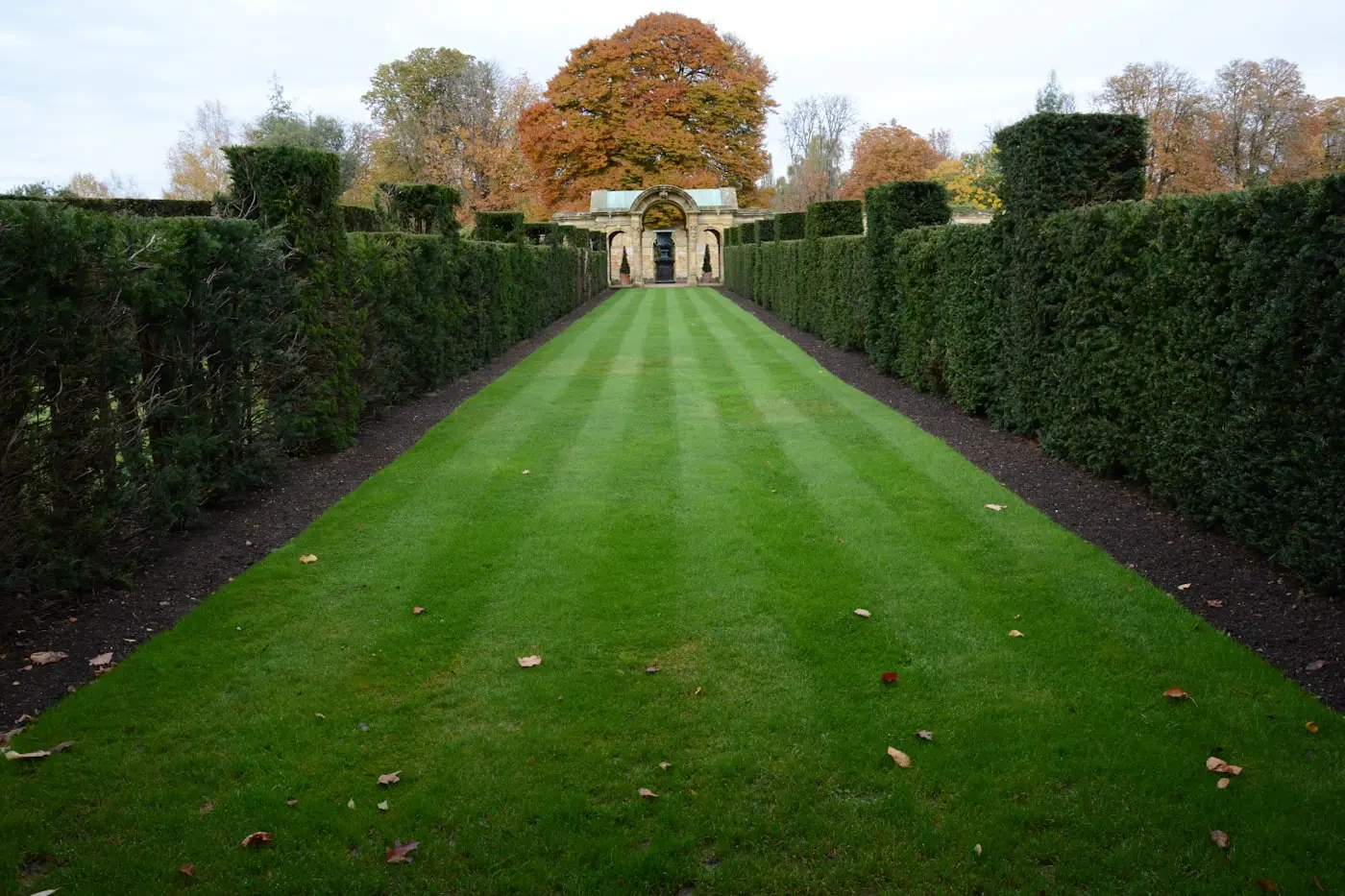
A well-cut lawn with ragged or crumbling edges looks significantly worse than the quality of the lawn itself would suggest. Lawn edges are one of those things that the eye goes to immediately: clean, defined edges make the whole garden look cared for; broken, sunken, or indistinct edges undermine even a good quality lawn.
Edge deterioration is a common problem in Yorkshire gardens for several reasons specific to the local climate and soil. This guide covers why edges break down, what the repair options are, when DIY is realistic, and what professional repair costs in 2026.
Why Lawn Edges Deteriorate in Yorkshire
Frost heave
Yorkshire winters reliably produce freeze-thaw cycles. Water in the soil freezes overnight and thaws in the day. Each cycle lifts the surface slightly and then drops it back down, but the cumulative effect on turf edges is progressive disruption. A clean edge cut in October can be visibly lifted and irregular by March in a winter with repeated freeze-thaw events. This is particularly evident in gardens on north-facing slopes or in frost pockets - common in the valley gardens of West Yorkshire and parts of North Yorkshire where cold air settles overnight.
Yorkshire's clay soils make this worse. Clay holds more water than sandy or loamy soils, so there is more water available to freeze. Clay also expands when wet and contracts when dry, creating a seasonal movement cycle that shifts turf sections at the edge of the lawn micro-scale but persistently.
Footfall and mower damage
The turf edge of a lawn is its most structurally vulnerable point. When the lawn edge runs directly alongside a border without a hard surface separating them, the only access to the border is often across the lawn edge itself. Repeated footfall on the edge compresses the turf, then begins to crumble the edge profile, and eventually creates a sunken section where the edge should be.
Rotary lawnmowers driven too close to the edge scalp the turf and fragment the edge. Each pass that takes the mower slightly over the line removes a small amount of the edge turf. Over a season this adds up to a gradually retreating edge that becomes harder to define and trim cleanly.
Natural growth and edge creep
Grass naturally grows outward into adjacent borders, and border plants (particularly ground cover plants, creeping perennials, and some bulb foliage) grow inward over the lawn edge. Without regular trimming the edge becomes a blurred zone rather than a defined line. This is not damage but the normal result of stopping regular edge maintenance for a season or two.
Original installation quality
In new build gardens across Yorkshire (see our guide to garden after a new build in Yorkshire), the turf is often laid with minimal soil preparation. Turf laid on a poor substrate without sufficient depth or drainage develops edge problems faster because the turf cannot root properly and the edge profile is weaker.
Types of Lawn Edge Problems
Different problems require different repair approaches. Identifying which problem you have is the first step.
Sunken or raised sections. A section of edge that is noticeably lower or higher than the surrounding lawn. Usually caused by frost heave, poor compaction during turfing, or differential settlement. Repair by lift-and-relay (see below) or by topdressing a sunken section with a sand-soil mix applied gradually over several weeks.
Crumbling or fragmented edge. The turf profile at the very edge has broken down - you can see bare soil showing through at the edge, the turf cannot hold a clean cut, and sections may be missing entirely. Caused by footfall, mower damage, or frost damage over time. Repair by lift-and-relay to bring fresh turf to the edge face, or by cutting back to a new, clean line and reseeding.
Ragged or grown-over edge. The edge line has been lost to grass growing into borders or borders encroaching onto the lawn. The boundary is unclear and irregular. Repair by re-cutting the edge with a half-moon edger against a guide (plank or string line). No structural repair needed - just re-establishing the line.
Persistently soft or wet edge. A section of the edge is always soft or waterlogged, causing footfall damage and making mowing without scalping difficult. Usually indicates a drainage problem in the soil beneath. May need a French drain alongside or a slit drain through the lawn edge before surface repair is worthwhile.
DIY Lawn Edge Repair - What Is Achievable
Re-cutting a ragged edge
For edges that are simply uneven or grown over but the underlying turf is sound, re-cutting is the repair. You need a half-moon edging iron and a flat board or plank to use as a guide.
- Lay the board along the intended edge line. On curves, use a garden hose or rope to mark the line before cutting
- Press the half-moon edger vertically down through the turf along the board edge with your foot, one blade-width at a time
- Remove the cut strip of turf and any protruding border growth
- The result is a clean vertical cut edge that can be trimmed with edging shears on subsequent maintenance visits
Re-cutting an edge removes a small strip of lawn each time. On a lawn that needs re-cutting every few years, the lawn gradually shrinks. Installing a permanent edging strip (see below) eliminates this gradual erosion.
The lift-and-relay method for crumbling edges
This is the standard professional repair for sections where the edge profile has crumbled or sunken.
- Cut a rectangular section of turf, approximately 30-40cm wide (measured from the edge inward) and around 40-50cm long, using a flat spade or half-moon edger
- Undercut and lift the section cleanly, keeping the turf roots intact
- Rotate the lifted section 180 degrees - the crumbled outer edge is now the inner edge, and the firm inner turf now forms the new outer edge
- Relay the section with the firm face forming the new edge, trimming to ensure it sits level and flush
- Fill the gap in the interior (where the crumbled section now is) with a mixture of good topsoil and sharp sand, firm down, and reseed
- Water well and keep the reseeded section moist for 2-3 weeks until germination
In Yorkshire, reseed in spring (April-May) or early autumn (mid-August to September) for best germination results. Mid-summer reseeding in dry conditions is difficult without regular watering.
Topdressing sunken edges
For a section that is sunken but the turf is not crumbled or damaged, gentle topdressing can raise the level over several weeks. Apply 1-2cm of a sand-soil mix brushed into the low area, allow the grass to grow through, then apply another 1-2cm layer. Repeat until the level is correct. This is slower than lift-and-relay but does not disturb the turf.
When to Hire a Gardener for Edge Repair
Consider hiring a professional gardener when:
- The damaged edge runs for more than 10-15 metres (large-scale lift-and-relay is time-consuming and physically demanding)
- You want a consistent, straight or smooth curved result along the full perimeter
- The underlying soil issue (drainage, compaction) needs addressing as part of the repair
- You want edging strip installation at the same time
- The edge problem is combined with a wider lawn renovation requirement
Our lawn edging service covers both repair and ongoing edge trimming. For broader lawn issues, our guide to lawn renovation costs in Yorkshire gives context on when full lawn renovation is a better investment than ongoing repairs.
Professional Repair Methods
Lift-and-relay at scale
A professional gardener carrying out lift-and-relay will work methodically along the damaged edge, repairing sections and ensuring consistent level and line. The advantage of professional work over DIY on longer runs is the speed and consistency: a gardener experienced in edge repair can do 15-20 metres of lift-and-relay in a morning, with a result that is straighter and more consistent than most homeowners achieve. They will also assess and address the underlying soil condition if needed.
Edging strip installation
Installing a permanent edging strip along lawn perimeters eliminates the ongoing need for edge re-cutting and significantly reduces edge deterioration from frost heave and footfall. The strip provides a physical barrier between turf and border, and the mower wheel can run along the strip cleanly without scalping the edge.
Types available:
- Galvanised steel or Corten steel: most durable, cleanest look, 2-5mm thick. Costs £15-30 per metre in materials, plus installation
- Aluminium: lightweight, rust-proof, slightly cheaper than steel, adequate for most residential use
- Rigid plastic edging: cheapest (£3-8 per metre) but becomes brittle in Yorkshire winters and tends to rise out of the ground over time
- Treated timber boards: a natural-looking option using pressure-treated hardwood boards set on edge, held by stakes. Suits an informal garden style
Installation depth is typically 5-10cm into the soil with 1-2cm proud of the turf surface. Edges in Yorkshire clay should be set at least 8-10cm deep to resist frost heave. Professional installation includes excavating a clean trench, setting the edging to the correct level and line, and backfilling.
Lawn Edge Repair Costs in Yorkshire
| Work type | Typical cost (2026) |
|---|---|
| Small edge repair (few sections, 10-15m perimeter) | £50-80 |
| Medium repair (20-40m perimeter with multiple sections) | £80-120 |
| Full perimeter edge re-cut and tidy (40-60sqm lawn) | £60-100 |
| Steel edging strip installation (per metre) | £18-35 including materials |
| Full edging strip installation (40-60sqm rear garden) | £120-200 |
| Combination repair plus edging strip | £150-300 depending on garden |
These are Yorkshire 2026 prices including labour. Materials for turf repair (topsoil, seed) are usually included in the quoted price for small jobs; for larger repair jobs confirm whether materials are included or quoted separately.
Maintaining Good Edges Long-Term
Once edges are repaired and ideally protected with an edging strip, maintaining them is straightforward with a regular trimming schedule. During the main growing season (April to September), edges benefit from trimming every 2-4 weeks. A good routine is to trim edges at every mowing visit with long-handled edging shears or a rotary trimmer, and re-cut the definitive edge with a half-moon edger 2-3 times a year (spring, midsummer, and autumn).
Our lawn mowing service includes edge trimming as standard, and gardeners on a regular fortnightly maintenance arrangement will maintain edges as part of each visit. See our lawn edging page for booking options specific to edge repair and installation.
Frequently Asked Questions
Why do lawn edges deteriorate in Yorkshire?
The main causes are frost heave (Yorkshire winters repeatedly freeze and thaw the turf edge, disrupting the profile), footfall directly on the edge, mower scalping from running too close to the edge, and the natural growth of grass into adjacent borders. Yorkshire's clay soils compound all of these by retaining water and moving seasonally as they expand and contract.
How much does lawn edge repair cost in Yorkshire?
Small repair jobs (a few sections, 10-15 metre perimeter) cost £50-80. Medium repair (20-40 metres) costs £80-120. Full edging strip installation on a typical rear garden lawn costs £120-200. A combination of repair and edging strip on a damaged garden typically runs £150-300.
Can I repair lawn edges myself in Yorkshire?
Small edge repairs and re-cutting ragged edges are manageable DIY jobs with a half-moon edger and a straight guide. The lift-and-relay method for crumbling sections is also achievable for one or two sections. For 10+ metres of damaged edge or where edging strip installation is part of the plan, hiring a gardener saves time and produces a more consistent result.
What is the lift-and-relay method for lawn edge repair?
Cut a 30-40cm wide section of turf from the damaged edge inward, lift it, rotate it 180 degrees so the crumbled face is now on the interior, and relay it with the firm interior turf forming the new edge. Fill the interior gap with topsoil-sand mix and reseed. The new edge is clean and firm from the start; the reseeded interior fills within 4-6 weeks in the growing season.
Are lawn edging strips worth installing in Yorkshire?
Yes, particularly in Yorkshire gardens where frost heave and clay soil movement regularly disrupt turf edges. Metal edging strips (steel or aluminium) are the most durable option. They eliminate the need for re-cutting the edge line and give the mower wheel a clean surface to run along, reducing scalping risk. The initial installation cost (£120-200 for a typical rear garden) pays back in reduced maintenance over 5-10 years.
How often should lawn edges be trimmed in Yorkshire?
Edge trimming with shears or a rotary edger on every mowing visit (every 2-4 weeks through the growing season) keeps edges tidy. Re-cutting the definitive line with a half-moon edger should be done 2-3 times a year - in spring, midsummer, and early autumn - to prevent encroachment from border plants into the lawn.
Need lawn edges repaired or installed in Yorkshire?
60-second assessment. If a local gardener takes your enquiry, they call you with a price.
Start the assessment