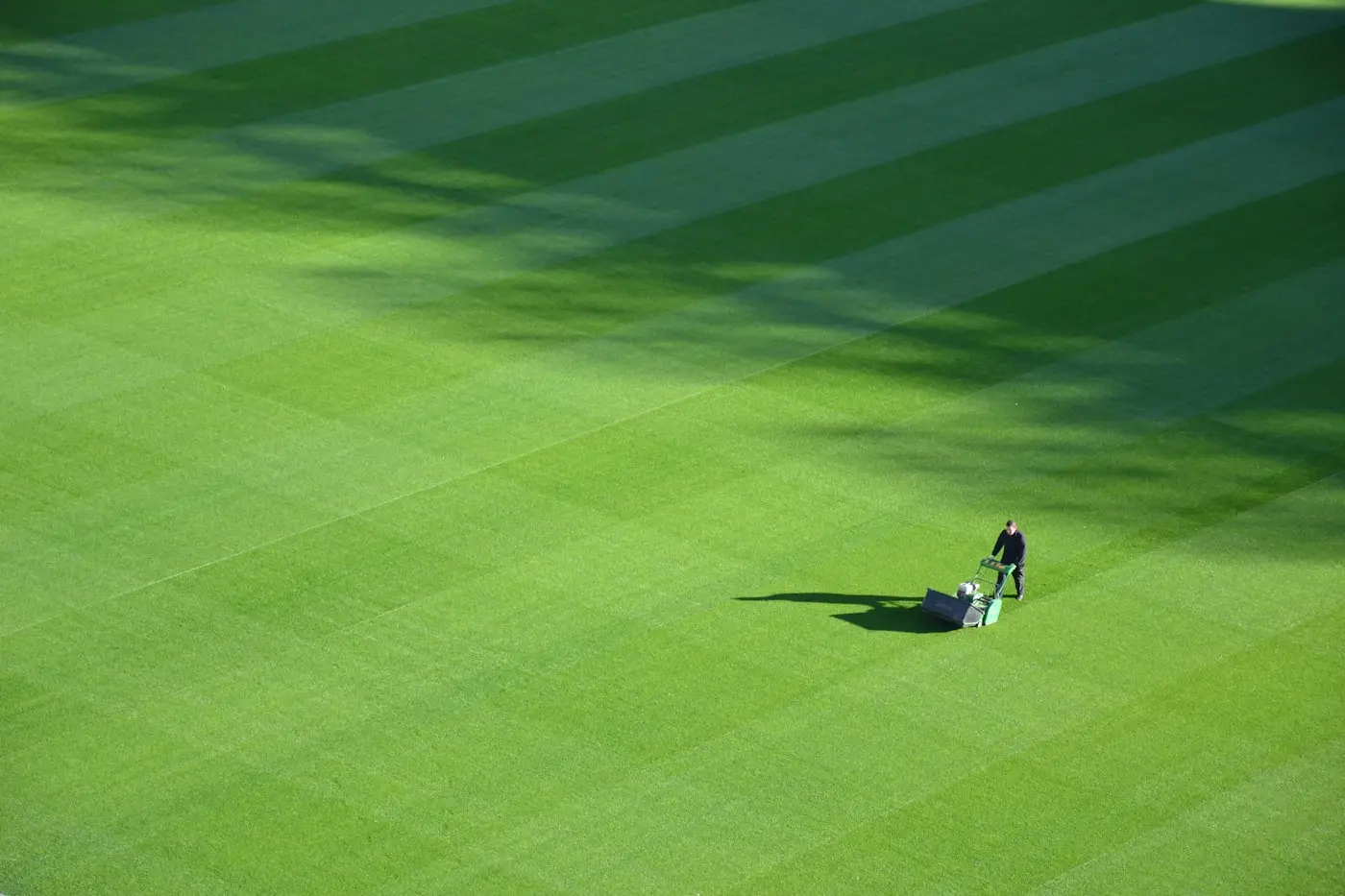
If you're budgeting for lawn renovation in Leeds, Harrogate, or Wakefield, local lawn specialists can provide a written quote once they've assessed your turf condition, soil compaction, and drainage.
Lawn renovation covers a range of treatments from a single-treatment scarification through to the full autumn programme that transforms a neglected Yorkshire lawn in one day. The price range is wide because what is needed varies so much: a lawn that has been maintained annually needs a different scope of work to one that has been left for five years. This guide breaks down every component, explains what drives costs up or down in Yorkshire specifically, and gives you the numbers you need to budget accurately.
What Lawn Renovation Means - and What It Does Not
Lawn renovation, used correctly, means the full autumn programme: lawn scarification to remove thatch, aeration to relieve compaction, overseeding to introduce new grass, and top dressing to improve the surface growing medium. Done together in September on a Yorkshire lawn, these four steps in a single day produce the kind of transformation that four separate visits over the year would struggle to match.
Renovation is not the same as:
- A lawn feed or weedkiller treatment - chemical treatments without mechanical intervention do not address thatch or compaction.
- A single scarification - scarification without overseeding leaves bare patches that fill with weeds or moss.
- Re-turfing - renovation works with the existing grass; re-turfing replaces it entirely.
The value of the full programme is that the preparation work - pre-mowing, surface readiness, thatch removal - is shared across all four steps. A gardener doing all four in one visit charges considerably less than four separate visits, and the combined result is better than the sum of the parts.
Full Price Breakdown - Yorkshire 2026
Individual treatment costs
| Treatment | Lawn size | Professional cost | DIY hire/materials |
|---|---|---|---|
| Scarification only | 50m2 | £60-150 | £40-80/day hire |
| Hollow-tine aeration | 50m2 | £60-150 | £40-70/day hire |
| Overseeding only | 50m2 | £40-100 | £20-40 seed + materials |
| Top dressing | 50m2 | £80-200 | £30-60 materials |
| Autumn lawn feed application | 50m2 | £30-60 | £10-20 fertiliser |
Full programme costs
| Programme | Lawn size | Professional cost | Notes |
|---|---|---|---|
| Scarification + aeration | 50m2 | £120-240 | Both passes, thatch and plug removal |
| Full autumn programme | 50m2 | £200-400 | Scarify, aerate, overseed, top-dress |
| Full autumn programme | 100m2 | £350-600 | Larger garden; prep and materials scale |
| DIY full renovation kit | 50m2 | -- | £80-150 including hired equipment and materials |
New turf and full lawn replacement
| Option | Lawn size | Typical cost | Notes |
|---|---|---|---|
| New turf supply and lay (prepared ground) | 50m2 | £400-750 | Ground assumed level and prepared; standard grade turf |
| New turf supply and lay (prepared ground) | 50m2 | £600-1,000 | Premium sports/ornamental turf |
| Complete new lawn (strip, prep, turf) | 50m2 | £600-1,200 | Includes stripping old surface, ground preparation, soil improvement, turf |
| Complete new lawn from seed | 50m2 | £300-600 | Slower but cheaper; requires 3-6 months before full use |
What Drives the Cost Up or Down in Yorkshire
Thatch depth
Thatch is the primary variable in scarification cost. A lawn with 10-15mm of thatch is straightforward - one or two machine passes and the thatch lifts cleanly. A lawn with 25-35mm of compacted thatch that has been building for years requires more passes, more time, and significantly more effort to rake out and remove. On Yorkshire clay where thatch builds faster than on lighter soils, a lawn that has not been properly maintained for three or more years can involve half a day of thatch removal alone on a 50m2 plot. This is factored into professional quotes but is sometimes a surprise for homeowners expecting a quick pass with a machine.
Soil type - West Yorkshire clay vs Vale of York
West Yorkshire clay lawns typically need hollow-tine aeration as a non-optional element of any renovation. On free-draining sandy soils, solid-tine aeration (spiking rather than coring) is sometimes sufficient. Hollow-tine aeration is more expensive to do - the equipment is heavier and the core removal takes longer - but it is the treatment that addresses the compaction problem properly. A quote for a clay-soil lawn in Bradford or Huddersfield that does not include hollow-tine aeration is probably undercutting a necessary step.
The aeration frequency also differs by soil type. West Yorkshire clay lawns need annual aeration to prevent compaction from re-establishing. On the Vale of York sandy loam, every 2-3 years may be sufficient for a well-maintained lawn. This means the annual maintenance cost of a West Yorkshire clay lawn is higher than for an equivalent garden on lighter soil.
Access and garden layout
Professional renovation equipment - petrol scarifiers, hollow-tine aerators - is heavy. If access to your garden requires carrying equipment through the house, up steps, or through a narrow gate, time increases and quotes reflect this. A rear garden accessed through a house in a Bradford terrace costs more to service than an identically sized garden accessible through a side gate. This is a legitimate cost difference, not overcharging.
September timing premium
September is the optimal renovation month in Yorkshire, and demand is high. Gardeners who specialise in lawn renovation are typically fully booked in September by mid-August. If you book early, you get the standard rate. If you book late and need a September slot urgently, you may pay a premium or end up with a less experienced operator. Spring renovation (April-May) is easier to book at short notice but gives less reliable overseeding results on clay soil.
Book in August for September work
This is the single most important scheduling note for Yorkshire lawn renovation. September slots with any established local gardener fill by mid-August. If you are reading this in September and have not booked, you are already facing October availability at best. Plan ahead for next year.
Renovation vs Re-Turfing: How to Decide
The renovation vs re-turf decision comes down to one question: is there enough viable grass in the existing lawn to build on?
If more than 50% of the lawn is moss, annual meadow grass, coarse weeds, or bare soil, renovation often produces a disappointing result. Re-turfing gives a cleaner start at comparable cost.
A useful practical test: stand at the edge of the lawn and look across it. If you can see more brown, yellow, and grey than green - if moss and weeds visibly dominate - the base grass population is probably too depleted for renovation to work reliably. Scarification and overseeding will improve the situation, but the competition from established moss and weed growth is difficult to overcome without starting fresh.
On the other hand, if the lawn is mostly reasonable grass that is thin, mossy at the edges, and compacted - but fundamentally green when mowed - renovation is almost always better value. You keep the establishment history of the existing sward, you pay less, and the result by spring is a lawn that looks considerably better than it did before treatment.
| Lawn condition | Recommended approach | Why |
|---|---|---|
| Mostly grass, light moss, compacted | Full renovation programme | Existing sward is viable; renovation cheaper and effective |
| 30-50% moss, thin grass, some bare areas | Full renovation + possible partial re-turf on worst sections | Renovation can still work but may need two consecutive years |
| Over 50% moss, weeds, or bare soil | Re-turf assessment | Base population too depleted; renovation will underdeliver |
| Complete lawn failure (drought, pests, poor ground) | Complete new lawn | Ground preparation needed; new seed or turf from scratch |
For more detail on re-turfing costs, see the turfing cost Yorkshire guide.
Yorkshire-Specific Renovation Timing
September - first choice
Soil temperature in Yorkshire through September is typically 12-15 degrees Celsius at 5cm depth - warm enough for grass seed germination but cool enough that the lawn is not under heat stress. The westerly rainfall patterns that characterise Yorkshire's autumn deliver reliable moisture from September onwards, reducing the irrigation burden on newly overseeded areas. Grass sown in September has three months of cooler growing conditions to establish root systems before the hard frosts of December. By the following April, a September-renovated lawn is stronger and denser than anything spring-renovated in the same year.
April to May - second choice
Spring renovation is possible and produces results, but it is less reliable than autumn work on Yorkshire clay for two reasons. First, clay soils warm slowly in spring - soil temperatures in Bradford or Wakefield may not reach a reliable 8-10 degrees Celsius until late April, and seed sown into cold clay germinates slowly and unevenly. Second, spring overseeding competes with the first weed flush of the year. Annual meadow grass, chickweed, and other opportunistic species germinate alongside your grass seed and can overrun newly seeded areas before the lawn grass establishes. Autumn overseeding faces no such competition.
If spring is your only option, go ahead - renovation at any time beats no renovation. But set expectations appropriately: a spring renovation on West Yorkshire clay will produce visible improvement by summer, but it will not match the outcome of a September job done properly.
What a Professional Programme Includes
When you book a professional full-programme renovation in Yorkshire, here is what should be included at a quoted price of £200-400 for a 50m2 lawn:
- Pre-mow. The lawn is cut to 25-30mm, lower than usual. Clippings are removed to expose the thatch layer for the scarifier.
- Scarification. One or two passes with a professional petrol scarifier, typically crossing both north-south and east-west on a heavily thatched lawn. The machine lifts thatch to the surface.
- Thatch removal. All lifted thatch is raked, collected, and removed from the garden. This is labour-intensive on a badly thatched lawn and is a significant part of the time cost.
- Hollow-tine aeration. A hollow-tine aerator is run over the entire lawn, removing cores of soil at 10-15cm intervals. Cores are left on the surface and break down with top dressing.
- Overseeding. Grass seed is applied at the manufacturer's recommended rate across the entire lawn. A shade-tolerant, clay-soil-appropriate mix is standard in Yorkshire.
- Top dressing. A grit-compost mix (typically 70% sharp sand, 30% compost) is applied at 1-3kg per m2 and brushed into the aeration holes with a soft broom. This improves surface drainage over time.
- Water in. The whole lawn is watered thoroughly at the end of the visit.
Some operators also include an autumn lawn fertiliser application at no extra charge. Confirm this when getting quotes - an included application is good value given the phosphorus and potassium benefit to newly seeded grass.
DIY Lawn Renovation - What It Actually Costs
DIY renovation is achievable for a handy homeowner and costs significantly less than professional work. Here is the realistic cost breakdown for a 50m2 lawn:
| Item | Cost | Notes |
|---|---|---|
| Petrol scarifier hire (1 day) | £60-100 | From tool hire companies across Yorkshire |
| Hollow-tine aerator hire (1 day) | £40-70 | Often same day; plan for a full morning of work |
| Grass seed (50m2 rate) | £15-35 | Good quality clay-tolerant mix; do not buy cheapest |
| Top dressing (50m2 at light rate) | £20-40 | Grit-compost mix; available from garden centres |
| Autumn lawn fertiliser | £10-20 | Low-nitrogen autumn formulation |
| Total DIY (approximate) | £145-265 | Excluding your time - allow 6-8 hours for a 50m2 lawn |
The time cost is the honest variable that comparison tables often omit. Thatch removal on a badly thatched 50m2 Yorkshire clay lawn takes 2-3 hours on its own. Full DIY renovation including hire collection, prep, scarification, raking, aeration, seeding, top dressing, and tidy-up is a full day's physical work. For many homeowners, the professional cost is justified not because the DIY is unachievable, but because the time value of not spending a full Saturday doing heavy physical labour outdoors exceeds the price difference.
What Results to Expect and When
Set expectations before you start, whether DIY or professional. The lawn will look its worst immediately after scarification - brown, torn, and bare in patches. This is exactly the right outcome. It will look alarming for 2-3 weeks. Do not panic.
- Weeks 1-3: The lawn looks terrible. Brown and patchy. Normal and expected.
- Weeks 3-4: A faint green haze appears as overseeded grass begins to germinate.
- Weeks 4-6: New grass is clearly visible, filling bare areas.
- November-February: Growth slows as temperatures drop but root systems continue developing.
- March-April (following year): The real result becomes clear. A well-renovated Yorkshire lawn in April is noticeably denser, greener, and with less moss than it was before treatment.
Full establishment - meaning a lawn that can withstand heavy family use - takes one complete growing season. In the first spring after September renovation, keep foot traffic reasonable and mow gently at a high setting (40-50mm) for the first several cuts.
Frequently Asked Questions
How much does lawn renovation cost in Yorkshire in 2026?
£200-500 professionally for a 50-60m2 lawn. £80-200 DIY. Individual treatments: scarification £60-150, aeration £60-150, overseeding £40-100, top dressing £80-200.
Is renovation cheaper than re-turfing?
Yes, usually. Full renovation £200-500 for 50m2. New turf £400-750 for 50m2 on prepared ground. Complete new lawn £600-1,200. Renovation wins if the existing grass base is more than 50% viable.
When should I book?
Book in August for September work. September is the best month in Yorkshire and slots fill fast. Spring (April-May) is possible but gives less reliable results on clay soil.
Does West Yorkshire clay cost more to renovate?
Not more per visit, but clay lawns need annual aeration where lighter soils need it every 2-3 years. The annual maintenance cost is higher because the treatment frequency is higher.
What does a professional programme include?
Pre-mow, scarification, thatch removal, hollow-tine aeration, overseeding, top dressing, water-in. Some include an autumn fertiliser application. One full day's work for an experienced operator on a 50-60m2 lawn.
How long before I see results?
Looks terrible for 2-3 weeks. New grass visible at 3-4 weeks. Bare patches filling at 4-6 weeks. Full result visible the following spring.
When should I re-turf instead of renovate?
When more than 50% of the lawn is moss, weeds, or bare soil. Renovation at that point underdelivers. New turf gives a cleaner result at comparable cost.
Is it cheaper to renovate a lawn or re-turf it?
Renovation is usually cheaper and takes less time to recover if the existing grass base is reasonable. A professional renovation for 50m2 costs £200-500. New turf for 50m2 costs £400-750 in materials plus laying, or £600-1,200 for a fully prepared new lawn including ground preparation, soil improvement, turf supply and laying. The decision point is lawn quality: if more than 50% of the lawn is moss, weeds, or bare soil, re-turfing often gives better long-term results for comparable cost. If the existing grass is mostly viable, renovation is better value.
Does lawn renovation cost more in West Yorkshire than East Yorkshire?
Not significantly, but the scope of work often differs. West Yorkshire clay lawns typically need annual aeration to prevent compaction, whereas free-draining East Yorkshire or Vale of York soils may only need aeration every 2-3 years. A Yorkshire clay lawn renovation programme is therefore more likely to include hollow-tine aeration as a non-optional element, which adds to the cost versus a lighter renovation on sandy soil. The labour rates across Yorkshire are broadly similar; it is the frequency and scope of work that differs by soil type.
When is the best time to book lawn renovation in Yorkshire?
September is the optimal month for lawn renovation in Yorkshire. Book in August - September slots fill quickly with local gardeners who do this work seasonally. Spring renovation (April-May) is the second-best option but gives less reliable overseeding results on clay soil. Avoid booking summer renovation on clay lawns: the stress of scarification combined with heat and clay that cracks when dry makes summer treatment significantly less effective than autumn.
What is included in a professional lawn renovation programme?
A full professional renovation programme typically includes: pre-mow to lower the sward height; scarification to remove thatch (one or two passes depending on thatch depth); raking and removing lifted thatch from the surface; hollow-tine or solid-tine aeration; overseeding the entire lawn (not just bare patches); top dressing with a grit-compost mix; and watering in. Some gardeners include an autumn feed application. The price per job varies, but a single combined visit for all stages is better value than four separate visits.
How much does new turf cost in Yorkshire?
Turf costs £8-15 per square metre supplied and laid in Yorkshire, depending on turf quality, access, and whether ground preparation is included. For a 50m2 lawn: turf and laying only (on prepared ground) £400-750. A complete new lawn including stripping the old surface, ground preparation, soil improvement, turf supply, and laying typically costs £600-1,200 for a 50m2 garden. Premium turf varieties, difficult access, or significant ground levelling work add to the upper end of those ranges.
Related reading
- Lawn scarification in Yorkshire - the core renovation treatment
- Lawn aeration in Yorkshire
- Turfing cost in Yorkshire - what new turf actually costs
- Lawn overseeding in Yorkshire
- Lawn mowing across Yorkshire
Ready to renovate your Yorkshire lawn?
Tell us your postcode and lawn size. We'll give you an accurate quote and connect you with a local specialist who knows Yorkshire soils.
Get a free assessmentHow long does it take to see results after lawn renovation?
The lawn looks its worst in the first 2-3 weeks after scarification - brown, torn, and bare in places. New grass from overseeding is visible within 2-3 weeks of sowing; bare patches fill within 4-6 weeks. By the following spring, a successfully renovated Yorkshire lawn is noticeably denser, greener, and with significantly less moss than before treatment. Full establishment - meaning a lawn that can withstand heavy use - takes one complete growing season.