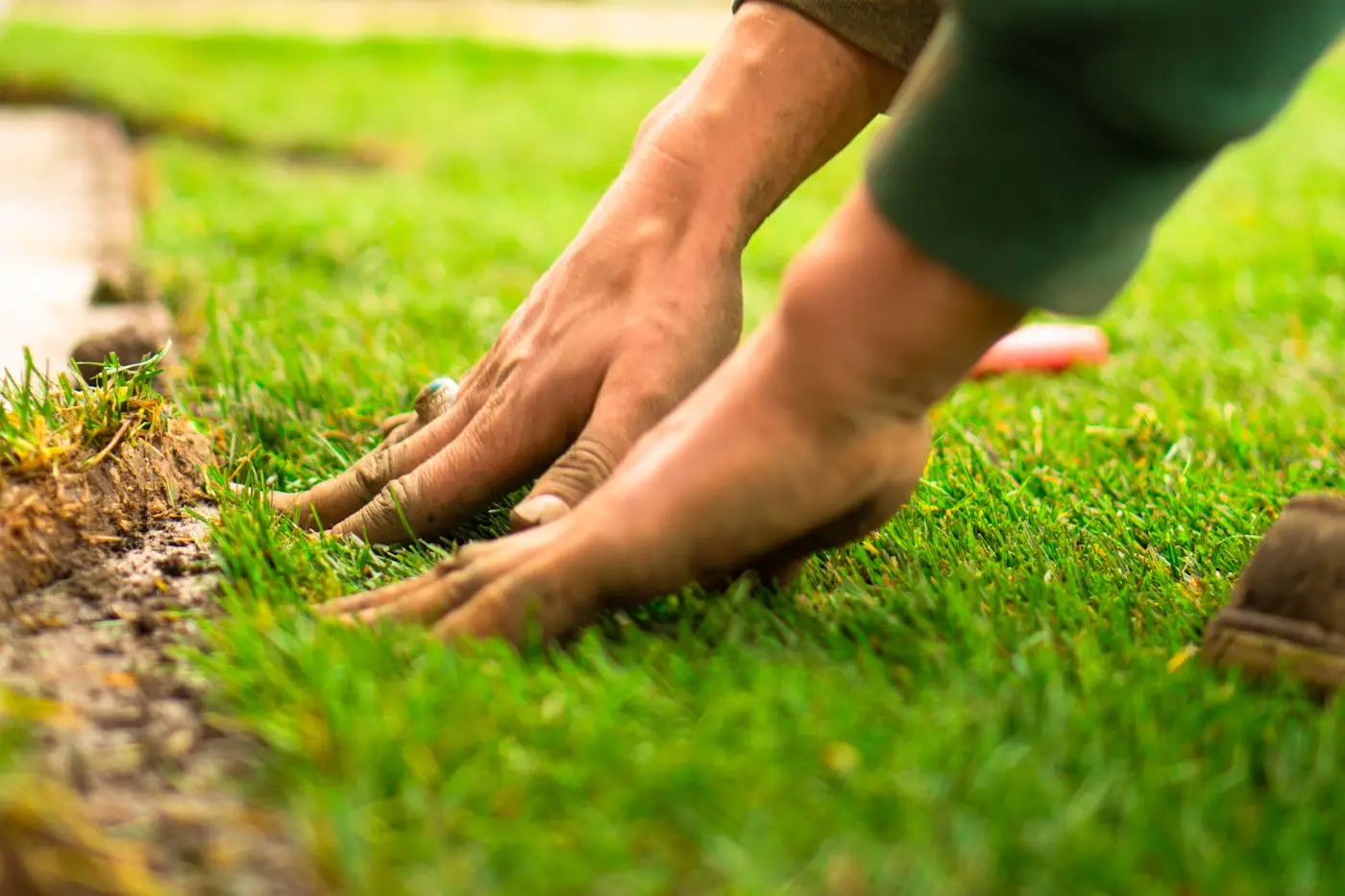
Turfing costs and turnaround times vary by location, and contractors in Leeds, Wakefield, and Doncaster can provide site-specific quotes once they have assessed your soil type and lawn dimensions.
How much does turfing cost in Yorkshire in 2026?
Turfing in Yorkshire costs £7-14 per m² fully installed on standard soil in 2026 - that covers turf supply, stripping, preparation, and laying. A typical 30m² back garden costs £210-420 on standard soil. On Yorkshire's heavy clay soil, the job costs significantly more: adding the 100mm topsoil layer that clay gardens need pushes a 30m² job to £510-900. The soil preparation is where most of the cost variation sits, and it is also where most failed turf jobs can be traced back to.
| Cost element | Typical Yorkshire price | What's included |
|---|---|---|
| Turf supply (per m²) | £3-6/m² | Utility grade £3-4; ornamental/sports grade £5-6 |
| Labour and laying (per m²) | £4-8/m² | Includes laying and basic prep on good soil |
| Total installed (per m²) | £7-14/m² | Strip, rotavate, level, lay - standard soil |
| Typical 30m² lawn (standard prep) | £210-420 | Good soil, no topsoil import needed |
| Clay soil surcharge (30m²) | +£300-600 | 100mm topsoil import and spread, levelling |
These are supply-and-lay prices. They assume the old lawn or ground is stripped, the area is rotavated and levelled to a workable standard, and turf is laid and watered in. They do not include skips or green waste removal, which adds £100-200 depending on volume.
What affects the cost of turfing in Yorkshire?
Turfing costs in Yorkshire are mainly determined by three things: lawn size, soil condition, and whether the existing lawn needs stripping first. The turf supply cost itself is a relatively small part of the total - the soil preparation is where the real variation sits.
1. Stripping the existing lawn or weeds
If there is an existing lawn, it needs to come off. This can be done by hand with a flat spade, or with a turf cutter (which speeds the job significantly on larger areas). On a 30m² lawn, stripping takes 2-4 hours by hand. The stripped turf needs to go somewhere - either composted on site (which requires space), or removed. Removal costs £80-160 depending on volume and skip hire or green waste disposal route. Any gardener who says they can lay new turf over the old surface without stripping is not setting you up for a good result.
2. Rotavating
Once stripped, the top 150mm of soil needs breaking up and loosening. On a light, well-structured soil this is a quick pass with a rotavator. On Yorkshire clay - which is the reality for most gardens across Bradford, Leeds, Wakefield, Doncaster, Rotherham, and Barnsley - the clay clumps and resists the tines, takes multiple passes, and needs drying conditions to work to the right consistency. Working clay soil in the wrong conditions produces a structural mess that sets like concrete when it dries.
3. Levelling
After rotavating, the surface needs to be raked level. Turf laid on an uneven base follows the undulations underneath, and they do not disappear with time - they become more obvious as the turf grows in and you start mowing. Levelling on a garden with significant bumps or slopes takes longer and may require importing topsoil to fill low spots. Allow an extra hour for this on any garden that has not been properly levelled before.
4. Soil improvement
This is where the real difference between a good job and a cheap job shows up. On decent loam soil, a pass with a rotavator and a light top-dressing of fine topsoil or compost is sufficient. On heavy clay, you either need to spread a 100mm layer of quality topsoil over the clay and lay the turf into that, or incorporate sharp sand (minimum 50kg per m²) and organic matter into the existing clay to a depth of 150mm. The topsoil approach is generally more reliable. Topsoil is typically £40-80 per tonne, and a 100mm layer over a 30m² lawn needs roughly 3 tonnes - £120-240 in materials alone plus labour to spread it.
5. Laying the turf
Turf is laid in staggered rows (like brickwork) with joints butted tightly together. Edges are trimmed with a half-moon edger or sharp spade. On a flat, well-prepared surface this is satisfying, relatively quick work. On awkward shapes, slopes, or gardens with complex borders, it takes considerably longer. Most gardeners charge per m² for the laying element.
Turfing costs by lawn size in Yorkshire
These are realistic installed costs for Yorkshire in 2026, including standard preparation on average soil. Add the clay surcharge if applicable to your situation.
| Lawn size | Standard prep cost | With clay topsoil layer | Notes |
|---|---|---|---|
| 15m² | £105-210 | £255-460 | Small rear yard or front strip |
| 30m² | £210-420 | £510-900 | Typical terrace or semi rear lawn |
| 50m² | £350-700 | £750-1,350 | Larger semi or detached rear garden |
| 75m² | £525-1,050 | £1,025-1,850 | Generous detached garden |
| 100m² | £700-1,400 | £1,300-2,400 | Large garden or complete makeover project |
These prices exclude waste removal and skip hire. Large gardens with significant existing vegetation may also incur additional clearance costs before turfing can begin. For context on full garden transformation costs, see the garden landscaping cost guide.
The Yorkshire clay problem: why soil preparation costs extra
If you live in Bradford, Leeds, Wakefield, Doncaster, Rotherham, or Barnsley and your garden has heavy clay soil, you need to be honest with yourself and your gardener about what is underneath before committing to a turfing budget.
Yorkshire's Coal Measures clay is among the most challenging domestic garden soil in the UK. It drains very slowly, compacts easily under machinery and foot traffic, and sits at a naturally low pH. Turf laid directly onto poorly prepared clay will produce a lawn that waterlogs after rain, bakes hard and cracks in dry summers, and develops moss within two years as the compaction cycle reasserts itself.
The 100mm topsoil rule for clay gardens
On heavy clay, the most reliable approach is to lay a minimum 100mm layer of quality blended topsoil over the existing clay before turfing. This creates a root zone with the drainage and structure grass needs, while the clay below provides a moisture reservoir in dry spells. The topsoil cost for a 30m² lawn at 100mm depth is approximately £120-240 in materials plus £80-150 in labour to spread and level. It adds £200-400 to the job total, but it is the difference between a lawn that thrives and one that fails in year two.
If a quote you receive for turfing on Yorkshire clay does not mention soil preparation costs separately, ask specifically: "What soil improvement are you including in this price?" A gardener who dismisses the question or says the existing soil is fine without visiting and assessing it is worth treating with scepticism.
Is it worth hiring a professional for turfing in Yorkshire?
For Yorkshire gardens - particularly on clay soil - hiring a professional makes a significant difference to the outcome. The preparation stage is the critical part of a turfing job, and it requires equipment (rotavator, turf cutter), physical labour, and knowledge of how to read and work clay soil. A professional who regularly turfing Yorkshire clay gardens will know exactly how deep to go, how much topsoil to add, and when soil conditions are right to work.
The cost premium of a professional over a determined DIY approach is typically £150-300 for a 30m² garden. That premium buys correct soil preparation, the right equipment, and a warranty on the establishment result. Given that a failed turf job means stripping and starting again at full cost, the professional premium is almost always justified.
For gardens on lighter soils in North Yorkshire or the Dales, the argument is more marginal - a capable homeowner with the right tools can produce good results on well-drained loam. But anywhere in the West or South Yorkshire clay belt, professional preparation pays for itself.
When is the best time to lay turf in Yorkshire?
Yorkshire's climate makes timing important. The best windows for turfing are April to May and September.
April to May: Soil temperatures have risen enough for root establishment, and Yorkshire's typically moist spring conditions reduce the irrigation burden. The turf has the whole growing season to establish before its first winter. Avoid laying in dry May spells without a guaranteed irrigation commitment - new turf that dries out in the first week before rooting can fail completely.
September: An excellent window that many people overlook. Soil temperature is still warm, autumn rain is more reliable, and the cooler air temperatures reduce the stress on newly laid turf. Turf laid in September in Yorkshire roots well and comes back strongly the following spring.
Avoid if possible: July and August. Summer turfing on Yorkshire clay is high-risk. Clay soils can crack in dry spells, the turf joints open up, and the irrigation requirement is intense - every single day for two to three weeks. If you cannot commit to that, late summer turfing often fails. A garden maintenance project that needs new turf is better planned for spring or autumn.
How to get an accurate turfing quote in Yorkshire
A proper turfing quote in Yorkshire should be based on a site visit or at minimum a detailed description and photographs. The gardener needs to assess soil type, existing surface condition, drainage, and access before quoting accurately. Any quote given without seeing the garden or asking detailed questions about soil conditions is likely to either be a rough estimate or is omitting the soil preparation work.
A proper quote for turfing in Yorkshire should specify: site clearance and stripping of existing lawn, disposal of stripped material (or state it is your responsibility), rotavating depth, soil preparation materials and method (especially relevant for clay), turf specification and grade, laying method, and aftercare instructions. If a quote is a single number without these items broken out, ask for a written breakdown before accepting.
For broader pricing context, see the how much does a gardener cost UK guide.
Turf vs overseeding: when to choose which
Turf is not always the right answer. For many Yorkshire gardens, overseeding an existing lawn - or seeding a cleared area from scratch - produces excellent results at a fraction of the cost.
Choose turf when:
- You need an immediate, usable surface (turf is walkable within 3-4 weeks)
- The garden has children or pets who will use it soon after installation
- You have a slope where seed would wash away in Yorkshire's rain
- You are installing in spring and want the lawn established before summer
- The existing ground is so infested with couch grass or bindweed that a clean start is better than renovation
Choose seed when:
- Budget is the priority - seeding costs roughly 10-15% of turfing for the same area
- You are working in late August to September, when Yorkshire's conditions are ideal for grass seed germination
- You have 3-4 months before the space needs to be used
- You are overseeding thin areas rather than starting from bare soil
For laying a new lawn from seed rather than turf, see the lawn seeding Yorkshire guide. For overseeding an existing lawn to fill bare patches, see the lawn overseeding Yorkshire guide. For broader lawn care advice, the lawn care Yorkshire guide covers the full seasonal picture.
Aftercare: the first six weeks
The most expensive turf job in Yorkshire is the one where aftercare is not taken seriously and the turf fails, requiring a repeat installation. The six weeks after laying are critical.
Watering: Daily watering for the first two weeks, or twice daily in warm weather. Lift a corner to check if the roots have made contact with the soil - until they have, the turf is entirely dependent on surface moisture. On Yorkshire clay, the clay itself holds some moisture, which helps, but surface watering is still essential.
No traffic: Keep people, children, and pets off the turf until it has rooted - typically 2-3 weeks. Foot traffic on unrooted turf on clay creates depressions that do not level out.
First cut: Wait until the turf is firmly rooted, then cut high (40-50mm) with a sharp mower. Do not scalp new turf. The first cut should take off no more than a third of the grass height.
First feed: Apply a balanced lawn fertiliser at 6-8 weeks after laying. Do not apply nitrogen-heavy feeds to new turf in its first four weeks, and avoid autumn nitrogen applications on Yorkshire clay as they promote soft, frost-vulnerable growth.
If a garden maintenance plan is in place, the gardener can monitor the establishment and advise on first cut timing rather than leaving it to guesswork.
Frequently asked questions about turfing costs in Yorkshire
How much does turfing cost in Yorkshire?
Turfing in Yorkshire costs £7-14 per m² fully installed on standard soil in 2026. A typical 30m² back garden costs £210-420 including stripping, preparation, and laying. Yorkshire clay soil adds £300-600 to a 30m² job if topsoil import is needed. Always get quotes that specify soil preparation separately.
How much does it cost to turf a garden in the UK?
In 2026, expect to pay £7-14 per m² fully installed on standard soil. A typical 30m² back garden costs £210-420 in Yorkshire for turf, prep, and laying. Yorkshire clay soil adds £300-600 to a 30m² job if topsoil import is needed. For related costs see the garden landscaping cost guide.
Is it worth turfing over an old lawn?
No. Laying turf over an existing lawn without stripping gives poor results - the old root system and soil structure persist underneath and prevent the new turf from rooting properly. Always strip, rotavate, and prepare the soil first. The stripping cost adds to the job but is not optional if you want a result that lasts.
Can you lay turf on clay soil?
Yes, but Yorkshire clay needs preparation. The most reliable approach is adding a 100mm topsoil layer over the clay before laying. Incorporating sharp sand and organic matter is an alternative. Laying directly onto unprepared clay produces a lawn that waterlogs, compacts, and develops moss within 1-2 years. See the clay soil guide for more.
How long does new turf take to root?
2-3 weeks in good conditions. Test by gently lifting a corner - resistance means rooted. On Yorkshire clay, rooting can take slightly longer. Keep traffic off and water daily until rooted. First cut at 40-50mm once firmly established.
Does Yorkshire clay affect how much turfing costs?
Yes, materially. Clay soil preparation adds £300-600 to a standard 30m² job when topsoil import is required. Any quote that does not mention soil preparation on Yorkshire clay should prompt further questions. The upfront cost is always less than the cost of failed turf and a repeat installation.
Turf vs seed: which is better for a Yorkshire garden?
Turf is better when you need an immediate result, have children or pets that will use the garden soon, have a slope where seed would wash away, or are laying in spring when conditions favour instant establishment. Seed is better when budget is tight (seed costs roughly 10-15% of turf), you have time to wait 3-4 months for results, and you are seeding in late August to September when autumn conditions favour germination. For Yorkshire's clay soils and damp autumns, autumn overseeding is highly effective. Turf wins on speed; seed wins on cost.
What does the aftercare cost for new turf?
If a gardener is managing aftercare, expect to pay for 2-3 follow-up watering visits in dry spells at £20-40 per visit, and a first cut visit at £30-50 when the turf is established (usually 3-4 weeks after laying). If you are doing aftercare yourself, the main costs are water and a good lawn feed applied at 6-8 weeks. Do not fertilise in the first 4 weeks - let the turf root first. Avoid feeding with nitrogen-heavy products in autumn on Yorkshire clay as it promotes soft growth that is vulnerable to frost.
Related reading
- Turfing service across Yorkshire
- Artificial grass installation in Yorkshire - costs and what to expect
- Lawn care in Yorkshire - the full seasonal guide
- Lawn overseeding in Yorkshire
- Garden landscaping costs in Yorkshire 2026
- Patio laying costs in Yorkshire 2026
- How much does a gardener cost in the UK?
- Garden maintenance across Yorkshire
Need a Yorkshire gardener?
Tell us what you need and we put your enquiry in front of a local gardener. No call centres, no national franchise - direct contact with someone who knows Yorkshire gardens.
Get a free assessmentWhat is the difference between turf grades?
Ornamental turf contains fine fescue and bent grasses - it looks excellent but is not hard-wearing and will not tolerate dogs, children, or heavy foot traffic. Utility turf (the most common domestic choice) is a ryegrass-dominant mix that tolerates traffic and routine wear well and recovers quickly. Sports turf is hard-wearing utility grade to professional specifications - generally not necessary for domestic gardens and priced higher. For most Yorkshire gardens, a good-quality utility turf is the right choice.