Turfing and new lawn laying across Yorkshire
New lawn laid properly. Preparation is everything.
Soil preparation accounts for 70% of whether a new lawn succeeds or fails. On Yorkshire clay, that means topsoil amendment before a single roll of turf goes down. Get your enquiry in front of a local turf layer who gets this right.
- Free quotes, no obligation
- Local gardeners
- 240+ Yorkshire towns covered
- No call centres
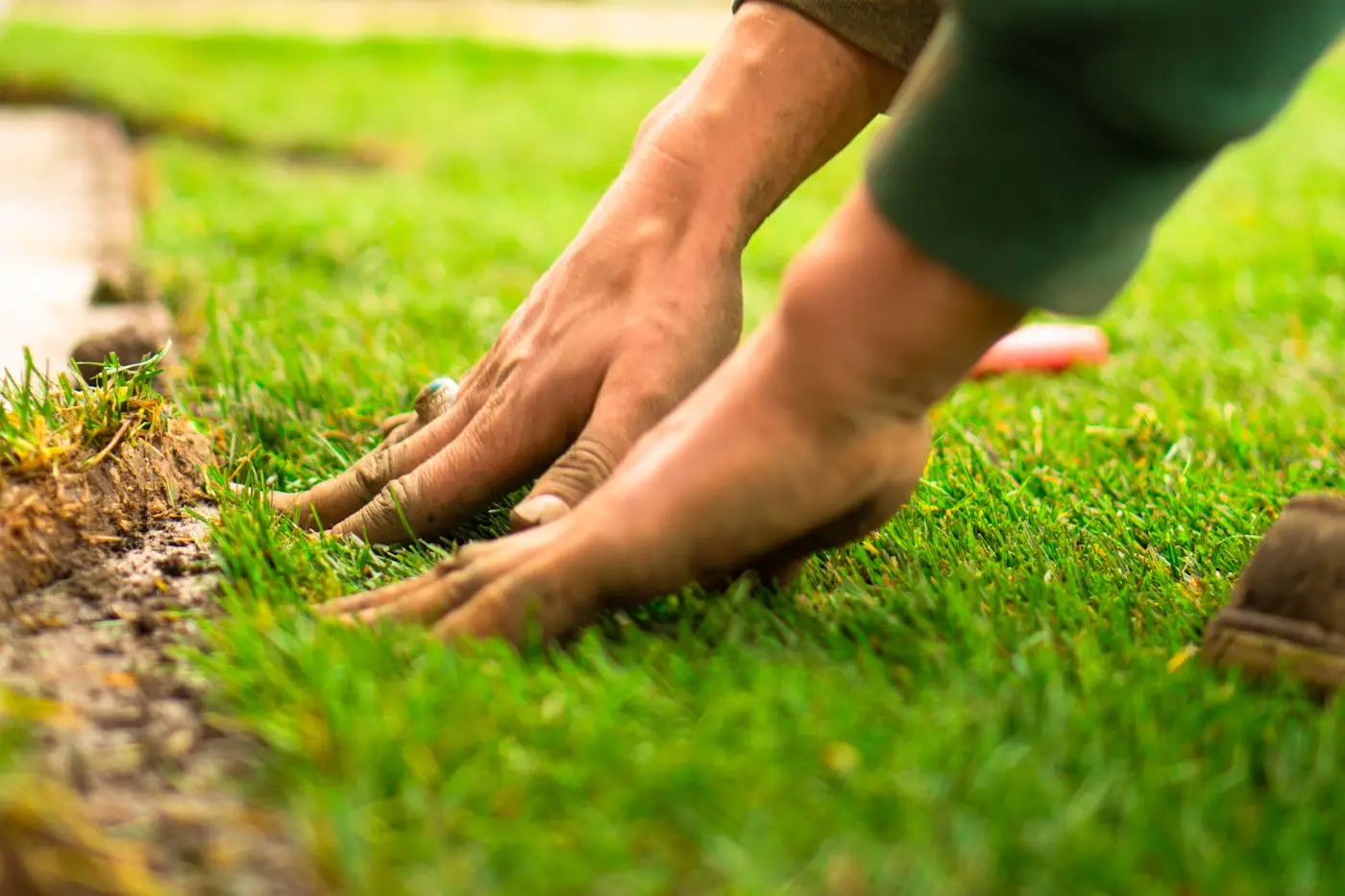
The quick answer on price and scope
Standard residential turf supply and lay in Yorkshire costs £8–£12 per m2 on prepared ground. Premium sports blend turf (rye/fescue mix) costs £12–£16 per m2. A typical 20m2 garden runs £180–£280 for supply and lay excluding ground preparation. Ground preparation for Yorkshire clay adds £100–£300 depending on how much topsoil amendment is needed. The full breakdown by garden size is in the price table further down.
Turfing is a one-time installation job, not an ongoing service. Once the lawn is established - typically six to eight weeks after laying - it enters normal maintenance: mowing, feeding, occasional scarification. If you are looking for ongoing lawn care rather than a new lawn, the lawn mowing service and garden maintenance pages cover those.
The most common mistake with Yorkshire turfing: laying turf directly onto clay without topsoil preparation. The turf establishes poorly, the lawn becomes compacted and waterlogged in winter and dry and hard in summer. One barrowload of topsoil per m2 on clay ground before laying is not optional - it is the difference between a lawn that lasts and one that struggles.
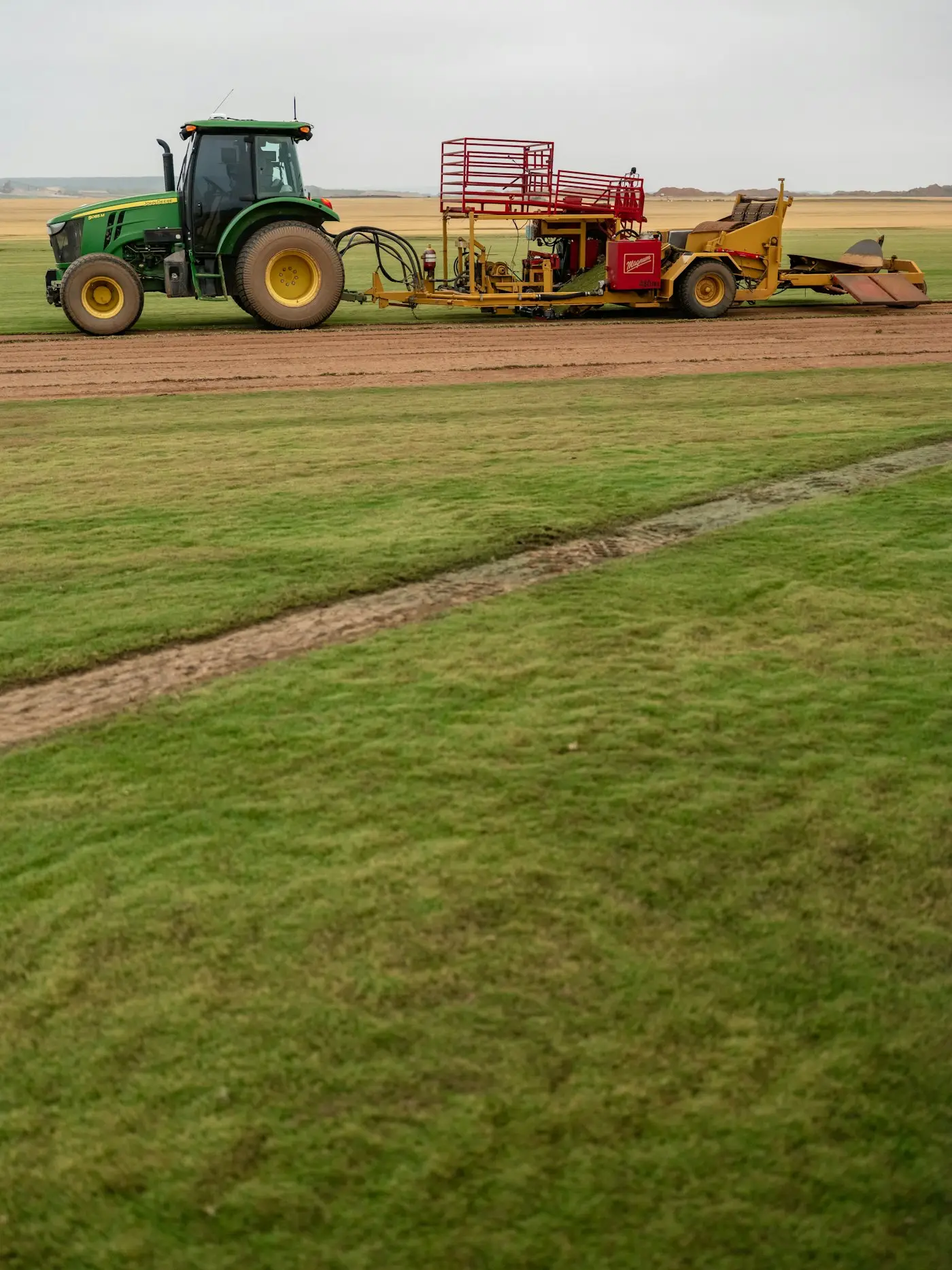
Turf vs seed in Yorkshire: which to choose
Both have their place. The decision comes down to timing, budget and how quickly you need a usable lawn.
Turfing: the case for it
Turf gives an instant result. Within six weeks of laying you have a lawn you can use. It can be laid for most of the year - any time the ground is not frozen, waterlogged or baked dry. There is no window of opportunity to hit, no germination anxiety, and no weeks of bare soil vulnerable to weeds, birds and foot traffic. For a family garden where getting a usable space quickly matters, turf is almost always the right choice.
Turf also tolerates Yorkshire's autumn rains well once established. A lawn laid in late September or October will knit into the soil through the winter and be strong and ready for spring use by March. This autumn window is particularly good in Yorkshire because the soil is still warm from summer, so roots establish before the ground cools.
Seeding: when it makes sense
Seed costs significantly less than turf - typically £1–£3 per m2 for seed and spreading versus £8–£16 per m2 all-in for turf. For large areas where budget is a constraint, seeding with careful timing can give an excellent result. The two reliable windows for seeding in Yorkshire are April to May (soil warming, moisture adequate) and August to September (soil still warm, autumn rains provide moisture without drought stress). Outside these windows, germination rates drop significantly. Avoid seeding from mid-June to late July when dry spells are most common in Yorkshire - without irrigation the seed desiccates before it establishes.
Seed requires more active aftercare than turf in the establishment phase: protecting against birds (fleece or netting), keeping off the area for 8-12 weeks, regular light watering in dry spells, and managing weed competition in the first season. These demands are manageable but real. If your garden is heavily shaded by trees, choose a shade-tolerant seed mix rather than standard turf, as most rolled turf is produced on open sunny fields and will struggle in deep shade.
Yorkshire clay: soil preparation in practice
Yorkshire sits on a wide band of clay-dominated soils, particularly across the Vale of York, the Leeds-Bradford corridor, Wakefield and the East Riding lowlands. Clay has one fundamental problem for a lawn: it holds water when wet and sets like concrete when dry. Neither state is good for grass roots.
Topsoil amendment
The standard recommendation for Yorkshire clay is to bring in enough sandy loam topsoil to create a 75mm working layer over the clay. In practice this works out to approximately one standard builder's barrowload per square metre. The topsoil should be spread over the cleared and loosened clay surface and rotovated in to at least 150mm depth, mixing the topsoil with the top of the clay rather than simply sitting on top of it. This blending is important: a sharp interface between topsoil and clay creates a perched water table that roots cannot cross in wet conditions.
The finished seedbed should be firm but not compacted, fine in texture, raked level and firmed with a roller or by systematically treading (the old technique of shuffling sideways across the bed). The surface should be at least 25mm below the surrounding hard surfaces to allow for turf thickness without the lawn sitting proud of pathways and creating an edge-maintenance problem.
Drainage on low-lying Yorkshire ground
Some Yorkshire gardens, particularly in the Vale of York, East Riding and low-lying parts of the Ouse, Wharfe and Don valleys, have groundwater levels that make year-round lawn drainage a challenge regardless of topsoil quality. If water stands on your garden for more than 24-48 hours after heavy rain, you have a drainage issue that topsoil alone will not fix. A land drain or soak-away may be needed before turfing makes sense. A good turf layer will assess drainage before quoting; be cautious of anyone who does not raise the question on a low-lying site.
Turfing costs across Yorkshire
| Job description | Typical Yorkshire price | Notes |
|---|---|---|
| Turf supply and lay, 20m2 (standard) | £180–£280 | Excludes ground preparation. On prepared, level ground. |
| Turf supply and lay, 20m2 (premium sports blend) | £260–£380 | Finer-leaf rye/fescue blend. Excludes ground preparation. |
| Turf supply and lay, 50m2 (standard) | £400–£650 | Larger area - slight reduction in per-m2 cost. |
| Turf supply and lay, 50m2 (premium) | £600–£900 | Premium sports turf. Excludes ground preparation. |
| Ground preparation (per m2) | £5–£15/m2 | Topsoil supply, rotovation, levelling. Higher end for clay-heavy ground needing significant amendment. |
| Clay topsoil amendment (20m2) | £100–£300 | One barrowload per m2. Depends on topsoil price and access. |
| Land drain / soak-away (if needed) | £300–£800+ | For low-lying gardens with standing water. Quote individually. |
Per-m2 rates for turf and preparation reduce on larger areas. If you have a garden over 100m2 to turf, ask specifically about a per-m2 rate rather than accepting a first quote calculated at the domestic rate.
The full guide
Turf varieties for Yorkshire
Not all turf is the same. The variety you choose should match how you will use the lawn and the conditions in your garden.
Rye/fescue blends: the Yorkshire workhorse
The most commonly available domestic turf in Yorkshire is a blend of perennial ryegrass and red fescue. Perennial rye is hard-wearing, recovers quickly from damage and establishes fast. Red fescue tolerates lower fertility and poorer drainage than rye alone, which makes the blend better suited to the variable Yorkshire garden than pure-rye turf. A 70/30 or 60/40 rye/fescue blend is a reliable all-round choice for most Yorkshire domestic lawns.
Sports and premium turf blends
Sports turf - used on football pitches and cricket outfields - is produced to a higher standard of uniformity and generally uses finer-leaf rye varieties alongside browntop bent or smooth-stalked meadow grass. It creates a denser, finer-textured lawn with better colour. It costs more (£12–£16 per m2 all-in) and requires marginally more care - more frequent mowing, a little more feeding - but delivers a noticeably better-looking result. Worth the upgrade if the lawn is a focal point in a garden makeover or if you want a lawn that looks maintained rather than simply functional.
Shade-tolerant turf
Standard rye/fescue turf requires at least four hours of direct sunlight per day. For gardens that are heavily shaded by buildings, walls or established trees - common in terraced houses across Bradford, Leeds and Sheffield, and in many of the older suburban gardens of Harrogate and York - a shade-tolerant mixture seeded in at establishment can help. True shade-tolerant turf using creeping red fescue and shade-adapted fescues is available from specialist suppliers and is worth specifying if more than a third of the lawn area is in shade.
Seasonal timing for Yorkshire's climate zones
Yorkshire is not climatically uniform. There are meaningful differences between the wetter, higher-altitude western areas and the drier, lower Vale of York and East Yorkshire.
Vale of York and East Yorkshire
These are Yorkshire's drier areas, receiving 600-650mm of annual rainfall on average. Summer dry spells are a real consideration here - midsummer turfing without irrigation is risky from late June through August. September and October are excellent months for turfing in the Vale: soil is warm, natural rainfall is reliable, and the turf has time to root well before frost. Spring turfing from late March onwards is also reliable once the soil temperature is above 5-6C consistently.
Pennine fringe and West Yorkshire
Higher and wetter. Annual rainfall of 800-1,100mm in the Pennine fringe around Huddersfield, Halifax, Keighley and Skipton means drought stress is rarely the concern here. Waterlogging is a more relevant risk, particularly in poorly draining clay gardens. Summer turfing is generally fine as the summers are wetter than the Vale - the main caution is avoiding very wet ground where laying equipment would compact the seedbed. Autumn turfing works well in this zone as the extended autumn rains knit turf in quickly.
Aftercare: the critical first eight weeks
The biggest cause of turfing failure in Yorkshire is inadequate watering in the first six to eight weeks. New turf has very shallow roots and cannot source moisture from deep in the soil. It relies entirely on what is available in the top 50-75mm of the seedbed.
Watering
In the first two weeks, water every day in dry conditions - enough to wet the seedbed to 75mm depth, not just dampen the turf surface. In Yorkshire's spring and autumn the natural rainfall often provides this, but in the July-August window it will not. Lift a corner of a turf roll after watering - the underside should be moist. If it is dry, you have not watered enough.
From weeks three to eight, reduce to every two to three days in dry conditions. The lawn is establishing roots and actively seeking moisture deeper in the soil - you want to encourage downward root growth by allowing the top to dry slightly between waterings rather than keeping it permanently saturated. By week eight, a well-established lawn in normal Yorkshire autumn conditions needs no supplemental watering at all.
First mow
Mow for the first time when the grass reaches approximately 75mm height and you can feel resistance when you try to tug a turf roll gently - this indicates the roots have anchored. Cut to no less than 40mm height for the first few cuts. Never remove more than a third of the blade length in any single mow. Using a mower that is too heavy or cutting too short in the first weeks is the second most common way to damage a newly laid lawn.
Frequently asked questions about turfing in Yorkshire
When is the best time to lay turf in Yorkshire?
Year-round as long as the ground is not frozen, waterlogged or baked dry. The best windows are March to May and September to October. Summer turfing from June to August is fine with daily irrigation but risky without it, particularly in the drier Vale of York and East Yorkshire. Autumn turfing is the safest bet for Yorkshire: soil is warm, rainfall is reliable, and the turf roots over winter ready for spring use.
How much topsoil do I need for turfing on Yorkshire clay?
One barrowload per m2 as a rule of thumb, equating to approximately 75mm of topsoil depth. This needs to be rotovated in to at least 150mm depth to blend with the top of the clay, not simply spread on the surface. A sharp layer interface causes waterlogging. Use sandy loam topsoil rather than heavy clay-based topsoil - you are trying to improve drainage and aeration, not add more clay.
How much does turfing cost in Yorkshire?
Standard turf supply and lay costs £8–£12 per m2 on prepared ground. Premium sports blend is £12–£16 per m2. A 20m2 garden runs £180–£280 excluding preparation. Clay ground preparation adds £100–£300. Full 50m2 standard turfing all-in including preparation typically runs £600–£900.
Turf or seed: which is better for a Yorkshire garden?
Turf for most domestic gardens where you want a usable lawn within six weeks and do not want to manage the establishment process. Seed if budget is the priority, you can hit the April-May or August-September window, and you are willing to manage watering and weed control through establishment. Seed is significantly cheaper but requires timing and attention. Turf is more forgiving of timing and less demanding to establish.
Further reading
A new lawn that lasts starts with the ground underneath
Tell us your postcode, garden size and current ground conditions. A local turf layer can take it on and come back with a price that includes the preparation your soil actually needs.
Request a gardenerTurfing across all of Yorkshire.
Local turf layers covering 240+ towns across Yorkshire. Find your nearest specialist for postcode-specific pricing and knowledge of local soil conditions.
- Turfing in York
- Turfing in Harrogate
- Turfing in Beverley
- Turfing in Hull
- Turfing in Cottingham
- Turfing in Scarborough
- Turfing in Wetherby
- Turfing in Boston Spa
- Turfing in Driffield
- Turfing in Malton
- Turfing in Norton
- Turfing in Helmsley
- Turfing in Pickering
- Turfing in Kirkbymoorside
- Turfing in Easingwold
- Turfing in Thirsk
- Turfing in Ripon
- Turfing in Knaresborough
- Turfing in Tadcaster
- Turfing in Selby
- Turfing in Pocklington
- Turfing in Northallerton
- Turfing in Leeds
- Turfing in Bradford
- Turfing in Sheffield
- Turfing in Halifax
- Turfing in Wakefield
- Turfing in Huddersfield
- Turfing in Doncaster
- Turfing in Rotherham
- Turfing in Barnsley
- Turfing in Haxby
- Turfing in Strensall
- Turfing in Huntington
- Turfing in Copmanthorpe
- Turfing in Bishopthorpe
- Turfing in Stamford Bridge
- Turfing in Filey
- Turfing in Bridlington
- Turfing in Goole
- Turfing in Ilkley
- Turfing in Dunnington
- Turfing in Boroughbridge
- Turfing in Skipton
- Turfing in Whitby
- Turfing in Stokesley
- Turfing in Market Weighton
- Turfing in Stockton-on-the-Forest
- Turfing in Keighley
- Turfing in Otley
- Turfing in Bedale
- Turfing in Hornsea
- Turfing in Castleford
- Turfing in Dewsbury
- Turfing in Garforth
- Turfing in Guiseley
- Turfing in Horsforth
- Turfing in Morley
- Turfing in Pontefract
- Turfing in Ackworth
- Turfing in Batley
- Turfing in Bingley
- Turfing in Cleckheaton
- Turfing in Holmfirth
- Turfing in Horbury
- Turfing in Ossett
- Turfing in Pudsey
- Turfing in Hebden Bridge
- Turfing in Mirfield
- Turfing in Sowerby Bridge
- Turfing in Brighouse
- Turfing in Elland
- Turfing in Featherstone
- Turfing in Normanton
- Turfing in Hemsworth
- Turfing in Maltby
- Turfing in Mexborough
- Turfing in Wath-upon-Dearne
- Turfing in Rawmarsh
- Turfing in Swinton
- Turfing in Royston
- Turfing in Darton
- Turfing in Hoyland
- Turfing in Wombwell
- Turfing in Penistone
- Turfing in Thorne
- Turfing in Bawtry
- Turfing in Kippax
- Turfing in Rothwell
- Turfing in Knottingley
- Turfing in Richmond
- Turfing in Leyburn
- Turfing in Masham
- Turfing in Settle
- Turfing in Guisborough
- Turfing in Loftus
- Turfing in Saltburn-by-the-Sea
- Turfing in Pateley Bridge
- Turfing in Grassington
- Turfing in Long Preston
- Turfing in Hebden
- Turfing in Shipley
- Turfing in Hessle
- Turfing in Brough
- Turfing in Swanland
- Turfing in Withernsea
- Turfing in Heckmondwike
- Turfing in Birstall
- Turfing in Liversedge
- Turfing in Yeadon
- Turfing in Catterick Garrison
- Turfing in Acomb
- Turfing in Poppleton
- Turfing in Rawcliffe
- Turfing in Sherburn-in-Elmet
- Turfing in Howden
- Turfing in Mytholmroyd
- Turfing in Marsden
- Turfing in Meltham
- Turfing in Conisbrough
- Turfing in Tickhill
- Turfing in Adwick-le-Street
- Turfing in Thurnscoe
- Turfing in South Elmsall
- Turfing in Denby Dale
- Turfing in Farsley
- Turfing in Crofton
- Turfing in Armthorpe
- Turfing in Sprotbrough
- Turfing in Todmorden
- Turfing in Willerby
- Turfing in Hedon
- Turfing in Hawes
- Turfing in Addingham
- Turfing in Burley-in-Wharfedale
- Turfing in North Cave
- Turfing in Barlby
- Turfing in Haworth
- Turfing in Baildon
- Turfing in Bolton-upon-Dearne
- Turfing in Goldthorpe
- Turfing in Cudworth
- Turfing in Honley
- Turfing in Queensbury
- Turfing in Upton
- Turfing in Kirkburton
- Turfing in Skelmanthorpe