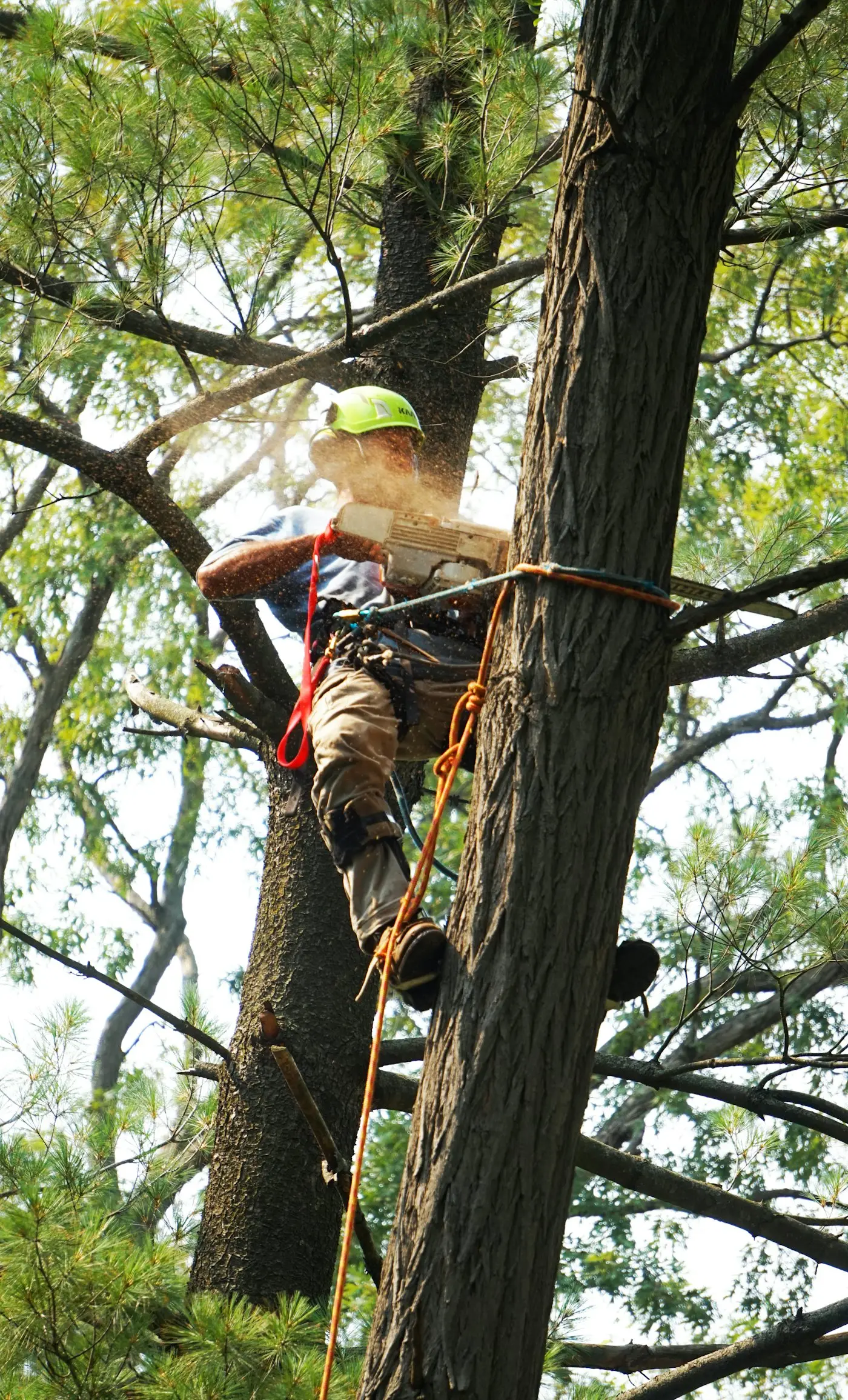
Yorkshire's gardens are unusually well-stocked with significant trees. The county's combination of large Victorian and Edwardian properties with mature garden plantings, former parkland subdivided into housing, and the sheer scale of the landscape means that managing trees is a reality for a large proportion of homeowners across Leeds, Harrogate, York, Sheffield, and the rural areas in between. If you have a tree that needs attention - whether a crown that has grown over the house, a storm-damaged branch, a dead ash that is becoming a hazard, or a tree you simply want removed - this guide covers what it costs, what to check before booking, and the legal position you need to understand first.
The quick answer: crown reduction costs £200-800, tree felling £150-2,000+ depending on size, stump grinding £60-300, and emergency storm work £400-1,000 or more. All prices depend heavily on size, access, and what is happening around the tree.
Tree Surgery Services and What They Mean
Tree surgery is not a single service - it covers a range of different operations with very different costs, techniques, and reasons for doing them. Understanding what you are actually asking for helps you get accurate quotes and avoid paying for work you do not need.
Crown reduction
Crown reduction reduces the overall size of the tree's canopy while maintaining its natural shape. It involves removing the outer portions of branches to reduce the spread or height, cutting back to suitable growing points rather than leaving stubs. Crown reduction is appropriate when a tree has grown too large for its setting, when it is shading the garden or house too heavily, or when the crown is creating wind resistance that poses a structural risk. A well-executed crown reduction leaves the tree looking natural and continues to grow, just at a more manageable size. Cost: £200-800 for a medium garden tree, more for large specimens requiring a full crew.
Crown lifting
Crown lifting removes the lower branches to raise the base of the canopy. Common reasons include improving light levels in the garden beneath the tree, clearing a canopy that has grown down to obstruct a driveway or path, or reducing the "sail" effect on exposed sites. It is a less drastic operation than crown reduction and generally less expensive. Cost: £150-400 depending on tree size and number of branches removed.
Deadwooding
Deadwooding removes dead, dying, or diseased branches from within the canopy. Dead branches eventually fall - in Yorkshire's stormy autumns and winters, often onto something you would prefer they had not. Deadwooding is often recommended as an annual or biennial maintenance operation on large established trees, particularly veteran oaks and mature beeches which accumulate dead branches regularly. Cost: £150-500 depending on tree size and accessibility.
Tree felling
Complete removal of the tree, including felling in sections (sectional felling) where the tree cannot be felled in one piece due to the surrounding space. Most domestic garden trees require sectional felling, with the surgeon working from a rope in the canopy and lowering sections to the ground using rigging. Cost varies enormously by tree size:
| Tree height | Felling cost (sections, no access issues) | Stump grinding (add-on) |
|---|---|---|
| Small (under 5m) | £150-300 | £60-100 |
| Medium (5-10m) | £300-700 | £80-150 |
| Large (10-15m) | £600-1,200 | £120-250 |
| Very large (15m+) | £1,000-2,000+ | £150-300 |
Access is a major pricing factor. A tree surgeon who can park a chipper on the drive and chip material immediately is significantly cheaper to hire than one who has to carry every cut section through the house by hand. If your rear garden has no side access and the tree is large, expect to pay at the upper end of these ranges, potentially beyond them.
Stump grinding
After felling, the stump remains. Left in place, it can be a tripping hazard, will continue to produce suckers in some species, and prevents you using the ground properly. Stump grinding uses a specialist machine to grind the stump and upper root flare down to about 30cm below ground level, leaving wood chip that can be raked out or left to decompose. It does not remove the main lateral roots, but makes the ground usable and safe. Stump grinding as a standalone service typically costs £60-300 depending on stump size. Having it done at the same time as felling is usually cheaper than a return visit.
Emergency storm damage
Yorkshire is a windy county. The autumn and winter gales that come in off the Pennines and across the North Sea cause significant tree damage every year, particularly to mature ash (already weakened by dieback) and to large-canopied trees with surface root systems on the shallow soils of the Dales and Moors. Emergency call-outs - where a tree or branch has fallen or is at immediate risk - command a significant premium over standard work. Out-of-hours emergency call-outs typically cost £400-1,000 for moderate jobs, more for large complicated situations involving structures, vehicles, or road closures. Most tree surgery services in Yorkshire maintain an emergency line.
Tree Preservation Orders: What They Are and Why They Matter
A Tree Preservation Order (TPO) is a legal protection placed on a specific tree or group of trees by a local planning authority. Once a TPO is in place, any pruning, felling, or other work on that tree requires prior written consent from the council. Carrying out work on a TPO tree without consent is a criminal offence. The maximum fine is unlimited - courts have levied fines of tens of thousands of pounds for the unlawful felling of particularly significant trees.
How to check whether a tree has a TPO
Every council in Yorkshire maintains a register of TPOs on a publicly searchable GIS planning portal. Search your council's planning portal for Tree Preservation Orders or use the planning map viewer and look for TPO overlays at your property address. Leeds City Council, Sheffield City Council, Bradford Metropolitan District Council, York City Council, and North Yorkshire Council all have publicly accessible TPO records. The check takes a few minutes and is free. Always check before booking any tree work, even if the tree looks ordinary - TPOs are placed on individual trees of all sizes and species, not only ancient veterans.
Applying for consent to work on a TPO tree
If a tree is TPO-protected and you need to carry out work, submit a Prior Approval application to your local planning authority. This is free. The council has eight weeks to make a decision. In practice, reasonable requests for surgery work on TPO trees (crown reduction for safety or access reasons, deadwooding, removal of a diseased tree) are generally approved, sometimes with conditions. Outright refusal is more common for requests to fell healthy, significant trees.
Conservation Areas
If your property is in a Conservation Area - and many parts of Yorkshire's historic towns are - you must give six weeks' written notice to the council before working on any tree with a trunk diameter over 75mm at 1.5 metres height. The council can use this period to make a TPO. If they do not respond within six weeks, you can proceed. This applies to all trees in Conservation Areas, not just notable ones. Areas of York (Micklegate, The Mount, Bootham), central Harrogate, Skipton town centre, Knaresborough, Ripon, and many North Yorkshire villages fall within Conservation Areas. Check your postcode on the council planning portal.
Ash Dieback in Yorkshire: A Growing Problem
Ash dieback, caused by the fungus Hymenoscyphus fraxineus, is now endemic across Yorkshire. The disease kills ash trees progressively - first the upper canopy shows die-back, then the lower crown, then the tree. As the tree dies, its wood becomes structurally compromised very quickly. Dead ash is particularly hazardous because the timber deteriorates rapidly and becomes brittle within one to two years of the tree dying, making felling and surgery significantly more dangerous than on living trees.
Yorkshire has a large population of ash trees - in hedgerows, along watercourses, in gardens, and in woodland. Many domestic gardens in North Yorkshire, the Dales, and in the green fringe around Leeds and Harrogate have ash trees planted in previous decades as ornamental or shade trees. These are now at risk, and many are already showing signs of dieback.
If you have an ash tree in your garden, get it assessed by a qualified arborist sooner rather than later. The risk from an untreated declining ash tree increases year by year as the canopy dies and becomes increasingly unstable. An arborist can advise on whether the tree can be managed (crown reduction to remove the dead upper canopy and reduce risk), whether it needs to be removed, or whether it has sufficient health to remain for the time being. Early intervention is significantly cheaper than emergency removal of a fully dead ash that has become a hazard. Garden clearance after tree removal is often needed to deal with the arisings and the cleared ground.
Yorkshire's Veteran Trees and Why They Need Careful Handling
Yorkshire has a significant legacy of veteran trees - ancient oaks, mature beeches, and old limes that predate the housing built around them. These trees have often been present for 200 years or more and are disproportionately valuable for biodiversity, providing habitat for specialist insects, bats, and hole-nesting birds that cannot use younger trees.
Veteran trees require a different approach from routine garden trees. Aggressive crown reduction of a veteran oak can do more harm than good if the balance between root system and canopy is disrupted. Deadwooding of a veteran should preserve some dead wood in the canopy - dead wood habitat is precisely what makes veteran trees ecologically valuable. Any arborist working on a veteran tree should have specific experience with ancient trees, not just standard commercial tree surgery experience.
The Woodland Trust maintains a register of veteran trees (the Ancient Tree Inventory) and many significant Yorkshire veterans are on it. Check whether any tree in your garden appears on the register before booking work. The Harrogate district, North Yorkshire, and the East Riding all have significant concentrations of recorded veteran trees in garden and hedgerow settings.
How to Hire a Tree Surgeon in Yorkshire
Tree surgery has a relatively low barrier to entry - anyone can buy a chainsaw - but the risk of a poorly qualified operator is real, both for safety and for the trees themselves. Checking credentials protects both you and them.
Essential checklist before hiring:
- NPTC (Lantra Awards) CS30 chainsaw certificate (felling) and CS31 (aerial operations) for any climber working above ground
- Public liability insurance minimum £5 million - ask to see the certificate, not just a verbal assurance
- Employer's liability insurance if they are bringing employees to site
- Professional membership of the Arboricultural Association (AA) or BALI (British Association of Landscape Industries) - this is not mandatory but indicates professional standards
- Written quotation specifying the work, disposal of arisings, and any additional costs (stump grinding, skip hire)
- Confirmation that they have checked TPO and Conservation Area status if relevant
Be cautious of very low quotes. A crew of two qualified arborists with proper insurance, a chipper, and appropriate rigging equipment has significant overheads. A quote that is substantially lower than the market rate is usually either missing something (disposal of arisings, stump grinding) or involves unqualified operators with inadequate insurance. Get three written quotes on significant jobs before committing.
What a Tree Surgeon Cannot Do Without Permission
Beyond TPOs and Conservation Area rules, there are a few other constraints worth knowing. If a tree overhangs a neighbour's land, you are entitled to cut back branches to the boundary line - but you cannot do this without notifying your neighbour first, and the cut branches (as well as any fruit on them) legally belong to the neighbour. You cannot force entry onto a neighbour's land to carry out tree work, even if the tree is yours.
Birds' nests in active use are protected under the Wildlife and Countryside Act 1981 year-round, not just in spring. A nest with eggs or chicks in it cannot be disturbed regardless of the tree work planned. The nesting season runs broadly from February to August, with peak activity April to July. Any tree surgeon who spots an active nest should stop work immediately. This is not just courtesy - disturbing an active nest is a criminal offence. The practical implication is that tree work is best planned for late autumn and winter when nesting risk is minimal. See the autumn garden jobs guide for the case for doing tree surgery in October and November.
Frequently Asked Questions
Can I fell a tree in my own garden in Yorkshire?
Usually yes, but check for TPOs (Tree Preservation Orders) and Conservation Area status before booking any work. Both checks are free on your council's planning portal. Removing a TPO tree without consent carries an unlimited fine. In Conservation Areas, six weeks' written notice to the council is required before felling trees over 75mm trunk diameter.
When should I call an emergency tree surgeon in Yorkshire?
When a tree or large branch has fallen or is at immediate risk of falling onto a structure, vehicle, or public route; when storm damage has left a tree dangerously unstable; or when a tree is blocking a road or driveway. Emergency call-outs cost £400-1,000 or more depending on scale and time of day.
Do I need planning permission for tree work in a Conservation Area?
No permission, but you need six weeks' written notice to the council for any tree over 75mm trunk diameter. The council can use this period to impose a TPO if they wish. If no response within six weeks, you can proceed. Many Yorkshire town centre locations and historic villages fall within Conservation Areas - check your postcode on the relevant council planning portal.
What qualifications should a tree surgeon have?
NPTC CS30 (felling) and CS31 (aerial work), minimum £5 million public liability insurance, ideally Arboricultural Association or BALI membership. Always get a written quote before work starts. Three quotes on any job over £500 is sensible practice.
How much does stump grinding cost in Yorkshire?
£60-100 for small stumps, £100-200 for medium stumps, £150-300 or more for large stumps from mature trees. Having it done at the same time as felling is cheaper than a separate return visit. Access to the stump affects price significantly.
What is ash dieback and how does it affect Yorkshire gardens?
Ash dieback (Hymenoscyphus fraxineus) is endemic across Yorkshire and kills ash trees progressively. Dead ash becomes brittle very quickly, increasing the hazard risk significantly. If you have an ash tree showing sparse canopy, dead branches, or lesions on the bark, get an arborist assessment before it becomes an emergency removal. Early intervention is substantially cheaper and safer than dealing with a fully dead ash.
Need a tree surgeon in Yorkshire?
Tell us where you are and what needs doing. We will connect you with a qualified, insured local arborist.
Get a quote