Garden design · Great Ouseburn
Garden design across Great Ouseburn, Little Ouseburn, Aldborough, Minskip and the Boroughbridge-Knaresborough corridor in YO26. Planting plans, full redesigns, and hard landscaping on alluvial Vale of York soil in flat, open village gardens. Local designers who quote directly, free initial estimates, design from £500.
Great Ouseburn is a village in the lower Ouse valley, YO26 postcode, between Boroughbridge to the north and Knaresborough to the south-east. The village has a traditional North Yorkshire character - stone and brick farmhouses, generous village plots, some more modern housing at the edges. The surrounding landscape is flat Vale of York arable farmland with the River Ouse providing the eastern boundary of the wider area.
The defining soil characteristic at Great Ouseburn is alluvial soil - deposited by the River Ouse and its tributaries over centuries. Alluvial soils in the Vale of York are typically deep, fertile, and well-structured, neither the heavy drainage-challenged clay of the industrial West Yorkshire belt nor the very free-draining limestone of the Harrogate fringe. The soil character tends toward a medium loam with good moisture retention - productive and manageable for a wide range of garden plants. In lower-lying positions closer to the river, there can be higher water table conditions and occasional waterlogging in wet winters.
Most garden design enquiries from Great Ouseburn and the surrounding YO26 villages involve larger plots than urban Yorkshire - the village character and property scale generate bigger gardens. The flat topography means garden layouts work with level or near-level sites in most cases, which simplifies hard landscaping but can limit the natural drainage that slope provides. For year-round garden maintenance, see the Great Ouseburn local gardeners page.
Design fees are separate from build and planting costs. The ranges below reflect what designers across Yorkshire typically charge. Most quote a fixed fee after seeing the site.
| Service | Typical range |
|---|---|
| Initial consultation | Free to £75-150 |
| Planting plan only | £300-800 |
| Planting plan + implementation | £600-1,500 |
| Full design and project management | £800-3,000+ |
| Border replant (up to 10 sqm) | £150-400 |
| Full garden makeover (50-100 sqm) | £5,000-15,000+ |
Larger village plots in Great Ouseburn and surrounding YO26 villages sit at the upper end of or above standard ranges. Hard landscaping on a flat site is generally straightforward and does not require the additional groundwork costs that sloping sites attract. See the garden renovation cost guide for wider Yorkshire context on project costs.
Free initial estimate from a designer who understands Vale of York alluvial conditions and the flat, open character of gardens in YO26.
The full local guide
The flat topography of Great Ouseburn and the Ouse valley villages means most garden designs work with level ground. This is a design opportunity as much as a constraint - level sites are easier to hard landscape, simpler to drain formally, and give more flexibility for layout decisions. The design challenge is creating visual interest and spatial variety on flat ground without relying on topographic change. Raised beds, planting height variation, pergola structures, and defined lawn areas with planted surroundings all contribute to a design that feels purposeful rather than monotonous.
The deep, fertile alluvial loam at Great Ouseburn is genuinely productive planting ground. A wide range of ornamental perennials and shrubs perform reliably in this soil - it is not as challenging as heavy clay or as demanding for irrigation as free-draining limestone loam. The main constraint in lower-lying positions is winter waterlogging: in wet years, gardens close to the river can sit with standing water through January and February, and any planting in those areas needs to tolerate periodic waterlogged conditions. Raised beds and moisture-tolerant planting address this practically.
The alluvial soil is excellent for productive growing - fertile, workable, and moisture-retentive without the drainage problems of heavy clay. Vegetables, soft fruit, cut flowers, and orchard trees all perform well in this ground. Great Ouseburn's flat plots have space for a proper kitchen garden layout - a walled or hedged enclosure with raised beds, paths, and fruit tree espaliers against the boundaries. A full kitchen garden design and installation on a standard Great Ouseburn plot typically costs £5,000-£12,000 depending on scale and materials.
Properties on the village edge at Great Ouseburn, Aldborough, and Little Ouseburn often back onto open farmland, with views across the flat Vale of York landscape. Designs that integrate with this setting - native hedging that extends the field boundary character, wildflower areas that connect to the agricultural landscape, long grass managed for wildlife - are increasingly popular. This approach suits the village character and typically has lower ongoing maintenance requirements than formal ornamental planting.
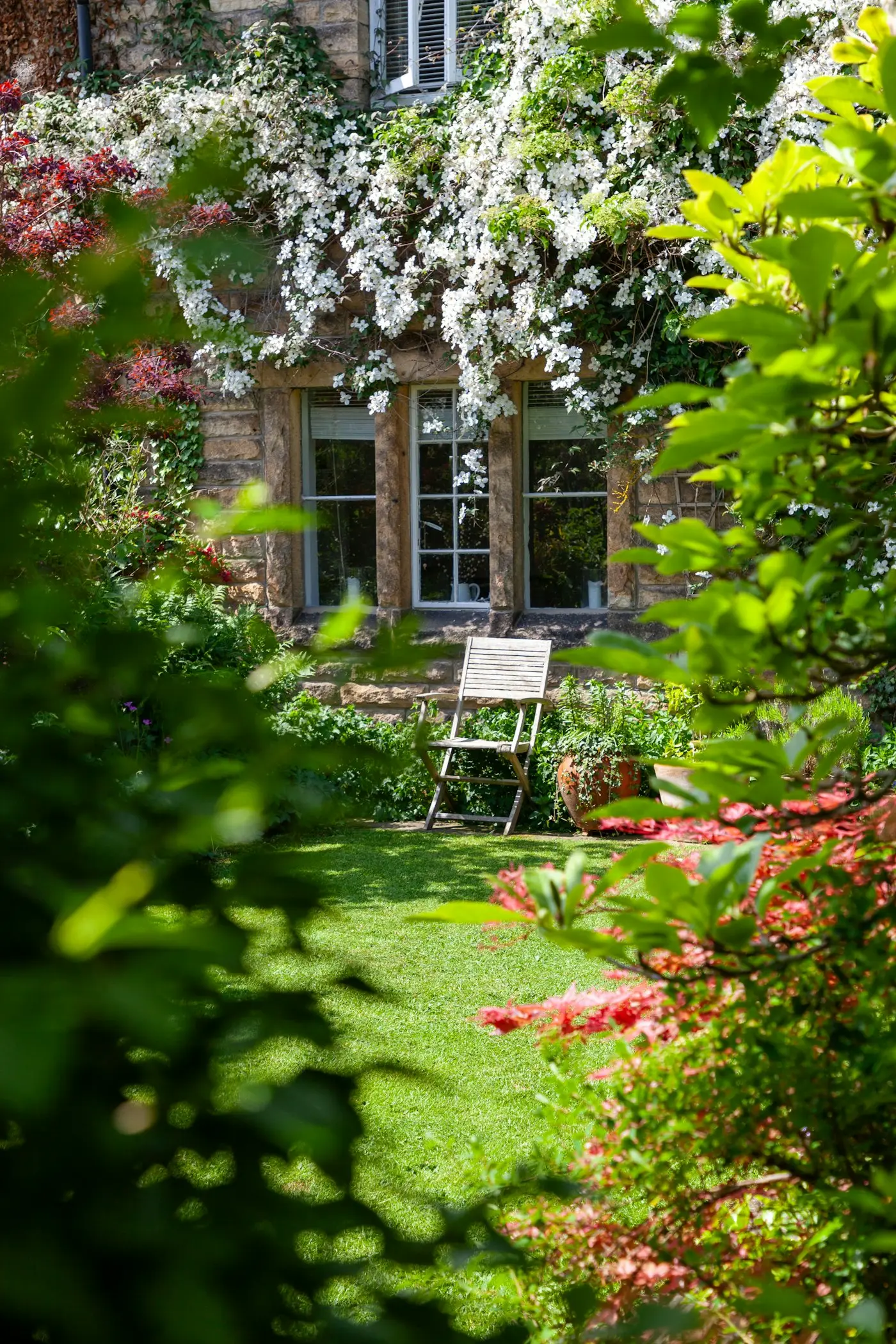
The fertile alluvial loam at Great Ouseburn supports a broad plant palette. Ornamental perennials that perform well in moisture-retentive, fertile soil - astilbes, hostas, ligularia, rodgersia, and trollius - are particularly strong in the lower-lying and more moisture-retentive parts of the village. In better-drained positions, the soil suits virtually any hardy ornamental: roses, geraniums, rudbeckias, heleniums, and salvias all establish reliably and perform through a Vale of York growing season.
For structural planting, the fertile alluvial soil grows shrubs and small trees quickly. Viburnum, philadelphus, cornus, and physocarpus all establish fast and provide year-round structure. For ornamental trees on larger plots, native species such as field maple, cherry, and crab apple suit the landscape character and grow well in this ground.
In garden positions that experience periodic winter waterlogging, moisture-tolerant planting is essential. Ligularia, trollius, carex, and Molinia grasses are all well-suited to temporarily waterlogged conditions. On lawns that suffer seasonal waterlogging, hollow-tine aeration and a top dressing programme improve drainage progressively over several seasons. Lawn treatment on alluvial soil requires less intervention than on heavy clay but benefits from annual aeration in wet areas.
What soil does my Great Ouseburn garden have?
Great Ouseburn sits on deep fertile alluvial soil deposited by the River Ouse - a medium loam with good moisture retention and fertility. It is neither as challenging as heavy clay nor as irrigation-dependent as free-draining limestone loam. In lower-lying positions close to the river, higher water table conditions and winter waterlogging can occur. A designer should assess your plot's drainage before finalising a planting scheme.
My Great Ouseburn garden waterloggs in winter - can it be designed around?
Yes. The practical approaches are: raising the lawn surface slightly to improve drainage away from the house; using moisture-tolerant planting in the persistently wet areas; installing a French drain at the low point to redirect water off the plot; and in severe cases, improving subsoil drainage with a perforated pipe system. A designer should assess the extent of waterlogging before recommending a solution - the right intervention depends on how wet, how long, and what is causing the water to accumulate.
How do I design a flat Great Ouseburn garden to feel interesting?
Flat gardens work well with strong layout geometry - defined borders, a clear relationship between patio, lawn, and planting zones - and variation in planting height. Tall structural plants (ornamental grasses, standard trees, climbing plants on pergola structures) introduce vertical interest that topography would otherwise provide. Defined paths with strong geometry also help a flat plot feel purposeful rather than formless.
Can I grow an orchard on alluvial soil at Great Ouseburn?
Yes - the deep, fertile alluvial loam is excellent for fruit trees. Apple, pear, plum, and cherry all perform well in this soil. The flat, open Vale of York position provides good light but some wind exposure, so windbreaks or wall training helps with more tender varieties. On large village plots, a small traditional orchard of three to five trees on semi-dwarfing rootstocks is very achievable and adds significant character to the garden.
How long does a garden design project take in Great Ouseburn?
A planting plan can be produced in 2-4 weeks. A full design with hard landscaping typically takes 6-12 weeks from brief to installation. Larger village plots are often phased across two or three seasons. Spring and autumn are the best planting windows. Start the conversation 8-12 weeks before your target planting season.
When is the best time to start a garden redesign in Great Ouseburn?
The Vale of York has a reliable growing season with good light levels. Planting is best in spring (March-May) or autumn (September-October). Hard landscaping can proceed at any time in reasonable weather. Autumn planting is particularly effective in this area as the alluvial soil stays warm well into October and plants establish before winter without needing heavy watering support.
Garden design coverage across the Vale of York and surrounding towns:
Surrounding villages including Little Ouseburn, Aldborough, Minskip, Moor Monkton, Nun Monkton, and Whixley.
For general garden maintenance and clearance in Great Ouseburn, visit our local gardeners in Great Ouseburn page.