Garden design · Guisborough, East Cleveland
Guisborough garden design and landscaping.
Guisborough sits at the foot of the North York Moors in East Cleveland with Guisborough Priory as a backdrop and a genuine gardening challenge: variable soils ranging from boulder clay to free-draining sandstone, and enough coastal influence to mean wind exposure matters. Getting your specific plot right starts with understanding what you are working with. Local designers quote you directly. Design from £500.
- Free initial estimates
- Local designers who quote directly
- Design from £500
- No call centres
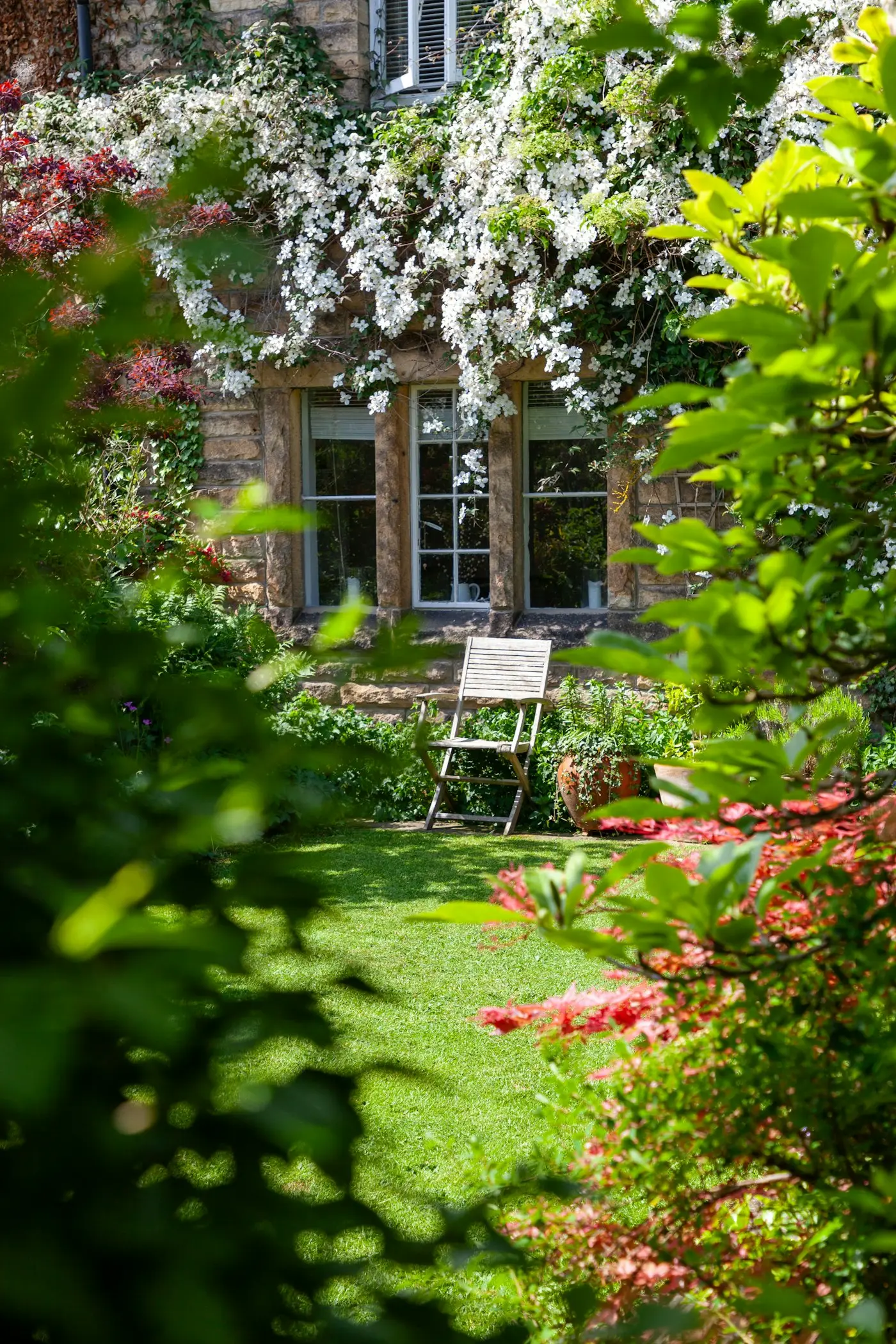
What garden design looks like in Guisborough
Guisborough TS14 is East Cleveland's main market town, sitting below the North York Moors on the southern side of the East Cleveland plateau. The ruins of Guisborough Priory, a substantial Augustinian monastery dating to the twelfth century, dominate the eastern edge of the town and give Guisborough a historical presence that most towns this size do not have. That heritage backdrop, combined with the open moorland rising quickly to the south, creates a strong landscape character that should inform how your garden sits within its setting.
The town's geology is more complex than it appears at first glance. The lower ground and the western residential areas sit on glacial boulder clay, deposited when the North Sea ice sheet retreated around 15,000 years ago. This clay is dense, slow-draining, and prone to holding standing water through the winter months. On the higher ground toward the Eston Hills and the Moors fringe to the south, the geology shifts to Jurassic sandstone and the soil becomes much lighter, more free-draining, and quicker to warm in spring. If you have gardened in Guisborough for any time, you will already have a sense of which end of this spectrum your soil sits on.
The coastal factor is real but often underestimated. Guisborough is around 12 miles from the North Sea at its nearest point, and while that distance means salt-wind damage is significantly less severe than in Saltburn or Whitby, easterly and north-easterly winds carry enough coastal influence to affect exposed plants. After a significant easterly gale in late winter or early spring, broad-leaved evergreens on exposed east-facing boundaries can show brown scorch on their leaves. Wind shelter, through native hedging or structural planting, is worth building into any exposed Guisborough garden as a design priority.
For local gardening and maintenance support, see the gardeners in Guisborough page. For the full overview of garden design services across Yorkshire, that page covers the process in detail.
The quick answer: costs and process in Guisborough
A planting plan for a Guisborough garden runs £300-800. Full design with project management runs £800-3,000+. Full garden builds including hard landscaping and planting typically run £5,000-15,000+ for a mid-size plot. Clay plots that need drainage improvement before planting add £800-2,500 to the project cost, but this is not optional if you want plants to survive. Designers quote you directly with no fee on your side of the enquiry.
The process starts with a site visit where the designer assesses your soil type, drainage, aspect, and brief. On clay ground, this assessment will specifically test how the drainage behaves before any planting scheme is proposed. You receive a scaled proposal, agree the work, and either implement it yourself or have the designer manage the whole project. For detailed cost context, our Yorkshire garden designer cost guide breaks down typical fees by project type.
Get your Guisborough garden designed this season.
Tell us about your soil, your brief, and your plot. A local designer comes back with a real figure. No subscriptions, no call centres. Design from £500.
Start your free estimateThe full local guide
Guisborough's soil, climate, and conditions
Boulder clay is the defining gardening challenge in the lower parts of Guisborough. Heavy clay soil compacts easily, drains slowly, and tends to become sticky and cold in winter and spring. Many plants that are otherwise cold-hardy will struggle in clay that stays waterlogged for extended periods, because their roots cannot access oxygen when the soil is saturated. This is why drainage assessment is not an optional extra on a Guisborough clay plot: it is the foundation that determines whether any subsequent planting investment survives.
Improving clay soil is a medium-term process. Adding organic matter each year, grit on heavy sections, and building in raised planting areas or beds gradually improves the structure over several seasons. A designer familiar with East Cleveland clay will specify plants that are genuinely tolerant of the conditions while this improvement work is underway, rather than a planting scheme that assumes well-drained fertile loam. Persicaria, eupatorium, ligularia, and rodgersia are not glamorous plant names, but they perform reliably on clay and provide real structure and seasonal interest while the soil is being improved.
The sandstone ground on higher Guisborough plots is the opposite problem: it drains so fast that organic matter breaks down quickly and moisture is lost rapidly in dry spells. Mulching is essential on these plots, and plant selection should favour drought-tolerant species once established. The good news is that sandstone-derived soil warms quickly in spring and supports a wide range of Mediterranean and prairie-style plants that will not perform on heavy clay.
The growing season in Guisborough runs around 195-205 frost-free days, slightly shorter than the Vale of York but longer than the exposed positions in the Dales and on the higher Cleveland Hills. Last frosts typically clear by mid-April in the town, and first autumn frosts usually arrive in late October. This gives you a reasonable working season for both establishing new planting and managing an established garden.
What gets designed in Guisborough gardens
Clay-soil transformation projects
A significant proportion of Guisborough garden projects begin with the same challenge: an established lawn over compacted clay that does not drain, does not grow well, and is not enjoyable to use in winter. The transformation process combines drainage improvement (either surface grading, French drains, or both), organic matter improvement to the top 30 centimetres of soil, raised planting areas where the clay is particularly dense, and a planting scheme that respects the improved but still clay-influenced conditions. These projects take two to three years to fully establish, but the improvement in the garden's character from year one is significant.
Estate and post-industrial residential garden redesigns
Guisborough has a significant stock of 1970s and 1980s housing on residential estates where many gardens have the same basic layout: a fenced perimeter, a grass lawn, and possibly an established flowering cherry or ornamental tree. These gardens are a design opportunity, not a limitation. A thoughtful redesign imposes structure, replaces tired grass with varied planting, improves the soil, and creates a garden that looks intentional and distinctive rather than generic. The boulder clay challenge is usually present in these gardens, and dealing with it as part of the project rather than after the fact is the key to a successful redesign.
Wind shelter and boundary planting
On exposed east or north-facing plots in Guisborough, boundary planting that provides wind shelter is often the highest-value design investment. A mixed native hedge of hawthorn, blackthorn, field maple, and rugosa roses will establish within three to four years and reduce wind speeds in the garden behind it by 50-60 percent. That wind reduction has measurable effects on plant health, the usability of the garden in spring and autumn, and the range of plants that can be grown in the sheltered zone. Designing the boundary first and the internal planting second makes sense on exposed plots.
Contemporary redesigns with priory views
Gardens on the eastern side of Guisborough that face toward the priory ruins have one of the most distinctive borrowed landscapes in East Cleveland. A thoughtful design frames the priory view from the garden's main seating area or from a key vantage point within the plot, uses structural planting to direct the eye outward, and avoids busy planting that competes with the view. Formal hedging panels, gravel surfaces, and a restrained plant palette work particularly well when the design is conceived around an outward view.
Design styles that suit Guisborough
The moorland backdrop and historical character of Guisborough favour designs that are honest about the landscape rather than trying to impose something that belongs elsewhere. Naturalistic planting using species that reference the moorland edge, combined with good structural bones through hedging and defined hard surfaces, creates gardens that look comfortable in their setting. For period properties near the priory, a more formal approach using clipped structure, traditional herbaceous planting, and stone surfaces suits the architecture.
Contemporary design using clean-edged natural stone, bold perennial planting, and minimal ornamentation works well on newer residential properties, particularly when the design accepts the clay challenge rather than ignoring it. For ideas across Yorkshire styles, the Yorkshire garden design ideas guide covers approaches suited to different property types and landscapes.
Cost guide for Guisborough garden design
| Service | Typical cost | What it includes |
|---|---|---|
| Initial consultation | Free to £75-150 | Site visit, brief discussion, outline proposal. |
| Planting plan only | £300-800 | Scaled scheme, plant list, spacings. You implement. |
| Full design with project management | £800-3,000+ | Design, contractor coordination, planting oversight. |
| Drainage improvement (medium garden) | £800-2,500 | French drains, surface grading, soil improvement. |
| Full garden makeover (50-100 sqm) | £5,000-15,000+ | Clearance, drainage, hard landscaping, planting. |
| Native boundary hedge (per 10m) | £200-500 | Mixed native hedging plants and installation, year 1. |
Drainage work on clay plots is a prerequisite, not an optional extra, and is best incorporated into the initial design project rather than added as a remedial fix after planting fails. For a general cost overview, our gardening cost guide covers the main variables.
Plants that work across Guisborough's soil types
- For clay ground: Persicaria amplexicaulis (Firetail), eupatorium purpureum, ligularia (Desdemona, The Rocket), rodgersia pinnata, Miscanthus sinensis varieties, Calamagrostis x acutiflora for grasses. Rugosa roses for boundary hedging on clay.
- For sandstone free-draining ground: Salvias (Caradonna, Hot Lips), hardy geraniums (Rozanne, Patricia), catmint (Six Hills Giant), sedums (Autumn Joy), echinacea, Stipa tenuissima for grasses.
- For wind-exposed boundaries: Rosa rugosa (Roseraie de l'Hay, Alba), hawthorn (native Crataegus monogyna), blackthorn, field maple, griselinia littoralis for sheltered spots as a fast-establishing windbreak.
- Structural evergreens: Viburnum tinus for winter flowers, aucuba japonica for deep shade, Ilex aquifolium (holly) as a robust native that tolerates both exposure and clay.
Once your planting is established, ongoing garden maintenance keeps it in shape. For clearance before design work starts, the garden clearance service covers that first step.
Process: working with a Guisborough garden designer
- Initial brief. You describe your garden, its soil conditions as you know them, your brief, and your budget. Mention any drainage issues you have noticed.
- Site visit and drainage assessment. The designer visits, assesses soil type by texture and drainage observation, maps sun and shade, notes any existing plants worth retaining. On clay plots, a test hole may be dug to assess drainage below the surface.
- Proposal and costings. A scaled scheme with plant list, quantities, spacings, and indicative costs. Drainage improvement will appear as a separate line if needed.
- Phasing. Drainage work first, then hard landscaping, then planting. Autumn and winter are ideal for hard landscaping on clay to avoid working in wet conditions during the growing season.
- Installation and establishment. The designer sources plants, oversees planting, and advises on the first-season aftercare to establish the scheme.
Frequently asked questions about garden design in Guisborough
What soil does my Guisborough garden have?
Guisborough sits on glacial deposits that left significant boulder clay across the lower ground and western parts of the town. This clay is dense, slow-draining, and prone to waterlogging in winter. Higher ground toward the Eston Hills and the North York Moors fringe transitions to sandstone-derived soil that is free-draining and lighter. Both need different treatment, and a designer will identify which you have on the site visit.
How much does garden design cost in Guisborough?
A planting plan for a Guisborough garden typically costs £300-800. Full design with project management runs £800-3,000+. Full garden builds including hard landscaping and planting typically run £5,000-15,000+. Clay plots requiring drainage work before planting add £800-2,500 to the project cost. See our Yorkshire garden designer cost guide for a full breakdown.
Does coastal salt wind affect my Guisborough garden?
Guisborough is around 12 miles from the North Sea coast. Salt-wind damage is much less severe than in Saltburn or Whitby, but in strong easterly and north-easterly winds there is a coastal influence that affects exposed plants. Wind-tolerant boundary planting including hawthorn, blackthorn, and rugosa roses provides shelter that benefits everything growing behind it.
What plants work in Guisborough's variable soil conditions?
For clay ground: persicaria, eupatorium, ligularia, rodgersia, and Miscanthus grasses all tolerate clay well. For sandstone-derived free-draining ground: salvias, hardy geraniums, catmint, sedums, and echinacea perform well. Both soil types suit rugosa roses for boundary hedging, which are tolerant of clay while also handling coastal wind exposure.
Related services
Once your design is established, regular garden maintenance keeps it in good shape. For overgrown plots needing clearance first, see our garden clearance service. For boundary hedge establishment once your design includes hedging, see hedge trimming in East Cleveland.
Related: Find a gardener in Guisborough
Areas near Guisborough we also cover
We cover garden design across the wider East Cleveland area. For Stokesley to the west, see Stokesley garden design. For Saltburn-by-the-Sea to the east, see Saltburn garden design. For the full list of towns we cover, see our garden design service page.