Garden design · Guiseley · LS20
Guiseley garden design and landscaping.
Guiseley gardens cover a range of conditions from clay-heavy lower estates to the better-draining ridge soils above. The most common brief is a practical, low-maintenance redesign that looks good without demanding constant attention. We connect you with local designers who understand LS20 and quote directly. Design from £500.
- Free initial estimates
- Local designers who quote directly
- Design from £500
- No call centres
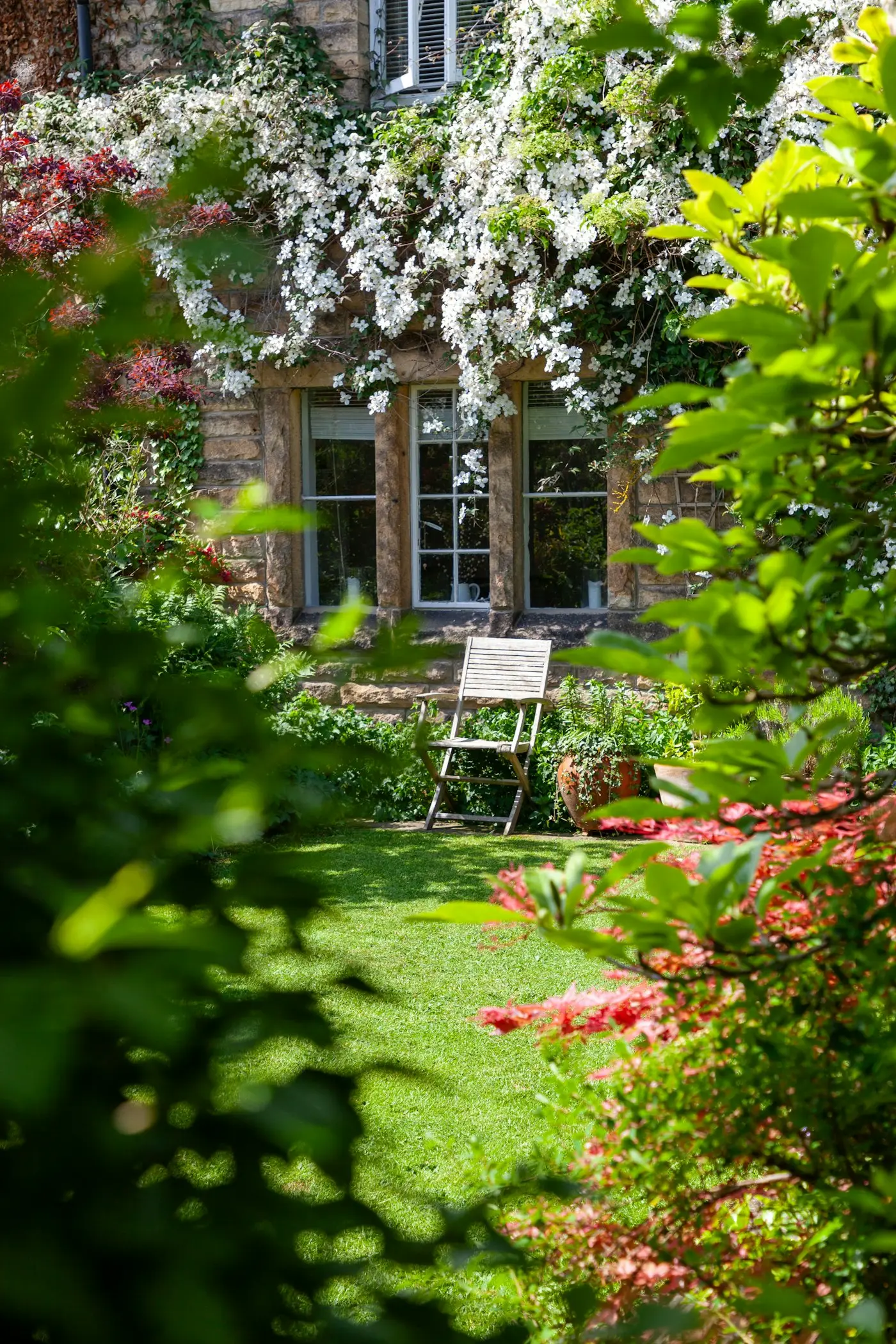
What garden design looks like in Guiseley
Guiseley is a Leeds and Bradford commuter town positioned on and around the ridge between Airedale and the Wharfe Valley. Its housing is predominantly 1930s-60s semis on the established residential streets, with newer build estates extending outward and upward on the higher ground. The gardens are mostly practical in scale - rear plots of 60-150 sqm are typical - and the most common request is a redesign that reduces maintenance, improves the space for outdoor living, and replaces tired paving or a struggling lawn with something that holds its value and looks good year-round.
Soil conditions across Guiseley divide broadly along the contour lines. The lower estate ground sits on Millstone Grit and Coal Measures geology that produces acid, slow-draining, clay-influenced soil. This soil compacts in summer, stays wet in winter, and gives many homeowners the annual frustration of a muddy lawn from November through to April. On the ridge and the higher ground, the soil drains considerably better and produces lighter loam that performs well for most ornamental planting with less structural intervention needed.
Wind exposure is a factor on the higher and more open plots. Guiseley sits between the Aire valley to the south and the more elevated ground toward Otley and Baildon Moor to the north, and westerly weather moving through the Aire valley gap can be persistent on exposed aspects. It is rarely as severe as on the moorland edge at Haworth or Baildon, but it is worth considering when specifying taller structural planting. For a garden design service that takes these site-specific conditions seriously, we connect you with designers who quote directly.
Cost and process overview
A planting plan for a Guiseley garden starts from around £300-500. Full design with project management runs £800-3,000 depending on the complexity. A complete garden redesign including new patio, raised borders and planting typically costs £4,000-12,000 for a standard semi-detached rear plot. Low-maintenance schemes that combine hard surfaces with structural planting and limited lawn can deliver excellent results at the moderate end of the budget range.
The process starts with a site visit. Your designer assesses soil and drainage, sun and shade, what is worth keeping and what to clear, and your brief and budget. See our Yorkshire garden designer cost guide for a breakdown of how fees work at each level of service.
Get your Guiseley garden sorted this season.
Tell us about your plot and a local designer comes back with a real figure. No call centres, no subscriptions. Design from £500.
Start your free estimateThe full local guide
Soil conditions and drainage across LS20
The clay-influenced lower estate soils in Guiseley need management before planting rather than just planting over. Adding organic matter (well-rotted garden compost, spent mushroom compost) improves structure significantly over two to three seasons. Grit incorporated into border soil improves drainage. Raised bed construction lifts the root zone above the slow-draining ground and allows you to specify a growing medium that suits your plants rather than fighting the native soil. For lawn areas that waterlog each winter, hollow-tine aeration followed by sharp sand top-dressing is the standard first step, with sub-surface drainage added for severely affected plots.
The better-draining ridge soils above the town have their own constraints. They dry out more readily in a summer drought and may need consistent mulching to retain moisture around ornamental planting. The acid pH typical of Millstone Grit geology suits ericaceous plants (rhododendrons, azaleas, pieris, blueberries) and can limit the performance of lime-loving plants if the pH is particularly low. A soil pH test before specifying a planting scheme is cheap insurance against the wrong plants being specified.
Westerly exposure on the upper and open plots means plant selection should include robustly wind-tolerant species rather than anything that needs a still, sheltered position to thrive. The good news is that many of the most attractive garden plants are also among the most wind-tolerant: ornamental grasses, hardy geraniums, nepeta, salvias, roses and most native hedging species handle exposure without the fussing and staking that more tender plants require.
Common project types in Guiseley
Low-maintenance patio and border redesign
The most frequent Guiseley brief is replacing a tired or badly-laid patio (concrete slabs, worn block paving, old decking) with a quality hard surface and redesigning the borders to reduce maintenance. Porcelain paving or Indian sandstone on a proper mortar bed, raised borders with imported topsoil, and a planting scheme of structural perennials and grasses that look good year-round with minimal intervention deliver the combination most Guiseley homeowners want: an attractive space that does not require hours of weekly management.
Lawn renovation or replacement
Waterlogged, mossy, compacted lawns are one of the most common Guiseley problems, particularly on the clay-influenced lower estate ground. Hollow-tine aeration and top-dressing resolves moderate compaction. A full lawn renovation - scarify, aerate, top-dress, overseed with a suitable clay-tolerant mix including hard-wearing dwarf ryegrass and fescues - is the right approach for a lawn that has been struggling for several seasons. For gardens where lawn has become more of a maintenance burden than an asset, reducing the lawn area and replacing it with a hard surface and planted areas is often the more practical long-term choice.
New-build garden design
Newer estates in Guiseley often come with gardens that have been finished with poor quality topsoil over compacted subsoil and rubble. The common brief is starting properly from scratch: import quality topsoil, design a practical layout with a good patio, sensible lawn area (or none if the household does not use it), raised beds and structural planting that establishes quickly and improves year on year. Getting the soil right from the start is far more cost-effective than trying to improve a bad base after the garden has been planted.
1930s-60s semi-detached garden refresh
The established residential streets of Guiseley have many gardens that were last properly designed in the 1970s or 80s and have since accumulated a mix of legacy planting, old concrete paths and features that no longer serve the household. The brief is usually modernisation while retaining the good bones of the existing layout: keep the mature hedges and any substantial shrubs, replace the path and patio surfaces, redesign the borders with a contemporary planting palette, and if there is a large conifer or overgrown leylandii hedge, address it as part of the project.
Design styles that work in Guiseley
Low-maintenance contemporary design is the most consistently popular approach in Guiseley: quality hard surfaces, a limited palette of structural plants repeated for coherence, and a layout that maximises usable outdoor living space relative to high-maintenance lawn or border. This style suits the predominantly semi-detached housing stock and the busy commuter households that want a good-looking garden without a high ongoing time commitment.
Cottage garden planting works well on the more sheltered plots with the better-draining ridge loam - the soil is well-suited to roses, hardy geraniums and the classic cottage garden perennials. The key is keeping maintenance genuinely realistic: an informal cottage garden that has been thoughtfully designed for low input is a pleasure; one that requires constant deadheading, staking and intervention to stay presentable becomes a burden quickly.
Naturalistic planting using structural grasses and long-season perennials suits the larger plots and particularly any garden with open sky and a sense of space. Grasses like Calamagrostis Karl Foerster and Molinia handle the wind exposure well, look spectacular from July through December, and require only one annual cut-back to stay in shape. Paired with echinacea, rudbeckia and salvia, this kind of scheme is genuinely low-maintenance once established and genuinely beautiful across the seasons. Our Yorkshire garden design ideas guide covers more approaches that suit the region's varied conditions.
Cost guide for Guiseley garden design
| Service | Typical cost | What it includes |
|---|---|---|
| Initial consultation | Free to £75-150 | Site visit, brief discussion, outline proposal. |
| Planting plan only | £300-800 | Scaled scheme, plant list, spacings. You implement. |
| Full design and project management | £800-3,000+ | Design, contractor coordination, planting oversight. |
| Lawn renovation (clay soil) | £200-500 | Aeration, top-dressing, overseeding or full reseed. |
| Patio replacement and borders | £3,000-8,000 | New hard surface, border edging, structural planting. |
| Full garden redesign (semi-detached rear) | £4,000-12,000 | Clearance, new hard landscaping, soil improvement, planting. |
For a fuller picture of what different types of garden work cost across Yorkshire, see our how much does a gardener cost guide. Designers quote directly with clear terms before booking.
Plants that suit Guiseley gardens
For clay-influenced lower estate gardens: Hydrangea paniculata Limelight (handles clay and exposed positions, spectacular late summer), Rosa rugosa (wind-tolerant, fragrant, clay-friendly), Geranium psilostemon (strong magenta, clay-tolerant, long-flowering), Astilbe (loves moisture-retentive clay - white, pink, red and magenta forms available), Molinia caerulea Transparent (elegant upright grass, clay-tolerant), Calamagrostis Karl Foerster (sturdy, wind-resistant, excellent seasonal structure), Persicaria bistorta Superba (pink candles, naturalises in moist clay).
For the better-draining ridge loam: Salvia nemorosa Caradonna (long blue spikes from June, repeat-flowers if cut back), Nepeta Six Hills Giant (soft lavender, long season, completely self-managing), Echinacea purpurea Magnus (pink cone flowers, drought-tolerant once established), Stipa tenuissima (feathery Mexican grass, free-seeding and luminous in evening light), Sedum Autumn Joy (structural all season, brilliant late colour), Lavandula Hidcote (reliable and fragrant on well-drained loam).
Your designer will do a proper on-site assessment before specifying plants. The variation between clay lower estates and the ridge loam in LS20 is significant enough that the wrong plant list is a recipe for plant losses and frustration.
Design process for Guiseley projects
- Brief. You describe your garden, your lifestyle and what you want from the space. The brief almost always includes a maintenance budget (time per week) which shapes the entire design approach.
- Site visit. Your designer assesses soil type and drainage, sun and shade, wind exposure, what is worth keeping and what to clear. A clay soil assessment determines whether raised beds or drainage work needs to be factored in.
- Proposal. A scheme tailored to your soil, aspect and maintenance preference. For low-maintenance briefs, this will typically prioritise hard surfaces and structural planting over high-input borders.
- Sequencing. Soil improvement or drainage work first, hard landscaping second, planting at the optimal season. Hard landscaping is best carried out from spring through autumn; planting in autumn or spring.
- Installation and aftercare. The designer sources plants, oversees installation and advises on the first-season establishment care that determines whether the scheme thrives long-term.
Frequently asked questions about garden design in Guiseley
What soil does my Guiseley garden have?
Lower estate ground sits on Millstone Grit and Coal Measures geology: acid, slow-draining, clay-influenced soil that compacts in summer and waterlogs in winter. The ridge and higher areas have better-draining loam that performs considerably better for most ornamental planting. If your lawn waterlogged this winter or baked hard in summer, you likely have clay-influenced ground. Soil improvement or raised bed construction is worth doing before committing to a planting scheme.
How much does garden design cost in Guiseley?
A planting plan costs £300-800. Full design with project management runs £800-3,000. A complete garden redesign including new patio, borders and planting typically costs £4,000-12,000 for a standard semi-detached rear garden. Low-maintenance schemes using hard surfaces and structural planting often deliver excellent results at the moderate end of the full-design range. See our garden designer cost guide for a full breakdown.
What plants suit a Guiseley garden?
Clay lower estates: Hydrangea paniculata, Rosa rugosa, Geranium psilostemon, Astilbe, Molinia caerulea, Calamagrostis Karl Foerster, Persicaria. Better-draining ridge loam: Salvia nemorosa, Nepeta, Echinacea, Stipa tenuissima, Sedum Autumn Joy, Lavandula Hidcote. Your designer will assess your specific site before specifying plants - the variation across LS20 is significant enough that soil type determines plant selection at least as much as aesthetic preference.
How long does a garden design project take in Guiseley?
A planting plan is ready within one to two weeks of the site visit. A full redesign from initial brief to completed installation runs four to ten weeks for a standard semi-detached rear garden. Low-maintenance schemes primarily involving hard landscaping with limited planting can sometimes be completed in two to four weeks once the design is agreed. Starting the process in winter means you are ready to plant in early spring at the best establishment time.
Related services
Once your design is planted, regular garden maintenance keeps it in good shape through the growing season. For gardens that need clearing before design work can start, our garden clearance service covers LS20.
Areas near Guiseley we also cover
We cover garden design across the Leeds and Bradford commuter belt including Yeadon, Baildon, Rawdon and Horsforth. For a full list, see our garden design service page.
Garden design in nearby areas
- Garden design in Yeadon
- Garden design in Horsforth
- Garden design in Otley
- Garden design in Ilkley
- Garden design in Baildon
For gardeners and general garden maintenance, see gardeners in Guiseley.
Related: Find a gardener in Guiseley