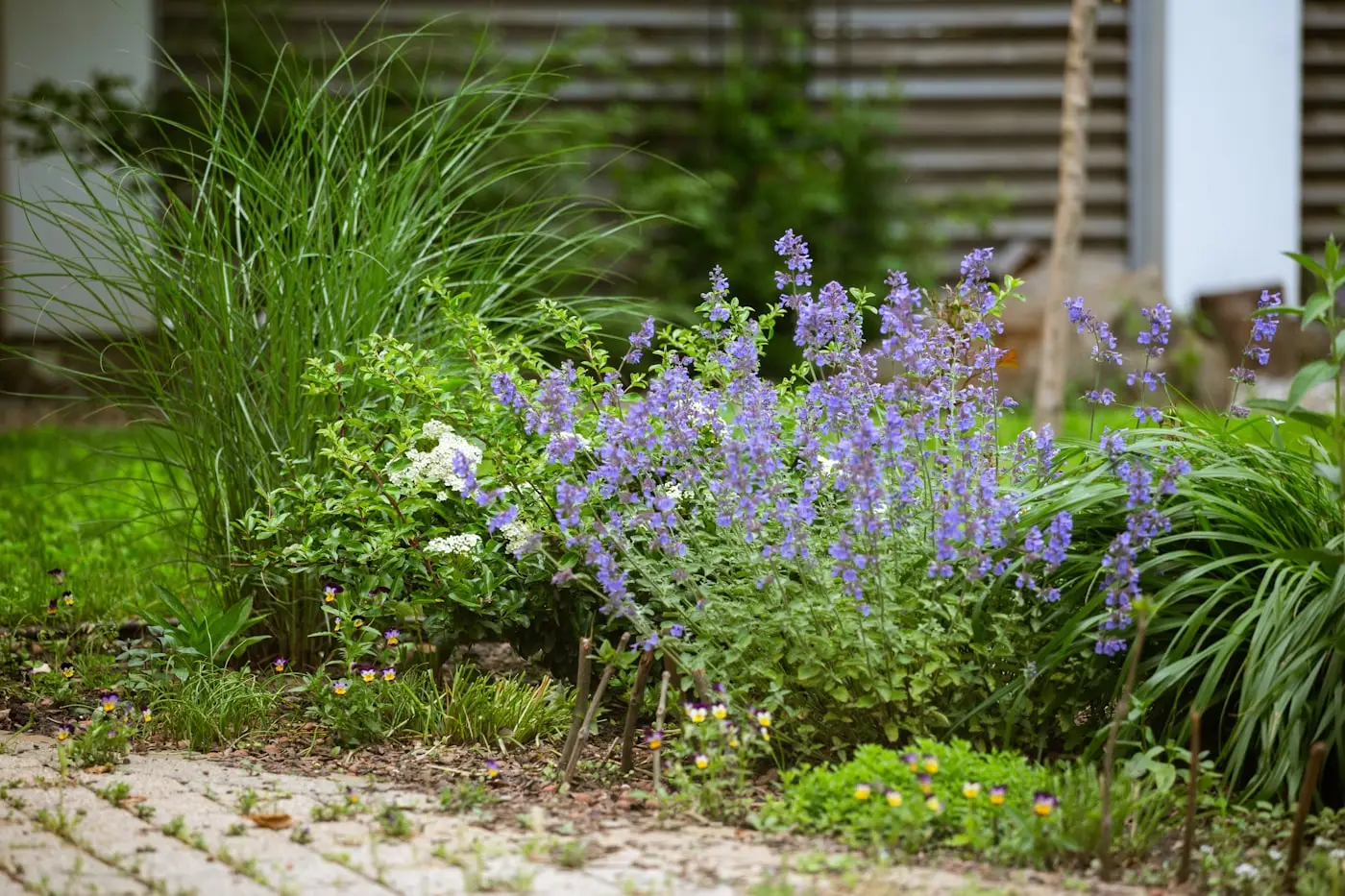
What garden design looks like in Kippax
Kippax is a village about six miles south-east of Leeds city centre, in the LS25 postcode. Despite its proximity to Leeds, it retains a distinct village character with an older residential core and surrounding newer developments. It sits at the junction of the West Yorkshire coalfield and the more open Vale country to the east, and the soil reflects this: Coal Measures clay in the main settlement area, becoming slightly lighter and better-draining on the eastern fringe toward the open fields. The village attracts Leeds commuters who want a quieter residential base, and gardens in Kippax tend to be a decent size by suburban standards - particularly the older village properties that have not been infilled or subdivided. The gardening challenge is consistent throughout: coal clay that rewards patient management and appropriate plant selection.
Village garden character in Kippax
Kippax has a genuine village identity that garden design should respect. The older properties in the historic core have gardens with period character - established boundaries, mature planting, and gardens that feel appropriately rural for a commuter village rather than looking like transplanted urban plots. New design for these properties typically works with the existing character: renovating borders rather than clearing them, maintaining mature boundary planting that provides privacy and structure, and adding new planting that complements rather than contradicts what is already there.
Commuter village gardens and outdoor living
Kippax's commuter population uses gardens primarily at evenings and weekends, which shapes the design brief. A garden designed for this use pattern needs to look good without intensive weekly attention, provide a comfortable outdoor space for relaxing and entertaining, and have seasonal interest that peaks when the household is most likely to be using it. Low-maintenance, structure-focused design with reliable seasonal planting covers this brief. A properly designed patio in a south or south-west facing position makes the garden genuinely usable rather than something you look at rather than spend time in.
Clay soil in a well-established garden
Many Kippax gardens are well-established - 20 to 40 years old with accumulated planting decisions that have created their own soil and light conditions. Old woody shrubs that have grown too large, trees whose canopy has spread to shade large portions of the garden, and borders that have been repeatedly planted and replanted all create the specific conditions that a designer will assess on a site visit. Understanding what the existing plants are doing to the soil and light, and designing the new planting with this context in mind, produces better results than applying a generic planting plan without reference to the actual conditions.
Cost ranges for Kippax garden design
| Service | Cost range |
|---|
| Planting plan only | £300-800 |
| Planting plan with implementation | £600-1,500 |
| Full design and project management | £800-3,000+ |
| Border replant (up to 10 sqm) | £150-400 |
| Patio design and installation | £2,000-8,000 |
| Full garden makeover (50-100 sqm) | £5,000-15,000+ |
Garden design consultations in Yorkshire run £50-120 per hour. A site visit costs around £150-250. See our garden design service page for full detail.
Get a free Kippax garden estimate
Tell us what you want from the garden and we will connect you with local designers who quote directly.
Get a design estimate
The full local guide
Plants that perform in Kippax gardens
Coal Measures clay in Kippax suits dogwood, viburnum, spiraea, hardy roses, and ornamental cherries as structural backbone plants. Miscanthus and deschampsia grasses handle wet winters and provide year-round interest. Reliable perennials on this soil include rudbeckia, helenium, astrantia, and hardy geraniums. For shade under established trees, epimedium and woodland-edge plants perform well. Annual bark mulching and organic matter input maintains soil structure and suppresses weeds. Climbing plants on fences (clematis, roses, pyracantha) extend the planting vertically.
How the process works
- Initial brief. Tell us what you want from the garden.
- Site visit and assessment. The designer visits, assesses your soil, drainage, and existing planting.
- Design proposal. A scaled plan with planting list, materials specification, and cost estimate.
- Coordination and installation. For full project management, the designer coordinates contractors for paving, fencing, and planting.
- Establishment. Planting in autumn or early spring with advice on maintenance through the first season.
Frequently asked questions
What soil does Kippax have?
Kippax sits primarily on Coal Measures clay, becoming slightly lighter on the eastern village fringe. Heavy, slow-draining soil that stays wet in winter. Well-established Kippax gardens often have improved soil from decades of cultivation.
How much does garden design cost in Kippax?
A planting plan only costs £300-800. A consultation visit is £150-250. Full design and project management is £800-3,000. Hourly rates for a Yorkshire designer run £50-120. Designers quote directly after a site visit.
What style suits a Kippax commuter village garden?
Low-maintenance design that looks good with minimal weekly input, provides comfortable outdoor living space, and has seasonal interest throughout the year. Structure-focused planting with reliable perennials and shrubs works best for a household that uses the garden primarily at evenings and weekends.
What plants work on Kippax's coal clay?
Dogwood, viburnum, spiraea, hardy roses, miscanthus and deschampsia grasses, rudbeckia, helenium, hardy geraniums, and epimedium under shade. Climbing plants on fences (clematis, roses) extend the planting vertically.
Do you cover the wider south-east Leeds area from Kippax?
Yes. We connect homeowners with designers across LS25 and the wider Leeds area. Designers quote directly.
Autumn and spring planting for Kippax's clay-loam
The clay-loam soil in Kippax responds well to the traditional planting windows of autumn and spring. Autumn planting (September to November) is the best time for woody plants and hedging: the soil is warm enough for root establishment, autumn rain keeps the new plants watered without irrigation, and the plants have the whole of winter to establish root systems before the spring growing season. Spring planting (April to May) is better for herbaceous perennials and tender plants. Summer planting is possible but needs irrigation on clay-loam soil that can dry out in July.
For homeowners in Kippax who want to improve their borders, a late September to October planting programme gives the best results. Remove the plants that are failing or overgrown in September, improve the soil with well-rotted compost in October, plant the new structural shrubs and bulbs in October-November, and mulch the whole border. By the following April, the structural plants are establishing and the bulbs are giving the first colour. By the following September, the border looks substantially different from its pre-improvement state.
Hedging on Kippax's clay-loam establishes well. Hornbeam (Carpinus betulus) is the best formal hedge choice for this soil - it holds its leaves through winter (copper-brown), handles clay-loam moisture levels well, and clips to a clean formal shape. Beech (Fagus sylvatica) similarly holds its leaves and grows well on clay-loam but dislikes wet clay more than hornbeam. Hawthorn for informal or stock-proof hedging handles the soil conditions easily and provides excellent wildlife habitat. A designer will recommend the appropriate hedging species for your specific position and purpose.
For productive growing in Kippax, the clay-loam soil is an advantage over lighter soils: it holds moisture and nutrients better, which suits vegetables and soft fruit. Raised beds improve the growing conditions further by lifting roots out of any waterlogged lower soil and creating a deep, well-structured rooting environment. A designer can incorporate a raised bed kitchen garden into a Kippax garden design at whatever scale is appropriate for the household's productive aspirations.
For hedge trimming and garden maintenance in Kippax, the clay-loam conditions mean that timing of maintenance work matters. Working on clay-loam soil when wet damages the structure - walking on borders in wet weather compacts the clay and reduces aeration. The practical approach is to do cultivation work (digging, planting, border editing) in autumn when the soil is workable but before it becomes saturated, and in spring once the soil has dried enough to work without compaction. Hard landscaping (paving, path repairs) can be done in any weather provided the sub-base is managed carefully. A designer will include this practical timing advice in the handover notes alongside the planting plan and maintenance calendar.
Areas around Kippax we also cover
We match homeowners with designers in Farsley and Featherstone and Crofton. For general gardening services in Kippax, visit the local gardeners in Kippax page. See also our guide to finding a gardener in Kippax.