Garden design · Maltby · S66
Maltby garden design that works with the clay.
Maltby gardens sit on Coal Measures clay - the same heavy, slow-draining ground that runs across this corner of South Yorkshire. A design that ignores that fact will cost you more in failed plants and persistent problems. We connect you with local designers who understand S66 ground conditions, quote you directly and deliver practical schemes built for your actual soil. Design from £500.
- Free initial estimates
- Local designers who quote directly
- Design from £500
- No call centres
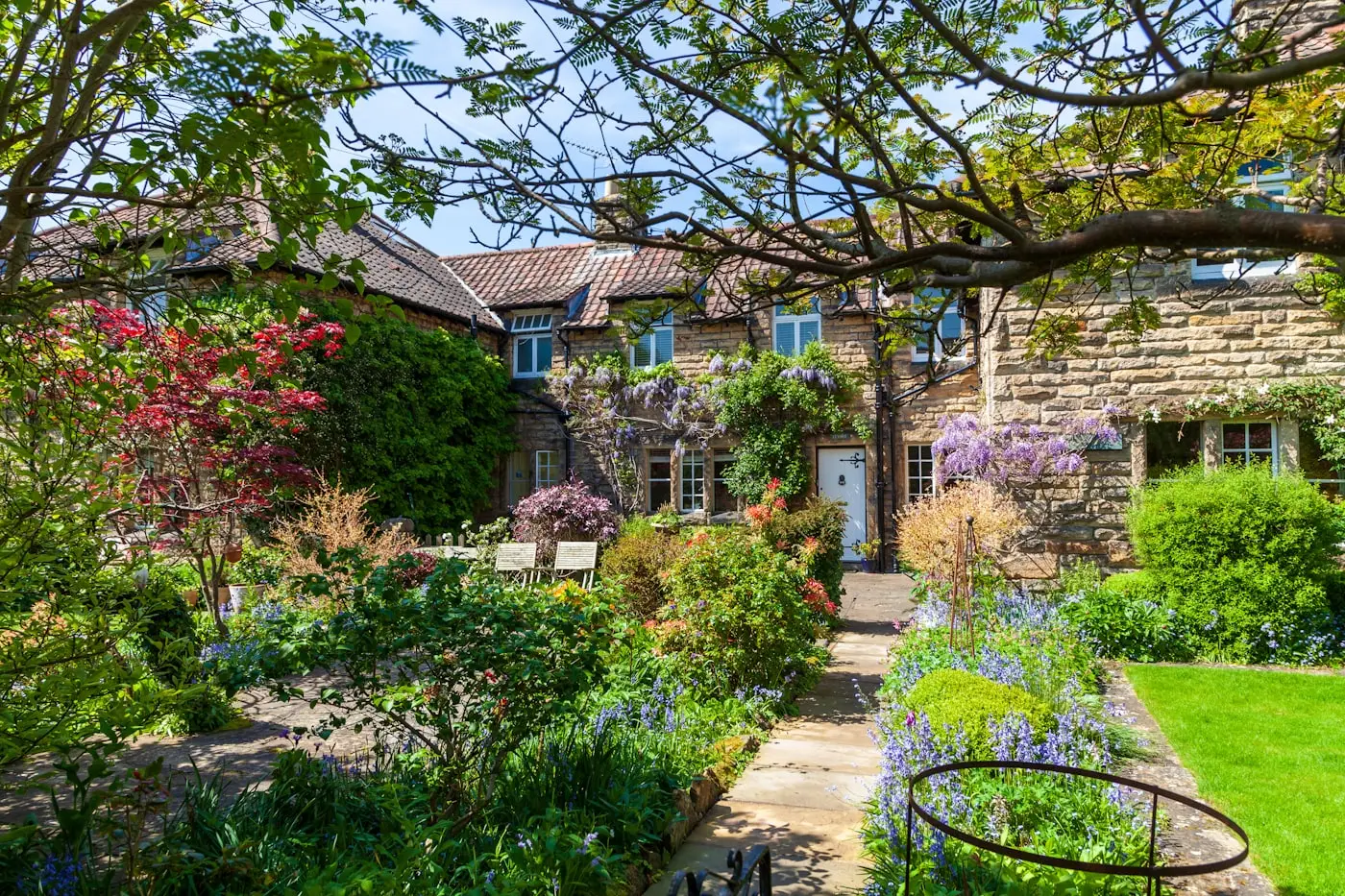
Garden design in Maltby
Maltby sits on the eastern edge of the South Yorkshire coalfield, and its gardens carry the clear imprint of that geology and that history. Coal Measures clay dominates the ground across S66: dense, heavy, and slow to drain. Post-war semis and pre-war terraces built for mining families typically have rear gardens of between 50 and 120 square metres - substantial plots by any standard, even if they have been left to do their own thing for decades.
The good news is that those are real gardens with real potential. The council-era builders understood that outdoor space mattered, and the plots they laid out are generous by the standards of more recent developments. If your garden has a tired lawn that turns to mud each November, borders that need sorting, or a patio that has settled and cracked over the years, you are not looking at a difficult project. You are looking at a garden that can be genuinely transformed with the right approach to the soil and the right plant choices.
The key is working with Coal Measures clay rather than pretending it is something else. A planting scheme designed around moisture-tolerant perennials, raised beds where sharper drainage is needed, and permeable surfaces on areas that currently pool - that is a design that will work in this postcode. See our overview of the full garden design service for how the process works across Yorkshire, and the local gardeners in Maltby page for maintenance support once any design is established.
Cost guide for garden design in Maltby
These are honest Yorkshire ranges to budget against. All designers who quote through this site set their own prices and contact you directly. There are no additional fees on your side of the enquiry.
| Service | Typical cost | What it includes |
|---|---|---|
| Initial consultation | Free to £75 | Site visit, brief discussion, outline proposal. |
| Planting plan only | £350-800 | Scaled scheme, plant list, spacings. You implement. |
| Full design and project management | £900-3,000 | Design, contractor coordination, planting oversight. |
| Patio replacement (20-40 sqm) | £2,000-5,500 | Sub-base, edging, paving supply and lay. |
| Raised beds (2-3 beds) | £400-900 | Timber or stone beds, soil mix, initial planting. |
| Full garden makeover (60-120 sqm) | £5,000-14,000 | Clearance, hard landscaping, planting, establishment. |
| Lawn drainage and renovation | £500-2,000 | Aeration, drainage, topdressing, overseeding. |
Designer fees are separate from build and plant costs. Plants sourced through a designer at trade prices are usually cheaper than garden-centre retail and come with better provenance. For a full breakdown of what affects cost across Yorkshire, see our garden designer cost guide.
Get your Maltby garden sorted this season.
Describe your plot and a local designer comes back with a real figure. No call centres. Design from £500.
Start your free estimateThe full local guide
Understanding your Maltby plot
Maltby's housing stock divides broadly into Victorian and Edwardian terraces in the older parts of town, and post-war semis and 1960s-70s estates that make up the majority of the residential streets. Both types present similar soil conditions but different spatial constraints.
Terrace rear gardens are often narrower and more enclosed, with limited aspect choice. Many have been partially paved at some point, leaving a mix of old concrete slabs, compacted soil, and remnant borders that have had decades of variable planting. The clay beneath is typically quite compacted from long-term foot traffic, which worsens the drainage problem.
Semi-detached and estate gardens are more open, with better light access and usually more room to work with. But the soil profile on these plots can be more disturbed: housing construction in the 1950s and 60s routinely stripped topsoil and replaced it unevenly, leaving shallow soil over compacted sub-base in parts of the garden and deeper ground in others. A proper soil assessment before any design work starts is always worth doing.
Mining heritage adds another layer. Subsidence risk across the South Yorkshire coalfield is managed at a planning level, but in garden terms it can mean patches of disturbed ground, old fill material close to the surface, and slight variations in drainage across a single plot. None of this prevents good garden design; it just means a site visit matters more than it would in a straightforward setting.
What Coal Measures clay means for your garden
The clay across S66 is nutritious soil - it holds water and nutrients in a way that sandy soils do not. But its drainage characteristics dominate everything else:
- Water sits on the surface after rain, sometimes for days in winter
- Lawns develop moss, algae and compaction patches where pooling is worst
- Plants that need sharp drainage - lavender, rosemary, most Mediterranean herbs - rot at the root over wet winters
- Paving and path edges can heave as the clay swells and contracts seasonally
- Digging and planting is genuinely hard in summer when the surface has dried and cracked to concrete hardness
The design response is not to import tonnes of grit and try to convert your clay into something it is not. That approach is expensive, temporary, and ultimately futile. The better path is to use the soil's strengths, manage its weaknesses structurally, and choose plants that reward you for the conditions you actually have rather than the conditions you might wish for.
What gets designed in Maltby gardens
These are the briefs that come up most frequently in Maltby and across the S66 postcode. Your garden may fit one type or combine elements of several.
Low-maintenance redesign for a standard semi plot
The most common brief in the S66 postcode. You have a garden of 60-120 square metres, a lawn that has been neglected or never really worked on clay, borders that have become overgrown or bare, and limited time to maintain what is there. The design response is usually: reduce the lawn to a manageable area or replace it entirely with permeable paving and a planted border; create a usable hard-standing area for sitting and storage; and plant the borders with structural perennials and shrubs that ask little of you through the season.
This kind of project transforms a garden from a source of weekend stress into a space that looks reasonable most of the year for an hour of attention each month. The budget for a Maltby semi redesign of this type typically runs £5,000-10,000 for the full project including hard landscaping and planting. The design fee is separate - usually £500-1,500 for a scheme of this scale.
Drainage and lawn improvement
If your lawn is predominantly moss rather than grass, the problem is almost never the seed or the feed - it is the drainage and compaction. On Coal Measures clay, a single round of aeration and scarification rarely solves the underlying issue. A longer-term approach combines hollow-tine aeration with grit-based top dressing in autumn, followed by overseeding with moisture-tolerant grass species. If the ground is seriously compacted, French drains or slit drainage may be the more cost-effective solution over a five-year horizon.
For ongoing lawn care once the structural work is done, see our garden maintenance service for Maltby and the surrounding S66 area.
Hard landscaping and patio replacement
Many Maltby gardens have old concrete patios laid directly on clay without adequate sub-base. Over time these crack, settle unevenly, and pond. Replacing them is a straightforward project, but it needs to be done properly: a crushed-stone sub-base of at least 100mm compacted depth, a membrane to prevent clay migration, and a permeable or semi-permeable surface that handles the load without lifting. Yorkshire sandstone flags or quality porcelain in a tone that complements the local brickwork both look far better than standard concrete slabs and last considerably longer if laid correctly.
Raised beds and productive garden integration
Raised beds are one of the most practical additions to a Maltby garden. The native clay soil is difficult for most vegetable crops, but raised beds filled with a good compost-topsoil mix give you complete control of the growing medium. Two or three well-positioned raised beds can supply a household with salad crops, herbs and seasonal vegetables from spring to autumn, and they integrate cleanly into a broader garden redesign rather than looking like an afterthought. A designer can position them to make best use of the sunny spots your plot offers while leaving room for the patio and the lawn.
Privacy screening and boundary planting
Estate gardens in Maltby often have limited privacy from neighbouring properties. A planting scheme along the rear and side boundaries using fast-establishing shrubs and small trees provides screening that grows in value over time and avoids the cost and maintenance of additional fencing. Hornbeam (Carpinus betulus) makes an excellent formal hedge on clay soils - it tolerates wet conditions that would stress beech or yew, and it holds its leaves through winter to maintain screening. For more informal boundaries, mixed native planting of hawthorn, blackthorn, elder and dog rose creates a hedge that benefits wildlife and asks little of you once established.
Design styles that suit Maltby gardens
Maltby is a working town with a practical character and a real sense of place. A garden design that works here uses materials and plants appropriate to the South Yorkshire setting rather than importing a style from somewhere else. That said, your outdoor space is yours, and a good designer will deliver what you want to live in - not what looks good in a design magazine.
Contemporary low-maintenance
Clean lines, natural stone or quality porcelain paving, a limited palette of structural planting, simple lighting. This style suits both terrace gardens and the more open semi plots. The key is material quality: cheap pressed concrete slabs age badly and look out of place against South Yorkshire brick. Investing in the paving surface and keeping the planting simple delivers a garden that looks considerably better for longer.
Naturalistic and wildlife-friendly
Coal Measures clay soils, once planted well, support a diverse range of wildlife. A naturalistic design with native hedging, a small wildlife pond, and a mixed perennial border using grasses, astilbes, geraniums and Persicaria can turn a Maltby garden into genuinely good habitat for birds and invertebrates. This style is lower-maintenance than it looks once established, because the plants are chosen to thrive in the conditions rather than struggling against them.
Productive garden design
If your priority is growing food and flowers alongside a usable outdoor space, a productive garden design integrates raised vegetable beds, cut-flower borders, herb planting and fruit trees within a coherent layout. Maltby gardens have enough space to do this properly without it feeling cramped. A designer can create a scheme where each element earns its place and the practical and aesthetic sides of the garden work together. For ideas on combining productive and ornamental planting, the Yorkshire garden design ideas guide has examples across different plot sizes.
Plants that work in Maltby's clay soil
Choosing plants that suit Coal Measures clay is the single most important factor in whether a Maltby garden thrives or struggles year after year. These plants are reliable on heavy, moisture-retentive ground and will establish well once the soil has been prepared:
- Hardy geranium (Rozanne, Patricia, Johnson's Blue) - sprawling ground cover that tolerates clay and fills space effectively from June onwards
- Astilbe (Fanal, Visions in Red, Deutschland) - feathery plumes in damp conditions and partial shade, good for north-facing or lower-lying spots
- Persicaria amplexicaulis (Firetail, Alba) - tough, fast-growing, flowers July to October on heavy ground, one of the most reliable clay perennials
- Crocosmia (Lucifer, Emily McKenzie) - arching orange-red spikes through August; spreads vigorously on clay and needs dividing every few years
- Ligularia (The Rocket, Desdemona) - large architectural foliage for damp spots and north-facing borders, impressive scale in the right position
- Alchemilla mollis - chartreuse flowers in June, self-seeds into gaps, tolerates heavy ground and partial shade
- Siberian iris (Caesars Brother) - slender foliage and May flowers; specifically prefers moist clay over drier ground
- Cornus (Midwinter Fire, Sibirica) - winter stem colour; thrives in moist to wet conditions, excellent for the wetter parts of a Maltby garden
- Hornbeam (Carpinus betulus) - the best formal hedge choice for clay; tolerates wet conditions that stress beech; holds leaf colour through winter
- Hemerocallis (daylilies) - once established on clay, extremely tolerant of both wet and dry spells; good mid-border colour from July
Avoid rosemary, lavender, salvias and other Mediterranean plants in unimproved clay borders - they will fail in wet winters. If you want those plants, they need raised beds or significantly improved soil with grit. A designer will tell you honestly what works in your specific plot rather than building a scheme that looks good on paper and fails in its first winter.
How the design process works in Maltby
- Initial brief. You describe your garden, your budget, how you use the space and what you want from it. Photos and rough measurements help, but even a description is enough to get an initial response.
- Site visit and soil assessment. The designer visits, checks drainage conditions, maps sun and shade patterns across the plot, assesses existing plants worth keeping, and identifies any structural issues. In Maltby, drainage assessment is a non-negotiable part of this step.
- Proposal and costings. You receive a planting plan or layout scheme with plant list, quantities and indicative costs. This is your decision point - no obligation to proceed.
- Phasing the work. If you proceed, the designer sequences the project. Drainage and hard landscaping come first; planting follows at the right season. Autumn and early spring are the best windows for establishing plants on clay soil in South Yorkshire.
- Installation and establishment. The designer sources plants (often at trade prices below garden-centre retail), oversees planting and advises on aftercare through the first season.
Frequently asked questions about garden design in Maltby
What soil does my Maltby garden have?
Most Maltby gardens sit on Coal Measures clay: dense, heavy, slow-draining ground derived from the geology that underpinned the colliery industry across this corner of South Yorkshire. It holds water long after rain, compacts under foot traffic, and bakes hard in dry summers. Mining heritage also means some plots have disturbed ground from old infrastructure. The design response is raised beds for anything needing sharp drainage, permeable surfaces where water pools, and planting chosen for clay tolerance.
How much does garden design cost in Maltby?
A planting plan typically costs £350-800. Full design with project management runs £900-3,000. A complete makeover covering clearance, hard landscaping and planting typically costs £5,000-14,000 for a mid-size S66 plot. Designers quote directly with no call centre fees. See our garden designer cost guide for a full Yorkshire breakdown.
What are the main design challenges in Maltby gardens?
Waterlogging and compaction are the two defining challenges. Coal Measures clay does not drain freely, so lawns develop moss and algae patches, borders stay wet in winter, and patios pond after heavy rain if sub-bases are inadequate. Post-war semi gardens often have shallow topsoil over compacted clay. The design solution combines drainage improvement, raised beds, permeable paving, and clay-tolerant planting chosen to work with the soil.
Can I get a low-maintenance garden in Maltby?
Yes, and it is the most common brief we receive. Low-maintenance design on clay means: reducing or eliminating a waterlogged lawn; replacing it with permeable paving or a gravel-and-planting combination; using structural ground-cover perennials that suppress weeds once established; and mulching borders each spring. A well-designed low-maintenance Maltby garden needs perhaps an hour a month rather than a weekend every six weeks.
Related services
Once your design is planted, regular garden maintenance keeps it in shape through the growing season. For overgrown Maltby gardens that need clearing before design can start, see our garden clearance service. For boundary hedging once your design includes screening planting, see our hedge trimming service.
Related: Find a gardener in Maltby
Areas near Maltby we also cover
We cover garden design across the Rotherham area and the wider S66 and S65 postcodes. For the larger town nearby, see garden design in Rotherham. For the S64 corridor, see Mexborough garden design. For a full list of South Yorkshire areas, see our garden design service page.