Garden design · Pontefract
Garden design across Pontefract, Featherstone, Ackworth, Knottingley, Darrington. Historic market town with well-drained loam that historically suited deep-rooted liquorice crops — same soil quality translates to strong garden performance. Victorian terraces near the castle and larger suburban gardens to west and east. Local designers who quote directly, free initial estimates, design from £500.
Pontefract's gardening character is shaped by its soil and its history. The town was once a significant liquorice-growing area — a crop that thrives in deep, well-drained loam — and that same soil quality is part of why the established gardens here perform well. Borders on good Pontefract loam respond quickly to consistent management, and lawns that have been properly cared for establish solid structure that holds through the full growing season. This is genuinely good growing ground when it's managed properly, better than the heavy clay of some surrounding areas.
The gardens around the castle area are often behind Victorian-era terraces with compact back yards — useful spaces that mostly want a practical approach rather than elaborate planting. The newer estates to the west and east of the town have larger, more open gardens with better light and more scope for planting. These properties tend to generate the more substantial maintenance and design enquiries in WF8, where homeowners want comprehensive schemes that make the most of the plot size and the soil quality.
Pontefract Castle ruins sit prominently in the landscape and the gardens in the immediate area carry a distinctive character. Stone walls, established mature planting, and boundary features with real age to them are common near the old town. Managing those elements requires a designer who can read an established space rather than apply a standard suburban brief. Check the Pontefract lawn care page for context on what the loam-based soil needs and how it performs through a typical West Yorkshire growing season.
Design fees are separate from build and planting costs. The ranges below reflect what designers across Yorkshire typically charge. Most quote a fixed fee after seeing the site.
| Service | Typical range |
|---|---|
| Initial consultation | Free to £75–150 |
| Planting plan only | £300–800 |
| Planting plan + implementation | £600–1,500 |
| Full design and project management | £800–3,000+ |
| Kitchen garden / raised-bed setup | £400–900 |
| Full garden makeover (50–100 sqm) | £5,000–15,000+ |
Hard landscaping (patios, walls, fencing) is quoted separately and depends on materials and scale. A mid-size patio or retaining wall typically runs £2,000–£12,000. Plants are either trade-priced through the designer or you source them directly — most designers are flexible depending on your budget and involvement preference.
Free initial estimate from a Pontefract-area designer. We connect you with local professionals who quote directly.
The full local guide
The newer western and eastern estates have larger, more open gardens with real scope for comprehensive redesigns. Full border replants, new lawn installations, raised kitchen beds, patio extensions, and planting schemes that make proper use of the good loam soil. Budget £5,000–£12,000 for a comprehensive suburban garden redesign on a standard new-build or larger semi-detached plot. The loam-based Pontefract soil is more forgiving than heavy clay once it's properly worked and fed.
The terraces near the castle and the older town streets have compact back yards with limited space. Practical paved surfaces with planting gaps, raised beds, shade-tolerant planting, and designs that maximise usable space without trying to pack in suburban features that won't suit the scale. Budget £2,000–£5,000 for a comprehensive courtyard redesign on a typical terrace plot.
Gardens immediately around the castle ruins have stone walls, established mature shrubs, and boundary features with genuine age. These spaces need designs that respect the historic character — structural pruning on mature plantings, stone wall and boundary maintenance, planting that integrates with the medieval setting rather than suburban ornamental schemes. A designer who understands historic gardens will propose schemes that maintain the character rather than override it.
The loam-based soil across most of Pontefract suits lawn establishment better than heavy clay. New-build gardens that started with builder's turf on compacted subsoil respond well to proper renovation — scarifying, aerating, top-dressing and overseeding in the first couple of seasons makes a significant difference to how the lawn performs. The soil is on your side here; it just needs proper establishment work to deliver on that potential.
Many of the privet and hawthorn boundaries through the Victorian-era streets have matured well beyond their original planted size. Structural reduction to get them back to a manageable scale before routine maintenance cuts make sense. A one-off comprehensive reduction sets the boundary up for years of straightforward annual management afterwards and brings the hedge back into proportion with the plot.
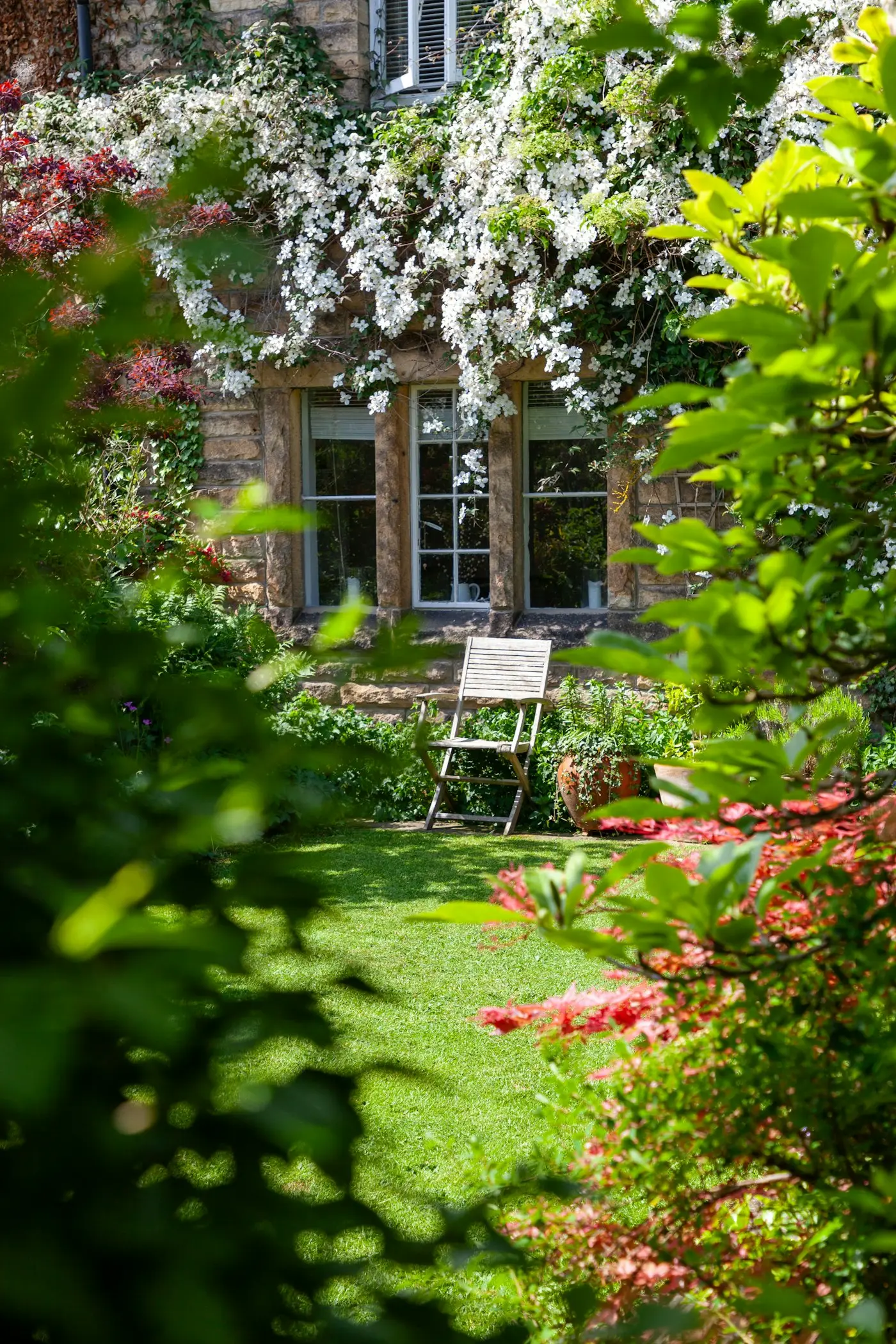
The well-drained loam across most of Pontefract suits a wide planting palette — herbaceous perennials, shrub roses, hardy geraniums, salvias, ornamental grasses, catmint, and structural hedging (beech, hornbeam, yew) all perform well on the established gardens. The deep loam that historically suited liquorice roots gives modern borders and lawns a solid foundation that responds quickly to consistent feeding and management. Borders on good Pontefract loam establish quickly and hold their structure through summer better than gardens on heavy clay or thin chalk.
The Victorian terraces near the castle with compact, shaded back yards need shade-tolerant planting — ferns, ivies, hostas, hardy geraniums, and shrubs that tolerate limited light. Stone walls throughout the older town streets suit cottage-style planting and self-seeding hardy species that integrate with the historic character.
The newer estates to the west and east have more open, sunny gardens where sun-loving borders, roses, lavender (on the better-drained patches), and ornamental grasses all thrive. The soil quality gives you planting versatility that heavier clay ground doesn't offer — use it.
We connect homeowners across Pontefract WF8 with local garden designers who quote directly for your project. There's no middleman fee added on the customer side — you get a direct estimate from the designer, and you decide whether to proceed. The initial estimate is free with most designers. They visit, assess the site, and provide a costed proposal. If you want to explore what a redesign would look like on your plot, the first conversation costs nothing and gives you a realistic picture of scope, cost and timing. See the garden makeover cost guide for broader context on what full redesigns typically involve.
What soil does my Pontefract garden have?
Most Pontefract gardens sit on well-drained loam — the same soil quality that historically suited the deep-rooted liquorice crop the town was famous for. This is genuinely good growing ground that responds quickly to consistent care. Borders establish well, lawns hold their structure through summer, and the soil is more forgiving than the heavy clay of some surrounding areas. A designer should still assess your specific plot, but the baseline soil quality across WF8 is strong.
How long does a garden redesign take in Pontefract?
A planting-plan-only project can be turned around in 2–4 weeks depending on the designer's workload. A full redesign with hard landscaping and comprehensive planting typically takes 6–12 weeks from initial brief to installation, often phased to match spring or autumn planting windows. Larger projects are phased across seasons or budget years — spring and autumn are the best times to plant.
Do I need a full design or just a planting plan?
If your layout is fine but the borders need replanting, a planting plan (£300–800) is usually sufficient. If you want to change the layout, add hard landscaping, or redesign the space from scratch, a full design (£800–3,000+) with project management makes sense. Most designers will advise which approach fits your brief after seeing the site.
What does a designer charge separately from the build cost?
The designer's fee covers the design, drawings, planting plan, and project management. The build cost covers materials, labour, plants, and installation. Most designers quote both separately so you can see what you're paying for design work versus physical implementation. Some bundle it as a single project fee; others prefer to separate it so you can phase the work if budget requires.
Can you design a garden that works with the historic Pontefract Castle setting?
Yes, and it requires a designer who understands historic gardens. The castle-area properties have stone walls, established mature planting, and boundary features with genuine age. A good design respects that character — structural pruning on mature shrubs, stone-compatible planting, cottage-style borders that integrate with the setting. A designer who tries to impose suburban ornamental schemes on a historic plot produces something that looks imported rather than rooted in the landscape.
What's involved in a Victorian terrace courtyard garden design in Pontefract?
The terrace back yards near the castle and the older town streets are compact, often shaded, and bounded by stone walls. A good design maximises usable space with practical paving, planting in gaps or raised beds, and shade-tolerant species that suit the limited light. Trying to pack in a full lawn and herbaceous borders on 15–20 square metres produces a cramped, high-maintenance space. The right approach is designing for what the courtyard genuinely offers.
When is the best time to start a garden redesign in Pontefract?
Planting is best in spring (March–May) or autumn (September–November) when the ground is workable and plants establish well. Hard landscaping can be done year-round in dry weather. Most designers take bookings in January and February for spring installation, or in June and July for autumn planting. If you want the work done in a specific season, start the conversation 8–12 weeks before that window.
Garden design coverage across West Yorkshire and surrounding towns:
Surrounding areas including Featherstone, Ackworth, Knottingley, Darrington.
For general garden maintenance, lawn care, and year-round gardening services in Pontefract, visit our local gardeners in Pontefract page.