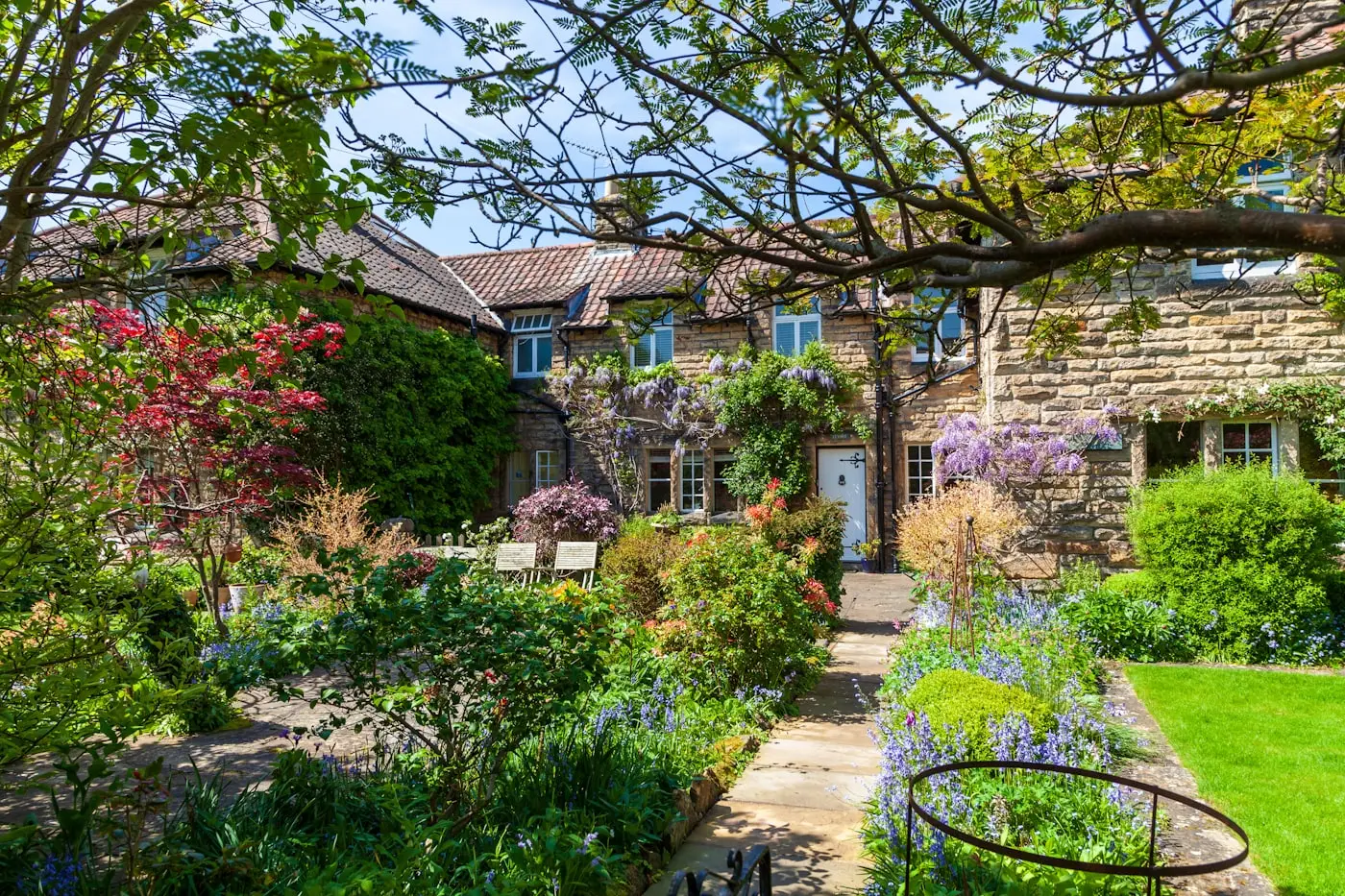
What garden design looks like in Wombwell
Wombwell sits in S73 in the Dearne Valley, a few miles south-east of Barnsley town centre. It is a suburban settlement in character: a mixture of terraced and semi-detached housing from the inter-war and post-war mining era alongside newer private housing estates built across former colliery land. The River Dearne runs to the north of the town, and the broader Dearne Valley landscape is low-lying and flat, bounded by the river valley and the rising ground toward Hoyland and the Don catchment to the south.
The soil condition that defines gardening across Wombwell is Coal Measures clay, the heavy, dense material that underlies the entire former Dearne Valley coalfield. This geology produces a soil that challenges plants and gardeners alike: in winter and spring it holds water, creating waterlogging that can kill shallow-rooted plants and makes the ground impossible to dig without causing structural damage to the soil structure. In a dry summer the same clay bakes hard, shrinks, and cracks, creating surface conditions that look dry but conceal retained moisture below.
Many Wombwell gardens also have an added complication below the surface: decades of deep mining beneath the valley floor created subsidence that has affected ground levels, subsoil composition, and drainage patterns. Where ground has settled and been backfilled, the subsoil can be unpredictable, mixing clay with rubble, ash, or imported material that drains at different rates. A thorough site assessment before designing is important because the drainage problem in one garden can differ significantly from the one next door.
None of this makes Wombwell gardens unworkable. Coal Measures clay is genuinely fertile: it is high in nutrients, holds moisture through dry spells once established plants are drawing on the subsoil, and produces excellent results once the right planting choices and soil management approach are in place. The gardens that do well in Wombwell are the ones that have been managed with organic matter over many years, or that have been designed with the clay in mind from the start. A garden designer with experience in S73 will give you a design built around what the soil can do rather than what the Instagram feed suggests it should.
Managing the Dearne Valley clay
The most important single intervention for a Wombwell clay garden is organic matter. Well-rotted compost, bark mulch, leaf mould, or green waste compost worked into the soil and added as a surface mulch each year steadily improves clay structure by creating pore spaces, encouraging earthworm populations, and buffering the extreme wet-dry cycle. This is not a one-season fix: it is an ongoing commitment that produces cumulative results, and gardens that have had this treatment for five or more years perform noticeably better than those that have not.
For areas where waterlogging is a serious problem, raised beds offer a practical solution that works immediately. Constructing growing zones from railway sleepers or treated timber and filling them with a loam and compost mix bypasses the clay layer entirely for everything planted in them. Raised beds drain freely, warm up faster in spring, and can be filled with whatever growing medium suits the planting scheme. They are effective for vegetables, herbs, cut flowers, and feature shrubs, and they work well in the compact plot sizes typical of Wombwell gardens because they define clear planting zones without wasting ground space.
For lawns on clay, the approach differs. Hollow-tine aeration in autumn is the most effective single annual intervention: it removes plugs of soil and creates channels into which a sharp sand and compost top-dressing can be brushed, improving drainage into the root zone over time. Clay-tolerant grass seed mixes perform better than fine-turf fescues in waterlogged conditions; if your lawn looks thin and mossy in late winter, it is probably the wrong grass variety for the soil rather than a maintenance problem. A designer will assess whether the existing lawn is worth improving or whether starting with a more appropriate seed mix would give better results for less ongoing effort.
Compact suburban plots
The typical Wombwell garden is a modest-sized suburban plot, often with a small front garden, a longer rear garden divided by a path and a lawn, and close-board fence panels on the boundaries. These plots are not large, but they are entirely workable as designed spaces: the key is using every available surface, including the fence lines, and dividing the plot into clear zones that feel intentional rather than improvised.
Fence lines are the most underused resource in most compact suburban gardens. A south or west-facing fence is a warm, sheltered growing surface that suits climbing roses, clematis, wisteria, and wall-trained shrubs. North-facing fence lines suit shade-tolerant climbers like ivy, hydrangea petiolaris, and climbing hydrangea. Adding a planted fence line transforms the visual depth of a small garden by giving the eye something to travel to rather than stopping at the boundary. The fencing itself effectively disappears as the planting establishes.
Where the plot is large enough, a defined seating area with level paving at the house end and a planted zone beyond creates a clear outdoor living area and a garden proper without either dominating the space. Compact gardens on clay benefit from a hard-surfaced patio area that does not become muddy in wet weather: the transition from interior to garden is important in a climate where outdoor space needs to work through nine months of variable weather, not just the dry weeks of July and August.
Planting choices for S73 clay
Shrub roses have a long history in Dearne Valley gardens for good reason: they tolerate clay, handle wet winters, and give a season of flower from June to November on modern repeat-flowering varieties. An old mining-village garden full of well-established shrub roses, with hardy geraniums at the front and a dogwood or two at the back of the border, represents several decades of accumulated garden knowledge about what works on this soil. A designer will often recommend a planting scheme that builds on those traditional choices while adding structure and seasonal interest with grasses, perennials, and climbers.
For perennial planting in the border, rudbeckias and heleniums are excellent performers on clay: they flower prolifically in late summer, stand well without staking, and reliably come back year after year. Persicaria amplexicaulis flowers through summer into autumn on heavy, moisture-retentive soil and fills ground space effectively while suppressing weeds. Astilbes bring colour to shaded clay borders that are difficult to plant with anything else. Ornamental grasses, particularly miscanthus and molinia, add movement and winter interest to borders while tolerating the wet-then-dry cycle that clay creates.
Trees for small Wombwell gardens need to be chosen carefully because the right choice gives decades of value while the wrong one creates a maintenance problem. Crab apples are excellent: small, multi-season interest (spring blossom, summer foliage, autumn fruit, winter structure), completely tolerant of clay, and available in a range of sizes including very compact columnar forms that suit narrow plots. Rowans perform similarly, and amelanchier (snowy mespilus) is outstanding in clay, giving three seasons of interest and a naturally graceful shape that needs minimal pruning.
Cost ranges for Wombwell garden design
Garden design pricing depends on the scope of work and whether you want design only or full project management. These are the typical ranges for budgeting:
| Service |
Cost range |
| Planting plan only |
£300-800 |
| Planting plan + implementation |
£600-1,500 |
| Full design and project management |
£800-3,000+ |
| Border replant (up to 10 sqm) |
£150-400 |
| Raised bed construction (2-3 beds) |
£400-1,200 |
| Full garden makeover (50-100 sqm) |
£5,000-15,000+ |
Raised bed construction, drainage work, and clay soil preparation are quoted separately. Subsidence-related ground preparation on former mining land can add to cost on specific plots if the subsoil needs remediation before a level patio or lawn base can be laid. Designers quote directly based on your specific brief and site conditions. For more detail on what drives the cost, see what a garden makeover costs.
Start your free Wombwell garden estimate
Tell us what you want and we put your enquiry in front of local designers who quote directly. No call centre fees on your side.
Get a design estimate
The full local guide
Common garden design projects in Wombwell
The most common starting point is a garden that has been left to run down on a property that has recently changed hands. The typical condition is bramble and bindweed over compacted clay, with a patchy lawn and a few overgrown shrubs. Clearance and soil assessment is the first stage, followed by a decision about what is worth keeping: established shrubs and any mature trees are almost always worth building around, even if they need hard pruning to restore shape. Starting from scratch on cleared clay is more expensive and takes longer to look established than working with what is already there.
Patio replacements are common in Wombwell because original paving on clay subsoil settles unevenly over ten to twenty years. Frost heave and clay shrinkage cause slabs to move, edges to drop, and surfaces to become uneven and potentially hazardous. Relaying on a proper MOT type 1 sub-base with compacted hardcore beneath is the right approach for longevity: cutting corners on the sub-base means the same problem recurs in another decade. A designer will assess the existing patio condition and the subsoil before recommending materials and specification.
Kitchen garden and raised bed schemes are popular on Wombwell plots where the household wants to grow food but the clay makes traditional vegetable gardening frustrating. A three or four-bed sleeper raised bed system with good quality growing medium, a small greenhouse or polytunnel at the back of the plot, and a soft-fruit cordon or two against the fence line gives a productive growing space that works with the site rather than fighting the soil. A designer will lay out a scheme that fits the available space and suits what you actually want to grow.
Wildlife-friendly garden designs are increasingly requested across S73. The Dearne Valley has significant wildlife interest as a whole, and garden habitats for pollinators, hedgehogs, and birds are valued by many Wombwell householders. A wildlife-friendly design does not have to look untidy: it means selecting plants with high nectar and berry value, leaving some areas as rougher ground, incorporating a small water feature, and creating log or leaf-pile habitats at the garden edges. These elements can be integrated into a well-designed garden that looks intentional rather than neglected.
Process for a Wombwell garden designer
- Initial brief. Tell us what you want from the garden: whether it is a planting refresh, a raised bed kitchen garden, a patio replacement, or help with persistent clay waterlogging and drainage.
- Site visit and assessment. The designer visits, assesses your soil, drainage, existing planting, and any structural issues including any ground-level irregularities from subsidence. This is usually a free initial consultation.
- Proposal and design. You receive a scaled design with planting plan, materials specification, and cost estimate. For design-only work, this is the deliverable and you implement it yourself or find your own contractors.
- Phasing and coordination. For full design-and-build projects, the designer coordinates hard-landscaping contractors, raised bed construction, plant sourcing, and installation timing to suit the site conditions and the growing season.
- Installation and establishment. Planting is carried out, usually in autumn or early spring. The designer advises on ongoing organic matter mulching, which is the most important year-on-year investment for improving S73 clay gardens over the long term.
A planting plan can be produced within one to two weeks of the site visit. A full redesign with installation typically takes four to ten weeks depending on project scale. Autumn is a good time to commission a clay garden design: soil preparation can happen over winter, frost helps break down clay clods, and planting goes in at the best possible time in spring.
Designers in Wombwell and S73
We connect homeowners across S73 with local designers who quote directly. They set their own prices and there are no call centre fees on the customer side. The free initial estimate gives you a sense of what your project involves before you commit to the full design. Whether you want a planting plan only, a raised bed scheme, or full project management of a larger makeover, we put your enquiry in front of someone who understands the Coal Measures clay conditions that affect every Wombwell garden and knows what will actually perform on your plot.
Frequently asked questions
What soil does Wombwell have?
Wombwell gardens sit on Coal Measures clay, the heavy, dense soil that underlies the former Dearne Valley coalfield. It waterlogs through winter and bakes hard in a dry summer. Many plots also have subsidence-affected subsoil from decades of deep mining beneath the valley floor. The clay is naturally fertile once managed properly. Organic matter, raised beds, and clay-tolerant planting are the main design tools for making it productive.
How much does garden design cost in Wombwell?
A planting plan only costs £300-800. Planting plan with implementation runs £600-1,500. Full design with project management typically costs £800-3,000+. A full garden makeover on a 50-100 sqm plot runs £5,000-15,000+. Raised bed construction, drainage, and clay soil preparation are quoted separately. Designers quote directly based on your specific brief and site conditions.
What is the best approach to a waterlogged Wombwell garden?
The most practical approach combines organic matter incorporation with raised beds for planted areas, and regular aeration for lawns. Adding compost, bark mulch, or green waste annually improves clay structure over time. Raised beds filled with imported loam and compost bypass the waterlogging problem entirely for the plants in them. For lawns, hollow-tine aeration in autumn and a sharp sand top-dressing improves drainage into the root zone each year.
What plants do well in Wombwell gardens?
Shrub roses thrive in Coal Measures clay and have been a staple of Dearne Valley gardens for generations. Hardy geraniums, rudbeckias, heleniums, persicarias, astilbes, and hostas all do well. Dogwoods and viburnums are excellent structural shrubs for clay. Ornamental grasses including miscanthus and molinia tolerate the wet-then-dry cycle. Avoid lavender, rosemary, cistus, and other Mediterranean drought-lovers that need free-draining soil.
How long does a garden redesign take in Wombwell?
A planting plan can be produced within one to two weeks of the site visit. A full redesign with installation typically takes four to ten weeks. Autumn is the best time to start the design process for clay gardens: the ground can be cultivated and improved over winter and planting goes in at the right time in spring. Getting soil preparation done before winter means you start the growing season ready rather than still breaking ground.
Areas around Wombwell we also cover
We also match homeowners with designers in Thurnscoe, Royston, Penistone, and the wider Barnsley area. For general garden maintenance, lawn care, and year-round gardening services in Wombwell, visit our local gardeners in Wombwell page.