Front Garden Ideas for Yorkshire Homes
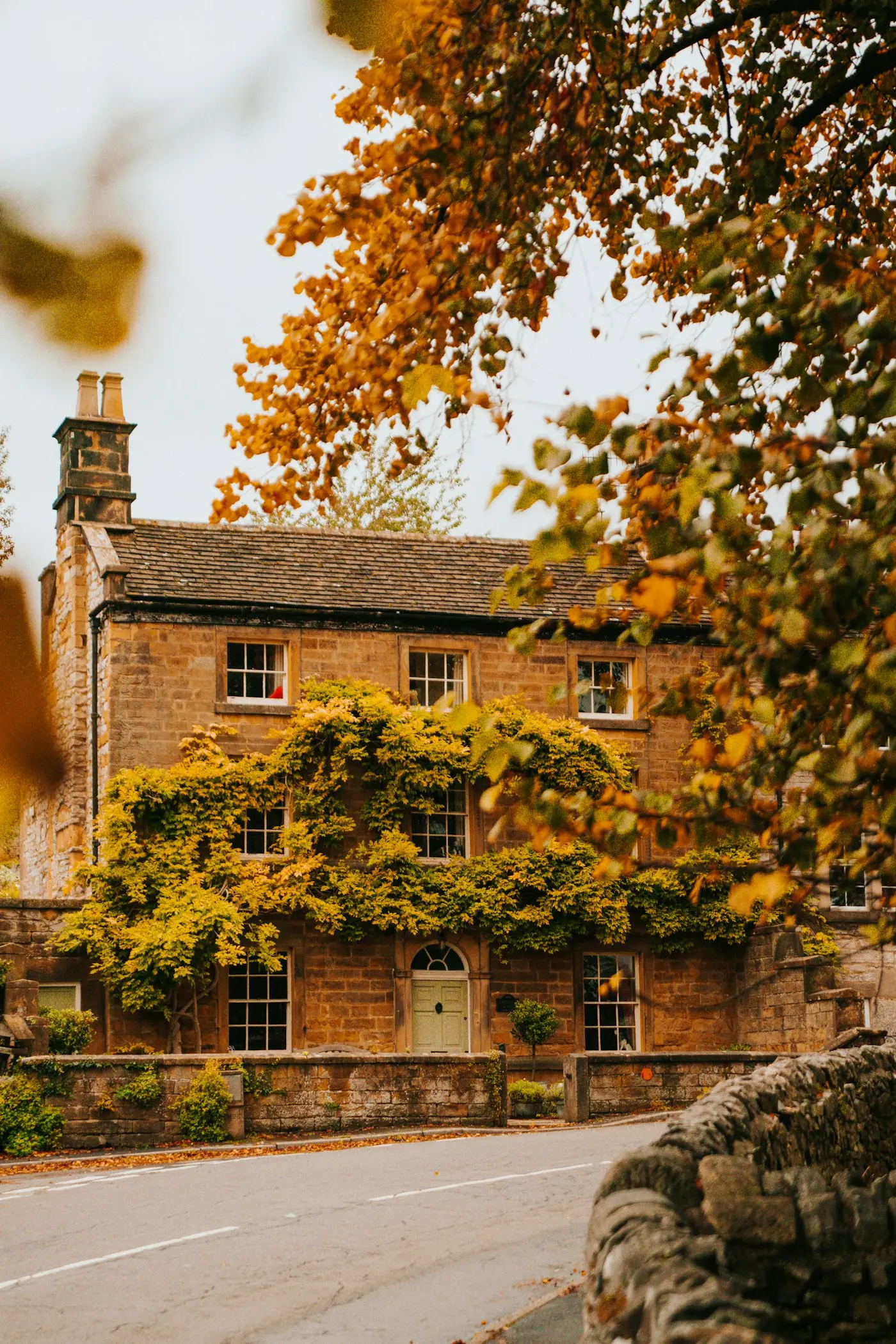
Most Yorkshire homeowners neglect the front garden and quietly regret it. It is the first thing visitors see, the first thing buyers notice, and with a modest amount of thought it can look genuinely good with very little ongoing maintenance. A front garden that works is not about show - it is about solving the right problem for your property type.
This guide covers the most common front garden situations in Yorkshire, the decisions that actually matter (paving vs lawn, parking vs planting), planning rules you need to know, and what grows reliably in Yorkshire conditions.
The Yorkshire Front Garden - Four Common Situations
Victorian and Edwardian terrace
Most terraces in Leeds, Bradford, Sheffield, Hull, and the smaller mill towns have a small strip garden - typically 2-4m deep and 5-6m wide. The soil is usually compacted clay, possibly alkaline from old lime mortar. The exposure is often north or east facing (streets run east-west in most Yorkshire town grids). These gardens are small enough that a single good decision - a bold evergreen, a proper surface, a well-maintained edge - can transform the look. Do not try to do too much in a small space.
1950s-1970s semi-detached
The dominant house type in suburban Yorkshire - Harrogate, Headingley, Roundhay, Crossgates, Ecclesall Road corridor in Sheffield. Bigger plot, often already concreted or tarmacked over in the 1980s or 1990s. The concrete may be cracked and weedy, the tarmac bubbling. Replacing an old impermeable surface with permeable block paving or resin-bound gravel is usually the single best intervention - it looks better, meets current planning rules, and is good for drainage. These plots are big enough for some planting alongside the parking.
Modern estate (post-2000)
Usually a small grass strip with a shared path, barely 2m deep. Often shaded by the neighbour's fence or wall. Grass in this situation is a losing battle - it gets churned in winter, barely grows in shade, and contributes nothing to kerb appeal. Replace it with a low planting scheme or a simple gravel finish with structural evergreens. Low-maintenance matters here; these houses typically have small households with busy lives.
Rural or village garden
More space, more wind, more character. Village properties in the Dales, Moors, or East Riding often have a front garden the size of a small back garden. The opportunity is considerable. Hedging (hawthorn, hornbeam, yew) creates a proper sense of enclosure. A mixture of cottage plants - hardy geraniums, salvias, roses - works beautifully in the windswept landscape. Stone edging and gravel paths suit the setting far better than concrete or block paving.
Paving vs Lawn - The Big Decision
In most Yorkshire front gardens, this comes down to one question: do you park a car there, or do you want it to not
If you park there, grass is pointless - it will be destroyed within a year. If you do not park there, lawn can work, but only if it gets enough light and you are prepared to maintain it. A shaded north-facing lawn strip in Leeds will look terrible from October to April regardless of what seed mix you use.
Block paving
The dominant choice for parking areas. Permeable block paving (with a permeable sub-base and open-jointed or gap-filled blocks) does not need planning permission regardless of size. Standard block paving over 5sqm does.
- Cost in Yorkshire: £80-120/sqm installed (excavation, sub-base, bedding, blocks, edging)
- A typical 20sqm front garden: £1,600-2,400
- Looks neat, durable, adds value
Resin-bound gravel
A smooth, attractive finish that is always permeable (so no planning issues), easy to clean, and looks more considered than plain tarmac. More expensive than block paving but requires less maintenance. Popular in Harrogate and the more affluent suburb areas of Leeds and York.
- Cost in Yorkshire: £80-150/sqm installed
- A typical 20sqm front garden: £1,600-3,000
Gravel (loose)
The cheapest surface option. Works well for planting areas and paths but poorly for heavy parking - it gets displaced and tracked into the house. Needs edging to contain it, and replenishing every 3-5 years as it settles.
- Cost: £20-40/sqm
- A typical 20sqm: £400-800
For more detail on surfacing costs, see our guide to block paving in Yorkshire and our broader patio laying cost guide.
Planning Rules for Paving Front Gardens
Since 2008, paving over a front garden in England with an impermeable surface (solid concrete, standard tarmac, or block paving without a permeable base) over 5 square metres requires planning permission. This rule applies everywhere in Yorkshire.
You do not need planning permission if you use:
- Permeable block paving (blocks with open joints filled with gravel or a permeable base layer)
- Resin-bound gravel (always permeable)
- Loose gravel or shingle
- Any surface that allows water to drain through to the ground
In conservation areas (York city centre, Harrogate town centre, Knaresborough, Skipton, and many other Yorkshire towns) there are additional restrictions on front garden alterations. Always check with the local authority before starting work in a conservation area.
Getting a Dropped Kerb for Off-Road Parking
A dropped kerb (vehicle crossing) lets you drive from the road onto your front garden. This is a Highways application, not a planning application - you apply to your local authority's Highways department, not Planning.
The process:
- Apply to Highways for a vehicle crossing licence (forms on your council's website)
- Highways inspect the site to check sight lines, footway width, utility locations
- If approved, Highways arrange the actual kerb lowering - you cannot do this yourself
- You can arrange the private driveway work (within your boundary) separately through any contractor
Costs in Yorkshire vary by council. Expect to pay £1,200-2,500 for the Highways portion. The council does the kerb; you pay for it. York, Leeds, Bradford, Kirklees, and Sheffield councils all have slightly different processes and timescales - York and Harrogate tend to be slower (conservation area complexity); Bradford and Leeds tend to be more straightforward in suburban areas. Allow 6-12 weeks for Highways approval.
Low-Maintenance Planting for Yorkshire Front Gardens
Evergreen structure plants
You want something that looks decent in January as well as June. Options for Yorkshire conditions:
- Portuguese laurel (Prunus lusitanica): tough, attractive, handles Yorkshire clay and wind well. Better than cherry laurel for smaller spaces - tidier growth. Can be clipped as a hedge or left as a multi-stem shrub.
- Yew (Taxus baccata): the finest hedging plant in Britain. Slow to establish but lasts centuries. Takes hard clipping. Handles alkaline limestone soils well (useful in the Dales and Wolds). Berries toxic to children and livestock - keep this in mind for family gardens.
- Box (Buxus sempervirens): traditionally used for formal edging and topiary, but box blight (Cylindrocladium buxicola) is now widespread across Yorkshire. If you want formal topiary, consider Ilex crenata (Japanese holly) or Lonicera nitida instead - both are blight-resistant.
Ground cover for Yorkshire clay
- Hardy geraniums (Geranium): Geranium 'Rozanne' is outstanding - flowers June to October, sprawls to suppress weeds, handles clay and partial shade. Needs cutting back once a year.
- Periwinkle (Vinca minor): evergreen ground cover, purple or white flowers in spring, handles deep shade and clay. Can become invasive - plant in contained areas or lift and divide every 3-4 years.
- Heuchera: colourful foliage in bronze, purple, and lime - gives year-round interest in a small bed. Handles clay if drainage is reasonable.
Hedging
- Hornbeam (Carpinus betulus): excellent for wet clay soils where beech struggles. Holds its dead leaves through winter (like beech) giving year-round privacy. Clips well into a tight hedge.
- Native hawthorn (Crataegus monogyna): perfect for rural and village properties. Fast-growing, wildlife-friendly, impenetrable to dogs and children when established. Flowers beautifully in May.
Climbers on the house wall
A climber on the front wall of the house softens the look considerably:
- Clematis: a huge range, many suitable for Yorkshire. Clematis 'Montana' is vigorous and flowers abundantly in May on a sunny wall. Clematis tangutica handles a shadier north-facing wall better than most.
- Pyracantha: evergreen, white flowers in June, red or orange berries in winter. Good as an espalier against a wall. Thorny - a genuine deterrent if trained below windows.
- Cotoneaster horizontalis: semi-evergreen, herringbone branching pattern, red berries, handles north-facing walls well. Very reliable in Yorkshire.
For a full guide to clay-tolerant planting, see our article on gardening in Yorkshire clay. For a wider low-maintenance planting guide, see our low-maintenance garden ideas for Yorkshire.
North-Facing Front Gardens
A significant proportion of Yorkshire terraced and semi-detached houses have north-facing front gardens - the street runs east-west, and the front of the house faces north. These gardens get limited direct sun, particularly in winter.
What works in a shaded north-facing front garden:
- Ferns: soft shield fern (Polystichum setiferum) is evergreen and handles Yorkshire clay. Male fern (Dryopteris filix-mas) is robust and large. Both require essentially zero maintenance once established.
- Hostas: impressive foliage, handles deep shade. Slug damage is the main problem - use copper tape, nematodes, or wool pellets rather than pellets near hedgehogs.
- Mahonia: large structural evergreen, yellow flowers in winter (November-February), handles shade and clay well. Dramatic and architectural. 'Winter Sun' is the best cultivar for a smaller space.
- Euonymus fortunei: evergreen, variegated forms add light to a dark space, handles shade and cold, very low maintenance.
See our full guide to north-facing gardens in Yorkshire for more detail on shade planting and light maximisation.
Drainage in Yorkshire Front Gardens
Yorkshire gets a lot of rain. Front gardens on clay - which describes most Yorkshire suburbs - can waterlog badly in winter, particularly where the soil has been compacted by foot traffic or vehicles.
Signs of a drainage problem: standing water after rain lasting more than 24-48 hours; moss growing in the lawn; bare patches where grass has died from waterlogging; a lawn that feels spongy or hollow in winter.
Fixes:
- Remove grass and replace with a permeable surface plus raised planting beds - this is often the most effective solution for a small front garden
- Add a French drain along the edge of the garden, leading to the road gutter or a soakaway
- Raise planting beds by 15-20cm above the natural ground level - fill with improved topsoil mixed with grit
- For persistent problems, see our full guide to garden drainage in Yorkshire
If you are planning a significant front garden improvement, our garden design service connects you with local designers who can assess the drainage before specifying the surface. If the existing garden needs clearing before you start, our garden clearance service can handle the groundwork.
Need help with your Yorkshire garden?
60-second assessment. If a local gardener takes your enquiry, they call you with a price.
Start the assessmentFrequently Asked Questions
Do I need planning permission to pave my front garden in Yorkshire?
No permission needed if you use a permeable surface (resin-bound, permeable block paving, gravel) of any size. If you use a solid impermeable surface over 5 square metres, you need planning permission. This applies across all Yorkshire councils. Conservation areas have additional restrictions - check locally.
How much does block paving cost for a front garden in Yorkshire?
Block paving costs roughly £80-120 per square metre installed, including excavation, sub-base, blocks, and edging. A 20-30sqm front garden typically comes to £1,600-3,600. Resin-bound surfaces are similar at £80-150/sqm. Gravel is considerably cheaper at £20-40/sqm.
What plants are good for a low-maintenance Yorkshire front garden?
For year-round structure: Portuguese laurel, yew, hornbeam. For ground cover in clay: hardy geraniums, periwinkle, Heuchera. For north-facing shade: ferns, hostas, Mahonia, Euonymus. Avoid Buxus (box) - box blight is widespread across Yorkshire. For rural properties: native hawthorn makes an excellent boundary hedge.
How do I get a dropped kerb in Yorkshire?
Apply to your local authority's Highways department (not Planning). They assess the application, inspect the site, and carry out the kerb lowering through their own contractors. You cannot do the kerb work yourself. Total cost typically £1,200-2,500 in Yorkshire, including the Highways element. Allow 6-12 weeks for approval - longer in conservation areas.