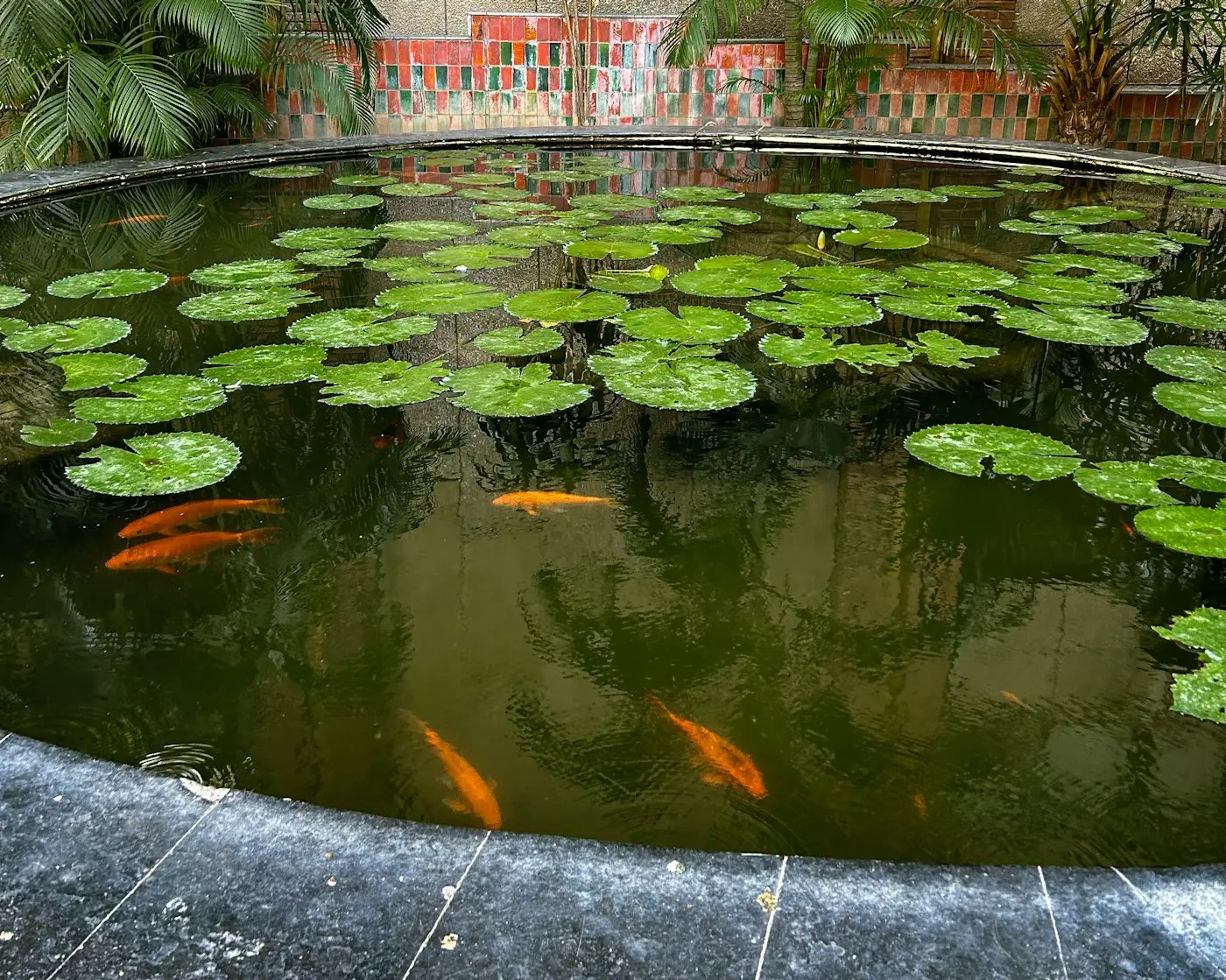
Quick answer: Core pond maintenance jobs are blanketweed removal (May to August in Yorkshire), pump and filter cleaning every 4 to 6 weeks, marginal plant cutting back in autumn, and leaf netting in October and November. A full pond clean including partial silt removal costs £200 to £500 for a small to medium pond. Annual maintenance contracts for feature ponds typically run £300 to £600 per year. Late spring (May) is the best time to book a professional clean before summer.
Why Yorkshire Gardens Have So Many Ponds
Yorkshire has a genuine pond culture that goes back further than the current wildlife gardening movement. The Victorian and Edwardian building boom that produced the county's characteristic stone terrace rows - in Leeds, Bradford, Halifax, Huddersfield, Harrogate, and dozens of smaller mill towns - also produced small walled rear gardens where ornamental features like fishponds and water basins were fashionable from the late 19th century through to the 1930s. Many of these original features survived, were forgotten for decades, and have been revived by successive generations of homeowners who found them under concrete or paving during renovation work.
The larger, affluent gardens of Harrogate, Ilkley, Skipton, and Knaresborough have their own pond tradition - more formal in style, often with koi or large goldfish, and constructed or extensively renovated during the garden design boom of the 1980s and 1990s when water features became fashionable in premium garden design. These gardens frequently have purpose-built filtration systems and the owners invest in ongoing professional maintenance.
Further out into North and East Yorkshire, rural properties - farmhouses, converted barns, old rectories and vicarages - frequently have larger ponds that were originally functional (watering livestock or farm machinery) and have been naturalised or landscaped for ornamental purposes. These rural ponds are typically larger, less intensively managed, and face different maintenance issues from their urban equivalents: more tree cover, more leaf fall, greater silt accumulation, and sometimes significant visiting wildlife that changes the ecological balance year to year.
And then there is the wave of wildlife ponds that started appearing in Yorkshire gardens from about 2015 onwards, driven by concern about declining amphibian populations and a broader interest in garden biodiversity. These ponds are designed not to have fish (which eat tadpoles and frogspawn), to have gently sloping edges for easy access by hedgehogs and frogs, and to be managed minimally rather than for visual perfection. They have their own maintenance needs - mainly preventing them from silting up and being taken over by blanketweed or invasive plants - but they are considerably less demanding than koi ponds.
The Core Pond Maintenance Tasks: What Gets Done and When
Blanketweed Removal (May to August)
Blanketweed - the stringy green filamentous algae that can go from absent to pond-filling in a matter of weeks - is the most frequently requested pond maintenance job in Yorkshire. It thrives in warm, nutrient-rich water with plenty of sunlight, and the conditions from May through to August in Yorkshire's warmer seasons are perfect for it. A pond that looked clear in April can be choked with blanketweed by mid-June.
Physical removal is the most reliable short-term method: twirl a long stick through the growth to gather it up, remove it from the pond, and leave it beside the pond for 24 hours before composting - this lets any trapped pond life (water beetles, small larvae, snails) find their way back to the water. Chemical treatments exist but are poorly suited to ponds with fish or significant wildlife value; the breakdown of large algae masses after treatment consumes oxygen and can cause fish deaths. Physical removal is safer, though it requires repeating regularly through summer.
The longer-term approach is reducing the conditions that cause blanketweed in the first place: shade the surface (water lilies covering 30 to 50 per cent of a small pond surface significantly reduce blanketweed), limit nutrient loading (fish waste is the biggest source in stocked ponds; do not overstock), and keep leaves out in autumn to prevent the nutrient release that comes from leaf decomposition.
Silt Dredging (Every 5 to 10 Years)
Silt accumulates in every garden pond over time. It comes from decomposed plant material, fish waste, soil that washes in from surrounding beds, and the natural die-back of submerged and marginal plants. In a Yorkshire garden with significant tree cover, accumulation can be substantial: a pond under mature sycamores or birch can accumulate 5 to 10 centimetres of silt per year in a wet season.
Left long enough, silt accumulation reduces pond depth, creates anaerobic conditions at the bottom that are harmful to fish and beneficial bacteria, and contributes to nutrient loading that drives algae growth. The practical sign that dredging is needed: the pond depth is noticeably shallower than it was when you remember it being installed, or the water turns murky and dark brown rather than clear after rain.
Silt dredging is a job that is safer done by a professional with experience of ponds containing fish. The reason is specific: disturbing accumulated silt releases hydrogen sulphide gas, which can accumulate at the pond surface and is harmful to fish at relatively low concentrations. A professional will work carefully, maintain aeration (either by keeping a pump running or adding a temporary aerator), and remove fish temporarily if the pond is shallow enough that the disturbance will significantly affect water quality. DIY silt removal from a large pond with significant fish stock is a risk not worth taking.
Pump and Filter Cleaning (Every 4 to 6 Weeks During Active Season)
Most garden ponds installed in the last 20 to 30 years have a circulation pump and some form of biological filtration. The filter houses beneficial bacteria that break down fish waste; a clean, functioning filter is what keeps the water clear and the fish healthy. A blocked filter is the most common cause of sudden water quality deterioration in summer.
Filter cleaning is not a complete strip-down and sterilise - that would destroy the beneficial bacteria you need. It is a rinse of the foam media in pond water (not tap water, which contains chlorine that kills the bacteria) to remove accumulated debris while preserving the biological film. Most pond filters need this every 4 to 6 weeks through the active season (April to October in Yorkshire) and once or twice through winter if the pump runs year-round. Pump impellers get clogged by debris and blanketweed; a quick check and clean each time you service the filter prevents most pump failures.
Marginal Plant Cutting Back (Autumn)
Marginal plants - yellow flag iris, reedmace (bulrush), reed canary grass, pickerel weed, water mint - provide habitat value and help with nutrient uptake through the growing season, but they need cutting back in autumn before they shed their leaves into the pond. Leaves that fall into the pond from marginals contribute significantly to the nutrient loading that drives blanketweed and green water in the following spring. Cut marginals back to about 10 to 15 centimetres above water level in October, removing the cut material from the pond immediately. See our full autumn garden care guide for the timing across different parts of Yorkshire.
Water lilies do not need cutting back - their leaves die back naturally through autumn and winter. The petioles (leaf stalks) can be cut off at the base if they look untidy, but this is cosmetic rather than necessary.
Leaf Netting (October and November)
The single most effective thing you can do for a Yorkshire garden pond is to keep leaves out of it in autumn. Falling leaves from deciduous trees - particularly oak, sycamore, birch, alder, and willow - are rich in tannins and organic compounds that decompose into the pond and dramatically increase nutrient loading. A pond that is covered in fallen leaves by November will spend most of the following summer fighting the algae growth that the nutrient pulse from decomposition drives.
A simple fine-mesh net stretched over the pond surface in early October, before the main leaf fall begins, and removed in December once the leaves are mostly done, catches the problem before it enters the water. Net edges need securing to prevent them sinking into the pond under the weight of accumulated leaves; check and remove collected leaves from the net every week or two rather than letting the weight build up. If you have a large pond or a significant area of mature deciduous trees above it, a professional autumn visit to net and clear the pond before winter can be well worth the cost - leaf fall into an untended pond for 6 to 8 weeks makes the following year's maintenance considerably harder.
Fish Health Monitoring
Goldfish and koi are the most common pond fish in Yorkshire gardens, and both are reasonably hardy in Yorkshire winters if the pond is deep enough (at least 60 centimetres minimum, ideally 90 centimetres or more to prevent complete freezing). Signs of fish health problems include: fish gasping at the surface (oxygen depletion - usually a blocked filter or a sudden algae crash), unusual spots or lesions (bacterial or fungal disease, often triggered by stress from poor water quality), fish staying near the surface in cold weather (usually harmless torpor rather than illness), or unexplained fish deaths over a short period.
Koi keepers in Harrogate, Ilkley, and the higher-spec garden pond market in North Yorkshire often invest in regular professional health checks, particularly in spring when fish come out of winter and their immune systems are at their most vulnerable. A professional pond visit in May should include a visual check of all visible fish, a water quality test for ammonia, nitrite, pH, and KH (carbonate hardness), and filter status assessment.
Yorkshire-Specific Pond Considerations
Hard Water in East Yorkshire
East Yorkshire - particularly the chalk belt running through the East Riding from the Yorkshire Wolds down towards Beverley and Driffield - has some of the hardest tap water in England. Hard water contains elevated levels of calcium and magnesium carbonates (KH - carbonate hardness) and general hardness (GH). For pond fish, moderate hardness (KH 6 to 10 dKH) is actually beneficial - it stabilises pH and provides buffering capacity. Very high KH (above 15 dKH) can occasionally cause problems with pH swings in heavily planted ponds.
The practical implication for East Yorkshire pond owners topping up with tap water is that scale deposits can accumulate on waterfall features, pipework, and pump impellers more quickly than in softer-water areas of the county. In the Pennine West Yorkshire areas (Calderdale, Kirklees), tap water is significantly softer, and the pH of the water can be lower. This needs monitoring in koi ponds, where stable pH is important for fish health. If you are collecting rainwater to top up a pond - a sensible practice that avoids the chlorine and mineral additions of tap water - the soft, slightly acid nature of Yorkshire rainwater is generally beneficial for most pond types. If you keep a vegetable garden as well, the pond overflow or top-up water is useful for irrigation: water that has been through a biological filter is nutrient-rich and valuable for growing crops. See our guide to growing vegetables in Yorkshire for how rainwater collection fits into a productive garden setup.
Yorkshire Winters and Pond Freezing
Small garden ponds in Yorkshire - particularly those under 60 centimetres deep - can freeze completely in a hard Yorkshire winter. Complete freezing is lethal to fish: it prevents gas exchange between the water and the atmosphere, trapping toxic gases (primarily ammonia from fish waste and decomposition) in the water below the ice. If the pond is small and shallow enough to freeze solid, the fish are at serious risk.
The common advice is to create a hole in the ice to allow gas exchange. The correct way to do this is to melt a hole using hot water poured slowly over the ice surface, or to use a pond de-icer (a small floating heating element designed specifically for ponds). Never break the ice by striking it - the shockwave through the water can be harmful to fish, particularly koi, which have a swim bladder sensitive to sudden pressure changes. A small ball or tennis ball floated on the surface before freezing weather arrives keeps a small area ice-free by preventing complete surface ice formation.
In Yorkshire winters in upland gardens - the Dales, the Pennine fringe, the North York Moors edge - freeze events are common and sometimes prolonged. Any pond in these areas with fish stock should have either a de-icer running through winter or a pump that keeps the water moving sufficiently to prevent freezing (moving water freezes at lower temperatures than still water). A pump also maintains oxygen levels through the limited photosynthesis period of winter.
Heron Predation Across Yorkshire
Grey herons are widespread across Yorkshire, including in urban and suburban gardens, and garden ponds are easy fishing for them. A heron can empty a small pond of goldfish in a single visit. The problem tends to peak in late winter and early spring when natural water bodies have ice cover and herons are driven to find alternative food sources; it also spikes when herons are feeding young in the nest.
Heron deterrents that work: low-profile trip wires around the pond edge (herons wade in from the edge and a wire at about 20 centimetres height will deter most birds); pond netting; and pond depth combined with planting cover (fish that can hide in deep water and among aquatic plant cover are harder to catch than fish in shallow, clear water). Plastic heron decoys work initially but most herons become habituated to them within a few weeks. Motion-activated water jet deterrents work well but need a connected hose and a power supply, limiting their practicality in some garden situations.
When to Book Pond Maintenance in Yorkshire
Late spring - May - is the best time for a professional pond clean and assessment. By May, water temperatures are rising but have not yet reached the levels that make a full clean stressful for fish. The algae season is just beginning, so a clean in May prevents the summer blanketweed build-up rather than responding to it. Any winter damage to pumps, filters, or pond liners is easier to assess and repair in May than later in the season when the pond is in full production.
Autumn - October and early November - is the second key maintenance period. The jobs at this time of year are less invasive: leaf netting setup, cutting back marginals, a filter check before winter, and ensuring the pump is set up to run through winter or the de-icer is in place. If you have had a bad blanketweed summer, autumn is a good time to assess what structural changes (more shade planting, reduced fish stocking, better filtration) would help next year.
Yorkshire note: May books up quickly for pond maintenance. If you want a professional spring clean in May, enquire in March or April. Summer emergency calls for sudden fish deaths or catastrophic algae outbreaks are obviously needed when they arise, but for planned seasonal maintenance, book 4 to 6 weeks ahead for the May window.
What a Professional Pond Visit Covers
A standard professional pond visit in Yorkshire covers the following, though the exact scope depends on the pond type and what the owner has requested:
- Visual inspection of pond condition, water clarity, and any signs of liner damage or leakage
- Water quality test: pH, ammonia, nitrite, KH at minimum; sometimes GH and nitrate for koi ponds
- Filter media rinse and pump inspection
- Blanketweed removal and disposal
- Visual fish health check (noting any fish showing abnormal behaviour or visible symptoms)
- Assessment of marginal plant condition and advice on any cutting back or thinning needed
- Report back to the owner on any issues found and recommended follow-up
A full spring clean is a larger job. It typically involves partial water removal (usually 30 to 50 per cent rather than a full empty, which causes more disruption than it resolves), removal of accumulated debris from the pond floor, filter deep clean, and plant thinning. Fish are moved temporarily to a holding tank or large tub while the more disruptive parts of the work are done, then returned when water quality is stable.
Pond Maintenance Costs in Yorkshire: 2026 Guide
| Job | Typical cost | Notes |
|---|---|---|
| Blanketweed removal and tidy (small pond) | £80 to £150 | One visit, small pond up to around 3m x 2m |
| Full spring clean (small to medium pond) | £200 to £400 | Partial water change, debris, filter, fish check |
| Full spring clean (large feature pond) | £400 to £700 | Koi ponds, ponds over 5m x 3m or equivalent volume |
| Annual maintenance contract (feature pond) | £300 to £600/year | Regular seasonal visits; larger or complex ponds more |
| Silt dredge (small garden pond) | £300 to £600 | Priced per job; larger rural ponds significantly more |
| Hourly rate (general pond work) | £20 to £35/hr | Specialist koi pond technicians at the higher end |
What You Can Do Yourself vs When to Call a Professional
Most routine pond maintenance is well within the capabilities of an engaged homeowner. Weekly tasks during summer - checking the fish, removing any blanketweed that has developed, making sure the pump is running, removing any debris from the surface - take 10 to 15 minutes and are straightforward. Rinsing the filter foam media in pond water every few weeks is a slightly messier but simple task once you have done it once. Leaf removal in autumn is no more difficult than any other garden task.
The jobs where professional help is worth the cost: silt dredging in any pond with fish stock (for the reasons described above - hydrogen sulphide gas release is a real risk, and fish management during the process needs care); diagnosing and treating fish disease (a vet with aquatic experience or a specialist pond company is better placed than a general gardener for this); installing or significantly upgrading filtration (getting the biological filtration right from the start saves far more in problems later); and dealing with a suspected pond liner failure, which requires draining and careful inspection that is best done by someone who has done it before.
Thinking about a new pond or a complete redesign of an existing one? Our garden design service includes water feature planning and installation, including advising on the right scale and filtration for your garden's conditions and your goals for the pond. Getting the design right at the start - particularly the depth, the filtration capacity, and the relationship between the pond and surrounding planting - avoids the expensive retrofitting that is common with ponds designed primarily for appearance rather than function.
Get your pond sorted before summer
Spring is the right time. Fill in the form and we will connect you with a pond specialist who covers your part of Yorkshire.
Book a pond visit →Frequently Asked Questions
How often should you clean a garden pond?
For a small ornamental pond, a full clean is typically needed once a year in late spring. Blanketweed removal should be done as needed through summer - in Yorkshire that often means monthly between May and August. Filters and pumps need cleaning every 4 to 6 weeks during the active season. Silt dredging is needed every 5 to 10 years depending on leaf fall and fish stock. The yearly rhythm is: spring refresh in May, blanketweed management through summer, leaf netting in autumn, reduced maintenance through winter.
What causes blanketweed in ponds?
Blanketweed thrives when sunlight, warm water, and excess nutrients combine. In Yorkshire the peak season is May to August. Nutrient loading from fish waste, leaf decomposition, and soil runoff feeds it. The long-term fix is reducing nutrients: limit fish stocking, keep leaves out in autumn, establish shade plants (water lilies covering 30 to 50 per cent of the surface) that compete with algae for light. Physical removal with a twirled stick is the most effective short-term method for most small garden ponds.
How do I keep my pond clear in summer?
Keep a good proportion of the water surface shaded with floating plants like water lilies. Remove blanketweed physically as it develops. Clean the pump filter regularly - a blocked filter in warm weather causes oxygen depletion fast. Do not overfeed fish. If topping up the pond in dry weather, rainwater from a water butt is preferable to tap water, especially in hard-water East Yorkshire where tap water adds minerals that can feed algae growth.
Is it OK to clean a pond in winter?
A full clean should not be done in winter in Yorkshire. Cold water cleaning disturbs the pond ecosystem when fish are in semi-torpor and their immune systems are suppressed. Stressing fish with a water change in cold conditions risks disease and fish deaths. The exception is removing fallen leaves from the surface or a net, which is fine at any time of year. Wait until water temperature is consistently above 10 degrees Celsius (usually late April to mid-May in Yorkshire) before any significant maintenance.
How much does pond maintenance cost in Yorkshire?
A small garden pond blanketweed removal and tidy typically costs £80 to £150. A full pond clean including partial silt removal costs £200 to £400 for a small to medium pond and £400 to £700 for a larger feature pond. Annual maintenance contracts for a feature pond with fish typically run £300 to £600 per year. Silt dredging is priced per job and ranges from £300 to £600 for a small garden pond. Hourly rates run £25 to £35 per hour.
Do you service ponds across Yorkshire?
Yorkshire Lawn and Garden connects homeowners with local pond specialists across the county, including the Harrogate, Ilkley, and Skipton areas; York and the Vale of York; Leeds, Bradford, and West Yorkshire; Sheffield, Barnsley, and South Yorkshire; and across the East Riding including Hull, Beverley, and Driffield. Use the quote form to describe your pond and we will connect you with someone who covers your area.