Garden pond installation in Yorkshire: costs, types and design
A garden pond changes your outdoor space in a way that almost nothing else does. The sound of water, the movement of dragonflies and damselflies, frogs arriving within weeks of filling - these are things you cannot get from a planted border or a new lawn. Whether you're after a simple wildlife pond that takes care of itself, or a formal koi pond with a waterfall, we connect you with pond specialists across all 240+ towns in our Yorkshire network.
- Free quotes, no obligation
- Local gardeners
- 240+ Yorkshire towns covered
- No call centres
Wildlife pond, ornamental pond, or hybrid?
The three pond types serve different purposes and have very different construction requirements, running costs, and maintenance demands. Understanding which is right for your garden before you start saves significant cost and frustration.
Wildlife pond
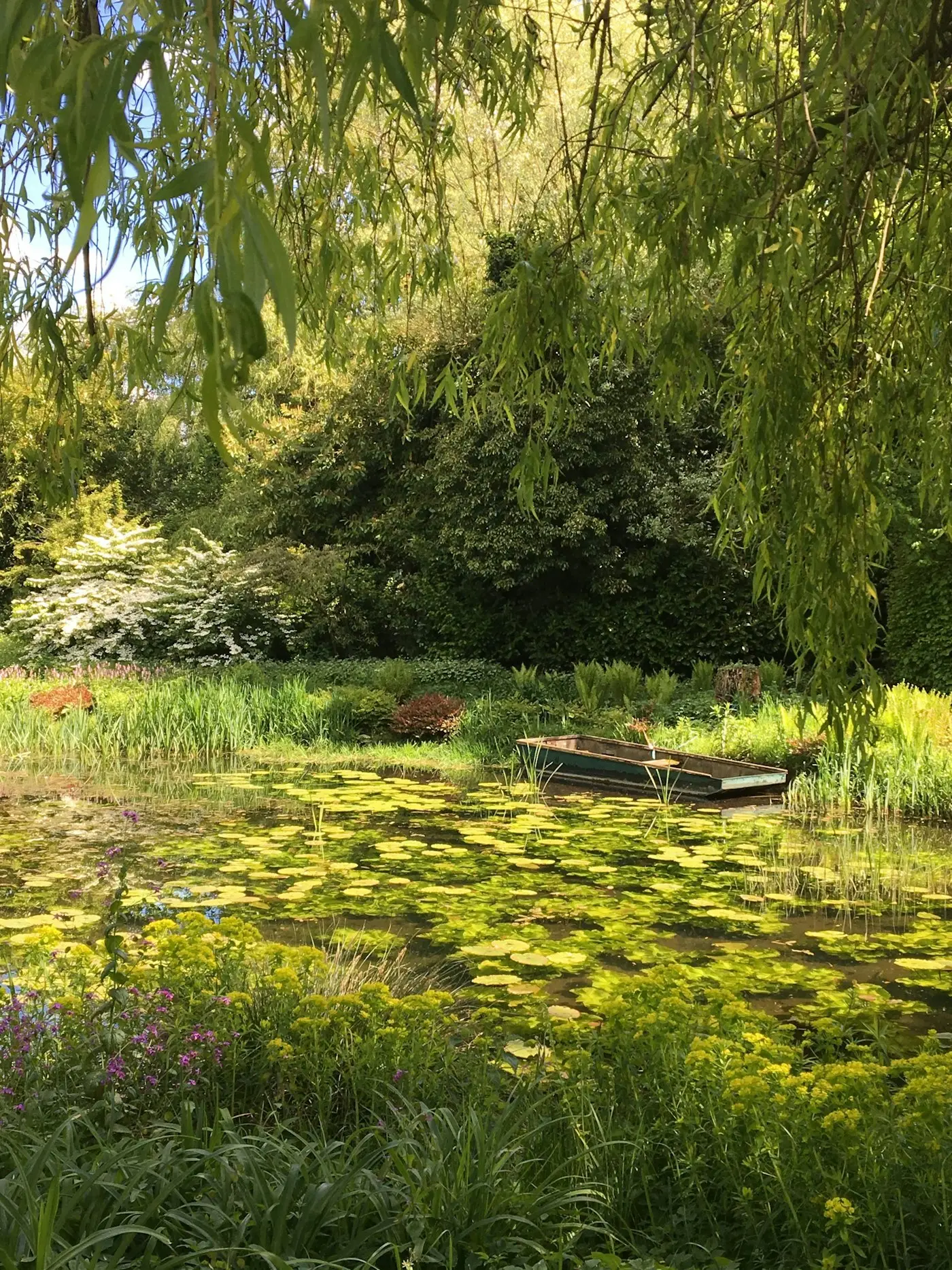
A wildlife pond is designed to attract and support native wildlife. It has shallow, gently sloping margins (for frogs, newts, and invertebrates to enter and exit safely), native aquatic and marginal planting, no pump or filter, and typically no fish (fish eat tadpoles, frog and toad spawn, and aquatic invertebrates, effectively eliminating most of the wildlife you are trying to attract). A good wildlife pond reaches a natural balance and requires minimal intervention once established.
Yorkshire Wildlife Trust has identified garden ponds as one of the single most impactful actions Yorkshire homeowners can take for local biodiversity. The data is compelling: a wildlife pond in good condition can support hundreds of species, including nationally scarce invertebrates. Great crested newts (a legally protected species under the Wildlife and Countryside Act 1981 and the Conservation of Habitats Regulations) have been recorded colonising new garden ponds in West Yorkshire within the first season. Common frogs, common toads, smooth newts, and palmate newts are found across virtually the entire Yorkshire county and will find your pond.
Wildlife pond minimum size is around 1m x 2m - you can go smaller but the ecological value drops significantly below this, and very small ponds are prone to rapid algae problems and temperature fluctuations. The ideal wildlife pond has a range of depths: shallow margins (100-150mm) leading to mid-depth planting shelves (200-300mm) leading to a deeper central section (at least 600mm). The deep section prevents complete freezing in Yorkshire winters and provides refuge for creatures during cold and drought.
Ornamental pond
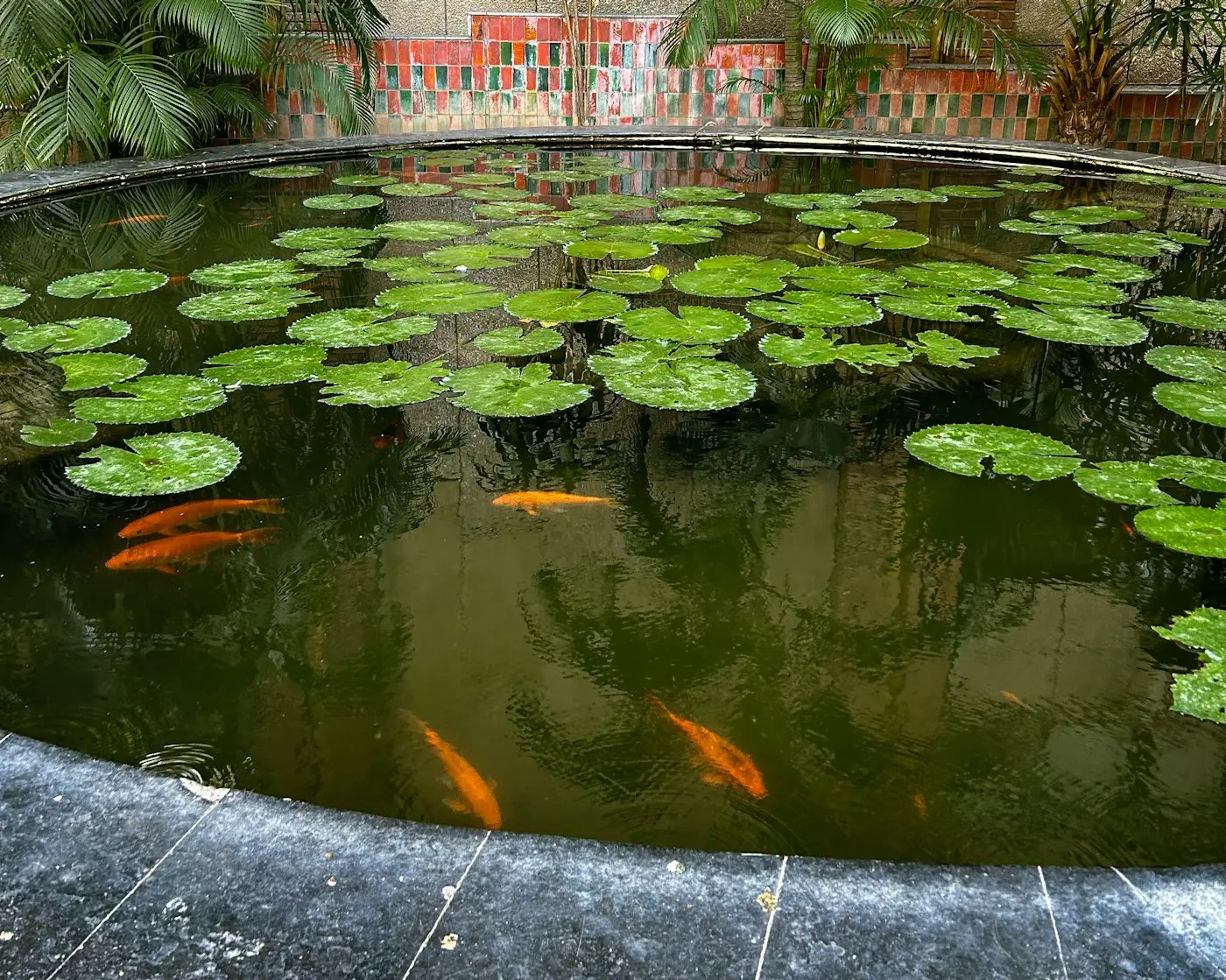
An ornamental pond is designed primarily for visual impact and often for fish keeping. It typically has more formal or geometric shaping, a pump and filter system (essential for fish health), and may include a fountain, waterfall, or other water feature. The fish are the main attraction for many owners - common goldfish, shubunkin, koi, and golden orfe are all popular in Yorkshire gardens.
An ornamental fish pond has running costs that a wildlife pond does not: electricity for the pump and UV clarifier, filter media that needs periodic replacement, and potentially fish food, medications, and water treatment products. Yorkshire winters can be hard on fish: temperatures can reach -10C in exposed North Yorkshire garden positions, and any fish pond needs a minimum depth of at least 600mm for goldfish to overwinter safely, and 900mm or more for koi. Heaters and pond warmers are available for very cold winters or smaller ponds. Our pond installation guide covers fish pond considerations in detail.
Hybrid pond
A hybrid pond combines elements of both: perhaps a natural-looking shape and native planting alongside a small pump that circulates water without filtration, or a pond with a designated wildlife margin on one side and a cleaner ornamental section with a small goldfish population on the other. Hybrid ponds are popular with homeowners who want the biodiversity benefits of a wildlife pond but also want some movement and perhaps a few fish. The trade-offs are real: fish will reduce wildlife populations, and a partly-pumped pond requires more maintenance than a fully natural one. But a well-designed hybrid can achieve a reasonable balance of both goals in a medium-sized Yorkshire garden.
Yorkshire soil, water, and ecology for garden ponds
Yorkshire's natural conditions strongly influence how you should approach pond installation. Local soil and water chemistry, native species, and winter severity all affect the choices you make in the planning stage.
Yorkshire clay: an advantage for pond construction
Heavy clay soil - dominant across the Vale of York, the East Riding plains, and much of the West Yorkshire lowlands - is an asset for pond construction. Clay holds water naturally, which means that in clay-rich gardens, a traditional puddled clay liner can be a viable alternative to a rubber or synthetic liner. This was the method used for farm ponds across North Yorkshire for centuries, many of which are still holding water today. A puddled clay liner involves working the clay into the dug pond basin repeatedly, building up layers until a reliably waterproof membrane is formed. It requires a higher clay content than most suburban Yorkshire soils will provide without importing clay, but in genuinely clay-heavy gardens it is worth discussing with your installer. The advantage is longevity: a well-made puddled clay pond can last indefinitely without liner replacement.
For most garden pond installations, a modern butyl rubber or EPDM liner is more practical and reliable than puddled clay. Both materials are flexible, durable, and resistant to UV degradation. A 0.75mm butyl liner has an expected life of 20-25 years in typical residential use; EPDM of similar thickness performs broadly comparably. Neither should crack or fail in Yorkshire winter conditions if installed correctly.
Yorkshire water hardness
Yorkshire's tap water is moderately hard in most areas: calcium carbonate levels typically run at 150-250mg/L, with softer water in the west (Pennine catchments, where reservoirs collect soft upland rainfall) and harder water in the east (East Riding and areas drawing from chalk or limestone aquifers). Moderate hardness has some benefits for pond ecology: it buffers pH fluctuations and provides calcium for snail shells and invertebrate exoskeletons. It can contribute to limescale build-up on pump impellers and UV clarifier sleeves, which should be cleaned periodically.
Avoid topping up your pond with tap water if possible. Top-up water brings dissolved minerals and, in Yorkshire's treated water supply, chloramine (which is harder to off-gas than simple chlorine). A water butt collection system is ideal for pond top-ups. If you must use tap water, use a dechlorinator product and add it slowly over the pond margin rather than pouring it in directly. A rainwater-fed pond in Yorkshire's reasonably wet climate will need far less topping up than one in southern England, which is one advantage of the Yorkshire location.
Yorkshire winters and pond depth
North Yorkshire's Moors and Dales see some of the coldest garden temperatures in England. Even in the milder Vale of York and East Riding lowlands, winter temperatures regularly reach -5C or below, and exposed gardens can see -10C in hard winters. If you are keeping fish, pond depth is not optional: a minimum of 60cm for common goldfish, 90cm for koi. This gives fish a zone of unfrozen water to which they can retreat as surface ice forms. In a pond with fish, never allow the surface to freeze completely as the gas exchange is cut off and ammonia builds up rapidly. A pond de-icer (a low-wattage floating heater) or a regular pond aerator running at the surface will prevent complete freezing in most Yorkshire winters.
Wildlife ponds with no fish can freeze at the surface without significant harm to the ecosystem, but a deeper section (at least 60cm) allows amphibians and invertebrates to overwinter in the unfrozen water. Very shallow ponds (under 30cm throughout) may freeze to the bottom in a hard Yorkshire winter, killing inhabitants. See our garden wildlife guide for more on supporting overwintering species.
Avoiding toxic planting nearby
Yorkshire gardens contain several commonly planted species that are toxic to pond inhabitants or that significantly contaminate pond water when they drop leaves or seeds. Yew (Taxus baccata) is extremely common in Yorkshire as a hedge plant and in older gardens and churchyards: all parts are highly toxic to fish and can contaminate pond water from falling needles. Horse chestnut produces toxins that leach from fallen leaves and conkers. Laburnum, also common in older Yorkshire gardens, has highly toxic seeds and pods that fall directly into ponds positioned near the tree. Choose pond siting to avoid all of these. Even non-toxic trees pose a leaf-fall problem: decomposing leaves de-oxygenate the water. A pond should ideally have no overhanging trees on at least two sides.
Garden pond installation costs in Yorkshire
Pond installation in Yorkshire costs £500-£1,500 for a small wildlife pond (1-2m²), £1,500-£4,000 for a medium ornamental pond (3-6m²), and £4,000-£10,000+ for a large wildlife pond. Specialist koi ponds run £5,000-£20,000+. All-in prices cover excavation, liner, pump, filter, edging and planting. Yorkshire installer rates sit at the lower end of the UK national scale.
Pond costs vary more than almost any other garden project. The ranges below reflect typical Yorkshire installer quotes for fully supplied-and-installed ponds.
DIY vs professional installation
A small wildlife pond is one of the more accessible DIY garden projects. The excavation can be done by hand for a pond up to about 3-4sqm, the liner fitting is straightforward with care and a helper, and the planting is enjoyable. A basic wildlife pond installed by a motivated DIYer with bought-in materials costs £200-600 for a 1-2m² feature. The same pond installed professionally costs £500-1,500 - the canonical starting point for Yorkshire pond installation.
For anything larger, anything with fish requiring proper filtration, or any formal pond with structured edging and complex shape, professional installation delivers a much better result and usually pays back in avoided mistakes. A liner installed with poor underlay and badly fitted edges can fail within five years; a professionally installed pond should last 20+ years without major intervention.
Our garden maintenance service can take on ongoing pond maintenance once your pond is established, including autumn leaf netting, pump winterisation, and spring cleaning. We cover pond installations across York, Harrogate, Leeds, Sheffield, and all 240+ towns in the Yorkshire network.
The full guide
Where to put your pond
Siting is the most important decision in pond planning and the one most often rushed. A badly sited pond creates ongoing problems; a well-sited pond looks right and supports life with minimal intervention.
Sunlight requirements
Most aquatic plants need at least four to six hours of direct sunlight per day to flower and oxygenate effectively. A pond in deep shade will develop water quality problems and support a much narrower range of wildlife. In Yorkshire's often-overcast summers, a position that maximises available sunlight is particularly important. South or southwest-facing positions are ideal. North-facing positions, while common in many Yorkshire back gardens enclosed by terrace housing, are challenging for pond planting and will be dominated by algae in the absence of competing plants.
There is one exception: the northern bank of a pond (the bank facing north, i.e. shaded by the water) provides a cooler, more thermally stable microclimate than the exposed southern bank. This cooler edge is where you site the pump inlet or any shade-tolerant bog planting. The bulk of the pond surface and the primary planting shelves should receive maximum sun.
Distance from trees and structures
Allow at least the full height of any nearby tree as a minimum clearance between the tree and the pond. This keeps leaf fall manageable and avoids root interference with the liner. Willow (very common near water in Yorkshire), poplar, and birch have particularly invasive root systems that can undermine a pond liner over time. Any structure with footings - a house, garage, or garden wall - should have at least two metres of clearance, more on unstable or shrinkable clay soils where the pond could affect moisture levels in the subsoil adjacent to the foundations.
Ground level and drainage context
A pond at the lowest point of a garden collects surface water run-off, which brings in silt, fertiliser, and pesticide residues from the surrounding lawn or borders. This causes persistent algae problems and poor water quality. A position on a gentle slope with a flat-built pond (not simply dug into the low point) gives better control. If your garden genuinely has no other option than the lowest point, consider installing a small sump or overflow at pond level to manage excess run-off before it enters the pond.
For context on managing garden drainage more broadly, see our garden drainage guide.
Choosing the right liner for a Yorkshire garden pond
The liner is the most important structural element of a garden pond. The choice affects longevity, flexibility of pond shape, installation difficulty, and long-term maintenance. These are the options most commonly used in Yorkshire residential pond installations.
Butyl rubber liner
Butyl rubber is the traditional choice for flexible pond liners and remains the most widely specified material in UK residential pond construction. A 0.75mm butyl liner is the standard weight for most garden ponds; a 1.0mm liner is appropriate for ponds with fish where the liner will be subject to more physical contact and where a liner failure would cause significant loss. Butyl is heavy and somewhat less flexible at cold temperatures than EPDM, but it is puncture-resistant and has an excellent track record in Yorkshire conditions. Expected service life is 20-25 years with correct installation. Fish pond-safe formulations should be specified if fish are planned.
EPDM liner
EPDM (ethylene propylene diene monomer) is a synthetic rubber liner that has become increasingly popular as an alternative to butyl. It is slightly lighter than butyl, marginally more flexible at low temperatures (which makes it easier to work with on cold Yorkshire autumn days), and is typically priced slightly lower than equivalent butyl. Performance is broadly comparable to butyl in residential garden ponds. Some EPDM products contain carbon black compounds that are toxic to fish; always specify a fish-safe grade if fish are planned.
Fibreglass (GRP) preformed ponds
Rigid fibreglass preformed ponds are available in fixed shapes and sizes. They are quicker to install than flexible-liner ponds (no folding, no underlay, no edge finishing required) and very durable once in place. The limitation is that you cannot customise the shape or depth profile: you get what the manufacturer makes. This suits small formal ponds or simple wildlife features but does not work well for larger, naturalistically shaped ponds. Preformed ponds require very careful excavation to match the exact shape of the unit, with backfill compacted firmly around all sides to provide support and prevent movement.
Puddled clay
As noted above, puddled clay is a traditional Yorkshire pond-making technique that remains viable in clay-rich soils. A specialist is needed to assess whether the site clay is suitable and to execute the puddling correctly. The method involves excavating the pond, wetting and working the clay in repeated layers, and allowing it to consolidate. In genuinely suitable conditions, a puddled clay pond is the most durable and natural-looking option, but it is not appropriate for lighter or more variable soils and requires significantly more labour than a liner-based installation. Our water features guide covers traditional and modern pond construction methods in more detail.
Underlay
Regardless of liner type, a proper underlay layer is essential for flexible liner installations. Underlay prevents sharp stones and debris in the excavated walls and base from puncturing the liner during installation and over time. Geotextile underlay fabric is the standard; some installers also add a layer of sharp sand on the pond base. In Yorkshire's stony soils and in gardens where previous landscaping has left rubble, proper underlay is non-negotiable.
Planting a Yorkshire garden pond
The right planting transforms a pond from a hole of water to a living ecosystem. For Yorkshire conditions, native species are more reliable, more ecologically valuable, and generally lower maintenance than exotic or tender aquatics. These are the key species suited to Yorkshire garden ponds.
Water lilies (Nymphaea)
Water lilies are the most iconic pond plant and genuinely valuable: their floating pads provide cover for fish, shade that reduces algae, and a habitat for many invertebrates. For Yorkshire, choose varieties rated hardy to Zone 5 or below, which covers the temperatures reached in North Yorkshire's more exposed gardens. Good Yorkshire-hardy varieties include Nymphaea 'Marliacea Albida' (white, vigorous, very hardy), 'Chromatella' (yellow, medium spread), and 'James Brydon' (deep pink, compact for smaller ponds). Plant in aquatic compost in mesh baskets at the correct depth for the variety: most hardy lilies do best with 30-60cm of water over the crown.
Yellow flag iris (Iris pseudacorus)
A native Yorkshire plant, growing naturally along the edges of rivers, reservoirs, and wet ground across the county. Yellow flag iris is vigorous (plant in a restricted basket to prevent it taking over a smaller pond), produces bright yellow flowers in May and June, and is extremely tough in Yorkshire conditions. It tolerates waterlogged margins and temporary flooding. The seedpods provide food for birds in autumn.
Marsh marigold (Caltha palustris)
One of the earliest flowering pond margin plants, producing brilliant yellow blooms from March. Marsh marigold is native across Yorkshire's wet areas and thrives at pond margins in 0-15cm of water. It is fully hardy in Yorkshire conditions, provides early nectar for emerging bumblebees and early pollinators, and requires very little maintenance beyond cutting back old growth in late summer.
Oxygenating plants
Submerged oxygenating plants are critical for pond health: they produce oxygen during daylight, absorb nutrients that would otherwise fuel algae, and provide spawning substrate for fish and habitat for aquatic invertebrates. For Yorkshire wildlife ponds, Myriophyllum spicatum (spiked water milfoil - native to UK) and Ranunculus aquatilis (water crowfoot - native, produces attractive white flowers at the surface) are both excellent choices. For fish ponds, hornwort (Ceratophyllum demersum) is popular for its ability to tolerate lower light conditions. Avoid invasive non-native oxygenators including Elodea nuttallii, Crassula helmsii (New Zealand pygmy weed), and Lagarosiphon major (curly waterweed), all of which can escape into the wider environment and are a serious conservation concern in Yorkshire's river systems.
Marginal planting
The shallow edges of a pond provide planting positions for emergent and marginal species that grow in waterlogged soil or in very shallow water. Good marginals for Yorkshire ponds include Lythrum salicaria (purple loosestrife - native, highly attractive to bees and butterflies), Veronica beccabunga (brooklime - native, excellent for wildlife), Oenanthe fistulosa (water dropwort - native, white umbel flowers), and Mentha aquatica (water mint - native, fragrant, very attractive to invertebrates). Plant in aquatic compost in mesh baskets on the marginal shelf at 0-15cm depth, or directly into a built-up margin of aquatic compost for a more natural arrangement.
Full planting guidance, including species suitable for different pond depths and Yorkshire north versus south exposures, is available in our garden wildlife guide.
Pump and filter systems for Yorkshire garden ponds
Wildlife ponds do not need pumps or filters. If you add fish, a pump and biological filter become essential for water quality and fish health. Here is what you need to know about specifying a system that works in Yorkshire conditions.
Pump sizing
A pond pump for a fish pond should be capable of turning over the full volume of the pond every one to two hours. Calculate your pond volume in litres (length x width x average depth in metres, multiplied by 1,000). A 3,000-litre pond needs a pump rated at 3,000-6,000 litres per hour (L/h) for adequate water turnover. Upsize slightly rather than downsize: an undersized pump is the most common cause of poor water quality and fish losses in Yorkshire garden ponds.
UV clarifiers
A UV clarifier kills green-water algae (suspended single-cell algae that turns pond water pea-green) by exposing the water to ultraviolet light as it passes through the unit. UV clarifiers are highly effective in summer but stop working below approximately 4C, because the UV bulb efficiency drops off significantly at low temperatures. This means that in Yorkshire's late autumn and winter, green water can return briefly even with a UV unit installed. This is normal and resolves as water temperatures rise in spring. Replace the UV bulb annually at the start of the season regardless of apparent condition, as UV output degrades before visible light output fails.
Biological filtration
A biological filter provides a physical medium (foam, ceramic media, or similar) colonised by beneficial bacteria that convert ammonia (from fish waste and uneaten food) through nitrite to nitrate, which plants can absorb. This process (the nitrogen cycle) takes four to six weeks to establish in a new pond - the "cycling" period during which ammonia and nitrite can spike dangerously. In Yorkshire, starting a new fish pond in late spring (May or early June) gives the filter adequate time to establish before the warm summer temperatures elevate fish metabolism and waste production. Test water regularly through the cycling period and do not add fish until ammonia and nitrite readings are consistently zero. See our pond installation guide for a detailed cycling walkthrough.
Winter pump management
In a Yorkshire winter, many pond owners choose to remove the main pump and filter from November to March, replacing it with a small aerator or pond heater to maintain surface movement and prevent complete freezing. Running a heavy pump through winter keeps water temperatures slightly lower than they would naturally be (by circulating water from the surface to the depth), which reduces the thermal refuge effect for fish. A small, low-wattage aerator running at the surface prevents freezing without the same temperature penalty. This is particularly relevant in North Yorkshire where hard winters are more common.
Planning permission and pond installation in Yorkshire
Garden ponds generally do not require planning permission. The excavation and construction of a garden pond falls within permitted development for most residential properties in England. However, there are several situations where you should check before starting work.
Flood risk areas
Yorkshire has extensive flood risk areas, particularly along the Ouse, Wharfe, Calder, Don, and their tributaries. In Flood Zone 2 or 3, any earthworks that alter drainage patterns, create new water storage, or could contribute to flooding require a Flood Risk Assessment and potentially Environment Agency consent. The EA's online flood map can be checked before planning work. If your garden is on a floodplain, consult the EA and your local planning authority before excavating a pond.
Boundary ponds
If a pond is sited close to a property boundary, the water level and drainage implications for neighbouring land need consideration. In heavy clay soil, a new pond body can affect soil moisture levels in adjacent ground. If in doubt, discuss with a drainage engineer and notify your neighbours before work begins - it is much easier to address concerns before the pond is dug than after.
Protected species
If your garden may already support protected species - great crested newts, bats, or breeding birds in dense vegetation - any excavation work could disturb them. Great crested newts are present across much of West and South Yorkshire in particular. A brief ecological assessment before significant ground works is good practice and may be required if you are in an area where surveys have recorded the species. Your local Wildlife Trust or an ecological consultant can advise. Our wildlife guide covers the basics of identifying and protecting garden wildlife before landscaping work.
Conservation areas and listed buildings
As with other garden works, Conservation Area properties and listed buildings may have additional requirements. A garden pond is generally unlikely to require specific consent in a Conservation Area unless it involves significant alteration to historic garden features or associated boundary structures, but if in doubt, contact your local authority conservation officer before starting. Our garden drainage guide covers related permissions for earthworks near structures.
How to attract wildlife to a new Yorkshire pond
A new pond can feel discouragingly empty for the first few weeks. In practice, Yorkshire's wildlife finds water faster than most homeowners expect, but there are things you can do to accelerate the process.
Do not add pond water or creatures from another pond
It is tempting to seed a new pond with water, mud, or creatures from an existing pond. This is risky: pond water can carry diseases (including the devastating crayfish plague Aphanomyces astaci, and ranavirus which affects frogs and newts), invasive species (New Zealand flatworm, signal crayfish), and non-native plant species. Yorkshire's waterways already have significant biosecurity pressures. Let your pond fill naturally with rainwater and allow wildlife to colonise under its own steam. They will arrive without help in Yorkshire's wildlife-rich countryside.
Create access at all margins
The most critical design element for a wildlife pond is gentle access at every edge. A pond with sheer sides prevents frogs, toads, and hedgehogs from exiting once they have entered, with fatal results. Slope at least one side shallowly to the waterline, and consider placing a flat stone or short plank ramp in any section that remains steep. This also provides the gradual depth transitions that amphibians need for spawning.
Plant native species first
Native aquatic and marginal plants establish faster and provide better habitat than exotic ornamental plants. Plant in year one with the native species listed above (marsh marigold, water mint, yellow flag iris, native oxygenators) and add ornamental species once the pond is established if desired. Yorkshire native species available from reputable aquatic nurseries will establish quickly and attract the invertebrates that form the base of the aquatic food web.
Provide habitat at the pond margins
A log pile, a rockery, or areas of long grass within a few metres of the pond provides resting and overwintering habitat for frogs, toads, and newts during the months when they are not in the water. A simple pile of logs or flat stones in a quiet corner of the garden close to the pond transforms your yard's value for amphibians. For more on garden-wide wildlife support, see our garden wildlife guide.
Common questions about garden pond installation in Yorkshire
How much does a garden pond cost in Yorkshire?
A small wildlife pond installed professionally in Yorkshire costs £500-1,500 for a 1-2m² feature with liner, basic edging, and native planting. A medium ornamental pond (3-6m²) with pump, filter, and planting costs £1,500-4,000. Large wildlife ponds (7m²+) run £4,000-10,000+. Specialist koi ponds start at £5,000 and can exceed £20,000 for high-specification builds with recirculating systems, specialist filtration, and constructed edging. DIY materials only for a small wildlife pond cost £200-600. Yorkshire installer prices sit at the lower end of the UK national scale; costs vary by location, access, and site conditions.
What is the best liner for a pond in Yorkshire?
For most Yorkshire garden ponds, 0.75mm butyl rubber or fish-safe EPDM are the best liner choices. Both are flexible enough to accommodate Yorkshire's clay-heavy soils, durable enough to handle the freeze-thaw conditions of Yorkshire winters, and long-lived (20+ years with correct installation). Butyl is slightly heavier and traditionally preferred by experienced installers; EPDM is marginally easier to work with in cold weather. For fish ponds, confirm that the EPDM specified is a fish-safe formulation. Fibreglass preformed ponds are a practical choice for small, formal features. Puddled clay is viable in genuinely clay-rich Yorkshire soils but requires specialist assessment and installation.
Can I have a pond if my garden is clay?
Yes, and clay soil is actually an advantage for pond construction. Clay-rich soils hold water naturally, which means your liner is less stressed and the risk of liner migration or fold damage is lower than in sandy or gravelly soils. In very clay-heavy Yorkshire gardens, the traditional puddled clay liner method may be viable as an alternative to rubber liners. Clay soil can also mean slower drainage in the area surrounding the pond, which creates naturally wet conditions ideal for marginal plants and bog garden features adjacent to the pond edge. The main consideration with clay is ensuring the pond base is excavated cleanly and level, as clay can be sticky and difficult to work with - this is one good reason to have a professional handle the excavation rather than attempting it by hand.
How do I attract wildlife to a new pond in Yorkshire?
Yorkshire's wildlife finds new water features quickly without significant intervention. The most important steps are: plant native aquatic and marginal species (not exotic ornamentals) in the first season; create gently sloping margins on at least one side so frogs, toads, and hedgehogs can exit safely; do not add pond water or creatures from elsewhere (biosecurity risk); provide habitat at the margins through log piles and long grass patches. Common frogs and smooth newts typically colonise new Yorkshire ponds within the first year. Do not add fish if wildlife is your primary goal, as fish will eliminate tadpole populations. Fill with rainwater rather than tap water where possible.
Frequently asked questions
How much does pond installation cost in Yorkshire?
Pond installation in Yorkshire costs £500-£1,500 for a small wildlife pond, £1,500-£4,000 for a medium ornamental pond, and £4,000-£10,000+ for a large wildlife pond. Specialist koi ponds run £5,000-£20,000+.
Prices include excavation, liner, pump, filter, edging and basic planting. Yorkshire rates sit at the lower end of the UK national scale.
What size pond can I have in my garden?
A useful wildlife pond starts at around 1m x 2m (2sqm). Below this, ecological value drops and the water is prone to temperature swings and algae problems. Most Yorkshire back gardens can accommodate a medium pond of 3-6sqm.
There is no upper legal limit on size for residential garden ponds. Ponds over approximately 3m3 capacity near a watercourse, or within a flood risk zone, may require Environment Agency notification or a Flood Risk Assessment. Very large ponds near property boundaries are worth discussing with your installer before design is finalised.
Do I need planning permission for a garden pond?
Most garden ponds do not require planning permission. Excavating a pond is permitted development for most residential properties in England. No application is needed if the pond is within the garden curtilage and does not significantly alter a listed structure or Conservation Area feature.
Exceptions to check: ponds near a watercourse (Environment Agency may need notification), ponds in Flood Zone 2 or 3, and ponds on listed properties or in Conservation Areas. Yorkshire has extensive flood risk areas along the Ouse, Wharfe, Calder and Don - worth checking your postcode on the EA flood map before starting work.
What is the best liner for a Yorkshire garden pond?
For most Yorkshire garden ponds, 0.75mm butyl rubber or fish-safe EPDM are the best liner choices. Both handle Yorkshire's freeze-thaw winters well and last 20+ years with correct installation.
Butyl is slightly heavier and has a longer track record in UK residential ponds. EPDM is marginally more flexible at cold temperatures, which makes it easier to work with on autumn installation days. For fish ponds, confirm the EPDM is a fish-safe formulation - some standard EPDM contains compounds harmful to fish. Fibreglass preformed ponds are practical for small formal features. Puddled clay is viable in genuinely clay-rich Yorkshire soils but needs specialist assessment.
Can I have a pond if my garden has clay soil?
Yes, and clay soil is an advantage for pond construction. Clay holds water naturally, which reduces pressure on the liner and makes the surrounding ground naturally damp - ideal for marginal plants and bog garden features at the pond edge.
In very clay-heavy Yorkshire gardens - common across the Vale of York, East Riding plains and much of West Yorkshire - the traditional puddled clay liner method may be viable as an alternative to rubber liners. The main practical consideration with clay is clean excavation: clay is sticky and difficult to work with, which is one good reason to have a professional handle the dig rather than attempting it by hand.
What wildlife will come to my pond?
Common frogs and smooth newts typically colonise new Yorkshire garden ponds within the first season - often within weeks of filling. You do not need to introduce them; they find water on their own.
Over the first two to three years, a well-planted wildlife pond in Yorkshire can attract: common frogs, common toads, smooth newts, palmate newts, great crested newts (in suitable West and South Yorkshire habitats), dragonflies and damselflies, water boatmen, diving beetles, pond skaters, water snails, and visiting herons and grey wagtails. Do not add fish if wildlife is your primary goal - fish eliminate tadpole populations and drastically reduce invertebrate diversity.
How do I maintain a garden pond?
Wildlife ponds need minimal maintenance: remove excess blanketweed in summer, net fallen leaves in autumn, and cut back overgrown marginal plants in late summer. Fish ponds need regular pump and filter care plus water quality testing.
- Spring: check pump and UV clarifier, replace UV bulb, remove winter debris, add new native plants
- Summer: remove blanketweed by hand, top up with rainwater if needed, check water quality (fish ponds)
- Autumn: net falling leaves before they sink, cut back dying marginal growth, remove pump in late October (wildlife ponds)
- Winter: maintain a small hole in surface ice using a de-icer or aerator (fish ponds); leave wildlife ponds alone
Professional pond maintenance in Yorkshire typically costs £100-£300 per year for a medium garden pond.
What is the difference between a wildlife pond and a koi pond?
A wildlife pond has no pump or filter, gentle sloping margins, native planting, and no fish. It attracts frogs, newts and invertebrates with minimal running costs. A koi pond is engineered for fish: high-volume filtration, UV clarification, and minimum 90cm depth are all required.
Wildlife pond
No pump needed. Native planting. Frogs, newts, dragonflies. Minimal maintenance. No running costs.
£500-£1,500 installedKoi pond
Pump, filter and UV required. 90cm+ depth. Specialist fish. Higher maintenance and running costs.
£5,000-£20,000+ installedWhen is the best time to install a pond in Yorkshire?
Late summer (August-September) is the best time. The ground is firm, pond plants establish well before winter, and wildlife discovers your pond in time for the following spring. Spring (April-May) is a good second choice.
Avoid winter installation: frozen or waterlogged ground makes excavation harder and more expensive, pond plants are dormant, and any fish added in cold water are under significant stress. Yorkshire's Pennine gardens can have frozen ground from November through March in hard winters, so planning ahead to an August or September installation date avoids all of this.
How much does garden pond installation cost in Yorkshire?
A small wildlife pond (1-2m², informal, pre-formed liner) costs £500-1,500 installed by a Yorkshire gardener in 2026. A medium ornamental pond (3-6m², butyl liner, simple planting shelf) runs £1,500-4,000. A formal koi pond (5-10m²+, pump, filter, UV system, depth for koi welfare) costs £5,000-20,000+, depending on specification. Yorkshire labour runs £25-35/hr; materials (liner, edging, pumps, plants) account for 40-60% of most projects. Get three quotes for anything over £1,000.
Do I need planning permission for a pond in Yorkshire?
Most garden ponds in Yorkshire do not need planning permission as they fall under permitted development. You only need permission if: the pond is within the grounds of a listed building, you live in a Conservation Area and the pond would be visible from the road, or the pond requires significant drainage or watercourse work. A pond in a standard residential back garden is almost always permitted development regardless of size. If the pond will be connected to a watercourse (stream or ditch), you may need consent from the Environment Agency under the Flood Risk Activities regulations - check before starting.
How long does pond installation take?
A small pre-formed wildlife pond takes 1-2 days to install including excavation, lining, edging, and initial planting. A medium ornamental pond with a pump and filtration system takes 2-4 days. A full koi pond with a biological filtration system, UV clarifier, aeration, and landscaping around the perimeter typically takes 1-2 weeks of on-site work. Yorkshire clay can add a day to excavation compared to lighter-soil gardens. Concrete or block-built formal ponds take 2-4 weeks including curing time.
What is the best type of garden pond for Yorkshire?
For Yorkshire's climate - cold winters, wet springs, moderate dry summers - a wildlife pond with a butyl rubber liner, planted shelves, and native planting is the most low-maintenance option and the hardest to get wrong. It does not need pumps, winter heating, or specialist maintenance. Koi ponds are the most demanding (water quality, winter cover, filtration maintenance) but very rewarding; plan for an ongoing annual maintenance cost of £200-600. Formal ornamental ponds suit smaller formal gardens in Leeds, Harrogate and York; informal natural-style ponds suit larger plots across North and East Yorkshire.
Pond installation covering 240+ towns across Yorkshire
Our pond specialists cover the full county from the Humber to the North Yorkshire Moors. Find your local pond installer below, or find your nearest gardener in Yorkshire to see all available services in your area.
- York
- Harrogate
- Beverley
- Hull
- Cottingham
- Scarborough
- Wetherby
- Boston Spa
- Driffield
- Malton
- Norton
- Helmsley
- Pickering
- Kirkbymoorside
- Easingwold
- Thirsk
- Ripon
- Knaresborough
- Tadcaster
- Selby
- Pocklington
- Northallerton
- Leeds
- Bradford
- Sheffield
- Halifax
- Wakefield
- Huddersfield
- Doncaster
- Rotherham
- Barnsley
- Haxby
- Strensall
- Huntington
- Copmanthorpe
- Bishopthorpe
- Stamford Bridge
- Filey
- Bridlington
- Goole
- Ilkley
- Dunnington
- Boroughbridge
- Skipton
- Whitby
- Stokesley
- Market Weighton
- Stockton-on-the-Forest
- Keighley
- Otley
- Bedale
- Hornsea
- Castleford
- Dewsbury
- Garforth
- Guiseley
- Horsforth
- Morley
- Pontefract
- Ackworth
- Batley
- Bingley
- Cleckheaton
- Holmfirth
- Horbury
- Ossett
- Pudsey
- Hebden Bridge
- Mirfield
- Sowerby Bridge
- Brighouse
- Elland
- Featherstone
- Normanton
- Hemsworth
- Maltby
- Mexborough
- Wath-upon-Dearne
- Rawmarsh
- Swinton
- Royston
- Darton
- Hoyland
- Wombwell
- Penistone
- Thorne
- Bawtry
- Kippax
- Rothwell
- Knottingley
- Richmond
- Leyburn
- Masham
- Settle
- Guisborough
- Loftus
- Saltburn-by-the-Sea
- Pateley Bridge
- Grassington
- Long Preston
- Hebden
- Shipley
- Hessle
- Brough
- Swanland
- Withernsea
- Heckmondwike
- Birstall
- Liversedge
- Yeadon
- Catterick Garrison
- Acomb
- Poppleton
- Rawcliffe
- Sherburn-in-Elmet
- Howden
- Mytholmroyd
- Marsden
- Meltham
- Conisbrough
- Tickhill
- Adwick-le-Street
- Thurnscoe
- South Elmsall
- Denby Dale
- Farsley
- Crofton
- Armthorpe
- Sprotbrough
- Todmorden
- Willerby
- Hedon
- Hawes
- Addingham
- Burley-in-Wharfedale
- North Cave
- Barlby
- Haworth
- Baildon
- Bolton-upon-Dearne
- Goldthorpe
- Cudworth
- Honley
- Queensbury
- Upton
- Kirkburton
- Skelmanthorpe
Get a pond installation quote today
Tell us the approximate size and type of pond you have in mind, your garden location, and whether you want fish or wildlife focus. We put your enquiry in front of a local specialist.
Get a free quote