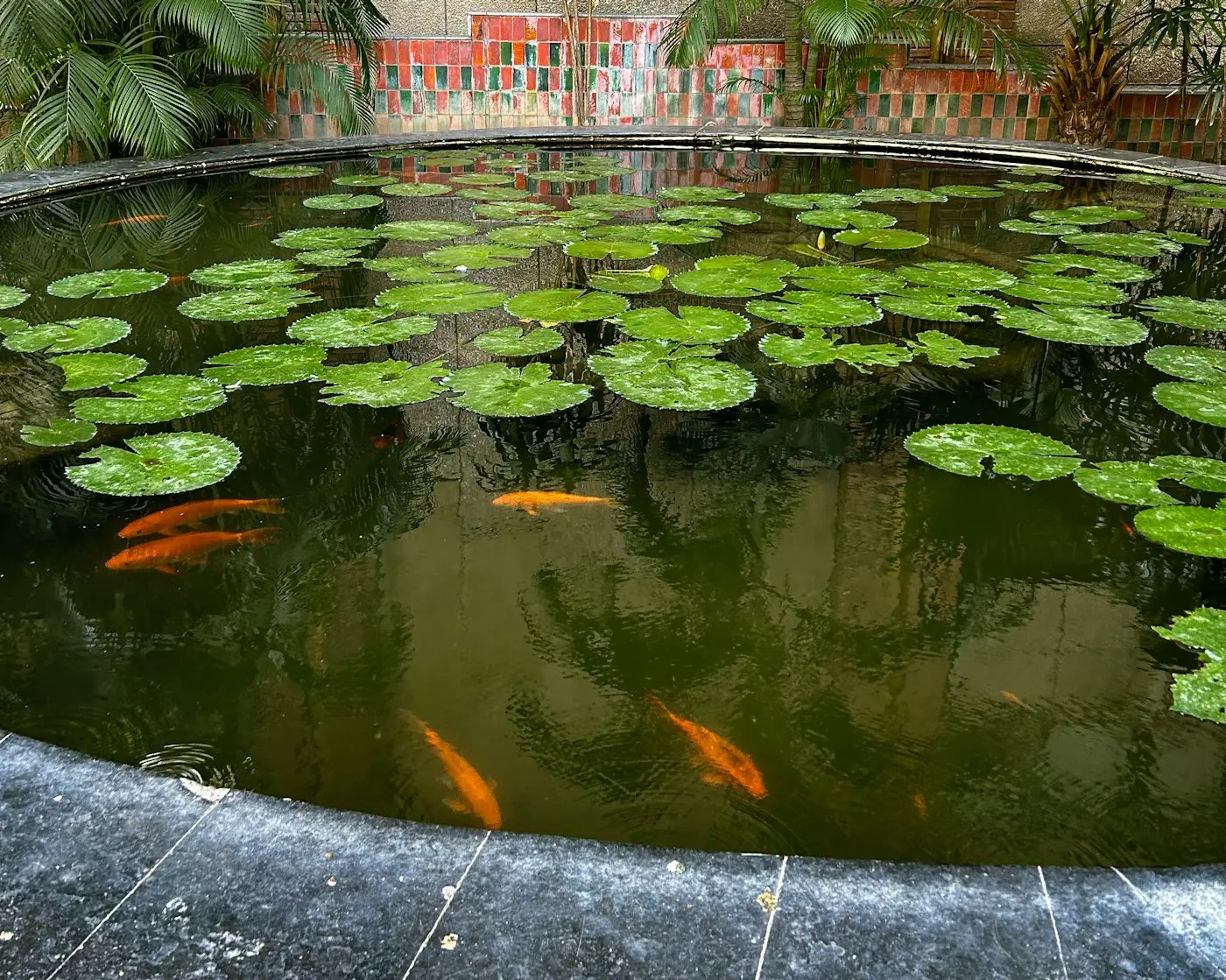
Water feature installation and pond design services are available across Yorkshire, with contractors experienced in the drainage conditions found in Leeds, Harrogate, and Beverley.
Water in a garden changes it in a way that nothing else quite matches. The sound of moving water masks traffic and neighbours. A pond attracts wildlife that no amount of planting alone will bring in. Even a small bubbler feature changes the atmosphere of a courtyard garden more than its size would suggest. Yet water features also get abandoned - pump failures go unnoticed, algae takes over, wildlife ponds fill with leaves and silt - because people install them without thinking through what they will actually maintain and what suits their garden's specific conditions.
Yorkshire has specific conditions. The county's winters are not extreme by European standards, but hard frosts in December through February are reliable enough to threaten unprotected water feature infrastructure. The persistent damp that characterises much of West Yorkshire and the hills around Harrogate, Skipton, and the Pennine edge creates excellent algae conditions in summer. And the diversity of Yorkshire gardens - from the compact terraced yards of Bradford and Leeds to the half-acre gardens of Harrogate and York's suburbs - means that what suits one garden is completely wrong for another.
This guide runs through the main water feature options that work well in Yorkshire, what they cost, what they need to survive the climate, and what wildlife to expect in return. We install and maintain water features as part of our garden service - from positioning and planting a self-contained bubbler to designing and lining a wildlife pond - and the experience informs every recommendation here.
Types of Water Feature and What They Cost in Yorkshire 2026
| Feature type | Typical cost (installed) | Maintenance level | Wildlife value |
|---|---|---|---|
| Self-contained bubbler / fountain | £150-600 | Low - pump clean annually | Low (birds drink; insects visit) |
| Wall-mounted water feature | £300-900 | Low - pump clean, winter removal | Low |
| Formal garden pond (3x2m) | £1,500-4,000 | Medium - pump, algae, planting | Medium-high (with plants) |
| Informal wildlife pond (self-dug) | £300-800 in materials | Low - no pump needed | Very high |
| Raised stone water table | £1,200-3,500 | Medium | Low-medium |
Self-contained bubblers and fountain features
A self-contained bubbler - typically a millstone, a drilled boulder, or a ceramic pot over a buried reservoir - is the most practical water feature for most Yorkshire domestic gardens. Everything is contained within the unit: a submersible pump sits in the reservoir, water is pumped up through the feature and falls back into the reservoir, and the only connection needed is a standard garden power socket. There is no pond to maintain, no liner to manage, and no open water to worry about if you have young children or grandchildren visiting.
Installation is straightforward: a hole is dug for the reservoir (typically a 60-80 litre buried tank with a wire grid over the top), the reservoir is set in, the millstone or boulder is positioned on the grid, the pump is connected, and the feature is filled with water and switched on. A competent gardener or handyman can complete this in half a day. Most of the cost is in the feature itself - a quality drilled millstone or natural boulder is £100-400 depending on size and material. A simple ceramic pot bubbler can be done for less.
Yorkshire-specific: remove the pump in late autumn and store it indoors. Submersible pumps that freeze in their reservoirs suffer impeller damage. The reservoir itself (if it is a buried tank with a flexible liner) can generally be left in place through winter; the water in it will not damage it when it freezes because the flexible liner accommodates the expansion.
Wall-mounted water features
A wall-mounted water feature - a stone mask, a copper spout, or a contemporary stainless steel panel - delivers the sound of running water in a compact footprint. Water runs from the wall fitting into a trough or reservoir below, is pumped back up, and circulates continuously. They suit smaller enclosed gardens and terraced yards well, and they look particularly good on old stone walls of the kind found across Yorkshire's historic towns and village gardens.
The cost range (£300-900 installed) includes the feature unit, a wall-mounted reservoir or below-ground sump, pump, and wiring to a power supply. The stone surrounds that make a wall-mounted feature look integrated into the wall are the expensive part of high-end installations - a bespoke stone-clad wall fountain with a matching trough is a specialist job and can cost considerably more. A good off-the-shelf unit with competent installation sits comfortably in the £300-700 range.
The winter caveat is more significant for wall-mounted features than for bubblers. The feature unit itself is often ceramic, cast stone, or terracotta - all materials that crack if water inside freezes and expands. Remove the pump in November, drain the reservoir and trough, and if the feature unit itself is frost-sensitive (check the specification), either insulate it or remove it and store it in a shed or garage until spring. Yorkshire winters are reliably cold enough to crack unprotected ceramic water feature units.
Formal garden ponds
A formal garden pond - a defined shape (rectangle, oval, or octagon), usually with a liner and fitted edging, possibly with a fountain or cascade, and planted with water lilies and marginal plants - is the traditional garden pond of country house borders and large suburban gardens. In Yorkshire, they work best in gardens large enough to position the pond away from overhanging trees (leaf fall is the bane of pond maintenance) and with space for a planted surround that softens the formal edges.
A pond of 3m x 2m (6 square metres) at 600mm depth requires excavating approximately 3.6 cubic metres of soil, lining with a butyl or EPDM rubber liner (the most durable options), installing a pump and filter for water clarity if fish are planned, and edging with stone, brick, or timber sleepers. Installed professionally, this costs £1,500-4,000 depending on specification, edging materials, and planting. The wide range reflects the difference between a basic liner-and-coping installation and a fully planted, fountain-equipped feature with quality stone edging.
A submersible pump and filter for a 6m2 pond with a small fountain runs at £150-400 for the equipment; installation adds £100-200. The pump needs cleaning every 3-6 months - the filter media accumulates debris and a blocked pump is both inefficient and at risk of overheating. Running costs are modest: a quality pump of appropriate size for the pond uses 20-60W, which at current electricity rates costs roughly £15-45 per year to run continuously.
Wildlife ponds: the best value water feature in Yorkshire
An informal wildlife pond - dug by hand or machine, lined with a flexible liner, planted with native aquatic plants, and left to establish naturally without a pump or filter - is the single most rewarding water feature for most Yorkshire gardens. See our pond installation service for what we cover and typical timescales. The ecological value is exceptional. A new wildlife pond in a Yorkshire garden typically has frogs visiting within weeks if any froggeries exist nearby (and in most Yorkshire gardens, they do). Common toads, smooth newts, and great crested newts (in suitable areas) follow within a season or two. Dragonflies and damselflies arrive once the pond is established. Hedgehogs drink from it. Birds bathe. On a still August evening, the surface will have more life on it than any other square metre of your garden.
The cost of a self-built wildlife pond is primarily materials: a quality butyl liner or EPDM rubber liner for a 3m x 2m pond costs £50-150 depending on specification. Underlay to protect the liner from stones costs £30-60. Native aquatic plants (submerged oxygenators like hornwort, marginals like yellow flag iris and marsh marigold, and floating plants like water soldier) run to £40-100 for a good initial planting. All-in materials cost for a 3m x 2m wildlife pond dug yourself is £300-400. Professionally installed, including excavation by hand (which is the typical approach for an informal natural-looking pond), the total is £600-1,200 depending on the size, complexity of shape, and planting specification.
No pump is required and none should be installed. Wildlife ponds work because they are allowed to find their own ecological balance - pumps and filters are incompatible with the low-flow conditions that newts and many aquatic invertebrates prefer. The pond will go green with algae in the first summer; this is normal and will clear as the planting establishes and the ecosystem develops. Do not be tempted to introduce tap water regularly (it brings in phosphates and chlorine) or to empty and refill the pond - both set the ecological clock back to zero.
The wildlife pond case for Yorkshire gardens
Yorkshire has lost a significant proportion of its wetland habitats over the last century. Garden ponds are now one of the most important refuges for amphibians in the county, particularly in urban and suburban areas where natural ponds are rare. A 3x2m wildlife pond in a Leeds or Sheffield suburb is not a trivial garden feature - it is meaningful habitat for species that are genuinely declining. Frogs, toads, and newts in your garden also eat slugs, aphids, and other garden pests. The ecological case and the practical gardening case point in the same direction.
What Yorkshire Wildlife to Expect
The wildlife that arrives depends on what is nearby, but Yorkshire gardens are well connected to amphibian and invertebrate populations that will exploit a new pond quickly. Common frogs are present in virtually every Yorkshire urban and suburban area and will locate a new pond within weeks of spring. Frogs typically arrive to spawn in February or March - a new pond installed in autumn or early spring should see spawn in its first season if frogs are present in the area.
Common toads are slightly less ubiquitous in gardens than frogs but are found widely across Yorkshire. They are particularly good at finding new ponds - their homing instincts are strong and they travel considerable distances. Smooth newts are present across most of Yorkshire and typically colonise a garden pond within one to two seasons. Great crested newts (a protected species) are present in parts of Yorkshire - if you are in an area where they are known, contact your local wildlife trust before excavating any pond.
Dragonflies and damselflies are the most spectacular summer visitors. A pond established for two to three years will typically see common blue damselflies, azure damselflies, and four-spotted chasers as the most frequent visitors; emperor dragonflies and broad-bodied chasers follow as the pond matures. All require aquatic emergent plants for their larvae to climb and emerge from - iris, bulrush, and reed sweet-grass all serve this purpose. See our Yorkshire wildlife garden guide for more on what attracts different species and how to design your garden for wildlife more broadly.
Positioning Your Water Feature
Sun or shade?
Self-contained bubblers and wall features can go almost anywhere with a power supply. A wildlife or formal pond needs more thought. Ponds need a minimum of six hours of direct sunlight per day for healthy aquatic plant growth and to maintain the water temperatures that amphibians and invertebrates need. Full shade produces a cold, poorly oxygenated pond that struggles ecologically.
However, full sun in a small pond creates algae problems in summer. The ideal is dappled or partial shade - a position that gets sun for much of the day but is shaded for part of the afternoon in high summer. In practice, for most Yorkshire gardens this means avoiding placing the pond in full shade under trees (also problematic for leaf fall) and avoiding the sunniest corner of the garden.
Distance from trees
Overhanging trees drop leaves into ponds from October through December. Decomposing leaf matter releases nutrients into the water that feed algae and destabilise the pond chemistry. Willow roots are particularly aggressive at penetrating pond liners. Keep ponds at least 5-6 metres from large trees and avoid any position that will be directly overhung by deciduous canopy in autumn.
Level ground
A pond needs to be level, or the liner will show on one side. In a sloped Yorkshire garden, this means either cutting into the slope (which is straightforward but produces spoil) or building up one side with a retaining edge. A raised pond on a slope, built up on the downhill side with stone or timber sleeper walls, can look intentional and well-designed - and it brings the water surface to a more visible level from the house. This is often the best solution for Yorkshire's many sloped gardens.
Aquatic Planting for Yorkshire Ponds
Planting is what makes or breaks a wildlife pond. The key categories are: submerged oxygenating plants, floating plants, emergent marginal plants, and bog plants at the pond edge. All four categories serve different ecological functions and all are needed for a balanced, healthy pond.
Submerged oxygenators - hornwort, water starwort, water milfoil - grow entirely beneath the surface. They produce oxygen, absorb nutrients that would otherwise feed algae, and provide cover and spawning habitat for newts and fish. They are the engine room of a healthy pond. Plant generously at one bunch per 3-4 litres of water volume in the first season.
Floating plants - water lilies (native white or yellow, or one of the dwarf cultivars for smaller ponds), frogbit, water hawthorn - shade the surface and reduce the light that algae needs. A water lily planted in a deep container in the centre of the pond, with its leaves spread across the surface, does more for summer algae control than any chemical treatment. For a 3x2m pond, one or two lily plants is appropriate; resist the temptation to plant more as they expand quickly.
Emergent marginals - yellow flag iris, marsh marigold, water mint, brooklime, amphibious bistort - grow in the shallow margins with their roots in water and their stems and leaves above the surface. They provide cover for wildlife entering and leaving the pond, nesting material for birds, and structural habitat for dragonfly and damselfly nymph emergence. These are the plants that make a pond look like a pond rather than a hole with water in it. Our borders and planting service includes aquatic planting installation and we can advise on the right species mix for your pond's depth profile and sun position.
Algae: the Yorkshire Pond Challenge
Algae is the most common complaint about garden ponds in Yorkshire. Two types cause problems: green water (a bloom of microscopic single-celled algae that turns the water pea-soup green and opaque) and blanket weed (a filamentous algae that forms green matted strands which can choke a pond). Both are responses to the same conditions: high nutrient levels in the water, high light penetration, and warm temperatures. Yorkshire's summers are warm enough and long enough to trigger both in an under-planted or over-stocked pond.
The sustainable solution is biological, not chemical. Dense submerged planting competes with algae for nutrients; floating surface plants shade out the light that algae needs; a balanced ecosystem without too many fish keeps nutrient inputs manageable. A new pond will typically go through a green water phase in its first summer - this is normal and usually clears naturally by early autumn as the planting establishes and the ecosystem finds its balance.
Barley straw extract - a liquid product available at garden centres - is effective against green water algae and is safe for wildlife, fish, and plants. Apply in early spring before the algae bloom peaks. Blanket weed is best dealt with mechanically: twist a garden cane into the weed and pull it out in coils. Remove only two-thirds of it at any one time to avoid disturbing wildlife that lives within it. UV clarifiers (a UV light unit within the filtration circuit) are highly effective at eliminating green water algae in formal ponds with fish but are not compatible with natural wildlife ponds where no filtration system runs.
Winter Management for Yorkshire Water Features
Yorkshire winters are reliably cold enough to require attention to water features in November and December. What to do depends on the feature type.
For self-contained bubblers and wall features: remove the pump in November, drain it, dry it, and store indoors. Check whether the reservoir or feature unit is frost-resistant and take appropriate action - wrap frost-sensitive ceramic or terracotta with garden fleece or bubble wrap, or move it indoors if practical. Refill and reinstall the pump from mid-March when hard frosts are less likely.
For wildlife and formal ponds: leave them. Ice on the surface is not a problem for a pond of adequate depth (60cm or more at the deepest point). It is good practice to float a tennis ball or similar object on the surface of a pond through cold spells - moving the ball slightly each day keeps a small area of open water that allows gas exchange for overwintering wildlife below. Do not break ice by force (the shock wave can harm fish and amphibians). If the pond freezes solid, pour hot water gently over the ice to melt a small hole rather than striking it. For fish ponds, a pond heater (a floating electrical element that maintains a small ice-free area) is worth the running cost through a hard winter.
For fish in formal ponds: fish overwinter in the deeper part of the pond where temperatures are more stable. Stop feeding when water temperatures drop below 10 degrees Celsius - fish metabolism slows in cold water and uneaten food rots and pollutes the pond. Resume feeding in spring when temperatures rise consistently above 10 degrees, typically from April in Yorkshire.
What a Gardener Can Do and When You Need a Specialist
A skilled gardener can: install a self-contained bubbler or wall feature from a kit; dig and line an informal wildlife pond up to approximately 4m x 3m; position and plant aquatic species correctly; advise on siting, depth profile, and planting mix; and carry out ongoing seasonal maintenance including pump cleaning, blanket weed removal, and autumn tidy-up.
Where specialist expertise is needed: large formal water features with complex recirculating pump systems, raised stone-clad water tables with bespoke stonework, concrete-rendered formal pools, or any installation involving connection to mains water supply rather than a self-contained reservoir. These need a specialist water feature installer or, for the plumbing element, a qualified plumber. The boundary is approximately this: if the feature runs on a garden pump plugged into an outdoor socket, a gardener can handle it; if it involves mains plumbing connections or large-scale engineering, it needs a specialist.
For the design and planning of a water feature within a wider garden project, our garden design service covers water feature positioning, pond design, and integration with the wider planting scheme. Our garden design timeline guide covers how to sequence a garden transformation project that might include a water feature alongside other elements. For a complete garden overhaul, see our garden makeover service or our garden makeover cost guide for Yorkshire-specific figures.
Frequently Asked Questions
Will a garden pond attract mosquitoes in Yorkshire?
A healthy, well-planted wildlife pond will not produce significant mosquito problems. The predators a balanced pond ecosystem establishes - pond skaters, water beetles, dragonfly larvae, frogs, and toads - control mosquito larvae effectively. Moving water features (bubblers, fountains) are naturally inhospitable to mosquito breeding. Small, stagnant, unplanted water in containers (not proper ponds) is where mosquito problems actually occur.
How deep does a wildlife pond need to be in Yorkshire?
At least one zone should be 60cm deep - deep enough not to freeze solid in a Yorkshire winter. Shallow margins (10-20cm) are needed for marginal planting and easy amphibian access. The ideal profile is graduated: shallow at the edges, sloping to 60cm at the centre. Total surface area matters as much as depth - aim for at least 3-4 square metres for a stable ecosystem.
Can I have a water feature in a small Yorkshire garden?
Yes. A millstone bubbler, wall fountain, or pot water feature works well in courtyard-sized spaces. A half barrel or large ceramic pot with no drainage hole makes a viable container wildlife pond that attracts frogs and insects even in the smallest yard. Small gardens suit self-contained features best - open ponds need more space to function well ecologically.
What happens to my water feature in a Yorkshire winter?
Remove the pump from self-contained features in November and store indoors. Frost-sensitive ceramic units should be wrapped or stored. Wildlife and formal ponds should be left in place - surface ice is normal and not harmful to wildlife in a pond of adequate depth. Float a ball on the surface to keep a small ice-free area for gas exchange. Do not break ice by force.
How do I manage algae in a garden pond in Yorkshire?
The long-term solution is biological: dense submerged planting competing with algae for nutrients, floating plants shading the surface, and a balanced ecosystem without excessive fish stocking. New ponds typically go through a green water phase in their first summer - this usually clears as planting establishes. Barley straw extract (safe for wildlife) is effective against green water algae. Blanket weed is removed manually with a garden cane.
Related reading
- Garden design - water features planned as part of the whole garden
- Full garden makeover - including water feature installation and planting
- Borders and planting - aquatic plants and pond-edge planting
- Yorkshire wildlife garden guide - what to plant and design to attract wildlife
- Garden design timeline - sequencing a garden project that includes water features
- Garden makeover costs - full project costs including water features in Yorkshire
Ready to bring water into your Yorkshire garden?
We install water features and wildlife ponds, and handle all the planting and maintenance around them. Tell us what your garden needs.
Get a free assessment