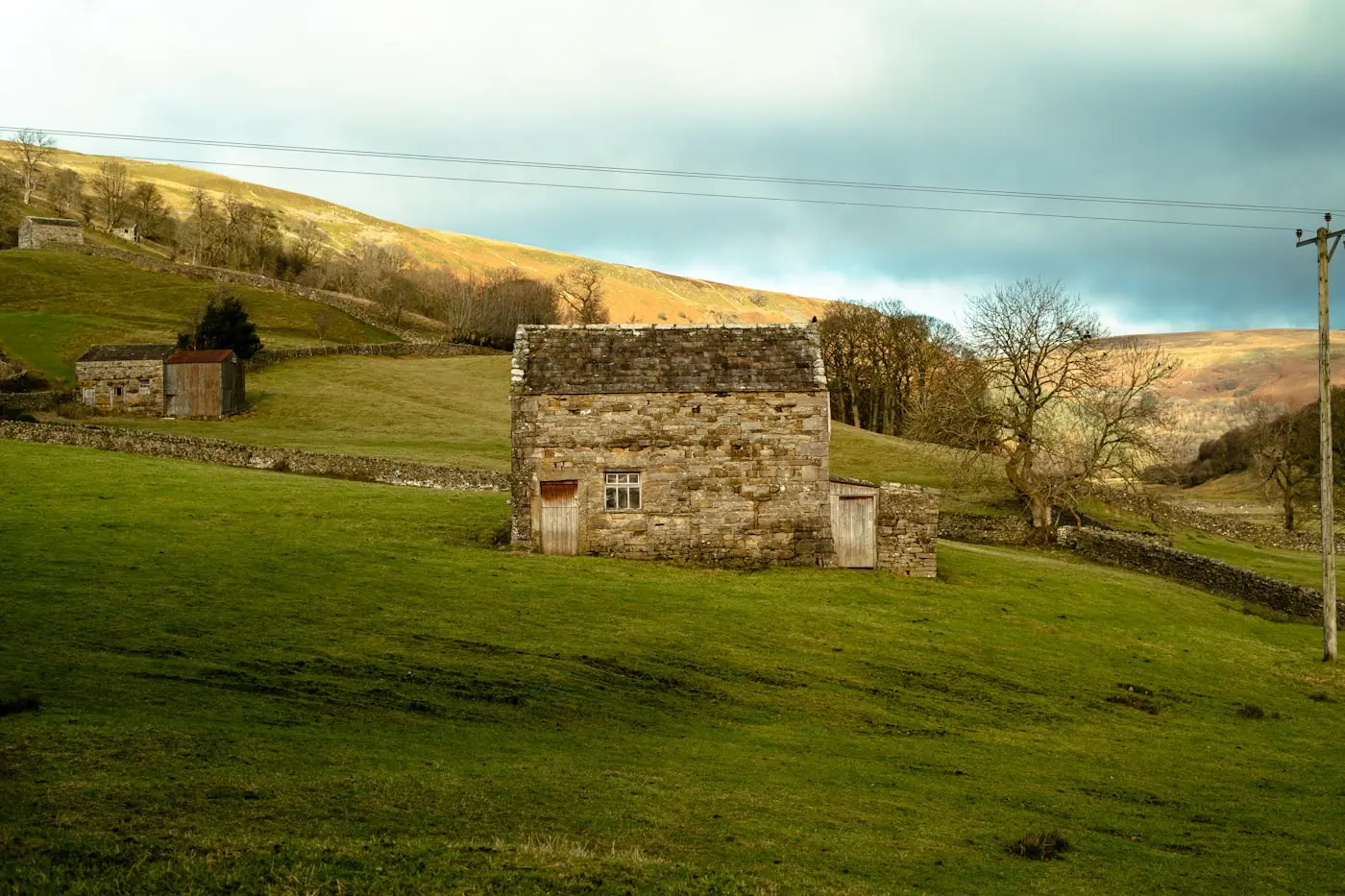
Garden rooms are becoming an essential addition for homeowners across Yorkshire, from Wetherby to Harrogate and Knaresborough.
The post-pandemic shift to home working accelerated demand for garden rooms and garden offices across Yorkshire significantly, and the market has matured enough that there is now a wide range of suppliers and quality levels to navigate. Leeds, Harrogate, Sheffield, York, and Bradford all have strong local and regional installers, alongside national brands with local fitting teams. The challenge for a Yorkshire homeowner is not finding suppliers - it is knowing what to ask for, what separates a good installation from a poor one, and how to ensure the building integrates into the garden rather than looking like an afterthought. Yorkshire's cold winters add an extra dimension to this: the insulation and heating specification that is adequate in Surrey can leave a Yorkshire garden room cold and damp from October to April.
Garden room, summer house, garden office, studio: knowing the difference
These terms are used inconsistently across the industry, which makes comparing quotes difficult. Here is a practical working definition of each type as it relates to a Yorkshire context.
Summer house: an uninsulated or minimally insulated timber building designed for seasonal use from April to October. Relatively low cost (£3,000-£8,000 supply and fit for a well-made version), but genuinely unsuitable for use in Yorkshire from November to March. If you want a year-round space, a summer house is not the answer regardless of what the brochure implies. In Yorkshire, an unheated, uninsulated timber building drops to ambient temperature within an hour of sunrise - in January, that means working in a room at 2-4C. Not viable.
Garden room: the catch-all term for a properly insulated, year-round outbuilding with heating, double glazing, and power. This is the product that has expanded dramatically in the last few years. Quality ranges enormously - some garden rooms are essentially a well-insulated shed with bifolds, while the better end of the market produces buildings that are architecturally designed, thermally efficient, and genuinely comfortable through a Yorkshire winter. Budget £10,000-£25,000 for a reliable year-round product.
Garden office: a garden room configured primarily for professional work - typically with more power sockets, data connections, superior broadband provision (often with a dedicated outdoor CAT6 cable run from the house), and acoustic performance between the building and the house. The construction is the same as a garden room; the difference is in the specification of services. The broadband cable is the critical element - WiFi from the house is unreliable at 15-20 metres and often cannot penetrate a well-insulated timber wall effectively. Budget for a proper cable run as part of the installation.
Garden studio: a garden room configured for creative use - art studio, music room, yoga or fitness space. The specific requirements here are often different from an office: more natural light (glazing in the roof or clerestory windows), better acoustic isolation from the house for music, or extra structural capacity in the floor for heavy equipment. A garden studio at the bespoke end of the market is where costs escalate most significantly - £30,000 to £50,000 for a well-designed, acoustically isolated music studio is not unusual.
Yorkshire's climate: why insulation is not optional
Yorkshire's winters are colder and wetter than much of England, and the variation within the county is significant. A garden room in Wetherby or Selby will experience cold snaps to -5C or -6C on a bad January night, but typically mild periods in November and February. A garden room in Skipton, Holmfirth, or on the Pennine edge above Halifax will see -10C in a hard winter and sustained cold spells from November to March. On the North York Moors above Helmsley or Pickering, exposed positions can experience conditions that are genuinely challenging for any unprotected building.
The practical consequence is that the insulation specification that might be adequate in a milder part of England - say, 50mm floor and wall insulation - is insufficient for year-round comfort in Yorkshire. The standard you should be asking for is minimum 70mm rigid insulation in floor, walls, and roof, with 100mm or better in the roof (heat loss is disproportionately high through the roof). Low-E double glazing is the minimum standard for any Yorkshire garden room; triple glazing in exposed upland positions is worth the extra cost.
Ask any supplier for their exact U-values. U-value is the measure of thermal transmittance - how fast heat passes through a material. For a Yorkshire garden room used year-round, you want wall U-values of 0.25 W/m2K or lower, floor 0.25 or lower, roof 0.18 or lower. A good supplier will provide these figures without hesitation. If a supplier cannot tell you their U-values, walk away.
Yorkshire-specific insulation checklist
Minimum 70mm rigid insulation in floor, walls, and roof (100mm roof preferred). Low-E double-glazed units as a minimum. Electric underfloor heating or wall-mounted electric heating with a thermostat (not oil-filled radiators, which are slow to respond). Separate power circuit with RCD protection, run from the house consumer unit by a qualified electrician. Vapour control layer on the warm side of insulation to prevent condensation in the wall structure. Check that the DPC (damp-proof course) in the floor is properly specified for Yorkshire's wet ground conditions.
Planning rules in Yorkshire: what is permitted and what is not
Most garden rooms fall within permitted development, meaning you do not need formal planning consent. The key rules under current legislation are:
- Maximum 2.5 metres in height (eaves and ridge for a single-pitch or flat roof; 4 metres for a dual-pitched roof)
- Must not cover more than 50% of the total garden area (this is total of all outbuildings, not just the new one)
- Must be placed behind the principal elevation of the house (usually the front wall)
- Must not be used as a separate dwelling
- Must not be forward of the principal elevation or side elevation on a corner plot
Yorkshire has a higher proportion of listed buildings and conservation areas than many English counties, and this is where the standard permitted development rules often do not apply. If you are in a conservation area - which includes large parts of Harrogate town centre, York's historic core, most of the Dales villages, parts of Hebden Bridge, Skipton's historic centre, and hundreds of other designated areas across the county - additional rules apply and you should contact your local planning authority before purchasing a garden room. The relevant contacts are the planning departments of North Yorkshire Council, West Yorkshire Combined Authority planning, City of York Council, South Yorkshire councils, or East Riding of Yorkshire Council depending on your location.
For listed buildings, any new outbuilding in the curtilage requires listed building consent in addition to any planning permission. This applies even to buildings that would otherwise be permitted development. The consent process involves a heritage assessment and is more involved than standard planning - budget an extra two to four months and potentially some architect's fees for the application if your property is listed. The Yorkshire garden renovation guide has more detail on navigating planning constraints for garden work across the county.
Costs: supply and installation across Yorkshire
| Type | Typical size | Cost range | Usable season |
|---|---|---|---|
| Basic summer house | 2.4m x 3.0m | £3,000-£8,000 | April-October |
| Insulated garden room | 3.0m x 4.0m | £10,000-£18,000 | Year-round |
| Garden office | 3.5m x 5.0m | £15,000-£25,000 | Year-round |
| Bespoke studio | 4.0m x 6.0m+ | £25,000-£50,000+ | Year-round |
These figures include the building supply and installation but do not include groundworks (base preparation, hard standing), the electrical connection from the house, landscaping around the building, or broadband cable. In Yorkshire, access can sometimes be a challenge: if the building needs to be craned or carried through a narrow side passage, add a premium for the extra installation complexity. Get access assessed by the installer before agreeing a price.
Common add-ons worth specifying in Yorkshire
Power: every garden room should have a proper 240V power circuit run from the house consumer unit by a Part P qualified electrician. This is not something to DIY or to buy from a supplier who provides a trailing extension lead as the power solution. A proper installation includes a dedicated 6A or 10A circuit, an RCD in the consumer unit, weatherproof conduit for the cable run, and a small consumer unit or fused spur inside the garden room. Budget £400-£800 for a professional electrical installation.
Broadband: for a garden office, a CAT6 ethernet cable buried in conduit from the house to the garden room is essential. WiFi extenders and powerline adapters are unreliable at distance, especially through thick insulation. A direct ethernet run gives you gigabit speeds regardless of distance and is the professional solution. This should ideally be installed in the same ground trench as the power cable to avoid multiple ground disturbance operations. Budget £200-£400 for the cable run and terminations.
Underfloor heating: electric underfloor heating (a resistance mat under tile or engineered timber flooring) is one of the best upgrades for a Yorkshire garden room. It heats the space evenly from the floor up, warms the structure of the building rather than just the air, and runs efficiently from a programmable thermostat. The floor is typically where the cold penetrates first in a Yorkshire winter, and underfloor heating addresses this directly. Budget £800-£1,500 for supply and fit of electric underfloor heating in a garden room.
Bi-fold or slide-and-fold doors: on a south or south-west facing garden room, bi-fold doors that open the entire front wall of the building to the garden extend the usable season at both ends. In April and September, a day that is too cool to sit outside is still pleasant in a sunny garden room with the doors open. Position the garden room to face south if at all possible and maximise the glazed area on that face.
Integrating the garden room into your garden design
The most common mistake Yorkshire homeowners make with a garden room is treating it as a standalone purchase rather than an element of the garden design. A garden room that sits at the end of a lawn without landscaping, screening, or a proper path connection to the house looks exactly like a shed dropped into the garden - regardless of how much it cost.
Good integration starts with positioning. Ideally, your garden room has a direct sight line from the main house living or kitchen area - this makes it feel connected rather than remote. The path between house and garden room should use materials that relate to the existing patio or garden surfacing: if you have Indian sandstone paving at the house, carry the same stone or a compatible choice to the garden room entrance. If the existing garden has clay pavers, match the palette.
Planted screening around two or three sides of the building is what makes a garden room feel embedded in the garden rather than placed on top of it. For year-round screening, evergreen planting is essential: Portuguese laurel (Prunus lusitanica) is one of the best Yorkshire choices - fully hardy, attractive, and effective as screening. Viburnum tinus 'Eve Price' grows quickly to 1.5-2m and provides winter flowers alongside year-round screening. For a more formal treatment, yew (Taxus baccata) is the finest hedging plant for a Yorkshire garden room surround, though it is slow to establish. See the garden design service for advice on integrating a garden room into an existing garden layout or a new garden design scheme.
Hard standing around the building - a simple area of gravel, paving, or decking - ties the structure to the ground level rather than leaving it perched on its base on bare lawn. Even a 600mm wide strip of gravel around the perimeter of the building, with planted beds behind it, makes a significant difference to how the structure reads in the garden. For the broader garden renovation that often accompanies a garden room installation, see the garden renovation Yorkshire guide.
Checking suppliers in Yorkshire
Before committing to a Yorkshire garden room supplier, ask these specific questions: What is your wall U-value? What insulation type and thickness do you use in floor, walls, and roof? Can I visit a completed installation similar to what I am purchasing? What is included in your installation price and what is extra (base, electrics, landscaping)? Who is responsible for planning queries and do you assist with this? What is your warranty on the building structure and on the fixtures (doors, windows, roof)?
A supplier who answers these questions clearly and confidently, and who can show you a completed Yorkshire installation in conditions similar to yours, is worth paying a premium over the cheapest online quote. The cheapest garden room installation is rarely the best value over a ten-to-twenty-year lifespan. Get three quotes and compare them on specification, not just price - a quote that is £3,000 cheaper than the others may be using thinner insulation, cheaper glazing units, or leaving electrical work as an extra that will cost you more to add than the saving.
Frequently Asked Questions
Do garden rooms need planning permission in Yorkshire?
Most do not, under permitted development rules - the key limits are 2.5m height, covering less than 50% of garden area, and placement behind the principal elevation. But if you are in a conservation area (widespread across Yorkshire's historic towns and Dales villages) or have a listed property, check with your local council before purchasing. Listed buildings require listed building consent for any new outbuilding in the curtilage.
How much does a garden room cost in Yorkshire?
From around £3,000-£8,000 for a basic seasonal summer house, to £10,000-£25,000 for a properly insulated year-round garden room, to £25,000-£50,000+ for a bespoke studio. The insulation specification is the key variable: in Yorkshire's climate, the difference between a properly insulated room and a summer house is the difference between twelve months' use and five.
What insulation specification do I need for a Yorkshire garden room?
Minimum 70mm rigid insulation in floor, walls, and roof (100mm in the roof preferred). Low-E double glazing as a minimum. Wall U-values of 0.25 W/m2K or lower, roof 0.18 or lower. Ask any supplier for their exact U-values before comparing quotes - a good supplier will provide these without hesitation.
How do I integrate a garden room into my Yorkshire garden design?
Position it with a sight line from the house, connect it with a proper path in matching materials, plant evergreen screening on two or three sides (Portuguese laurel or Viburnum tinus work well in Yorkshire), and lay hard standing around the perimeter. A garden room that has landscaping around it looks designed; one that does not looks placed.
Related reading
- Garden renovation in Yorkshire - planning and costs
- Garden design in Harrogate and North Yorkshire
- Garden design across Yorkshire
- How much does a garden designer cost in Yorkshire?
- Yorkshire garden design ideas - styles, materials and approaches
Get your garden room landscaped properly.
A local Yorkshire garden designer can position, screen, and landscape around a new garden room so it looks right from day one. Get a quote in 60 seconds.
Start the assessment