Catterick is best known nationally for its racecourse, but as a settlement it is a relatively modest North Yorkshire village sitting on the south side of the River Swale, bisected by the A6136 and with the A1 trunk road passing nearby. The village itself has a mix of older stone properties, post-war housing, and more recent residential development, with a range of garden types that reflects that variety of housing. Unlike Catterick Garrison to the north - the large military base that significantly expands the local population - the village proper has a predominantly civilian residential character with gardens that benefit from consistent private ownership and investment. Gardens here range from modest long-established village plots to newer family homes on the outskirts with younger gardens still being established. For all of them, the challenge is finding a reliable gardener who will show up consistently, work to a proper standard, and charge a fair rate for a part of North Yorkshire that does not have the density of gardeners that a larger town would offer.
What Catterick Village Gardens Are Like
The older stone properties in Catterick village centre have established cottage-style gardens with well-developed borders and boundary walls or hedges that reflect decades of private ownership. These gardens have character - good soil built up over years of cultivation, established shrubs and perennial plantings, and the kind of settled, personal quality that comes from a garden that has been tended by the same household for a long time. Managing these gardens requires care and an understanding of what is there before proposing any changes.
The post-war housing that forms a significant part of Catterick's housing stock has more standard domestic garden format: a rear lawn, a border or two, and a hedge boundary. These are the gardens where the main challenge is consistent maintenance through the growing season - keeping the lawn under control, managing the boundary hedge, and preventing annual weeds from taking over borders that are not visited regularly. When maintenance lapses across a season, these gardens recover readily with a proper clearance and a reset of the maintenance schedule.
The newer residential properties on the outskirts of the village have younger gardens that are still being established. Topsoil quality on newer Catterick developments varies - some have been given reasonable depth of cultivated soil; others have the standard stripped-site soil that struggles to support anything beyond the most basic grass establishment without significant improvement. If your newer Catterick garden has a lawn that looks sparse, patchy or struggling despite consistent care, inadequate topsoil depth is often the explanation.
Soil Conditions in Catterick
Catterick village sits in the Vale of Mowbray, a broad agricultural valley between the Yorkshire Dales to the west and the North Yorkshire Moors to the east. The soils in this valley are predominantly clay loam on the village ground, transitioning toward lighter sandy loam closer to the River Swale and the racecourse area where the floodplain character dominates.
Clay loam in the Vale of Mowbray is a reasonable growing medium - it has the moisture-retention and fertility advantages of clay without being as heavy and problematic as the pure alluvial clay of Vale of York villages like Riccall or Barlby. Gardens on clay loam in Catterick generally drain acceptably after rain, support a wide range of plants, and produce steady grass growth through the season. The main management considerations are the same as for any clay soil: avoid working the ground when it is waterlogged, aerate lawns annually to address compaction, and manage border soil with organic matter additions to keep the structure open and productive.
The limestone influence from the Dales geology to the west keeps the soil pH broadly neutral to slightly alkaline across most of Catterick - typically pH 6.5 to 7.5. This is a comfortable pH for most garden plants. Strongly acid-loving plants like blueberries, rhododendrons and heathers will not perform optimally without amendment, but the vast majority of commonly grown perennials, shrubs and lawn grasses are perfectly happy in this pH range.
Lawn care on Vale of Mowbray clay loam
Catterick's clay loam lawns benefit from annual aeration to maintain drainage and prevent compaction. Unlike the heavier alluvial clay of the Vale of York, clay loam in the Vale of Mowbray is manageable with solid tine aeration in most cases - full hollow tine work is needed only when compaction is severe or drainage has become noticeably poor. The best time for aeration on DL10 lawns is September, when the soil still has warmth for recovery but the main growing season is winding down. Combining aeration with overseeding of thin or bare areas in September produces the strongest recovery before winter. Lawn treatment programmes for Catterick gardens can be built around this autumn foundation.
What Gets Booked Most in Catterick
Regular lawn mowing and garden maintenance
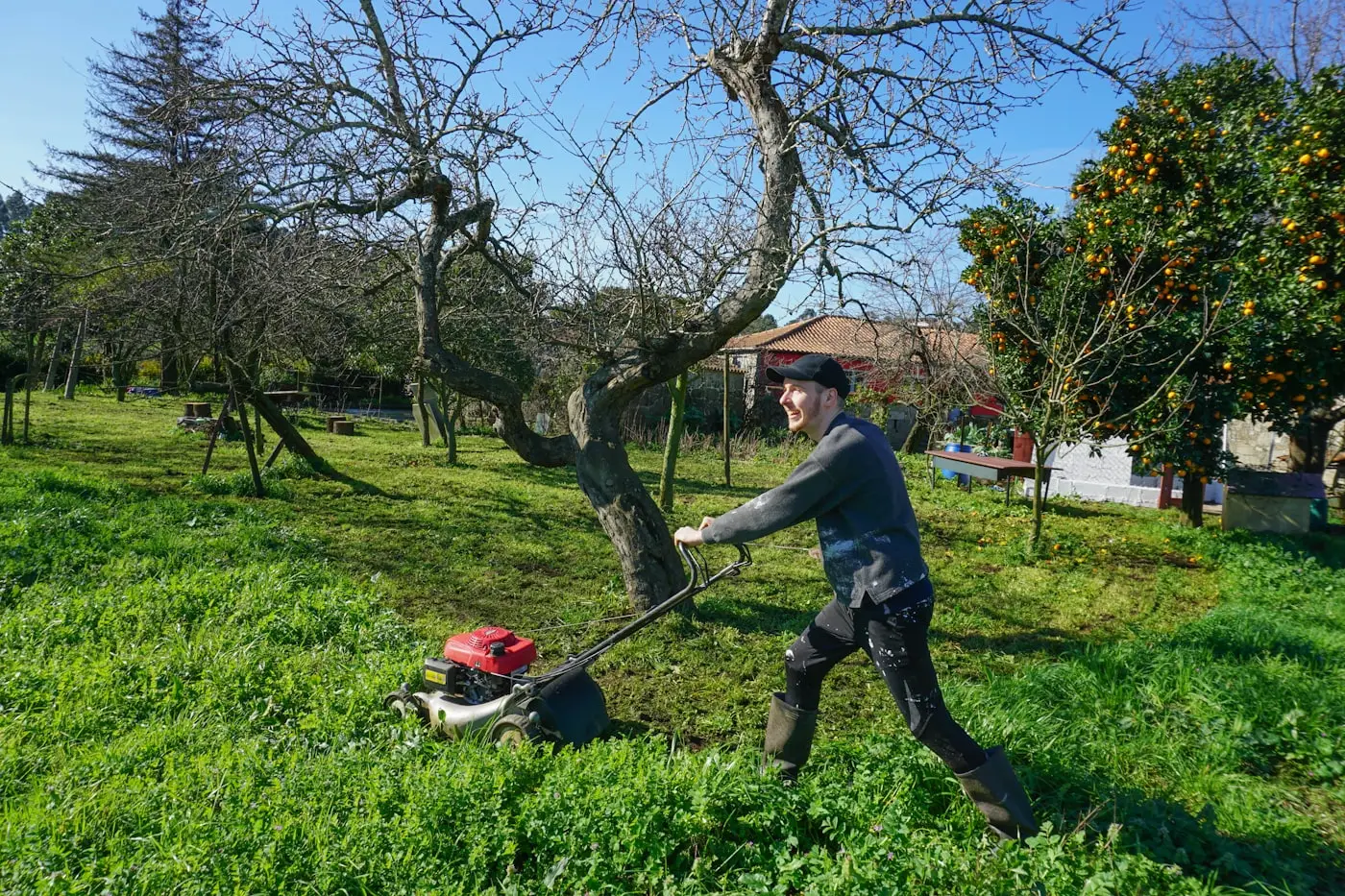
The most consistent work in Catterick is straightforward lawn mowing and general garden maintenance on a fortnightly schedule through the growing season. April to October covers the main period when grass is growing and borders need regular attention. A typical Catterick maintenance visit covers the lawn mow and edge, basic border weeding and tidying, and any immediate pruning requirements. Monthly billing on a contract rate is standard and makes the cost predictable across the season.
Hedge trimming
Boundary hedges - privet, hawthorn, and mixed native hedging are common in Catterick - need twice-annual trimming to stay in condition. Hedge trimming in late May and late August keeps most Catterick hedges under control. The stone walls on the older village properties require a different approach - pointing and maintenance rather than trimming - and should be assessed by someone who understands traditional stone construction before any repair work is undertaken.
Garden clearance and renovation
There is a consistent pattern of garden clearance work in Catterick driven by properties changing hands, rental properties returning to owner occupation, and households that have had a difficult year or two and let the garden run. Clay loam clearances in Catterick are more manageable than heavier clay clearances in the Vale of York - the soil structure is better and weeds do not root quite as deeply or as stubbornly. A manageable Catterick clearance on a medium garden runs £150-£350; larger or more badly neglected plots run higher and are always quoted after a site visit.
Lawn renovation
North Yorkshire winters take a toll on lawns that have not received proper autumn treatment. Wet, cold winters with repeated freeze-thaw cycles damage turf, particularly in areas of compaction. Lawn renovation in spring - scarification to remove dead material and moss, overseeding to fill bare areas, and a spring feed to encourage recovery - is a common spring booking in Catterick. The clay loam soil responds well to treatment when timing is right: late March to April when the soil has warmth and moisture available.
Weed control
Productive clay loam soil supports weed growth as readily as it supports garden plants. Weed control in Catterick borders is most effective when managed consistently through the season rather than as periodic clearances. Annual weeds in the vegetable garden and productive areas need different treatment from the perennial weeds that establish in ornamental borders. A gardener who understands the distinction will apply the right approach in each context.
What Does a Gardener in Catterick Cost?
| Service | Typical rate (DL10 Catterick, 2026) | Notes |
|---|---|---|
| Hourly rate (maintenance) | £25-£32/hr | Contract rate at lower end; one-off work higher |
| Lawn cut (one-off) | £25-£55 | Typical Catterick garden size |
| Fortnightly maintenance contract | £35-£70 per visit | Covers mowing, edging, basic border tidy |
| Hedge trimming | £40-£100 per visit | Length and height dependent; twice per year typical |
| Garden clearance | £150-£400 | Fixed quote after site visit |
| Lawn aeration and overseeding | £70-£130 | Autumn timing recommended |
| Full lawn treatment programme | £120-£240 per year | Spring feed, autumn aeration and overseed |
What to Look for When Hiring in Catterick
- Public liability insurance: Non-negotiable. Ask for the policy number and cover level.
- Waste Carrier's Licence: Required for waste removal. Ask for the licence number.
- Experience in the DL10 area: Ask whether they actively cover Catterick and surrounding DL10 postcodes. Rural North Yorkshire coverage varies between gardeners.
- Site visit for clearance or renovation work: Any job involving significant clearance or lawn renovation needs a site visit before quoting.
- Written contract terms: What visits include, what is extra, how seasonal tasks are handled.
Frequently Asked Questions
How do I find a reliable gardener in Catterick?
Word of mouth from a local neighbour is the best starting point. A local introduction service for the DL10 postcode area is preferable to a national platform. Ask for insurance, Waste Carrier's Licence, and references from DL10 properties. See the Catterick area gardeners page for local coverage including the wider garrison and village area.
How much does a gardener in Catterick charge?
General garden maintenance in Catterick runs £25-£32 per hour in 2026. Fortnightly contracts cost £35-£70 per visit. For full regional comparison, see the UK gardener costs guide.
What is the difference between Catterick village and Catterick Garrison for garden services?
Catterick Garrison is the large military base to the north of the village, with a separate housing and garden service market. The garrison housing estate has its own maintenance considerations (often MoD-managed or subject to specific tenancy requirements). The village itself has predominantly civilian private properties with standard garden service needs. Most gardeners covering the DL10 area will service both, but it is worth confirming when you enquire. See the dedicated Catterick Garrison gardeners guide for specific garrison estate information.
What work gets done most in Catterick?
Regular lawn mowing; hedge trimming; garden clearance; lawn renovation after winters; and weed control in borders.
What is the soil like in Catterick?
Catterick sits in the Vale of Mowbray on soils that vary between the well-drained limestone and sandy loam closer to the racecourse area and the more clay-influenced ground in the lower-lying parts of the village. The racecourse sits on notably well-draining sandy loam - similar ground to nearby areas of the Swale floodplain. Private garden soil in Catterick village proper tends toward a moderate clay loam that drains adequately in normal conditions but can sit wet after extended rain. The limestone influence from the surrounding Dales geology keeps the pH broadly neutral to slightly alkaline.
Do Catterick gardeners offer regular maintenance contracts?
Yes. A fortnightly maintenance contract covering the growing season April to October is the standard model for most Catterick households who want consistent garden upkeep. Monthly billing. A typical Catterick contract visit takes forty-five minutes to one and a half hours depending on garden size and what is included. The consistency of a regular visit schedule keeps gardens ahead of the main growth periods without requiring significant catch-up work.
What are the red flags when hiring a gardener in Catterick?
Key warning signs: a quote significantly below the DL10 local rate; no proof of public liability insurance; no Waste Carrier's Licence when waste removal is involved; quoting for garden clearance without visiting the property first; and vague or verbal-only contract terms. In a relatively small North Yorkshire community, checking whether a gardener has a track record in the area is straightforward - ask for references from other DL10 properties.
Related reading
- How much does a gardener cost in the UK? (2026 prices)
- Garden maintenance across Yorkshire
- Lawn treatment across Yorkshire
- Garden clearance across Yorkshire
- Gardeners in Richmond (nearby DL10 town)
- Gardeners in Catterick Garrison
- Catterick area - town overview
Gardeners in nearby areas
We cover Catterick and the surrounding North Yorkshire area:
Get a quote for your Catterick garden.
60-second assessment. If a local gardener takes your enquiry, they call you with a price for your specific garden and job.
Start the assessment