If you're budgeting for a pond in Harrogate, York, or Knaresborough, local landscapers can survey your garden, advise on clay liner versus butyl, and give you a firm price that accounts for Yorkshire's notoriously heavy subsoil.
The quick answer: a DIY wildlife pond in Yorkshire costs £150-400 in materials and a weekend's work. A professionally installed medium pond (roughly 2m x 3m) costs £1,200-3,000. A large formal pond with stonework, planting, and a pump-filter system runs £3,000-8,000 or more. The range is wide because a pond can be almost anything - a shallow 1m2 wildlife dip or a 20m2 koi pond with a filtration system. This guide covers the realistic cost range for domestic Yorkshire gardens across the main pond types.
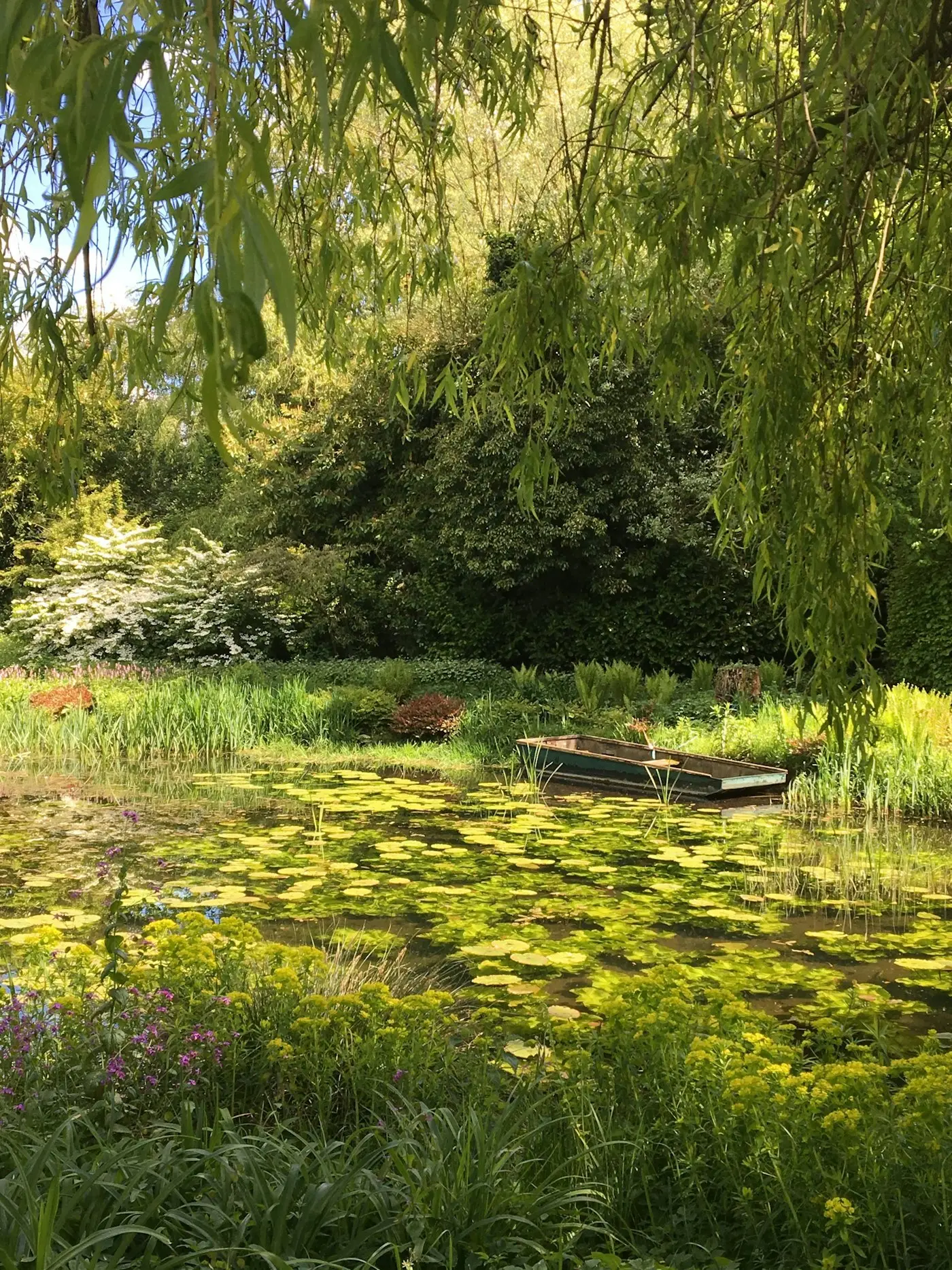
Yorkshire has two specific factors that affect pond construction: the heavy clay subsoil across much of the county makes concrete ponds risky and butyl liner the preferred construction method; and the significant difference in water hardness between the Pennine-fed west (soft, slightly acidic) and the chalk-influenced east and Vale of York (harder, more alkaline) affects how you manage water quality long-term.
Pond Installation Cost Table: Yorkshire 2026
| Pond type | Typical cost | Notes |
|---|---|---|
| DIY wildlife pond (1m x 1.5m) | £150-400 | Materials only - liner, underlay, plants |
| Small professional pond (1.5m x 2m) | £500-1,200 | Butyl liner, basic edging, planting |
| Medium professional pond (2m x 3m) | £1,200-3,000 | Liner, shelved edges, stone edging, planting |
| Large formal pond (3m x 4m+) | £3,000-8,000+ | Liner or concrete, formal edging, pump-filter, lighting |
These prices are for the pond structure and edging. Pump and filter systems, fish, ongoing planting, and electrical connection (for pump power) are additional costs. See the ongoing costs section below for running costs once the pond is established.
Construction Methods: Liner, Pre-formed, or Concrete
Butyl rubber liner: the recommended choice for Yorkshire
Butyl rubber liner is the most versatile and reliable pond construction method for Yorkshire gardens, and it is what most experienced Yorkshire pond builders use by preference. A quality 0.75mm butyl liner costs approximately £8-15 per m2 and has a design life of 20-50 years. It can be shaped to any profile, accommodates shelved edges for marginal planting, and is forgiving of minor ground movement.
The Yorkshire-specific advantage of butyl over concrete is significant. Yorkshire clay moves with moisture changes and freeze-thaw cycles. Concrete ponds crack where the ground moves beneath them - a problem that is far more prevalent in clay-heavy West and South Yorkshire than in lighter soils. A properly lined pond, by contrast, moves with the ground without losing integrity. Unless you are prepared to invest in a fully engineered, reinforced concrete structure, liner is more reliable in Yorkshire's clay conditions.
Installation process for a butyl-lined pond: excavate to the desired profile (key tip: create shelves at 200mm and 400mm depth for marginal plants before the main 600-750mm deep zone), remove all stones and sharp objects, lay protective underlay (at least 300g/m2 geotextile, or old carpet works well), lay the butyl liner with generous overlap at the edges, fill slowly, trim the liner leaving 300mm surplus around the edge, and finish the edge with turf, stone, cobbles, or formal paving.
Pre-formed rigid ponds: convenient but limited
Pre-formed fiberglass or heavy-duty plastic ponds (the rigid shells sold at garden centres) are the easiest option for a small, shallow ornamental or container-style pond. They come in fixed sizes and shapes, typically 200-500 litres, and cost £50-200 for the shell itself.
The disadvantage in Yorkshire is installation. A pre-formed pond must be bedded in perfectly - every inch of the underside supported so the rigid shell cannot flex. In clay soil, this is harder to achieve than it sounds. The hole must be slightly wider than the pond, backfilled with sand after installation. Any unsupported section allows the shell to flex under water pressure, which stresses the joints and eventually cracks them. For a naturalistic-looking pond of any real size, a butyl liner is significantly more practical.
Concrete ponds: durable if built properly
A properly engineered concrete pond can last 50+ years and provides the most precise formal shapes - straight edges, perfect right angles, clean lines for a contemporary garden. The cost is higher: a concrete pond at 2m x 3m professionally built with shuttered concrete walls, waterproof render, and coping stone typically costs £4,000-8,000+, compared to £1,500-2,500 for the same size in liner.
In Yorkshire clay, a concrete pond needs adequate expansion joints and proper foundation design to resist ground movement. A basic concrete pond on clay without engineering consideration will crack within 5-10 years as the clay shrinks in dry summers and expands in wet winters. If you want concrete, use a contractor with specific experience in concrete pond construction - not just someone who "can do concrete". Ask to see examples of their work.
Yorkshire clay: why liner beats concrete for most gardens
The combination of high clay content (Gault clay in West Yorkshire, Kimmeridge and Oxford Clay across much of South and East Yorkshire) and Yorkshire's significant seasonal rainfall means ground movement is higher here than in lighter soils. A 600mm clay profile can move 20-30mm vertically between wet winter and dry summer conditions. A concrete pond needs to either accommodate this movement with expansion joints or be isolated from the ground movement entirely with a proper foundation. Butyl liner accommodates movement without any special engineering. For most domestic Yorkshire ponds, liner is the lower-risk, lower-cost, and equally durable choice.
Wildlife Pond vs Ornamental Pond: What It Means for Cost
Wildlife ponds: lowest cost, highest ecological value
A wildlife pond designed to attract frogs, toads, newts, and insects has no pump, no filter, no fish, and no formal edging requirements. It needs irregular edges (so animals can get in and out), shelved sides for marginal plants, and ideally at least one area at 60cm depth that will not freeze solid in winter. With native plants establishing naturally and from deliberate planting (marsh marigold, yellow flag iris, water forget-me-not, hornwort), the pond becomes self-managing within 2-3 seasons.
The cost is driven purely by excavation, liner, and basic edging. A 2m x 3m wildlife pond costs £600-1,200 professionally installed with butyl liner and stone edging on one side and turf on the others. As DIY, the same pond in materials is £200-400. There are no ongoing running costs - no electricity, no filter cleaning. This is the lowest-cost, highest-wildlife-value option and suits the majority of Yorkshire gardens well.
Ornamental ponds with fish
A pond stocked with goldfish or koi needs a filter and pump to maintain water quality. Fish produce ammonia from waste; without biological filtration, ammonia accumulates to toxic levels. A pond pump and filter for 10-20 goldfish costs £150-400 to buy and £50-100 per year to run in electricity. The pump runs 24 hours a day to maintain oxygen levels and filter efficiency.
Fish ponds also need to be deeper - a minimum of 75cm, ideally 90cm-plus, to allow fish to overwinter below the ice line in a Yorkshire winter. In a hard frost, a Yorkshire pond 30cm deep can freeze solid. Koi ponds need 1.2-1.5m depth and a significantly more powerful filter system - a good koi setup adds £500-2,000 to the base pond cost for filtration alone.
The important choice upfront is whether you want fish or wildlife. A fish pond with a pump is not wildlife-friendly - the filter removes the algae and invertebrate life that drives the food web, and fish eat tadpoles and invertebrate larvae. Design for one or the other from the start; retrofitting a wildlife pond for fish (or vice versa) is possible but awkward.
Yorkshire Water: Soft West vs Hard East
Yorkshire's water chemistry varies significantly across the county and it matters for pond management.
West Yorkshire (Bradford, Halifax, Huddersfield, Calderdale, Kirklees)
Water fed from Pennine reservoirs (Scammonden, Baitings, Blackmoorfoot, Ogden) is very soft - typically 20-50 mg/l calcium carbonate hardness. This soft, slightly acidic water is excellent for most pond plants, creates naturally clear water in a well-planted pond, and is less prone to blanket weed and green water than harder water. The pH is typically 6.5-7.0. West Yorkshire gardeners have the easiest water for naturalistic wildlife ponds.
Vale of York and East Yorkshire (York, Harrogate, Selby, Hull, East Riding)
Water in the Vale of York and East Riding is significantly harder - 150-300 mg/l in some areas, drawn from chalk aquifers and the Permian limestone. Hard water encourages blanket weed growth (filamentous algae thrives in calcium-rich water) and can make new ponds appear green and murky as algae bloom initially. The solution is to fill and top up with collected rainwater rather than tap water wherever possible. A 200-litre water butt dedicated to the pond is worth planning in from the start in hard-water areas.
Practical implication
When getting your pond planted up, mention your water hardness to the supplier. Some aquatic plants - particularly water lilies - perform better in the mildly acidic conditions of soft water. In hard water areas, slightly alkaline-tolerant species perform more reliably. Yorkshire Wildlife Trust and local aquatic nurseries (there are good ones in Harrogate, Leeds, and the East Riding) will know which species perform well in your specific local water conditions.
Ongoing Costs: What a Pond Costs to Run
| Item | Annual cost | Notes |
|---|---|---|
| Wildlife pond (no pump) | £0-30 | Occasional plant division and thinning only |
| Ornamental pump (small) | £30-80 | 1,000-2,000 l/h pump, 8-15W |
| Pump + filter system (fish pond) | £60-150 | Filter media replacement + running costs |
| UV clarifier (green water prevention) | £20-50 | Bulb replacement annually |
| Pond treatments (algaecide, pH) | £20-60 | More relevant in hard water areas |
When to Install a Pond in Yorkshire
Late summer and early autumn - August through October - is the best time to install a pond in Yorkshire. At this time:
- The ground is at its driest and firmest after summer (significantly easier to excavate than waterlogged winter clay)
- The pond has all winter to fill naturally with rain and establish water chemistry before the main planting season
- Frogs and toads will investigate and may overwinter at the margins even in the first year
- Aquatic plants installed in September establish root systems before winter dormancy and burst into growth in spring
- Most landscapers and pond specialists have more availability in autumn than in spring and summer
Avoid installing in December through February if possible. Frozen ground is difficult to excavate cleanly, liner is stiffer and more prone to cracking in very cold conditions, and there is no growth season benefit for planting. If you must install in winter, wait for a frost-free period and handle the liner carefully.
Do I need planning permission for a garden pond in Yorkshire?
Most domestic garden ponds do not need planning permission. The relevant threshold is 3m3 of water volume (roughly 3,000 litres - a 2m x 2m x 0.75m pond). Ponds under this volume are generally permitted development.
Exceptions and complications:
- Ponds in Conservation Areas with associated raised bunds, formal stonework, or structural alterations may need permission for the associated works
- Very large ponds (over 3m3) should have a pre-application conversation with the local council, particularly if close to a neighbour's boundary where overflow or drainage could cause issues
- Ponds adjacent to watercourses need to consider Environment Agency consent requirements - do not connect a garden pond directly to a stream or drain without checking
- Listed buildings and their curtilages may require listed building consent for external works including pond installation
For the vast majority of domestic Yorkshire garden ponds at the sizes discussed in this guide, no planning permission is needed and you can simply go ahead.
Frequently Asked Questions
How much does a garden pond cost in Yorkshire?
DIY wildlife pond: £150-400 in materials. Small professionally installed pond: £500-1,200. Medium professional pond: £1,200-3,000. Large formal pond: £3,000-8,000+. The main cost drivers are size, construction method, and whether you want a pump and filter system.
Should I use butyl liner or concrete in Yorkshire?
Butyl liner for almost all domestic ponds. Yorkshire clay moves with moisture and frost, and concrete ponds crack over time unless properly engineered. Butyl liner handles ground movement without issue and has a 20-50 year lifespan. Concrete is only worth the extra cost for large, formal, precisely-shaped ponds where the engineering is done properly.
How does Yorkshire water hardness affect a garden pond?
Yes. West Yorkshire Pennine water is soft and ideal for ponds. The Vale of York and East Riding water is harder - more prone to blanket weed and green water. In hard water areas, top up the pond with collected rainwater rather than tap water to reduce algae problems.
Can I install a wildlife pond myself in Yorkshire?
Yes - it is one of the most achievable DIY garden projects. Mark, excavate, lay underlay, lay liner, fill slowly, trim, and edge. Planting with native marginals completes the pond. For a 1.5m x 2m pond, allow a weekend and £200-350 in materials. No specialist tools needed beyond a spade and wheelbarrow.
When is the best time to install a garden pond in Yorkshire?
August to October. Ground is firmest for digging, pond establishes through winter, and plants are ready to go in spring. Avoid hard frost periods for liner installation.
Is butyl rubber liner or pre-formed pond better for Yorkshire gardens?
Butyl rubber liner is almost always the better choice for Yorkshire gardens. Pre-formed ponds (rigid fiberglass or plastic shells) are limited in size, shape, and depth, and fitting them correctly in Yorkshire's clay soil is actually harder than it sounds - the rigid shape must be perfectly supported all the way round or the shell flexes and cracks. Butyl liner is flexible, can be shaped to any size and profile, and is more forgiving of minor ground movement. A quality 0.75mm or 1mm butyl liner has a lifespan of 20-50 years. Concrete ponds crack in Yorkshire clay as the ground moves through freeze-thaw cycles - liner is more reliable unless you are prepared to invest in a properly engineered concrete structure.
Related reading
- Pond installation service - book through Yorkshire Lawn and Garden
- Water features in Yorkshire - fountains, streams, and pond alternatives
- Garden pond maintenance in Yorkshire - seasonal care guide
Planning a pond in your Yorkshire garden?
We help with garden preparation, plant sourcing, and ongoing maintenance around new pond installations across Yorkshire.
Get a free assessment