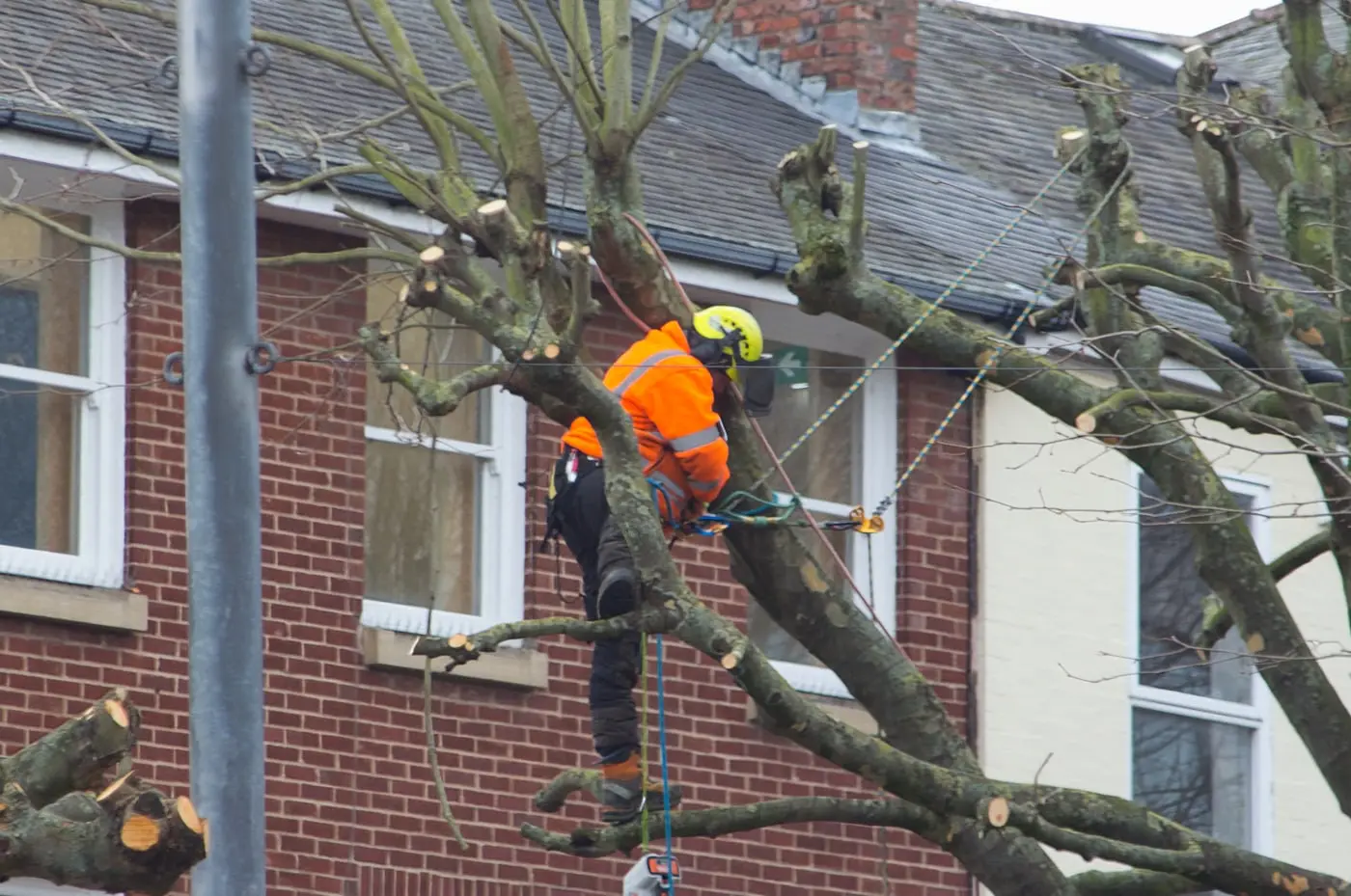
Stump grinding in Yorkshire typically costs £80-200 per stump depending on diameter and access. A small stump under 20cm across might be £80-120; a large oak stump at 60cm will be closer to £180-300, and anything bigger on heavy clay soil will cost more still. These are contractor prices. If you hire a machine yourself and do it, you are looking at £120-160 per day for equipment hire, which only makes economic sense if you have three or more stumps to deal with. For a single stump, a contractor is almost always the better call.
The quick answer: typical stump grinding costs in Yorkshire 2026
Small stump (under 20cm diameter): £80-120. Medium stump (20-40cm): £100-150. Large stump (40-60cm): £130-200. Very large stump (60cm+): £180-300+. Additional lateral roots on heavy clay: add £30-50. Multiple stumps booked together: usually discounted 10-20% per stump. Stump removal (full extraction by excavator) costs considerably more and is rarely necessary for a domestic garden.
What stump grinding actually is
A stump grinder is a machine with a rotating cutting head fitted with carbide teeth. The operator manoeuvres the head back and forth across the stump, progressively chewing it down below ground level. Standard residential grinding goes to around 150-200mm (15-20cm) below the surface - enough to re-lawn the area or plant shrubs directly above it. The result is a hollow filled with a mixture of wood chip and soil rather than a solid stump protruding from the ground.
The grinding process leaves the lateral roots in the ground. These decay naturally over time - typically 5-10 years for a hardwood tree, faster for softer species. This is not a problem for most garden uses. The remaining roots do not regrow once the stump is gone, and they add organic matter to the soil as they break down. The only situation where leaving the roots causes a problem is if you are planning to build over the area (driveway, path, extension foundations), in which case a deeper grind or full extraction may be required.
Stump grinding vs stump removal
These two terms often get confused. Stump grinding (sometimes called stump milling) uses the rotary cutting head to process the stump in place, down to a set depth. The roots stay in the ground and decay. Stump removal, or full extraction, means physically digging out the entire stump and root ball with an excavator or mini-digger. Full removal is dramatically more disruptive - you end up with a significant hole in your garden that needs backfilling - and considerably more expensive. Most domestic situations do not require it. The exceptions are where you are building over the ground, where the root system is interfering with existing drainage or foundations, or where the tree species (honey fungus-susceptible species particularly) makes leaving the roots inadvisable.
A third option that occasionally comes up is digging it out by hand. This is viable only for very small stumps with shallow root systems - a self-seeded sapling that was cut off young, for instance. An established tree stump of any size has a root system that makes manual extraction practically impossible without machinery. The grinding approach exists precisely because the alternative is so much more work.
Stump grinding cost table: Yorkshire 2026
| Stump diameter | Typical Yorkshire price | Notes |
|---|---|---|
| Under 20cm | £80-120 | Small ornamentals, self-seeded trees, young birch etc. |
| 20-40cm | £100-150 | Mid-size garden trees - apple, ornamental cherry, medium ash |
| 40-60cm | £130-200 | Established trees - large ash, mature sycamore, medium oak |
| 60cm+ | £180-300+ | Large oak, veteran beech; price rises steeply with diameter |
| Extra for lateral roots | +£30-50 | Particularly relevant on clay soils where roots spread wide |
| Multiple stumps (same visit) | -10 to 20% per stump | Mobilisation cost is shared; always book together |
Diameter is measured at ground level at the widest point. If you are unsure, measure across the stump with a tape before calling for a quote - contractors will ask. The prices above assume reasonable access. A stump in a back garden that requires the grinder to be manhandled through a narrow side passage adds time and cost.
What affects the price in Yorkshire
Accessibility
Stump grinders come in various sizes. The larger, ride-on models that contractors prefer for big stumps need a gate or access way at least 900mm wide to get into a rear garden. If access is tight, a contractor either needs to use a smaller pedestrian grinder (slower work, higher labour time) or dismantle sections to get through. Yorkshire's stock of Victorian and Edwardian terraced housing - Leeds, Bradford, Sheffield, Halifax, Wakefield - often means the only garden access is a narrow side passage or through the house. Always mention access constraints when asking for a quote. A contractor who visits on-site before quoting will factor this in; a phone quote without a site visit may not.
Soil type and root spread
Yorkshire's clay soils - most prevalent in West and South Yorkshire, the Vale of York and much of the Humber basin - affect stump grinding costs in a specific way. Clay retains moisture, and a tree growing in clay will often have a wider, shallower lateral root system than the same species on free-draining sandy or loamy soils. This is because the roots spread outward searching for oxygen rather than driving deep into waterlogged ground. A 30cm-diameter oak on good loam may have lateral roots extending 3-4 metres. The same tree on clay can have roots spreading 5-6 metres, often close to the surface and much harder to grind through. This is why contractors sometimes price a clay-soil job higher than the diameter alone would suggest.
Species: hardwood vs softwood
This matters more than most homeowners expect. A silver birch stump and an oak stump at the same diameter are very different jobs. Birch is a softwood (in the practical sense of being low density) that grinds relatively quickly. Oak is dense hardwood that blunts cutting teeth and requires more passes. Ash is similar to oak in density. Sycamore is mid-range. Conifer stumps grind faster than hardwoods but the resinous material gums up the machine. If you are having an ash tree stump ground - which is increasingly common as ash dieback leaves large numbers of Yorkshire gardens and hedgerows with dead or felled ash trees - expect to pay at the higher end of the range for the diameter because the wood is extremely hard.
Yorkshire has been significantly affected by ash dieback (Hymenoscyphus fraxineus) over the past decade. A huge number of ash trees across the county have been felled as the disease progresses, leaving stumps of all sizes behind. If you have multiple ash stumps to deal with, booking them all in one visit gives you the best chance of a discounted rate.
Depth required
Standard residential grinding to 150-200mm below surface is enough for most replanting and lawn restoration. If you are planning to pave or surface over the area, you need grinding to at least 250-350mm to prevent the decaying wood from creating soft spots in the base. If you are planning to build over the ground at all - a shed base, an extension, a new driveway - you should discuss the depth requirements with both your contractor and whoever is doing the groundwork. The deeper the grind, the longer it takes, and some contractors charge incrementally for deeper work.
What happens to the chips
Stump grinding produces a significant quantity of wood chip and soil mix. For a medium stump, you might get a barrow-load or two; for a large stump, considerably more. Most contractors offer two options: leave the chips on-site (free or included in the price), or take them away (usually £30-60 extra, depending on volume). The chips are actually useful. Mixed with topsoil, they make decent mulch for borders. Spread 7-10cm deep around existing trees and shrubs, the chip helps retain moisture and suppress weeds. The one thing not to do is pile them directly against plant stems or tree bark, where they can cause rot.
Grinding depth and what it means for replanting
The depth to which a stump is ground determines what you can do with the area afterwards.
- 150-200mm (standard): suitable for turfing, seeding, planting shrubs and perennials. The underlying wood and roots will decompose over time without causing surface problems in most cases.
- 250-350mm (medium depth): suitable for paving, patios and paths with a solid base. Allows time for the remaining organic material to compact before surface work begins.
- 600mm+ (deep grind or extraction): required if you are building structural elements above the ground, laying a new driveway with a proper sub-base, or if building regulations or an engineer require no organic material beneath a structure.
For replanting a tree in the same location, depth is less of the issue than timing. Wait 6-12 months before planting a new tree where an old one was removed. The soil needs time to settle and the remaining root material needs to begin decomposing before new tree roots can establish properly. For shrubs, perennials, and grass, this waiting period is unnecessary. Fill the void with topsoil, let it settle for a week or two, then plant normally.
A note on replanting after ash dieback
If you are replanting after an ash removal, consider that ash dieback does not persist in the soil - it is an airborne fungal pathogen. There is no soil contamination preventing you from planting another tree species in the same location once the stump has been dealt with. Native alternatives that suit the same conditions ash favoured in Yorkshire include field maple, wild cherry, and rowan, all of which tolerate the clay soils ash often grew on.
DIY stump grinder hire: is it worth it?
Stump grinder hire from companies like HSS or similar national tool hire chains runs £120-160 per day for a pedestrian grinder. It sounds economical for one stump. In practice, it rarely is for a single job.
The economics: a contractor quoting £120 for one stump is bringing a commercial-grade machine, experience, PPE, and experience knowing how to handle complications. If you hire a machine at £140 for the day, add collection and return time, factor in the learning curve operating it safely, and deal with anything unexpected (a root hitting a buried cable or pipe, say), the saving is modest at best. Most tool hire grinders are lighter pedestrian models that are slower on anything over 30cm diameter than the ride-on machines a contractor uses.
The case for DIY hire: if you have three or more stumps of similar size, all accessible in the same garden, a day's hire with two people can be efficient. You will need full PPE - safety glasses or face shield, ear defenders, heavy-duty gloves, steel toe-capped boots, and thick trousers or chaps. The cutting head throws debris with considerable force. Do not operate without face protection. Mark any buried service locations (gas, electric, water, telecoms) before you start grinding - call 0800 96 1000 (Dial Before You Dig) for a free check of known services in your area.
Finding a stump grinding contractor in Yorkshire
There are two routes: a dedicated stump grinding contractor, or an arborist who also offers stump grinding as part of their service. For large stumps or complex jobs, a dedicated grinder with a commercial-grade machine is usually the better choice. For a stump that follows directly from a tree removal job, the arborist who did the felling is a natural option - they may discount the stump work as part of the overall job, and they already know the site.
Things to check before you book:
- Public liability insurance of at least £2m. Stump grinders throw debris. Any contractor working near structures, windows, fences or vehicles should have current liability cover. Ask for a copy of the certificate, not just verbal confirmation.
- On-site quote rather than phone quote. Diameter and species are the two variables a contractor can assess from what you describe. Access, soil conditions, proximity to walls or pipes, and the actual state of the stump are things that only a site visit can confirm. A contractor willing to quote without visiting is either very experienced at reading the situation from good photos and descriptions, or is leaving themselves room to revise the price on the day. Ask for a written quote that specifies exactly what is included.
- Clarity on depth and chip disposal. Ask what depth they grind to as standard. Ask whether chip removal is included or extra. Ask whether they will leave the area level or whether you need to source topsoil to fill the void.
See the broader guide to finding a tree surgeon in Yorkshire for more on qualification checks and what to ask when getting arborist quotes.
Stump grinding as part of a wider garden clearance
A stump left in ground that is otherwise being cleared or redesigned is worth dealing with as part of the wider job. If you are already having a garden clearance done, or planning a significant replanting, adding stump grinding to the same visit saves a separate mobilisation cost. The garden clearance cost guide covers what to expect for clearance jobs across Yorkshire. If you are resetting a garden that has had multiple trees removed - increasingly common after storm damage, ash dieback removals, or renovation work on older properties - getting all the stumps ground in a single visit is consistently the most economical approach.
For the wider tree surgery context, the tree surgery cost guide for Yorkshire covers felling, crown work, and pruning prices in detail. Stump grinding is rarely included in a felling quote unless explicitly stated. The tree pruning guide covers the maintenance side of tree work that does not involve full removal.
Frequently asked questions
How long does stump grinding take?
A single small to medium stump (under 40cm) in an accessible position: 30-60 minutes for an experienced operator. A large oak stump of 60cm+ on clay soil: 2-3 hours. Most of the time goes on setup and positioning, not the grinding itself. Multiple stumps in the same garden take proportionally less time per stump because setup is shared - which is why multi-stump jobs attract a discount.
Can I plant on the spot straight away?
For shrubs, perennials, and grass: yes. Fill the void with topsoil, allow a week or two to settle, then plant normally. For a replacement tree in the same location: wait 6-12 months. The remaining root system needs time to begin decomposing before new tree roots can establish. There is no chemical or disease reason to wait - it is purely a physical establishment issue.
Is stump grinding included in a tree removal quote?
Rarely. Most arborists price it separately. Always ask specifically whether stump grinding is included and, if so, to what depth. A quote that mentions stump grinding without specifying depth may only cover 10-15cm, which is not enough for most purposes. Confirm what is in the price before work starts.
Do I need planning permission?
No. Stump grinding does not require planning permission in most circumstances. If the original tree was protected (TPO or conservation area), it is worth checking with your local planning authority before proceeding, but in practice most councils treat grinding as incidental to the removal rather than a separate consent issue.
What is the difference between stump grinding and stump removal?
Stump grinding processes the stump in place to a set depth, leaving the root system to decay naturally. Stump removal (full extraction) means digging out the entire stump and root ball with an excavator - much more disruptive and expensive, and rarely necessary for domestic garden use. Grinding is the right approach for almost all standard replanting, lawn restoration, and paving work.
Related articles
- Planting Trees in Yorkshire - once the stump is gone, what to plant next
- How to Find a Tree Surgeon in Yorkshire
- Tree Surgery Costs in Yorkshire (2026 Prices)
- Tree Pruning in Yorkshire: When to Prune and How
- Garden Clearance Across Yorkshire
- Garden Clearance Cost Guide
Can I plant directly on a ground stump straight away?
For most shrubs, perennials, and grass, yes - you can replant on the ground-down area fairly soon after grinding. The wood chip left behind is a reasonable growing medium when mixed back with topsoil. However, if you want to plant another tree in the same spot, it is worth waiting 6-12 months. The remaining root system needs time to decompose, and new tree roots will struggle to establish where old ones are still in the ground. For lawns, fill the hollow with topsoil and seed or turf - the area will need a little settling time but is plantable within weeks.
Do I need planning permission to grind a stump?
No, you do not need planning permission to grind a stump in most circumstances. However, if the tree that was removed had a Tree Preservation Order (TPO), or was in a conservation area, you should check with your local planning authority before proceeding. Grinding a stump of a protected tree without appropriate consent could technically be viewed as completing the unauthorised removal. In practice, most local planning authorities consider the stump a remnant of an already-removed tree and focus their enforcement on the felling itself - but it is worth a quick check if you are unsure of the tree's protected status.
Need stump grinding or garden clearance in Yorkshire?
We can put you in touch with a local contractor quickly. 60-second form, free enquiry, covering all of Yorkshire.
Start the estimateGardeners in your area
We cover the whole of Yorkshire. Click through to your town for local pricing and availability: