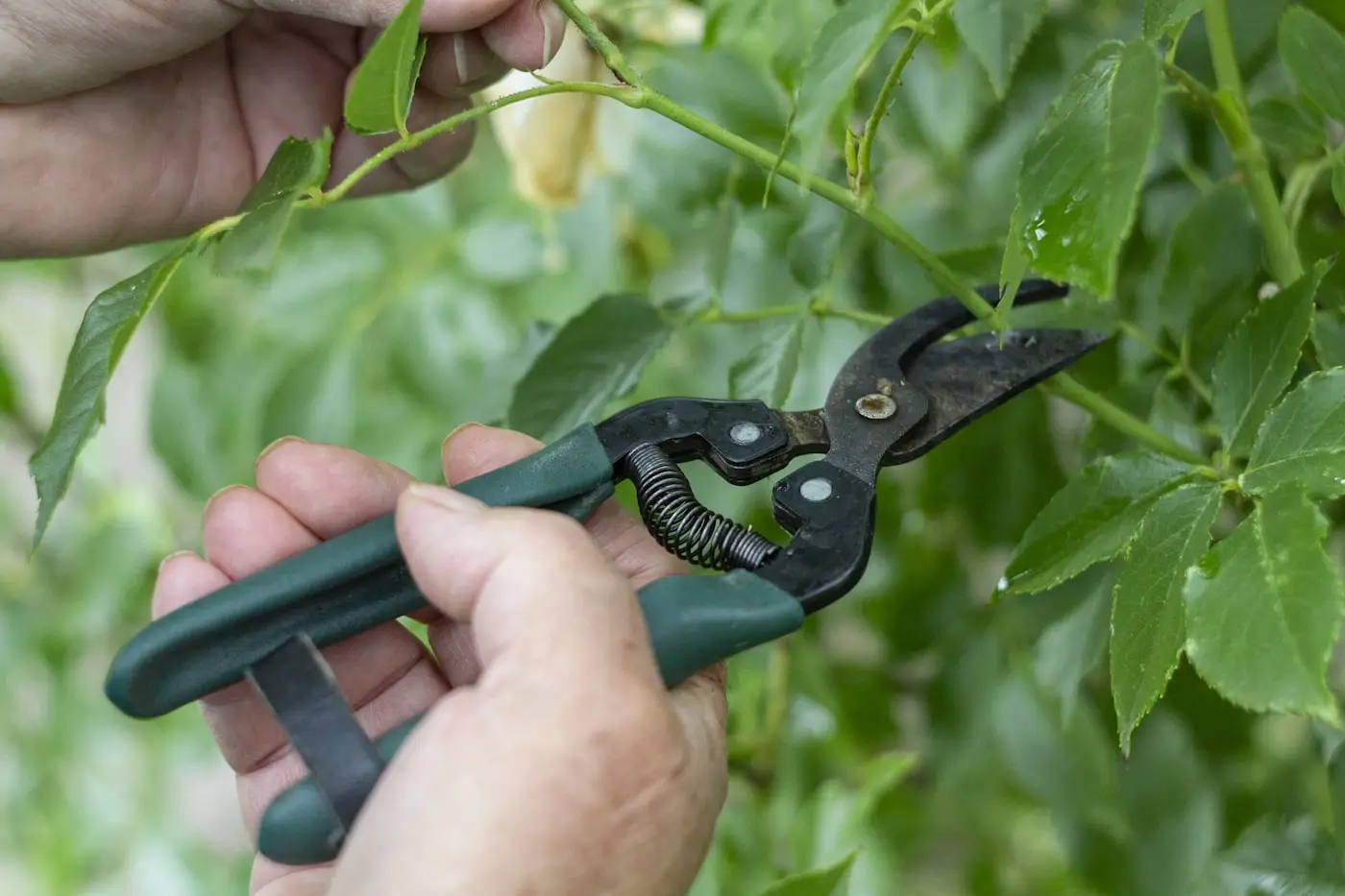
The most common mistake homeowners make with tree work is assuming everything that involves a tree requires a tree surgeon. It often does not. A significant proportion of the calls a tree surgeon receives in Yorkshire are for jobs that a competent gardener could safely handle at a fraction of the cost: a small apple tree that needs pruning back, ornamental shrubs that have got too tall, a cherry that needs a few crossing branches removed. Understanding the boundary between the two trades saves you money and means you end up with the right person for the job.
This guide starts with that question and then works through what to look for when you do need a qualified arborist, what the job types involve, and what Yorkshire-specific factors affect the work and the cost. For full pricing, see our tree surgery cost guide for Yorkshire.
When you need a tree surgeon vs a gardener
The two trades operate in genuinely different territory. The confusion arises because the word "tree" covers an enormous range of jobs, from a gardener removing a small dead branch with loppers to an arborist felling a 20-metre oak near a house. Here is a clear breakdown of where the line sits.
What a gardener can safely do
- Light pruning of smaller trees and ornamental shrubs, working from the ground or a stepladder
- Fruit tree pruning: apple, pear, and plum trees where the work is accessible from ground level or a standard ladder
- Crown lifting on smaller ornamental trees, removing the lowest 2-3 metres of branches by hand or with a pruning saw
- Deadheading and formative pruning of ornamental shrubs
- Hedge trimming at any height (this is gardening, not arboriculture)
- Removing small, dead branches from accessible trees using loppers or a hand saw
As a practical guide: if the tree is under about 4-5 metres and the work can be done safely from the ground or a standard ladder with hand tools, a qualified gardener is the right person. See our tree pruning guide for Yorkshire for detail on what is involved in different pruning jobs.
What requires a qualified arborist
- Felling any tree of significant size, regardless of location
- Crown reduction and crown thinning on large trees (over 4-5 metres)
- Any work requiring climbing equipment or an aerial work platform (cherry picker)
- Chainsaw use above ground level
- Emergency removal of storm-damaged trees
- Any work on trees near structures, power lines, or boundaries where the risk of things going wrong is serious
- Work on trees with a Tree Preservation Order (TPO)
The honest answer to "can my gardener do it?"
A good gardener will tell you when something is out of their scope. If a gardener quotes enthusiastically for major tree felling or climbing work without mentioning NPTC qualifications or insurance that covers aerial chainsaw work, that is a problem. The same goes for a tree surgeon who prices a simple apple tree prune at arborist rates when a gardener could handle it safely. The right trade for the job saves you money and keeps everyone safe.
Qualifications to look for in a tree surgeon
Tree surgery is an unregulated trade in the sense that anyone can call themselves a tree surgeon. This makes checking qualifications non-negotiable. Here is what to ask for:
NPTC certificates (the minimum for chainsaw work)
The National Proficiency Tests Council (NPTC) issues the standard qualification framework for arborists and chainsaw operators. The key certificates are:
- CS30: Chainsaw maintenance and cross-cutting. The basic level, required for any chainsaw operation.
- CS31: Felling and processing small trees. Required for felling work.
- CS38: Climbing and aerial rescue. Required for anyone working in the canopy.
- CS39: Aerial cutting with a chainsaw. Needed for pruning in the canopy with a saw.
Ask to see the actual certificates with names, dates, and certificate numbers. A competent arborist will produce these without hesitation. Verbal confirmation is not enough.
City and Guilds Level 3 in Arboriculture
This is the broader professional qualification. It covers tree identification, tree biology, risk assessment, and practical techniques. A Level 3 arborist has had their knowledge formally assessed, not just their chainsaw handling. For larger or more complex jobs in Yorkshire, a Level 3 qualification is a useful marker of someone who understands trees as well as how to cut them.
Arboricultural Association membership
The Arboricultural Association (AA) runs an Approved Contractor scheme. Member contractors are required to hold minimum insurance levels, carry relevant qualifications, and abide by the AA's code of practice. The AA website has a find-a-contractor tool that covers Yorkshire. Membership is not mandatory, but it does add a layer of third-party accountability that a random Google search does not provide.
Insurance
Tree surgery is high-risk work. Public liability insurance of at least £5m is standard for professional arborists, and for work near buildings the level should be higher. Employer's liability insurance is also required if they have employees on the job. Ask for the certificate with the insurer, policy number, and cover amount. If something goes wrong during tree work near your house and the contractor has inadequate insurance, the consequences land on you.
What tree surgery work actually involves
Understanding the terminology helps when getting quotes and verifying that you need what you are being sold. Here are the main types of tree surgery work:
Tree felling
Removing a tree entirely, from cutting at the base through to clearing the debris. The complexity ranges from a straightforward fell of a tree in open ground with no obstacles, to a sectional dismantling of a large tree in a confined garden where sections have to be lowered by rope because there is no room to let them fall. Sectional dismantling is significantly more expensive and time-consuming than a straight fell. Most Yorkshire garden jobs involving trees near fences and houses will require sectional dismantling.
Crown reduction
Reducing the overall size of the tree's canopy, cutting branches back to appropriate growth points. Done correctly, crown reduction reduces the tree's height and spread while retaining its natural form. Topping (cutting straight across the top) is not an acceptable practice and a reputable arborist will not do it. Crown reduction requires proper technique to avoid leaving large wounds that invite disease.
Crown thinning
Removing a proportion of the smaller branches within the canopy to increase light penetration and air movement. Unlike crown reduction, the overall size of the tree does not change significantly. Crown thinning is often done on trees near properties to reduce wind resistance and the risk of storm damage. It is also beneficial for gardens where a large tree is shading an area badly.
Crown lifting
Removing the lower branches to increase the clearance between the ground and the base of the canopy. Commonly done to improve sight lines, allow more light under the tree, or prevent branches obstructing paths and driveways. On smaller ornamental trees up to 4-5 metres, a gardener can often do the lower crown lifting from the ground. On larger trees, an arborist is needed.
Deadwooding
Removing dead, dying, or structurally compromised branches from the canopy. Dead branches can fall without warning and represent a genuine hazard in gardens with children, over paths, or near structures. This is often a job that gets neglected until something falls. For smaller trees, a gardener can handle accessible dead branch removal. For large trees, proper deadwooding requires an arborist to assess the whole canopy.
Stump grinding
After a tree is felled, the stump remains. Stump grinding uses a specialist machine to grind the stump down below ground level. This is separate from felling and is usually quoted separately. Without stump grinding, you are left with an obstacle in your garden and a potential source of regrowth. For a dedicated guide to this service including Yorkshire prices and what to expect, see our stump grinding Yorkshire guide. For the full cost picture across all tree surgery work, see the tree surgery cost guide.
Yorkshire-specific tree considerations
Tree work in Yorkshire involves a few specific issues that do not apply everywhere. These are worth understanding before you start the process of finding an arborist.
Ash dieback
Ash dieback, caused by the fungal pathogen Hymenoscyphus fraxineus, has spread extensively across Yorkshire. Tens of thousands of ash trees across the county, in private gardens, on council land, and in woodlands, are showing the characteristic symptoms: wilting leaves, blackened leaf stalks, diamond-shaped lesions on the bark, and progressive dieback from the crown downward. There is no cure.
If you have an ash tree in your Yorkshire garden and it is showing any dieback symptoms, it needs an arborist assessment. The trajectory of the disease is unpredictable: some trees hold on for years in a compromised state, while others decline rapidly and become structurally dangerous. An ash tree that looks manageable in summer can be shedding large limbs by autumn as the dead wood dries out. Ash trees near houses, paths, or boundary walls need treating as a priority if infected. Light removal of dead branches is within gardener scope; a tree showing significant structural dieback requires a qualified arborist to assess whether it is safe to retain and how to manage it.
Tree Preservation Orders (TPOs)
A Tree Preservation Order is a legal protection placed on individual trees or groups of trees by the local planning authority. TPOs exist across Yorkshire and cover both common garden trees and notable specimens. Before doing any significant work on a tree in your Yorkshire garden, you should check whether it has a TPO. The consequences of carrying out unauthorised work on a protected tree can include unlimited fines under the Town and Country Planning Act 1990.
TPO registers are held by each local authority. In Yorkshire, that means Leeds City Council, Bradford Council, Sheffield City Council, City of York Council, North Yorkshire Council, East Riding of Yorkshire Council, Calderdale, Kirklees, Wakefield, Doncaster, Rotherham, and Barnsley. Most councils have an online TPO search tool. If you cannot find it, phone the planning department directly. For work on a TPO tree, the local authority must give consent and the process can take several weeks.
Conservation areas
If your property is in a conservation area, any tree with a trunk diameter of more than 75mm at 1.5 metres height is subject to notification requirements even without a specific TPO. You must give 6 weeks' written notice to the local planning authority before carrying out any work. The council then has the opportunity to make a TPO if they want to protect the tree. Conservation areas cover many streets and villages across historic Yorkshire - York, Harrogate, Saltaire, Haworth, and dozens of other settlements have designated conservation areas.
Post-storm emergency work
Yorkshire, particularly the Pennine areas and the exposed east coast, sees significant storms. The aftermath often involves fallen trees on fences, roofs, outbuildings, and roads. Emergency tree surgery - work required within 72 hours because of immediate danger to life, property, or public access - may be exempt from the usual TPO notification requirements, though you should still inform the council as soon as practicable. Emergency callout work is significantly more expensive than planned work, and if the damage is caused by a neighbour's tree falling on your property, the insurance position can be complex. Check your home insurance policy specifically for storm and falling tree cover.
How to find a qualified tree surgeon in Yorkshire
The starting point for any serious search should be the Arboricultural Association's find-a-contractor tool at trees.org.uk. This lists AA Approved Contractors by location. In Yorkshire, there are numerous listed firms covering all the major areas. AA contractors have been assessed against the Association's standards and must carry appropriate insurance.
For work on TPO trees specifically, some local authorities in Yorkshire maintain lists of approved contractors who they will work with for council-owned tree work. These lists can be a useful pointer for private work too, since any contractor appearing on a council-approved list has been through a degree of vetting. Contact the relevant council's tree officer or planning department and ask whether they have a recommended contractor list.
When approaching any arborist, ask for the following before agreeing anything:
- NPTC certificates relevant to the job type (CS30/31 at minimum, CS38/39 for climbing work)
- Public liability insurance certificate with cover level - minimum £5m for tree work near structures
- Employer's liability certificate if they bring a team
- Written quote specifying exactly what is and is not included (stump grinding, waste removal, TPO application if needed)
- Confirmation of whether they will handle TPO paperwork or whether you need to do it yourself
Get at least two quotes for any job over £500. Tree surgery prices in Yorkshire can vary considerably between contractors for the same job, partly because of genuine differences in how they approach the work and partly because the market is inconsistent. A quote that is significantly below the others warrants a question about what is missing from it.
For smaller pruning and garden tree work that falls within gardener scope, see our garden maintenance service. For hedge work of any size, the hedge trimming service covers that separately.
Frequently asked questions
Do I need a tree surgeon or a gardener for my job?
The dividing line is height, equipment, and risk. If the work involves a tree over 4-5 metres, chainsaw use above ground level, climbing or aerial access, or felling anything substantial, you need a qualified arborist. A gardener can safely handle light pruning of smaller trees and ornamental shrubs, fruit tree pruning (apple, pear, plum where the work is accessible from ground level), hedge trimming, and crown lifting on smaller trees. If in doubt, describe the job to both and see who tells you honestly whether it falls within their scope.
What qualifications should a tree surgeon have?
For chainsaw work: NPTC CS30 (maintenance and cross-cutting) and CS31 (felling small trees) are the minimum. For climbing and aerial work: CS38 and CS39. City and Guilds Level 3 in Arboriculture is the broader professional qualification. Arboricultural Association Approved Contractor status adds a further layer of accountability. Ask to see actual certificates - names, dates, certificate numbers - not verbal confirmation.
Do I need planning permission to cut down a tree in Yorkshire?
You may. If the tree has a TPO, you must apply to your local planning authority for consent before carrying out any work, including felling or significant pruning. If the tree is in a conservation area, you must give 6 weeks' written notice to the council before any work. Check with your council's planning department before proceeding. Unauthorised work on a protected tree can result in unlimited fines.
How much does tree surgery cost in Yorkshire?
It varies widely. Tree felling for a small tree with good access runs around £150-400; a large mature tree can cost £800-3,000 or more. Crown reduction on a medium tree typically runs £400-900. Stump grinding is usually £80-400 depending on stump diameter. Emergency callouts start at £300-600. See the full tree surgery cost guide for Yorkshire for a complete breakdown by job type and size.
What is ash dieback and does it affect Yorkshire trees?
Ash dieback (Hymenoscyphus fraxineus) is widespread across Yorkshire. Symptoms include wilting leaves, blackened leaf stalks, diamond-shaped bark lesions, and progressive crown dieback. There is no cure. Mildly affected trees can sometimes be managed for years, but heavily infected trees near structures or paths pose a real structural hazard as they weaken. If you have an ash showing symptoms, get an arborist assessment. Light removal of dead branches is within gardener scope; significant dieback near structures requires a qualified arborist to assess stability and risk.
Related articles
- Planting Trees in Yorkshire - if you want to add a tree rather than remove one
- Tree Surgery Costs in Yorkshire (2026 Prices)
- Tree Pruning in Yorkshire: When to Prune and How
- Fruit Tree Pruning in Yorkshire
- How Much Does Hedge Trimming Cost?
- Garden Clearance Cost Guide
- Garden Maintenance Across Yorkshire
- Hedge Trimming Across Yorkshire
Garden work in Yorkshire.
For smaller tree pruning, shrub work, and garden maintenance, a local Yorkshire gardener can help. 60-second form, free to you.
Start the assessmentGardeners in your area
We cover the whole of Yorkshire. Click through to your town for local pricing and availability: