Caring for a Yorkshire garden in summer means watering deeply but rarely on clay, raising your mowing height to 5 to 6cm in July, and mulching borders to hold moisture. Yorkshire summers swing between drought and downpour. The 2022 heat broke county records while a typical July brings heavy showers within days of a dry spell. Garden by conditions, not the calendar.
Quick answer: June means peak mowing (1 to 2 times per week), deadheading, and the start of the hedge trimming window after late June. July is heat and water management — mowing height up, watering deep and infrequent on Yorkshire clay. August is assessment and planning: lawn condition, autumn overseeding, booking autumn treatments. The work does not stop in summer; it shifts.
Yorkshire's Changeable Summer Weather
Yorkshire summers are famously unpredictable: a warm dry June followed by a wet July, a drought in August, thunderstorms in late summer. This changeable pattern is what makes Yorkshire garden care genuinely different from a simple seasonal routine.
For lawns, the swing between wet and dry creates a dual problem. Wet periods compact clay soils as people walk on saturated ground, restricting root growth. Dry spells then bring drought stress to roots already weakened by compaction. Yorkshire lawns need aerating more than lawns in stable-climate regions precisely because the soil is regularly pushed to both extremes within the same season - wet Pennine rains in one fortnight, baked Wolds clay the next.
Hedges respond to the same pattern with unpredictable growth bursts after rain, then slowed or static growth during dry periods. A hawthorn or privet hedge in the Dales or around Harrogate can put on several weeks' worth of growth in three days after a wet spell, then sit static for a fortnight in August. Timing a single annual cut becomes difficult; the answer is to cut by growth, not the calendar. Professional hedge trimming in late summer accounts for this variability across all common Yorkshire species.
Borders benefit most from a strategy that buffers both extremes. Mulching in late spring - before the heat arrives - is the single most effective adjustment for a changeable Yorkshire summer: it slows surface moisture loss during dry spells and reduces waterlogging during wet ones by improving surface structure. Watering timing matters equally; check at depth before watering, then water deeply and infrequently rather than lightly and daily. Coastal gardens near Scarborough and Whitby contend with salt-laden humidity in wet periods that accelerates fungal disease; moorland and Dales gardens face harder frost exposure at altitude that shortens the effective growing season. Regular garden maintenance through the season keeps borders stable through whatever the Yorkshire summer delivers.
Why is summer garden care in Yorkshire different from the rest of England?
Walk into any garden centre in Yorkshire in late June and you will see advice aimed at Surrey. The UK gardening calendar published in most magazines assumes a growing season that stretches from March to October in something approaching consistent warmth. Yorkshire does not work like that. The county sits between two competing weather systems: maritime Atlantic influence from the west, and colder, drier continental air from the north and east. In practice, this means May and June can be genuinely warm and productive, but July and August can swing between humid and damp or hard and dry — sometimes both in the same fortnight.
What matters practically is that the intense growing period in Yorkshire lawns and borders is concentrated in roughly six weeks: late May through to early July. By mid-July, grass growth slows noticeably in most years. By August, if there has been a dry spell, many Yorkshire lawns go into dormancy — brown, hard, and dormant on the surface while the clay beneath is still wet. Understanding this rhythm means the work you prioritise in summer is different from advice written for southern England. You are managing maintenance, not growth, for much of July and August.
Summer is also when the garden earns its keep. Long evenings on a well-maintained patio, a lawn that looks good through July, borders with enough structure to carry interest into August — these are the reasons the spring and autumn work gets done. A well-lit garden extends the usable hours even further; see our guide on garden lighting in Yorkshire for ideas on making summer evenings count.
What should I do in my Yorkshire garden in June?
Mowing in June
June is the most demanding month on the mower. Growth rates peak in warm, moist conditions and most Yorkshire lawns benefit from cutting one to two times per week at 3.5 to 4 centimetres to maintain quality. Cutting frequency is more important than cutting height: a lawn cut twice a week at 4 centimetres stays denser and more weed-resistant than one cut once a week at 3 centimetres.
Keep the blade sharp. A blunt mower blade tears the grass rather than cutting it cleanly, leaving the tips brown and making the lawn look tired within two days of cutting. Most homeowners sharpen or replace blades once a season; for a lawn cut twice weekly through June, that timing should be early in the season — before the heavy use, not after.
Lawn Feeding in June
If you apply only one summer lawn feed, early June is the window. A balanced NPK feed applied in early to mid-June supports growth through the peak period and helps the lawn develop the root depth it will need to handle drier conditions in July and August. Do not feed after mid-July — feeding a lawn going into a dry spell pushes top growth at the expense of roots and increases drought stress. Feeds that combine fertiliser with weedkiller work in June when the lawn is actively growing; the weedkiller component requires warmth and growth to be effective.
Hedge Trimming: the Nesting Bird Rule
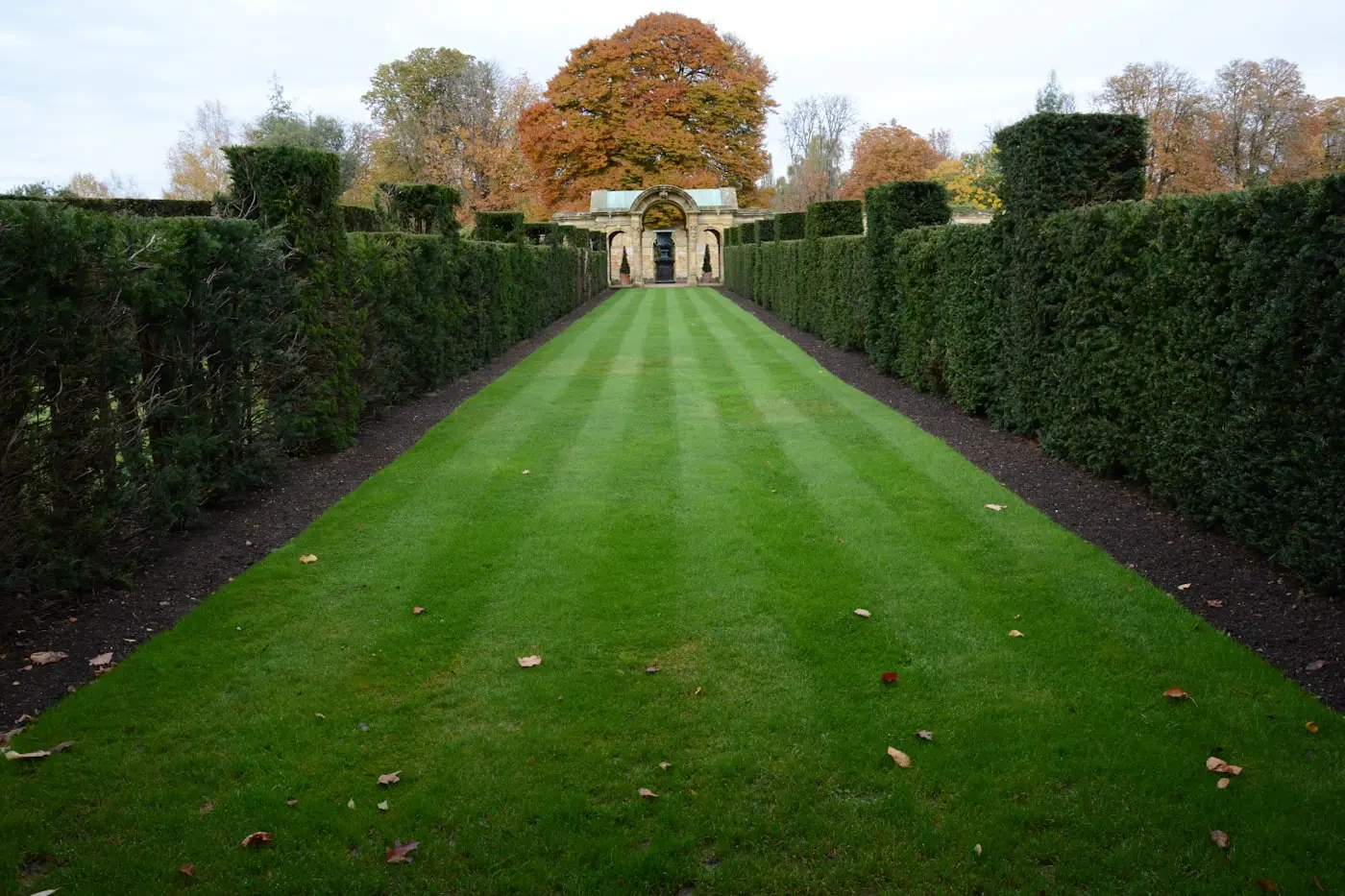
This is the question Yorkshire homeowners ask most often in June: when can I trim the hedge? The answer is not a simple date. The Wildlife and Countryside Act 1981 makes it an offence to intentionally damage or destroy an active nest of a wild bird. The nesting season for most common garden species runs from roughly late March to mid-July. In practice this means holding off hedge trimming — particularly on hawthorn, privet, and beech hedges where nesting is common — until late July at the earliest.
The more reliable rule: check before you cut. Look and listen. Nest activity is usually obvious — birds flying in and out repeatedly is the giveaway. If there is any doubt, wait. Most experienced gardeners will not touch a formal hedge until late July and will check it visually before starting. The exception is informal trimming of long growth tips that is clearly away from any nesting sites; that is a judgment call. For significant formal hedge cutting, late July to September is the practical safe window in Yorkshire.
Deadheading Roses and Perennials
Deadheading roses in June keeps the flowering going. Remove spent blooms back to the first set of five-leaflet leaves below the flower, cutting to an outward-facing bud. In a good June this may need doing every 10 to 14 days on repeat-flowering varieties. Species roses and once-flowering varieties (many ramblers, Rosa glauca) should not be deadheaded if you want hips for autumn; leave those alone once their single flush is over.
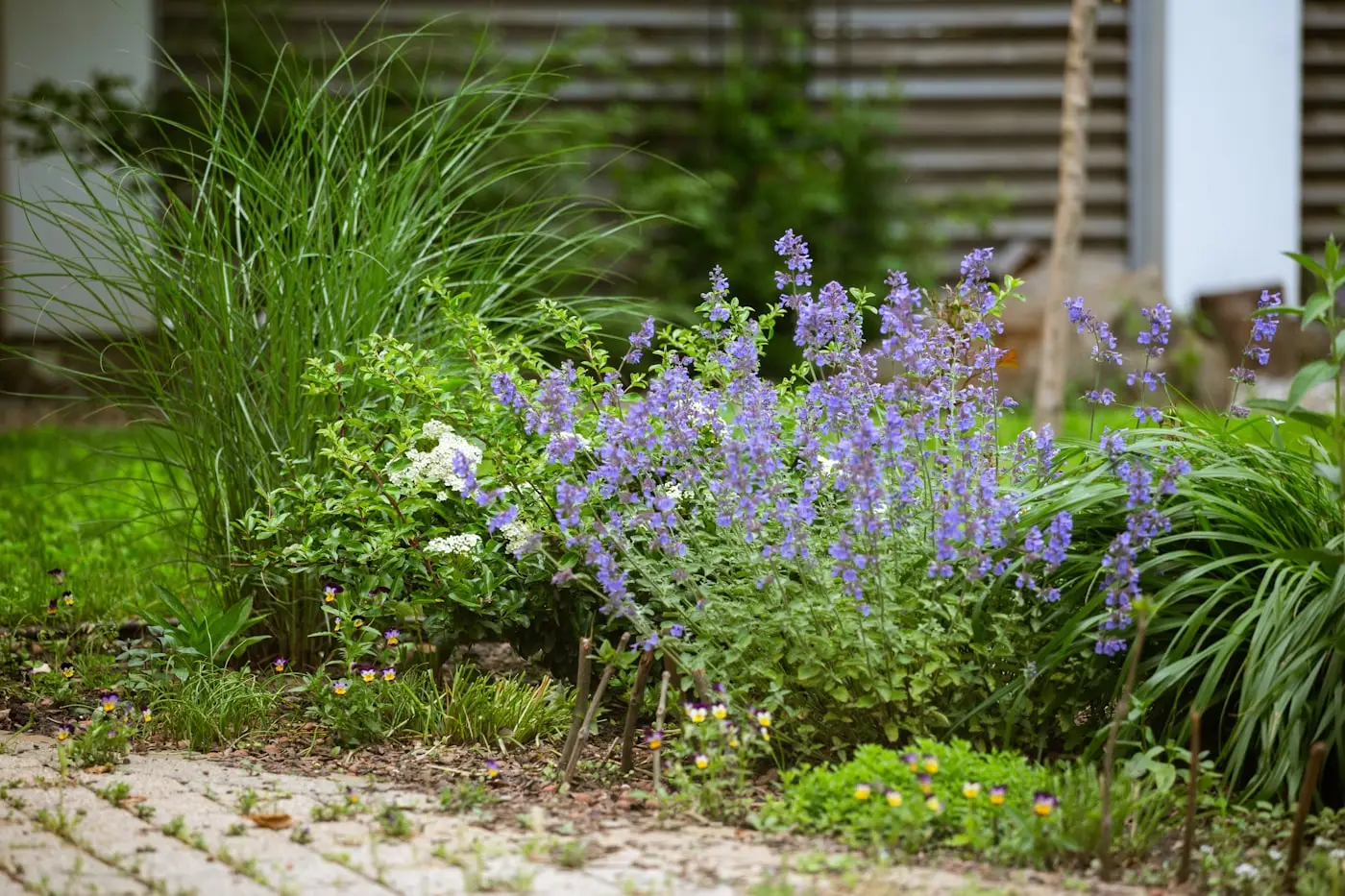
Perennials worth deadheading in June: Geranium (cranesbill) — cut back by a third after the first flush to encourage repeat flowering; Salvia nemorosa and hybrids — cut spent spikes back to the next set of buds; Nepeta — cut the first flush back by a third when it finishes for a second wave in July. These are quick jobs that make a significant difference to how long the borders carry colour through summer.
What are the main tasks for a Yorkshire garden in July?
The Yorkshire Clay Watering Problem
Most general watering advice is written for gardens on sandy or loam soils. Yorkshire clay changes the calculation significantly. Clay holds water at depth even when the surface looks and feels dry. During a dry July, a Yorkshire clay border may have cracked surface soil and perfectly adequate moisture at 20 to 30 centimetres down — which is exactly where established perennial and shrub roots are drawing from. Watering the surface of a dry clay border on a hot July afternoon achieves almost nothing: the water evaporates from the surface before it reaches the root zone, and the clay seals up again within hours.
The correct approach for Yorkshire clay is deep and infrequent watering. When you do water borders: apply enough to penetrate 20 to 30 centimetres (you are looking at 20 litres per square metre or more, applied slowly enough to soak in rather than run off). Then do not water again until the surface is dry again to a depth of 5 to 8 centimetres. A garden fork pushed 15 centimetres into the soil and twisted slightly will tell you whether there is moisture below the surface. Light daily watering on clay borders trains roots upward, creating plants that are more drought-vulnerable, not less.
Pots and containers are the exception. They have no clay reservoir below them and dry out fast — daily watering in a warm July is usually necessary for anything in a terracotta or smaller plastic pot. Moving containers into part-shade during the hottest weeks reduces water loss significantly.
Yorkshire note: The 2022 UK drought was severe across Yorkshire. Areas around Doncaster, Selby, and the Vale of York saw clay gardens crack severely in July and August — surface fissures 20 to 30mm wide in some cases. Below those cracks, the clay remained adequately moist at depth. Many homeowners watered heavily in response; on cracked clay this water ran straight down the cracks to deep soil rather than spreading through the surface layer. The lesson: on cracked clay, water slowly and let it soak before applying more. If the surface is cracking, your borders are probably fine — it is the pots and any recently planted stock that need attention.
Mowing Height in July
Raise cutting height from June's 3.5 to 4 centimetres to 5 to 6 centimetres as July progresses, particularly if rainfall becomes scarce. A longer grass plant has more leaf area for photosynthesis, more root depth, and better shade coverage over the soil — all of which reduce water loss and help the lawn handle dry conditions better. The stripe-loving short-cut lawn looks great in June but is the first to suffer when a dry July arrives. In dry conditions, stop cutting if the grass has stopped growing. There is no benefit in cutting dormant grass short.
Border Management in July
The main July task in borders is staying on top of the weeding — annual weeds seed prolifically in July heat and dry conditions make the soil more difficult to work. A long-handled hoe in dry weather is the most efficient tool. Weed between rain events when the soil surface is workable but before weeds have set seed.
Stake any tall perennials that have not had support installed earlier: Delphinium, Verbena bonariensis, and tall Echinops are common failures in a Yorkshire July wind — and the county gets summer thunderstorms that can flatten unsupported tall plants overnight. Discreet bamboo and twine staking is worth ten minutes of time.
What should I do in my Yorkshire garden in August?
Lawn Assessment in August
August is the right month to properly assess the lawn's condition and plan autumn renovation. Walk the lawn and note: which areas are thin or patchy (likely compaction or shade); where are weeds concentrated (soft spots, drainage issues, edges); is moss present (a sign of poor drainage, compaction, or shade that a surface treatment alone will not fix). These observations are the basis for the autumn treatment plan.
September and October are the ideal window for overseeding in Yorkshire: soil temperatures are still above 10 degrees Celsius (needed for germination) but air temperatures are cooling, which reduces evaporation and competition from weeds. A September overseed on a well-prepared lawn surface establishes well by October. An October overseed is a gamble that depends on whether temperatures stay mild. Do the assessment in August; do the work in September.
Book Autumn Treatments Now
This is not filler advice. Scarification, hollow-tine aeration, overseeding, and autumn feeds are genuinely time-sensitive in Yorkshire — the window between mid-September and mid-October is the only one that reliably works for grass seed. Good gardeners fill this window fast. If you want your lawn renovated in September, enquire in August and confirm the booking by end of August. By September, expect to be waiting, or to be pushed back to October when conditions are less reliable.
The same logic applies to formal hedge trimming — August and September are peak time for the main annual cut on most species. Booking in August rather than calling in mid-September means you get a choice of timing rather than whatever slot is left.
August Tidying and Autumn Prep
August is the transition month. The borders start to look end-of-season in places — some perennials have finished, some annuals are going over. The instinct is to cut everything back for tidiness; resist it. Most spent perennial stems should stay until the spring tidy: they provide habitat for overwintering insects and protect crowns from early autumn frosts. Cut back only what has clearly collapsed, is diseased, or creates a smothering problem for plants around it.
What to do: collect seed from any plants you want to propagate (Aquilegia, Verbena bonariensis, Echinacea all self-seed freely in Yorkshire gardens). Order spring bulbs now for September planting; tulip, allium, and narcissus bulbs are best planted September to November. Plan any significant autumn clearance or planting changes — it is easier to think clearly in August than in the rush of October.
The 2022 Yorkshire Drought: What It Taught Us
The summer of 2022 was exceptional. Yorkshire recorded its highest temperatures in the county's recorded history during the July heat event, and the subsequent dry spell through August was the driest August in parts of South and West Yorkshire for decades. The pattern of damage was instructive for anyone thinking about summer garden management in future years.
Clay gardens in the Vale of York, around Selby, Goole, and the flat eastern Vale fared better than people expected. The clay retained moisture at depth and most established borders and trees came through without significant losses. The casualties were: recently planted stock (anything planted in the preceding 12 months with roots not yet established in the clay); containers and pots that dried out completely; and lawns that were cut short and fed with nitrogen during the drought — these went brown faster and recovered slower than lawns left at height and not fed.
The practical lessons: on clay, trust the soil more than the surface. Recently planted stock needs watering through any dry spell; established borders usually do not. Raise mowing height before a forecast dry spell. Do not apply nitrogen feed once growth has stopped. And do not panic at a brown lawn on Yorkshire clay - dormancy is not death.
Watering Guide: Lawns vs Borders vs Pots
| What you are watering | Yorkshire clay advice | When NOT to water |
|---|---|---|
| Established lawn | Only in prolonged drought (3+ weeks without rain). Deep and infrequent if you do. Brown clay lawn is dormant, not dead. | Do not water if lawn is simply brown. Water only if ground is cracking and soil is dry at 10cm depth. |
| Established borders | Rarely needed on clay. Check at 15 to 20cm depth before watering. Deep, infrequent if needed. | Do not water if clay is moist at depth. Light surface watering on clay is nearly useless. |
| Recently planted stock | Water weekly in dry periods for the first full season. These plants have not established roots in the clay yet. | Do not water in cool wet Yorkshire weather. Over-watering young plants on heavy clay causes root rot. |
| Pots and containers | Daily in dry July and August weather. Move to part-shade to reduce water loss. | Reduce watering in a wet Yorkshire summer. Check soil before watering; standing water kills roots. |
| Vegetable garden | Consistent moisture is important for crops. Water at root level, not overhead. Morning watering is best. | Do not water in the heat of the afternoon. Water evaporates before it soaks in and leaf wetness can encourage disease. |
What height and frequency should I mow at in a Yorkshire summer?
The single most useful piece of summer mowing advice for Yorkshire lawns is this: adjust your cutting height for the conditions, not for the calendar. The standard 3.5 to 4 centimetre summer cut is right for June in good growing conditions. It is the wrong answer for a lawn going into drought in late July or a lawn in part shade at any time of year.
As a practical guide: cut at 3.5 to 4 centimetres through June and into early July while the lawn is growing well. Move to 5 centimetres in mid-July as growth slows. If August is dry and the lawn has stopped growing, stop cutting. Resume when growth restarts after rain, but not immediately — wait until the lawn is actually growing again before cutting.
On clippings: in June, when cuts are frequent and clippings are short, leaving them on the lawn (grasscycling) returns nutrients and helps moisture retention. When growth is long and clippings are heavy — after a missed week or return from holiday — collect them. A thick layer of clippings lying on the lawn smothers the grass below and creates conditions for fungal disease. In a wet Yorkshire summer, collect clippings more often than you would in a dry one, as they decompose more slowly in damp conditions and mat more easily.
Hedges in Summer: What You Can and Cannot Do
The nesting bird season effectively closes most formal hedge trimming from March to late July. By late July in most Yorkshire gardens the nesting season is ending, and the period from late July through September is the main window for the annual hedge cut.
For most common species, the timing guidelines are:
- Privet, hawthorn, hornbeam, beech: late July to September after a visual nest check
- Leylandii and conifer hedges: late August to September; avoid cutting after mid-September as new growth will not harden before first frosts
- Yew: late August is ideal; yew grows slowly and one annual cut is sufficient
- Photinia (Red Robin), Escallonia: trim lightly after the first flush of growth in late June, then again in late August
- Box: late June and again in late August; the two-cut approach keeps box formal and reduces the risk of box blight in damp conditions
The hedge trimming service covers all common Yorkshire hedge species; if you are unsure about timing for a specific hedge, the quote visit is the right time to ask.
Want your summer garden properly maintained?
Tell us what you need and we put your enquiry in front of a local Yorkshire gardener who knows the county's conditions.
Get a free quote →Frequently Asked Questions
When can you trim hedges in summer in Yorkshire?
Late July at the earliest for most species, and only after checking for active nests. The nesting season runs from late March to mid-July for most garden birds. Disturbing an active nest is an offence under the Wildlife and Countryside Act 1981. In practice: hold off formal hedge cutting until end of July for hawthorn, privet, and beech. Conifers can be done from late August. Always check visually before starting — a second brood late into July is not unusual in a warm Yorkshire summer.
How often should you mow the lawn in summer in Yorkshire?
In June, when growth is at its peak, most Yorkshire lawns benefit from cutting once or twice a week at 3.5 to 4 centimetres. In July during settled warm weather, once a week. In August during drought, raise the cutting height to 5 to 6 centimetres and stop cutting if the grass has stopped growing. Let growth rate and soil moisture guide frequency rather than the calendar.
How do you look after a lawn during a Yorkshire summer drought?
Yorkshire clay lawns handle drought differently from free-draining soils. Clay retains moisture at depth even when the surface cracks and looks bone dry. A brown clay lawn in August is almost always dormant rather than dead and will recover within two weeks of rain. The worst approach is cutting it short and watering lightly and daily. If you do water, apply at least 20 litres per square metre deeply but infrequently. Raise cutting height to 5 to 6 centimetres. Avoid feeding during drought. Wait for autumn for renovation work.
Should you leave grass clippings on the lawn in summer?
In summer, leaving short clippings on the lawn returns nutrients and helps retain moisture during dry spells. The condition is that clippings should be short. If you have let the lawn grow long and are removing significant material in one cut, collect them rather than leaving a heavy layer that can smother the grass. Clippings from a lawn treated with weedkiller in the last four cuts should always be collected and not composted.
When should you book autumn garden treatments in Yorkshire?
August is the time to book September and October lawn treatments — scarification, aeration, overseeding, and autumn feeds. These are time-sensitive: grass seed needs soil warmth to germinate, and that window in Yorkshire is roughly mid-September to mid-October. Good gardeners fill their autumn treatment slots in August. If you leave it until September, expect to wait or be pushed back to October when conditions are less ideal for germination.
What border care is needed in July and August in Yorkshire?
July: deadhead roses every 10 to 14 days. Cut back faded perennials like Nepeta and Salvia nemorosa by a third to encourage a second flush. Water pots and containers daily in dry weather. August: tidy and cut back anything that has finished flowering. Remove annual weeds from borders before they ripen and seed. Start thinking about autumn bulb planting in September and order bulbs now if you want specific varieties.
When should I water my garden in a Yorkshire summer?
Water in the early morning, before 9am, to reduce evaporation loss. Yorkshire clay holds moisture longer than sandy or loam soils, so check before watering: push a trowel or finger 10 centimetres into the border soil. If it feels moist at that depth, skip the watering. Pots and containers need checking daily as they have no clay reservoir to draw on and dry out fast in warm weather. Established borders on Yorkshire clay rarely need watering unless there has been no meaningful rain for three weeks or more. Newly planted stock from the preceding 12 months is the exception and needs weekly watering through any dry spell.
Should I water my lawn in a Yorkshire summer?
For most established Yorkshire lawns on clay, the answer is rarely if ever. Yorkshire clay retains moisture at depth even when the surface looks brown and dry. A dormant brown lawn in August is almost always dormant rather than dying and will recover within two weeks of rain. The exception is recently laid turf or newly overseeded areas, which need watering through any dry spell. If you do water an established lawn, apply at least 20 litres per square metre deeply and infrequently - light daily watering on clay trains roots upward and makes the lawn less drought-resilient for the following year. A regular garden maintenance service can assess whether your lawn needs intervention during a dry spell.
When should I stop mowing for the season in Yorkshire?
Most Yorkshire lawns stop needing regular mowing in early to mid-November, when growth slows significantly as soil temperatures drop. The final cut of the year should be at 5cm - taller than the summer height - to protect the grass through winter. Do not cut on frozen ground or when frost is forecast if a gardener takes it on, as mowing frozen grass damages leaf cells and leaves brown marks that take weeks to recover. In a mild November and December (more common in coastal East Yorkshire near Scarborough and Whitby, and in sheltered Vale of York gardens), you may need one or two additional light cuts at 5.5cm. Find gardeners covering your area through the Yorkshire towns hub.
How do I keep my garden tidy over summer holidays?
Book a gardener for fortnightly maintenance visits while you are away. A Yorkshire lawn that goes four or more weeks without mowing in summer can reach 15-20cm, which is beyond what most domestic mowers handle cleanly and requires a professional recovery visit to bring back properly. If you are away for two weeks or less, raise the cutting height to 5cm before you leave to slow visible growth. Ask a neighbour to water pots and containers - these dry out quickly in July and August and are the most likely casualties of a two-week absence. Borders and lawns established in Yorkshire clay typically look after themselves for two weeks without any intervention.
How does Yorkshire's changeable summer weather affect my garden?
Yorkshire's summer weather varies significantly across the county. Atlantic systems bring rain to West Yorkshire and the Pennines while East Yorkshire and the coast see drier, cooler conditions influenced by North Sea air. Clay soils amplify these swings: wet spells can waterlog roots while dry spells cause surface cracking above moist subsoil, making growth rates unpredictable week to week. The practical response is to garden by conditions rather than the calendar. Check soil moisture at 10 to 15 centimetres depth before watering; adjust mowing height to match actual growth rate rather than following a fixed schedule; avoid feeding when weather is unsettled. Yorkshire clay retains moisture at depth even when the surface looks and feels bone dry - understanding this is the most important adjustment for a changeable summer.
How does Yorkshire's changeable summer weather affect gardens?
Yorkshire summers oscillate between dry warm spells and sudden wet periods, sometimes within the same week. This means lawns need aerating more than in stable-climate regions (to handle both compaction from wet soil and drought stress), hedges grow in unpredictable bursts, and borders benefit from thick mulch to buffer both extremes.
What should I do with my Yorkshire garden during a hot dry summer?
During a Yorkshire hot spell: water deeply once a week rather than shallowly daily, let the lawn go dormant rather than scorching it with mowing, and hold off on fertiliser until rain returns. Most Yorkshire lawns recover quickly after a dry summer - they are adapted to the region's variable rainfall.
What should I do in my garden after heavy summer rain in Yorkshire?
Hold off mowing for at least 24 to 48 hours until the lawn surface drains enough to walk on without leaving deep footprints. Mowing wet clay compacts the surface and tears the turf rather than cutting it cleanly. Check any recently planted stock - saturated ground can shift or heave rootballs. In borders, heavy rain after a dry spell may pool on sealed clay rather than absorbing immediately; this is normal and will drain given time. Remove any mulch or compost washed onto paths or edging before it dries. After a summer thunderstorm, check stakes on tall perennials such as Delphinium and Verbena bonariensis, which are commonly flattened by the brief but intense storms Yorkshire sees in July and August.
How do I protect my garden during a Yorkshire summer heatwave?
During a heatwave, raise lawn mowing height to 5 to 6 centimetres and stop mowing if grass stops growing. A dormant lawn cut short recovers more slowly than one left at height. Move container plants into partial shade. Water established borders only if soil is dry at 15 centimetres depth - on Yorkshire clay, the surface cracks and looks bone dry while the subsoil remains moist. When you do water, apply deeply and infrequently, and water in the early morning rather than the afternoon. Newly planted stock from the preceding 12 months needs weekly watering through any dry spell even when established beds look fine. The July 2022 heatwave, which reached above 40 degrees Celsius in parts of South and West Yorkshire, showed that established clay gardens survived better than expected. It was containers, recently planted stock, and lawns cut short and fed with nitrogen during the drought that suffered most.
What are the best drought-tolerant plants for a Yorkshire summer?
Given Yorkshire's variable summers, the most resilient plants combine drought tolerance with the ability to handle occasional wet periods. Good choices: Achillea (yarrow), which thrives on dry and poor soil including clay when it dries; Sedum (now Hylotelephium), which stores water in succulent leaves; Eryngium (sea holly), whose deep tap root reaches moisture below cracked clay; Verbena bonariensis, self-seeding and drought-tolerant once established; Nepeta (catmint), reliably tough in both wet and dry Yorkshire conditions; and ornamental grasses such as Stipa tenuissima, which require almost no intervention once established. The key for Yorkshire clay is choosing plants that tolerate both winter waterlogging and summer surface drying. Mediterranean plants requiring year-round drainage rarely thrive here because of the wet winters and heavy clay subsoil across much of the county.
Why do Yorkshire lawns go brown in summer?
Yorkshire lawns go brown in summer for two reasons: drought dormancy and heat stress. On clay-heavy Yorkshire soils, the lawn enters dormancy when the top 5 to 8 centimetres dry out, even though moisture remains at depth below. A brown dormant lawn on Yorkshire clay is almost always recoverable and will green up within two weeks of sustained rain. The key distinction is dormancy versus death: if the lawn was healthy going into summer and has not been cut short or fed with nitrogen during a dry spell, dormancy is overwhelmingly the likely cause. Heat stress on a short-cut lawn is more serious: repeatedly cutting below 3.5 centimetres during hot dry spells depletes root reserves. Raise the cutting height to 5 to 6 centimetres from mid-July onwards and stop cutting if grass growth has stopped. A lawn that enters dormancy at a sensible height recovers well once rain returns.
How often should I water my garden in a Yorkshire summer?
Frequency depends on what you are watering. Established borders on Yorkshire clay rarely need watering more than once every two to three weeks during a dry summer, and often not at all: clay retains moisture at depth even when the surface cracks. The rule is to check at 10 to 15 centimetres depth before watering rather than going by surface appearance. Pots and containers need checking daily in July and August and may need watering every day in warm weather. Vegetable beds need consistent moisture for good crops: every two to three days in dry conditions if they are not on heavy clay. Recently planted stock from the past 12 months needs weekly watering during any dry spell, regardless of how established beds around it look. On established Yorkshire clay lawns, the answer is almost never during a normal dry summer.
What's the best way to protect plants during a Yorkshire heatwave?
The most effective steps during a Yorkshire heatwave: move containers into partial shade to significantly reduce their water loss; apply a 5 to 8 centimetre mulch layer around newly planted border plants to slow surface moisture evaporation; water deeply in the early morning before 9am rather than in the afternoon when evaporation loss is highest; and raise the lawn mowing height to 5 to 6 centimetres or stop mowing entirely if grass growth has stalled. On Yorkshire clay, established border plants are more resilient than they look: the clay holds moisture at depth even when the surface appears bone dry. The plants most at risk are containers, anything planted in the past 12 months, and vegetable crops that need consistent moisture to avoid bolting or split fruit. Do not apply any fertiliser or feed during a heatwave: this pushes soft top growth that suffers more in heat and diverts resources away from roots.
Should I mow my lawn in a Yorkshire heatwave?
Only if the grass is still actively growing, and if so, raise the blade height first. During a Yorkshire heatwave, if growth has slowed or stopped, do not mow: cutting dormant or near-dormant grass short removes the leaf area the plant needs to photosynthesise and recover, and exposes the soil surface to more direct heat and moisture loss. If the grass is still growing slowly, raise the cutting height to 5 to 6 centimetres and mow less frequently than normal, around once every 10 to 14 days rather than weekly. Never remove more than one third of the blade length in a single pass during heat stress. The short-cut stripe-lover lawn looks great in June but is consistently the hardest hit by a Yorkshire summer heatwave: longer grass shades the soil surface, retains more moisture, and bounces back faster after drought ends.
What should I do if my Yorkshire lawn turns yellow in summer?
A yellowing lawn in a Yorkshire summer is almost always drought dormancy, not permanent damage. On clay soils, the surface dries and yellows while moisture remains at depth in the subsoil. Stop mowing, raise the blade to 5 to 6 centimetres if you do cut, and do not apply nitrogen feed during the dry spell. The vast majority of yellow clay lawns recover within two weeks of sustained rain without any intervention. If the yellowing appears as irregular pink-tinged patches rather than overall yellowing, it may be red thread fungus, a common summer lawn disease in Yorkshire's humid conditions that needs a fungicide treatment rather than watering.
Why are Yorkshire summers getting drier and how should I adapt my garden?
Yorkshire's summers are showing a trend toward longer dry spells, particularly in South and East Yorkshire where summer rainfall has become less reliable. The 2018 and 2022 droughts both broke Yorkshire records. Practical adaptations: replace thirsty summer bedding with drought-tolerant perennials such as Achillea, Sedum, Eryngium, and Nepeta; apply a 5-centimetre mulch layer to borders in spring before the heat arrives; choose plants that handle both wet winters and dry summers; and raise lawn mowing height from mid-July to protect the grass surface. Yorkshire clay is an advantage in dry summers - it holds moisture at depth long after the surface looks parched.
What garden jobs are most important in a Yorkshire summer?
June: mow once or twice weekly at 3.5 to 4 centimetres, deadhead roses and perennials, and begin hedge cutting from late June after nest checks. July: raise lawn cutting height to 5 to 6 centimetres, water pots and containers daily, and weed borders before the heat makes the soil hard to work. August: book autumn lawn treatments before slots fill up, assess lawn condition for autumn renovation, cut back spent perennials, and order spring bulbs now for September planting. The single most time-sensitive summer job is booking autumn treatments in August - the mid-September to mid-October overseeding window in Yorkshire is short and fills fast.
Does drought in Yorkshire affect what gardeners charge?
A prolonged dry spell does not change hourly rates for regular garden maintenance in Yorkshire, which run at £25 to £35 per hour in 2026. It can affect time per visit: a drought-stressed lawn may need less mowing, reducing visit time and cost, while watering newly planted stock or containers may add time. One-off drought recovery work such as scarifying a damaged lawn in autumn is priced separately at standard rates. Summer drought can increase demand for autumn renovation bookings, so August is the time to book before slots fill. Yorkshire gardeners do not surge-price during dry spells.
What does summer weather change mean for Yorkshire garden care timing?
Yorkshire's summer weather is increasingly variable, with longer dry spells punctuated by intense rainfall events. For garden care timing, this means gardening by conditions rather than the calendar. Check soil moisture at 10 to 15 centimetres depth before watering rather than watering on a fixed schedule. Adjust mowing frequency to actual grass growth - in a dry July, growth slows or stops and mowing frequency should drop accordingly. Avoid feeding during unsettled spells. Yorkshire clay amplifies the swings: it can shift from waterlogged to surface-cracked within weeks. Understanding this rhythm, rather than following any national gardening calendar, is the most useful adjustment for Yorkshire summer conditions in 2026.
When should I water my garden in Yorkshire summer?
Water in the early morning before 9am during any dry spell that has lasted more than two weeks on established borders. On Yorkshire clay, most garden borders will not need watering at all in a typical dry July - the clay holds moisture at depth even when the surface cracks. The exception is pots, containers, and anything planted in the last 12 months, which need checking daily. Push a finger or trowel 10cm into border soil: if it feels moist, do not water.
Why is my Yorkshire lawn yellow in summer?
A yellow Yorkshire lawn in summer is almost always drought dormancy, not permanent damage. When the top layer of clay dries out, the grass turns yellow and stops growing while moisture remains deeper in the subsoil. Stop mowing and do not apply any feed. The vast majority of yellow Yorkshire clay lawns recover fully within two weeks of meaningful rain without any intervention. The exception: if the yellowing appears as irregular pinkish patches across the lawn rather than overall yellowing, it may be red thread fungus - a common Yorkshire summer lawn disease that needs a fungicide, not watering.
How often should I mow my lawn in summer?
In June, cut once or twice a week at 3.5 to 4cm while the lawn is growing actively. In July, drop to once a week as growth slows in warm weather. In August, if there has been a dry spell and the grass has stopped growing, stop mowing entirely until growth resumes. Never cut a dormant or near-dormant lawn short - it damages the plant, delays recovery, and exposes the soil surface to more heat and moisture loss. Match mowing frequency to actual growth rate, not to a fixed weekly schedule.
What temperature is too hot to mow a Yorkshire lawn?
There is no fixed temperature cutoff, but as a practical guide: if grass growth has stalled during a hot spell, do not mow. In a Yorkshire heatwave, lawn growth often slows or stops when air temperatures stay above 25 to 28 degrees Celsius for several days. The test is not the thermometer but the lawn: if a week has passed and there is not enough new blade to justify cutting, skip the mow and check again in a few days. The 2022 heatwave, which brought temperatures above 40 degrees Celsius to parts of South Yorkshire, showed that lawns cut short during the heat recovered the slowest in autumn. Raise the blade to 5 to 6cm and mow less often before stopping entirely.
Should I water my garden in the morning or evening?
Always water in the morning, before 9am. Morning watering gives moisture time to soak into Yorkshire clay before daytime heat increases evaporation. Evening watering leaves foliage wet overnight, which encourages fungal diseases - powdery mildew on roses and borders is consistently worse in gardens watered in the evening. The one exception is a pot or container that has wilted completely during a heatwave afternoon: water it immediately rather than waiting for the next morning, as wilting containers cannot wait overnight without suffering damage.
How do I protect my garden in a Yorkshire drought?
In a Yorkshire drought, raise the lawn mowing height to 5 to 6cm and stop mowing if growth has paused. Apply a 5 to 8cm mulch layer around border plants to slow surface moisture loss. Do not feed anything: nitrogen pushes soft growth that suffers most in heat and diverts energy away from roots. Water only pots, containers, and plants from the last 12 months - established borders and lawns on Yorkshire clay are more resilient than they appear because clay holds moisture at depth even when the surface cracks. The cracks look alarming; the subsoil beneath is usually still adequately moist for established plants.
What should I do with my garden in a heatwave?
Stop mowing if grass growth has paused. Move containers into partial shade - this significantly reduces their water loss during a hot spell. Water deeply in the early morning, not in the afternoon when evaporation is highest. Do not apply any fertiliser during the heatwave. Check newly planted stock weekly and water if soil is dry at 10cm depth. Established borders on Yorkshire clay rarely need watering even in a heatwave - the clay subsoil holds moisture long after the surface cracks. Focus your attention on the three things most at risk: containers, anything planted in the ground in the last 12 months, and the lawn if it has been recently cut short.
How do I revive a lawn after a dry Yorkshire summer?
Wait for the first sustained autumn rains, which typically arrive in September in Yorkshire, before starting any revival work. A dormant summer lawn on clay almost always recovers on its own within two weeks of meaningful rain without intervention. Once it is actively growing again - usually late September - assess the damage: scarify to remove dead thatch, hollow-tine aerate compacted areas, and overseed any thin or bare patches. The mid-September to mid-October window is the right time for overseeding in Yorkshire: soil is still warm enough for germination but air temperatures are cooling, reducing evaporation and weed competition. Do not apply feed until the lawn has visibly recovered and had at least two mows post-drought.
Why is my garden dying in the Yorkshire summer heat?
Gardens rarely die in Yorkshire summer heat - most appear dead but are dormant. On clay soils, established lawns and border plants enter dormancy when surface moisture drops, going brown and brittle while moisture remains at depth in the subsoil. A dormant lawn on Yorkshire clay almost always recovers within two weeks of meaningful rain without any intervention. The plants most at genuine risk during a Yorkshire summer heatwave are containers, anything planted in the last 12 months, and vegetable crops. If your garden looks dead in August after a dry spell, dormancy is overwhelmingly the likely cause, not death. Raise the lawn mowing height to 5 to 6 centimetres, stop mowing, water only pots and recently planted stock, and wait for September rain. If a border plant has genuinely died rather than gone dormant, the stem will be brown and brittle right down to soil level with no green tissue visible anywhere on the plant.
What should I do with my garden in a dry summer?
In a dry Yorkshire summer, the most important adjustments are: raise your lawn mowing height to 5 to 6 centimetres and stop mowing if grass growth has stopped; water only pots, containers, and plants from the past 12 months; do not apply any feed or fertiliser; apply a 5 to 8 centimetre mulch layer around border plants to hold moisture. Yorkshire clay is more resilient than it looks: established lawns and borders hold moisture at depth even when the surface cracks and appears bone dry. A brown clay lawn in a dry Yorkshire summer is almost always dormant, not dead, and will recover within two weeks of sustained rain. The exception is anything in a pot or planted in the ground in the last 12 months - these need weekly checking and watering through any dry spell.
Do I need a gardener for summer garden care in Yorkshire?
Most established Yorkshire gardens on clay are low-intervention through July and August - the main jobs are mowing, deadheading, weeding, and watering pots. A gardener becomes worth booking when: the garden is large enough that fortnightly mowing and border care takes more than half a day; you have significant hedge cutting due in late July or August; you are going away and have containers or recently planted stock that needs watering; or you want autumn lawn renovation in the September to October overseeding window. For ongoing summer maintenance, a fortnightly visit from a local Yorkshire gardener typically costs £50 to £80 for a standard garden. Get a free quote to confirm current availability and pricing in your area.
How much does summer garden maintenance cost in Yorkshire?
Regular summer garden maintenance in Yorkshire costs £25 to £35 per hour in 2026, with most standard gardens taking one to two hours per fortnightly visit. A typical fortnightly visit covering mowing, edging, deadheading, and light weeding comes to £50 to £70 for a smaller garden, £80 to £120 for a larger plot with borders, hedging, and a longer lawn. One-off summer jobs are priced separately: hedge trimming typically runs £50 to £150 depending on size and species; a summer border tidy runs £40 to £80 for a half-day. Autumn renovation work - scarification, hollow-tine aeration, and overseeding - is typically quoted as a fixed job, usually £120 to £300 for a standard Yorkshire lawn. Rates do not increase during summer drought; Yorkshire gardeners price by time and job, not by demand. See the full gardener cost guide for more detail.
Why is summer gardening in Yorkshire different from the rest of the UK?
Yorkshire's summer gardening differs because of its geography and soils. The county sits between Atlantic weather systems from the west and North Sea influence from the east, giving it a shorter productive growing season than southern England. The intense growth period concentrates into roughly six weeks from late May to early July. By mid-July, grass growth slows noticeably and gardens shift into a maintenance phase through August. Yorkshire clay soils amplify the effect of weather swings: they retain moisture at depth during dry spells while waterlogging quickly during wet ones. Standard advice written for the south assumes a long warm season on lighter soils and rarely applies here without adjustment. In practice, Yorkshire gardeners manage drought and waterlogging in rotation through the same summer, sometimes within the same fortnight.
What lawn care do I need in a Yorkshire dry spell?
In a Yorkshire dry spell, raise the cutting height to 5 to 6 centimetres and stop mowing altogether if the grass has stopped growing. Do not apply any feed during a dry spell: nitrogen pushes top growth at the expense of roots and makes drought stress worse. Yorkshire clay lawns rarely need watering during a normal dry spell because clay retains moisture at depth even when the surface cracks and looks bone dry. If you do water, apply at least 20 litres per square metre deeply and infrequently rather than lightly and daily: light daily watering trains roots upward and makes the lawn more vulnerable to the next dry spell. A brown clay lawn in summer is almost always dormant rather than dead and will recover within two weeks of sustained rain without intervention. Wait for autumn for renovation work such as overseeding or hollow-tine aeration.
How do I protect my Yorkshire garden during a heatwave?
During a Yorkshire heatwave, raise the lawn mowing height to 5 to 6 centimetres and stop mowing if grass growth has stalled: a dormant lawn cut short recovers more slowly than one left at height. Move container plants into partial shade to reduce water loss significantly. Water established borders only if soil is dry at 15 centimetres depth, because Yorkshire clay holds moisture below the surface even when the top layer is cracked and dry. When you do water, apply deeply in the early morning before 9am rather than in the afternoon. Newly planted stock from the preceding 12 months is the highest priority during a heatwave and needs weekly watering even when established beds look fine. Do not apply any fertiliser during a heatwave: this pushes soft top growth that suffers more in heat and diverts energy away from roots.