Garden design · Leyburn, Wensleydale
Leyburn garden design and landscaping.
Leyburn is Wensleydale's gateway market town, sitting above the valley floor with views that extend the full length of the dale. The short growing season, limestone-influenced soil, and exposed north-facing aspects define what your garden can do. Many Leyburn properties are holiday lets or second homes that need designed, low-maintenance gardens that look after themselves between visits. Local designers quote you directly. Design from £500.
- Free initial estimates
- Local designers who quote directly
- Design from £500
- No call centres
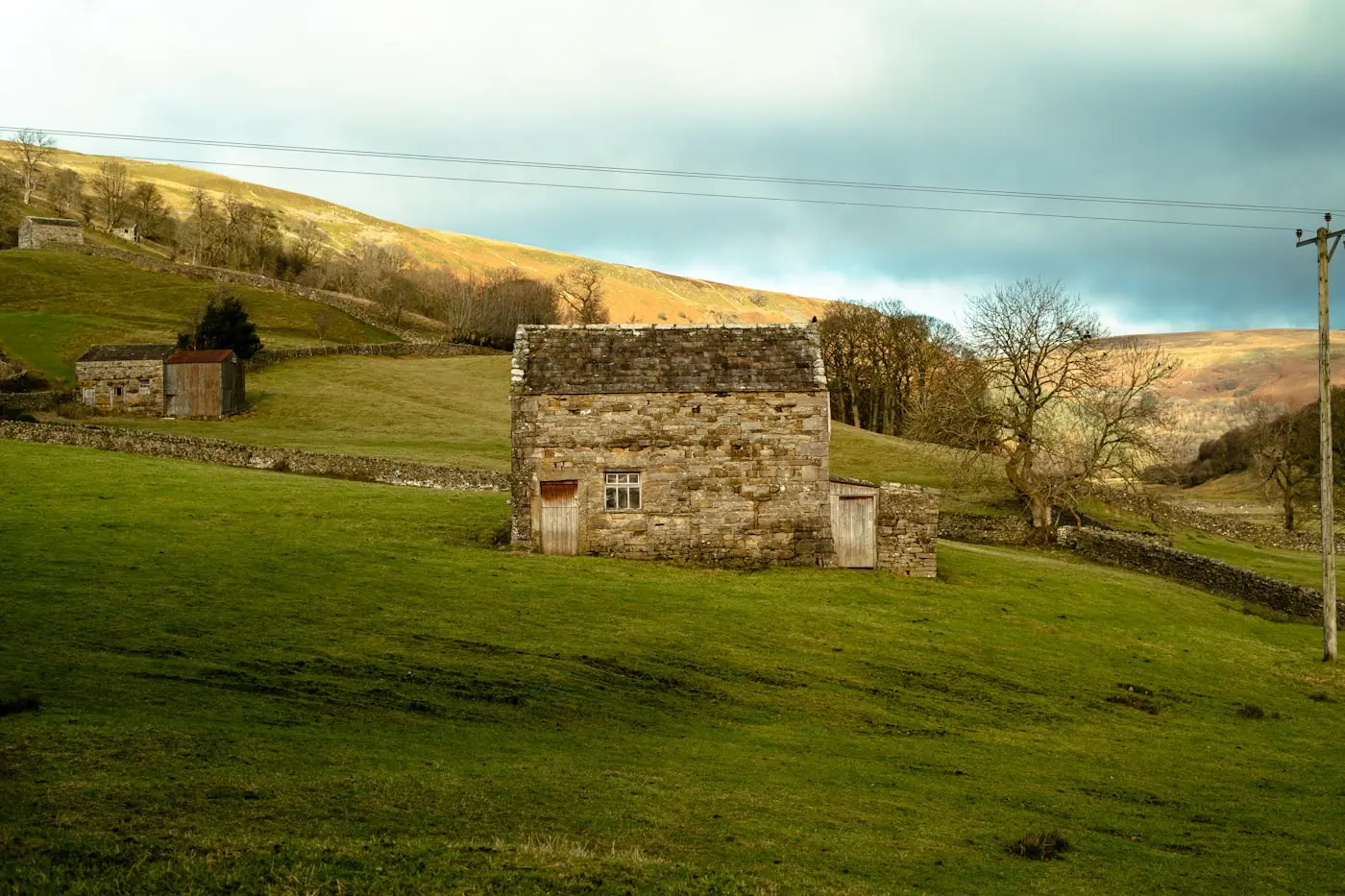
What garden design looks like in Leyburn
Leyburn DL8 is one of the most visited market towns in the Yorkshire Dales, sitting at the start of upper Wensleydale and acting as the commercial hub for a wide area of the dale. The town's position on a limestone terrace above the River Ure gives it dramatic views south and west across Wensleydale, and the Shawl, a limestone walking feature immediately south of the town, is one of the most distinctive landmarks in the area. These views are one of Leyburn's great design assets: a garden that frames them is more valuable, more pleasurable, and more distinctive than one that ignores them.
The growing environment at Leyburn is genuinely challenging, and understanding that challenge honestly is what separates a successful Dales garden from one that disappoints. The town sits at around 200-220 metres above sea level, and while the valley position provides some shelter, the exposure on north-facing slopes and on the town's higher ground is significant. The growing season runs around 260-270 days compared to 275 or more in the Vale of York, and last frosts can persist into late April in exposed positions. Spring arrives later and summer is shorter than anywhere south of the Dales.
The geology is limestone and boulder clay in combination. In the valley floor gardens around Wensley village and along the Ure corridor, you get better loam with reasonable depth. In Leyburn itself, the elevated position means thinner, more alkaline soil over the limestone, with faster drainage and a tendency to dry out in July if not mulched. North-facing gardens on the upper side of the town face the most challenging conditions: slow to warm, prone to frost pockets, and receiving less direct sun in a day than their south-facing neighbours.
The holiday let and second-home character of much of Leyburn's property stock creates a specific design context. Many owners want gardens that are genuinely attractive and clearly designed, but that do not require regular intervention to maintain that appearance. If your property is let to visitors or is used only intermittently, the design needs to function well without its owner. For local gardening context, the gardeners in Leyburn page covers what to look for in a local gardener. For the full overview of the garden design service, that page describes the process across Yorkshire.
The quick answer: costs and process for Leyburn garden design
A planting plan for a Leyburn or Wensleydale garden typically runs £400-950. Full design with project management runs £1,000-3,500 or more, reflecting the additional travel and site time involved in remote Dales locations. Full garden builds including hard landscaping and planting typically run £7,000-20,000+ for a mid-size plot. Remote access to Wensleydale adds a modest travel premium compared to equivalent work closer to Harrogate or Richmond. Designers quote you directly; there is no fee on your side of the enquiry.
The process starts with a site visit where the designer assesses your soil, your aspect, the existing plants, and your brief. On a Leyburn plot, the sun and shade assessment is particularly important because the difference between a south-facing and north-facing aspect here is more significant than in most lowland Yorkshire towns. You receive a scaled proposal with a plant list, quantities, spacings, and indicative costs. You choose whether to implement it yourself or have the designer manage the whole project. For detailed cost context, our Yorkshire garden designer cost guide breaks down fees by project type.
Get your Wensleydale garden designed this season.
Tell us about your Leyburn plot, your brief, and whether it is a holiday let or your own home. A local designer comes back with a real figure. No subscriptions, no call centres. Design from £500.
Start your free estimateThe full local guide
Leyburn's soil, climate, and what they mean for your garden
The limestone geology of upper Wensleydale shapes Leyburn gardens in ways that are immediately visible. The characteristic pale grey stone of the buildings, walls, and field boundaries is the same rock that sits under many gardens in the town. Where it is exposed or close to the surface, you have alkaline, thin, fast-draining soil that restricts your plant palette to limestone-tolerant species. This is not a limitation once you understand it: the range of plants that thrive on limestone and tolerate fast drainage is extensive and beautiful. Dianthus, wild thyme, Geranium sanguineum, alliums, hardy salvias, and prairie-style grasses are all well-suited to these conditions and can create gardens of genuine distinction.
The climate is the other defining factor. Leyburn's growing season is shorter than the Vale of York by 10-15 days at either end of the year. Last frosts in exposed positions can run to late April, and first autumn frosts arrive before the end of October. This means that tender plants need protection, that spring planting should be timed later than for lowland sites, and that the design should provide interest from structural and winter elements because the herbaceous season is compressed. Evergreen structure, winter-flowering shrubs, and bark and stem interest become more important in a short-season Dales garden than in an equivalent garden 30 miles south.
South-facing slopes in Leyburn are genuinely rewarding. The limestone reflects warmth, the drainage means the soil is not waterlogged in spring, and a sheltered south-facing position can be noticeably warmer than the temperature data for the town suggests. These positions allow a broader planting palette and can push into territory usually reserved for gardens further south. North-facing aspects, particularly on the exposed upper side of the town toward the moor edge, are the opposite: cold, slow, and demanding of a design that specifically accounts for the conditions rather than hoping for the best.
For absentee owners, the maintenance implications of plant selection matter as much as the aesthetic. A planting scheme that requires staking, deadheading, and regular division to look good is not a low-maintenance garden regardless of the plants used. Genuinely self-sufficient planting uses species that are stable, long-lived, and do not need regular intervention: grasses that stand through winter, structural evergreens that hold their shape, and ground-covering perennials that suppress weeds without spreading aggressively.
What gets designed in Leyburn and Wensleydale gardens
Low-maintenance holiday let and second-home gardens
This is the most frequent design brief across the Wensleydale area, and it requires a different approach from a standard residential garden. The priority is a design that looks clearly intentional on arrival, remains attractive without regular tending for three to four weeks between visits, and is resilient to the harder use that holiday guests sometimes give outdoor spaces. Gravel surfaces with permeable membrane, structural evergreen planting, seasonal bulbs for colour, and ornamental grasses for movement and winter presence are the building blocks. Lawns are not excluded, but they require mowing during the growing season, which means either a local maintenance service or designing them out in favour of lower-maintenance alternatives.
Shawl-facing garden schemes
Gardens on the south side of Leyburn that face toward or over the Shawl have a unique borrowed landscape. The limestone terrace and the dale view beyond it are features that should shape the internal design of the garden: seating oriented to the view, planting that does not block it, structural elements that frame it. These gardens work best with a design that is deliberately restrained internally, letting the landscape do the work rather than competing with it. Simple, well-executed hard landscaping in natural limestone, combined with a planting scheme of grasses and hardy perennials, creates a setting rather than a spectacle.
Walled kitchen and cottage gardens
Several properties in and around Leyburn retain stone-walled enclosures that once served as kitchen gardens or working garden areas. These walled spaces have a warmer microclimate than the open garden around them, particularly against south-facing walls, and can grow a wider range of plants than the exposed position of Leyburn would otherwise permit. Restored as productive kitchen gardens or as decorative cottage-style gardens, they are among the most beautiful and useful features a Dales property can have. A designer familiar with these structures will work with the character of the stone and the microclimate rather than imposing a scheme that ignores them.
Limestone rockery and naturalistic schemes
Where the bedrock is close to the surface, the most appropriate and lowest-maintenance approach is to work with it: a limestone rockery using local stone, planted with species that specifically thrive in these conditions. Sempervivum, Dianthus, thyme, Geranium cinereum, Campanula cochlearifolia, and Phlox subulata are plants that actively prefer the thin, alkaline, fast-draining conditions around exposed limestone outcrops. These plantings need almost no maintenance once established, look beautiful from spring to autumn, and age naturally into the landscape in a way that imported topsoil and conventional border planting does not.
Design styles that suit Leyburn
The Wensleydale landscape is one of the finest in England, and the garden design that works best in Leyburn acknowledges that. Simple, honest, quality-led design that uses local materials and a plant palette drawn from the dale's own flora creates gardens that sit naturally in their setting and improve over time. The temptation to import Mediterranean or contemporary urban design styles is understandable but usually disappointing in this context: the Dales landscape is its own thing, and gardens that reference it rather than fighting it are more beautiful and more appropriate.
For holiday let properties, the Wensleydale vernacular works particularly well as a design framework: dry-stone limestone walling, gravel and natural stone surfaces, structural evergreens for year-round presence, and a restrained planting palette that photographs well and ages gracefully. For owner-occupied properties where more personal expression is possible, there is room for bold planting, kitchen garden sections, and structures that reflect the owner's individual taste, within the overall framework of the Dales landscape. The Yorkshire garden design ideas guide covers design approaches across Yorkshire's different landscape characters.
Cost guide for Leyburn garden design
| Service | Typical cost | What it includes |
|---|---|---|
| Initial consultation | £75-150 | Site visit (remote Dales travel included), brief, outline proposal. |
| Planting plan only | £400-950 | Scaled scheme, plant list, spacings. You implement. |
| Full design with project management | £1,000-3,500+ | Design, contractor coordination, planting oversight. |
| Low-maintenance holiday let design | £500-1,500 | Planting plan optimised for minimal intervention and year-round presence. |
| Limestone rockery and naturalistic scheme | £400-1,200 | Rockery design, plant selection, initial planting. |
| Full garden makeover (50-100 sqm) | £7,000-20,000+ | Clearance, hard landscaping in local limestone, planting, establishment. |
Remote Dales locations carry a modest travel premium for designer fees compared to equivalent work in Harrogate or Richmond. Hard landscaping in local limestone is more expensive per square metre than concrete or reclaimed brick, but it weathers into the Dales landscape authentically and retains its character indefinitely. For context on Yorkshire-wide costs, our gardening cost guide covers the main variables.
Plants that thrive in Leyburn's conditions
The short growing season and limestone influence restrict some choices but confirm others. These categories consistently perform well in Wensleydale conditions:
- Grasses for structure and year-round presence: Stipa tenuissima for movement in exposed positions, Calamagrostis x acutiflora Karl Foerster for upright structure through winter, Festuca glauca for edging on free-draining limestone soil.
- Limestone-tolerant perennials: Geranium sanguineum (bloody cranesbill, native to limestone), Dianthus (all species), alliums (Purple Sensation, Gladiator) for late spring, salvias (Caradonna), echinacea in sheltered south-facing spots.
- Structural evergreens: Yew for topiary and hedging (tolerates thin limestone soils exceptionally well), viburnum tinus for winter flowers, Euonymus fortunei for ground cover.
- Shrubs for exposed positions: Buddleja for summer colour, potentilla for reliable low-maintenance flowering in exposed positions, Rosa rugosa for tough boundary hedging that handles the conditions.
- Bulbs for seasonal colour: Narcissus (species and small varieties perform better than large hybrids in thin soil), alliums, camassia for early summer, species crocus for early spring.
Once your planting is established, ongoing garden maintenance keeps it in shape between your visits. If your Wensleydale garden needs clearing before design work begins, the garden clearance service covers that first step.
Process: working with a Leyburn garden designer
- Initial brief. You describe your garden, your brief, whether it is a permanent residence or a holiday let, and your budget. Photos of the plot from different angles help considerably.
- Site visit and assessment. The designer visits, assesses soil depth and pH, maps sun and shade across the plot, notes any existing plants worth retaining, and identifies the aspect and exposure conditions. The Shawl view and valley views will be factored in where relevant.
- Proposal and costings. A scaled planting plan or full scheme with plant list, quantities, spacings, and indicative costs. For low-maintenance briefs, the proposal will specifically identify the maintenance requirements of each element.
- Phasing. Hard landscaping in autumn to winter, planting in spring. In Wensleydale, spring planting is best done after the last frost risk clears, which may be mid to late April in exposed positions.
- Installation and establishment. The designer sources plants, oversees planting, and advises on the first-season aftercare. On limestone soil, first-year mulching is particularly important to retain moisture and build organic content.
Frequently asked questions about garden design in Leyburn
What soil does my Leyburn garden have?
Leyburn sits above the Wensleydale valley floor on limestone bedrock with boulder clay deposits. Valley-floor gardens in Wensley and along the Ure corridor have deeper, better loam. The elevated market place position of Leyburn itself tends to have shallower, more alkaline soil over the limestone, which drains fast but can be thin. North-facing plots warm slowly in spring and hold frost longer than south-facing positions. A soil assessment on-site is the most reliable guide.
How much does garden design cost in Leyburn?
A planting plan for a Leyburn or Wensleydale garden typically costs £400-950. Full design with project management runs £1,000-3,500+, reflecting the additional travel involved in remote Dales locations. Full garden builds typically run £7,000-20,000+. See our Yorkshire garden designer cost guide for context.
What is the Shawl at Leyburn and does it affect nearby gardens?
The Shawl is a limestone terrace and walking feature on the south side of Leyburn with views across Wensleydale toward Middleham and the wider Dales. Gardens that back onto or overlook the Shawl have some of the most dramatic borrowed landscapes in Wensleydale. A designer working on these plots will treat the Shawl view as a primary design asset, using structural planting and hard surface layout to frame and direct attention toward the view.
Can I get a low-maintenance garden design for a holiday let or second home in Leyburn?
Yes, and this is one of the most common design briefs in the Wensleydale area. A low-maintenance garden for an absentee owner uses structural evergreens for year-round presence, bulbs for seasonal colour with no effort, gravel or permeable surfaces rather than grass that needs mowing, and a planting palette that survives without regular intervention. These are designed gardens, not stripped-back ones: the discipline is in the selection and specification.
Related services
Once your design is established, regular garden maintenance keeps it in shape between visits. For overgrown or neglected Wensleydale plots needing clearance first, see our garden clearance service. For established hedging on your property boundary, see hedge trimming in North Yorkshire.
Related: Find a gardener in Leyburn
Areas near Leyburn we also cover
We cover garden design across the Wensleydale area. For Richmond to the east, see Richmond garden design. For Catterick Garrison, see Catterick Garrison garden design. For the full Yorkshire list, see our garden design service page.