Garden design · Richmond, North Yorkshire
Richmond garden design and landscaping.
Richmond sits on a limestone escarpment at the mouth of Swaledale, and your garden reflects that: thin soil, steep slopes, and a climate that runs colder and later than anywhere in the Vale of York. Getting it right means working with the geology and the exposure, not against it. Local designers and skilled gardeners quote you directly. Design from £500.
- Free initial estimates
- Local designers who quote directly
- Design from £500
- No call centres
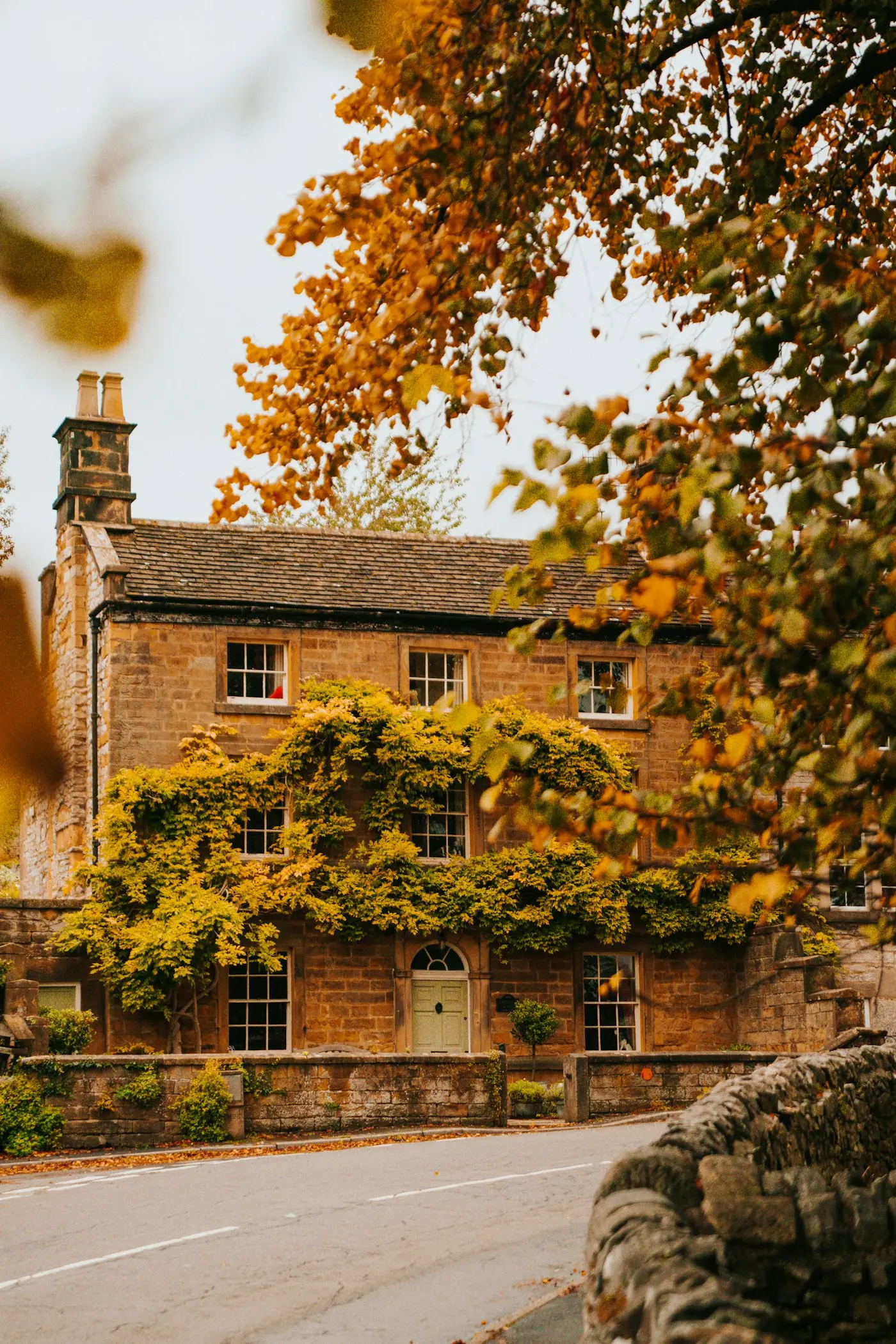
What garden design looks like in Richmond
Richmond DL10 is one of the most distinctive and demanding gardening environments in North Yorkshire. The town sits at around 200 metres above sea level on a limestone escarpment dropping sharply to the River Swale, and the surrounding countryside rises well above 350 metres into the Swaledale hills. That elevation brings real consequences for your garden: last frosts can run into early May in most years, spring is typically three to four weeks behind the Vale of York, and winters are sharper and longer. If you have been wondering why your garden feels like it lags behind friends' gardens further south, that is why.
The bedrock is millstone grit and limestone, which gives you thin, alkaline topsoil that drains fast and warms slowly. On the slopes around the castle and the town's historic centre, that topsoil can be as shallow as 15 to 20 centimetres before you hit rock. On lower ground toward Brompton-on-Swale, you get more depth, but still nothing like the rich alluvial loam of the Vale. Understanding your soil before you plant saves you money: acid-loving plants like rhododendrons and camellia will fail in Richmond's pH 7.2-7.8 conditions, while limestone-tolerant plants thrive and need far less intervention once established.
The good news is that the Georgian streetscape, castle ruins, and Swaledale backdrop mean Richmond gardens have extraordinary context to work with. Dry-stone walling in local limestone, terraced levels carved from the slope, and planting schemes borrowed from the Dales landscape all sit naturally here in a way they would look forced elsewhere. A well-designed Richmond garden works with the drama of the setting rather than trying to impose something suburban onto a landscape that resists it.
For general gardening and maintenance support once your design is in place, the local gardeners in Richmond discovery page covers what to look for in a gardener for this area. For an overview of the full garden design service, including how the process works across Yorkshire, that page gives the wider picture.
The quick answer: garden design costs and process in Richmond
A planting plan for a typical Richmond DL10 garden runs £350-900. Full design with project management, where the designer coordinates contractors and oversees the whole project, runs £900-3,500 or more depending on scope. Difficult-access or steep plots take more designer time on-site and tend to sit toward the higher end. Full builds including hard landscaping, retaining walls and planting typically cost £6,000-18,000+ for a mid-size garden. Designers quote you directly; there is no fee on your side of the enquiry.
The process starts with a site visit where the designer assesses your soil depth, drainage, aspect, and the plants already in the garden. They then produce a proposal, usually a scaled planting plan with a plant list, spacings and indicative costs. You decide whether to implement it yourself or have the designer manage the whole project. Most Richmond homeowners find that having the designer manage at least the hard landscaping phase is worth the extra cost on steep or technical plots, because the sequencing of retaining walls, drainage and planting matters and errors are expensive to correct.
For context on what garden design typically costs across the county, our Yorkshire garden designer cost guide breaks down fees by project type and scope.
Get your Richmond garden sorted this season.
Tell us about your plot, your soil, and what you want from the space. A local designer comes back with a real figure. No call centres, no subscriptions. Design from £500.
Start your free estimateThe full local guide
Richmond's soil, climate, and what they mean for your garden
The limestone escarpment that Richmond sits on is the defining fact of gardening here. Limestone bedrock means alkaline soil, shallow depth on slopes, and fast drainage. That is good in one respect: waterlogging is rarely a problem in well-positioned Richmond gardens. But it also means your soil dries out quickly in July and August, and nutrients leach fast through the thin profile. Annual mulching with organic matter is not optional in Richmond gardens if you want to build soil quality over time; it is the single most effective maintenance investment you can make.
The aspect of your plot matters enormously in Richmond. South-facing slopes on the escarpment catch all available sun and can feel surprisingly warm even in October. North-facing plots on the same slope are in shade for much of the winter day and warm slowly in spring. A good designer will map your sun and shade patterns across the year before making a single planting recommendation, because a scheme that works beautifully on a south-facing Richmond plot could struggle on a north-facing one fifty metres away.
Frost risk is real and persistent at this altitude. The last frost date in Richmond averages mid to late April but can run into the first or second week of May in exposed positions. This shapes what you can grow: tender perennials that are reliable in York need cutting back hard and protecting in Richmond, and some will simply fail over winter without extra shelter. Hardy herbaceous planting, including epimediums, hardy geraniums, hellebores, and alliums, earns its keep in Richmond gardens because it comes back reliably without fuss each year. Deciduous shrubs like buddleja, cornus, and philadelphus also perform well.
Holiday let gardens in the Richmond area have particular requirements. If your garden is attached to a property that takes short-term lettings, you need a design that is attractive on arrival, resilient to variable maintenance, and structured enough to hold its shape even when no one has been there for three weeks. Low-maintenance does not mean bare: ornamental grasses, structural evergreens, and seasonal bulbs can give a holiday let garden year-round interest with minimal intervention.
What gets designed in Richmond gardens
Terraced slope gardens
The most distinctive and technically demanding brief in Richmond. Gardens on the escarpment often drop several metres from house to boundary, with no usable level ground. A terraced design creates two or three level areas connected by steps, retained by dry-stone limestone walls that echo the Dales vernacular. Each terrace becomes a distinct outdoor room: one for sitting, one for planting, one for kitchen growing if the brief includes it. The limestone walling is functional but also beautiful, and it ages into the landscape in a way that poured concrete or timber sleepers do not. Expect the hard landscaping element alone to account for a significant share of the budget on a steep plot.
Walled kitchen gardens
A number of older properties in and around Richmond have substantial walled gardens that historically grew vegetables and fruit for the household. Many of these have fallen into partial use or outright neglect. Restoring or redesigning a walled kitchen garden is one of the most rewarding projects a Richmond designer can take on: the walls provide shelter from the cold winds that come off the moors, creating a microclimate that is genuinely warmer than the surrounding garden. Trained fruit trees against south-facing walls, raised vegetable beds with deep improved soil, a cutting-flower border for the house, and a small greenhouse in the sunniest corner are all elements that work well in Richmond's walled gardens.
Holiday let garden redesigns
As Swaledale and the wider Richmond area attract more short-stay visitors, the outdoor space of a holiday property has become a genuine selling point. A tired, patchy lawn and a few overgrown shrubs is no longer acceptable at the price point these properties command. The design brief for a holiday let garden focuses on structure that photographs well, low-maintenance planting that recovers from hard use, and practical elements like outdoor seating areas with sound surfaces and good drainage. Native hedging and gravel gardens with drought-tolerant planting are popular choices because they look after themselves between visits.
Limestone rock garden and dry garden schemes
Working with the rock rather than against it opens up a design approach that suits Richmond perfectly. Where the bedrock is close to the surface, a skilled designer will incorporate limestone outcrops as features rather than obstacles, building a rock garden scheme around them with planting that specifically thrives in the thin, alkaline, fast-draining conditions. Dianthus, thyme, aubrieta, Geranium cinereum, Sempervivum, and alpine sedums are plants that actively prefer these conditions and can flower for months without irrigation once established. This approach also reduces the cost of soil improvement that would be needed if you tried to create a conventional border in the same spot.
Design styles that suit Richmond
The Dales vernacular is the starting point for most successful Richmond gardens: dry-stone limestone walling, gravel surfaces, planting that references the moorland and valley floor rather than a southern English country house garden. This does not mean every Richmond garden looks the same. Within the vernacular framework, there is room for bold structure, contemporary hard landscaping in natural materials, and planting schemes that are sophisticated rather than rustic.
Prairie-style planting works exceptionally well in Richmond's alkaline, free-draining conditions. Grasses like Stipa tenuissima and Calamagrostis x acutiflora, combined with late-season perennials like echinacea, penstemon, and salvia, create gardens that perform from June to November and need cutting back only once a year. The naturalistic character sits well in a setting where the countryside is visible over almost every garden boundary.
For period properties in the town centre, a more formal approach with clipped box or yew structure, pleached hornbeam screens, and traditional planting in muted tones suits the Georgian architecture. Topiary is a genuine investment in a Richmond garden: the alkaline soil and relatively cool, moist summers suit yew and box well once established, and structural evergreens provide the year-round bones that the garden needs when herbaceous planting dies back over the long Richmond winter.
For a wider gallery of approaches that work across Yorkshire, the Yorkshire garden design ideas blog covers styles from coastal to moorland to urban, with specific plant and material references throughout.
Cost guide for Richmond garden design
These ranges reflect what Richmond homeowners typically spend. Steep access and technical retaining-wall work push costs higher than equivalent flat-site projects in York or Leeds. Designers quote you directly; these are reference ranges, not fixed prices.
| Service | Typical cost | What it includes |
|---|---|---|
| Initial consultation | Free to £75-150 | Site visit, brief discussion, outline proposal. |
| Planting plan only | £350-900 | Scaled scheme, plant list, spacings. You implement. |
| Full design with project management | £900-3,500+ | Design, contractor coordination, planting oversight. |
| Limestone dry-stone walling (per metre) | £120-200 | Skilled labour using local stone, foundations included. |
| Terraced slope garden (full project) | £8,000-20,000+ | Retaining walls, steps, drainage, hard surfaces, planting. |
| Full garden makeover (50-100 sqm flat) | £6,000-16,000+ | Clearance, hard landscaping, planting, establishment. |
| Kitchen garden / raised-bed setup | £500-1,200 | 2-3 raised beds with improved soil, initial planting. |
Hard landscaping with local limestone costs more per metre than concrete block or reclaimed brick, but it weathers into the Richmond landscape in a way that cheaper materials do not, and it holds its value in a property context. For a detailed breakdown of what a full Yorkshire garden makeover involves, our gardening cost guide covers the main variables.
What plants work in Richmond's conditions
Thin alkaline soil and a short growing season narrow your options but also clarify them. The plants that genuinely thrive in Richmond's conditions are often more beautiful and more low-maintenance than the tender plants that struggle. Here are the categories that work well:
- Hardy perennials: Geranium Rozanne and Patricia for long season ground cover and slope stabilisation, epimedium for dry shade under trees, hellebores for late-winter colour before the season opens, alliums for spring into early summer.
- Grasses: Stipa tenuissima for movement in exposed positions, Calamagrostis x acutiflora Karl Foerster for upright structure, Festuca glauca for low edging in very free-draining spots.
- Shrubs: Buddleja for summer colour and wildlife, cornus (Midwinter Fire, Sibirica) for winter stem colour in wetter ground, potentilla for reliable low-maintenance flowering, native hawthorn and blackthorn for boundary hedging that handles exposure well.
- Structural evergreens: Yew for topiary and hedging (tolerates thin limestone soils better than most), viburnum tinus for winter flowers, Pittosporum tenuifolium for sheltered spots only, as it needs protection from severe frost.
- Bulbs: Narcissus, alliums, camassia, and species tulips for spring; crocosmia Lucifer for late summer. Tulips need lifting in thin alkaline soil or they decline quickly after year one.
A local designer will assess your specific plot and aspect before recommending plants. A south-facing slope can grow a wider range than a north-facing one, and even a small amount of additional shelter changes what is viable. See the garden maintenance service for ongoing care once your planting is established.
Process: what to expect from a Richmond garden designer
- Initial brief. You describe your garden, your budget, how you use the space and what you want from it. Photos of the slope, the aspect, and any existing features help considerably.
- Site visit. The designer assesses soil depth, drainage, sun and shade patterns across the plot, any structural issues with existing retaining walls or steps, and plants worth keeping. Most site visits in Richmond are free or included in the design fee.
- Proposal and costings. You receive a scaled proposal with a plant list, quantities, spacings, and indicative costs for both the design and the build. On steep or complex plots this may include outline drawings for retaining walls and drainage. This is your decision point.
- Phasing and timing. If proceeding, the designer sequences the work. On a terraced slope garden, hard landscaping comes first (autumn to early spring is ideal), then planting once the levels are established. Spring planting is best for most Richmond gardens so plants can establish before their first summer.
- Installation and establishment. The designer sources plants, oversees planting, and advises on aftercare through the first season. In Richmond's thin soil, the first-year watering and mulching programme is more important than elsewhere.
Frequently asked questions about garden design in Richmond
What soil does my Richmond garden have?
Most gardens in Richmond DL10 sit on thin limestone-derived soil over bedrock. Topsoil depth can be as little as 15-20cm on the escarpment slopes around the castle and town centre, improving to 30-40cm on lower ground toward Brompton-on-Swale. The soil is well-drained but drains too fast in dry spells, and the pH tends alkaline (7.2-7.8), which rules out acid-lovers like rhododendrons and suits Mediterranean and prairie-style planting instead.
How much does garden design cost in Richmond, North Yorkshire?
A planting plan for a Richmond garden typically costs £350-900. Full design with project management runs £900-3,500+. Steep or difficult-access plots attract a premium because designers spend more time on-site managing logistics. Full garden builds including hard landscaping and retaining walls typically run £6,000-18,000+ for a mid-size plot. Designers quote directly with no call centre fees. See our guide to garden designer costs in Yorkshire for typical ranges.
What plants work well in Richmond's exposed conditions?
Richmond's altitude means late frosts into May in most years. Hardy, late-starting plants work best: hardy geraniums (Rozanne, Patricia), catmint (Six Hills Giant), salvias (Caradonna survives to -15C once established), alliums for spring colour after the limestone soil warms, and ornamental grasses like Stipa tenuissima that thrive in free-draining conditions. For hedging, beech and hornbeam both tolerate exposed positions and hold colour through winter.
Can a designer work with my Richmond garden's steep slope?
Yes, and slope work is one of the most common design briefs in Richmond. Designers experienced with Dales and Swaledale gardens know how to create level terraces retained by dry-stone walling that uses local limestone, maximise south-facing aspects for warmth, and select plants that hold slopes without heavy irrigation. A terraced design can turn an apparently unusable steep plot into a multi-level garden with distinct rooms and seasonal interest.
Related services
Once your design is planted up, regular garden maintenance keeps it in good shape through the growing season. For overgrown or neglected plots that need clearing before design work can start, see our garden clearance service. For established hedging once your design includes boundary planting, see hedge trimming in North Yorkshire.
Related: Find a gardener in Richmond
Areas near Richmond we also cover
We cover garden design across the wider Richmondshire area. For the garrison town nearby, see garden design in Catterick Garrison. For Wensleydale, see Leyburn garden design. For the wider service overview, the garden design service page lists all Yorkshire towns we cover.