Greenhouse Installation in Yorkshire
Yorkshire's growing season is short. Late frosts can arrive into May in the Pennine dales; the growing window between last frost and first autumn cold can be as narrow as 16-18 weeks in the higher parts of the county. A greenhouse extends that window dramatically at both ends, giving you a frost-free space from February and protection into November. We connect you with local greenhouse installers across all 240+ Yorkshire towns.
Get a free quote- Free quotes, no obligation
- Local gardeners
- 240+ Yorkshire towns covered
- No call centres
Why a greenhouse makes particular sense in Yorkshire
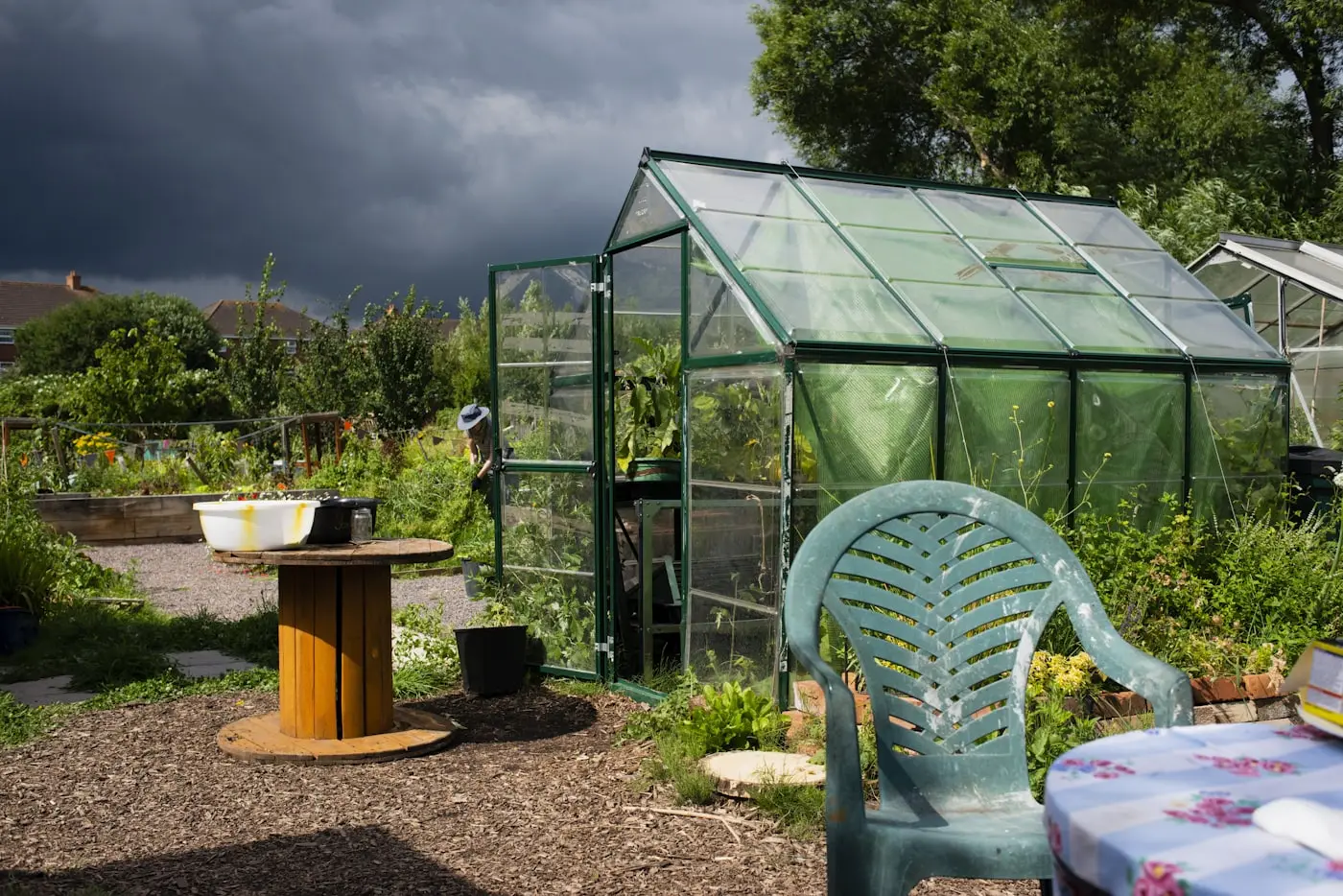
Yorkshire's climate is one of the main arguments for greenhouse growing. The county spans a wide range of conditions - from the relatively mild, frost-light coast at Whitby and Scarborough to the exposed Pennine moorland at 300-400 metres altitude where frosts can occur in any month - but across almost all of it, the outdoor growing season is shorter and less reliable than it needs to be for productive vegetable and tender plant growing.
Late frosts in the Pennine areas
The western edge of Yorkshire - the Calder Valley, Airedale, Wharfedale, Nidderdale, and the moors above them - sits at altitude and catches cold air drainage from the hills. Ground frost into mid-May is not unusual in these areas. Air frost into late April is common. For gardeners in Hebden Bridge, Holmfirth, Skipton, Settle, and the villages above them, a greenhouse provides the only reliable frost-free growing environment before the outdoor season is safely established.
Even in the lowland areas - York, Hull, the Vale of York - a cold snap in late April can catch tender seedlings started outdoors or in an unprotected cold frame. A heated greenhouse eliminates this risk entirely and allows sowing of tomatoes, peppers, and cucumbers in February or March for planting out in June when the outdoor risk is genuinely past.
The short Yorkshire growing season
In the absence of a greenhouse, most Yorkshire outdoor gardeners effectively have a growing season from mid-May to mid-September for the most tender crops - four months. With a greenhouse, tomatoes sown in February and planted in a heated greenhouse in April can be producing fruit by July. A cold greenhouse extends salad growing from October to April when outdoor growing has stopped. The season becomes year-round rather than four months.
Mixed summer weather
Yorkshire's summer weather is variable. The Vale of York and East Riding can be hot and dry in a good summer - Lincolnshire and the Humber basin create a low-rainfall shadow - while the Pennine west is wetter and cooler. A greenhouse compensates for both extremes: in a dry hot summer it creates a humid, controllable growing environment for cucumbers and tropical plants that need moisture; in a cool wet summer it provides the warmth and shelter that tomatoes and peppers need to perform.
Greenhouse types: freestanding, lean-to and polytunnel
The structure type affects cost, appearance, growing performance, and what fits in your garden. Each option has a clear use case.
Freestanding greenhouse
A freestanding greenhouse is the most common type in Yorkshire gardens: a self-supporting structure with a ridged roof, positioned within the garden away from walls. It receives light on all sides, which provides even growing conditions across the whole interior. It can be sited to maximise sun exposure (ideally with the long axis running east-west to maximise the south-facing roof area).
Standard sizes run from 6x4ft (too small for practical year-round use in most cases) through 6x8ft and 6x10ft (a practical starting size for a Yorkshire family garden) to 10x12ft and 10x16ft (serious growing space). A 6x8ft greenhouse gives approximately 4.5 square metres of floor space. A 10x12ft gives approximately 11 square metres, which is enough for a full run of tomatoes, cucumbers, a propagating bench, and cold-hardy winter salads in rotation.
Lean-to greenhouse
A lean-to greenhouse is built against a house or outbuilding wall, using the wall as one side of the structure. The wall provides several advantages: it stores and radiates heat, reducing heating costs significantly in winter; it provides structural support that allows a lighter frame; and the proximity to the house makes running an electricity supply for heating and lighting much simpler.
The south-facing wall of a Yorkshire house is the ideal position for a lean-to - it collects maximum sun in winter when solar angles are low and creates a genuinely warm growing environment even without added heat. A well-sited south-facing lean-to on a brick or stone wall can grow figs, peaches, and nectarines in Yorkshire that would not thrive in a freestanding glass structure. This is the same principle behind the walled gardens of Yorkshire's country houses - Sledmere, Castle Howard, Studley Royal - where south-facing heated walls created microclimates for tender crops in a northern climate.
The limitation of a lean-to is that one side is the wall, so plants furthest from the glass on the wall side receive less light. This is manageable for staging plants on shelves near the glazing, but limits the type of floor-level growing that a freestanding structure allows.
Polytunnel
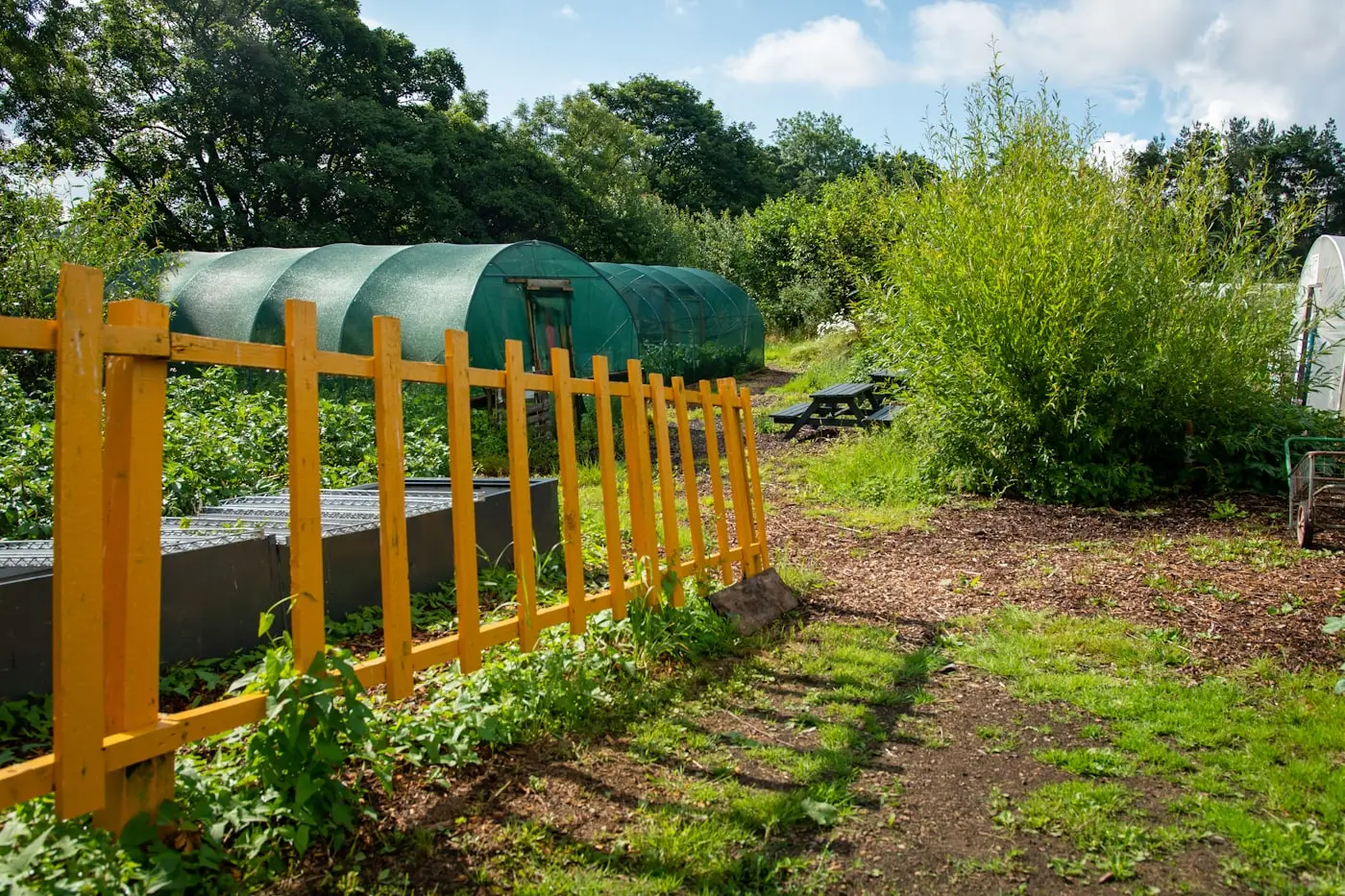
A polytunnel is a metal hoop frame covered with heavy-duty polythene film. It is the most economical way to get large sheltered growing space and is used extensively across Yorkshire's kitchen garden properties, smallholdings, and allotments. A standard 14ft x 24ft polytunnel provides approximately 31 square metres of growing space - significantly more than a glasshouse at the same price.
Polythene covers need replacing every five to seven years (the UV-stabilised grade typically used in polytunnels degrades over time). Cover replacement costs £100-400 for a standard domestic polytunnel depending on size. The structure itself lasts indefinitely if maintained. Polytunnels are less attractive than glazed greenhouses and do not suit all garden settings, but for productive growing at minimum cost they provide an excellent return.
For a 14ft x 24ft polytunnel installed with foundation anchors in Yorkshire, expect to pay £600-1500 including the cover. DIY assembly of a flat-pack polytunnel is achievable for a reasonably confident gardener; professional installation ensures correct tensioning of the cover and secure anchoring in Yorkshire's wind.
Greenhouse installation costs in Yorkshire
What affects your quote
Frame material: Aluminium is cheapest; timber adds 40-100% to the structure cost for the same size. Composite and galvanised steel sit in between.
Glazing: Polycarbonate is cheaper than toughened glass. Horticultural glass is cheapest but not recommended for Yorkshire's hail exposure. Toughened glass is the right specification for most installations.
Base: Often quoted separately. The base can account for 20-40% of the total project cost for a quality installation. Never skip the base cost estimate - a greenhouse installed on an inadequate base will cause problems within two to three years on Yorkshire clay.
Installation complexity: A greenhouse on a level, accessible garden site is straightforward to install. Sloping gardens, awkward access, or adjacent structures that complicate the base layout add labour cost.
The full guide
Frame and glazing options: aluminium vs timber, glass vs polycarbonate
The frame and glazing choice is one of the most important decisions in greenhouse specification and has significant implications for running cost, maintenance, and performance in Yorkshire conditions.
Aluminium frames
Aluminium is the most common greenhouse frame material for good reason: it does not rot, requires no maintenance, is strong for its weight, and is significantly cheaper than timber equivalent sizes. The thin glazing bars maximise light transmission. An aluminium greenhouse installed correctly in Yorkshire will last 30-40 years without maintenance beyond an occasional clean.
The limitation of aluminium is thermal conductivity: metal conducts heat efficiently, so aluminium glazing bars create cold bridges where the frame contacts the glazing, increasing heat loss. In a cold Yorkshire winter this can increase heating costs relative to an equivalent timber-framed greenhouse. For an unheated or minimally heated greenhouse, this effect is less important; for a greenhouse intended to maintain growing temperatures through December and January, it is worth considering.
Timber frames
Western red cedar is the standard timber for quality greenhouse construction. It is naturally rot-resistant, dimensionally stable, and takes a painted or oiled finish well. Cedar greenhouse frames look substantially better than aluminium in a traditional or period garden setting and have a warmer, more domestic character that suits the Yorkshire garden aesthetic - stone walls, established planting, period properties.
The requirement for annual maintenance (painting or oiling the timber) is the main practical downside. In Yorkshire's wet climate, timber maintenance is non-optional - a neglected cedar frame will degrade over a decade in a way that aluminium will not. The maintenance commitment is perhaps four to six hours per year for a standard greenhouse. For gardeners who will reliably do this, timber is a rewarding material; for those who will not, aluminium is the more practical choice.
Treated softwood greenhouse frames (cheaper than cedar) need more regular maintenance and have a shorter lifespan. They are a false economy in most cases. If choosing timber, specify cedar.
Horticultural glass vs toughened glass
Standard horticultural glass (3mm) is cheap and widely used, but it is fragile. In Yorkshire, where hailstorms are a regular occurrence particularly in the Pennines and North Yorkshire Moors, a hailstorm can break multiple panes in a single event. Toughened safety glass (4mm, tempered) is significantly more impact-resistant, does not shatter into dangerous shards, and is worth the modest premium for Yorkshire conditions. For greenhouses in exposed positions or where children use the garden, toughened glass is the right specification.
Twin-wall polycarbonate
Twin-wall polycarbonate (typically 4mm or 6mm for greenhouse use) has become a very popular alternative to glass across Yorkshire, and the Yorkshire climate provides a strong argument for it. It is nearly unbreakable under normal garden conditions including hailstones. Its twin-wall construction provides better thermal insulation than single-layer glass (U-value approximately 3.5 W/m2K versus 5.6 for 3mm glass), which meaningfully reduces heating costs through winter. It is lighter than glass, easier to handle, and safer if broken.
The trade-off is light transmission: polycarbonate transmits approximately 83% of available light versus 90% for glass. This is a meaningful difference in a Yorkshire winter when light levels are already low. For summer growing, polycarbonate is fine. For maximum winter light for propagation and seedlings, glass gives better results. Many Yorkshire gardeners choose polycarbonate for the roof (where hail impact is greatest) and glass for the sides as a practical compromise.
Triple-wall polycarbonate
Triple-wall polycarbonate (10mm or 16mm) provides significantly better insulation than twin-wall (U-value around 2.0 W/m2K) at the cost of further light reduction. It is used for greenhouse walls in extreme climates and in heated growing structures where energy costs are a primary concern. For Yorkshire domestic greenhouses it is primarily used in the north-facing wall or gable ends where light transmission is less critical.
Greenhouse bases: what Yorkshire clay demands
Yorkshire's heavy clay soil creates specific challenges for greenhouse bases. Clay shrinks during summer droughts (the Vale of York and East Riding experience significant summer moisture deficit in hot years) and swells in wet winters. A greenhouse base laid on unexcavated clay will move seasonally, causing the frame to go out of square, glazing bars to misalign, and fixings to loosen. The base is not a detail to cut corners on.
Concrete strip foundation and perimeter base
A concrete strip foundation is the most secure base option for any greenhouse larger than 6x8ft and is required for timber-framed greenhouses. A trench is excavated around the greenhouse perimeter to below the frost line (typically 450mm in Yorkshire), concrete is poured, and a perimeter base block or brick wall is built up to the finished floor level. The greenhouse frame bolts to fixing anchors in the concrete.
This is a permanent installation that survives Yorkshire's freeze-thaw cycles and clay movement without shifting. It is the right base for a greenhouse you intend to keep for 20-30 years. Cost for a 10x12ft greenhouse base in Yorkshire: £400-800 for the concrete and block work, not including groundwork excavation.
Paving slab base on compacted hardcore
A paving slab base is the most common approach for aluminium greenhouses in Yorkshire. Slabs are laid on a sub-base of compacted hardcore (100-150mm crushed stone) to provide stability and drainage. The greenhouse frame anchors to ground anchors driven through the slab joints or to anchor plates beneath the slabs.
This approach is less permanent than concrete but adequately stable for standard aluminium greenhouses if the hardcore is properly compacted. The key requirement on Yorkshire clay is adequate depth of hardcore - 150mm minimum - and excavation of the clay to below the topsoil layer. A slab base on insufficiently compacted ground on clay will develop movement within a few years.
Cost for a 6x8ft paving slab base in Yorkshire: £200-400. For a 10x12ft: £350-600.
Concrete slab
A full concrete slab (100mm reinforced concrete on 100mm hardcore sub-base) is the most stable base option and is used for larger greenhouses or those with heavy internal features (built-in staging, propagation benches, water storage tanks). It is the most expensive base option but provides a stable, easily cleaned floor surface and maximum structural security. Drainage must be addressed - a full concrete slab with no drainage outlet will create pooling from condensation and watering. Include a drain or soakaway connected to the slab during construction.
Ventilation and heating: getting the balance right in Yorkshire
These two systems are the operational heart of a greenhouse. Getting them right determines whether the greenhouse actually grows plants well through the Yorkshire seasons.
Ventilation requirements
Inadequate ventilation is one of the most common greenhouse problems in Yorkshire. A greenhouse with insufficient ventilation overheats rapidly on warm days - temperatures above 30 degrees Celsius damage most plants, and above 40 degrees many plants die within hours. At the same time, a cool, humid greenhouse without adequate airflow creates perfect conditions for fungal diseases including botrytis (grey mould), which is one of the most damaging greenhouse diseases in Yorkshire's wet climate.
The recommended minimum is roof vents of at least 20% of the floor area. Most standard greenhouses are supplied with less than this. The fix is simple: order additional roof vents at time of purchase (much cheaper than retrofitting) and fit automatic vent openers that operate without any intervention as temperature rises. A heat-sensitive wax cylinder in each vent opener extends and contracts with temperature, pushing the vent open as the greenhouse warms and allowing it to close as it cools. Each opener costs £15-25 and requires no electricity or manual operation.
For larger greenhouses, a louvre vent at low level on the north or east wall (opposite a high roof vent on the south side) creates a convective flow of cooler air up through the structure, significantly more effective than roof-only ventilation. Extractor fans with thermostat controls are used in professional growing operations and in larger domestic greenhouses where passive ventilation is insufficient.
Yorkshire summers and ventilation
The Vale of York and East Riding can experience sustained hot dry spells in June and July - temperatures over 25 degrees Celsius for multiple consecutive days are recorded regularly. In a glass greenhouse without adequate ventilation, ground-level temperatures can reach 50-55 degrees Celsius on such days, which will kill most plants within a few hours. Shading (shade paint on south and west-facing glass, or shade netting inside the structure) combined with maximum ventilation manages this risk. Green shade paint applied in spring and washed off in autumn reduces solar gain in summer without permanent light reduction in winter.
Heating options for Yorkshire winters
Yorkshire winters are cold enough to require heating if you want to use the greenhouse year-round. The key target temperature is typically 5-7 degrees Celsius minimum (frost-free, suitable for overwintering tender plants), though a higher minimum of 10 degrees Celsius (cool greenhouse, suitable for growing tomatoes from January) is needed for serious winter production.
A thermostatically controlled electric fan heater is the most practical heating option for most Yorkshire domestic greenhouses. A 1kW fan heater on thermostat is sufficient to maintain frost-free temperatures in a 6x8ft aluminium polycarbonate greenhouse through most Yorkshire winters. A 10x12ft greenhouse typically needs 2-3kW for frost-free temperatures. The cost of running an electric heater varies by energy tariff, but a 1.5kW heater running an average of four hours per night through December to March costs approximately £80-120 for the heating season at current electricity rates.
Paraffin heaters are used where no electricity supply is available. They require refilling every one to two weeks depending on output and size, produce humidity (useful in winter propagation but a potential botrytis risk if ventilation is inadequate), and need careful management around flammable materials. They are a practical off-grid option but more management-intensive than electric.
A gas supply extension from the house to a greenhouse heater is cost-effective where gas runs close to the greenhouse location. It requires a Gas Safe-registered engineer for the connection. Running costs are lower than electric at current gas prices, but the upfront installation cost (£300-800 for the gas pipe run and connection) only makes sense for larger greenhouses with significant heating demand.
Insulation to reduce heating costs
Bubble wrap insulation clipped inside the greenhouse glazing is the single most cost-effective intervention for reducing winter heating costs. Double-layer bubble wrap (large-bubble grade, available from greenhouse suppliers) reduces heat loss through the glazing by 30-50% and costs £15-30 per 10 metre roll. Applied to all glass surfaces in October and removed in March, it maintains better minimum temperatures and dramatically reduces heating time and cost. It reduces light transmission by 10-15%, which is acceptable through winter when light levels are already limited.
Planning permission for Yorkshire greenhouses
Understanding the permitted development rules prevents a costly mistake. Most domestic greenhouses are permitted development and do not require planning permission, but there are specific conditions that can change this.
Permitted development rules for outbuildings
A greenhouse is treated as an outbuilding under the Town and Country Planning (General Permitted Development) Order. The key rules for permitted development (no planning permission needed) are: the greenhouse must not be forward of the principal elevation (the front of the house); outbuildings must not collectively cover more than 50% of the garden area; maximum eave height of 2.5 metres; maximum ridge height of 4 metres (or 3 metres if within 2 metres of the boundary); single storey only.
A standard 6x8ft or 10x12ft greenhouse in a typical Yorkshire rear garden satisfies all these conditions easily. The 50% garden coverage rule is almost never an issue for a standard greenhouse - you would need a very large structure on a very small garden to approach this limit.
When you need to apply for permission
You need to apply for planning permission for a greenhouse if: you are in an Article 4 area where permitted development rights have been removed (this is relatively common in Conservation Areas and some urban regeneration zones in Yorkshire); you want to build a greenhouse with a floor area over 30 square metres (Building Regulations approval is also needed for structures over 30 square metres); or your property is a listed building (listed building consent may be needed for any structure in the garden, regardless of size). Yorkshire has extensive Conservation Areas and listed building stock - York, Harrogate, Beverley, Richmond, Helmsley, Helmsley, and many other towns have areas with additional restrictions. Check with your local planning authority before starting work if you are in any doubt about your property's status.
Building Regulations for larger greenhouses
Greenhouses with a floor area over 30 square metres require Building Regulations approval in addition to any planning permission. This applies to large commercial or semi-commercial greenhouse structures. Standard domestic greenhouses (up to 30 square metres) are exempt from Building Regulations if they are detached and used for horticultural or leisure purposes. A 10x12ft greenhouse is approximately 11 square metres - well within the exempt threshold. A large 16x24ft greenhouse reaches approximately 36 square metres and would require Building Regulations approval.
Growing year-round in a Yorkshire greenhouse
A greenhouse changes the Yorkshire growing calendar fundamentally. Here is what is achievable in each season with different levels of heating.
February and March: early propagation
In a heated greenhouse (minimum 10 degrees Celsius), tomatoes, peppers, and aubergines can be sown from mid-February. This gives plants a full 16 weeks of protected growing before outdoor temperatures are warm enough for hardening off in June. In a frost-free but cool greenhouse, hardier crops - lettuce, spinach, peas, broad beans - can be sown from late February. The extended propagation window is the primary argument for heating a greenhouse in Yorkshire; without it, the effective start of the growing season is constrained by outdoor temperatures.
April and May: the dangerous period for Yorkshire
This is where the greenhouse earns its cost in Yorkshire. Late frosts in April and May (common at altitude in the Pennines, regular across the Vale of York in cold springs) can damage or kill tender seedlings that have been started early. A greenhouse provides frost protection for these plants until it is safe to plant outside - typically late May in lowland Yorkshire, early June in the Pennine areas. Without a greenhouse, gardeners must either buy larger, more expensive plants in May (most of the growth potential of the season already used) or sow outdoors in late May and lose the early season advantage entirely.
June to September: summer production
Tomatoes, cucumbers, melons, peppers, and aubergines grow well in an unheated Yorkshire greenhouse through the main summer season. Tomatoes particularly benefit from the protected environment - outdoor Yorkshire tomatoes have a mixed record in cooler, wetter summers, while greenhouse tomatoes produce consistently across all but the coldest Yorkshire summers. The main management task is ventilation (preventing overheating) and watering (greenhouse soil and containers dry rapidly in hot weather).
October to December: season extension
An unheated greenhouse provides approximately three to four weeks of frost protection relative to outdoors in Yorkshire's autumn. This keeps tomatoes cropping into October when outdoor plants would have been killed, protects autumn-sown salads from the first frosts, and provides a transition zone for tender plants being moved from outdoor positions for winter storage. In a frost-free heated greenhouse, hardy salads (winter lettuce, spinach, miner's lettuce, claytonia) grow through the winter and provide fresh leaves throughout the Yorkshire winter months.
December to January: overwintering and storage
Even an unheated greenhouse provides meaningful protection for non-hardy plants - an unheated greenhouse in Yorkshire will typically hold a minimum temperature five to eight degrees above ambient outdoor temperature in mild winter weather. This is enough to overwinter many tender perennials (pelargoniums, fuchsias, agapanthus) that would be killed by a hard outdoor frost. A frost-free heated greenhouse (minimum 5 degrees Celsius) extends this to reliably overwinter dahlias, begonias, colocasias, and other tender bulbs and tubers without needing to lift and store in trays indoors. See our Yorkshire greenhouse installation guide for more detailed seasonal growing programmes.
Common questions about greenhouse installation in Yorkshire
How much does greenhouse installation cost in Yorkshire?
A basic 6x8ft aluminium greenhouse with polycarbonate glazing and a paving slab base, professionally installed, costs £400-800. A 10x12ft aluminium greenhouse with toughened glass costs £1500-3000 installed. A cedar timber greenhouse of the same size runs £2000-5000. Premium larger greenhouses with heating, staging, and quality bases cost £5000-12000 or more. The base cost (£200-800 depending on size and specification) is often quoted separately and should always be included in any comparison.
Do I need planning permission for a greenhouse in Yorkshire?
Most domestic greenhouses are permitted development and require no planning permission - the standard conditions cover virtually all domestic installations. If your property is a listed building, in a Conservation Area, or you want a greenhouse over 30 square metres, you need to check with your local planning authority first. Yorkshire has significant Conservation Area and listed building coverage, so if in doubt, a quick check with the council is worthwhile before purchasing. A planning application is not expensive or difficult to prepare for a simple greenhouse, but it does take time - allow 8 weeks for a decision.
Glass or polycarbonate for a Yorkshire greenhouse?
For Yorkshire conditions, twin-wall or triple-wall polycarbonate has a strong practical case over glass. Polycarbonate is significantly more impact-resistant than standard horticultural glass, which matters in a county with significant hailstorm exposure particularly in the Pennine areas and North Yorkshire. It insulates better (twin-wall polycarbonate has a U-value of approximately 3.5 W/m2K versus 5.6 for standard 3mm horticultural glass), which reduces heating costs through Yorkshire's long cold winters. It also does not shatter, which is safer if you have children in the garden. Glass is better for light transmission and has a longer lifespan with proper maintenance. Toughened safety glass is the glass specification to use, not standard horticultural glass.
What base does a greenhouse need in Yorkshire?
A greenhouse needs a firm, level base that will not shift over time. The main options are: a concrete strip foundation and perimeter base (the most secure, permanent option, required for heavier timber greenhouses), a full concrete slab (maximum stability, suits larger structures and those with significant equipment), or a paving slab base on compacted hardcore (good for aluminium greenhouses, easier to install, allows drainage between slabs). Yorkshire's clay soil means bases need to be properly constructed - clay shrinks in summer drought and swells in wet winters, causing movement in poorly-made bases. A base should never be laid directly on unexcavated clay.
Aluminium or timber greenhouse frame for Yorkshire?
Aluminium frames are lower maintenance, lighter, and cheaper. They do not rot or need annual painting, though the thinner glazing bars reduce heat retention slightly versus timber. They suit polycarbonate glazing particularly well. Timber frames, typically western red cedar, look significantly better in a traditional garden context and provide better insulation as wood is a poorer conductor of heat than metal. Timber needs annual painting or oiling to prevent deterioration in Yorkshire's wet climate. The aesthetic case for timber is strong on period properties; the practicality case for aluminium is strong where low maintenance matters most.
What heating options work for a Yorkshire greenhouse?
For frost-free protection through a Yorkshire winter (keeping temperatures above 2-3 degrees Celsius), a thermostatically controlled electric fan heater rated at 1-2kW is effective in a standard 6x8ft greenhouse. For a frost-free 10x12ft greenhouse, 2-3kW is needed. Paraffin heaters are a lower-tech option with no electricity required but need regular refilling and produce humidity. Mains gas extension heating via a pipe from the house is cost-effective where the greenhouse is close to the property. Bubble wrap insulation on the inner faces of polycarbonate or glass dramatically reduces heat loss and reduces heating costs by 30-50%. In milder Yorkshire winters, a well-insulated greenhouse may not need active heating at all for frost-hardy plants.
How much ventilation does a Yorkshire greenhouse need?
As a minimum, a greenhouse should have roof vents equal to at least 20% of the floor area. Most standard aluminium greenhouses are supplied with one or two roof vents per section, which is often insufficient for Yorkshire summers. The Vale of York and East Riding can see hot dry spells in July and August where an under-ventilated greenhouse will overheat to 50 degrees Celsius or more, killing plants rapidly. Automatic vent openers (louvre-operated by a temperature-sensitive wax cylinder, around £15-25 each) open vents automatically as temperature rises and are a worthwhile addition to every roof vent. Side louvre vents add additional airflow. If fitting a larger greenhouse, specify extra roof vents at purchase - retrofitting them later is difficult.
What can I grow year-round in a Yorkshire greenhouse?
An unheated Yorkshire greenhouse gives you: frost-free storage for tender plants from October to April, early sowing of tomatoes, peppers and aubergines from February (six to eight weeks earlier than outdoor sowing), year-round salad growing in a cold winter (lettuce, spinach, winter purslane) with reasonable cold tolerance, and overwintering of half-hardy perennials, dahlias, and frost-sensitive container plants. A heated greenhouse (frost-free, 5-7 degrees Celsius minimum) extends this to year-round tropical and tender plant growing, winter tomatoes, and propagation from January onward. The key Yorkshire benefit is the extension of the short growing season - a greenhouse effectively adds six to eight weeks at each end of the outdoor growing year.
What is the best greenhouse glazing for Yorkshire hailstorms?
Twin-wall polycarbonate is the most hail-resistant standard glazing option and is strongly recommended for roof panels in Yorkshire. Toughened safety glass (4mm) is significantly more resistant to hail than standard 3mm horticultural glass and does not shatter into dangerous shards if broken. For gardens in the Pennine areas and North Yorkshire Moors where hailstorms are most frequent, polycarbonate roofing with toughened glass sides is a practical compromise that balances impact resistance with light transmission.
How do I extend the growing season in a Yorkshire greenhouse?
The key actions: add a thermostatically controlled electric heater for frost-free minimum temperatures (significantly extends both ends of the season); fit automatic vent openers on all roof vents (prevents summer overheating without manual management); insulate with bubble wrap internally from October to March (reduces heat loss by 30-50%); use a maximum-minimum thermometer to monitor what the greenhouse actually reaches overnight in cold snaps. With these measures, a standard Yorkshire greenhouse can reliably maintain growing activity from late February through to December. See our Yorkshire vegetable growing guide and kitchen garden guide for seasonal growing programmes specific to Yorkshire conditions.
Greenhouse installation alongside other Yorkshire garden projects
A greenhouse typically complements a wider productive garden. Our raised bed installation service covers the beds that often sit alongside or near the greenhouse for outdoor growing. For the ongoing care of plants in and around a greenhouse, our garden maintenance service covers the full seasonal programme. For new borders and planting around the greenhouse structure, our borders and planting service handles the softscape.
Further reading: our Yorkshire greenhouse installation guide covers specific product recommendations, base specifications, and seasonal growing notes. For kitchen garden planning including the greenhouse within a wider productive scheme, see our Yorkshire kitchen garden guide. For vegetable growing advice specific to Yorkshire conditions, our Yorkshire vegetable growing guide covers what to sow, when, and what to expect from the county's variable climate.
Greenhouse installation covering 240+ towns across Yorkshire
Our network of greenhouse installers covers the full county. Find your local installer below, or find your nearest gardener in Yorkshire to see all available services in your area.
- York
- Harrogate
- Beverley
- Hull
- Cottingham
- Scarborough
- Wetherby
- Boston Spa
- Driffield
- Malton
- Norton
- Helmsley
- Pickering
- Kirkbymoorside
- Easingwold
- Thirsk
- Ripon
- Knaresborough
- Tadcaster
- Selby
- Pocklington
- Northallerton
- Leeds
- Bradford
- Sheffield
- Halifax
- Wakefield
- Huddersfield
- Doncaster
- Rotherham
- Barnsley
- Haxby
- Strensall
- Huntington
- Copmanthorpe
- Bishopthorpe
- Stamford Bridge
- Filey
- Bridlington
- Goole
- Ilkley
- Dunnington
- Boroughbridge
- Skipton
- Whitby
- Stokesley
- Market Weighton
- Stockton-on-the-Forest
- Keighley
- Otley
- Bedale
- Hornsea
- Castleford
- Dewsbury
- Garforth
- Guiseley
- Horsforth
- Morley
- Pontefract
- Ackworth
- Batley
- Bingley
- Cleckheaton
- Holmfirth
- Horbury
- Ossett
- Pudsey
- Hebden Bridge
- Mirfield
- Sowerby Bridge
- Brighouse
- Elland
- Featherstone
- Normanton
- Hemsworth
- Maltby
- Mexborough
- Wath-upon-Dearne
- Rawmarsh
- Swinton
- Royston
- Darton
- Hoyland
- Wombwell
- Penistone
- Thorne
- Bawtry
- Kippax
- Rothwell
- Knottingley
- Richmond
- Leyburn
- Masham
- Settle
- Guisborough
- Loftus
- Saltburn-by-the-Sea
- Pateley Bridge
- Grassington
- Long Preston
- Hebden
- Shipley
- Hessle
- Brough
- Swanland
- Withernsea
- Heckmondwike
- Birstall
- Liversedge
- Yeadon
- Catterick Garrison
- Acomb
- Poppleton
- Rawcliffe
- Sherburn-in-Elmet
- Howden
- Mytholmroyd
- Marsden
- Meltham
- Conisbrough
- Tickhill
- Adwick-le-Street
- Thurnscoe
- South Elmsall
- Denby Dale
- Farsley
- Crofton
- Armthorpe
- Sprotbrough
- Todmorden
- Willerby
- Hedon
- Hawes
- Addingham
- Burley-in-Wharfedale
- North Cave
- Barlby
- Haworth
- Baildon
- Bolton-upon-Dearne
- Goldthorpe
- Cudworth
- Honley
- Queensbury
- Upton
- Kirkburton
- Skelmanthorpe
- Thornton
- Silsden
- Slaithwaite
- Linthwaite
- Golcar
- Greetland
- Middleham
- Reeth
- Emley
- Flockton
- Spofforth
- Stocksbridge
Get a greenhouse installation quote today
Tell us the size you want, the style, and whether you need a base laid. We put your enquiry in front of a local installer who can quote for your specific garden and location.
Get a free quote