Raised Bed Installation in Yorkshire
Yorkshire's heavy clay soil is the single biggest obstacle to productive vegetable growing across the county. A raised bed filled with quality topsoil and compost bypasses the clay entirely, drains freely, warms up earlier in spring, and gives you full control over what your plants grow in. Whether you want a single kitchen garden bed or a complete vegetable plot conversion, we connect you with local raised bed builders across all 240+ Yorkshire towns.
Get a free quote- Free quotes, no obligation
- Local gardeners
- 240+ Yorkshire towns covered
- No call centres
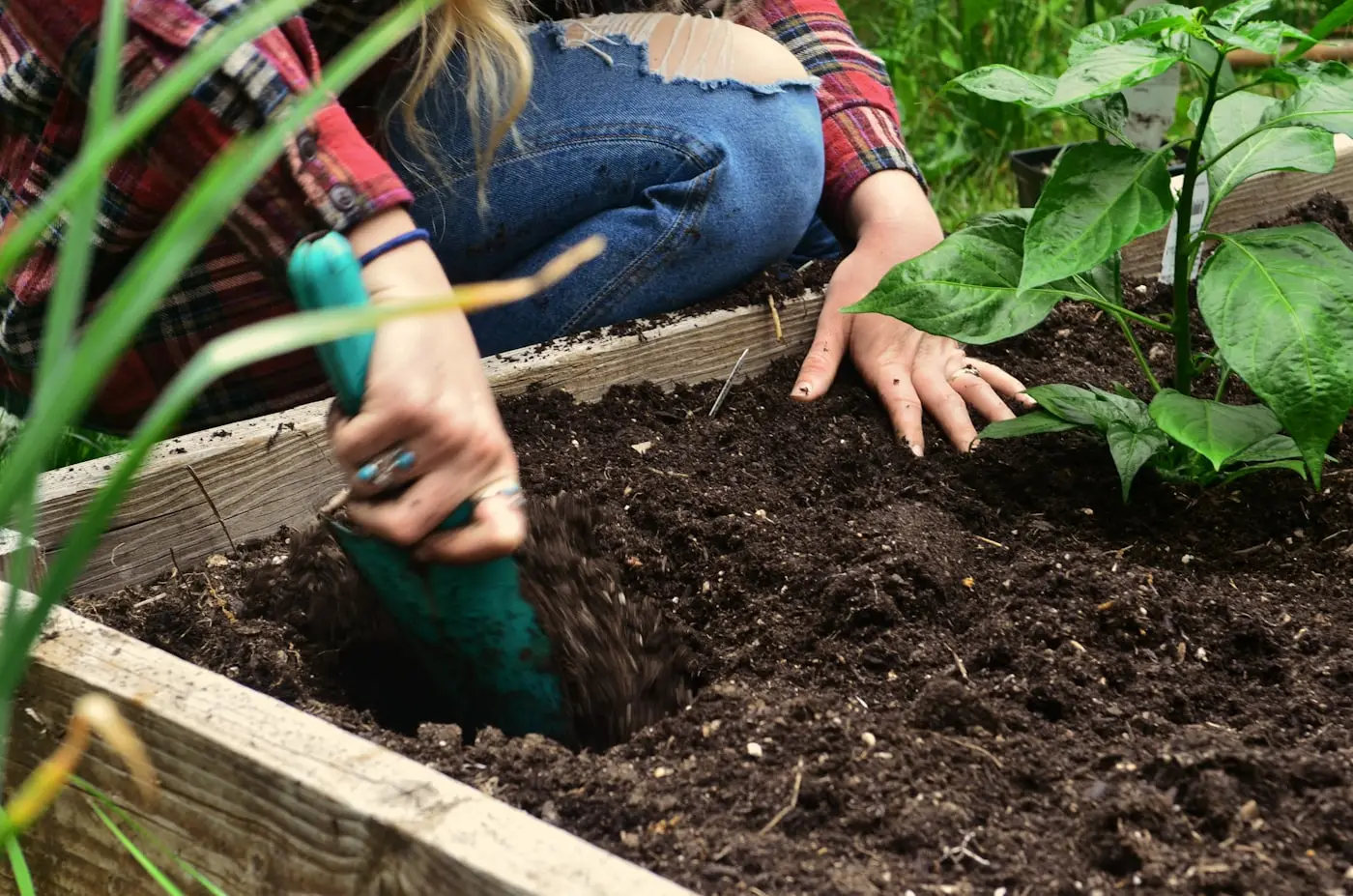
Yorkshire clay and why raised beds make such a difference
To understand why raised beds have become one of the most requested garden projects across Yorkshire, you need to understand Yorkshire's soil. A large proportion of Yorkshire's gardens - across the Vale of York, the East Riding, and most of West Yorkshire - sit on heavy clay that causes consistent, predictable problems for gardeners.
The Yorkshire clay problem
Clay soil has very fine particles that pack tightly together. In winter and spring it holds water, staying wet and sticky for weeks after rain. In the summer drought that characterises the Vale of York and East Riding, it dries to a hard crust. It compacts under foot traffic. It warms up four to six weeks later than well-drained loam in spring, which delays germination and planting significantly for Yorkshire vegetable growers.
Parsnips sown directly into compacted York clay come up patchy. Beetroot in Bradford clay goes to seed in a dry summer. Carrots in East Riding clay fork and misshape in the heavy subsoil. These are not failures of technique - they are the natural result of trying to grow crops that need loose, well-drained, deep soil in ground that is inherently unsuited to the purpose.
A raised bed does not improve the clay. It replaces it. The growing medium inside the bed is entirely separate from the ground below - a mix of quality topsoil and compost that drains freely, does not compact under normal gardening use, warms up quickly in spring, and can be precisely formulated for the crops you want to grow. The clay under and around the bed is irrelevant. This is why raised beds in Yorkshire gardens produce results that would be impossible in the surrounding soil.
The Wakefield Rhubarb Triangle
Yorkshire has a deep history of productive horticulture. The Wakefield Rhubarb Triangle - a nine-square-mile area centred on Wakefield, Morley, and Rothwell - is famous globally for forced rhubarb grown in dark sheds, a technique that has been practiced here since the 1870s. The county also has a strong allotment culture, with well-established allotment sites across Sheffield, Bradford, Leeds, Hull, and every market town. Vegetable growing is part of Yorkshire's gardening DNA.
Raised bed kitchen gardens tap into that tradition while solving the soil problem that makes open growing difficult in many parts of the county. They bring productive growing to gardens where the underlying soil would otherwise make vegetable growing frustrating and inconsistent.
Spring advantage
A raised bed built of timber or stone sits above ground level. The soil inside is surrounded by air on all sides rather than being part of a continuous cold ground mass. It warms up faster in spring as ambient temperature rises. On the hillside gardens of the West Riding - where spring comes late at altitude - this can mean a four to six week earlier sowing window than the surrounding clay. For Yorkshire vegetable growers, that difference between a late April sowing in a raised bed and an early June sowing in cold clay ground represents an entire growing season's head start.
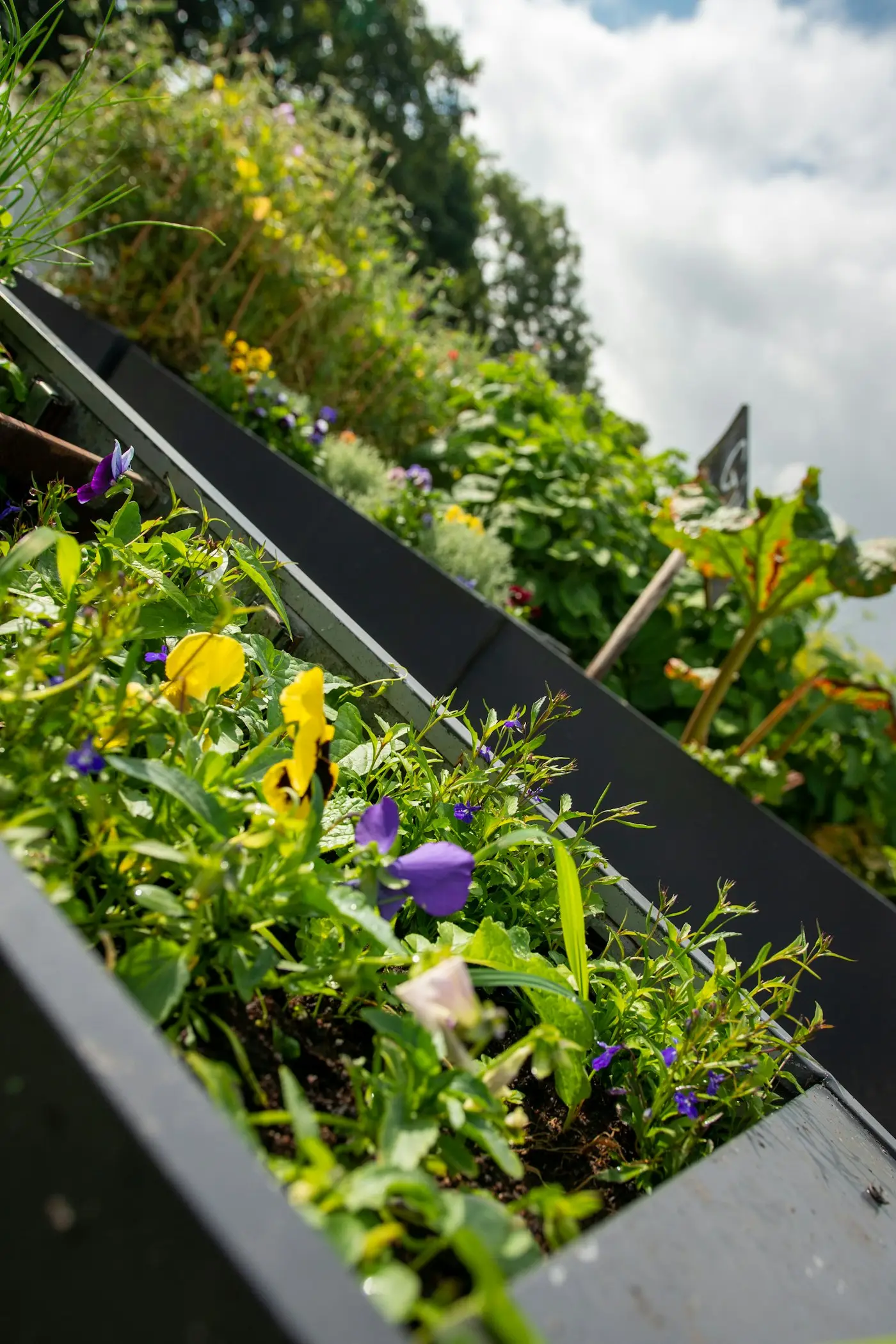
Raised bed materials: timber, sleepers, brick, stone and composite
The material you choose affects cost, appearance, longevity, and how the bed integrates with the rest of your garden. Here is an honest assessment of the main options for Yorkshire gardens.
Treated softwood timber
Pressure-treated softwood (typically pine or larch, treated to UC4 specification for ground contact use) is the most common DIY raised bed material and a solid professional choice for the lower price bracket. UC4 treatment means the preservative has penetrated the wood under pressure and is rated for long-term ground contact, unlike the cheaper surface-applied treatments on many garden centre kits.
Properly UC4-treated softwood raised bed boards last 10-15 years in Yorkshire conditions. At 300mm height, a standard 1.2m x 2.4m bed uses three to four lengths of 150mm x 38mm board per side. Corner posts set into the ground (300-400mm post below grade, 200-400mm above) are the structural key - a bed with corner brackets and no posts will move and bow under the weight of the fill. A well-built softwood bed with proper corner posts and correctly specified treatment is a solid 15-year structure.
DIY kit cost for a 1.2m x 2.4m x 300mm softwood raised bed: £150-300 depending on source and wood specification. Professionally built equivalent: £300-500 including labour.
Hardwood timber
Oak, sweet chestnut, and larch hardwood boards require no treatment - their natural tannin and resin content gives them decades of ground contact resistance without any applied preservative. Oak is the traditional choice for high-quality garden structures across Yorkshire, and it weathers to a silver-grey that looks particularly well against Yorkshire stone.
Hardwood beds are significantly heavier than softwood equivalents and need the same corner post approach to stay in shape. They are typically 20-50% more expensive than treated softwood but last 20-30 years with no maintenance. For a kitchen garden intended as a permanent feature, the lifetime cost often favours hardwood.
Untreated oak raised bed boards in Yorkshire: £25-50 per linear metre depending on section size. A professionally built 1.2m x 2.4m oak bed: £450-700.
Railway sleepers
Railway sleepers - both reclaimed hardwood originals (200mm x 250mm x 2.6m) and new softwood or oak sleepers from garden suppliers - are enormously popular for raised beds across Yorkshire, and for good reason. They give a chunky, substantial appearance that suits both cottage gardens and contemporary schemes. Stacked two courses high (approximately 450-500mm) they create a deep, dramatic bed that reads well in a large garden. One course stacked (approximately 200-250mm) is fine for standard raised bed use.
Reclaimed railway sleepers are treated with creosote and other preservatives and are technically not suitable for growing food in direct contact with the wood. In practice, most gardeners line the inside face with heavy-duty polythene or root barrier before filling, which prevents any soil contact with the treated surfaces. New softwood sleepers treated with non-toxic preservatives are the cleaner option for food growing. New oak sleepers need no treatment and are food-safe.
A single 2.6m reclaimed softwood sleeper costs £20-35 from a Yorkshire timber merchant. A 1.2m x 2.4m bed at one course high uses approximately four sleepers cut to length, plus end pieces: around £80-140 in material. Professional sleeper raised bed builds cost £400-800 for a standard bed depending on sleeper type and depth.
Composite boards
Composite raised bed boards are made from a blend of recycled plastic and wood fibre (similar material to composite decking). They look like timber, will not rot, will not warp, and carry a 25-year manufacturer guarantee. They are heavier than softwood and cost more upfront - typically £200-500 for a standard single bed kit - but have near-zero lifetime maintenance cost.
Composite is a good choice for gardens where long-term low maintenance matters, for situations where timber aesthetics are important but replacement in 15 years is not wanted, and for accessible-height beds where the structure needs to be solid and permanent without annual treatment. Yorkshire's wet climate means timber maintenance costs add up over decades; composite's lifetime cost is competitive with regularly maintained hardwood.
Brick and stone raised beds
Brick or natural stone raised beds are permanent structures that outlast any timber option indefinitely. They are significantly more expensive to build, requiring masonry skills and proper foundations to stay level and prevent frost damage, but they integrate beautifully with period properties and look superb once planted.
In Yorkshire, local stone raised beds - particularly in North Yorkshire and the West Riding where millstone grit and limestone are abundant - suit the landscape in a way that timber does not always match. A stone raised bed built from reclaimed Yorkshire stone on a Yorkshire property looks as if it has always been there.
Brick raised beds need a concrete foundation strip (usually 150mm deep, 150-200mm wide) to prevent frost heave movement. A professional brick raised bed of 1.2m x 2.4m at 400mm height including foundation costs £600-1500 depending on brick specification and local labour rates. Stone beds using hand-laid local stone cost more: £800-2000 for a comparable size, more for complex shapes or specialist stonework.
Raised bed costs in Yorkshire
What affects your quote
Material: The single biggest cost variable. Treated softwood is cheapest; oak or stone is at the top. Composite sits between hardwood timber and stone in cost but has the lowest long-term maintenance cost.
Height: Accessible-height beds (600-900mm) require more material and fill than standard-height beds. Expect to pay 50-100% more for an accessible-height build versus a standard 300mm bed of the same footprint.
Fill cost: Always ask whether the quote includes topsoil and compost fill. Many bed installation quotes are for the structure only; fill is an additional cost that is often similar in value to the structure itself for deeper beds.
Site preparation: If the bed is going over existing lawn, that lawn needs to be removed or suppressed (usually a layer of thick cardboard or weed membrane under the fill). If it is going on hard standing, no preparation is needed. Slope adjustment for terraced beds on a slope adds labour cost.
The full guide
Getting the dimensions right: size, height and accessible design
The most common raised bed sizing mistakes are going too narrow (making weeding and harvesting awkward) or too shallow (not providing enough root depth for the crops you want to grow). Getting dimensions right before building saves regret later.
Width: the 1.2m rule
The standard maximum width for a raised bed is 1.2m (approximately 4 feet). This allows an average adult to reach comfortably to the centre from either side without stepping into the bed. A bed wider than 1.2m requires stepping into it to reach the middle, which defeats a primary purpose of the raised bed - keeping the growing medium loose and uncompacted. Beds accessible from only one side (against a wall or fence) should be a maximum of 600mm wide for comfortable reach.
Length is essentially unlimited from a practical standpoint, though most kitchen garden beds run 1.8-3.6m to make manageable growing areas. Longer beds can be divided into sections for crop rotation.
Height: standard vs accessible
Standard raised bed height is 200-300mm. This is enough to give the key benefits - improved drainage, earlier warming, better growing medium - while keeping construction cost and fill volume manageable. It also allows comfortable kneeling alongside the bed for planting, weeding and harvesting.
Accessible height - 600-900mm - is designed for elderly gardeners, people with back problems, or wheelchair users. At this height, most tasks can be performed from a seated or standing position without bending. The structural requirements are greater (the bed needs to resist significant lateral pressure from fill at height), and the fill volume is three to four times that of a standard bed. A well-built accessible raised bed is a genuinely life-changing feature for gardeners who find kneeling or bending painful - it extends the useful gardening life of the garden significantly.
For accessible beds, the top of the bed should have a 150-200mm wide flat coping edge (the top of the board or a stone capping) that can be sat on while working - this is a useful design detail that turns the structure into a garden seat as well as a productive bed.
Depth for specific crops
Most vegetables and herbs grow well in 300mm of good growing medium. Crops with deep roots - parsnips, beetroot, carrots, potatoes - benefit from 400-500mm depth. Salads, herbs, strawberries, and most flowers need only 150-200mm. If you are building beds primarily for deep root vegetables, the extra height of a two-course sleeper or three-board timber is worth the additional material and fill cost.
What to fill a raised bed with: topsoil, compost and bulk delivery
The fill is as important as the structure. A beautifully built raised bed filled with the wrong medium will underperform. Getting this right requires understanding both what plants need and what is practically available in Yorkshire.
The standard fill mix
The most widely recommended raised bed fill for Yorkshire vegetable growing is: 60% quality topsoil, 40% well-rotted compost or organic matter. The topsoil provides the mineral base and weight the mix needs to stay workable. The compost adds organic matter, improves drainage, feeds soil biology, and creates the friable, open structure that root vegetables particularly need.
Some growers use a John Innes No.3 equivalent as the base instead of bulk topsoil for small beds - it is pre-blended and consistent but expensive for large volumes. For multiple beds or a full kitchen garden conversion, bulk topsoil delivery is the practical and economical option.
Topsoil in Yorkshire: what to order
Yorkshire has several good topsoil suppliers who deliver by the bulk bag (typically 0.75 cubic metres per bag) or by the tonne in a tipper delivery. For a single 1.2m x 2.4m bed at 300mm depth, you need approximately 0.85 cubic metres of fill (the mix settles, so order 10% extra). One large bulk bag and one smaller bag of compost will typically fill a standard bed.
For a full kitchen garden conversion with four to six beds, ordering topsoil and compost by the tonne or by multiple bulk bags is significantly cheaper per cubic metre than individual bags. Our Yorkshire topsoil guide covers what to look for in a topsoil specification, how to assess quality on delivery, and what you should and should not accept from a bulk supplier.
Avoid filling with on-site subsoil or heavy clay from the garden excavation. The purpose of the raised bed is to provide a better growing medium than the existing soil - using the same material in the bed defeats the purpose entirely.
Maintaining the growing medium
A raised bed is not a closed system. Plants extract nutrients and organic matter breaks down over time. An annual top-dressing of compost (50-75mm added each autumn or spring) maintains soil organic matter levels and keeps the bed performing well over years. After five to seven years, a thorough turning with compost addition may be needed to restore the full tilth of the original fill.
In Yorkshire's wet winters, raised beds can develop a surface crust if left bare through the cold months. Covering beds with horticultural fleece or a simple wooden cover through January and February protects the soil structure and keeps it workable for early spring sowing.
Vegetables, herbs and ornamentals: what works in Yorkshire raised beds
A raised bed changes what is possible in a Yorkshire garden. The combination of improved drainage, earlier spring warming, and controllable growing medium opens up options that are difficult or impossible in the surrounding soil.
Vegetables for Yorkshire raised beds
Salad crops - lettuce, rocket, spinach, mixed leaves - are among the most rewarding raised bed crops because they grow quickly, can be cut-and-come-again, and in a good raised bed in a sheltered position can be harvested from April through to November in Yorkshire. A cold frame placed over the raised bed through March extends the season further still.
Root vegetables thrive in deep raised beds. Parsnips sown in April in a 400mm deep raised bed on York clay will produce straight, well-formed roots that would be stunted and forked in the surrounding ground. Carrots, beetroot and radishes all respond dramatically to the loose, stone-free growing medium of a good raised bed.
Brassicas - kale, purple sprouting broccoli, spring cabbage - are reliable Yorkshire raised bed crops, being broadly hardy enough for Yorkshire winters and performing well in the improved growing medium. Companion planting with marigolds reduces cabbage white butterfly pressure. Netting is needed against pigeons, which are a significant brassica pest across Yorkshire's countryside gardens.
Courgettes, squash and pumpkins grow vigorously in raised beds and need the most room - one or two plants typically fill a standard bed. In a warm summer these crops are highly productive across most of Yorkshire; in a cool wet summer (more frequent at altitude in the Pennines) they can be disappointing.
Potatoes grow well in raised beds but take significant space and the same space can produce more diverse cropping with mixed salads or roots. Many Yorkshire raised bed gardeners use one dedicated potato bed per year and rotate other crops through the remaining beds.
Herbs
A shallow raised bed (150-200mm) of gritty, well-draining growing medium is ideal for Mediterranean herbs - rosemary, thyme, sage, oregano - that struggle in Yorkshire's clay because of poor winter drainage. The key to keeping these herbs through Yorkshire winters is not cold hardiness (they are generally hardy enough) but drainage: they rot in cold, waterlogged clay but thrive in a raised bed with free-draining mix. A Yorkshire kitchen garden without a herb bed is genuinely missing something.
Ornamental raised beds
Raised beds are not exclusively for edibles. Ornamental raised beds filled with specialist growing medium suit: alpines and rock garden plants (gritty, fast-draining mix), acid-loving plants like heathers and dwarf rhododendrons (ericaceous compost in the fill), bulb displays (well-drained mix for tulips and alliums), and cottage garden annuals (standard topsoil-compost mix). In smaller Yorkshire gardens, a low ornamental raised bed in front of a wall or boundary creates a planting zone that adds height and structure to the garden without taking significant space.
Sloping gardens
Terraced raised beds are the practical solution for Yorkshire's many sloping gardens. The hillside streets of Bradford, Halifax, Holmfirth, Hebden Bridge, and the Pennine valley towns have gardens that slope steeply enough to make conventional gardening difficult. A series of terraced raised beds stepped down the slope creates flat growing surfaces, prevents soil washing downhill, defines the garden structure clearly, and can be highly productive.
The lower side of each terraced bed needs to be taller to create a level top surface. On a steep slope this means the uphill beds may be 150-200mm tall while the downhill beds need 400-600mm on the lower face to stay level. The material and fill cost is proportionally higher on sloping sites, but the transformation in usability and appearance is usually dramatic.
Converting a lawn to a kitchen garden: the full project
The most popular raised bed project in Yorkshire is converting a section of lawn - or sometimes the entire rear garden - from grass to a productive kitchen garden with multiple raised beds and hard-surfaced paths. This is a full landscaping project that transforms how the garden is used.
Planning the layout
A well-planned kitchen garden has beds no wider than 1.2m for easy access, paths of at least 600mm between beds (900mm if you want to wheel a barrow through), and a clear sense of which beds are for rotation (vegetables that should not follow each other in the same bed year after year) and which are permanent (herbs, asparagus, strawberries, soft fruit).
A typical Yorkshire kitchen garden conversion takes an area of 4m x 6m or 5m x 8m and creates four to eight beds of varying sizes with level paths between. This size provides enough growing area for a family's salads, roots, and brassicas through the season. Larger gardens can accommodate more beds; smaller gardens can achieve significant production in two or three well-managed beds.
Path surfaces
Grass paths between raised beds become muddy and difficult to manage through Yorkshire's wet seasons. The best path surfaces between raised beds are: bark chip (cheap, natural, needs topping up every two to three years), paving slabs on compacted hardcore (permanent, neat, good for larger gardens), or compacted gravel on weed membrane (clean appearance, good drainage). Avoid plain soil paths between beds - they grow weeds and become waterlogged in wet periods.
Project cost for a full kitchen garden conversion
A complete kitchen garden conversion in Yorkshire - removing lawn, building four to six raised beds in treated timber or sleepers, laying bark chip paths, and filling beds with quality topsoil and compost - typically costs £1500-4000 for a professional installation. Materials make up roughly 40-50% of this cost; the rest is labour for the groundwork, bed construction, and filling. A detailed breakdown is covered in our Yorkshire raised bed construction cost guide.
Common questions about raised beds in Yorkshire
How much does a raised bed cost in Yorkshire?
A basic DIY treated softwood kit costs £150-300 for a standard 1.2m x 2.4m bed. A professionally built equivalent runs £300-600. Sleeper beds cost £350-900 depending on height and sleeper type. Brick or stone beds cost £500-2000. Fill (topsoil and compost) adds £80-200 for a standard single bed. A full kitchen garden conversion with multiple beds, paths, and fill typically costs £1500-4000 for a professional installation.
Do I need to line a raised bed?
For food growing in direct soil contact with the timber, lining the inside face of treated softwood with heavy-duty polythene or root barrier is good practice, particularly if the treatment specification is unclear. Untreated hardwood, new (non-creosote) softwood sleepers, and composite boards do not need lining. The base of the bed should not be fully sealed - roots need to penetrate the ground below and drainage needs to flow freely downward. Leave the base open or use permeable root barrier if you want to prevent weeds growing up through the base.
How long will a raised bed last in Yorkshire?
Properly treated softwood (UC4 specification) lasts 10-15 years in Yorkshire's wet climate. Hardwood oak or sweet chestnut lasts 20-25 years. Railway sleepers (new or reclaimed) last 25+ years. Composite boards last 25+ years with a manufacturer guarantee. Brick and stone beds are effectively permanent. The Yorkshire climate is genuinely wet, and any untreated or poorly treated softwood will degrade faster here than in drier southern climates - do not accept garden centre kit timbers without checking the treatment specification.
What is the best material for raised beds in Yorkshire?
For most Yorkshire gardeners, pressure-treated softwood (UC4 treatment, suitable for ground contact) or hardwood offers the best balance of cost and longevity. Treated softwood beds last 10-15 years. Hardwood (oak, sweet chestnut) lasts 20-25 years with no treatment needed. Railway sleepers - both new and reclaimed - are very popular in Yorkshire for a chunky, traditional look and last 25+ years. Composite boards (recycled plastic and wood fibre) last 25+ years and never rot, though they cost more upfront. Brick and stone are permanent and weather superbly in Yorkshire conditions, but require more skill to build and cost significantly more.
What height should a raised bed be in Yorkshire?
Standard height is 200-300mm (one to two courses of sleeper, or two to three boards of timber). This lifts the growing medium above ground level, improves drainage and warms up faster in spring - significant in Yorkshire's colder climate. Accessible height for elderly gardeners or wheelchair users is 600-900mm, which allows working from a seated or standing position without bending. Deeper beds (400-600mm) suit root vegetables like parsnips and carrots. Shallower beds (150-200mm) are fine for salads, herbs and shallow-rooted plants.
What do I fill a raised bed with in Yorkshire?
A standard raised bed filling mix is roughly 60% quality topsoil and 40% compost or well-rotted organic matter. For a 1.2m x 2.4m x 300mm bed you need approximately 0.85 cubic metres of mix. Most Yorkshire gardeners order topsoil by the bulk bag (0.75m3 per bag, around £80-120 delivered) or by the tonne load for multiple beds. Avoid filling with subsoil or garden soil from the plot - Yorkshire's heavy clay subsoil is the problem the raised bed is solving, so replacing it with the same material defeats the purpose.
Do I need planning permission for a raised bed?
No. Standard garden raised beds are garden furniture and do not require planning permission. This applies even to brick and stone beds. The only exception would be if the raised bed involved structural work affecting a boundary wall in a conservation area, which is extremely unlikely for a typical garden raised bed. There are no Building Regulations implications for standard raised bed construction.
How do I choose a contractor to build raised beds in Yorkshire?
For timber raised beds, any competent carpenter or garden builder can do the work. Ask to see photos of previous raised bed builds, ask about the timber treatment specification (you want UC4 for ground contact if using treated softwood), and ask how corner joints and posts are specified - simple butt joints held with corner brackets fail faster than properly joined corners with corner posts set into the ground. For brick and stone beds, use a contractor with masonry experience who can provide a level, properly bedded structure. For large kitchen garden conversions with multiple beds and path laying, choose a garden designer or landscaper who has done similar projects.
Can raised beds work on a sloping Yorkshire garden?
Yes - sloping gardens are one of the best use cases for raised beds. A series of terraced raised beds down a slope creates flat growing surfaces, prevents soil erosion, and can transform an otherwise difficult sloping plot into highly productive growing space. The lower side of each bed needs to be taller to create a level top surface, so a slope adds some material and labour cost over a flat installation. In gardens with a significant gradient - common on the hillside terrace streets of Bradford, Halifax, Holmfirth and Hebden Bridge - terraced raised beds are often the most practical approach to productive growing.
Raised beds alongside other Yorkshire garden projects
Raised beds are often part of a wider garden improvement project. For the soil fill, our Yorkshire topsoil guide covers what to order, how much you need, and what to check on delivery. For kitchen garden layouts and what to grow across the Yorkshire seasons, our raised bed vegetable garden guide and Yorkshire kitchen garden guide cover the full growing programme. Cost guidance is in our raised bed construction cost guide.
Raised beds work best in a well-maintained overall garden. Our garden maintenance service covers the ongoing care around and between raised beds. For new planting in surrounding borders and lawn areas, our borders and planting service and turfing service handle the wider garden. For gardens that need clearing before raised beds can go in, our garden clearance service covers the baseline reset.
Raised bed installation covering 240+ towns across Yorkshire
Our network of raised bed builders covers the full county. Find your local installer below, or find your nearest gardener in Yorkshire to see all available services in your area.
- York
- Harrogate
- Beverley
- Hull
- Cottingham
- Scarborough
- Wetherby
- Boston Spa
- Driffield
- Malton
- Norton
- Helmsley
- Pickering
- Kirkbymoorside
- Easingwold
- Thirsk
- Ripon
- Knaresborough
- Tadcaster
- Selby
- Pocklington
- Northallerton
- Leeds
- Bradford
- Sheffield
- Halifax
- Wakefield
- Huddersfield
- Doncaster
- Rotherham
- Barnsley
- Haxby
- Strensall
- Huntington
- Copmanthorpe
- Bishopthorpe
- Stamford Bridge
- Filey
- Bridlington
- Goole
- Ilkley
- Dunnington
- Boroughbridge
- Skipton
- Whitby
- Stokesley
- Market Weighton
- Stockton-on-the-Forest
- Keighley
- Otley
- Bedale
- Hornsea
- Castleford
- Dewsbury
- Garforth
- Guiseley
- Horsforth
- Morley
- Pontefract
- Ackworth
- Batley
- Bingley
- Cleckheaton
- Holmfirth
- Horbury
- Ossett
- Pudsey
- Hebden Bridge
- Mirfield
- Sowerby Bridge
- Brighouse
- Elland
- Featherstone
- Normanton
- Hemsworth
- Maltby
- Mexborough
- Wath-upon-Dearne
- Rawmarsh
- Swinton
- Royston
- Darton
- Hoyland
- Wombwell
- Penistone
- Thorne
- Bawtry
- Kippax
- Rothwell
- Knottingley
- Richmond
- Leyburn
- Masham
- Settle
- Guisborough
- Loftus
- Saltburn-by-the-Sea
- Pateley Bridge
- Grassington
- Long Preston
- Hebden
- Shipley
- Hessle
- Brough
- Swanland
- Withernsea
- Heckmondwike
- Birstall
- Liversedge
- Yeadon
- Catterick Garrison
- Acomb
- Poppleton
- Rawcliffe
- Sherburn-in-Elmet
- Howden
- Mytholmroyd
- Marsden
- Meltham
- Conisbrough
- Tickhill
- Adwick-le-Street
- Thurnscoe
- South Elmsall
- Denby Dale
- Farsley
- Crofton
- Armthorpe
- Sprotbrough
- Todmorden
- Willerby
- Hedon
- Hawes
- Addingham
- Burley-in-Wharfedale
- North Cave
- Barlby
- Haworth
- Baildon
- Bolton-upon-Dearne
- Goldthorpe
- Cudworth
- Honley
- Queensbury
- Upton
- Kirkburton
- Skelmanthorpe
- Thornton
- Silsden
- Slaithwaite
- Linthwaite
- Golcar
- Greetland
- Middleham
- Reeth
- Emley
- Flockton
- Spofforth
- Stocksbridge
Get a raised bed quote today
Tell us the size you want, the material you prefer, and what you are planning to grow. We put your enquiry in front of a local builder who can quote for your specific garden.
Get a free quote