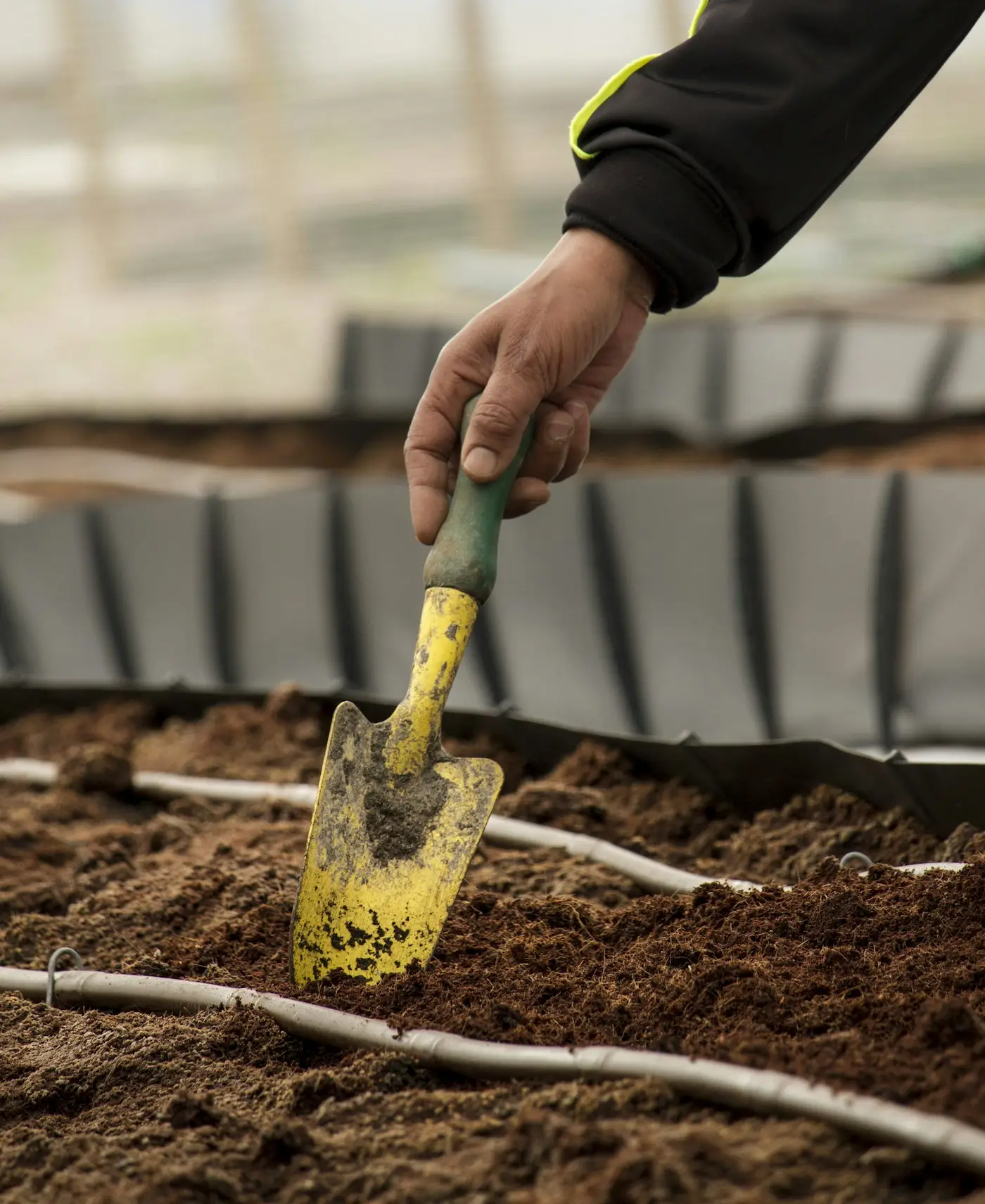
Topsoil suppliers and delivery services cover the whole county, with reliable stockists accessible from Leeds, Bradford, and Sheffield for projects ranging from raised beds to full lawn reinstatements.
Buying topsoil in Yorkshire is not complicated, but it is easy to get wrong. The county's native soils are highly variable - from the peaty, acidic Pennine moorland soils of the upper Dales to the fertile loam of the Vale of York, from the boulder clay of Holderness to the chalk-over-limestone soils of the Wolds - and the topsoil you import needs to work with what you already have rather than against it. Get this right and you are laying the foundation for years of successful lawn or garden performance. Get it wrong and you can create drainage problems, nutrient imbalances, and a soil structure that is harder to manage than what you started with.
Why people buy topsoil in Yorkshire
The main situations that drive topsoil purchases in Yorkshire are new build properties, lawn restoration, raised bed creation, and level changes in an existing garden.
New build properties are the single biggest source of topsoil need across Yorkshire. Construction strips the original topsoil, compacts the subsoil with heavy machinery, and typically backfills with whichever material was cheapest at the time. If you have moved into a new house in Leeds, Bradford, Sheffield, York, or any of the major development areas around Harrogate and Selby, there is a good chance your garden has little or no functional topsoil. What looks like a lawn is often turf laid on subsoil - it survives but never thrives, thin and prone to drought and disease. Bringing in proper topsoil and starting again, or heavily amending what is there, is the only reliable long-term fix.
Lawn restoration is the second most common need. A Yorkshire lawn that has thin patches, hollows, heavy moss, or areas of compaction from decades of use will benefit from a programme that includes some topsoil import as part of renovation. This does not necessarily mean stripping and re-laying the whole lawn - targeted top-dressing, hollow-tine aeration, and seeding can transform a worn Yorkshire lawn over two growing seasons if the soil quality is addressed at the same time. For the full lawn repair process, see the Yorkshire lawn repair guide.
Raised bed creation is the most straightforward topsoil use: you are filling a defined volume with a controlled growing medium and you have complete control over the specification. For a kitchen garden or ornamental raised bed, a blended topsoil and compost mix is the right choice rather than straight topsoil, which compresses over time and can become too dense for productive growing. Most good Yorkshire topsoil suppliers offer a garden blend - typically 60-70% screened topsoil, 30-40% composted green waste or bark - that is purpose-formulated for raised bed use.
Level changes and hollows in an existing garden need topsoil to fill and re-establish. A sunken patch in the lawn, a level-change project for a new terrace or seating area, or the aftermath of construction work all create a need for bulk topsoil. In these cases, matching the texture of the imported soil to what is already in the garden matters less than the quality of the fill material: use BS3882 certified screened topsoil and you will not go far wrong.
Yorkshire's soil types: why they matter when buying topsoil
Yorkshire has one of the most geologically varied landscapes of any English county, and the soils that develop on this underlying geology are correspondingly diverse. Understanding which soil type your garden sits on is valuable context for any topsoil purchase.
Coal Measures clay (West and South Yorkshire): the heavy clay that underlies much of Leeds, Bradford, Wakefield, Barnsley, and Sheffield. Dense, moisture-retentive, slow to warm in spring, prone to waterlogging in winter. Importing heavy clay topsoil onto this base - which is what some cheaper suppliers provide - simply adds more of the same problem. For gardens on Coal Measures clay, a lighter, more open topsoil with a higher organic matter content is preferable. The garden blend (topsoil with composted organic matter) specifically addresses this: it drains better and warms faster than straight clay topsoil. For more on managing heavy clay in a Yorkshire garden, the clay soil Yorkshire guide covers the full management approach.
Millstone Grit soils (Pennine valleys, upper Dales): thin, acidic soils derived from coarse sandstone. Naturally low in nutrients, free-draining, and often peaty in upland positions. These soils can absorb significant quantities of organic matter and benefit enormously from topsoil import - but the topsoil needs to be compatible in pH terms. Do not import alkaline limestone-derived topsoil onto an acidic Pennine soil garden if you are growing ericaceous plants (rhododendrons, heathers, azaleas). Match the pH of your imported topsoil to what you already have, or accept that a significant pH shift will take years to stabilise.
Magnesian Limestone soils (strip from Tadcaster to Doncaster): pale, alkaline, free-draining soils derived from limestone and dolomite. Very different from the clay soils to the west. Lawns on Magnesian Limestone can actually be very good once established, because the free drainage prevents the waterlogging that damages grass on clay. For topsoil import into these gardens, a medium-textured screened topsoil with neutral to slightly alkaline pH (6.5-7.5) is ideal.
Vale of York loam: the best natural agricultural soils in Yorkshire, found across the broad vale from Selby north to Northallerton. Medium-textured, good drainage, fertile, and easy to work. If your new-build garden in York, Wetherby, or Selby has had topsoil stripped and you are replacing it, match your imported topsoil to the local Vale of York loam specification if possible - a medium-textured screened topsoil, BS3882 Grade A, is the right product here.
Holderness boulder clay (East Riding): glacial clay deposits across the flat lands east of the Yorkshire Wolds toward the coast. Heavy, waterlogged in winter, fertile but difficult to work. Similar management challenges to the Coal Measures clay of West Yorkshire, though slightly less acidic. Gardens in Hull, Beverley, and the East Riding generally benefit from imported topsoil with significant organic matter content to improve drainage and structure.
Yorkshire Wolds chalk: shallow soils over chalk on the Wolds escarpment. Very free-draining, naturally alkaline, thin in depth. Topsoil import here needs to be alkaline-compatible and should be used at depth (200mm or more) to give plant roots enough medium to work with before they hit the chalk below.
Types of topsoil: what you are buying
BS3882 certified topsoil
BS3882 is the British Standard for topsoil, and asking for BS3882 certified product is the single most important step in avoiding poor-quality material. The standard specifies pH range (typically 5.5-7.5), organic matter content, texture (the balance of sand, silt, and clay), and contamination limits (heavy metals, stones, debris). Three grades are available:
- Grade A: the highest quality, suitable for lawns, ornamental borders, and sensitive growing situations. Low weed seed content, clean, well-screened. This is what you want for a lawn restoration or new lawn establishment in Yorkshire.
- Grade B: slightly lower organic matter and slightly more variable texture, but still suitable for most garden applications. Often adequate for raised beds and general garden improvement.
- Grade C: suitable for bulk fill and land restoration. Not appropriate for lawn establishment or productive growing. The cheapest product, but poor value if you need growing-quality topsoil.
Screened topsoil
Screened means the soil has passed through a mesh screen to remove stones above a certain size (typically 10mm-20mm). Screening also removes debris and breaks up clods. Good screened topsoil has a consistent, friable texture that is easy to rake and levels well. Unscreened topsoil can be variable in texture and stone content - acceptable for bulk fill but not for lawn preparation where a fine, even tilth is needed for seed germination or turf establishment.
Blended topsoil and compost mixes
Many Yorkshire topsoil suppliers offer a garden blend that mixes screened topsoil with composted green waste or bark, typically at 60:40 or 70:30 ratios. This is the best product for raised beds and ornamental borders - the compost component adds organic matter that improves drainage in clay topsoils and water retention in sandy topsoils, while also providing an immediate nutrient boost. The blend should specify that the compost component is fully composted (stabilised) rather than raw green waste, which can rob nitrogen from your soil as it continues to break down.
Questions to ask any Yorkshire topsoil supplier
Is the topsoil BS3882 certified, and which grade? Can you provide a soil analysis certificate? Is the material screened and to what mesh size? What is the organic matter content? Where does the topsoil originate from? (Local Yorkshire soils have known characteristics; generic 'UK topsoil' may be unsuitable for Yorkshire conditions.) What is the minimum order quantity and delivery method? Can you deliver to my specific postcode and what are the access requirements?
Calculating the quantity you need
The calculation for topsoil quantity is straightforward:
Volume (cubic metres) = Area (m2) x Depth (metres)
For a lawn restoration at 100mm depth over a 50m2 area: 50 x 0.1 = 5 cubic metres. For raised beds at 250mm depth over a 10m2 bed area: 10 x 0.25 = 2.5 cubic metres. Remember that soil compresses after it is spread and settles further over the first few months - allow a 10-15% excess over your calculated quantity to account for this settlement.
One cubic metre of topsoil weighs approximately 1.4 tonnes when moist (and Yorkshire soil is usually delivered moist). A tipper lorry typically carries 6-20 tonnes. This means a minimum tipper delivery of 6 tonnes gives you approximately 4.3 cubic metres - enough for a 43m2 lawn at 100mm depth. If your quantity is less than the tipper minimum, bulk bags (approximately 0.7-0.9m3 per bag) are the practical alternative.
| Application | Recommended depth | Example: 30m2 area |
|---|---|---|
| Lawn establishment (seed) | 75-100mm | 2.25-3.0 m3 |
| Lawn establishment (turf) | 100mm | 3.0 m3 |
| Ornamental borders | 150-200mm | 4.5-6.0 m3 |
| Raised beds (vegetables) | 200-300mm | 6.0-9.0 m3 |
| Hollow-filling in lawn | As required | Spot quantities |
Prices: what to expect to pay in Yorkshire
Topsoil prices in Yorkshire in 2026 for screened BS3882 product delivered by tipper lorry run from approximately £35 per cubic metre at the budget end to £55 per cubic metre or more for high-quality blended topsoil from a specialist supplier. The price per cubic metre typically falls as quantity increases - a 20-tonne delivery will cost proportionally less than a 6-tonne minimum delivery.
| Format | Quantity | Price range | Notes |
|---|---|---|---|
| Tipper lorry delivery | 6-20 tonnes (4-14 m3) | £35-£55/m3 | Cheapest per volume; needs good access |
| Bulk bag | 0.7-0.9 m3 per bag | £60-£120/bag | Good for smaller quantities; can stack for later use |
| Bagged (40L bags) | 40L per bag | £5-£8/bag | Equivalent to £125-£200/m3; only for very small jobs |
| Blended topsoil/compost | Tipper delivery | £45-£65/m3 | Better quality for beds and borders; worth the premium |
Delivery: access and logistics
Topsoil delivery logistics catch out many Yorkshire homeowners. A tipper lorry carrying 6-14 tonnes of soil needs access to a delivery point - ideally a firm, level surface that can support a laden lorry without sinking. If your property has a narrow side access, a low front wall, overhead cables, or a shared driveway, make these clear to the supplier before booking. Many Yorkshire terrace properties, particularly in Leeds, Bradford, and Sheffield, have side passages that are too narrow for a standard tipper and will need bulk bag delivery instead, with manual carry-through to the back garden.
For larger deliveries, a grab lorry (which has a hydraulic arm that can reach over fences or walls) or a tele-handler can extend the reach of the delivery, avoiding the need to move soil by wheelbarrow from the front driveway. These are typically available from local landscape contractors and plant hire companies rather than the topsoil suppliers themselves. For a tipper delivery, position the drop as close as possible to where the soil will be used - every metre of wheelbarrow distance adds significant labour time when you are moving several tonnes of material.
If soil is being delivered to a public road temporarily (if the driveway is too small), check whether your council requires a skip or temporary deposit permit. West Yorkshire councils and North Yorkshire Council both have guidance on this, and requirements vary. Getting this wrong can result in a fine and an instruction to remove the soil immediately, which is a poor way to start a garden project.
Spreading and incorporating topsoil
For lawn establishment
For a new lawn on imported topsoil, the process is: roughly grade the sub-base first (existing soil or subsoil), then spread the topsoil to a uniform depth of 100mm (mark target depth on canes positioned across the area to guide your grading), rake level, firm by treading or using a lawn roller, then rake again to a fine tilth before seeding or turfing. Do not rush this step - a properly prepared seedbed is what determines whether a lawn establishes evenly or patchily. Allow the prepared topsoil to settle for one to two weeks before seeding if possible, and re-rake any areas where rain has washed rills or created surface crust. For a full guide to Yorkshire lawn repair and renovation, see the Yorkshire lawn repair guide.
Rotavating imported topsoil into existing soil at the interface zone is particularly important on Yorkshire clay. Without cultivation at the interface, water movement between the layers is restricted and you can create a perched water table situation where the new topsoil stays waterlogged because water cannot drain into the compacted subsoil below. Rotavating 150mm deep at the boundary between the existing soil and the new topsoil, or ripping the existing soil with a fork before spreading, solves this.
For borders and raised beds
In a raised bed or ornamental border, spread the topsoil or topsoil blend to the required depth, incorporate any additional compost or soil improvement amendments, then water in and allow to settle before planting. The soil will compress by 10-15% over the first few weeks as air spaces close. For raised beds, this settling is normal and you should top up by the same amount after the first growing season. Do not compact raised bed soil by treading on it after filling - the whole benefit of a raised bed is the loose, aerated structure that allows roots to penetrate freely. Work from the paths, not from the bed surface. For the full vegetable growing approach that benefits from good topsoil and raised beds, see the Yorkshire vegetable growing guide.
Alternatives to topsoil import
Topsoil import is not always the right answer. For many Yorkshire gardens where the existing soil is poor quality but present in adequate depth, improvement in place is more practical and often cheaper than import.
Composted organic matter: incorporating generous quantities of well-rotted garden compost, green waste compost, or composted bark into existing poor soil transforms its structure over two to three years. This is the gold standard approach for any Yorkshire clay garden: compost breaks up clay aggregates, improves drainage, and increases microbial activity far more effectively than topsoil import alone. Source green waste compost from your local council's composting operation, or from a landscape supplier - typically £30-£45 per cubic metre delivered in Yorkshire.
Horticultural grit: for drainage improvement in clay-heavy Yorkshire soils, incorporating coarse horticultural grit (not sharp sand, which can make clay concrete-like at certain ratios) at one part grit to three parts soil is effective for specific planting situations requiring sharp drainage. Cost is higher than compost but lower than topsoil import, and the drainage improvement is long-lasting.
Green manures: sowing a green manure crop (mustard, phacelia, clover, vetch) and digging or rotavating it in before planting is a low-cost way to improve soil organic matter in a Yorkshire garden that has time to prepare before planting. Effective for new build gardens where a full growing season is available for soil improvement before permanent planting begins. For the full soil improvement picture and how it relates to a Yorkshire garden renovation, the soil improvement Yorkshire guide has detailed recommendations by soil type.
Frequently Asked Questions
What is BS3882 topsoil and why does it matter in Yorkshire?
BS3882 is the British Standard for topsoil quality, specifying pH, organic matter, texture, and contamination limits. Asking for BS3882 Grade A or Grade B certified topsoil is the most important step in avoiding poor-quality material. Much of what is sold as topsoil without certification is actually subsoil - low in nutrients and unsuitable for lawn or planting use.
How much topsoil do I need for a Yorkshire lawn?
Calculate: area (m2) x 0.1 = cubic metres for a 100mm depth, which is the standard for lawn establishment. A 50m2 lawn area needs 5 cubic metres. Add 10-15% for settlement. One cubic metre weighs approximately 1.4 tonnes when delivered moist.
What does topsoil cost delivered in Yorkshire?
Screened BS3882 topsoil delivered by tipper lorry costs £35-£55 per cubic metre in Yorkshire. Bulk bags (0.7-0.9m3) cost £60-£120 each, which is considerably more per cubic metre. Bagged 40-litre topsoil is the most expensive per volume and only cost-effective for very small quantities.
Should I match topsoil to my existing Yorkshire soil type?
Yes, where possible. Importing heavy clay topsoil onto free-draining sandy loam creates a drainage interface problem; importing very sandy topsoil onto heavy clay can cause drought stress. Ask your supplier about the texture and origin of their topsoil. On Coal Measures clay in West Yorkshire, a blended topsoil with good organic matter content is preferable to straight heavy clay topsoil.
Related reading
- Gardening on Yorkshire clay soil - the complete guide
- Soil improvement in Yorkshire - by soil type
- Lawn repair in Yorkshire - patches, hollows and renovation
- Growing vegetables in Yorkshire
- Garden renovation in Yorkshire - planning and costs
Need help with soil improvement or lawn restoration?
A local Yorkshire gardener can assess your soil, specify the right topsoil, and handle the groundwork. Get a quote in 60 seconds.
Start the assessment