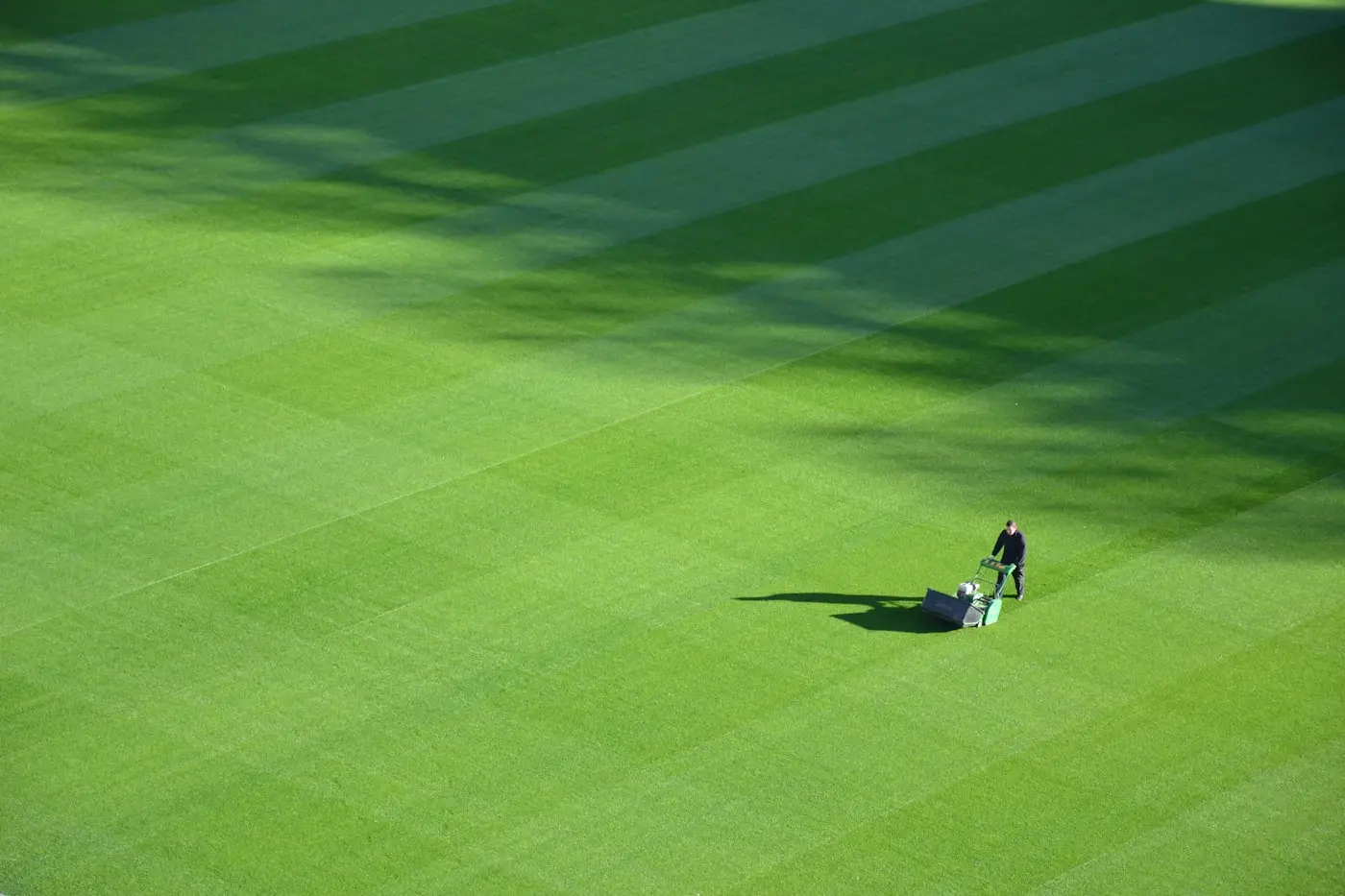
Artificial grass installation is growing in popularity across Yorkshire, from Bradford to Harrogate and Wakefield.
The quick answer: professionally installed artificial grass in Yorkshire costs £50-85 per square metre including materials and labour. A typical 30sqm back garden runs to £1,500-2,550 fully installed. A small front garden of around 15sqm comes out at £750-1,275. Those figures cover a mid-range product on reasonably straightforward ground. Yorkshire clay, restricted access, or a choice of premium pile will push costs above that range - and there are specific reasons why the sub-base work here costs more than in lighter-soil areas further south.
This guide covers what should be included in the price, which pile height suits which situation, how to compare quality grades, and the questions to ask before any installer gets started. If you are still weighing up whether to go artificial at all, see the artificial turf vs real lawn comparison first - this guide assumes you have already made the decision and want to know what a proper job looks like.
Cost at a Glance: Yorkshire 2026
| Garden size | Budget installed | Mid-range installed | Premium installed |
|---|---|---|---|
| Small front garden (15sqm) | £750 | £975 | £1,275 |
| Typical back garden (30sqm) | £1,500 | £1,950 | £2,550 |
| Larger garden (50sqm) | £2,500 | £3,250 | £4,250 |
| Large garden (75sqm) | £3,750 | £4,875 | £6,375 |
These prices are for supply and lay including sub-base, weed membrane, edging, and infill. On Yorkshire clay, add £200-400 for additional excavation and drainage work. Restricted access (no side entry for a mini-digger) adds a further £200-400. Ask any installer to break these out in writing.
What the Price Should Include
A properly priced artificial grass installation is not just the grass and a wave of the hand. Here is what every quote for a Yorkshire garden should cover.
Existing lawn removal and disposal
The old lawn has to come out. That means stripping the existing turf and topsoil to the required excavation depth, loading the spoil, and disposing of it. On a 30sqm garden this generates 4-6 tonnes of material. Some installers include skip hire in the quoted price; others charge it separately. If disposal is not itemised in the quote, ask. Skipping the disposal cost from the headline price is a common way to make quotes look cheaper than they are.
Sub-base excavation and compaction
This is the critical part of the job. The ground needs to be excavated to a minimum 150mm below finished level, then filled with a compacted MOT Type 1 crushed stone sub-base to a minimum 75mm depth. On Yorkshire clay, 100mm of compacted stone is a better specification because clay does not provide any natural drainage. The stone sub-base is what allows water to pass through the backing and away from the pile. Without it, any rain that passes through the grass has nowhere to go except the saturated clay below.
The sub-base must also be laid to a drainage gradient - typically 1:80 (about 12mm of fall per metre) - directing water towards a soakaway or drain at the perimeter. Any installer doing this correctly will be talking to you about drainage before they even quote.
Weed membrane
A heavy-duty (90-130gsm) woven or non-woven geotextile weed membrane goes between the sub-base and the grass. This prevents weed roots pushing up from below, reduces moss growth between the grass and sub-base, and helps maintain the structural separation between stone and grass backing. Domestic-grade garden membrane (the thin stuff from hardware shops) is not suitable - it collapses under foot traffic and does not do the job. Any professional installation should be specifying commercial-grade membrane.
Artificial grass supply
The grass itself: pile heights range from 20mm to 50mm+, in a range of quality grades. See the pile height guide below. The installer should be able to tell you the yarn manufacturer, the stitch rate (stitches per linear metre - higher is denser, more natural looking, more expensive), and the weight (dtex). A good mid-range product for a domestic lawn runs to 16,800 dtex or above.
Perimeter fixing and joining
The grass is fixed at the perimeter with bender board edging (a flexible plastic or aluminium channel) or nailed to a timber pressure-treated batten. Joins in the grass roll are glued with joining tape and landscape adhesive. Poorly joined artificial grass gapes visibly within a year; properly joined seams are practically invisible. Ask the installer how they handle joins if your lawn requires more than one roll width.
Infill
Kiln-dried silica sand infill is brushed into the pile to give it body, weight down the backing, and keep the fibres upright. On dog-owning properties, zeolite crumb is often used in addition to or instead of silica sand - zeolite is a natural mineral that absorbs ammonia from urine and significantly reduces odour. The infill layer is typically 2-4kg per sqm depending on pile height.
Pile Height Guide
Pile height is the length of the individual grass fibres measured from the backing. It affects how the lawn feels, how it performs under traffic, and how easy it is to keep clean in Yorkshire's wet and muddy seasons.
| Pile height | Best for | Yorkshire note |
|---|---|---|
| 20-25mm | High-traffic areas, dogs, hard-wearing applications | Less pile to trap mud and dirty paws; easier to hose clean in autumn |
| 30-35mm | Standard residential lawn - the most popular choice | Good balance of realism and practicality; handles Yorkshire weather well |
| 38-40mm | Luxury look, soft underfoot, primary aesthetic lawn | Shows footprints more clearly; longer pile traps debris in wet autumn |
| 45mm+ | Show gardens, premium installations, very occasional use | Not ideal for high-use Yorkshire gardens; requires more maintenance |
For most Yorkshire back gardens - especially those with children, dogs, or any significant foot traffic - 30-35mm is the right choice. It looks realistic without being high-maintenance. If you want a low-profile lawn that is genuinely easier to keep clean through muddy Yorkshire winters, 20-25mm is a practical answer even if it is less lush-looking.
Quality Grades and What They Cost
Artificial grass is sold by the supplier at a cost per sqm for the grass itself, before installation. Understanding supply-only costs helps you interrogate an installed quote.
| Grade | Supply only (per sqm) | Installed (per sqm) | Expected life | Warranty |
|---|---|---|---|---|
| Budget | £10-15 | £50-60 | 5-8 years | 2-5 years |
| Mid-range | £15-22 | £60-75 | 10-15 years | 7-10 years |
| Premium | £22-35 | £75-100+ | 15-20 years | 10-15 years |
The maths on quality: a budget 30sqm installation at £1,500 replaced after 7 years costs £215/year. A premium installation at £2,550 lasting 17 years costs £150/year. Premium wins on the long run, assuming the installation quality matches the product quality. A premium grass on a poor sub-base fails in the same way as budget grass on a poor sub-base - the warranty on the grass does not cover installation failures. Always ask for the yarn manufacturer's warranty separately from the installer's workmanship warranty.
Yorkshire-Specific Factors That Affect Cost
Clay subsoil: the biggest variable
Yorkshire's predominant soil is clay - heavy, slow-draining, prone to waterlogging in winter and cracking in dry summers. On sandy or well-draining soils (found in parts of the Vale of York and East Yorkshire), you can get away with a shallower sub-base and less aggressive drainage design. On clay - which covers most of Bradford, Leeds, Wakefield, Barnsley, Rotherham, Sheffield, and Huddersfield - the sub-base specification is non-negotiable.
A properly drained installation on Yorkshire clay needs 75-100mm of compacted MOT Type 1 stone over a correctly graded excavation. The drainage gradient must lead water to a soakaway dug into permeable ground below the clay layer, or to a channel drain at the perimeter. A poorly drained artificial lawn on clay will pool water in the pile within 3-5 years. The pile fibres soak up moisture, the backing begins to separate, and by year five you have an expensive problem.
The one question that separates good installers from quick ones
Ask every installer: "What is your drainage specification for this site, and how are you handling the clay subsoil?" A good installer will give you a specific answer: depth of excavation, sub-base thickness, drainage gradient, and where the water is going. If they say "we just put down membrane and grass" without addressing the sub-base or drainage, find someone else. Clay drainage failure is not covered by grass warranties. It costs you a full reinstallation.
Garden access
A large proportion of Yorkshire's terrace and semi-detached housing stock has a narrow side passage as the only rear access. If that passage is under 900mm wide, a mini-digger cannot get through, all excavated spoil has to be barrowed by hand, and the job takes significantly longer. Expect an access surcharge of £200-500 for restricted rear access on a standard installation job. Very tight access (under 600mm) can push this higher. If you know access is restricted, flag it upfront - installers who discover a tight passage after turning up will either reprice or cut corners on the groundworks to compensate.
Existing features to remove
Old paving, decking, play equipment, large shrubs, and rotting tree stumps (which require stump grinding before turf or artificial grass can be laid over that area) all add to the clearance cost before installation can begin. A standard lawn-to-artificial swap on a clear site is straightforward. Adding skip loads of concrete, timber, or embedded sleepers adds cost and time. Get a site visit from any installer before accepting a quote - quotes made from measurements alone routinely miss access and clearance complications.
Questions to Ask Every Installer
You cannot see the sub-base once the grass is down. These questions establish whether the installer is doing the job properly before you hand over any money.
- What depth are you excavating, and what depth of sub-base are you laying? On Yorkshire clay, minimum 100mm of compacted MOT Type 1. Anything less is a shortcut.
- What drainage gradient are you building in, and where is the water going? Should have a specific answer: drain to soakaway at X location, or to channel drain at Y edge.
- What is the pile height and yarn specification of the grass you are quoting? Get the product name, manufacturer, and stitch rate. Vague "premium quality" claims mean nothing without specifics.
- What infill material are you using? Kiln-dried silica sand is standard. If you have dogs, ask about zeolite crumb as a top-layer infill.
- What is your workmanship warranty, and what does it cover? Distinguish between the grass manufacturer's warranty and the installer's warranty on the sub-base and drainage work. Both matter.
- Does the price include removal and disposal of the existing lawn? If not, get a separate figure so you can compare like for like.
- What happens if I get drainage issues within the warranty period? You want a clear commitment in writing, not a verbal assurance.
DIY vs Professional Installation: The Honest Assessment
Artificial grass at supply-only rates costs £12-25/sqm. The saving versus installed cost on a 30sqm garden is roughly £600-1,200 in labour. The question is whether that saving is worth the risk.
Laying the grass itself is achievable for a careful DIYer - cutting, joining, and fixing the perimeter edging is manageable with the right tools and a patient approach. The sub-base is a different matter. Digging out 100mm across a 30sqm area means removing and disposing of roughly 3 tonnes of spoil, then sourcing, delivering, and compacting 3 tonnes of MOT Type 1 stone to a consistent level with the correct drainage gradient. Done wrong, this is the £1,500-2,000 drainage failure waiting to happen in year three. Done right, it is a weekend of hard physical work requiring a hired plate compactor and a skip.
A reasonable middle path: buy the grass yourself at supply-only prices, and hire a professional for the groundworks only. That captures most of the material saving while keeping the critical sub-base work in professional hands. See also the turfing cost guide if you are comparing against a real lawn installation, and the lawn care guide for what a maintained real lawn actually requires year-round.
Maintenance: What It Actually Takes
Artificial grass is lower maintenance than a real lawn, not zero maintenance. Here is what it realistically needs.
Regular brushing
Brush the pile twice a year - spring and autumn - with a stiff-bristle broom or a specialist artificial grass brush. This keeps the fibres upright and prevents matting. After a winter in Yorkshire, the pile will be flattened in traffic areas. A good brushing restores it. Do not use a metal rake - it damages the fibres.
Leaf and debris removal
Remove leaves and organic debris before they rot down into the pile. In autumn this means clearing the surface every couple of weeks if there are trees nearby. Rotting leaves left in the pile for a season create a layer of organic matter that weeds and moss can colonise. A leaf blower works well on artificial grass.
Hosing down
An occasional hose-down with clean water removes dust, pollen, and the surface residue that accumulates in an urban Yorkshire garden. After hosing, brush the pile while it is still damp to restore the fibre direction.
Dog owners
If you specified zeolite infill, hose the area down after urination to activate the mineral's odour absorption. Rinse more frequently in warm weather - ammonia odour is significantly worse in summer on a dry surface. Solid waste should be removed promptly. A dilute enzymatic cleaner (designed for artificial grass or pet surfaces) applied monthly during summer keeps hygiene and odour in check. See also our garden maintenance services if you want occasional professional clean-downs included in a maintenance package.
Related reading
- Artificial turf vs real lawn in Yorkshire - the full comparison
- Turfing cost Yorkshire - what a real lawn installation costs
- Lawn care in Yorkshire - what a maintained real lawn needs
- Patio laying cost Yorkshire - combining hard surfaces with artificial grass
- Garden maintenance services across Yorkshire
- Garden drainage in Yorkshire - solving clay soil waterlogging
Frequently Asked Questions
How long does artificial grass last in Yorkshire's weather?
Quality mid-range installations last 12-15 years; premium grades reach 15-20 years. Yorkshire's relatively mild, low-UV climate means artificial grass here tends to reach the upper end of its rated lifespan. The main risk is not weather but poor sub-base drainage - if water cannot escape through the stone layer below, the backing deteriorates from underneath regardless of product quality. Always ask for both the yarn manufacturer's warranty and a separate workmanship warranty covering sub-base and drainage.
Will it get waterlogged?
A properly installed system on Yorkshire clay with a 100mm compacted stone sub-base and a drainage gradient to a soakaway or channel drain handles Yorkshire rainfall without pooling. A poorly installed system on clay - shallow sub-base, no drainage gradient, membrane but no stone - will pool water in the pile within 3-5 years. Ask every installer to specify their drainage solution in writing before you accept a quote.
What about weeds growing through artificial grass?
Weeds do not push up through a proper weed membrane from below, but wind-blown seeds settle into the infill and germinate on the surface. A kept-brushed, well-infilled pile with annual spot-treatment keeps this manageable. Expect occasional surface weeding - less than a real lawn, but not zero. Moss can establish on the surface in shaded north-facing yards; treat with a path moss killer and rinse off.
Does artificial grass need planning permission?
Not for most rear garden installations under permitted development rights. Front gardens covering more than 5m2 with impermeable surfaces may require you to include drainage provision. Conservation areas and listed buildings may have additional restrictions. Check with your local authority if you are uncertain - Leeds City Council, Bradford MDC, and Sheffield City Council all have planning enquiry services.
Can I install artificial grass myself?
Laying the grass itself is DIY-achievable. The sub-base excavation and compaction is the skilled, physically demanding part where errors cause expensive drainage failures 2-3 years later. A practical middle path: buy the grass at supply-only prices (£12-25/sqm) and hire a professional for the groundworks only. This captures most of the material saving while keeping the critical sub-base work in professional hands.
Ready to get your artificial grass installed?
We connect Yorkshire homeowners with installers who understand clay drainage and Yorkshire ground conditions. Tell us what you need and we will find the right help.
Get a free assessmentWill artificial grass get waterlogged in Yorkshire?
It can, if the installation is done poorly. Artificial grass backing has drainage perforations, but the system only drains as well as the sub-base underneath it. On Yorkshire clay - which covers most of Bradford, Leeds, Wakefield, Sheffield, and Barnsley - water sits on the clay layer rather than soaking away. A properly installed artificial lawn on clay needs a minimum 75mm compacted MOT Type 1 stone sub-base with a drainage gradient to a soakaway or channel drain. Without this, the pile becomes waterlogged within a few years and the backing begins to deteriorate. Any installer who does not address drainage on clay soil in their quote should be pressed on the point before you proceed.