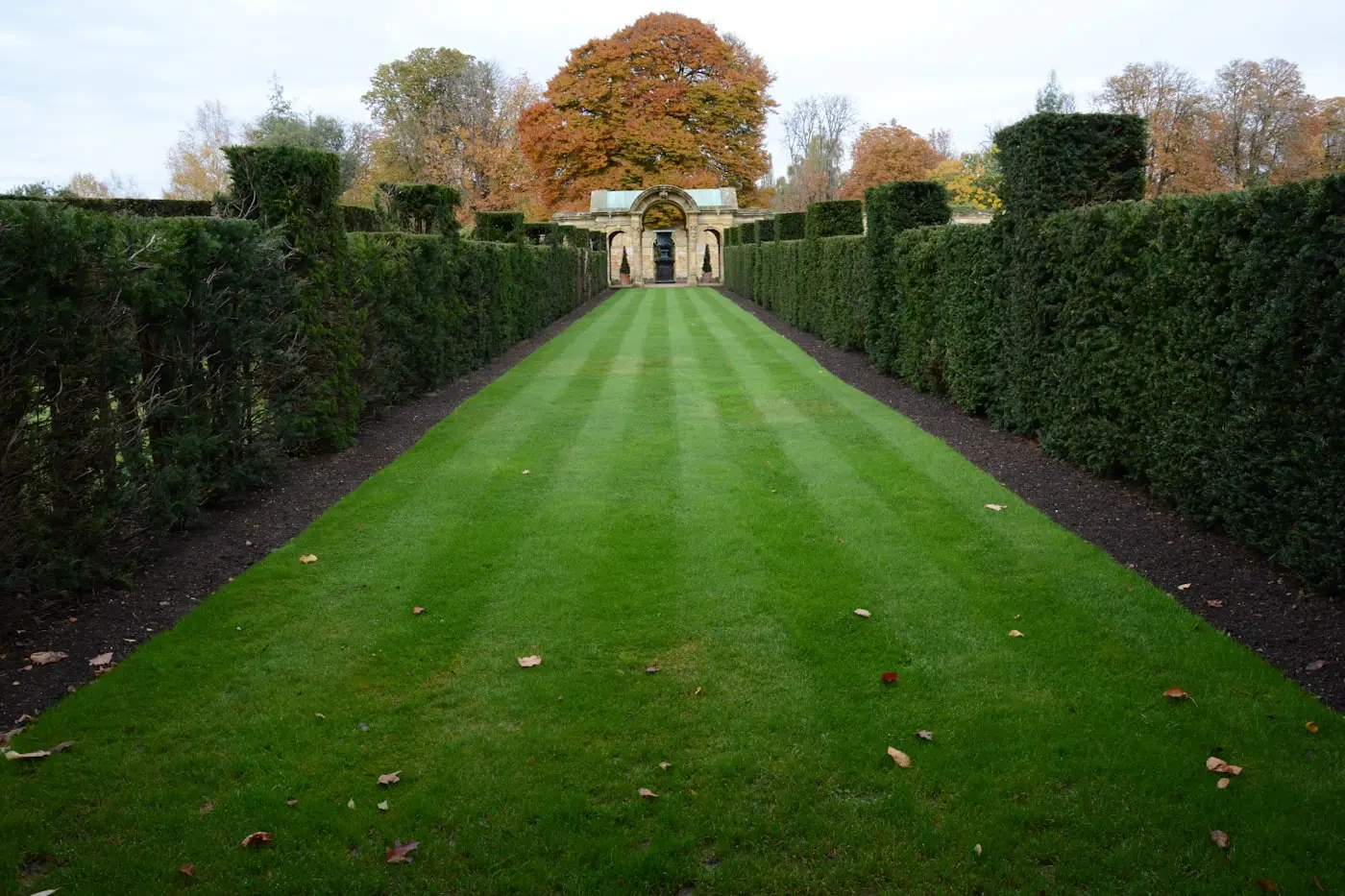
Yorkshire gardeners weighing up turf options will find local advice in York, Harrogate and Wakefield.
The artificial grass question has been rumbling through Yorkshire gardens for a decade, but it has sharpened in the last couple of years. Professional lawn care prices have risen. Time feels scarcer. And the artificial grass industry has gotten much better at producing products that look convincingly real at first glance. So it is a reasonable question: is it time to rip out the real lawn?
The honest answer is: it depends entirely on your situation. For some Yorkshire homeowners, artificial grass is the right call. For many others, it is an expensive solution to a problem that does not quite exist - because Yorkshire's climate is one of the best in England for growing real grass, and most lawns here need less intervention than people think.
This guide will give you the real numbers, address the Yorkshire-specific climate questions, and help you make the decision that suits your garden rather than the one that suits a salesperson's commission.
The Cost Comparison: Real Numbers
This is the part where most articles either inflate the cost of real lawn care or understate the cost of artificial installation. Here are the actual numbers for Yorkshire in 2026.
Artificial grass: installation cost
Professional artificial grass installation in Yorkshire (supply and lay, including membrane, edging, and infill) runs at:
- Budget grade: £40-60 per m2 installed (thinner pile, no infill, shorter life expectancy)
- Mid-range: £60-90 per m2 installed (30-40mm pile, silica sand infill, typical domestic spec)
- Premium: £90-120 per m2+ (high pile density, rubber/sand infill, 10-year warranty)
For a typical 30m2 back garden, the installed cost runs from approximately £1,500 at the budget end to £3,600 at the premium end. On Yorkshire clay, add £200-400 for the additional sub-base excavation and drainage work that clay soil requires.
The installation price also needs to include the old lawn removal, which is not always included. Stripping and disposing of an existing lawn adds £150-300 depending on size and access. Ask for a written breakdown before accepting any artificial grass quote.
Real lawn: what it actually costs
If you already have a lawn that needs regular maintenance, the annual cost of keeping it reasonable depends almost entirely on how much you do yourself:
- DIY mowing only (your time, your mower): materials cost is near zero. Most Yorkshire lawns need no more than £30-60 per year in fertiliser and weed treatment if managed sensibly.
- DIY mowing plus annual professional scarification and overseeding: £200-300 per year for a 30m2 lawn (scarification £100-150, overseeding materials and labour £100-150)
- Fully professional lawn care including regular cuts, scarification, aeration, and feeding: £300-500 per year for a standard garden
If you are starting fresh - replacing a ruined or non-existent lawn - new turf laid professionally costs £12-25 per m2. For a 30m2 garden that is £360-750 installed, versus £1,500-3,600 for artificial. Grass seed is cheaper still: £30-80 in seed and basic soil prep for a 30m2 area if conditions are right.
For a full breakdown of new lawn installation costs, see the turfing cost Yorkshire guide.
The breakeven calculation
Artificial grass pays for itself only if you are comparing against a sustained programme of professional lawn care. On that basis:
- If you pay a gardener £400/year for lawn care, a £2,400 artificial installation breaks even at 6 years. After that, you save £400 per year.
- If you mow yourself and spend £80/year on materials, the same artificial installation does not break even for 30 years. And by then you will need to replace it anyway.
Most Yorkshire homeowners who mow their own lawn sit much closer to the second scenario than the first. The breakeven argument for artificial grass is real - but only in specific circumstances.
Yorkshire Climate: Why Real Grass Has the Advantage Here
This point matters and does not get made often enough: Yorkshire is genuinely good territory for real grass. The climate is not working against you.
Rainfall
Yorkshire gets real, meaningful rainfall - particularly the western half. Leeds receives around 670mm per year; Bradford and Halifax more; the Pennine uplands significantly more. This means that even in typical summers, established Yorkshire lawns are rarely watered to death or scorched out. The irrigation demand that makes a real lawn a burden in the south-east of England simply does not apply here in most years.
West Yorkshire's westerly exposure (the Pennine winds that bring persistent drizzle) is the same thing that makes artificial grass appealing to some people - nobody wants to go out in the rain to mow. But it also means the grass grows back quickly after stress, recovers from wear, and does not need the constant attention that southern gardens might. The rain does the watering for you for most of the year.
Summer temperatures
Yorkshire summers are not consistently hot enough to kill well-established lawns. Drought stress can occur in dry East Yorkshire summers - particularly on sandy soils in the Vale of York - and the odd dry July can brown out even a decent lawn. But established lawns in Bradford, Leeds, Wakefield, and Sheffield recover from summer browning as soon as the rain returns in August. This is normal grass behaviour, not damage. A yellowed lawn in July is not a dying lawn.
Compare that with artificial grass in summer: synthetic turf can reach surface temperatures of 50-65°C on a warm day. In a Yorkshire summer that is perhaps 20°C ambient, the surface temperature of artificial grass is still routinely 10-20°C above ambient. On a genuinely hot day - not unheard of in Sheffield or York - artificial grass becomes uncomfortable or even painful to walk on barefoot. Children playing on it in July need to be watched carefully. Real grass stays cool.
Winter dormancy
Yorkshire winters are mild enough that real lawns go dormant rather than die. The grass turns a dull green-grey in January, grows slowly or not at all, and comes back strongly in March. This is not a failure of the lawn - it is natural winter dormancy. Artificial grass stays green through winter, which some people prefer visually, but the real lawn is not in trouble; it is just resting.
The winter concern with artificial grass is drainage. A poorly installed artificial lawn on Yorkshire clay can develop standing water at the edges or at the base of slopes in winter when the ground is already saturated. The plastic surface is not absorbing anything - the water has nowhere to go except the drainage system you installed, and if that system is inadequate, you end up with puddles on your "low-maintenance" lawn.
The Environmental Picture
This is a genuine consideration, not a lecture. Some Yorkshire homeowners care deeply about this; others do not. Here are the facts, and you can weigh them as you see fit.
Artificial grass is plastic. It is typically made from polyethylene or polypropylene, reinforced with latex or polyurethane backing. At end of life (10-15 years), it goes to landfill - it is not recyclable through any mainstream UK recycling system. A standard 30m2 installation represents roughly 50-80kg of non-recyclable plastic waste when it is eventually replaced.
Real lawn, by contrast, is a living system. A healthy 30m2 lawn sequesters a small but real amount of carbon in its root system and organic matter. It supports earthworms, beetles, and other soil invertebrates. It absorbs and filters rainwater through the soil. The grass surface stays cool in summer and provides foraging habitat for birds, hedgehogs, and invertebrates. Yorkshire Wildlife Trust has been vocal about the garden biodiversity loss associated with the replacement of real lawns and borders with hard surfaces and artificial grass.
This is not to say you should feel guilty for choosing artificial. But if environmental credentials are important to you - and for many Yorkshire homeowners they genuinely are - real lawn is the choice that aligns with those values.
When Artificial Grass Makes Sense
There are situations where artificial grass is the right answer, and it is worth being specific about them.
High-traffic areas with dogs or young children
If you have a dog that digs, urinates in the same spot repeatedly, or a small back garden that a young child is turning into a mud pit from October to March, artificial grass solves real problems. Real grass cannot withstand that level of use in a small area without constant renovation. Artificial grass handles it without complaint - though it does need hosing down regularly and a regular brushing to keep the pile upright and hygiene acceptable.
Areas where grass will not grow
Under dense tree canopy, in heavily shaded north-facing areas, or under a pergola structure - places where real grass fails through lack of light regardless of how carefully you manage it - artificial grass is a practical solution. There is no point fighting a losing battle against shade. Artificial grass needs no light at all.
Genuine maintenance impossibility
Elderly homeowners who physically cannot manage a lawn, rental properties where the tenant arrangement makes lawn care unworkable, or commercial spaces where no one is ever going to maintain a real lawn. These are genuine use cases where artificial grass solves a real problem rather than a perceived one.
Small, heavily used recreational areas
A small 10-15m2 area used as a children's play space, or a narrow side passage that gets heavy foot traffic, can work well in artificial grass where the economics and practicality make more sense at that scale.
When Real Lawn Is the Better Choice
Most residential gardens in Yorkshire
The honest verdict from people who work in Yorkshire gardens every day: the majority of residential lawns here would do better kept real. The climate suits grass. The drainage arguments that make artificial tempting in wetter climates actually apply to Yorkshire real lawn too - but the solution is better lawn drainage, not plastic grass. A scarified, aerated, well-fed lawn in Yorkshire keeps itself in decent shape with less intervention than most homeowners assume is needed.
If your lawn looks rough, consider whether it needs renovation rather than replacement. A professional lawn scarification in autumn followed by overseeding can transform a tired, mossy, patchy lawn into something good within a single season - at a fraction of the cost of artificial installation. See also our guide to lawn edging and maintenance services for the kind of regular work that keeps real lawns presentable without major intervention.
If you are likely to sell in the next 5 years
Yorkshire estate agents are consistent on this: artificial grass is not a selling point. Many buyers, particularly those with children or pets, are specifically put off by it. Buyers who find artificial grass in a garden when they view a property often factor in a removal and relawn cost when making offers. A well-maintained real lawn, by contrast, is a positive feature. If selling is on the horizon, keep the real grass.
If children play on the lawn regularly
Artificial grass gets hot. On a warm July day in Yorkshire - not unusual in Sheffield, Harrogate, or York - the surface temperature of artificial grass can reach 40-50°C. Children sitting or lying on it at those temperatures can burn exposed skin. Real grass stays close to ambient temperature because it transpires moisture and is kept cool by its own biology. If young children play on the lawn in summer, real grass is significantly safer.
If you value wildlife in your garden
As noted above: real lawn supports a living ecosystem. If this matters to you, it should be a deciding factor. There is no wildlife value in artificial grass.
A note from the ground level
Most experienced Yorkshire gardeners will tell you the same thing privately: they prefer to keep real grass where the client's situation allows it. Not because artificial is a bad product, but because Yorkshire's climate genuinely suits real lawns and because most homeowners underestimate what a renovated real lawn is capable of. The lawns that look worst in autumn - mossy, sparse, patchy - are often the ones most easily transformed by a proper scarification and overseed programme. Artificial grass is a valid answer to a specific question. It is not always the right answer to the question most people are actually asking.
Summary: The Honest Verdict
| Factor | Artificial grass | Real lawn |
|---|---|---|
| Upfront cost (30m2) | £1,500-3,600 | £360-750 (turf) or much less (seed) |
| Annual maintenance cost | Low (brush, hose, occasional infill top-up) | Variable: £0 DIY to £400+ fully professional |
| Lifespan | 10-15 years, then landfill | Indefinite with basic care |
| Summer temperature | Gets very hot (40-65°C surface) | Stays cool |
| Yorkshire climate fit | Works, but real grass works better | Excellent - climate suits it well |
| Wildlife value | None | High |
| Drainage on clay | Requires proper sub-base installation | Requires aeration but natural absorption |
| Resale impact | Neutral to negative for many buyers | Positive (well-maintained) |
Frequently Asked Questions
Is artificial grass worth it in Yorkshire?
For specific situations - dogs who destroy lawns, elderly homeowners who cannot manage maintenance, shaded areas where real grass will not grow - yes. For most residential Yorkshire gardens where the climate suits real grass and maintenance is feasible, the case is weaker than artificial grass salespeople suggest. Yorkshire's rainfall and mild summers mean real lawns here perform better than in most of England. See also the turfing cost guide for new lawn installation costs if renovation is an option.
How long does artificial grass last in Yorkshire?
Quality installations last 10-15 years. Budget grades may show wear within 7-10 years. Yorkshire's mild climate (low UV, moderate temperatures) means artificial grass here tends to reach the upper end of its lifespan compared to hotter, sunnier locations. The main risk to longevity is poor drainage installation, which degrades the backing material from below.
Does artificial grass cause flooding?
It can, if the sub-base and drainage are inadequate. On Yorkshire clay, this is a real concern. Any installation on clay should include a 100mm compacted aggregate sub-base and a clear drainage path to a soakaway or drain. Ask specifically about this before accepting a quote. A well-installed system handles Yorkshire rainfall fine; a poorly installed one causes new drainage problems where none existed before.
Can I put artificial grass on clay soil?
Yes, but the installation cost is higher - expect to add £200-400 to the base price for additional excavation and sub-base work on heavy Yorkshire clay. The drainage design is critical on clay. An installer who does not specifically address clay drainage in their quote should be questioned on the point.
What is cheaper: artificial or real lawn?
Real lawn is cheaper to install and cheaper to maintain unless you are paying a gardener for full professional lawn care year-round. Artificial grass costs £1,500-3,600 installed for a 30m2 garden; new turf costs £360-750. The ongoing cost comparison depends entirely on your maintenance habits. If you mow your own lawn, artificial grass does not pay for itself within any realistic timescale.
Will artificial grass affect my house sale?
It is more likely to be a negative than a positive. Many buyers - particularly families and pet owners - prefer real lawns and factor in artificial grass removal costs when making offers. Yorkshire estate agents consistently report that well-maintained real lawns are a selling point; artificial grass is not.
Is artificial grass good for Yorkshire wildlife?
No. Real lawn supports soil invertebrates, provides foraging for birds and hedgehogs, and absorbs rainwater through living soil. Artificial grass supports none of this. Yorkshire Wildlife Trust has campaigned specifically against the replacement of real lawns and borders with impermeable or artificial surfaces. If garden wildlife matters to you, keep the real grass.
Related reading
- Artificial grass installation in Yorkshire - costs and what the job involves
- Turfing cost Yorkshire - new lawn installation prices
- Lawn overseeding in Yorkshire - renovating a tired lawn
- Lawn scarification in Yorkshire - what it does and when
- Lawn edging and maintenance services across Yorkshire
Need a Yorkshire gardener?
Whether you want real lawn renovation or an honest quote for artificial, we connect you with local gardeners who know Yorkshire conditions. No call centres, no national franchise.
Get a free assessment