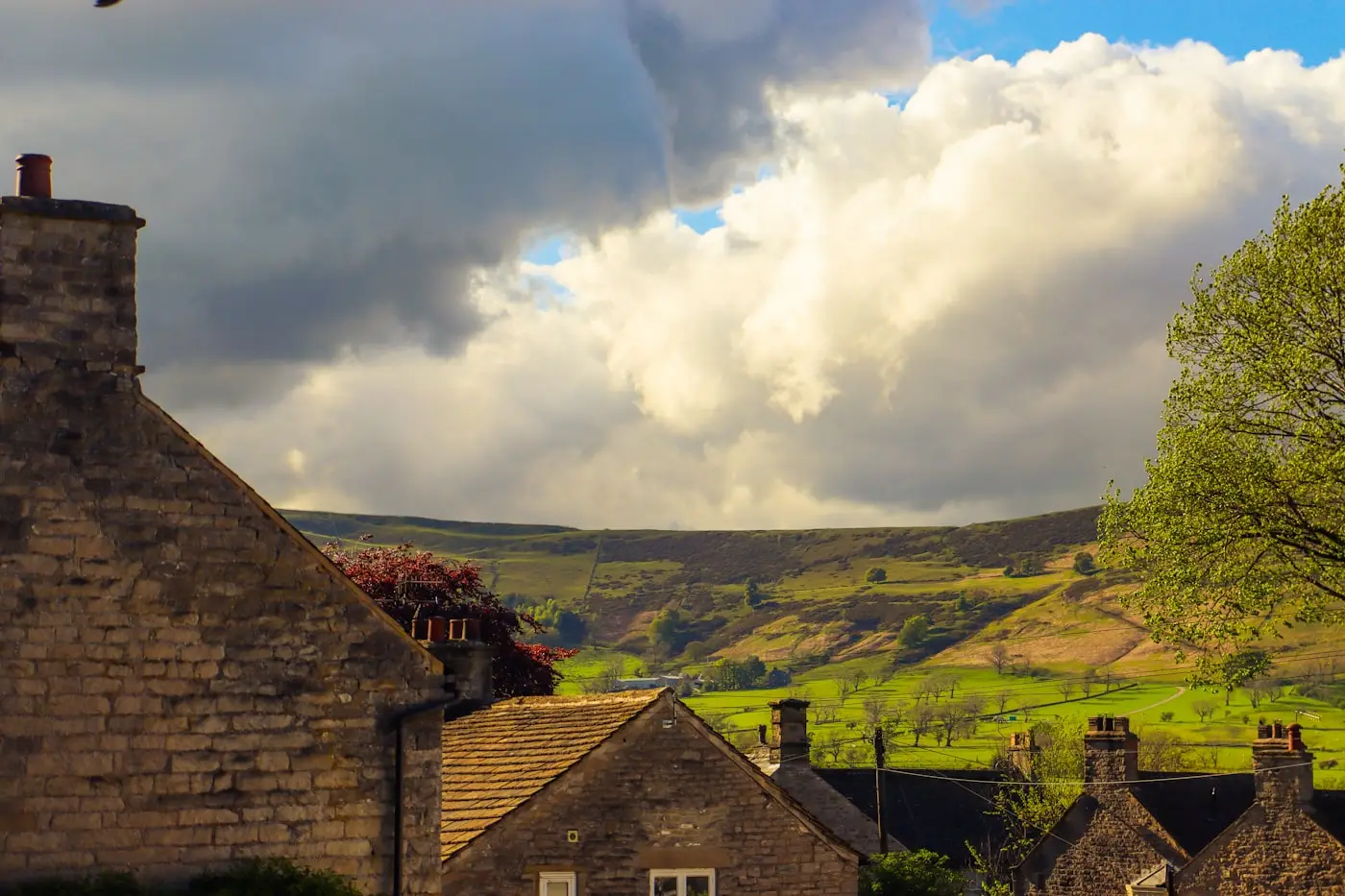
Drought-tolerant planting is increasingly popular across Yorkshire, with gardeners in Harrogate, Wetherby and York leading the way.
Yorkshire is not typically thought of as a drought county, and for good reason: the Pennine hills to the west catch Atlantic rainfall and distribute it generously across Calderdale, Bradford, and the upper Calder valley. Hebden Bridge sees more than 1,200mm of rain per year. But move east across the Pennines and the picture changes sharply. York receives around 620mm per year. Beverley and Driffield in the East Riding receive even less - among the lowest rainfall totals in England. And even in the wetter west, the summer of 2018 brought months of genuine drought, and the summer of 2022 triggered Yorkshire Water's first hosepipe ban since 1995.
The challenge of drought-tolerant gardening in Yorkshire is not the dryness alone. It is the combination: dry summers followed by cold, wet winters. Most plants with genuine drought tolerance evolved in Mediterranean or continental climates where summers are dry and winters are mild. Move those plants to Yorkshire and the winter kills them - not the drought. A cistus that thrives in the south of France dies in a Leeds winter. Lavender survives Yorkshire winters in most years but rots at the root if planted in wet clay through February. The selection of plants that is genuinely drought-tolerant and genuinely winter-hardy in Yorkshire conditions is narrower than it appears, and this is where most planting schemes fail.
Yorkshire's split climate: which part of the county are you in?
Understanding which part of Yorkshire you are gardening in is the starting point for drought-tolerant design. The county covers a wide range of climatic conditions, from reliably wet Pennine valleys to some of the driest land in England.
The Pennine west (Calderdale, Kirklees, parts of Bradford, the upper Wharfe valley) is wet. Annual rainfall of 900-1,400mm means that true drought conditions are relatively rare and short. In these areas, drought-tolerant planting is an aesthetic choice (reducing maintenance and water use) rather than a necessity, and the main challenge is winter hardiness rather than summer drought.
The central belt - Leeds, most of Bradford, Sheffield, Wakefield - receives 700-850mm per year. Dry summers occur regularly and can produce six to eight-week dry spells that stress conventional planting. Hosepipe restrictions affect these areas when Yorkshire Water implements county-wide bans. Drought-tolerant planting here has genuine practical value.
The eastern and drier zone - the Vale of York (York, Wetherby, Harrogate area), the East Riding (Beverley, Bridlington, Driffield, Holderness), and the lower Humber corridor - receives 600-680mm per year. This is a genuinely dry climate by English standards. In dry years, rainfall may be 500mm or less. Drought-tolerant planting here is a practical necessity rather than a preference, and conventional lawns and herbaceous borders require sustained supplementary watering to look anything other than stressed through July and August.
The winter problem: why Mediterranean drought tolerance does not transfer to Yorkshire
The most common mistake in drought-tolerant planting in Yorkshire is choosing plants that evolved for Mediterranean conditions - warm, dry summers and mild, wet winters - and discovering that they cannot survive Yorkshire winters. Yorkshire regularly experiences temperatures of -5 to -10C, and -12 to -15C events occur in severe winters. The Pennine area experiences these temperatures more frequently than the Vale of York or East Riding, but the whole county has genuine hard frost risk. If a full Mediterranean garden design in Yorkshire is your goal, that guide covers which structural elements and plant species make it work in our climate without the first hard frost undoing the investment.
Plants that are frequently offered as drought-tolerant but are borderline or unreliable in Yorkshire winters include: cistus (rock rose), phlomis fruticosa (Jerusalem sage), many salvia species (though Salvia nemorosa is reliably hardy), most agapanthus (some cultivars are marginally hardy but not reliably so in Yorkshire clay), and the more tender ornamental grasses such as Stipa tenuissima (Mexican feather grass). The RHS hardiness rating H5 (hardy to -10C) should be the minimum for a Yorkshire garden; H6 (hardy to -15C) is better for exposed upland sites or Pennine valleys.
Lavender in Yorkshire: the honest assessment
Lavender is not reliably drought-tolerant and winter-hardy in Yorkshire clay conditions. It survives most Yorkshire winters in free-draining soil (gravel beds or sandy borders), but the combination of clay soil (which holds winter wet around the roots) and hard frost kills it frequently. If you want lavender in a Yorkshire garden, plant it in raised beds or gravelled beds with excellent drainage, on a south or south-west-facing aspect, and expect to replace it every three to five years. In a north-facing or clay-heavy position, do not plant it at all.
Which plants are drought tolerant and winter-hardy in Yorkshire?
The following plants are both genuinely drought-tolerant (once established) and reliably winter-hardy to at least -10C in Yorkshire conditions. These are the plants that deliver the performance the catalogue photographs promise, without dying in the first hard winter.
| Plant | Hardy to | Character | Yorkshire notes |
|---|---|---|---|
| Stachys byzantina (lamb's ears) | -15C (H6) | Silver woolly foliage; sprawling ground cover; pink flower spikes | Excellent on gravel beds; may rot in heavy clay without sharp drainage |
| Echinops ritro (globe thistle) | -15C (H6) | Blue spherical flower heads; structural and architectural | Thrives in Yorkshire clay once established; very drought-tolerant when rooted in |
| Eryngium (sea holly) | -15C (H6) | Steely blue thistle-like flowers; metallic architectural form | Excellent drainage needed; works in gravel or sandy borders; E. x zabelii and E. bourgatii most reliable |
| Hylotelephium spectabile (sedum) | -15C (H6) | Flat pink flower heads; fleshy blue-green foliage; butterfly magnet | Very reliable in Yorkshire; tolerates clay if not waterlogged; holds structure into winter |
| Achillea (yarrow) | -20C (H7) | Flat-headed flowers in yellow, white, pink, red; fine feathery foliage | Tough Yorkshire plant; excellent on dry free-draining soils; spreads freely |
| Allium (ornamental) | -15C (H6) | Spherical flower heads on tall stems; late spring to early summer | Plant bulbs in autumn; thrive in well-drained borders; complement grasses beautifully |
| Salvia nemorosa | -15C (H6) | Dense blue-purple flower spikes; repeat flowering if cut back | More reliable in Yorkshire than other salvias; 'Caradonna' and 'Ostfriesland' are the best varieties |
| Artemisia (most species) | -10C to -15C (H5-H6) | Silver or grey aromatic foliage; structural year-round | A. absinthium and A. 'Powis Castle' are the most reliable in Yorkshire; need sharp drainage |
| Geranium (hardy) | -15C to -20C (H6-H7) | Wide range of flower colours; ground cover; long flowering season | G. sanguineum, G. 'Rozanne', G. pratense - reliable in dry conditions once established |
| Festuca glauca (blue fescue) | -15C (H6) | Fine blue-grey mounded grass; structural year-round | Superb in gravel gardens; drought-tolerant once established; divide every 2-3 years to keep vigorous |
Ornamental grasses for Yorkshire drought gardens
Ornamental grasses are among the most effective plants for drought-tolerant gardens in Yorkshire, combining structural interest through the whole year with minimal water needs once established. The key is choosing species that are both drought-tolerant and winter-hardy, rather than the more tender or moisture-demanding species.
Festuca glauca (blue fescue) is the most reliable small grass for a Yorkshire drought garden - compact, blue-grey, drought-tolerant, and fully hardy. Stipa gigantea (giant feather grass) is one of the most dramatic ornamental grasses: it reaches 2 metres in flower, is fully hardy in Yorkshire, and once established tolerates dry conditions well. Calamagrostis x acutiflora 'Karl Foerster' is a tall upright grass that is fully hardy and more drought-tolerant than its presence in border plantings might suggest. Pennisetum alopecuroides (fountain grass) is borderline in the coldest Yorkshire winters - H5 rating means it may survive or may not in a severe year; it performs better in the drier eastern Vale of York area than in exposed Pennine sites.
Does gravel mulching work on Yorkshire clay?
Yes - gravel mulching works well on Yorkshire clay, but only when installed with a 50-75mm grit sub-layer between the clay and the gravel. Gravel mulching is one of the most effective tools for a drought-tolerant garden. It retains moisture in the soil by preventing surface evaporation, suppresses weeds, and gives a clean aesthetic suited to the naturalistic planting that drought-tolerant plants lend themselves to. On Yorkshire clay, however, it must be installed correctly or it fails within a few seasons.
The problem is clay movement. Clay is a living, dynamic material - it expands when wet, contracts when dry, and over time it migrates upward through any covering material placed on it. Place 75mm of gravel directly on clay and within two to three Yorkshire winters, the clay has worked its way into the gravel base, mixed with it, and created a compacted greasy surface that neither drains nor provides the clean aesthetic of fresh gravel. This is the most common gravel mulching failure in Yorkshire gardens, and it is completely avoidable with the correct sub-base preparation.
The correct approach for gravel mulching on Yorkshire clay:
- Remove all existing grass or weed growth, including as much root material as possible for perennial weeds.
- Apply a 50-75mm layer of sharp horticultural grit or coarse sand over the clay surface. This acts as a transitional layer between the clay below and the gravel above, preventing the clay from migrating up into the gravel. Do not use building sand - it is too fine and compacts.
- If using a permeable membrane, lay it on top of the grit layer rather than directly on the clay. This allows water through but reduces weed germination in the gravel above. Be aware that membranes degrade over ten to fifteen years and are difficult to remove once established.
- Apply 50-75mm of the chosen gravel on top. Pea gravel (10-14mm grade) is the most traditional choice; slate chippings and quartz are alternatives. For a drought-tolerant planting scheme, the choice of gravel should complement the warm tones of the plants - terracotta-buff gravel suits echinops, alliums, and sedums; pale grey gravel suits a more silver-foliage scheme with artemisia and stachys.
- Plant directly through the gravel and grit layer into the clay below. Most drought-tolerant perennials will push roots through the grit and into the clay, which actually provides good anchorage and moisture during establishment. Water regularly for the first season; once rooted in, these plants genuinely need minimal supplementary watering.
For a full guide to gravel garden design and installation in Yorkshire, the gravel garden Yorkshire guide covers the design and installation process in detail.
How much water does reducing your lawn save in a dry summer?
A 50 square metre lawn needs 1,000-1,250 litres per week to stay green in July; replacing even half that area with drought-tolerant planting removes that demand entirely. The lawn is the single largest consumer of water in most Yorkshire gardens during a dry summer. A maintained green lawn in July and August requires approximately 20-25 litres per square metre per week of supplementary watering. A 50 square metre lawn needs 1,000-1,250 litres per week during a dry spell - a quantity that is practically impossible to sustain with a hosepipe ban in place, and expensive in time and water even without one.
The argument for reducing lawn area - or eliminating it entirely - is strongest in the drier eastern parts of Yorkshire (York, East Riding) but applies anywhere in the county during a hot, dry summer. Replacing even half of a large lawn with gravel, drought-tolerant planting, or hard paving dramatically reduces the water demand of the garden and improves its appearance through a dry summer. A properly designed drought-tolerant garden looks its best in July and August, when a lawn looks its worst without irrigation.
The low maintenance garden Yorkshire guide covers the full range of lawn reduction approaches and their cost. The garden makeover service handles the physical transformation from a high-maintenance lawn garden to a more self-sustaining drought-tolerant design. For the lawn areas you keep, the Yorkshire lawn care guide covers seasonal management including how to manage grass through dry spells without causing long-term damage. A professional lawn treatment programme - including aeration, overseeding, and seasonal fertilisation - helps drought-stressed turf recover quickly once rain returns. If you prefer to hand off the regular cutting, our lawn mowing service keeps the remaining grass in good condition through the season without adding to your water use.
How do you protect drought-tolerant plants from Yorkshire winters?
Add sharp grit around plant crowns, plant on a slight mound to improve drainage away from the root zone, and cover tender plants with dry straw or fleece in severe winters. Many drought-tolerant plants are killed in Yorkshire not by the cold itself but by the combination of cold and wet soil around their crowns and roots through winter. Clay soil that remains saturated from October to March is a hostile environment for plants that evolved in free-draining conditions. The solution for borderline plants (lavender, penstemon, some artemisia) is to improve drainage at the planting spot rather than just relying on the plant's cold hardiness.
Practical measures for winter-wet protection in Yorkshire clay: add a generous collar of sharp grit around the base of the plant (200-300mm diameter, 50mm deep) to prevent moisture accumulating at the crown; plant on a slight mound so water drains away from the root zone; in a severe winter, cover tender crowns with a layer of dry straw or grit held in place with horticultural fleece. These measures make the difference between a marginally hardy plant surviving a Yorkshire winter and losing it.
What is the best way to harvest rainwater in a Yorkshire garden?
Water butts are the simplest and most cost-effective water harvesting measure for a Yorkshire garden. A standard 200-litre butt connected to a downpipe from a house roof fills within minutes during a typical Yorkshire rainfall event and provides a reserve that can supply a drought-tolerant garden through short dry spells without touching the mains supply. In areas subject to Yorkshire Water hosepipe bans, this reserve can extend the period during which the garden can be watered within the ban's terms (watering from a can or stored rainwater is typically permitted even during a hosepipe restriction).
Practical water butt setup for Yorkshire: position on a stand of at least 200mm height to allow a watering can to fit under the tap; connect with a diverter rather than just a hole in the downpipe, so overflow goes back to the drain in heavy rain rather than flooding the patio; in a garden with multiple downpipes, run a second butt in series connected by overflow pipe from the first. Two 200-litre butts in series give 400 litres of stored rainwater - enough to hand-water a drought-tolerant garden through a week-long dry spell.
For larger gardens, or gardens with significant hard landscaping that generates runoff, a simple soakaway at the lowest point of the garden disperses surface water into the subsoil and prevents pooling. Yorkshire clay is not ideal for soakaways (it drains slowly), but a soakaway filled with clean rubble or purpose-made soakaway crates into a layer of more permeable subsoil can still provide useful drainage during heavy rainfall events. For a full assessment of drainage options in Yorkshire gardens, the garden drainage Yorkshire guide covers the range of solutions and their relative effectiveness on clay soils.
How much does a drought-tolerant garden makeover cost in Yorkshire?
| Element | Typical cost (Yorkshire, 2026) | Notes |
|---|---|---|
| Gravel mulching (per sqm, installed) | £25-£60 | Includes grit sub-layer, membrane option, gravel; labour for preparation |
| Drought-tolerant planting scheme (per sqm border) | £30-£70 | Supply and plant echinops, salvia nemorosa, achillea, alliums, grasses |
| Lawn removal and replacement with gravel (per sqm) | £30-£65 | Strip turf, dispose, grit sub-layer, gravel - full conversion |
| Water butt installation (200L) | £80-£180 supplied and fitted | Includes stand, diverter, and connection to downpipe |
| Full drought garden makeover (40-60sqm) | £2,500-£6,000 | Lawn removal, gravel mulching, planting scheme, water harvesting setup |
For Yorkshire gardener rates in general, the UK gardener cost guide gives the full national context. A garden design consultation before committing to a full drought-tolerant redesign is worthwhile - the plant selection and gravel specification decisions are the critical ones, and getting them right from the start saves money compared to replacing a planting scheme that was not suited to Yorkshire conditions.
Frequently Asked Questions
Which drought-tolerant plants survive Yorkshire winters?
The key Yorkshire-proven drought-tolerant, winter-hardy plants are: Stachys byzantina, Echinops ritro, Eryngium (sea holly), Hylotelephium spectabile (sedum), Achillea, ornamental Allium, Salvia nemorosa, Artemisia (on sharp drainage), Festuca glauca, and Stipa gigantea. All are rated H6 (-15C) or better. Avoid Mediterranean species with H4 or H5 ratings for clay-heavy Yorkshire gardens unless you can provide excellent winter drainage.
Is Yorkshire actually dry enough to need drought-tolerant planting?
It depends on where in Yorkshire you are. The East Riding and Vale of York receive 600-650mm of rain per year - genuinely dry - and drought-tolerant planting is a practical choice. Even in wetter West Yorkshire, the summers of 2018 and 2022 demonstrated that dry spells occur and hosepipe bans are a real possibility. Drought-tolerant planting reduces maintenance, water use, and garden vulnerability regardless of which part of the county you are in.
How much water does reducing my lawn save?
A maintained lawn needs 20-25 litres per square metre per week of supplementary watering in a dry summer. A 50 square metre lawn requires 1,000-1,250 litres per week. Replacing lawn with drought-tolerant planting and gravel eliminates that demand entirely, and the replacement garden looks its best in July and August, when an unwatered lawn looks its worst.
What plants survive dry summers in Yorkshire?
The most reliable drought-tolerant plants for Yorkshire gardens are Echinops ritro (globe thistle), Achillea (yarrow), Hylotelephium spectabile (sedum), Salvia nemorosa, Eryngium (sea holly), Stachys byzantina (lamb's ears), and ornamental grasses including Festuca glauca and Stipa gigantea. All are fully winter-hardy and genuinely drought-tolerant once established. They suit every part of Yorkshire, including the wetter Pennine west where drought-tolerant planting is an aesthetic and water-saving choice rather than a survival necessity. For advice on establishing a new drought-tolerant border, local gardeners can advise on plant selection and gravel specification for your soil type.
Does drought damage Yorkshire lawns?
A dry summer turns most Yorkshire lawns brown, but this is dormancy rather than death. Yorkshire clay holds moisture at depth even when the surface cracks and looks bone dry. An established lawn on clay will recover fully within two to three weeks of rain. The damage occurs if you cut the lawn short during drought stress or apply nitrogen feed to a dormant lawn - both push growth when the grass is least able to respond. Raise cutting height to 5-6cm and leave the lawn alone during a dry spell.
Are clay soils more or less drought resistant than sandy soils?
More drought resistant for established plants. Yorkshire clay holds water at depth far longer than sand or loam, which is why clay gardens in Leeds and Bradford often look fine well into a dry summer while sandy East Riding soils start to show stress first. The catch is the first year: new plantings in clay have not yet rooted deep enough to access the moisture reservoir below, so newly planted borders need watering through any dry spell in their first season. After two full seasons, most established plants in Yorkshire clay cope with normal summer dry spells without supplementary watering.
Which low-maintenance plants suit Yorkshire clay soil?
Yorkshire clay holds moisture well once established but stays waterlogged in winter, so the best low-maintenance plants are those with robust root systems that do not rot when wet. Hardy geraniums (particularly G. sanguineum and G. 'Rozanne') thrive in clay and spread to cover ground without intervention. Hylotelephium spectabile (sedum) handles clay well if not severely waterlogged. Echinops ritro, Achillea, and ornamental Allium all root successfully into clay once past their first season. Avoid plants needing sharp drainage year-round; lavender and cistus both struggle in Yorkshire clay winters even if they tolerate summer drought. A coarse grit collar around the crown of borderline plants significantly improves winter survival rates.
How much does it cost to set up a drought-tolerant garden in Yorkshire?
A full drought-tolerant makeover for a 40-60sqm Yorkshire garden costs £2,500-£6,000 in 2026, covering lawn removal, gravel mulching with a grit sub-layer, and a planting scheme. Smaller border conversions (10-20sqm) run £800-£2,000. Once established, a drought-tolerant garden costs significantly less to maintain than a conventional lawn garden: regular maintenance visits run from £25/hr, and drought-tolerant plantings need far less mowing, watering, and feeding than grass-heavy designs. The upfront cost typically pays back within two to three seasons through reduced maintenance time and water use.
How do I start converting a Yorkshire lawn to a drought-tolerant garden?
The most practical first step is deciding which parts of the lawn to keep and which to convert. Most Yorkshire homeowners start with a border conversion rather than full lawn removal: strip the turf, apply 50-75mm of sharp horticultural grit, then 50-75mm of gravel, and plant drought-tolerant perennials through both layers. This approach costs £800-£2,500 for a standard border on a medium garden, and results show within one growing season. For the full physical work, the garden makeover service covers lawn stripping, grit sub-base, and planting for Yorkshire conditions.
What are the best drought-tolerant plants for Yorkshire gardens?
For Yorkshire's clay-heavy soils and dry summers, the best drought-tolerant choices are: lavender (thrives on free-draining slopes after clay improvement), sedums and sempervivums (roof gardens and dry borders), ornamental grasses such as Stipa tenuissima and Festuca glauca (low water once established), geraniums (hardy cranesbills tolerate both clay and summer dry), and verbascum (deep tap-rooted, handles dry clay naturally). Avoid Mediterranean exotics on heavy clay without significant grit amendment - they rot in wet Yorkshire winters rather than dying of drought.
Does a drought-tolerant garden need less maintenance in Yorkshire?
Yes - once established. The first two summers require regular watering while roots establish, which offsets much of the water saving. After establishment (usually by year 3), a well-planned drought-tolerant Yorkshire garden needs roughly half the water and one-third less mowing time of a conventional lawn-and-border plot. Gravel mulching is the single biggest maintenance reducer: it suppresses weeds, retains soil moisture and eliminates most of the routine border weeding.
Related reading
- Gravel garden design and installation in Yorkshire
- Low maintenance garden design in Yorkshire
- Clay soil gardening in Yorkshire
- Garden drainage in Yorkshire
- Yorkshire lawn care guide
- Garden design service
- Borders and planting service
- Garden makeover service
Create a drought-tolerant Yorkshire garden.
60-second assessment. If a local gardener who knows Yorkshire soils and climate takes your enquiry, they call you with a plan.
Start the assessment