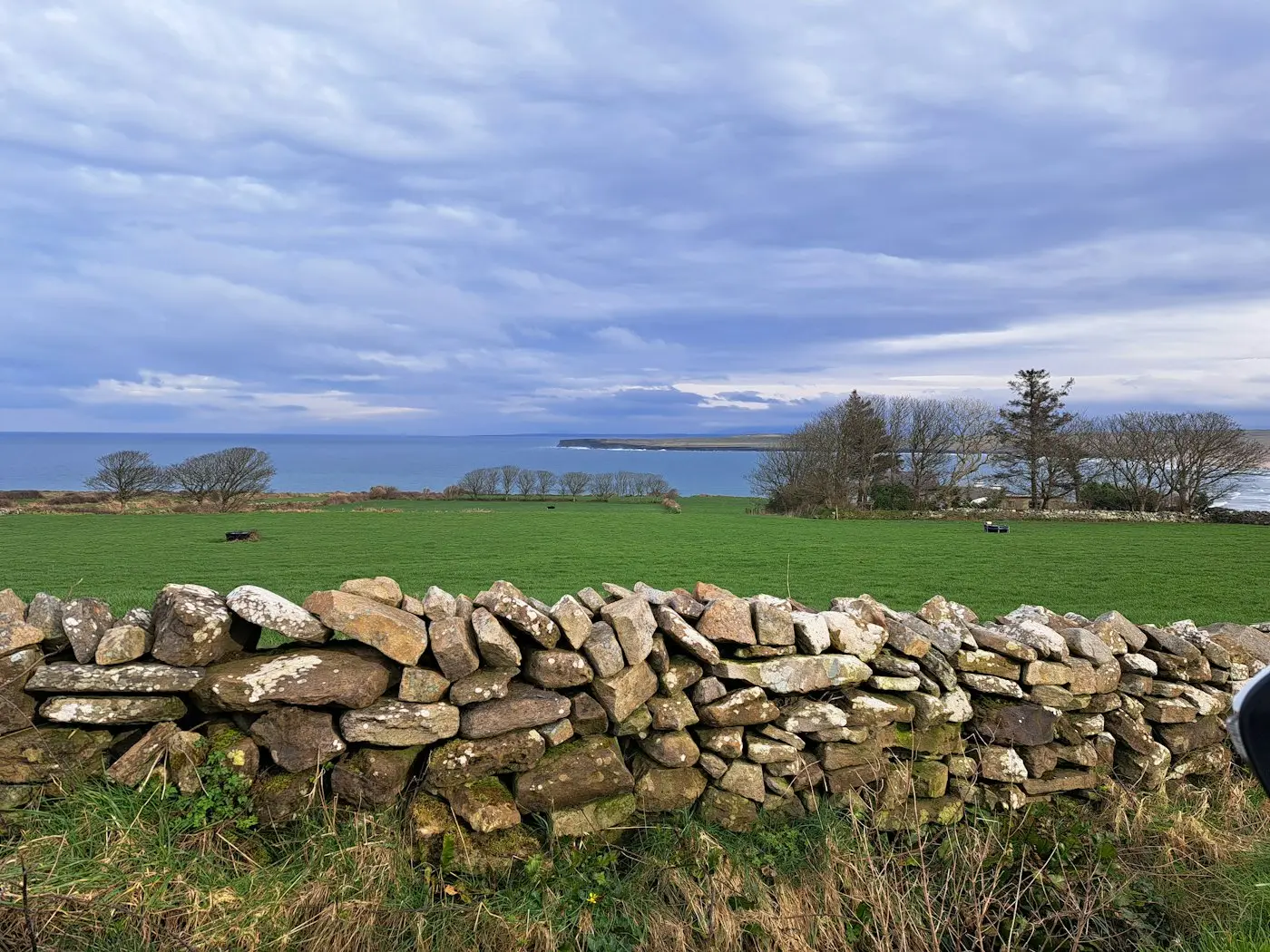
Garden wall and retaining wall projects are common across Yorkshire, with stone and brick work seen in gardens from York to Harrogate and Beverley.
Yorkshire's landscape is defined by its walls. The drystone field walls that run across the Pennines and the Dales are one of the most distinctive features of the English countryside, built over centuries from the stone that lies closest to hand - Millstone Grit on the Pennines, limestone in the Dales, sandstone on the fringes. That tradition extends naturally into the garden: a drystone or mortared stone boundary wall using locally sourced or reclaimed stone is one of the most powerful statements a Yorkshire garden can make. But stone is not the only option, and for many Yorkshire homeowners - particularly in the towns and cities where brick is the dominant building material - brick, rendered block, or timber sleeper walls are equally appropriate choices. This guide covers all the main options in the Yorkshire context.
Types of garden wall for Yorkshire gardens
Drystone walls
Drystone walls are built without mortar - the stones are fitted together by skill and gravity, with the weight and geometry of the wall creating its own structural stability. Yorkshire has a rich drystone walling tradition and some of the finest examples in England, from the single-width sheep walls of the moorland to the double-face, hearting-filled boundary walls of the Dales farms. A drystone garden wall using appropriate local stone is the most authentic and most visually powerful wall choice for a Yorkshire garden in a stone-built area.
The key to a good drystone wall is appropriate stone. Millstone Grit (the warm, buff-brown sandstone dominant across the Pennines, West Riding, and Harrogate area) should be used in Millstone Grit country; Carboniferous limestone (pale grey, used in the Dales and limestone fringe) should be used where that is the local material. Mixing stone types produces a wall that looks out of place regardless of how well it is built. Reclaimed stone from demolished farm buildings is available from several Yorkshire stone merchants and is often more economical than newly quarried stone while providing the weathered character that makes drystone walls look appropriate rather than new.
Drystone walling is a skilled craft. A well-built drystone wall will last 50 to 100 years without significant maintenance; a poorly built one will begin to lean and collapse within 10 to 15 years as the stone faces shift out of alignment. The Dry Stone Walling Association of Great Britain (DSWA) maintains a directory of certified wallers across Yorkshire - if you are commissioning new drystone work, choosing a DSWA-certified craftsman is a quality assurance measure worth taking.
Mortared stone walls
Mortared stone walls use the same Yorkshire stone but set in a lime or cement mortar, which provides greater structural stability and allows taller, thinner walls than drystone construction. They are appropriate where a more refined finish is needed, where the wall needs to be taller than a practical drystone construction allows, or where the ground conditions are too unstable for an unmortered structure. Mortared stone walls in Yorkshire should always use lime mortar rather than cement mortar wherever possible - cement is too rigid for the seasonal expansion and contraction that Yorkshire stone walls experience, and a hard cement pointing is one of the primary causes of stone spalling and wall failure in older Yorkshire buildings.
Brick walls
Brick garden walls are more at home in the towns and cities of Yorkshire than in the rural stone-building areas. In Leeds, Bradford, Hull, Sheffield, and the East Riding brick towns, a well-built brick garden wall using matching or complementary brick to the house is the right choice. Yorkshire has a strong tradition of quality brick production - the buff and red bricks of the West Riding are distinctive - and matching the house brick to the garden wall unifies the property in a way that other materials cannot. Engineering brick or hard-fired clay brick handles Yorkshire's wet-dry cycles better than soft, porous bricks, which can spall in frost when waterlogged.
A garden wall cap (coping stones or bullnosed brick in a projecting course at the top) is important in Yorkshire to deflect water off the face of the wall. Uncapped brick walls in Yorkshire's wet climate allow water to soak down through the top course and into the mortar joints, accelerating deterioration. A proper projecting coping course directs rainwater away from the face of the wall and significantly extends its maintenance-free life.
Rendered block walls
Rendered block walls (concrete block or thermalite block rendered in sand and cement or through-colour render) offer a contemporary aesthetic that suits modern new-build gardens and urban spaces well. They are less expensive than stone or brick and can be built quickly by a competent bricklayer without specialist skills. In Yorkshire's climate, external render requires a slightly heavier specification than in drier climates - a through-colour monocouche render (applied in two coats with the colour integral to the mix) performs better than painted render in Yorkshire's wet conditions, as paint can trap moisture and cause the render to blow.
Rendered walls require periodic maintenance in Yorkshire - checking for cracks after cold winters (freeze-thaw damage can cause render to delaminate from the substrate) and repairing promptly to prevent moisture ingress. A rendered wall that is well-built and well-maintained provides a clean, contemporary backdrop for planting that is hard to achieve with more textured stone or brick surfaces.
Timber sleeper retaining walls
Timber sleeper walls are a practical and moderately inexpensive solution for retaining changes of level in sloping Yorkshire gardens. New or reclaimed railway sleepers in hardwood (oak) or softwood (pine, larch) are stacked and fixed to create terraces, raised beds, and level changes. They suit informal, contemporary, and cottage-style gardens well and are much quicker to build than masonry retaining walls. The main limitation is lifespan: softwood sleepers begin to deteriorate after 10 to 15 years in Yorkshire's wet conditions even when treated; hardwood sleepers (oak, especially) last significantly longer - 20 to 30 years is reasonable for good oak sleepers.
Sleeper walls require good drainage behind them for structural integrity. Without drainage, the weight of wet soil behind the sleepers exerts significant horizontal pressure, and the timber-to-timber fixings can pull apart over time. Include a layer of gravel or hardcore behind the wall face and weep holes at the base to allow water to escape. Reclaimed railway sleepers - which have been pressure-impregnated with creosote - should not be used adjacent to food-growing areas as the creosote leaches into soil. For raised vegetable beds or fruit gardens, use untreated oak sleepers or purpose-made raised bed timber.
Retaining walls for sloping Yorkshire gardens
Many Yorkshire gardens slope - the county's hilly topography, particularly across the Pennine-facing suburbs of Leeds, Bradford, Huddersfield, Halifax, and Sheffield, means that many residential gardens have significant gradients. A retaining wall transforms a sloping garden from a difficult, erosion-prone slope into a series of level or gently graded terraces that are practical to garden on and far more usable as outdoor living space.
The structural engineering requirements for a retaining wall depend on the height of the retained soil. A retaining wall up to 600mm high retaining normal garden soil on reasonable clay is a straightforward construction job that any competent bricklayer or landscape contractor can handle. Above 1 metre, the structural design becomes more complex - the pressure of retained soil multiplies quickly with height, and the foundation, wall thickness, drainage provision, and any reinforcement all need to be sized accordingly. Above 1.5 metres, and certainly above 2 metres, the wall is a structural element and the design should be reviewed by an engineer or experienced landscape contractor who understands the site-specific soil conditions.
For Yorkshire's clay soils, drainage provision behind a retaining wall is particularly important. Clay retains water and transmits hydrostatic pressure effectively. A retaining wall on clay without adequate drainage will experience significant water pressure in wet winters, which is one of the primary causes of retaining wall failure in Yorkshire gardens. A 150mm layer of free-draining gravel or hardcore immediately behind the wall face, with a filter fabric to prevent clay migration into the gravel layer, and weep holes every 900mm to 1200mm in masonry walls, is the minimum adequate provision for Yorkshire clay sites.
The Yorkshire drystone walling tradition
The Dry Stone Walling Association estimates there are over 9,000 kilometres of drystone walls in North Yorkshire alone - more than the entire road network of the county. This extraordinary infrastructure was built largely between 1750 and 1850 during the Parliamentary Enclosure period, when common land across the Pennines and Dales was divided into private fields. Many of these walls were built to last centuries, and the best examples have done so. For a garden wall in Millstone Grit or limestone country, the drystone tradition is not just aesthetically appropriate - it is the technically correct choice for a structure that will outlast any alternative.
Planning permission for garden walls in Yorkshire
The basic permitted development rules for garden walls apply across Yorkshire as they do in England generally: walls up to 1 metre adjacent to a road or public footpath, and up to 2 metres elsewhere in the garden, do not require planning permission in most cases. However, Yorkshire has a high density of conservation areas and listed properties, and the rules in these contexts are more restrictive.
Conservation area status is widespread in Yorkshire. The historic cores of York, Harrogate, Skipton, Knaresborough, Ripon, Beverley, Richmond, and many smaller market towns and villages carry conservation area designation. In conservation areas, permitted development rights for walls can be restricted, and any wall that would materially affect the character of the conservation area may require conservation area consent. The planning authority (your local council) is the definitive source for what applies to your specific property. If your property is in or adjacent to a conservation area, a quick call to the planning department before starting any wall construction is the safest approach.
Listed building consent is required for any alterations to the curtilage of a listed building, including garden walls. This applies even to garden walls that are not themselves listed structures. If your house is listed (Grade I, II*, or II), consult your local planning authority before building, removing, or significantly altering any garden wall.
Cost estimates for garden walls in Yorkshire (2026)
| Wall type | Approximate cost per linear metre | Notes |
|---|---|---|
| Drystone (local stone, 0.6-0.9m) | 200 - 400 per m | Labour-intensive skilled craft; stone sourcing affects cost significantly |
| Mortared stone (0.9-1.5m) | 250 - 450 per m | Higher than drystone due to mortar, foundation requirement, and pointing |
| Brick wall (1m, single-leaf) | 150 - 300 per m | Brick spec and facing quality affects cost; coping additional |
| Rendered block (1m) | 120 - 250 per m | Less expensive than brick or stone; render quality affects longevity |
| Timber sleeper retaining (0.6-0.9m) | 80 - 200 per m | Drainage provision and fixings required; oak sleepers cost more than softwood |
| Masonry retaining (1m+) | 300 - 600+ per m | Structural design and foundations at this height add significantly to cost |
Planting against and on garden walls
A garden wall is a planting opportunity as well as a structural feature. South and west-facing walls in Yorkshire create warm, sheltered microclimates - sun-stored in the stone through the day and released at night - that allow plants otherwise too marginal for the county's climate to thrive. A south-facing Yorkshire stone wall is a genuinely different microclimate from the open garden, often 2 to 4 degrees warmer at night and significantly more sheltered from the cold north-easterlies that drop temperatures quickly in spring and autumn.
Plants that thrive against south or west-facing Yorkshire walls include: climbing roses (particularly the thornless or near-thornless cultivars like 'Zephirine Drouhin' and 'Cecile Brunner'); Ceanothus (borderline in Yorkshire's open garden, reliable against a warm wall); Fremontodendron californicum (spectacular in flower against a south wall, not reliably hardy in the open garden in Yorkshire); Chaenomeles (flowering quince, extremely tough, flowers in March on bare stems and is excellent against any aspect); and the winter-flowering climber Jasminum nudiflorum (yellow, flowers December to March, fully hardy against north or east walls).
Drystone walls with crevices and gaps are a special planting habitat. The conditions in wall crevices - warm, free-draining, gritty, with low nutrient levels - suit a specific range of plants that would not thrive in normal garden soil. Aubrieta colonises Yorkshire stone walls naturally and effectively from self-seeding. Saxifraga (particularly Saxifraga x urbium, London Pride) is a traditional wall plant for Yorkshire cottage gardens. Erigeron karvinskianus (Mexican fleabane) will self-seed prolifically into wall crevices and produce its small pink-and-white daisy flowers from May through October. For the wall tops, the hardy houseleek (Sempervivum tectorum) is traditional in Yorkshire - historically planted on cottage roofs and stone gate posts to ward off lightning, and genuinely at home on the flat tops of stone walls.
For more detail on hard landscaping options that work with garden walls, see the guide to hard landscaping in Yorkshire. The guide on drystone walls in Yorkshire covers the craft and construction in more detail. For sloping gardens specifically, the retaining wall guide addresses the structural and drainage requirements in the Yorkshire context.
Maintenance for Yorkshire garden walls
Even the most durable Yorkshire stone walls need periodic maintenance. For drystone walls, the main maintenance task is resetting any stones that have shifted or fallen out - typically after a severe frost-thaw cycle that has moved stones relative to each other, or after physical impact. Small sections of drystone wall can be re-laid by a careful DIY builder; longer sections or structural failures need a skilled waller. Annual inspection in spring (after the main frost risk has passed) identifies any sections requiring attention before summer growth hides the problem.
For mortared walls, the main maintenance is repointing - replacing eroded mortar joints before water penetrates behind the face and causes spalling or frost damage. Inspect mortar joints every five years in Yorkshire's conditions and repoint any sections where the mortar has receded more than 10mm from the face of the stone. Always use lime mortar for repointing traditional stone walls, never cement.
For rendered block walls, check for cracks after cold winters and repair promptly. Hairline cracks in render can be sealed with a flexible filler; larger cracks or areas of blown render (where the render has de-bonded from the block beneath) require hacking off and re-rendering. Painted render should be repainted every five to seven years in Yorkshire's conditions.
For help clearing overgrown areas before wall construction or garden clearance as part of a landscaping project, the garden clearance service handles the preparation work that precedes any new wall installation.
Frequently Asked Questions
Do I need planning permission for a garden wall in Yorkshire?
Walls up to 1 metre adjacent to a road and up to 2 metres elsewhere do not generally need planning permission. Conservation area properties and listed buildings have additional restrictions - always check with your local planning authority before starting work near these thresholds.
What is the best type of garden wall for a Yorkshire stone house?
Drystone or mortared stone using matching local stone (Millstone Grit, limestone, or sandstone depending on your location) is almost always the most appropriate and visually successful choice. Brick suits town and city properties where brick is the dominant local building material.
How much does a garden wall cost in Yorkshire?
Drystone walling: 200 to 400 pounds per linear metre. Mortared stone: 250 to 450 per metre. Brick: 150 to 300 per metre. Timber sleepers: 80 to 200 per metre. Masonry retaining walls above 1 metre: 300 to 600 or more per metre.
Can I build a drystone wall myself?
The basics are learnable, but a professional drystone waller produces a significantly better and longer-lasting result. For structural retaining walls, tall boundary walls, or walls in prominent positions, always use a professional. For short, low walls in informal positions, capable DIY builders can produce reasonable results.
What plants grow well on or against a Yorkshire stone garden wall?
South and west-facing walls suit climbing roses, ceanothus, fremontodendron, and chaenomeles. North and east walls suit Hydrangea petiolaris, schizophragma, and ivy. Drystone wall crevices suit aubrieta, saxifraga, erigeron, and sempervivum.
Do retaining walls need drainage in Yorkshire?
Yes - drainage is essential. Gravel or hardcore behind the wall face, a filter fabric, and weep holes at the base are the minimum requirements for a Yorkshire clay site. Without drainage, hydrostatic pressure in wet winters is one of the main causes of retaining wall failure.
Get a garden wall built or repaired in Yorkshire.
Our garden walls service handles new construction, repair, and restoration across the county.
Get a quote