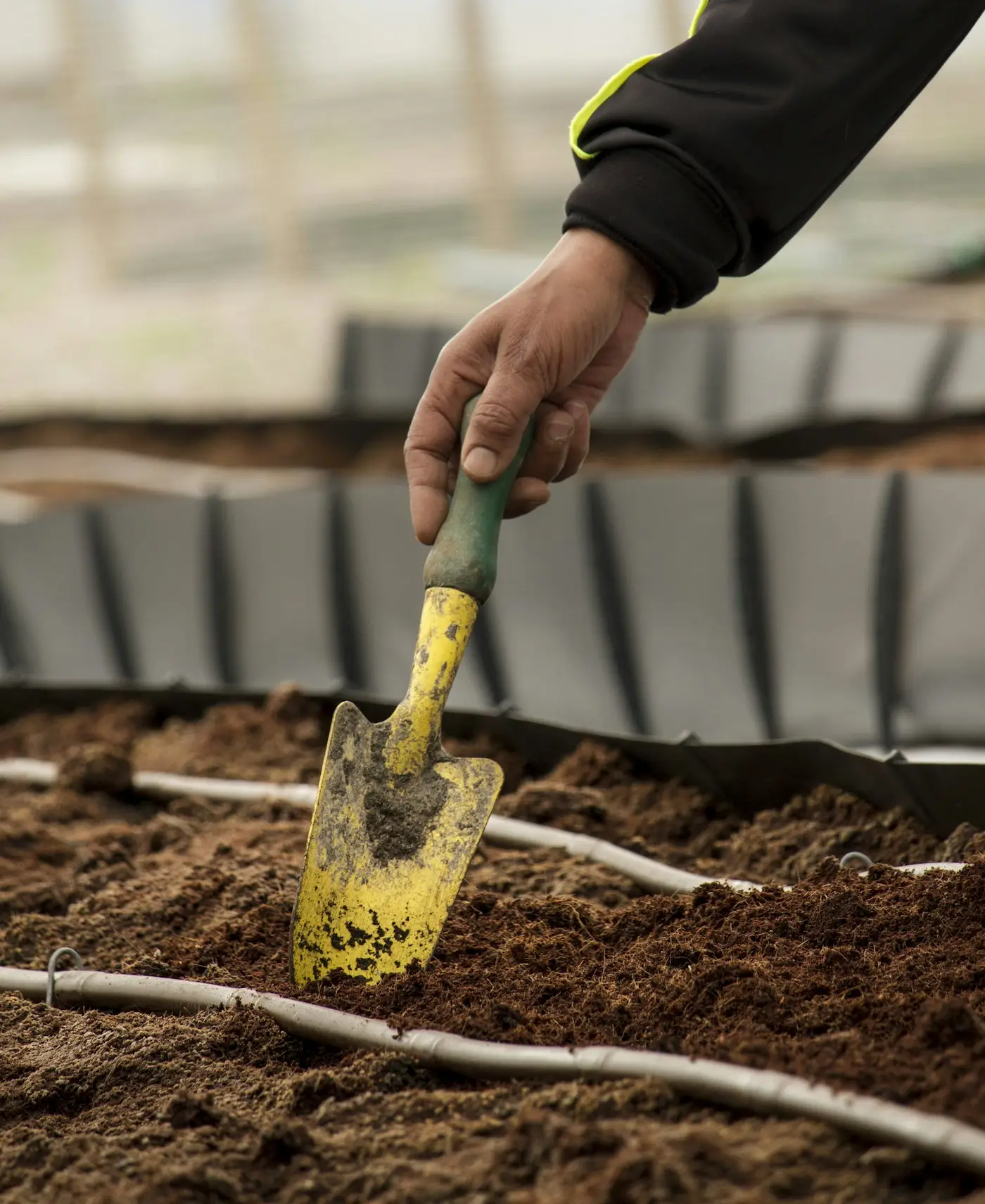
Darton occupies an interesting position in the South Yorkshire landscape: the older village centre sits on slightly higher ground with a mix of stone properties and traditional terraces, while the larger post-war residential estates to the south and east spread down onto the flatter, lower-lying ground where the Coal Measures clay is at its deepest and most challenging. That distinction matters practically if your garden is on one side of the slope versus the other - not because the soil type changes significantly, but because drainage patterns and the severity of waterlogging vary considerably across S75.
What both parts of Darton share is the heavy, shale-derived Coal Measures clay that sits under most of South Yorkshire's ex-colliery belt. In the old village core, there is more gritstone and shale fragment in the clay mix, and the natural drainage is marginally better on the higher ground. In the post-war estates, the clay is deeper, more uniform, and drains more slowly - a significant factor for anyone trying to maintain a reasonable lawn through a wet Yorkshire winter. Understanding which of these zones your garden sits in is the starting point for working out what the garden actually needs.
The Soil Under Darton Gardens
The Coal Measures geology under Darton produces a soil with consistent characteristics across both the old village and the new estates: heavy clay, naturally acid pH (typically 5.5 to 6.5 on untreated gardens), slow drainage, and a tendency to compact badly under sustained foot traffic. These characteristics drive almost every persistent garden problem you will encounter in S75.
In winter, Darton's clay soils absorb rainfall slowly and hold it for extended periods. Gardens in the lower parts of the post-war estates, where the ground is flatter and there is less natural fall, can sit waterlogged for two to three weeks after significant rain. This is not just inconvenient - it actively damages grass root systems, encourages fungal disease in borders, and makes the garden essentially unusable during wet spells. If you are standing in your garden in January and the water is sitting on the surface, the problem is almost certainly a combination of clay compaction and the absence of any meaningful drainage gradient.
In summer, the same clay that holds water in winter becomes hard and cracked as moisture evaporates. The cracking is visible on some Darton lawns by July - wide cracks in the clay soil where grass roots have dried out and separated from the soil. This second stress event in summer, immediately after the waterlogging stress of winter and spring, is a significant reason why grass on unmanaged Coal Measures clay loses condition progressively over each season.
Clay compaction: the invisible problem
Compaction is the most damaging thing that happens to Darton lawns and it is largely invisible from the surface. Regular mowing traffic, children playing, and normal garden use steadily compress the clay layer beneath the grass, reducing the pore space that allows water and air to reach grass roots. The lawn looks fine from a distance but the grass is gradually weakening at the root level. Hollow-tine aeration - using a machine to extract cores of soil and create open channels through the clay - is the only mechanical intervention that effectively reverses compaction. On compact Darton clay, the improvement after the first aeration session is often striking: water that previously sat on the surface for days starts draining within hours.
What Darton Gardens Are Like
The family-oriented residential character of Darton shows in its gardens. These are not the compact terraced plots of the inner Barnsley streets - the post-war estates have gardens of a reasonable working size, with back gardens that can accommodate a lawn, a border or two, a vegetable patch, and a patio or paved area without feeling cramped. Front gardens on the estates are typically modest in size but genuinely maintained by a significant proportion of homeowners - Darton is not a town where the average front garden is simply a car park.
The older properties in the village core have more varied garden configurations. Some of the older stone properties have long, narrow rear gardens that are partially in shade from the house and outbuildings. Others have more open plots on the slightly higher ground that benefit from better air circulation and marginally better natural drainage. The garden character in the village core is different enough from the estate gardens that a gardener covering both parts of S75 needs to work flexibly across soil conditions and garden styles.
One consistent feature of Darton gardens is the age of established plants. Many of the post-war estate gardens have fruit trees - apple and pear mostly - that were planted when the houses were first built in the 1950s and 60s. These trees are now sixty to seventy years old and many have never had a proper pruning programme. Overgrown fruit trees on clay soil cast significant shade that compounds the lawn moss problem and create dead zones in borders beneath their canopy. Fruit tree pruning in the correct way - to open the canopy rather than simply reduce height - is a useful service in Darton that not all general gardeners can deliver well. See the fruit tree pruning guide for Yorkshire for the technique and timing involved.
What Gets Booked in Darton
Regular lawn maintenance is the core service. Fortnightly mowing from April through October, edge maintenance two or three times across the season, and occasional path edging keeps the garden tidy without requiring periodic emergency recovery. On compact clay, consistent mowing at the correct height (not too short - scalping clay-soil grass causes stress and bare patches that moss takes over) is significantly more effective than irregular mowing at variable heights. Garden maintenance on a consistent fortnightly schedule is particularly important in Darton, where the clay means that problems compound faster between visits than they do on lighter-soil gardens.
Lawn renovation is the most impactful single intervention in S75 gardens. The moss problem in Darton lawns is endemic - the combination of Clay Measures clay, acid pH, and Yorkshire rainfall creates conditions where virtually every lawn without annual renovation management accumulates significant moss within two to three seasons. The renovation sequence for Darton clay: hollow-tine aeration in early September, scarification to remove the moss mat, overseeding with a moisture-tolerant mix that establishes reliably in cool, damp conditions, and lime application if a soil test confirms pH below 6.5. Done properly and repeated for two seasons, this delivers a lasting improvement. The overseeding guide for Yorkshire has the full detail on process and timing.
Hedge trimming is significant across Darton's residential streets. Privet hedges on the estate properties, many dating from the original build, have had mixed management over the decades. Some are in good condition and simply need annual trimming. Others have widened substantially or grown considerably above the original intended height, and need a more substantial initial reduction before routine maintenance can take over. Hedge trimming on overgrown privet requires the right equipment and an understanding of how far back the plant can be taken without leaving dead wood - this is not always a simple job.
Garden clearance comes up consistently on Darton properties where the garden has been left following a change of occupancy or a period of illness or life change. Clearing on Coal Measures clay is demanding physical work. Weeds root deeply in the dense soil, couch grass rhizomes spread through the clay layer and are exceptionally difficult to extract cleanly, and access through the side gates of post-war semis limits what equipment can be brought in. Get a fixed price after an in-person assessment before committing. Garden clearance costs in S75 run £160-£340 for a medium garden; restricted access or deep-rooted weed problems can take this significantly higher.
Fruit tree pruning is a job that comes up specifically in Darton's older estate gardens. The sixty-year-old apple and pear trees on these properties need a different approach to maintenance hedging - formative pruning to open the canopy, remove crossing branches, and encourage fruiting spurs. Inexpert heavy reduction of old fruit trees often produces a mass of vigorous water shoots the following season that make the problem worse. This is a job worth asking specifically about when you are talking to a prospective gardener in S75.
What Does a Gardener Cost in Darton?
Darton rates are consistent with the wider S75 and Barnsley district pattern. Rates sit at the lower end of the South Yorkshire range, reflecting the area's residential character rather than any shortcut on quality. The garden maintenance prices guide for Yorkshire gives the full regional comparison.
| Job type | Darton (S75), 2026 | Notes |
|---|---|---|
| Hourly rate (maintenance) | £25-£33/hr | Regular schedule at lower end; one-off visits higher |
| Day rate | £120-£175 | 7-8 hr day for clearance or renovation |
| Fortnightly maintenance visit | £36-£62 | Medium garden; lawn, borders, edges included |
| One-off lawn cut | £28-£52 | Overgrown or first-of-season cuts at higher end |
| Lawn renovation (aeration, scarification, overseed) | £95-£210 | Heavy clay adds labour time; lime application extra if needed |
| Hedge trimming | £38-£90 | Initial reduction on overgrown privet at higher end |
| Garden clearance (medium plot) | £160-£340 | Deep clay roots or restricted access add to cost |
| Fruit tree pruning (per tree) | £60-£130 | Older, larger trees at higher end |
Seasonal Guide for Darton Gardens
Spring (March to May)
Darton clay is typically still waterlogged in March and will remain difficult to work until mid to late April on most estate gardens. Structural pruning, hedge tidying, and path work can start earlier, but avoid lawn work or heavy border digging until the ground has firmed. Fortnightly mowing begins mid-April. May is the key month for border planting - the clay is workable before summer heat arrives, and improving the soil with compost before planting is more effective in May than at any other point in the season.
Summer (June to August)
Core mowing season. Do not scalp the lawn in dry July spells - on clay soil, short grass in a dry period creates bare patches that moss colonises rapidly in autumn. Raise the mowing height to 4-5cm in hot, dry weather. Book autumn renovation in August. September renovation across S75 fills quickly - the best gardeners in the area have autumn diaries that are effectively full by late August.
Autumn (September to November)
September is the critical month for lawn renovation in Darton. Aeration while soil temperature is above 10 degrees Celsius, followed by scarification, overseeding, and lime application if needed, produces the most durable results on Clay Measures soil. The autumn garden care guide for Yorkshire covers the full seasonal checklist. October is for leaf clearance (crucial on clay lawns - leaves compound moss pressure significantly), final mowing, and structural tidying before winter.
Winter (December to February)
Plan and book in February rather than chasing in April. Reliable gardeners in S75 fill their spring schedules early. A winter enquiry about summer maintenance gets you the best choice of available gardeners; an April enquiry when the garden already needs attention often finds options are limited.
Frequently Asked Questions
How much does a gardener charge in Darton S75?
Hourly rates run £25-£33 for general garden maintenance in 2026. Fortnightly visits for a medium S75 garden run £36-£62. Lawn renovation runs £95-£210 depending on lawn size. Day rates for clearance run £175-£300. See the UK gardener cost guide for full context.
What is the soil like in Darton gardens?
Carboniferous Coal Measures shale-derived clay, acid pH (5.5-6.5 untreated), slow-draining, compacts under foot traffic. Old village core has slightly more stone in the mix; post-war estate gardens have deeper, slower-draining clay. The moss treatment guide for Yorkshire covers how this soil drives lawn moss problems.
How do I get rid of moss in my Darton lawn?
A September renovation sequence - hollow-tine aeration, scarification, overseeding, and lime application - addresses the underlying soil conditions that favour moss. Surface treatments produce short-term results only. The overseeding guide covers the full process and what to expect in the first year.
What garden jobs are most popular in Darton?
Regular lawn maintenance, September lawn renovation, hedge trimming of established privet and hawthorn, garden clearance on newly purchased or neglected properties, and fruit tree pruning on the older estate gardens where 60-year-old apple and pear trees have never had proper formative management. See the fruit tree pruning guide for the correct approach to old trees.
Do gardeners in Darton also cover Mapplewell and Staincross?
Most gardeners covering Darton also work in Mapplewell, Staincross, Barugh Green, and the wider S75 area. Give your full postcode when enquiring. The soil conditions across this part of the Barnsley district are consistent enough that a gardener experienced in Darton clay is immediately useful across all these communities.
Further reading
- Lawn overseeding in Yorkshire - the full renovation guide
- Lawn moss treatment in Yorkshire
- Fruit tree pruning in Yorkshire
- Weed control in Yorkshire gardens
- Autumn garden care in Yorkshire
- Garden maintenance prices in Yorkshire
Gardeners near Darton
We cover Darton and the surrounding S75 area. Gardeners working Darton typically also cover Mapplewell, Staincross, Barugh Green, Royston, and Barnsley.
Find a gardener in Darton.
Tell us what you need and we put your enquiry in front of a local gardener covering S75. No call centres, no national franchise - one local gardener, direct contact.
Get a free assessment