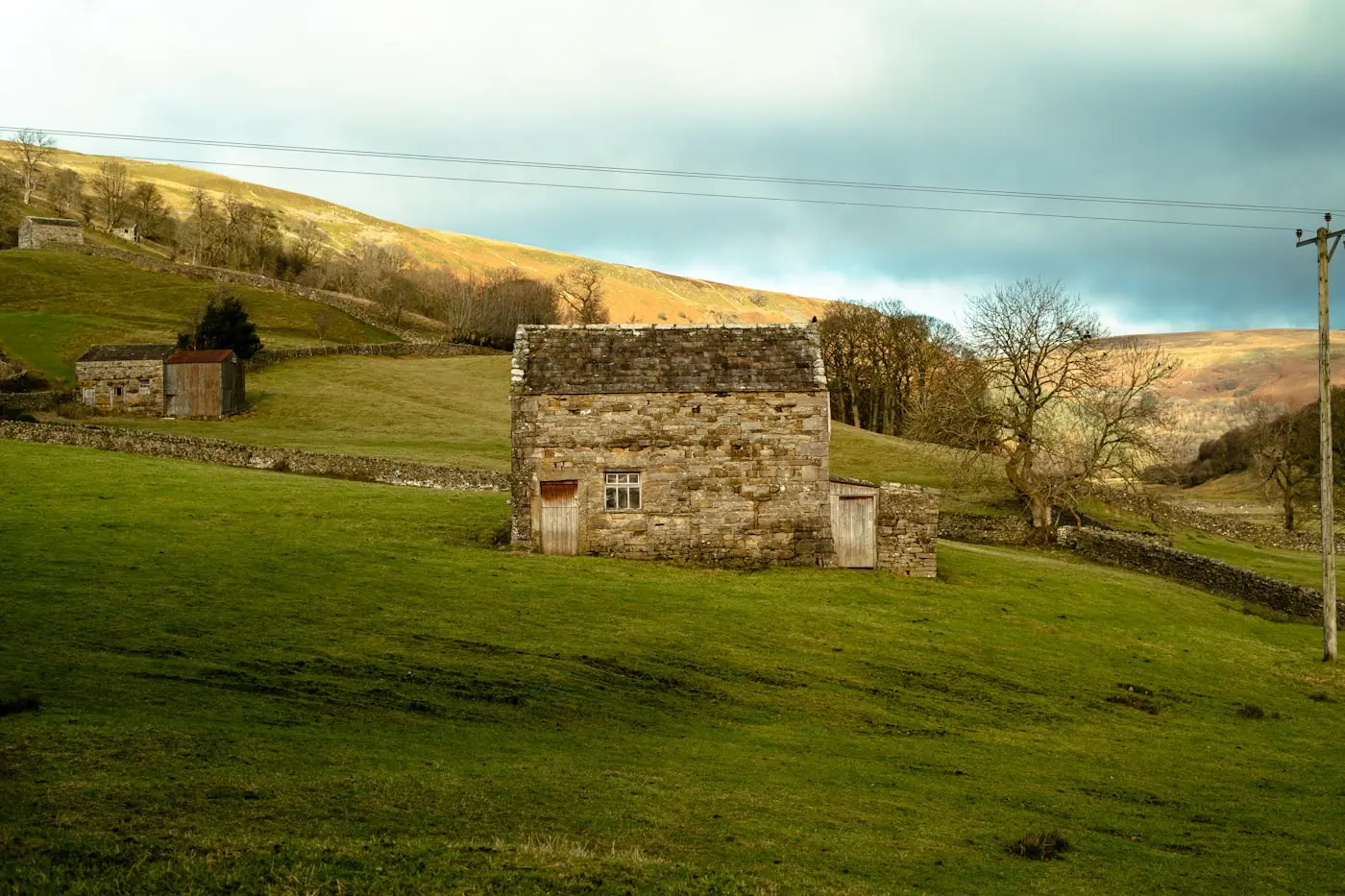
Ilkley is one of those places where the gap between a good gardener and a great one shows up faster than almost anywhere else in Yorkshire. The town sits at the edge of the moor on millstone grit, its upper slopes acidic and free-draining in a way that suits a very specific range of plants, its valley bottom near the Wharfe considerably more forgiving. The large Victorian and Edwardian properties that characterise the upper residential streets of the town have gardens that have been cultivated for a century or more - established trees, planted borders with genuine provenance, lawns that have been managed (or not managed) through generations of owners. Getting any of it wrong is more noticeable here than in a garden that started from scratch five years ago.
The standard of gardening in Ilkley is high. Harlow Carr - the RHS garden at Harrogate, twenty minutes away - sets a reference point that many Ilkley residents actively follow. People here know what a well-maintained border looks like, know what soil their garden is on, and have often already tried and failed with plants that perform elsewhere but do not work on millstone grit or at this elevation. What they want from a gardener is skilled management, not just labour. This guide explains what that means in LS29, what to expect to pay, and how to find the right person.
What Ilkley Gardens Are Actually Like
The most important physical distinction in Ilkley gardens is between the upper slopes on millstone grit and the valley bottom near the Wharfe. This is not a minor variation - it is the difference between acidic, fast-draining, moderately fertile ground and the more neutral, loamier soils of the river valley. In practical terms, it means the plants that thrive in one part of Ilkley may actively struggle in another part of the same town.
Upper slope gardens, particularly the streets rising from the town centre toward the moor, are on millstone grit-derived soil that is acidic, free-draining, and relatively low in fertility without amendment. These are the gardens where rhododendrons have established themselves as massive structural shrubs, where pieris and Japanese maples colour spectacularly in autumn, where heathers and bilberry occur as naturals at the moor edge. This soil is genuinely suited to ericaceous planting - and deeply unsuited to calcicole plants like lavender, clematis on thin alkaline soil, or the traditional cottage garden palette that a gardener from, say, the Vale of York might default to recommending.
Valley bottom gardens, particularly those on the flat along the Wharfe, have soil with better nutrient levels, more moisture retention, and a pH closer to neutral. A wider range of plants performs well here, and the shelter from surrounding development and the river valley topography means the growing conditions are more benign. These gardens can support vegetables, soft fruit, and the full range of traditional herbaceous planting that would struggle on the exposed acidic upper slopes.
The Victorian and Edwardian properties that define Ilkley's residential character tend to have large plots with features that have accumulated over decades: mature specimen trees, shrubberies, formal or informal borders with established clumps of perennials, old fruit trees in kitchen garden areas, hedging that predates most of the current owners. These gardens are not blank canvases. A gardener coming to them for the first time needs to spend time understanding what is there - what is deliberate, what is self-seeded, what is worth keeping, and what is taking over. The ones who walk in and start cutting without asking first are the ones who end up explaining why a thirty-year-old magnolia got hard pruned at the wrong time of year.
The moor edge position creates its own microclimate on the upper slopes. There is more wind exposure from the southwest than the valley gardens get. Late frosts arrive further into spring than general West Yorkshire forecasts indicate. The temperature differential between the moor top and the valley bottom on a clear spring night can be several degrees - and on those nights, upper slope gardens in Ilkley are in frost territory while valley gardens twenty metres lower are not. Any gardener who runs the same planting calendar in an upper Ilkley plot as they would in a Bradford suburb is not applying the knowledge this location requires.
The Harlow Carr influence
The RHS garden at Harlow Carr in Harrogate is close enough to Ilkley that many residents visit regularly and use it as a reference point for what is achievable in northern Yorkshire gardens. The trial grounds at Harlow Carr are specifically designed for northern conditions, which makes its plant performance data more relevant to Ilkley than the RHS Wisley guides that dominate most mainstream gardening advice. A gardener who knows Harlow Carr's approach to northern planting - including its work on millstone grit and acidic soils - will be more directly useful to an Ilkley homeowner than one who relies on gardening books calibrated for the south.
What Gardeners Actually Do in Ilkley
The work that comes up most consistently in LS29 gardens reflects the character of the area.
Skilled maintenance of established borders is the core request from the larger Victorian and Edwardian properties. This is not just cutting back and weeding - it requires understanding which perennials need dividing (and when, and how), which shrubs should not be hard pruned (and when they should be), which established plants are worth protecting through management and which are outgrowing their position. Garden maintenance at this level requires horticultural knowledge, not just labour. The homeowners who care about their Ilkley gardens can tell the difference quickly.
Lawn renovation is frequently needed on the millstone grit upper slope gardens where years of acidic conditions, surface moss, and thatch accumulation have left lawns that are more mossy than grassy. Hollow-tine aeration in September, scarification to remove the thatch and moss layer, overseeding with a grass mix suited to acidic, free-draining soil, and top-dressing builds a better lawn over two to three consecutive seasons of treatment. See the lawn care Yorkshire guide for more context on what this involves.
Mature tree management is a significant issue on many Ilkley plots. Large trees - often Victorian-era copper beeches, oaks, or conifers planted when the properties were first developed - affect everything around them: root competition, shade, soil moisture extraction. A gardener needs to work with this influence rather than against it, choosing appropriate shade-tolerant planting under tree canopies, advising when tree work needs an arborist rather than a gardener, and understanding that a lawn under a mature beech is always going to be a compromise between shade tolerance and traditional turf quality.
Hedge trimming on established properties often involves large, mature hedges that need professional equipment and skill to manage properly. Hedge trimming on a thirty-year yew or beech hedge is a different proposition from an annual privet cut - it requires knowing the right cut depth, the right time of year for the species, and the risk of cutting into old wood that will not regenerate if treated like younger growth.
Garden design and replanting is a common request when a property changes hands and the new owners want to put their own mark on an established Ilkley garden. Garden design for an Ilkley plot needs to account for the soil type, the exposure, the late frost risk, and the existing mature structural planting. A design that works on paper but ignores the acidic millstone grit or the moor edge microclimate will disappoint on the ground. Larger Ilkley properties frequently extend to outdoor entertaining areas where garden lighting is a considered part of the overall scheme rather than an afterthought.
Weed control in the acidic upper slope gardens involves different species than lowland Yorkshire. Bracken fronds pushing into gardens from the moor edge, foxgloves and willowherb self-seeding freely into borders, and birch seedlings establishing in any gap are the recurring pressure points. Weed control in these gardens is most effective as part of an ongoing maintenance arrangement.
How Much Does a Gardener in Ilkley Charge?
Ilkley rates sit at the higher end of Yorkshire domestic gardening because the gardens are larger, the work is more skilled, and the local standard for maintenance is higher than in most comparable towns. For broader context on Yorkshire rates, see the Yorkshire garden maintenance prices guide.
| Rate type | Ilkley (LS29), 2026 | Notes |
|---|---|---|
| Hourly rate (skilled maintenance) | £28-£45/hr | Higher rate reflects skill level required; horticultural training expected |
| Day rate (7-8 hrs) | £165-£220 | Renovation, clearance, or complex maintenance work |
| Fortnightly maintenance visit | £55-£110 per visit | Medium to large Ilkley garden; borders, lawn, edges |
| One-off lawn cut | £40-£70 | Larger plots at the higher end; overgrown plots higher still |
| Lawn renovation (aeration, scarification, overseed) | £130-£320 | Acidic millstone grit lawns often need more preparation work |
| Hedge trimming (mature established hedge) | £65-£140 per visit | Mature yew, beech, or mixed hedges command higher rates |
| Garden clearance (medium to large plot) | £280-£550 | Complex clearance with established shrubs assessed separately |
| Garden design consultation | £150-£350 | Initial site assessment and design brief; implementation quoted separately |
The higher rates in Ilkley compared to the broader Yorkshire average reflect the genuine difference in what the work requires. Maintaining an established Victorian garden on millstone grit is not the same work as maintaining a 1990s estate garden on loam. The right gardener charges more and is worth it.
Finding a Gardener Who is Right for Ilkley
The pool of gardeners covering LS29 includes a range from genuinely knowledgeable horticulturalists to general maintenance operatives, and the gap between them matters more in Ilkley than in most places. The most important filter is horticultural knowledge: does the person you are considering understand soil pH, can they identify established perennials and shrubs, do they know what should not be pruned at certain times of year, and have they worked with mature plantings on acidic moorland-edge ground before?
In a town with Ilkley's gardening culture, word of mouth is highly reliable. A gardener who maintains several of the well-known properties in the town has already been vetted by people whose standards are high. Asking neighbours whose gardens you admire who they use is the most direct route to a good recommendation. For homeowners new to the area, or in streets where personal recommendations are not available, a local introduction service that has already checked credentials and local knowledge produces a much better starting point than a national platform.
The questions to ask before committing to any gardener in Ilkley: Can you show me your public liability insurance? Do you hold a Waste Carrier's Licence? What is your horticultural training or qualification? Have you worked with acidic, millstone grit soil gardens? Can you describe how you would approach an established border with perennials and shrubs that have been in place for many years? A gardener who handles all of these with specific, confident answers is one worth getting a quote from.
When to prioritise a horticulturally trained gardener
If your garden has established perennial borders, mature shrubs or specimen trees, or significant planting that has been deliberately developed over years, prioritise finding someone with genuine horticultural training over someone who is primarily a lawn and maintenance operative. In Ilkley, this distinction matters. The RHS Level 2 and Level 3 qualifications are the relevant benchmark - they indicate someone who understands plant identification, soil science, propagation, and pruning principles, not just how to operate a mower.
Seasonal Guide for Ilkley Gardens
Ilkley's growing season is slightly shorter than the general West Yorkshire calendar, particularly on the upper slopes. The moor edge effect - cold air draining down from the gritstone plateau - can extend frost risk into early June in a late spring, and the autumn arrives a week or two earlier than in the Aire valley below. Here is how the year runs in LS29.
January and February are for planning, pruning, and structural work. Winter pruning of roses (late January to February in a mild spell), apple trees (any frost-free day through winter), and established gooseberries or currants is appropriate in the valley gardens where the frost risk is lower. Upper slope gardens should wait until late February for any pruning that stimulates growth. This is also the time to assess what has not survived winter - late frosts on the moor edge can kill things that would have survived further down the valley, and knowing what needs replacing informs spring planting decisions.
March and April mark the cautious start of the season. Grass begins growing from mid to late March in the valley bottom; upper slope gardens may lag by two to three weeks. This is the right time for border clearing, removing the previous year's perennial stems that were left for winter interest, mulching borders before the ground dries, and the first assessment of what needs dividing or replacing. Do not rush tender subjects - a cold north wind can arrive well into April on exposed upper slope gardens, and a frost in late April on the moor edge is not unusual in some years.
May is the main spring month. By mid-May, fortnightly mowing is underway, planting in borders is proceeding with more confidence, and the rhododendrons and pieris that are a distinctive feature of the upper slope gardens are at their peak. The late frost risk passes for most years by the third week of May in the valley, but upper slope gardeners should wait until the last week of May before committing tender subjects to exposed positions. Borders and planting work in May and early June is well-timed for the perennials and shrubs that establish best with a full season ahead of them.
June and July are the peak growing season. Regular fortnightly maintenance, hedge trimming from late June, and the management of the vigorous growth that the long Yorkshire days promote. Rhododendrons should be deadheaded after flowering - removing the spent flower trusses improves the following year's display and prevents seed setting. Any border dividing that did not happen in spring can begin cautiously in early July, though mid-summer division of large clumps carries higher risk than spring or autumn.
August and September are the transition months. Growth slows from late August, and September is the most valuable month for lawn renovation: hollow-tine aeration, scarification, overseeding with an acidic-soil grass mix, and top-dressing. Getting this done in September, while the soil is still warm, gives seed the best chance of germination before growth stops. Early autumn planting of spring bulbs in borders begins from mid-September.
October and November bring the season to a close. Border cutting back, leaf clearance (significant under the mature trees of the upper slope gardens), planting of bare-root trees and hedging plants, and structural assessment of anything that needs attention before winter. Upper slope gardens go dormant earlier than valley plots - by early November the upper moor edge gardens have finished their season, while valley bottom gardens may still have some residual growth.
Common Garden Problems in Ilkley
The recurring problems in LS29 gardens are specific to the combination of geology, microclimate, and garden character.
Acidic soil and the wrong plant choices. The most common single mistake in upper slope Ilkley gardens is planting species that need neutral or alkaline soil. Lavender, rosemary, catmint, and many Mediterranean herbs that perform brilliantly in a limestone garden will struggle or fail on millstone grit. If your border is full of plants that look unhealthy - yellowing leaves, poor growth, failure to establish - the soil pH is often the explanation. A pH test (inexpensive and straightforward) tells you what you are dealing with, and a gardener who recommends planting without testing first is working blind.
Late frost catching tender subjects. Upper slope gardens in Ilkley lose plants to late frosts that a gardener following the general West Yorkshire planting calendar would not have anticipated. If you have repeatedly lost tender plants in late April or early May that should be hardy enough for Yorkshire, the frost pocket effect on your specific garden may be the cause. Adjusting the planting calendar, covering vulnerable subjects in late April, or simply replacing tender choices with harder alternatives will produce better results.
Moss in lawns on acidic soil. Millstone grit soils are exactly the conditions that moss prefers - acidic, free-draining in summer, prone to surface wetness under trees and in shade. Moss in an Ilkley lawn is almost inevitable on the upper slopes without consistent autumn renovation treatment. Aeration, scarification, and overseeding with a shade-tolerant mix, repeated annually, is the long-term management approach. Raking moss out without addressing the underlying cause produces a result that lasts one season before the moss reasserts itself.
Established shrubs outgrowing their position. On the large Victorian plots, shrubs planted decades ago are now substantial structures that may have outgrown the space allocated to them. Rhododendrons in particular can become impenetrable thickets if not managed over the years. Bringing an overgrown rhododendron back to a manageable size requires a staged approach over two to three seasons - hard pruning the whole plant in one go risks a poor response. A gardener who knows how these plants respond to renovation pruning will manage the process correctly.
Bracken encroachment from the moor edge. Gardens that back directly onto the moor or open gritstone land face bracken pressure in a way that most Yorkshire homeowners do not. Bracken rhizomes spread underground and send up fronds that emerge through any gap in a border. The fronds are toxic to livestock and persistent in the garden - removing by hand is partially effective on shallow roots but the deep rhizome system makes complete eradication difficult without repeated treatment. A gardener who knows the moor edge will advise on realistic expectations and appropriate management.
Frequently Asked Questions
How do I find a reliable gardener in Ilkley?
Ask a neighbour whose garden is consistently well maintained. If that is not an option, a local introduction service vetted for horticultural knowledge and LS29 experience is the next best route. Prioritise someone with RHS-level training who can demonstrate experience with established gardens on acidic moorland-edge soil. See garden maintenance near me Yorkshire for broader context.
How much does a gardener in Ilkley charge?
£28-£45/hr for skilled garden maintenance in 2026. Day rates £175-£300. Fortnightly visits £55-£175 for a medium to large garden. The higher rates reflect the skill level Ilkley gardens require and the complexity of the work on established Victorian and Edwardian plots. For full context, see the UK gardener costs guide.
What soil do Ilkley gardens have?
Upper slopes: acidic, free-draining millstone grit-derived soil. Valley bottom near the Wharfe: better loam with more neutral pH. The distinction matters enormously for planting choices. Acid-lovers thrive on the upper slopes; Mediterranean herbs and calcicoles struggle without amendment. See the soil management guide for further context on managing difficult Yorkshire soils.
How does the moor edge affect Ilkley gardens?
Late frosts more common, growing season shorter on upper slopes, more wind exposure from the southwest. Run the planting calendar 2-3 weeks behind the general West Yorkshire dates for any exposed or elevated position in LS29.
What kind of gardener do I need for an established Ilkley garden?
One with genuine horticultural training and experience with established plantings on acidic soil. RHS Level 2 or 3 qualification is the relevant benchmark. For garden design work, local knowledge of millstone grit conditions and the moor edge microclimate is essential.
Can I get garden clearance in Ilkley?
Yes, but established Ilkley gardens need careful assessment before clearance begins - many contain valuable specimens that look overgrown but are worth retaining. A proper site assessment before any clearance work is worth doing, particularly on a property that has not had active maintenance for several years. Costs run £280-£550+ depending on plot size and complexity.
What do mature trees mean for an Ilkley garden?
They affect soil moisture, light, root competition, and what can grow successfully in their shadow. A gardener who understands tree influence on surrounding soil will advise on appropriate planting for dry shade and know when to refer to a qualified arborist rather than attempt tree work beyond their scope.
When is the best time to book a gardener in Ilkley for spring work?
February or early March. The best gardeners covering LS29 are fully committed by April. The late frost risk also means a February or March assessment visit is genuinely useful - a good gardener will advise on how the winter has gone and what the right timing is for your specific plot.
Related reading
- How much does a gardener cost in the UK? (2026 prices)
- Garden maintenance prices in Yorkshire
- Lawn mowing near me - Yorkshire
- Clay soil and difficult soil management in Yorkshire
- Garden maintenance across Yorkshire
- Garden design across Yorkshire
- Borders and planting services
- Hedge trimming across Yorkshire
Gardeners in other nearby areas
We cover the Wharfedale valley and the wider West and North Yorkshire area:
For structural landscaping or a full redesign, see our garden design Ilkley page.
Get a quote for your Ilkley garden.
60-second assessment, a skilled local gardener can take your enquiry and call you with a price for your specific garden and job.
Start the assessment