Garden maintenance near me in Yorkshire: quick answer
Garden maintenance near you in Yorkshire typically starts from £25-35/hr for routine work. Most areas of Yorkshire - from Leeds and Harrogate to Sheffield and Hull - have local gardeners who can visit within 1-2 weeks for a first job. Popular postcode areas in Harrogate, Ilkley, and Wetherby book 3-4 weeks ahead in spring. Submit your postcode on the form above and a local gardener covering your area can take it on. No call centres, no lead-selling, no booking obligation.
To find garden maintenance near you in Yorkshire, local sole-trader gardeners charge £25-35 per hour for regular maintenance visits, typically working your postcode. A standard visit covers lawn mowing, border weeding, light pruning, and path tidying. Most homeowners book fortnightly from April to October, dropping to monthly over winter.
Autumn garden maintenance in Yorkshire - what to book now
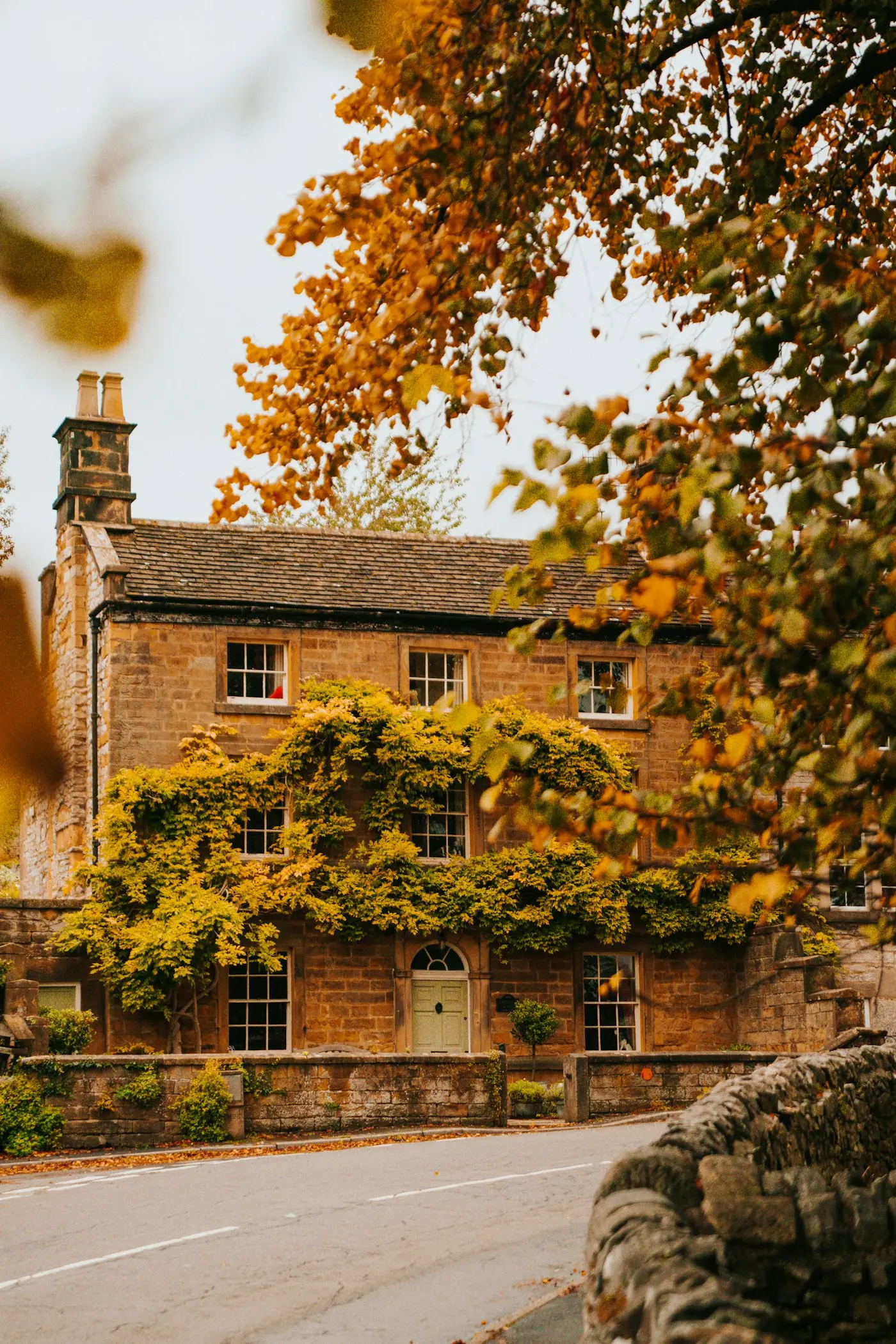
September and October are the right months to sort autumn garden maintenance before winter sets in. Key jobs now: leaf clearance from mid-October to stop fallen leaves smothering the lawn, cutting back perennials as they die back, lawn aeration and overseeding while the soil is still warm enough for germination, and mulching beds to protect roots through the cold months. Pennine gardens in West Yorkshire typically wrap up regular mowing by late October; sheltered Vale of York gardens often continue into November. Book leaf clearance and aeration now - slots fill fast once autumn colour peaks.
In September and October, maintenance visits often include leaf clearance and cutting back herbaceous borders ready for winter - work that prevents disease and means your garden looks tidy through the colder months.
What Is the Quick Answer on Garden Maintenance Near Me in Yorkshire?
Yorkshire gardeners typically charge £25-35 per hour for regular garden maintenance in 2026. Most homeowners book fortnightly or monthly visits covering lawn mowing, hedge trimming, border weeding, and seasonal tidying as part of a regular full garden maintenance service. To get a free estimate from a local gardener in your area, use the form above.
| Service | Typical price | Frequency |
|---|---|---|
| Lawn mowing (small garden) | From £20/visit | Weekly or fortnightly |
| General maintenance | From £25/hr | Monthly or as needed |
| Garden clearance | From £150 | One-off |
| Hedge trimming | From £50 | Twice yearly |
| Weed control | From £60/visit | Spring and autumn |
Searching "garden maintenance near me" almost always surfaces the same thing: national directories, lead-generation platforms, and aggregator sites that look local but are not. Behind them, your contact details get sold to five or six tradespeople who each paid a lead fee before you ever spoke. That cost comes back in the quote. This guide does something different - it tells you what garden maintenance near you in Yorkshire actually involves, what it costs, how to separate a reliable local gardener from a time-waster, and how to get your enquiry in front of someone already covering your postcode. No lead-selling, no lead-platform markup.
What does "garden maintenance near me" actually mean?
When you type "garden maintenance near me" into Google, you are asking for someone local who can keep your garden in reasonable shape on a regular basis. The reality of what you find is more complicated. Google's local results prioritise proximity - but the listings that come up are often national directories pretending to be local, or sole traders who advertise a wide area but can only reliably serve a 10-mile radius around their base.
For a garden maintenance service to genuinely be "near you," the gardener needs to be close enough that the economics work on both sides. Every mile of travel to your property costs fuel and dead time. A gardener whose round already passes your road can price your fortnightly visit more keenly than one who has to cross three towns to get to you. The difference can be £10-15 per visit - which adds up to £200+ over a growing season.
What you actually want when you search "garden maintenance near me" is:
- A gardener whose existing route covers your postcode - not just your general area.
- Someone who can commit to a regular schedule, not just appear for one visit and disappear.
- A real local person, not a lead-aggregator who passes your details to whoever is cheapest that week.
- A straightforward price upfront, not a "quote after inspection" that turns into something else on the day.
Yorkshire Lawn and Garden matches on existing round coverage, not driving radius. That means the gardener we put your enquiry in front of is already working in your area - which translates to better availability, sharper pricing, and someone who knows your local soil conditions, growing season, and the kinds of gardens common in your neighbourhood. See our gardeners near me Yorkshire guide for the broader picture of how local matching works.
What does "garden maintenance near me" actually include in 2026?
When a local gardener turns up for a standard maintenance visit, the work falls into two categories: what is routinely included, and what gets quoted as an extra. Getting this clear before the first visit prevents most of the friction that can arise later.
What is typically included in a standard visit
- Lawn mowing: Cut to the correct height for the time of year. Not too short in dry spells; not left so long it flops. Most visits include edging along beds, borders and paths.
- Border weeding: Hand-weeding planted borders and beds. Annual weeds pulled before they seed; perennial roots taken out where accessible.
- Light pruning and deadheading: Keeping shrubs from encroaching on paths, cutting spent flowerheads to extend flowering, trimming back straggly growth.
- Path and patio tidying: Sweeping paths, brushing off patios, clearing moss from step edges (not pressure-washing - that is a separate job).
- General tidying: Collecting and disposing of cuttings, clearing blown leaves, removing dead plants and spent annuals.
- Light hedge tidying: Keeping new growth in check on established hedges. Not full reduction - that is quoted separately.
What is usually charged as an extra
- Green waste removal: Taking cuttings and clippings away from your property. Typical add-on of £20-35 per visit. The gardener legally needs a Waste Carrier's Licence to do this.
- Full hedge reduction: Significant cutting back, reshaping, or managing large runs of leylandii or overgrown formal hedges.
- Lawn renovation: Scarifying, aerating, overseeding, moss treatment. These are seasonal jobs, usually autumn, priced separately.
- Pressure washing: Patios, paths, drives. Separate job requiring different equipment and water access.
- Planting: Putting in new plants, bulbs, bedding. Not part of a maintenance contract unless specifically agreed.
- Tree work: Any work on trees above head height typically requires a separate specialist quote.
- Garden clearance: When a garden has been seriously neglected, clearance is priced as a project, not a maintenance visit.
Always confirm the scope before visit one
A clear conversation about what is in and what costs extra takes five minutes and saves a lot of post-job awkwardness. Any professional will welcome it. If a gardener is vague about what they will and will not do, that vagueness rarely improves once you are a customer.
The single most common source of surprise on a first bill is green waste removal. Confirm before the first visit: is it included? Does the gardener take it away? Do they have a Waste Carrier's Licence to do so legally? Any reputable gardener will answer immediately. For a full breakdown of what garden maintenance costs, see our garden maintenance cost guide.
What should I expect from a local garden maintenance service near me?
A good local garden maintenance service near you covers the core tasks that stop a garden sliding from tidy to overgrown between visits. You can typically expect lawn mowing, border weeding, light pruning, and path tidying as standard - with extras like hedge reduction and waste removal quoted separately. Here is what a standard fortnightly visit in Yorkshire typically includes - and what is usually treated as an extra.
Lawn care
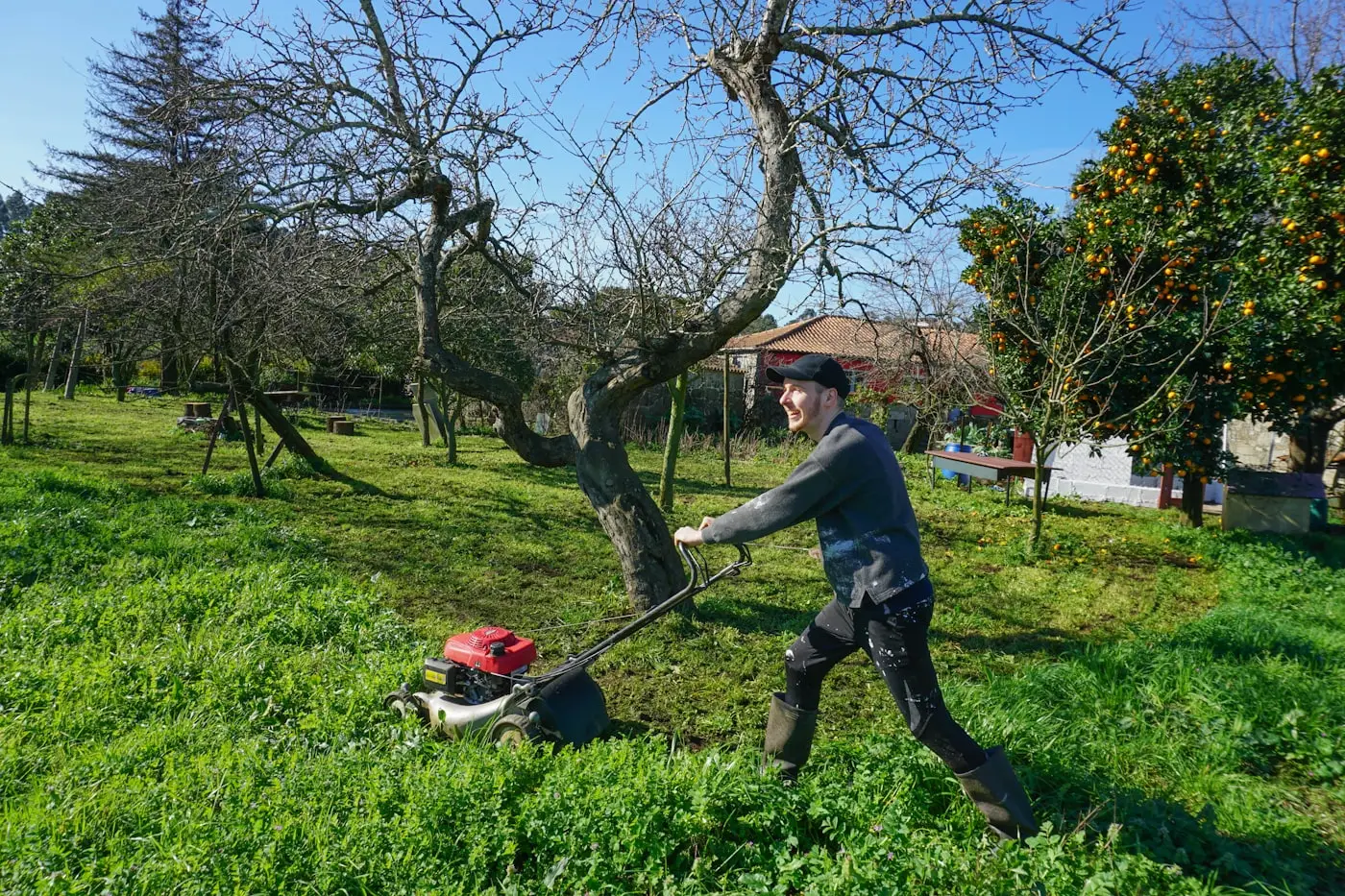
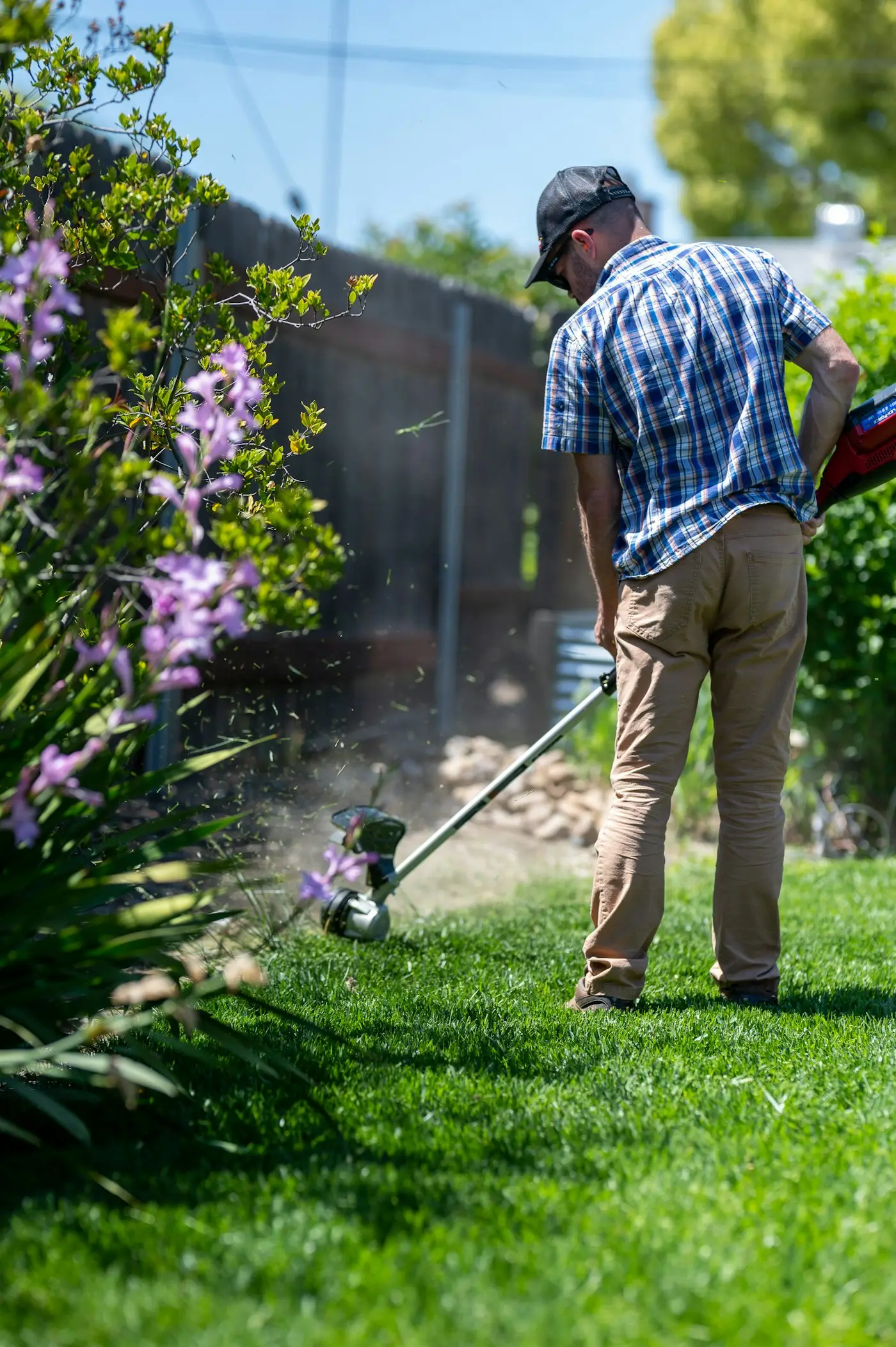
The lawn is usually the centrepiece of a maintenance visit. A standard visit covers mowing to the correct height for the season (not too short in dry spells, not left too long between cuts), edging along paths, beds and borders using a half-moon edger or strimmer, and clearing clippings if a grass box is used. What is not included in a standard maintenance visit: scarifying (removing dead thatch), aerating compacted ground, overseeding bare patches, or moss treatment. These are seasonal lawn care jobs that are usually quoted separately, typically in autumn. For regular cutting as a standalone service, see our lawn mowing service. If your lawn is central to why you want maintenance, see our lawn edging service for what proper edge maintenance involves.
Hedge trimming
Light hedge tidying - keeping new growth in check and maintaining the line - is often part of a regular maintenance contract. Full hedge reduction (cutting back significantly overgrown hedges, reshaping formal hedges, or managing large leylandii runs) is almost always priced separately because it takes significantly more time and equipment. Most Yorkshire gardeners do both, but they need to be quoted as separate jobs. If you have substantial hedging, see our hedge trimming service for timing, pricing and what to ask. The right time to cut most Yorkshire hedges is late summer (August to early September) - after nesting season, before the birds return.
Border weeding
Weeding planted beds and borders is the task that most homeowners least want to do themselves, and it is time-sensitive - annual weeds seed quickly and perennial weeds like bindweed and ground elder regenerate from root fragments if not caught early. A regular fortnightly visit keeps borders under control. A garden that has been left between visits can end up needing a dedicated weeding session before the maintenance rhythm can work properly. If your borders are mixed planting with perennials, your gardener should know which plants to leave and which to remove - local knowledge matters here. For properties with established infestations of persistent weeds such as bindweed or ground elder, a specialist weed control service using professional herbicide treatment addresses what routine hand-weeding cannot resolve.
Pruning and shrub care
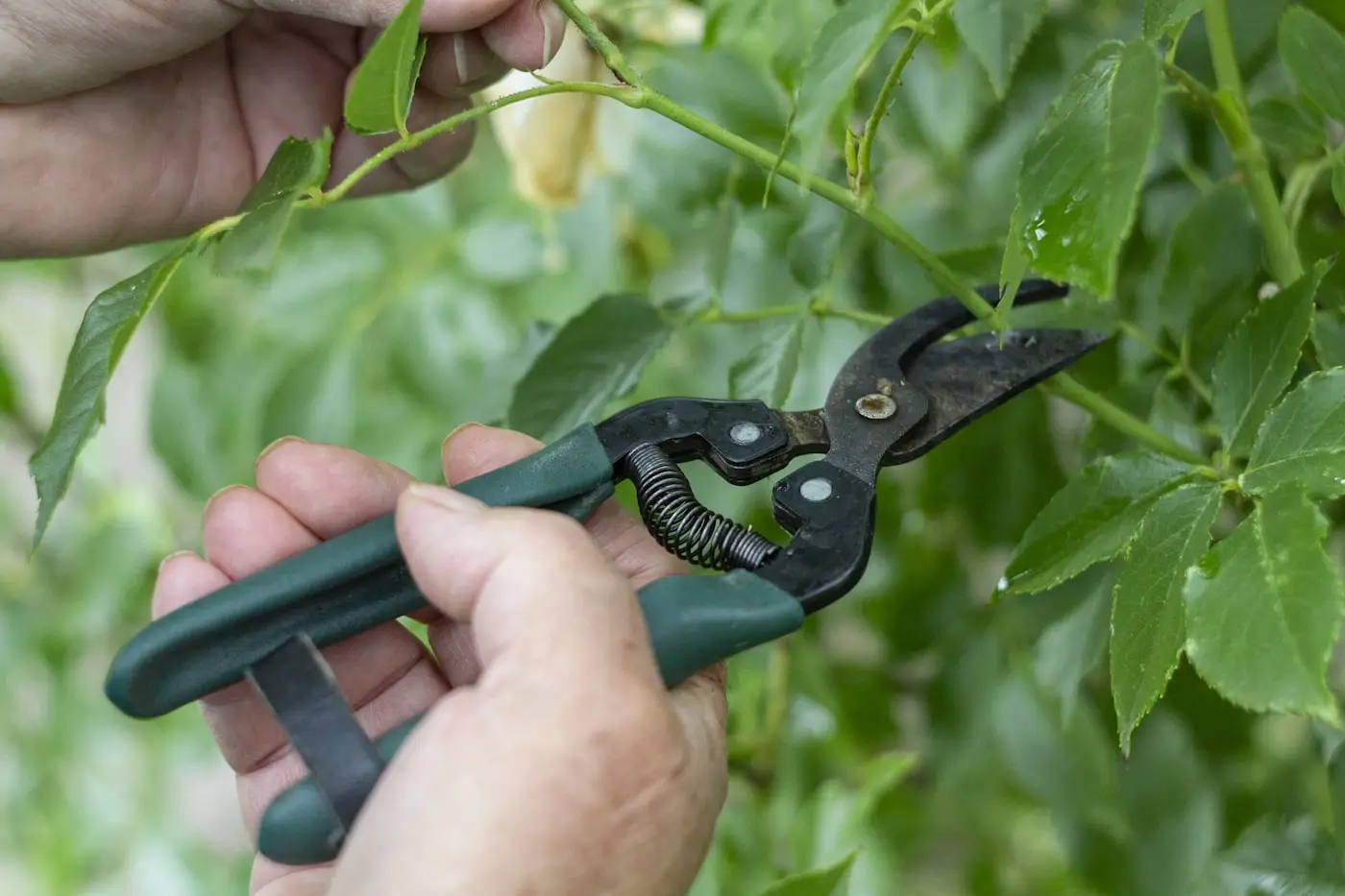
Light pruning - deadheading roses, keeping shrubs from encroaching on paths, cutting back spent perennials - fits within most maintenance contracts. More significant pruning (fruit tree pruning, hard renovation of overgrown shrubs, formal topiary) is a separate job. Get clarity on what is in scope before the first visit, because "pruning" means different things to different gardeners. A clear brief before the first visit saves a lot of confusion later.
General tidying
Sweeping paths and patios, clearing fallen leaves, removing dead plants, and general debris management are part of most maintenance visits. Green waste removal - whether the gardener takes clippings away or leaves them for your green bin - should be confirmed before the first visit. Taking green waste away costs extra (typically £20-35 per visit) and the gardener legally needs a Waste Carrier's Licence to transport it off your property.
How much does regular garden maintenance cost near me in Yorkshire?
Regular garden maintenance costs £60-200 per month in Yorkshire, depending on garden size and how often you book. Most homeowners with a standard 3-bedroom house garden pay £80-120/month for fortnightly visits through the growing season. That works out to two visits per month at £40-60 each. Gardens at the lower end of the range are small semi-detached plots with lawn and minimal borders; gardens at the upper end have more lawn, established borders, and hedges requiring regular trimming.
Yorkshire garden maintenance prices sit below the national average, reflecting lower labour costs and cost of living outside London and the South East. The quality of work is not affected by this - Yorkshire gardeners work to the same standard; they charge less because competing wages and overheads are lower here.
The direct answer for 2026: expect to pay £25-35 per hour or £35-80 per visit for regular garden maintenance in Yorkshire, depending on your garden size and what is included. Here is a quick reference for the main service types, followed by a full breakdown by garden size:
| Service type | Yorkshire 2026 rate | Notes |
|---|---|---|
| Regular visit (1.5-2 hrs) | £40-65 per visit | Fortnightly; standard residential garden |
| Monthly contract | £80-120/month | Typically 2 visits per month during the growing season |
| Annual full-service | £500-1,500/year | All visits for the year; small to large garden |
| One-off tidy-up | £80-200 | Half-day; depends on garden state and size |
| Full-day intensive | £175-300 | 8-hour day rate; better value on larger jobs |
| Garden size | Visit frequency | Typical cost per visit | Notes |
|---|---|---|---|
| Small (under 50m²) | Weekly cut | £20-30 | Lawn mow and edge; minimal borders |
| Small (under 50m²) | Fortnightly maintenance | £25-40 | Mow, edge, light weeding and tidy |
| Medium (50-150m²) | Fortnightly maintenance | £35-60 | Standard semi-detached; 60-90 minutes |
| Medium (50-150m²) | Monthly maintenance | £55-90 | Off-season or lower-maintenance plots |
| Large (150m²+) | Fortnightly maintenance | £60-100 | More borders, hedges, planted areas |
| Large (150m²+) | Monthly maintenance | £80-150 | Larger detached; 2-3 hour visit |
| Any size | One-off half-day | £80-130 | Spring reset, pre-sale tidy, post-holiday clearup |
| Any size | One-off full day | £175-£300 | 8-hour day; better value on bigger jobs |
The table above shows per-visit costs. If you are comparing quotes, the relevant number is the annual total: a fortnightly visit from April to October (14 visits) at £45 per visit comes to £630 for the season. Adding a monthly winter visit at £60 (5 visits) brings the full-year cost to around £930 - less than £80 per month for a consistently well-maintained garden.
| Job type | Yorkshire typical | UK average | Notes |
|---|---|---|---|
| Hourly rate | £25-35/hr | £25-50/hr | Regular maintenance work, experienced sole trader |
| Fortnightly maintenance visit | £35-65/visit | £40-80/visit | Standard semi-detached garden, 60-90 minutes |
| Monthly maintenance visit | £60-120/visit | £70-150/visit | Larger gardens, off-season or low-maintenance plots |
| Monthly retainer (regular schedule) | £100-180/month | £120-220/month | Full growing season contract, typically fortnightly |
| Half-day visit | £80-130 | £90-160 | One-off tidy, spring reset, pre-sale visit |
| Full day rate | £175-£300 | £160-300 | 8-hour working day; better value for bigger jobs |
| Waste removal | £20-35 extra | £20-50 extra | When gardener takes green waste away; licence required |
| First visit (assessment + work) | Add 25-40% | Add 20-40% | First visits take longer - gardener assesses as well as works |
The cheapest quote is rarely the best value
A gardener who quotes £10 less per visit and disappears after two sessions costs more over a season than one who charges a fair rate and turns up consistently every fortnight. Ask about reliability, how they handle bad weather, and whether they do the work themselves. Those questions matter more than shaving a few pounds off the visit price.
How quickly can I get a gardener near me in Yorkshire?
The honest answer depends on the time of year. Yorkshire has a clear seasonal pattern for gardener availability:
November to February: Most local gardeners have availability within a week, sometimes within days. This is the quietest period for outdoor garden work, so slots are easier to find. It is also the best time to lock in your spring gardener before the rush. Gardeners who are already planning their spring rounds will often agree a rate for next season during winter - and hold it at last year's price for customers who commit early.
March: Availability starts to tighten as homeowners begin thinking about the garden again. Still possible to get started within a week or two in most areas. Do not wait until April.
April to July: Peak season. Expect a 1-3 week wait for a new regular maintenance slot with a good, established gardener. The best local sole traders in popular Yorkshire towns (Harrogate, Ilkley, Wetherby, Beverley) can fill up entirely by late April. If you are starting fresh in May or June, you may need to go on a waiting list or accept a less established gardener.
August and September: Some availability opens up as one-off summer jobs finish. This is also a reasonable time to start for autumn maintenance and set up a contract for the following spring.
Yorkshire Lawn and Garden shows your enquiry to the gardening businesses working your postcode area. One can buy the introduction and contact you.
How often should I book garden maintenance near me?
Most Yorkshire gardens need fortnightly visits from April to October and monthly or occasional visits over winter. The right frequency depends on your garden's size, how much planting it has, and how much of a grass-growing season you are in. Here is the practical guide for Yorkshire gardens:
Fortnightly (April to October) - the most common choice
Fortnightly maintenance works well for most standard Yorkshire gardens through the growing season. The lawn gets cut before it gets shaggy, borders stay manageable between visits, and hedges do not outrun their lines. If you want your garden to look consistently good through the summer without thinking about it, fortnightly is the right call. The risk of stretching to monthly in peak growing months (May and June especially) is that the first half of each visit is just recovering ground rather than making progress.
Monthly or as-needed (November to March)
Through winter, most Yorkshire gardens slow down significantly. Grass growth nearly stops by December and the main jobs shift to clearing fallen leaves, cutting back dead perennials, and occasional tidying. Most homeowners drop to monthly or occasional visits from November through February and pick back up in late March as the season starts again. A good autumn visit in October or November - a proper cut-back and prep for winter - is worth doing properly rather than leaving until spring, when everything needs doing at once.
Weekly (peak season, larger gardens)
Larger gardens with extensive lawn areas, multiple planted beds, formal hedges, or lots of deadheading work often benefit from weekly visits in May through July. In a wet Yorkshire spring, grass can grow inches in a week. Missing a fortnightly cut in June can mean the grass is too long for a clean cut without scalping it. If you have a significant garden and care about it looking right through the height of summer, weekly is worth considering for those three months.
One-off visits
One-off maintenance visits work well for spring resets, post-holiday tidies, pre-sale smartening, or clearing up after a difficult winter. They are priced differently from regular contracts - expect half-day or full-day rates rather than a per-visit contract price. For overgrown or seriously neglected gardens, a one-off visit often crosses into garden clearance territory, which is quoted separately and needs the gardener to come prepared with the right equipment for heavier work.
Regular vs One-Off Garden Maintenance: Which Is Right for You?
This is the question most homeowners work through when they first start looking for garden maintenance near them. The honest answer depends on what you actually want from your garden over the course of a year.
Regular maintenance is right for you if...
- You want the garden to look good from April to October, not just in the week after a tidy.
- You do not have the time or inclination to do the maintenance yourself between visits.
- Your garden has a lawn that needs cutting every two weeks through the growing season.
- You have borders, hedges, or planted beds that need regular attention.
- You want a consistent relationship with one gardener who gets to know your garden.
Regular maintenance builds over time. After the first season, your gardener knows where the difficult weeds keep coming back, which shrubs need watching in late spring, and how your lawn responds to drought or heavy rain. That accumulated knowledge makes each subsequent season easier and cheaper to manage.
One-off visits make sense if...
- Your garden is low-maintenance (mainly lawn, little planting) and you just need it cut a few times a year.
- You are selling a property and need it presentation-ready for viewings.
- You want a spring tidy to complement the regular maintenance you already do yourself.
- You have been away and the garden has got ahead of itself while you were absent.
- You want to assess a gardener before committing to a regular arrangement.
Many ongoing maintenance relationships start with a one-off visit that goes well. If the gardener is reliable, does good work, and you get on with them, adding a regular slot is the obvious next step. There is no pressure to commit upfront - a good local gardener will work with you on what you actually need.
What questions should I ask before booking garden maintenance near me?
The conversation before the first visit determines most of what follows. A professional local gardener will answer all of these without hesitation - and if any of them cause visible discomfort, that is useful information too.
- Is green waste removal included in the price? The single most common source of post-job surprise. Some gardeners include it, some charge £20-35 extra per visit, some leave everything for your green bin. Settle this before the first visit.
- Do you carry public liability insurance? Standard cover is £5 million. Ask for the certificate number. If they do not have it immediately to hand, ask when they can send it.
- Do you hold a Waste Carrier's Licence? Required by law if they are taking green waste away from your property in a vehicle. The licence is free and takes minutes to obtain - any gardener doing clearance or removal work should have one.
- Will it be you personally on the day? For regular maintenance, you want the same pair of hands each visit. Consistency matters - a gardener who knows your garden gets better over time. If they subcontract, who to, and will it be consistent?
- What happens if the job takes more time than expected? A professional will confirm with you before going significantly over the agreed scope rather than presenting a larger bill afterwards. Get the agreement in advance.
- Can I see photos of recent work in my area? Most gardeners will send photos without being asked. Reluctance to show recent local work is a flag.
- How do you handle bad weather? Do they text the day before if rain is forecast? Do they reschedule automatically? Do they turn up regardless and assess on the day? None of these is wrong, but you want to know which one you are dealing with before the first missed visit.
- What is not included in your standard visit? Ask this explicitly. You want to know before the first bill what will attract an extra charge - hedge reduction, waste removal, pressure washing, planting. A clear gardener will list these without being asked.
What should I look for in a local gardener near me?
A reliable local gardener near you should carry public liability insurance, give you a confident ballpark price before visiting, and do the work themselves rather than subcontracting. Before committing to a regular maintenance arrangement, run through this checklist. A gardener who ticks every box is worth paying the going rate for and treating well - consistent, reliable local gardeners are in short supply in Yorkshire during the growing season.
- Gives a real ballpark price before visiting: An experienced local gardener can estimate "sounds like about an hour and a half, probably £55-65" from a description of your garden. Excessive hedging about price before seeing the garden usually means inexperience or a quote being assembled from a rate card rather than knowledge.
- Carries public liability insurance: £5 million is standard. Can supply the certificate number immediately when asked.
- Holds a Waste Carrier's Licence: If they will be taking green waste away. Free to obtain; no excuse not to have it.
- Does the work themselves: For regular maintenance you want one person who learns your garden. If they subcontract, find out who to and whether it will be consistent.
- Has genuine local reviews: Not just a five-star average on a platform - specific mentions of real places in your area, real descriptions of the work done. Generic "very professional" reviews with no location detail are worth less than one specific mention of a garden in your postcode.
- Communicates clearly about scope: Tells you upfront what is and is not in the standard visit, and confirms before going over scope on the day.
- Has a clear approach to weather: Whether they text the day before, reschedule automatically, or turn up regardless - you want to know before the first rainy fortnight.
- Keeps their own equipment maintained: Blunt mower blades tear grass rather than cutting it cleanly, leading to brown tips and disease entry points. A professional whose tools are always sharp is a professional who cares about the quality of the work.
- Knows your local conditions: Can speak confidently about your soil type, the local growing season, and which plants do well in your area. A gardener who has been working in your town for several years will know things about your garden conditions that no national directory can provide.
The simplest shortcut: if a neighbour's garden in your street looks consistently well-kept from April through October, knock on the door and ask who they use. That one conversation is worth more than reading review platforms for an hour.
How Do I Get the Most From My Garden Maintenance Visits?
Booking garden maintenance is the easy part. Getting good, consistent results year after year takes a small amount of active involvement from you - not much, but the right things at the right moments.
Set expectations clearly before the first visit
The most productive first visit happens when your gardener arrives knowing what matters to you. Before they come, walk the garden yourself and note: which areas need most work, any plants you particularly care about (so they do not get accidentally removed), whether you want formal edges or a more relaxed look, and any specific things you want done first. A five-minute walk around on the day with your gardener at the start of the first visit is worth more than a long phone conversation beforehand. Show, do not just tell.
Tell them what you do not like as well as what you want
Some gardeners default to very hard cutting. Others are more conservative. Neither is wrong, but if you hate the look of a severely cut-back rose in October, say so before it happens. Same goes for hedge shapes, how tight you want border edges, and whether you prefer leaving seed heads over winter for wildlife or having a cleaner look. A good gardener will remember these preferences from visit to visit - but they need you to establish them first.
Keep communication open during the season
If something does not look right after a visit, say so promptly. Most professional gardeners genuinely want to know, and a quick message the same day is much easier to act on than a complaint three weeks later when neither of you can remember exactly what happened. The best maintenance relationships involve a small amount of ongoing dialogue, not just a gardener arriving and leaving without interaction. Even a "garden looking great, thank you" message now and then reinforces the working relationship.
Book seasonal extras in advance
Autumn scarifying, spring overseeding, hedge reduction, pressure washing - these need to be booked as separate jobs, not dropped on your gardener as an addition to a standard visit. Ask in August or September about autumn lawn care, and in February about spring work that needs doing. A good local gardener will often prompt you about these things, but they are working multiple gardens and cannot always track every client's seasonal needs. A brief "what should we be thinking about for autumn?" message in late summer keeps things running smoothly.
Treat your gardener like the professional they are
Reliable, skilled local gardeners are genuinely in short supply during the growing season. The homeowners who get the best service - including priority slots in busy periods - are those who pay promptly, communicate clearly, and treat the working relationship with respect. This is not just good manners; it is practical. A gardener who has ten regular customers and needs to fit in an urgent job will fit it in for the client who pays on the day, not the one who takes three weeks to settle up.
What Are the Common Garden Maintenance Mistakes to Avoid?
These are the things that regularly cause problems between homeowners and local gardeners - not because anyone is at fault, but because assumptions went unchecked. Being aware of them before you start saves time and money.
- Assuming green waste removal is included: It almost never is by default. Always confirm this explicitly before the first visit. "Do you take the cuttings away, and if so, is that included in the price?" is the single most useful question you can ask.
- Leaving too long between visits in peak season: A garden left for a month in May or June does not just need one visit to catch up - it may need two, or a half-day session, which costs more than two standard fortnightly visits would have. Fortnightly maintenance during growing season prevents this; monthly visits during peak growth create it.
- Asking for hedge reduction as part of a standard maintenance visit: Cutting back a significantly overgrown hedge takes several times longer than maintaining an already-trimmed hedge. This needs to be booked as a separate job with appropriate time allocated. Dropping it on a gardener during a standard visit usually means either the hedge gets done badly, the rest of the garden does not get done, or both.
- Not telling the gardener about plants you care about: An experienced gardener who does not know you will tidy what looks like dead or untidy growth without knowing it is a valued plant you want to keep. A walk-around on the first visit and notes about specific plants prevents this entirely.
- Comparing quotes without comparing scope: A quote of £35 per fortnightly visit that includes waste removal is directly comparable to a quote of £28 per visit that leaves everything for your green bin. They are not the same service. Make sure any quotes you are comparing cover the same work - ask each gardener to specify exactly what is and is not in the price.
- Waiting until April or May to find a gardener: By mid-April, good local sole traders in popular Yorkshire towns are often fully booked. If you want a reliable gardener for the growing season, the best time to find one is January to March - when you can take your time, the gardener is not rushing between jobs, and availability is real rather than theoretical.
- Switching gardeners over small price differences: The cost of finding, assessing, and onboarding a new gardener - including the first visit premium and the time spent waiting to know if they are reliable - usually far exceeds the saving from switching to someone slightly cheaper. A gardener who knows your garden after two seasons of work is worth more than a cheaper one starting from scratch.
Garden Maintenance Near Me by Yorkshire Postcode
Your enquiry goes in front of local gardening businesses as soon as it arrives. Gardening businesses here are independent local firms. Ask to see public liability insurance before any work starts; we do not hold their certificates. Free quotes with no booking obligation across every postcode area below.
LS postcodes - Leeds
Leeds postcodes run from compact terraced gardens in Headingley (LS6) and Chapel Allerton (LS7) to larger suburban plots in north Leeds (LS16, LS17) and east Leeds (LS14, LS15). Fortnightly garden maintenance is the norm from April to October. Gardeners in popular north Leeds postcodes fill their rounds fast - book by March if you are in LS16 or LS17. Hourly rates across Leeds postcodes: £25-35/hr for routine maintenance. See the Leeds garden maintenance guide for local notes.
WF postcodes - Wakefield
Wakefield (WF1-WF10) covers the city area, Ossett, Horbury, Normanton, Featherstone, Pontefract, and Castleford. Flat terrain and reliable growing conditions mean most gardeners work year-round in WF postcodes, including winter clearance and hedge cutting. Most local gardeners here are available within a week outside the April to July peak. Typical rates: £25-35/hr. See the Wakefield garden maintenance guide.
BD postcodes - Bradford
Bradford postcodes span the city centre (BD1-BD6) out to Keighley (BD20-BD22), Bingley (BD16), and Shipley (BD18). Pennine influence is real in the western BD postcodes - higher rainfall, faster spring grass growth from April, and a slightly shorter growing season than the Vale of York. Lawn mowing typically starts a week or two later here than in York or Harrogate. Rates: £25-35/hr. See the Bradford garden maintenance guide.
HX postcodes - Halifax and Calderdale
The HX area (Halifax, Hebden Bridge, Sowerby Bridge, Elland) features hillside plots on gradients, stone-walled gardens, and genuine Pennine rainfall. Local gardeners in HX postcodes are experienced with steep access, fast spring growth, and hedge trimming on exposed hillside boundaries. Typical rates: £25-35/hr. Most gardeners covering HX postcodes accept new regular bookings outside the May to July peak.
HG postcodes - Harrogate and North Yorkshire
Harrogate (HG1-HG3) has some of Yorkshire's best-maintained private gardens - limestone soil, reliable growing conditions, and homeowners who expect consistently high standards. Fortnightly maintenance from late March is standard in central Harrogate, and reliable gardeners in HG1-HG2 fill quickly. Further out, HG3 (Pateley Bridge, Ripley, Hampsthwaite, Spofforth), HG4 (Ripon, Masham), and HG5 (Knaresborough) offer excellent growing conditions with slightly more availability. Rates across HG postcodes: £25-35/hr, towards the upper end in central Harrogate. See the Harrogate garden maintenance guide.
YO postcodes - York and beyond
York postcodes (YO1 to YO62) cover the city of York, Selby, Malton, Scarborough, Whitby, Helmsley, Boroughbridge, and Pocklington. Vale of York conditions apply to most of the York urban area - mild, productive, with the growing season starting from late March in most years. YO10 (south York), YO23, and YO24 are the core suburban residential areas with strong fortnightly maintenance demand. YO11-YO12 (Scarborough) and YO21 (Whitby) are coastal - expect the spring season to run 10-14 days behind inland conditions. All YO postcodes covered. Rates: £25-35/hr. See the York garden maintenance guide.
Trust signals for every match
Ask any gardener who contacts you for their public liability insurance and, for green waste removal, their Waste Carrier's Licence. A professional will have both to hand. We do not hold those documents for them.
What Is Yorkshire Garden Maintenance Like by Area?
Yorkshire is not one climate, one soil type, or one kind of garden. What works in a Harrogate spa garden does not necessarily work in a Barnsley back garden. Local knowledge matters - and the 242 towns covered in this guide reflect that. Use the grid below to find your nearest town and see local notes on garden conditions, typical jobs, and how to get your enquiry in front of a gardener covering your postcode.
A note on Yorkshire's regional differences before you read the town-by-town detail: the Pennines in the west bring reliably wet growing conditions and high winds; gardens here are more sheltered by hedges and walls, and grass grows fast from April. The East Riding chalk wolds give excellent free-draining growing ground but can be exposed; the Holderness plain east of Hull is low-lying and clay-heavy. North Yorkshire ranges from the moorland edge (short season, frost into May) to the Vale of York (mild, productive). South Yorkshire has pockets of industrial legacy soil alongside some genuinely excellent garden growing conditions around Sheffield's green-corridor suburbs. Your nearest gardener should know which of these conditions applies to your garden.
North Yorkshire (38 towns)
North Yorkshire gardens vary enormously. Pennine frost risk extends into late April at elevation - gardens in Skipton, Settle, and the Dales villages may have a growing season two to three weeks shorter than York. The Vale of York is mild and productive; the Moors fringe is exposed. Ripon, Northallerton and Bedale sit on good limestone-based soil with reliable growing conditions. Harrogate consistently has some of the best-maintained gardens in Yorkshire.
- YorkWalled city; Victorian terraces, Edwardian semis, walled gardens, new estates to the north. Vale of York growing conditions - mild, productive, season starts early March.
- HarrogateSpa-town gardens; some of the best-kept in Yorkshire, limestone soil, strong maintenance demand. High expectations here - fortnightly is the norm, not the exception.
- ScarboroughCoastal town; salt-tolerant planting, rapid hedge growth, second-home garden care. Coastal gardeners know which plants to avoid near the sea.
- RiponCathedral city; established gardens, period properties, limestone-based growing ground. One of North Yorkshire's most reliably productive garden towns. Strong regular maintenance culture.
- KnaresboroughGorge-side town; mixed garden types, close links to Harrogate, shared soil conditions. Limestone soil, good drainage, strong demand for regular upkeep.
- NorthallertonCounty town of North Yorkshire; market town gardens, Vale of York fringe, Dales edge conditions. Wide range of garden types from compact terraced plots to larger detached properties. Well-booked for regular maintenance year-round.
- ThirskVale of York market town; flat growing ground, strong regular maintenance demand. Good productive soil, reliable growing season. James Herriot country - well-kept gardens are part of the character.
- MaltonRyedale gateway; Wolds-edge soil, food-town character, mixed property types. Growing reputation as a food destination means a lot of productive kitchen gardens alongside ornamental plots.
- NortonMalton's twin across the Derwent; residential gardens, rural fringe, chalk subsoil. Good draining soil, steady maintenance demand.
- HelmsleyNorth York Moors gateway; affluent market town, walled-garden heritage, strong demand. Shorter season than the Vale but enthusiastic gardening community.
- PickeringMoors-edge town; cottage gardens, seasonal maintenance, strong spring clearance work.
- KirkbymoorsideMoors market town; smaller plots, independent gardener community, Ryedale soil.
- EasingwoldVale of York commuter town; well-maintained suburban gardens, fortnightly maintenance demand.
- SelbyOuse riverside; flood-aware gardening, mix of period and modern properties.
- TadcasterWharfe Valley; brewing town, chalk-soil growing ground, mixed residential.
- HaxbyNorth York suburb; family gardens, strong fortnightly maintenance demand, newer estates.
- StrensallNorth York village; larger plots, well-drained ground, steady landscaping and maintenance.
- HuntingtonYork suburb; modern estates, family gardens, year-round maintenance trade.
- CopmanthorpeSouth York village; newer housing, manageable gardens, regular fortnightly focus.
- BishopthorpeOuse-side village; established gardens, flood plain awareness, heritage properties.
- FileyCoastal resort; holiday-let gardens, seasonal maintenance, chalk-cliff soil. Coastal timing is a few weeks behind inland; do not rush early pruning here.
- BoroughbridgeA1 corridor market town; mixed rural-suburban garden types, well-served for local gardeners.
- SkiptonDales gateway; upland soil, shorter growing season, strong clearance and tidy demand. Frost risk until late April - do not rush the first cut or early pruning in Skipton gardens.
- WhitbyHarbour town; cliff-top salt spray challenges, second-home garden management. Coastal timing applies - season starts 2-3 weeks later than inland Yorkshire.
- StokesleyNorth York Moors fringe; market town character, Tees valley links, mixed garden types.
- Stockton-on-the-ForestEast York village; quiet residential, larger plots, estate garden maintenance.
- BedaleLower Dales market town; agricultural surrounds, established garden culture. Good productive limestone soil with a proper growing season. Strong local demand.
- RichmondSwaledale gateway; historic hillside town, Dales-edge soil, walled gardens.
- LeyburnWensleydale market town; rural setting, Dales garden character, smaller trade.
- MashamBrewery town on the Ure; rural gardens, limestone-based soil, established properties.
- SettleUpper Ribble Valley; limestone karst gardens, Dales micro-climate, specialist knowledge. Frost risk can persist until early May in valley positions - experienced local knowledge is essential here.
- GuisboroughTees Valley edge; Moors-fringe location, suburban and rural garden mix.
- LoftusEast Cleveland coastal; ex-industrial town, community gardens, modest residential plots.
- Saltburn-by-the-SeaVictorian seaside; clifftop salt exposure, established Victorian garden stock.
- Pateley BridgeNidderdale; Dales valley setting, excellent growing ground, strong local horticultural culture.
- GrassingtonUpper Wharfedale; Dales village, limestone gardens, strong holiday-let maintenance.
- Long PrestonRibble Valley village; Settle-Carlisle corridor, rural smallholding gardens.
- HebdenWharfedale village; small community, rural character, close to Grassington and Upper Wharfedale.
West Yorkshire (35 towns)
West Yorkshire gardens live under Pennine influence in the west - high rainfall, fast grass growth, shorter seasons at elevation. Moving east toward the Vale of York, conditions improve significantly. Leeds and its suburbs have reliable growing conditions from late March. Ilkley and Wetherby sit on the Wharfe and have some of the finest private gardens in West Yorkshire. The Calderdale valley towns (Halifax, Hebden Bridge, Sowerby Bridge) deal with hillside plots, challenging gradients, and Pennine weather - local knowledge is especially valuable here.
- LeedsYorkshire's largest city; suburban gardens from Headingley to Roundhay, strong year-round maintenance. Headingley, Chapel Allerton, Meanwood and Roundhay have well-established private garden culture.
- BradfordMillstone-grit city; Victorian terraces, suburban semis, diverse garden maintenance needs.
- HalifaxCalderdale; hillside gardens, Pennine weather patterns, strong seasonal clearance market.
- HuddersfieldColne and Holme valleys; textile-town heritage, elevated gardens, consistent maintenance.
- WakefieldCity with strong suburban ring; flat growing ground, year-round maintenance demand.
- WetherbyWharfe Valley commuter town; affluent gardens, hedge-heavy properties, reliable demand. One of West Yorkshire's most consistently well-maintained garden towns. Limestone-influenced soil from the Wharfe gives excellent growing conditions. Fortnightly contracts from late March are standard here.
- IlkleyWharfedale spa town; premium gardens, Moor-edge climate, strong quality expectations. Victorian and Edwardian properties with large, established gardens. Demand often exceeds gardener availability in season - book early.
- KeighleyAire Valley; mixed suburban and rural fringe, Bronte-country character.
- OtleyWharfedale market town; compact family gardens, strong local gardening culture.
- CastlefordAire Valley; ex-mining town, post-industrial regeneration, modern estate gardens.
- DewsburyHeavy Woollen district; mixed housing, consistent maintenance demand, good road access.
- GarforthEast Leeds suburb; modern family estates, strong fortnightly maintenance market.
- GuiseleyAireborough; commuter town, well-kept gardens, Leeds-Wharfedale corridor.
- HorsforthNorth Leeds suburb; mature residential, strong repeat maintenance trade.
- MorleySouth Leeds; Victorian and Edwardian housing, decent-sized family gardens.
- PontefractLiquorice town; flat growing ground, solid suburban maintenance market.
- AckworthWakefield fringe village; good-sized plots, rural character, lower-density residential.
- BatleySpen Valley; compact Victorian housing, strong clearance and tidy market.
- BingleyAire Valley; Five-Rise Locks town, hillside gardens, Pennine growing conditions.
- CleckheatonSpen Valley; mixed residential, accessible gardens, good commuter-belt demand.
- HolmfirthHolme Valley; Summer Wine country, hillside character, devoted gardening community.
- HorburyWakefield suburb; mixed housing, reliable maintenance demand, good road access.
- OssettWakefield district; suburban gardens, post-industrial character, solid local trade.
- PudseyLeeds-Bradford corridor; well-maintained family gardens, strong fortnightly demand.
- Hebden BridgeCalder Valley; bohemian market town, hillside gardens, enthusiastic gardening community.
- MirfieldCalder Valley; riverside town, mixed housing stock, year-round maintenance trade.
- Sowerby BridgeCalder-Ryburn confluence; compact hillside gardens, strong seasonal clearance.
- BrighouseCalderdale; growing commuter town, mixed housing, solid fortnightly maintenance.
- EllandCalderdale valley floor; compact gardens, accessible, good maintenance demand.
- FeatherstoneWakefield district; ex-mining community, flat gardens, affordable maintenance.
- NormantonWakefield fringe; modern and period residential mix, straightforward maintenance.
- HemsworthSouth Wakefield; flat terrain, post-pit community, accessible gardens.
- KippaxEast Leeds village; larger plots than inner city, strong regular maintenance.
- RothwellSouth Leeds; mixed housing, established residential, solid maintenance demand.
- KnottingleyAire Valley; canal town, flat growing ground, straightforward maintenance.
South Yorkshire (16 towns)
South Yorkshire ranges from the dry east (Doncaster, Thorne) where summer lawn stress is a real consideration, to the green hills of Sheffield in the west. Sheffield consistently has among the best urban tree and garden cover in England. Barnsley, Rotherham, and the Dearne Valley towns have strong suburban garden cultures. Penistone sits at Pennine elevation with a significantly shorter growing season than the valley bottoms.
- SheffieldSteel city with remarkable green cover; hillside gardens, excellent urban growing conditions. Sheltered valleys and south-facing slopes give some of the best growing microclimates in Yorkshire.
- DoncasterFlat and accessible; mixed urban-rural character, strong maintenance and clearance demand. Lower rainfall than west Yorkshire - lawns can stress in dry summers here.
- RotherhamDon Valley; suburban ring, mixed housing, post-industrial character, steady maintenance.
- BarnsleyDearne Valley; active local gardening demand, suburban estates, strong seasonal clearance.
- MaltbyEast Rotherham; ex-pit village, flat gardens, affordable maintenance.
- MexboroughDearne Valley town; compact housing, accessible gardens, easy to find local help.
- Wath-upon-DearneDearne Valley; post-industrial, mixed housing, flat accessible gardens.
- RawmarshRotherham suburb; compact gardens, consistent maintenance and tidying demand.
- SwintonDearne-Don corridor; mixed residential, good road access, straightforward maintenance.
- RoystonBarnsley fringe; village character, well-maintained gardens, solid local trade.
- DartonNorth Barnsley; mixed housing, reliable maintenance demand, suburban character.
- HoylandBarnsley district; compact housing, accessible gardens, strong clearance demand.
- WombwellDearne Valley; ex-pit town, flat terrain, cost-conscious maintenance.
- PenistonePennine market town; elevated position, shorter season, moorland-edge character. Frost risk into late April - treat this like an upland garden, not a valley one.
- ThorneEast Doncaster; peat bog fringe, flat terrain, distinctive drainage considerations.
- BawtrySouth Doncaster; affluent market town, well-maintained properties, quality maintenance.
East Yorkshire (10 towns)
East Yorkshire's chalk wolds give the best free-draining growing ground in the county - Driffield and Beverley gardens can be highly productive. The Holderness plain east of Hull is clay-heavy and prone to waterlogging; drainage considerations matter here. The East Riding growing season is slightly later than the Vale of York due to the cold North Sea influence - coastal towns like Bridlington and Hornsea can be 10-14 days behind inland conditions in spring. Hull sits in an estuary climate with milder winters than the Yorkshire uplands.
- HullYorkshire's biggest coastal city; estuary climate, varied soils from clay to sand. Milder winters than most of Yorkshire - growing season starts earlier here.
- BeverleyWolds-edge market town; chalk-based soil, established Minster-area gardens. Excellent free-draining growing ground. One of East Yorkshire's best towns for ornamental gardens.
- BridlingtonEast coast resort; coastal garden challenges, holiday-let maintenance, chalk soil. North Sea influence delays the spring - do not rush early work here.
- DriffieldCapital of the Wolds; excellent chalk-based growing ground, strong rural maintenance. The best garden growing soil in East Yorkshire. Productive gardens, strong local horticultural tradition.
- PocklingtonWolds market town; good growing soil, mix of town and village properties.
- Stamford BridgeDerwent Valley village; good agricultural soil, quiet residential, rural character.
- GooleCanal port town; flat low-lying gardens, drainage considerations, well-served by local gardeners. Heavy clay in parts - local knowledge about soil management is particularly useful here.
- DunningtonEast York village; larger suburban plots, well-drained ground, steady maintenance.
- Market WeightonWolds market town; rural character, chalk soil, accessible from Beverley and Hull.
- HornseaEast coast town; coastal garden management, holiday properties, salt-wind considerations. Like Bridlington, coastal timing means spring arrives 10-14 days later than inland.
Do not see your village or area listed? Local gardeners who work regularly across Yorkshire cover rural addresses between the towns above. Submit your postcode using the estimate form and we will put it in front of the gardening businesses working nearest to you.
What Does Your Local Gardener Need to Know About Yorkshire Garden Conditions?
Gardens in Yorkshire face a specific set of challenges that a gardener with only national experience may not anticipate. The following are the conditions that distinguish Yorkshire gardens from gardens elsewhere in England, and why local knowledge genuinely matters when booking maintenance near you.
Soil types vary dramatically across the county
The chalk and limestone of the Wolds and the North Yorkshire Dales gives excellent, free-draining soil where almost everything grows well. The heavy clay of Holderness (east of Hull) and parts of the Dearne Valley holds water badly, compacts easily, and needs a different approach to lawn care and planting. The sandy soils around Thorne and the peat-influenced ground east of Doncaster have their own quirks. Pennine acid moorland soils around Halifax and Holmfirth are a world apart from the productive limestone Vale of York. A local gardener already knows what they are dealing with when they arrive at your gate. A national directory referral may not.
The growing season is shorter than the national average
Yorkshire's average growing season - the period between last spring frost and first autumn frost - is typically two to four weeks shorter than the national average and significantly shorter than the South East of England. This is most pronounced in the upland west (Skipton, Settle, Holmfirth, Penistone) and the exposed coast and moorland north (Whitby, Scarborough, Helmsley). For gardeners and homeowners this means: do not rush early spring work; compact the main maintenance season from May to September rather than April to October; and accept that some plants reliably grown in Harrogate will not reliably grow in Hawes.
Rainfall patterns create maintenance timing challenges
West Yorkshire and the Pennine fringe (Halifax, Huddersfield, Hebden Bridge, Keighley) receives significantly more annual rainfall than the Vale of York, South Yorkshire's eastern lowlands, or the East Riding. In a wet Yorkshire spring, lawns in the west of the county can need cutting a week earlier than the same grass type in Driffield or Doncaster. This makes blanket national mowing schedules unreliable - local knowledge of when your specific area's growing season kicks in is worth more than a generic "start mowing in April" rule.
Wind exposure matters more than most people realise
Yorkshire is a windy county. The Pennine gardens of Calderdale and the moorland edge are exposed to prevailing south-westerlies that batter tall plants and require sheltering hedges and walls. East coast gardens from Scarborough to Bridlington to Hornsea face north-easterly salt winds in spring and autumn that restrict planting choices. Coastal and elevated gardens need different species choices and different maintenance timing - a gardener who has worked your area for years will know this instinctively.
Why "near me" matters more in Yorkshire than most counties
The difference between gardening in Skipton and gardening in Hull is not cosmetic. Different soil, different climate, different growing season, different plant choices. A gardener who works your specific area - not just "Yorkshire" - brings knowledge that genuinely improves the outcome for your garden. That is why Yorkshire Lawn and Garden matches on round coverage, not a broad geographic label.
How do I find a trustworthy local gardener near me?
The fastest route to a reliable local gardener near you is a direct referral from a neighbour whose garden looks good all year - or a introduction service that sends your details to one gardener, not five. Finding gardening services near you is easy; finding someone reliable who will still be turning up in August is harder. Here is what actually works:
1. Ask a neighbour whose garden looks right all year
This is still the best single method. A gardener already working your street knows your soil, knows how the local weather patterns play out, and has proved they can keep a Yorkshire garden looking good through the growing season. A warm referral from a neighbour beats any review platform - the work is visible and the relationship is ongoing. If a neighbour's garden looks consistently well-kept from April through to October, knock on the door and ask who they use. Almost everyone will tell you immediately.
2. Use a direct local introduction service
The distinction that matters is whether your details go to one gardener or five. Lead-aggregators (Checkatrade, Bark, MyBuilder, Yell) are paid per lead and send your contact details to multiple tradespeople. Each of those tradespeople paid to receive your details and builds that cost into their quote. A direct introduction service sends you to one local gardener covering your postcode. That is how Yorkshire Lawn and Garden works: one gardener, one price. No bidding war, no booking obligation buried in the quote.
3. Search by town, not "near me"
Searching "garden maintenance near me" surfaces directories. Searching "garden maintenance [your town]" or "gardener [your postcode]" surfaces actual local people. The Yorkshire towns hub gives you a starting point for every town in the directory - useful if you prefer to browse before submitting your details.
4. Call first, form-fill second
A five-minute phone call tells you more than reading reviews for half an hour. Does the gardener know your area without Googling it? Can they give you a rough estimate before seeing the garden? Do they answer confidently and without excessive caveats? A good local gardener will give you "sounds like about half a day, maybe £100-130 depending on the borders" without needing three days to think about it. Vague, hedged answers about pricing are usually a sign of inexperience or a quote being assembled from a rate card rather than actual knowledge.
5. Insist on the basics
Public liability insurance (standard is £5 million cover - ask for the certificate number) and a Waste Carrier's Licence for any job involving removal of green waste are non-negotiable for a professional. Any reputable gardener has both and will tell you immediately. Asking for these is not unusual - it is the sensible question any homeowner should ask before letting someone work in their garden.
What Is the Seasonal Garden Maintenance Calendar for Yorkshire?
Yorkshire has its own seasonal quirks that a local gardener should know. Late frosts in April are common on the Pennines and the Moors - gardens in Skipton, Settle, Pateley Bridge, and the Dales villages can see frost well into late April, sometimes early May, which is two to three weeks later than the Vale of York. Wet springs in South and West Yorkshire push grass growth faster than the calendar suggests. The East Riding's North Sea influence delays spring warmth on the coast. Dry summers in South Yorkshire (around Sheffield, Doncaster, and the Dearne Valley) stress lawns earlier than gardeners from wetter parts of the county might expect. The calendar below is calibrated for Yorkshire conditions, not national averages.
There is no single "Yorkshire season" - use the notes below as a guide and rely on your local gardener to adjust timing to your specific area. A gardener who has been covering your town for several years will know, for example, that Scarborough gardens are two weeks behind Ripon, or that Penistone needs a different approach in spring than Wetherby does.
January and February - Winter rest
- Minimal lawn work - grass is dormant or near-dormant across all of Yorkshire
- Clear debris and fallen branches after storms
- Check and clean tools while quiet
- Best time to book your spring gardener before availability goes
- Prune roses and fruit trees on dry, frost-free days
- Avoid walking on frozen or waterlogged grass
- Dales and Moors gardens: protect emerging snowdrops and early bulbs from heavy frost
March - Late winter, early season start
- First lawn cut of the year - high blade setting, not too short
- Spring tidy: cut back dead perennial stems from winter
- Start weeding borders before annuals get established
- Vale of York and East Riding: season is underway from mid-March
- Pennines and Moors: hold off - late frost risk remains
- Apply lawn feed if ground temperature is above 5 degrees
- Good time to start a new maintenance contract before the season peaks
April - Growing season begins
- Lawn mowing frequency increases - fortnightly visits begin across most of Yorkshire
- Weed borders before spring annuals seed
- Frost risk in April: still real at elevation - Skipton, Settle, Grassington, Penistone, Whitby, Filey
- Vale of York and Wharfedale: season in full swing by mid-April
- Hedge trimming: wait until mid-April at earliest; check for nesting birds first
- East Riding coastal gardens: 10-14 days behind inland - do not force it
- Book ahead if you have not - April fills gardeners' schedules fast
May and June - Peak growing season
- Fortnightly mowing is minimum for most Yorkshire lawns
- Wet West and South Yorkshire springs mean fast, lush growth - may need extra visits
- Pennines and Dales: late frost risk clears by mid-May; season catches up fast
- Weeding is critical - annuals seed quickly in warm weather
- First hedge cut of the year for most species (after nesting season check - no cutting before mid-May on dense hedges)
- Deadhead roses and early perennials to extend flowering
- Consider weekly visits if lawn is large or planting is heavy
- Coastal East Riding: season fully underway by late May; growth can be rapid once it starts
July and August - High summer
- South and East Yorkshire: lawns may need less frequent cutting in dry spells - do not force it
- Pennine West Yorkshire: rainfall often continues - growth stays fast, maintain fortnightly
- Main hedge cut: August is ideal for most species after nesting. Cut before September for a tidy winter appearance
- Deadheading keeps borders productive into September
- Watering pots and containers if gardener is covering holiday absence
- Watch for lawn stress (yellowing) in drier areas - do not scalp a dry lawn
- Privet and box hedges: second cut if needed in late August
September and October - Autumn reset
- Scarifying and overseeding if lawn is patchy or compacted - do this in September while soil is still warm
- Lawn mowing continues but frequency drops from October
- Plant spring bulbs from September onwards
- Cut back perennials as they die back (or leave for winter structure and wildlife value)
- Leaf clearance from October - particularly important for lawns (smothers grass)
- Dales and Moors gardens: first frosts possible from late September; protect tender plants
- Good month to plan and book the following spring's maintenance
November and December - Winding down
- Final lawn cut before Christmas (if grass is still growing - usually stops in most of Yorkshire by late November)
- Clear remaining fallen leaves
- Apply autumn/winter lawn feed if not done in October
- Check garden structures - fences, trellises, supports - before winter storms
- Protect tender plants with fleece in exposed North Yorkshire gardens and all Dales/Moors-edge locations
- Quiet period: good time to lock in a gardener for spring at last year's prices
- East Riding coastal: milder winters here mean some maintenance work continues - confirm with your gardener
Find garden maintenance near you in Yorkshire.
242 towns covered. One local gardener, never five. Free estimate, free introduction.
Request a gardenerHow Do I Book Local Garden Maintenance Near Me?
Booking local gardening services near you in Yorkshire takes about 60 seconds to get started. Here is what happens at each stage when you use Yorkshire Lawn and Garden:
- Submit your postcode and a brief garden description. The estimate form takes about 60 seconds. You describe your garden (rough size, whether you have lawn, borders, hedges), what you want doing (regular maintenance, one-off visit, specific jobs), and how often you are thinking of booking. No account required, no personal details shared with anyone before you speak to the gardener.
- Get your enquiry in front of one gardener covering your area. Yorkshire Lawn and Garden identifies the gardener already working closest to your postcode - not a list of five who all paid a platform fee. One match, one contact. No bidding, nobody else competing for your job.
- A ballpark price. The gardener who takes it on can follow up (or the next morning if the request comes in late). They will give you a rough price range based on your description before committing to a visit. You know where you stand financially before anyone comes to your garden.
- First visit assessment and quote confirmation. The first visit is part maintenance work and part assessment. Your gardener will confirm the scope and price, walk around with you if you want, and start the work on the same day. First visits typically take 25-40% longer than subsequent visits because the garden is being assessed as well as maintained.
- Set up your regular schedule. After the first visit, you agree on a regular frequency - most Yorkshire homeowners go fortnightly from April to October, monthly or occasional in winter. Your gardener adds you to their existing round, which keeps your pricing keen and your slot reliable.
There is no subscription, no platform account, and no fee attached to matching. The price you pay is what the gardener charges - nothing is added on top. If the first visit does not work out, you are not locked in. A good match happens most of the time because the gardener is already working your area and has a practical interest in reliable, regular local customers.
Yorkshire Lawn and Garden has been matching homeowners across 242 Yorkshire towns since 2024. Coverage spans all four ridings: North Yorkshire from the Dales to the coast, West Yorkshire from the Pennines to the Wharfe Valley, South Yorkshire from Penistone to Bawtry, and East Yorkshire from the Wolds to the Humber. If you are searching for garden maintenance near you in Yorkshire, the best way to find out whether a local gardener covers your specific postcode is to submit it - it takes 60 seconds and you get a same-day answer.
Got Questions About Garden Maintenance Near You?
How much does garden maintenance cost in Yorkshire?
Most Yorkshire gardeners charge £25-35 per hour for routine maintenance. A typical fortnightly visit covering lawn mowing, hedge trimming and border weeding runs 2-3 hours for a medium garden - budget £50-90 per visit. A fortnightly schedule through the March-October growing season (around 16-18 visits) usually comes to £800-1,600 a year for a medium garden.
What is the average cost of garden maintenance?
For a standard 3-bedroom house garden in Yorkshire, expect to pay £80-120/month for fortnightly maintenance visits. This typically covers lawn mowing, border tidying, weeding and hedge trimming. Larger gardens or less frequent visits cost more per session but less per month. The annual cost for a consistently maintained Yorkshire garden typically runs £700-1,000, covering fortnightly growing-season visits and monthly winter visits.
How much does garden maintenance cost per hour?
Garden maintenance in Yorkshire typically costs £25-35/hr for a self-employed gardener. Most routine fortnightly visits run 1.5-2 hours, so £40-65 per visit. Yorkshire hourly rates sit 20-30% below the national average of £25-50/hr, reflecting lower local labour and living costs.
How much does a garden maintenance service cost monthly?
A garden maintenance service in Yorkshire costs £60-200/month depending on garden size and visit frequency. Most homeowners with a standard 3-bedroom house garden pay £80-120/month for fortnightly visits. This typically covers lawn mowing, border tidying, weeding and hedge trimming. Larger gardens with extensive borders and hedges, or those requiring more frequent visits, sit towards the higher end of the range.
What does a garden maintenance service include?
A standard garden maintenance visit covers lawn mowing and edging, hedge trimming, border weeding, dead-heading and leaf clearance in autumn. Most gardeners also handle one-off jobs like pruning overgrown shrubs or clearing a neglected border when you book them regularly.
How much does garden maintenance cost near me?
In Yorkshire, garden maintenance typically costs £25-35 per hour in 2026. A fortnightly visit on a standard semi-detached garden runs £35-65 per visit (roughly 60-90 minutes of work). Monthly retainer contracts for larger gardens are typically £100-180 per month. A half-day maintenance job is £80-130 and a full day is £175-£300. These prices are 20-30% below the national average because Yorkshire labour and living costs are lower. For a full breakdown, see our garden maintenance service page and the garden maintenance cost guide.
How do I find a reliable gardener near me?
The most reliable methods: ask a neighbour whose garden looks right all year; use a direct local introduction service that sends your details to one gardener, not five; search by your town name rather than broad "near me" terms that surface national directories; and call before booking - a confident local gardener who gives you a real ballpark price without caveats is a good sign. For Yorkshire homeowners, Yorkshire Lawn and Garden puts your enquiry in front of the gardeners already covering your postcode. See our full gardeners near me Yorkshire guide for more detail.
What is included in garden maintenance?
A standard maintenance visit covers lawn mowing and edging, border weeding, light pruning of shrubs and deadheading, path and patio sweeping, and tidying up cuttings and debris. What is typically not included: full hedge reduction (charged separately), green waste removal (often an add-on at £20-35), planting, pressure washing, scarifying or aerating the lawn, and any hard landscaping. Confirm the scope before the first visit so both sides know what is in and what costs extra.
How often should I get my garden maintained?
Most Yorkshire gardens work best on a fortnightly schedule from April through October, dropping to monthly or occasional visits from November to March. In peak growing months (May to July), gardens with more planting often benefit from weekly visits. A good local gardener will suggest the right rhythm after the first visit - it depends on your lawn type, how many borders you have, and whether you have hedges that need regular attention.
Can I book a one-off garden maintenance visit?
Yes. One-off visits are common - before selling a house, after returning from a long holiday, before a garden party, or as a spring reset. Expect to pay £80-130 for a half-day visit or £175-£300 for a full day on a medium-to-large garden. If the garden has been heavily neglected with brambles or heavy waste, it usually crosses into garden clearance territory, which is priced separately as a project job.
What is the difference between garden maintenance and garden clearance?
Garden maintenance is regular upkeep of a garden already in a reasonable state - mowing, weeding, pruning, tidying. Garden clearance is what you need when a garden has been seriously neglected: heavy overgrowth, brambles, ivy, or a plot not touched for months or years. Clearance is priced as a project (typically £200-600 depending on size and vegetation type) rather than a recurring visit. Once a clearance is done, moving into a regular maintenance schedule is straightforward.
Do local gardeners work on weekends?
Many sole-trader gardeners in Yorkshire work Saturdays, particularly in spring and summer when the season is short and demand is high. Sunday working is less common but not unheard of. If weekend availability matters to you, mention it when you submit your estimate - it helps put your enquiry in front of a gardener who covers those days in your area.
How quickly can I get a gardener near me?
In winter (November to February) most local gardeners have availability within a week. In spring and summer (April to July) expect a 1-3 week wait for new regular maintenance slots - reliable gardeners fill up fast during the growing season. For urgent one-off jobs (clearance before a sale, tidy before guests), asking about the earliest slot helps before you commit. Booking before March is the surest way to lock in summer availability.
Is garden maintenance cheaper if I book regular visits?
Yes, in practice. A gardener who has your property on a regular round will often price per-visit more keenly than for a one-off, because they can plan their day efficiently and the travel overhead is lower when you are already on their existing route. Regular customers also tend to get priority scheduling through busy periods. The deeper saving is that a regularly maintained garden costs less per visit than one that needs heavy remedial work each time because it has been left between jobs.
What areas do Yorkshire gardeners cover?
Yorkshire Lawn and Garden covers 242 towns across all four ridings: North Yorkshire (including York, Harrogate, Scarborough, Ripon, Skipton, Whitby, Northallerton, Bedale, Ripon), West Yorkshire (including Leeds, Bradford, Halifax, Huddersfield, Wakefield, Ilkley, Wetherby), South Yorkshire (including Sheffield, Doncaster, Rotherham, Barnsley), and East Yorkshire (including Hull, Beverley, Bridlington, Driffield, Goole). Rural areas between towns are also covered. See our full Yorkshire towns directory or submit your postcode and we confirm coverage.
How do I know if a gardener is reliable?
Key signs of a reliable local gardener: they answer questions confidently and give you a real ballpark before seeing the garden; they carry public liability insurance (£5 million standard) and can give you the certificate number; they hold a Waste Carrier's Licence for any job involving green waste removal; they do the work themselves rather than subcontracting it; and they have genuine local reviews from clients in your area. A quick five-minute call tells you more than reading reviews for half an hour.
What happens if it rains on my maintenance day?
Light rain does not usually stop a maintenance visit - most tasks other than mowing are unaffected, and even mowing wet grass is manageable with the right equipment. Heavy rain or storms usually mean a reschedule. How this is handled varies: some gardeners text the day before if rain is forecast, others turn up and assess on the day, others reschedule automatically. It is worth asking your gardener how they handle this when you first set up a regular schedule, so there are no surprises when a wet fortnight arrives in June.
How do I get a quote for garden maintenance near me in Yorkshire?
The fastest way to get a quote is to use the estimate form at the top of this page. You will need your postcode, a rough description of your garden (size, whether you have a lawn, borders, hedges), and how often you are thinking of booking. Yorkshire Lawn and Garden will put your enquiry in front of one local gardener already covering your postcode. The gardener will give you a ballpark on the call before visiting - so you know the rough cost before committing to anything. There is no obligation to proceed and no booking obligation buried in the quote.
Should I get more than one quote for garden maintenance?
For a regular maintenance contract it is worth speaking to two gardeners rather than just one - not necessarily to pick the cheapest, but to get a feel for who you are dealing with. The gardener who comes back to you fastest, communicates most clearly, and gives you a confident ballpark without excessive hedging is usually the better long-term choice, even if they are not the cheapest on paper. For a one-off visit on a straightforward garden, one call is usually enough to know whether you want to proceed.
Can I change how often my garden is maintained once I have started?
Yes. Most gardeners who cover Yorkshire are flexible about frequency, particularly outside the peak growing season. A common pattern is fortnightly from April to October, dropping to monthly or occasional visits in winter. Some homeowners start with monthly visits in early spring and then move to fortnightly once the garden gets into full growth from May. Just communicate clearly with your gardener about what you want - they adjust their round planning around it and it is not an unusual request.
What is the best time of year to start a garden maintenance contract?
January to March is the best time to find and agree a contract with a local gardener in Yorkshire. Availability is better, you can take your time choosing, and gardeners are often willing to hold their rate from the previous season for customers who commit early. By April - particularly in popular towns like Harrogate, Ilkley, and Wetherby - the best sole traders are fully booked. Starting your search before March gives you the widest choice of reliable, established gardeners already working in your area.
Where can I find a gardener near me?
The best ways to find a gardener near you in Yorkshire: ask a neighbour whose garden looks consistently well-kept; use a direct local introduction service like Yorkshire Lawn and Garden that sends your details to one gardener already covering your postcode; or search by your town name rather than broad "near me" terms, which mostly surface national directories. Avoid lead-aggregator platforms that sell your contact details to multiple tradespeople - that cost comes back in the quote. See the Yorkshire towns directory to find gardeners covering your specific area.
What gardening services can I book near me in Yorkshire?
Local gardeners near you in Yorkshire offer a range of services including regular garden maintenance (mowing, weeding, pruning), dedicated lawn mowing, hedge trimming and shaping, garden clearance for neglected plots, lawn edging, border planting, and seasonal tidying. Most sole traders handle all standard maintenance tasks; specialist jobs (tree surgery, hard landscaping) are usually referred out. When you submit your postcode, we confirm exactly which services the gardener who takes it on covers.
Do I need to be home for the gardener?
For most standard garden maintenance visits, you do not need to be home. As long as the gardener can access your garden (side gate code, key, or unlocked access), they can complete the visit without you present. Most Yorkshire sole traders prefer to establish access arrangements on the first visit when you are home, then work independently afterwards. If you have specific instructions about plants, areas to avoid, or jobs to prioritise, leave a note or send a message before the visit. Payment arrangements (bank transfer, cash left in a secure spot) are agreed in advance.
Are local gardeners near me insured?
Any professional gardener working in Yorkshire should carry public liability insurance - the standard is £5 million cover. This protects you if the gardener accidentally damages your property or injures someone during their visit. Always ask for the certificate number before the first visit; a reputable gardener will give it immediately. If they also remove green waste from your property, they need a Waste Carrier's Licence (free to obtain from the Environment Agency). Yorkshire Lawn and Garden only works with gardeners who carry both.
Can I get a regular gardener near me in Yorkshire?
Yes. Most local gardeners near you in Yorkshire are looking for regular customers rather than one-off jobs - a fortnightly or monthly regular customer on an existing route is more valuable to them than a string of single visits. Regular customers typically get better pricing per visit, priority scheduling in busy periods, and a gardener who builds knowledge of their garden over time. Yorkshire Lawn and Garden puts your enquiry in front of a gardener already covering your postcode who is actively taking new regular bookings. Most regular schedules start as fortnightly from April to October, dropping to monthly or occasional visits over winter.
Can you mow lawns near me in Yorkshire?
Yes. Lawn mowing is the most common gardening service booked near you in Yorkshire and forms the centrepiece of most maintenance visits. Local gardeners cover everything from small terraced garden lawns to large detached property plots. A standard lawn mowing visit includes cutting to the right height for the season, edging along borders and paths, and clearing clippings. Prices start from around £25 per visit for a small garden to £40-60 for a larger lawn. To get your enquiry in front of a gardener covering your postcode, use the estimate form at the top of this page - free, no obligation.
How much does garden maintenance near me cost?
In Yorkshire, garden maintenance costs £25-35 per hour for routine work in 2026. A fortnightly visit on a standard semi-detached garden runs £35-65 per visit (roughly 60-90 minutes). Monthly retainer contracts for larger gardens run £100-180 per month. A half-day one-off tidy costs £80-130 and a full day runs £175-£300. Yorkshire rates sit 20-30% below the national average because local labour costs are lower. For a full breakdown see our garden maintenance service page.
How quickly can I book garden maintenance near me?
Outside peak season (November to March), most Yorkshire gardeners can start a new job within a week. In spring and summer (April to July) expect a 1-3 week wait for new regular slots - reliable local gardeners fill up fast during the growing season. Submit your postcode and ask whoever takes it on for their earliest slot. For the best availability, book before March. See how coverage works for Harrogate and all other Yorkshire towns using the matching form above.
Do local gardeners do one-off garden maintenance near me?
Yes. Most local gardeners who cover Yorkshire take on one-off garden maintenance near you - pre-sale tidies, post-holiday clearups, spring resets, and single lawn cuts. One-off visits are priced as half-day or full-day rates (£80-130 for a half day, £175-£300 for a full day) rather than hourly. Specify that it is a one-off when you submit the estimate form and you will get a realistic price for the specific job. If the garden is heavily overgrown, it may qualify as a garden clearance rather than a maintenance visit.
How do I find garden maintenance near me in Yorkshire?
The fastest route is to use the Yorkshire Lawn and Garden estimate form with your postcode. One local gardener already covering your area can follow up with a real price - no call centres, no lead-selling to multiple tradespeople. Gardeners are matched by the routes they already work, so you get someone who knows your street and your local garden conditions. For specific towns, use the Yorkshire towns directory. Avoid broad near-me search terms that mostly surface national directories rather than genuine local gardeners.
What does garden maintenance near me include?
Garden maintenance near you in Yorkshire typically includes lawn mowing and edging, border weeding, light pruning and deadheading, path and patio sweeping, and tidying up cuttings and debris. What is not usually included: full hedge reduction (priced separately), green waste removal (often an add-on at £20-35), planting new plants, pressure washing, scarifying or aerating the lawn, and tree work. Always confirm the scope before the first visit so both sides know what is in and what costs extra.
How quickly can you arrange garden maintenance near me?
Your enquiry goes in front of local gardening businesses as soon as it arrives. If one takes it on, the first visit date is yours to agree directly with your gardener based on their schedule and yours. Outside peak season (November to March) most new bookings start within a week or two; in spring and summer, regular maintenance slots fill faster so submitting early gives you more options. For urgent one-off jobs before a sale or event, mention the date when you submit the form.
Is garden maintenance near me cheaper than a national company?
Yes, in most cases. A local independent gardener near you in Yorkshire can typically price a regular maintenance visit more keenly than a national service because they do not carry national overheads, franchise fees, or platform mark-ups. Yorkshire rates also sit below the national average - £25-35/hr versus £25-50/hr nationally. A local gardener already on your street's existing round has lower travel overhead than a national firm sending someone out from a central depot. The total annual cost for consistent, reliable local maintenance is usually lower than a national service at comparable quality.
What time of year is best to book garden maintenance near me in Yorkshire?
January to March is the best time to find and book garden maintenance near you in Yorkshire. Availability is better than in the growing season, you can take time choosing, and many local gardeners will hold their previous year's rate for customers who commit before the spring rush. By April - particularly in popular Yorkshire towns like Harrogate, Ilkley, and Wetherby - established sole traders can be fully booked. Starting your search before March gives you the best choice of reliable local gardeners already covering your postcode.
Can I get regular garden maintenance near me?
Yes. Most local gardeners near you in Yorkshire are looking for regular customers rather than one-off jobs. A fortnightly or monthly regular customer on an established route is more valuable to them than a series of single visits. Regular customers typically get better pricing per visit, priority scheduling in busy periods, and a gardener who builds knowledge of their garden over time. Yorkshire Lawn and Garden puts your enquiry in front of a gardener already covering your postcode who is actively taking new regular bookings. Most regular schedules run fortnightly from April to October, dropping to monthly or occasional visits through winter.
Do you offer garden maintenance near me for small gardens?
Yes. Garden maintenance near you in Yorkshire is available for all garden sizes, including small terraced plots and compact urban gardens. For a small garden under 50 square metres, a standard fortnightly maintenance visit runs £25-40, covering mowing, edging, and basic weeding. Small gardens are straightforward work and most local gardeners are happy to take them on. Submit your postcode and describe your garden size, and the gardener who takes it on will give a realistic price for the specific job.
How often should I have garden maintenance done near me?
Most Yorkshire gardens work best with fortnightly visits from April through October, dropping to monthly or occasional visits from November to March. In peak growing months (May to July), gardens with heavy planting often benefit from weekly visits. In a wet Yorkshire spring, grass can grow quickly and missing a fortnightly cut can make the lawn too long to cut cleanly without scalping. A good local gardener will suggest the right frequency after the first visit, based on your lawn type, borders, and hedges.
Can I get garden maintenance near me the same week?
Outside peak season (November to March), most local gardeners in Yorkshire can fit a new booking in within a week. During the growing season (April to July), expect a one to three week wait for new regular maintenance slots, as established local gardeners fill up fast. For urgent one-off jobs such as a pre-sale tidy or clearance before guests arrive, single-day slots are often available even in peak season, as gardeners can fit a single day into a schedule gap more easily than adding a new regular slot. Submit your postcode and ask whoever takes it on for their earliest slot.
What garden maintenance services are available near me in Yorkshire?
Local gardeners near you in Yorkshire offer regular garden maintenance (fortnightly mowing, weeding, pruning, and border care), one-off lawn cuts, hedge trimming and shaping, garden clearance for neglected plots, lawn edging, border planting, and seasonal tidying. Most sole-trader gardeners handle all standard maintenance tasks. Specialist jobs such as large tree surgery or hard landscaping are usually referred to dedicated contractors. When you submit your postcode, the gardener who takes it on confirms exactly which services they cover in your area.
Is garden maintenance near me charged hourly or by job?
Most local gardeners near you in Yorkshire charge per hour for regular maintenance visits (typically £25-35/hr), but agree a fixed per-visit price once you are on a regular schedule, so you know what to expect each fortnight. One-off jobs such as seasonal tidies and clearances are usually priced as half-day or full-day rates (£80-250) rather than strictly hourly, because setup and travel time are part of the job regardless of duration. Always confirm whether waste removal is included in the quoted price before the first visit.
Can I get a free estimate for garden maintenance near me?
Yes. Yorkshire Lawn and Garden provides a free, no-obligation estimate for garden maintenance near you. Submit your postcode and a brief description of your garden and what you need doing, and a local gardener already covering your area will follow up with a ballpark price before any commitment. There is no booking obligation, no platform fee, and no obligation to proceed. The gardener can also visit and give a firm, detailed quote after a short walk around your garden, at no cost.
Do I need a contract for regular garden maintenance near me?
No formal written contract is required for regular garden maintenance near you in Yorkshire, though a clear agreement about frequency, scope, and pricing is important. Most local gardeners work on a rolling arrangement with regular customers: you agree the frequency and what is included, and the gardener adds you to their existing route. If you want to pause, reduce, or end the arrangement, a reasonable notice period (typically two to four weeks) is all that is needed. Get any agreement about pricing, scope, and waste removal confirmed in writing, even if just by text or email, to avoid misunderstandings.
Can I get garden maintenance near me for an overgrown garden?
Yes, but a heavily overgrown garden often needs a clearance visit first before a regular maintenance programme can start. If your garden has not been properly maintained for a season or more, with heavy weed growth, overgrown hedges, or bramble and ivy encroachment, the first visit will typically be priced as a garden clearance (£200-600 depending on size and growth) rather than a standard maintenance visit. Once the clearance is done, moving into a regular fortnightly or monthly maintenance schedule is straightforward. Describe your garden's current state when you submit the estimate form and the gardener who takes it on will advise on the right approach.
How do I get the best value garden maintenance near me in Yorkshire?
To get the best value from garden maintenance near you: book a regular contract rather than one-off visits, as gardeners price regular clients more competitively; commit before spring (January to March) when availability is better and some gardeners hold winter rates for early bookings; avoid lead-aggregator platforms such as Bark or Checkatrade that add a lead-cost overhead to every quote; and use Yorkshire Lawn and Garden's direct introduction service, which connects you to one local gardener already working your postcode. Always confirm that waste removal is included, as this is the most common source of unexpected costs.
Are there local garden maintenance companies near me in Yorkshire?
Most garden maintenance near you in Yorkshire is provided by sole-trader gardeners and small independent local teams rather than large companies. These local providers are typically more responsive, better priced, and more knowledgeable about your specific area than national garden maintenance companies. Yorkshire Lawn and Garden connects you directly with local sole traders and small teams already working in your postcode area, not national chains with central dispatch. Submit your postcode and we put your enquiry in front of whoever is currently taking new bookings nearest to you.
What is the best garden maintenance near me in Yorkshire?
The best garden maintenance near you in Yorkshire comes from a sole-trader or small local team who already works your postcode, carries public liability insurance, gives you a confident ballpark price before visiting, and does the work themselves rather than subcontracting. A gardener who knows your soil type, local frost dates, and the specific growing conditions in your area will consistently produce better results than a national service sending different people each visit. Ask any gardener who follows up through Yorkshire Lawn and Garden for their public liability insurance certificate number before work starts - a professional will have it immediately.
Can I get garden maintenance and lawn care near me in one service?
Yes. Most local gardeners near you in Yorkshire combine lawn mowing and lawn care with general garden maintenance as part of a regular visit. A standard fortnightly maintenance visit typically includes mowing, edging, border weeding, light pruning, and path tidying. Dedicated lawn care extras such as scarifying, aerating, overseeding, or moss treatment are quoted separately as seasonal jobs, typically in spring and autumn. Confirm what is included in your gardener's standard visit before the first appointment so there are no surprises.
Can I find gardeners for regular maintenance near me in Yorkshire?
Yes. Regular maintenance is what most Yorkshire gardeners prefer - it gives them a predictable route and steady income, and they price regular customers more competitively than one-off jobs. Submit your postcode on the Yorkshire Lawn and Garden enquiry form and specify that you want a regular arrangement. Most regular schedules run fortnightly from April to October, then drop to monthly or occasional through winter. Your gardener adds you to their existing round and comes on a consistent schedule.
How do I find garden maintenance near me with good reviews?
Look for Google reviews that specifically name your town or nearby area, not just a five-star average from an unknown location. Reviews that mention specific jobs, actual Yorkshire locations, and consistent repeat bookings are the most reliable signal. Yorkshire Lawn and Garden works only with gardeners who have established local reputations. When speaking to a gardener before booking, ask them to point you to reviews from clients in your specific postcode area - a reliable local gardener will have no hesitation doing this.
Who does garden maintenance near me in Yorkshire?
Garden maintenance near you in Yorkshire is carried out by local sole-trader gardeners and small independent teams who already work in your area. Yorkshire Lawn and Garden puts your enquiry in front of the gardener whose existing route covers your postcode, so you get someone already familiar with your local growing conditions and neighbourhood. Submit your postcode and we identify which local gardener is working nearest to you and available for new bookings.
What is the difference between garden maintenance and a gardener?
There is no meaningful distinction - a gardener is the person, and garden maintenance is the service they provide. When people search for garden maintenance near me, they are usually looking for the same service as gardeners near me: regular visits covering mowing, weeding, hedging, and seasonal tidying. The term garden maintenance tends to suggest a regular ongoing service, while gardener can refer to either regular or one-off work. Both searches lead to the same result: a local sole trader who visits your garden on a schedule you agree together.
How do I find cheap garden maintenance near me in Yorkshire?
To find affordable garden maintenance near you in Yorkshire: book a regular contract rather than one-off visits, as gardeners price regular clients more competitively; book in winter (November to February) before spring demand pushes rates up; avoid lead-aggregator platforms like Bark or Checkatrade, which add a lead-cost overhead to every quote; and use the Yorkshire Lawn and Garden direct matching form to reach one gardener already working your postcode. Yorkshire rates for routine maintenance (£25-35/hr) are already below the national average, so affordable local maintenance here is genuinely accessible.
Can I get a garden tidy up near me in Yorkshire?
Yes. Garden tidy-up visits are one of the most common one-off jobs booked near you in Yorkshire. A pre-sale tidy, post-holiday clear-up, spring reset, or pre-event smartening are all handled by local gardeners as half-day or full-day jobs. In Yorkshire, a half-day garden tidy typically costs £80-130 and a full day costs £175-£300, depending on the state of the garden. If the garden has been seriously neglected with heavy weed growth or brambles, it may need a full clearance rather than a tidy. Describe the current state when you submit the estimate form and the gardener who takes it on will advise the right approach.
Can I get a monthly gardener near me in Yorkshire?
Yes. Monthly garden maintenance visits are a common arrangement, particularly for lower-maintenance gardens, larger properties that need more time per visit, or for winter months when growth slows. A monthly visit for a medium garden in Yorkshire typically costs £55-90 per visit. Most gardeners who run fortnightly schedules during the growing season (April to October) are happy to switch to monthly from November to March. Some homeowners start on a monthly schedule and move to fortnightly once the growing season ramps up in May.
Can I get fortnightly garden maintenance near me in Yorkshire?
Yes. Fortnightly maintenance is the most common schedule for garden maintenance near you in Yorkshire through the growing season. From April to October, a fortnightly visit covers lawn mowing and edging, border weeding, light pruning, path sweeping, and general tidying - enough to keep a standard garden looking consistently good without things getting ahead between visits. A fortnightly maintenance visit for a standard semi-detached garden in Yorkshire typically costs £35-65 per visit. Most gardeners build their fortnightly clients into an existing round as their core regular work.
Do local gardeners near me charge call-out fees?
Most residential local gardeners in Yorkshire do not charge a separate call-out fee. They charge by time or by the job once they arrive - usually at their standard hourly rate of £25-35 per hour, or an agreed per-visit price if you are on a regular maintenance schedule. Some gardeners set a minimum visit charge (for example, a one-hour minimum) to cover travel time, but this differs from a formal call-out fee. When getting quotes, ask whether there is a minimum visit charge and whether travel is included in the price - this gives a clearer picture than asking about call-out fees specifically.
What garden maintenance can I get near me in Yorkshire?
Local gardeners near you in Yorkshire offer regular garden maintenance (mowing, weeding, pruning, border care), dedicated lawn mowing, hedge trimming and shaping, garden clearance for neglected plots, lawn edging, border planting, and seasonal tidy-ups. Most sole-trader gardeners handle all standard maintenance tasks. Specialist jobs such as large tree surgery or hard landscaping are usually referred to dedicated contractors. Submit your postcode and the gardener who takes it on confirms exactly which services they cover in your area.
What should I check before hiring a local gardener?
Ask for proof of insurance (£5 million public liability is standard - ask for the certificate number), check reviews that specifically name your area, and get at least two quotes for larger or ongoing jobs. A reliable local gardener gives you a confident ballpark price before visiting, does the work themselves rather than subcontracting, and holds a Waste Carrier's Licence if removing green waste. Yorkshire Lawn and Garden puts your enquiry in front of gardeners already covering your postcode - ask whoever follows up for their insurance certificate number and any relevant licences before work starts.
What does local garden maintenance near me include?
A standard local garden maintenance visit typically includes: lawn mowing and edging, border weeding, light pruning of shrubs and deadheading, path and patio sweeping, and general tidying of cuttings and debris. What is not usually included in a standard visit: full hedge reduction (charged separately), green waste removal (often an add-on at £20-35), planting new plants, pressure washing hard surfaces, scarifying or aerating the lawn, tree work, and any hard landscaping. Always confirm the scope before the first visit.
How do I find reliable garden maintenance near me?
The most reliable methods are: (1) ask a neighbour whose garden looks good all year - a warm referral beats any review platform; (2) use a direct local introduction service that sends your details to one gardener, not five; (3) search by town name rather than broad near-me terms, which mostly surface national directories; (4) call before booking - a confident, local-sounding gardener who gives a ballpark price without needing three days to think is a good sign. Yorkshire Lawn and Garden puts your enquiry in front of the gardeners already covering your postcode.
What does garden maintenance near me include in 2026?
In 2026, a standard garden maintenance visit near you in Yorkshire covers: lawn mowing (correct height for the season), border and bed edging, weeding planted borders, light pruning and deadheading, sweeping paths and patios, and clearing up cuttings. Typical extras charged on top: full hedge reduction, green waste removal (£20-35), pressure washing, scarifying and overseeding lawns, planting, and tree work. Some gardeners bundle more into their standard visit than others - always confirm what is included before booking.
What should I look for in reliable garden maintenance near me?
Key signs of reliable local garden maintenance: the gardener answers questions confidently and gives a real ballpark price before seeing the garden; they carry public liability insurance (£5 million is standard) and can supply the certificate number; they hold a Waste Carrier's Licence if taking green waste away; they do the work themselves rather than subcontracting; they have genuine reviews from clients in your area; and they communicate clearly about what to expect on the day. A five-minute phone call tells you more than reading reviews for half an hour.
Is there garden maintenance near me in Yorkshire?
Yorkshire Lawn and Garden covers 242 towns across all four ridings of Yorkshire: North Yorkshire (including York, Harrogate, Scarborough, Ripon, Skipton, Northallerton, Wetherby, Whitby), West Yorkshire (including Leeds, Bradford, Halifax, Huddersfield, Wakefield, Ilkley, Wetherby), South Yorkshire (including Sheffield, Doncaster, Rotherham, Barnsley), and East Yorkshire (including Hull, Beverley, Bridlington, Driffield, Goole). Rural areas between towns are also covered - submit your postcode and we confirm whether a local gardener covers your area.
How do I find a reliable local gardener?
The most reliable methods are: ask a neighbour whose garden looks good all year - a warm referral beats any review platform; use a direct local introduction service that sends your details to one gardener, not five; search by town name rather than broad near-me terms, which mostly surface national directories; and call before booking - a confident, local-sounding gardener who gives a ballpark price without needing three days to think is a good sign. Yorkshire Lawn and Garden puts your enquiry in front of the gardeners already covering your postcode.
How do I find garden maintenance near me?
To find garden maintenance near you in Yorkshire, search local directories by your town name rather than broad area terms, ask neighbours whose gardens look consistently tidy for a recommendation, or use a local introduction service that connects you directly with one gardener already covering your postcode. Avoid national lead platforms that sell your details to multiple tradespeople - that cost comes back in the quote. Yorkshire Lawn and Garden puts your enquiry in front of one local gardener already covering your postcode area, and your details are shared only when a business buys the introduction.
What does garden maintenance near me typically include?
A standard local garden maintenance visit typically includes lawn mowing and edge trimming, border weeding, light pruning and deadheading of shrubs, path and patio sweeping, and general tidying of cuttings and debris. Extras such as full hedge reduction, green waste removal, scarifying the lawn, and planting new plants are usually quoted separately. Always confirm what is in and what is extra before the first visit.
How much does local garden maintenance cost near me?
Local garden maintenance in Yorkshire costs £25-35 per hour, or £50-120 per visit for a typical garden on a regular contract. Small gardens (under 50 square metres) typically run £25-40 per fortnightly visit. Medium gardens (50-150 square metres) run £35-65 per visit. Larger gardens run £60-120 per visit. Yorkshire rates are 20-30% below the national average, reflecting lower local labour and living costs.
Can I get a one-off garden maintenance visit?
Yes, most local gardeners in Yorkshire take ad-hoc and one-off bookings alongside their regular maintenance rounds. One-off visits are typically priced as half-day rates (£80-130) or full-day rates (£175-£300) rather than hourly, because travel and setup time are part of the job regardless of duration. Common reasons for a one-off visit include a spring tidy, pre-sale smartening, post-holiday clearup, and post-winter reset.
What areas of Yorkshire offer garden maintenance near me?
Garden maintenance near you is available across all of Yorkshire, including Leeds, Sheffield, Bradford, Wakefield, Harrogate, and York, as well as hundreds of smaller towns and villages across all four ridings. Yorkshire Lawn and Garden covers 242 towns from Scarborough to Sheffield, Hull to Harrogate. Enter your postcode to check whether a local gardener already covers your specific area.
What are the signs my garden needs professional maintenance near me?
If you are spending more than an hour or two per fortnight on basic upkeep, borders are losing to weeds, the lawn has bare patches or spreading moss, or hedges have grown out of shape, it is usually time to call in a local gardener near you. Other signals: shrubs blocking paths or windows, cuttings piling up with nowhere to go, or a garden that looks worse at the end of summer than the start. A one-off assessment visit from a local Yorkshire gardener can tell you what is needed, what a regular maintenance programme would cost, and what the first visit should tackle first. Yorkshire rates start from £25/hr for routine maintenance.
Can I get garden maintenance near me for a rental property in Yorkshire?
Yes. Garden maintenance at rental properties is a common booking through Yorkshire Lawn and Garden. Landlords and letting agents use the service to keep gardens presentable between tenancies, meet garden maintenance clauses in tenancy agreements, and avoid disputes over garden condition at check-out. Regular maintenance from £25/hr keeps the plot in good condition throughout the tenancy. When submitting the estimate form, mention it is a rental property and whether invoices need to be addressed to a letting agent or landlord.
Do gardeners near me in Yorkshire use eco-friendly or organic methods?
Many local gardeners in Yorkshire are happy to use organic or eco-friendly approaches, including avoiding herbicides, composting on-site cuttings, and using peat-free products. If this matters to you, mention it when you submit the estimate form. Not every gardener offers this by default, but it is a growing request and most will accommodate it for regular customers. Confirming your preferences before the first visit means you get a gardener whose approach matches yours, without having to undo anything done in the meantime.
How do I pause or stop garden maintenance near me?
Most local gardeners in Yorkshire work on informal rolling arrangements rather than formal contracts, so pausing or stopping is usually straightforward. A notice period of two to four weeks is the normal expectation for regular arrangements. Communicate early if you want to pause for winter, take a break, or end the arrangement entirely. There is no cancellation fee or penalty with gardeners introduced through Yorkshire Lawn and Garden - you are not locked into a subscription. Most gardeners appreciate clear, early communication so they can plan their round.
What should I expect at the first garden maintenance visit near me?
The first maintenance visit typically takes 25-40% longer than subsequent visits because your gardener is assessing the garden as they work. Expect a brief walk-around at the start to confirm scope and agree any extras, then the standard maintenance work. After the visit, your gardener should confirm pricing for a regular schedule. It is worth being home for the first visit - not required, but useful for establishing access arrangements, clarifying which plants to leave alone, and getting a feel for how they work. First visits to neglected or complex gardens sometimes identify clearance work that needs a separate quote before a regular maintenance rhythm can begin.
How do I find a local gardener for regular garden maintenance near me?
The key to finding a gardener committed to regular maintenance is looking for sole traders who are actively building a stable local round rather than taking any job that comes up. Ask directly: are you taking new regular clients in my postcode, and can you commit to fortnightly from April? A gardener who cannot answer clearly is likely overstretched or not building a reliable local route. Yorkshire Lawn and Garden matches on existing round coverage, meaning the gardener who follows up is already working your street - which is why they can commit to a consistent regular schedule rather than fitting you in opportunistically. Regular customers also get better pricing per visit than one-off bookings.
Do local gardeners in Yorkshire offer monthly maintenance contracts?
Most local gardeners in Yorkshire do not use formal written contracts with monthly billing - they work on a rolling informal arrangement with regular customers. You agree the frequency, what is included, and the per-visit price, and the gardener adds you to their round. There is no legal lock-in, but there is an expectation of reasonable notice (two to four weeks) if you want to stop or reduce. Some gardeners in higher-demand areas such as Harrogate and Ilkley do issue written agreements covering pricing and scope. Whether informal or written, always confirm scope, frequency, and what costs extra in writing - a text or email is enough to avoid misunderstandings.
What does garden maintenance cost per year near me in Yorkshire?
A typical year of regular maintenance - fortnightly from April to October (14 visits at £40-55 each) plus monthly winter visits November to March (5 visits at £30-45 each) - costs around £700-1,000 for a medium-sized Yorkshire garden in 2026. Winter visits cost less than growing-season visits because the work is shorter: a tidy-up, leaf clear, and check of beds rather than a full mow and cut. Yorkshire rates of £25-35 per hour sit below the UK average of £25-50 per hour, so the full-year cost works out at around £60-85 per month for a consistently maintained garden. Asking for an annual estimate upfront rather than comparing per-visit prices makes it easier to budget accurately.
What gardening services near me come included in a standard Yorkshire maintenance visit?
A standard Yorkshire maintenance visit covers fortnightly lawn mowing and edging, border weeding, light pruning and deadheading, path and patio sweeping, and general debris clearance. What is almost never included: full hedge reduction, green waste removal (usually £20-35 extra per visit), pressure washing, scarifying or aerating the lawn, planting new plants, and tree work. The scope varies between gardeners - some include more, some less. The best way to compare is to ask each gardener: what specifically is and is not included in your standard fortnightly visit price? The answer tells you more than the headline hourly rate.
How do garden maintenance costs near me compare for regular versus one-off visits in Yorkshire?
Regular maintenance works out cheaper per visit than one-off bookings. A gardener who has you on an existing fortnightly round might charge £45-55 per visit for a medium Yorkshire garden. The same work booked as a one-off would typically be priced as a half-day rate of £80-130, because the gardener cannot plan efficiently around a single ad-hoc booking. Over a growing season the difference compounds: 14 fortnightly visits at £50 costs £700, while 14 equivalent one-off bookings at £100 costs £1,400. Regular customers also tend to get priority scheduling in busy spring and summer periods - a practical benefit beyond the price saving alone.
How much does garden maintenance cost per month in Yorkshire?
Most Yorkshire homeowners spend £60-120 per month on garden maintenance during the growing season (April to October), based on fortnightly visits at £35-65 per visit. Over a full year including quieter winter months, the average works out at £55-85 per month for a standard semi-detached garden maintained fortnightly. Monthly retainer contracts with a fixed price across the year typically run £80-150 per month depending on garden size and scope. Yorkshire rates are 20-30% below the UK national average, so regular maintenance here is genuinely affordable compared to other parts of England.
How do I find a reliable gardener near me in Yorkshire?
Ask a neighbour whose garden looks well-kept year-round - a warm referral beats any review platform. Use a direct local introduction service that sends your details to one gardener, not five. Call before booking: a reliable gardener gives a confident ballpark price before seeing the garden, carries £5 million public liability insurance, and holds a Waste Carrier's Licence for green waste removal. Avoid lead-aggregator platforms like Bark or Checkatrade, which sell your details to multiple tradespeople and build that cost into every quote. Yorkshire Lawn and Garden puts your enquiry in front of one local gardener already covering your postcode.
What does a garden maintenance visit include?
A standard garden maintenance visit in Yorkshire covers lawn mowing and edging, border weeding, light pruning and deadheading of shrubs and perennials, path and patio sweeping, and general tidying of cuttings and debris. Not usually included in a standard visit: full hedge reduction (quoted separately), green waste removal (add-on at £20-35 per visit), planting new plants, pressure washing, scarifying or aerating the lawn, and tree work. Always confirm what is in and what costs extra before the first visit to avoid surprises on the first bill.
How often do I need garden maintenance?
Most Yorkshire gardens need fortnightly maintenance visits from April through October, dropping to monthly or occasional visits over winter. In peak growing months (May to July) some gardens benefit from weekly visits, particularly if they have large lawns or heavy planted borders. In a wet Yorkshire spring, grass can grow quickly enough that missing a fortnightly cut means the lawn is too long to cut cleanly. A good local gardener will suggest the right frequency after the first visit based on your lawn type, planting, and how you use the garden.
What is the average cost of gardening services near me?
The average cost of gardening services near you in Yorkshire in 2026 is £25-35 per hour for routine maintenance, or £35-65 per visit on a standard fortnightly contract. Yorkshire rates sit 20-30% below the national average of £25-50 per hour, reflecting lower local labour and living costs. A one-off tidy costs £80-130 for a half day. Annual spend for a properly maintained Yorkshire garden typically runs £700-1,000, covering fortnightly growing-season visits and monthly winter visits for a standard semi-detached property.
How long does a garden maintenance visit take?
A standard fortnightly maintenance visit on a small-to-medium Yorkshire garden (up to 150 square metres) takes 60-90 minutes. Larger gardens with more lawn, borders, and hedges typically take 2-3 hours per visit. The first visit always takes 25-40% longer than subsequent visits because your gardener is assessing the garden as they work, noting which plants to leave, where persistent weeds return, and what will be needed in future. Factor this in when agreeing pricing for the first visit - a good gardener will flag it upfront.
Do Yorkshire gardeners do fortnightly maintenance?
Yes. Fortnightly maintenance from April to October is the most common arrangement for local gardeners and their regular customers in Yorkshire. It keeps lawns from getting too long between cuts, holds borders manageable without weeds getting ahead, and allows for consistent hedge tidying. Most Yorkshire sole traders build fortnightly customers into their existing rounds as their core income. A fortnightly maintenance visit for a standard semi-detached garden in Yorkshire typically costs £35-65 per visit. Outside the growing season (November to March), most arrangements drop to monthly.
How do I find reliable garden maintenance near me in Yorkshire?
To find reliable garden maintenance near you in Yorkshire: ask a neighbour whose garden looks well-kept all year - a warm local referral beats any review platform; use a direct local introduction service that sends your details to one gardener, not five; search by your specific town name rather than broad near-me terms that mostly surface national directories; and call before booking - a local gardener who gives a confident ballpark price without hesitation is a good sign. Yorkshire Lawn and Garden puts your enquiry in front of one local gardener already covering your postcode, and your details are shared only when a business buys the introduction. Cover is available across all four ridings - from Harrogate and York in the north to Sheffield and Doncaster in the south, Leeds and Bradford in the west to Hull and Beverley in the east.
What is the typical waiting time for a garden maintenance service near me?
The typical waiting time for a garden maintenance service near you in Yorkshire depends on the time of year. Outside peak season (November to March), most local gardeners can take a new booking within a week, often within days. During the growing season (April to July), expect a 1-3 week wait for new regular maintenance slots - reliable local gardeners fill up fast in spring. In the most in-demand postcode areas such as Harrogate, Ilkley, and Wetherby, established sole traders can be fully booked by late April. For urgent one-off jobs, a single-day slot is often easier to find than a new regular fortnightly slot. Submit your postcode and ask whoever takes it on for their earliest slot.
Do garden maintenance services near me offer free quotes?
Yes. Most local garden maintenance services near you in Yorkshire offer a free, no-obligation estimate. Yorkshire Lawn and Garden puts your enquiry in front of a local gardener already covering your postcode - no call centres, no booking obligation, and no platform markup added to the quote. A reputable local gardener will give you a rough price range based on your garden description before visiting, then confirm a firm price after a short walk-around on the first visit. Submit your postcode and a brief description of your garden and you can expect a response the same day or the next morning.
What does regular garden maintenance include near me in Yorkshire?
A regular garden maintenance visit near you in Yorkshire typically covers: lawn mowing cut to the right height for the season, border and bed edging, hand-weeding planted borders before weeds seed, light pruning and deadheading of shrubs and perennials, hedge tidying to keep new growth in check, path and patio sweeping, and clearing cuttings and debris. On a fortnightly schedule through the growing season (April to October) this is usually enough to keep a standard Yorkshire garden consistently tidy. Monthly visits in winter are shorter - mainly a tidy, leaf clear, and check of beds. Always confirm what is and is not included in your gardener's standard visit before the first appointment, particularly whether green waste removal and full hedge reduction are in scope or charged as extras.
How much does fortnightly garden maintenance cost near me in Yorkshire?
A fortnightly garden maintenance visit in Yorkshire typically costs £25-40 per visit for a small garden (under 50 square metres), £35-65 for a medium garden (50-150 square metres), and £60-100 for a larger garden. The price varies depending on what is included - whether grass, borders, and hedges are all covered, whether green waste removal is included, and whether the visit runs to 60 or 90 minutes. Yorkshire rates sit 20-30% below the national average. A medium semi-detached garden on a regular fortnightly contract, covering mowing, weeding, light pruning, and path tidying, typically costs around £45-55 per visit across most Yorkshire towns. A full fortnightly growing season (14 visits) for a medium garden comes to around £630-770.
How do I find a reliable local gardener near me in Yorkshire?
Three things filter out unreliable gardeners before you commit. First, look for Google reviews that name your specific town or postcode - a gardener with reviews mentioning Harrogate, Wetherby, or Ripon by name is more reliable than one with many reviews from unknown locations. Second, ask for proof of public liability insurance (£5 million is standard) and, if they will remove green waste, a Waste Carrier's Licence - a professional will give you the certificate number immediately. Third, request a rough price based on your garden description before agreeing to a visit. A local gardener who knows your area can give a confident ballpark without needing to inspect first. Avoid lead-aggregator platforms that sell your details to multiple tradespeople - that cost comes back in the quote. Yorkshire Lawn and Garden puts your enquiry in front of one local gardener already covering your postcode.
How much does garden maintenance cost per visit in Yorkshire?
Most Yorkshire gardeners charge £25-35 per hour, and most apply a 2-hour minimum, so a typical visit runs £50-80. A medium garden on a regular fortnightly contract usually sits at the lower end of that because the work never gets ahead of you. Annual maintenance contracts for a medium garden typically run £800-1,500 per year, depending on visit frequency and what is included. Prices vary by garden size, how often you book, and whether waste removal is included. Regular contracts work out cheaper per visit than one-off bookings. See our garden maintenance cost guide for a full breakdown.
How often should I have my garden maintained?
Most gardens benefit from fortnightly visits from April to October, then monthly through winter. A well-maintained garden needs less time per visit than one left too long between visits. Seasonal tidy-ups in spring and autumn are popular if you want less commitment. In peak growing months (May to July), some Yorkshire gardens with heavy planting benefit from weekly visits, particularly in wetter Pennine areas where grass grows faster.
What areas of Yorkshire do gardeners cover for maintenance?
Local gardeners cover the whole county: West Yorkshire (Leeds, Bradford, Huddersfield, Wakefield), South Yorkshire (Sheffield, Barnsley, Rotherham, Doncaster), North Yorkshire (York, Harrogate, Scarborough, Whitby, Ripon), and East Yorkshire (Hull, Beverley, Driffield, Bridlington). Most work within 10-15 miles of their base. Villages and rural areas within those corridors are usually covered. Submit your postcode to confirm whether a local gardener covers your specific area.
What does a monthly garden maintenance contract include?
A monthly garden maintenance contract in Yorkshire typically covers 2-3 visits per month through the growing season (April to October), each including lawn mowing and edging, border weeding, light pruning and deadheading, path and patio tidying, and general debris removal. Most contracts drop to 1 monthly visit through winter (November to March) covering tidying, leaf clearance, and a general check of beds. The contract is usually informal - an agreed frequency, scope, and per-visit price rather than a signed legal document. What is almost never included without extra charge: full hedge reduction, green waste removal (typically £20-35 per visit), scarifying or aerating the lawn, and new planting. Confirm these in writing before the first visit.
Is it cheaper to hire a gardener by the hour or on a contract?
A regular contract almost always works out cheaper per visit than booking by the hour. A gardener who has you on a regular fortnightly route will price each visit at £40-55 for a medium Yorkshire garden because they can plan their day efficiently. The same work booked as an ad-hoc hourly job costs more because the gardener has to factor in unpredictable travel and planning time. Over a growing season, the difference is significant: 14 fortnightly contract visits at £48 each costs £672, while 14 equivalent ad-hoc hourly bookings at £95 each costs £1,330. Regular contracts also give you priority scheduling in busy spring periods, when ad-hoc bookings are harder to find.
What is the difference between a one-off tidy-up and regular maintenance?
A one-off tidy-up is a single visit to bring a garden up to a presentable standard - before a house sale, after returning from holiday, or as a spring reset. It is priced as a half-day (£80-200 depending on garden size and current state) or full day (£175-300), because the gardener cannot plan their route efficiently around a single visit. Regular maintenance is an ongoing schedule - typically fortnightly from April to October - where the gardener maintains a garden that is already in reasonable condition. Regular visits are cheaper per session than one-off tidies and produce much better results over the course of a season, because each visit is about keeping on top of things rather than catching up after neglect.
Do garden maintenance services work in winter?
Yes, though winter visits are shorter and less frequent than growing-season visits. From November to March across most of Yorkshire, grass growth slows significantly and the main jobs shift to leaf clearance, tidying beds and borders, cutting back dead perennials, checking garden structures, and occasional pruning on frost-free days. Most homeowners drop to monthly winter visits at around £30-50 per visit. In sheltered Vale of York and East Riding gardens, some maintenance work continues into December. On the Pennines and Dales edge, winter visits may be limited to clear-day tidying only. Book your winter schedule in October so your gardener can plan their quieter-season rounds.
What should a garden maintenance quote include?
A proper garden maintenance quote should specify: the visit frequency (weekly, fortnightly, or monthly); exactly which tasks are included in each visit (mowing, edging, weeding, pruning, path sweeping); whether green waste removal is included or costs extra (typically £20-35 per visit); whether full hedge reduction is included or quoted separately; the price per visit or monthly total; and how the first visit (which takes longer) will be priced. It should also confirm whether the gardener will do the work personally or subcontract it. A quote that gives a price without specifying scope is not a quote - it is a starting point for a conversation about what you are actually getting.
How Do I Find Garden Maintenance in My Part of Yorkshire?
Looking for a local maintenance guide for a specific Yorkshire town? These pages cover what garden maintenance looks like in each area, local pricing notes, and how to get your enquiry in front of a gardener already working nearby.
Why choose a local independent gardener over a national gardening service?
There are national gardening chains and franchise operations across Yorkshire. They are not without merit - they tend to have structured quality control and clear T&Cs. But for most homeowners looking for reliable, consistent garden maintenance near them, a local independent sole trader or small team is a better fit. Here is why:
- Personal consistency: With a sole trader, the same person comes every visit. They learn your garden, your preferences, and your plants. National services often send different people to your job depending on availability, which means starting from scratch each time.
- Local knowledge: A local independent gardener knows your soil type, your local frost dates, which pests and diseases are active in your area, and which plants do well in your microclimate. This knowledge is built from years of working the same area, not from a training manual.
- Responsiveness: A sole trader whose business depends on regular local customers has a strong incentive to be reliable, communicate clearly, and deal with issues quickly. National services have more bureaucracy between you and the person doing the work.
- Better value for regular work: Independent local gardeners can price a fortnightly visit on an existing round efficiently because they are already passing your road. National services price nationally and build in overheads that a local sole trader does not carry.
- Relationship over time: After two or three seasons, a good local gardener knows your garden better than any new arrival ever could. That accumulated knowledge - knowing that your front lawn drains poorly in winter, that your rose needs hard cutting in March, that the bindweed comes back every year from the fence root - is worth more than a slightly lower initial quote from a service that will send a different person each time.
Yorkshire Lawn and Garden works exclusively with local independent gardeners and small local teams - not national chains, not franchise operations. Every gardening business here is based in the area it covers. Ask to see public liability insurance before any work starts.
What Are the Related Guides and Services?
Services you can book near you
- Garden maintenance across Yorkshire
- Hedge trimming and shaping across Yorkshire
- Garden clearance across Yorkshire
- Lawn edging across Yorkshire
Pricing guides
Related articles
- Gardeners Near Me in Yorkshire: Full Guide
- Gardeners in Barnsley: Local Guide
- Garden Maintenance Contracts in Yorkshire: What to Expect
- Spring Garden Tidy in Yorkshire: What It Costs
- Borders and Planting in Yorkshire: Plant Selection and Care
Town-level garden maintenance guides
- Garden maintenance in Harrogate
- Garden maintenance in York
- Garden maintenance in Leeds
- Garden maintenance in Sheffield
- Garden maintenance in Wetherby
- Garden maintenance in Beverley
- Garden maintenance in Driffield
- Garden maintenance in Ripon
- Garden maintenance in Northallerton
- Garden maintenance in Ilkley
- Garden maintenance in Scarborough
- Garden maintenance in Hull
- Garden maintenance in Doncaster
- Garden maintenance in Wakefield
- Garden maintenance in Huddersfield
- Garden maintenance in Bradford
- Garden maintenance in Halifax