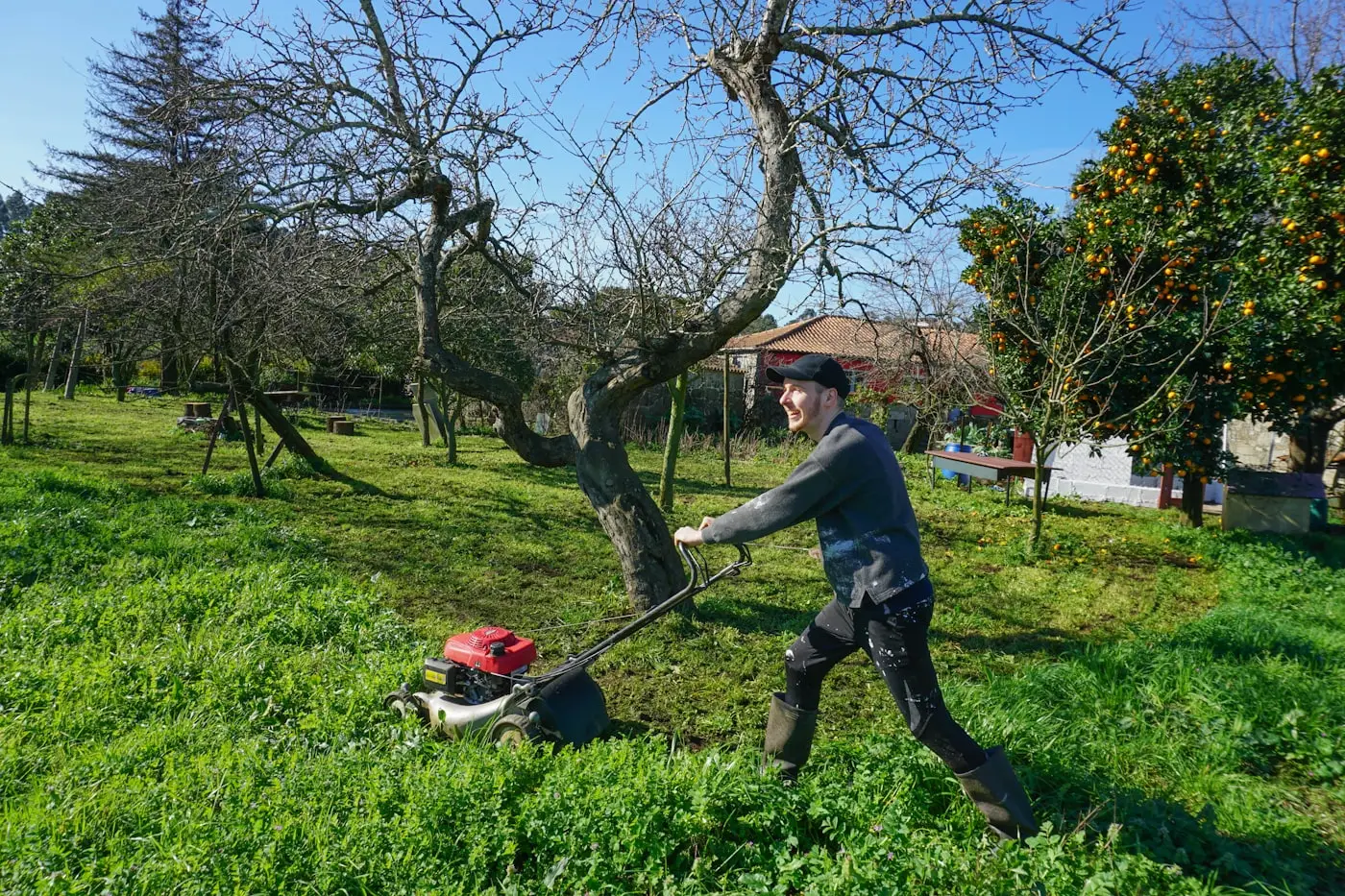
Knottingley sits on the Aire-Calder Navigation canal in the Wakefield district, a WF11 town with Ferrybridge immediately adjacent to the east and the wider Wakefield district stretching west. It is a former glass and chemical industry town with a housing character shaped by its working-class industrial history: a mix of 1950s to 1970s social housing and older stone-built properties, spread across flat terrain that drops slightly toward the canal in the lower parts of the town. The gardens here are generally medium-sized flat plots - not the tiny yards of older industrial terraces, and not the large rural gardens of outer-suburban properties, but genuinely usable spaces that the right gardener can keep in good shape. The challenge is the soil and the water table. Alluvial clay on flat ground close to a canal does not drain in the way that higher or lighter ground does, and that has specific implications for how your lawn and borders behave through the year.
What Knottingley Gardens Are Actually Like
The predominant garden type in Knottingley is the rear plot of a post-war social housing property: a rectangular space, often 12-22 metres in length, flat, with a boundary fence or low hedge, a lawn area, and some established planting that reflects the decades of occupancy. These gardens are more generous than the back yards of Victorian terraced housing, and many have been actively maintained over the years by owner-occupiers and long-term tenants. Some have vegetable plots, established shrub borders, or mature fruit trees from earlier generations. The older stone-built properties on some of Knottingley's earlier streets may have more irregular plot shapes and more established planting, sometimes including trees that have grown significantly over the decades since they were planted.
The flat terrain is consistent across almost the entire WF11 area. There is very little gradient in Knottingley, which means that drainage relies entirely on soil permeability and any engineered drainage in the garden rather than natural fall across the ground. Near the Aire-Calder Navigation - in the lower-lying streets closest to the canal - the water table is notably high, and this affects how gardens behave even when there has not been direct flooding. A lawn on these lower-lying plots will stay saturated for longer after rain, take longer to become workable in spring, and produce more moss and less healthy grass than a comparable lawn on better-draining ground. This is not a problem that can be ignored or managed around - it requires understanding and the right intervention at the right time of year.
Properties on the slightly higher ground further from the canal are better drained, though still on alluvial clay throughout. The improvement in drainage as you move away from the water is noticeable in how gardens perform, but the underlying soil type remains the same and compaction remains a consistent issue even on the better-draining plots.
How Much Does a Gardener in Knottingley Charge?
Knottingley sits within the Wakefield district rate band, which is broadly comparable to other WF postcodes and sits in the mid-range of the West Yorkshire market. For a full breakdown of gardener costs across Yorkshire and how Knottingley compares to the wider region, the companion cost guide covers the picture in detail. For the national context on how West Yorkshire rates compare to other parts of the UK, see the UK gardener hourly rate guide.
| Rate type | Knottingley WF11, 2026 | Notes |
|---|---|---|
| Hourly rate (maintenance) | £25-£32/hr | Regular contracts at the lower end; one-off visits higher |
| Day rate (7-8 hrs) | £118-£168 | Full working day; clearance or restoration work |
| Fortnightly maintenance visit | £34-£62 per visit | Medium flat garden; contract pricing. Lawn, borders, and edges. |
| One-off lawn cut | £25-£52 | Standard medium plots; larger or more overgrown gardens higher |
| Spring tidy (one-off) | £80-£195 | Canal-adjacent plots with drainage issues can take longer to work in spring |
| Hedge trimming (standard domestic) | £38-£88 per visit | Established hedges at the higher end; standard post-war fencing plots lower |
| Garden clearance (medium plot) | £185-£420 | Heavily overgrown flat clay plots: £380-£600. Fixed quote after site visit. |
One note specific to Knottingley: for properties in the lower-lying streets near the Aire-Calder Navigation, spring clearance and tidy work can take longer than expected because the ground stays wet well into spring and is not always workable at the point when most homeowners want the job done. A gardener who knows the area will factor this into their schedule and their advice to you about the best time to start. One who does not may quote for March work and find the ground unworkable when they arrive. For the Wakefield area context on rates and gardener availability, the Wakefield gardeners guide has the district-level picture.
What to Look for in a Knottingley Gardener
The standard checklist matters everywhere, but in Knottingley the drainage and water table knowledge is a particularly important differentiator:
- Public liability insurance: The starting requirement. Ask to see the certificate - the actual document with the policy number, insurer, and cover level. Not verbal confirmation. A minimum of £2m cover is standard for domestic garden work.
- Waste Carrier's Licence: Required by law to transport garden waste from your property. Ask for the licence number before any clearance or cuttings-removal job.
- Understanding of high water table conditions: Ask directly whether they have experience with gardens in the lower-lying parts of Knottingley near the canal, and how they approach lawn care and drainage on alluvial clay with a high water table. The right answer involves aeration, timing, and possibly engineered drainage advice. The wrong answer is mowing and hoping for the best.
- Seasonal flexibility: On the lower-lying plots near the Aire-Calder Navigation, spring workability can be limited. A gardener who understands this and works with the seasonal conditions - rather than pushing to start in March when the ground is saturated - is more valuable than one who does not.
- Responsiveness and professionalism at first contact: A prompt, clear response with an offer to visit before quoting is the correct behaviour. Vague or slow first contact rarely improves.
The canal proximity effect on gardens near the Aire-Calder Navigation
Properties within a few hundred metres of the Aire-Calder Navigation in Knottingley can have water table levels that make gardening meaningfully different from standard practice. After wet autumn and winter periods, the water table in these lower-lying areas can be within half a metre of the surface, which means grass roots are operating in near-anaerobic conditions for extended periods. This is not a disaster, but it does mean the growing season starts later, aeration matters more, and ground that looks superficially dry in February may still be saturated below the surface. A gardener who has worked these streets before will have already learned this.
Soil, Drainage, and Your Lawn in WF11
The alluvial clay that Knottingley sits on is different from the Coal Measures clay that characterises the Spen Valley and Normanton, but the practical challenges are similar: heavy, poorly draining ground that compacts easily and struggles to sustain healthy grass through wet Yorkshire winters. In Knottingley specifically, the canal proximity adds the water table dimension, which amplifies the drainage problem in the lower parts of the town.
Lawns on flat alluvial clay in WF11 share the same characteristic problems: moss encroachment that accelerates in wet years, patchy bare areas, poor root depth, and a lawn that looks significantly worse in March than it does in July. The underlying cause is compaction combined with poor drainage. The solution is the same as for any heavy clay soil: scarification and hollow-tine aeration in autumn, ideally in September or October before the ground becomes too wet to work, followed by overseeding with a clay-tolerant grass mix. For properties very close to the canal, this timing is particularly important - attempting aeration in late October or November on a near-saturated lawn is counterproductive and can make compaction worse by smearing the soil rather than opening it up.
For border areas, the approach on alluvial clay is to work organic matter into the soil annually to improve structure and drainage around plant roots. This is slow work to show results - improvement in soil structure takes several seasons to become clearly visible - but it makes a genuine difference to what you can grow and how your borders perform. A gardener who understands this will raise it. One who does not will weed the borders and leave the soil structure as they found it.
For a full seasonal overview of what should be happening in your garden throughout the year, the Yorkshire lawn care calendar covers the complete maintenance picture. For specific guidance on drainage problems - which is directly relevant to the lower-lying parts of WF11 - the Yorkshire garden drainage guide covers what can be done and when.
Regular Maintenance or One-Off Work
As with most Yorkshire towns, Knottingley homeowners who use a professional gardener are typically on either a regular seasonal contract or occasional one-off jobs for specific tasks. The right arrangement depends on your garden's current state and your goals for it.
A regular maintenance contract is the better option if you want your garden to stay consistently presentable through the growing season without managing the schedule yourself. A typical garden maintenance contract in Knottingley runs from April to October, with fortnightly visits covering lawn mowing and lawn edging, border weeding and light pruning, path clearing, and waste removal. Contracts are usually quoted as a fixed monthly fee. The per-visit rate is lower than for one-off work because the gardener is building the job into a planned round. A gardener who has maintained your specific plot through a full season will know where the ground stays wettest, which areas need the most attention in spring, and what the realistic expectations are for the soil conditions you have. For guidance on what to look for in a longer-term regular arrangement, see the Yorkshire garden maintenance contracts guide.
One-off work is the right approach for a defined, bounded task: a post-winter clearance, a spring tidy to bring a neglected garden back into shape, a hedge cutback, or a one-off lawn treatment. For clearance work on Knottingley's flat clay, always request an in-person assessment and a fixed quote. A gardener who quotes by phone without seeing the site is either guessing or planning to revise when they arrive. This is particularly important in WF11 where the condition of the ground can vary significantly between properties close to the canal and those further away.
Questions to Ask Before You Hire
- Can I see your public liability insurance certificate? The actual document, not verbal confirmation.
- Do you hold a Waste Carrier's Licence, and can I have the licence number? Required for any waste removal from the site.
- Have you worked gardens in WF11 or near the Aire-Calder Navigation before? Familiarity with the drainage conditions in the lower-lying parts of town is valuable knowledge.
- Can you visit before quoting for clearance or larger jobs? Conditions vary significantly between plots close to the canal and those further away. An in-person assessment is the only reliable basis for a fixed price.
- What is included in your maintenance contract? Mowing, edging, weeding, waste removal - what is in and what costs extra?
- Do you offer lawn aeration and scarification? On alluvial clay in WF11, this is not optional for a well-maintained lawn. If a gardener does not offer it or does not understand why it matters, that tells you something.
Red Flags
- A quote significantly below £25/hr with no explanation. Below the local rate without a clear reason almost always means no insurance, no waste licence, or both.
- Refusal to provide proof of insurance when asked. No legitimate reason for this.
- Giving a clearance or tidy price over the phone without visiting. On flat alluvial clay near the canal, ground conditions are genuinely variable and remote estimates are unreliable.
- No examples of recent local work. Anyone active in WF11 should be able to show you photos of comparable Knottingley gardens.
- Verbal-only commitments before starting work. Written scope confirmation is standard. Verbal-only creates ambiguity in the contractor's favour, not yours.
Finding a Gardener in Knottingley: Where to Start
Searching online for "gardener Knottingley" or "gardener near me WF11" will surface a mix of local contractors and national lead platforms. The lead platforms generate a comparison exercise by selling your contact details to multiple contractors simultaneously - the first to call gets the advantage, which is not the same as the best person getting the job. A local introduction service connecting you to one local gardener covering WF11 is a better starting point. For a full guide on how to evaluate and choose any gardener, see how to find a gardener in Yorkshire. For the broader regional picture on finding gardeners across West Yorkshire, finding a gardener near you in Yorkshire covers the main approaches. For district-level context on rates and availability in the Wakefield area, the Wakefield gardeners guide is directly relevant to Knottingley.
Frequently Asked Questions
How do I find a reliable gardener in Knottingley?
A neighbour's recommendation from someone who has used the same person through a full growing season is the most reliable starting point. Failing that, a local introduction service for WF11 is better than a national lead platform. When you first make contact, ask about public liability insurance, a Waste Carrier's Licence, and experience working with alluvial clay gardens in the Knottingley or Ferrybridge area.
How much does a gardener in Knottingley charge?
Typical WF11 rates in 2026 run £25-£32 per hour for maintenance, with day rates of £175-£300. Fortnightly contract visits for a medium garden run £34-£62 per visit. For the full regional context, see the Yorkshire gardener cost guide. For how these rates compare nationally, see the UK gardener hourly rate guide.
What should I look for in a Knottingley gardener?
Insurance and waste licence documentation as a minimum. Beyond that, familiarity with flat alluvial clay and the high water table conditions in the lower parts of WF11 near the Aire-Calder Navigation is the most locally specific knowledge to look for. A gardener who understands when the ground is and is not workable in Knottingley's wetter months will manage your garden far better than one who does not.
What garden work gets booked most in Knottingley?
Regular fortnightly maintenance through April to October is the most common arrangement. Lawn aeration and scarification in autumn is particularly relevant here because of the drainage challenges on alluvial clay. Spring tidies are busy in April and May, though canal-adjacent properties may need to wait for the ground to dry before clearance or planting work is practical. Hedge trimming is consistently in demand twice a year. For the full seasonal picture, see the Yorkshire lawn care calendar.
Do gardeners in Knottingley take on one-off jobs or only regular contracts?
Most take on one-off jobs alongside regular work. Clearances, spring tidies, and hedge cuts are all bookable as standalone jobs. For guaranteed regular slots from April, contact in February or March. For what a good regular arrangement looks like, see the Yorkshire garden maintenance contracts guide.
Related reading
- Gardeners in Wakefield
- Gardeners in Normanton
- How much does a gardener cost in Yorkshire? (2026)
- How to find and vet a gardener in Yorkshire
- Lawn scarification in Yorkshire
- Garden drainage in Yorkshire
- Garden maintenance across Yorkshire
- Lawn edging across Yorkshire
Gardeners in other nearby areas
We cover the full Wakefield district and wider West Yorkshire area:
Get a quote for your Knottingley garden.
60-second assessment. If a local WF11 gardener takes your enquiry, they call you with a price for your specific garden and job.
Start the assessment