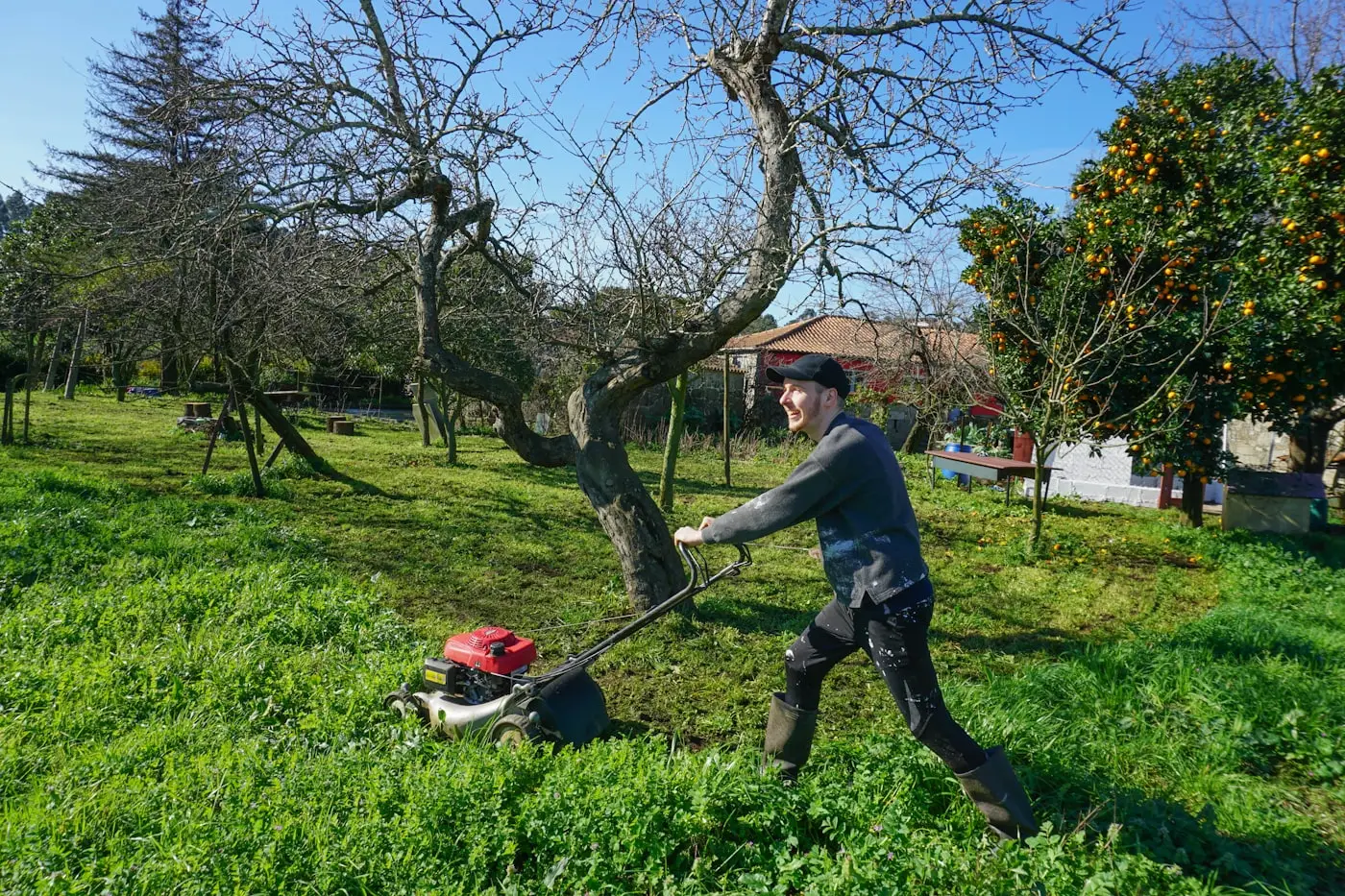
Woodlesford is a working suburb - the kind of place where most households are busy enough during the week that the garden is genuinely the last thing anyone has time for. It sits between Rothwell and Oulton in south-east Leeds, close to the Aire Valley, and the housing stock is predominantly post-war semis and more recent estate development, with some older terraces near the village centre and the railway station. The gardens here are typical of their type: medium-sized enclosed back gardens with a lawn, a border or two, a fence-line hedge, and whatever has accumulated in the borders over the years. Not complicated gardens, but gardens that accumulate a substantial backlog surprisingly quickly when they are not attended to through the growing season. A Woodlesford clay lawn that goes uncut through a wet May and June is a different proposition from the same lawn kept on a fortnightly mow - it does not just need cutting, it needs the work done in the right conditions on heavy clay, at the right height, and without doing further damage to a surface that is already compacted and worn. This guide is for Woodlesford homeowners who are looking for a gardener to manage that straightforwardly and reliably.
What Woodlesford Gardens Are Like
The housing in Woodlesford is predominantly post-war semis with standard domestic back gardens - enclosed by fence or hedge, with a lawn taking up most of the space, and borders along at least one side. The older properties near the historic core have slightly larger and more characterful plots. The more recent residential developments on the periphery have smaller, younger gardens that are still being established. What most have in common is the flat, clay-heavy soil of the Aire Valley and the enclosed character that means light levels in back gardens can be variable - a common pattern is a lawn that performs well in the sunny portion nearest the house but becomes mossy and thin under the fence-line or the boundary hedge where light is reduced.
Woodlesford's position near the Aire Valley means the soil profile is influenced by the river's historical floodplain, and Aire Valley clay is particularly heavy and sticky compared with soils further from the river. Gardens that sit close to the valley floor can be genuinely poor-draining, particularly in the spring months before the clay warms and dries out. A lawn on heavy Aire Valley clay that has not been aerated in several years will show the typical pattern: bare compacted areas in the most-used parts, moss establishing in the shaded wetter areas near the fence or hedge, and uneven growth across the surface as some patches sit better-drained than others.
On the newer estates in Woodlesford, the familiar problem of construction-disturbed topsoil applies. Gardens that were established on compacted building spoil or inconsistently replaced topsoil may have drainage problems that are structural rather than just a function of the clay character - poor drainage even by clay standards, bare patches that will not seed successfully because there is no meaningful topsoil depth, and borders that dry out and crack despite being on heavy ground because the subsoil is so compacted that water cannot penetrate to any depth.
The Aire Valley Clay Soil Challenge
Woodlesford sits in one of the heavier clay zones of West Yorkshire. The Aire Valley clay is dense, rich in silt and clay minerals, and genuinely challenging to manage well. It shares the fertility and moisture-retention advantages of all clay soils - plants grow strongly when conditions are right - but the disadvantages are more pronounced than in lighter clay areas. Waterlogging after rain is not unusual in the lowest gardens. The soil takes longer to warm in spring than most West Yorkshire locations, which delays the start of the effective growing season. And once it dries in summer, Aire Valley clay can set hard and crack in a way that is uncomfortable for established plant roots.
For lawns, the clay character means that lawn treatment - specifically aeration - is not optional if you want a lawn that stays in reasonable condition year on year. Compaction builds up faster on heavy clay than on lighter soils because the small particles compress more readily under foot traffic and the weight of machinery. Hollow tine aeration removes plugs of compacted soil and allows air, water and nutrients to penetrate to the root zone. Done in autumn while the soil has warmth, it gives the lawn the best possible recovery window before winter. Without it, compaction builds cumulatively: year one the lawn is a bit patchy, year three there are significant bare areas, year five there is more moss than grass in the problem areas and the whole thing needs a substantial renovation programme rather than a simple annual treatment.
Overgrown garden restoration on clay: what is actually involved
A Woodlesford garden that has been left for two or three growing seasons on clay soil is a genuinely substantial clearance job. Perennial weeds - dock, bindweed, ground elder, couch grass - establish at depth in the clay. They cannot be cleared by simply cutting them down; the root systems are intact and will regrow vigorously within weeks of being topped. Proper clearance means digging to the full root depth, which in clay can be eighteen inches or more for established dock. This is slow, physical work that cannot be accurately quoted without a site visit. Any gardener who quotes for a Woodlesford overgrown clearance without seeing it has either quoted for a top-cut rather than a root clearance, or has not thought about what the job involves on clay soil. Garden clearance on neglected clay plots needs to be quoted and priced properly.
What Gets Booked Most Often in Woodlesford
Fortnightly lawn mowing and garden maintenance
The most consistently booked work in Woodlesford is lawn mowing and general maintenance on a fortnightly schedule through the growing season. April to October, fortnightly visits, covering the mow, edge, and basic border tidy. The clay soil keeps grass growing consistently through the warm months, and the Aire Valley microclimate means Woodlesford rarely has the extended dry spells that stress lawns further west. A fortnightly schedule on a standard LS26 semi takes around forty-five minutes to an hour. Monthly billing on a contract rate makes the arrangement predictable for both parties.
Hedge trimming
Woodlesford properties typically have boundary hedges - privet and Leylandii are common along back garden boundaries, hawthorn and mixed native on older front boundaries. Hedge trimming twice a year keeps most Woodlesford hedges under control. The main issue in the area is Leylandii that has been allowed to grow significantly over its intended height, which requires a more careful approach and, for very large specimens, should involve a qualified arborist. A standard back garden hedge trim in Woodlesford costs £35-£80 depending on length and height.
Garden clearance and restoration
Woodlesford has a reasonable amount of garden clearance work, driven by property transactions, rental property cycles, and households that have simply fallen behind. Clay clearances are labour-intensive, and the job is always quoted after a site visit. Plan for a realistic timeline: a proper clay clearance that removes weed root systems takes significantly longer than a clearance on lighter ground, and the follow-up treatment to prevent regrowth from root fragments is as important as the initial clearance.
Lawn renovation after neglect
Woodlesford lawns that have gone without proper care for several seasons often need a multi-stage renovation rather than a single treatment. Scarification to remove accumulated thatch and moss, aeration to address compaction, overseeding to fill bare areas, and a treatment programme through the following season to consolidate the improvement. This is best started in autumn - September is the optimal window for renovation on clay soils - and the results show progressively through the following spring and summer. A lawn that is renovated in September and then managed consistently through the following season is in significantly better condition by the following autumn than one that was treated in spring and neglected again over winter.
Weed control
Fertile clay borders in Woodlesford grow weeds as efficiently as they grow desirable plants. Weed control done consistently through the season - regular hoeing and hand-weeding during visits - is dramatically more effective than periodic blitzes. Perennial weeds like bindweed and ground elder, once established in clay, require sustained effort over a full season to genuinely reduce rather than just set back.
What Does a Gardener in Woodlesford Cost?
| Service | Typical rate (LS26, 2026) | Notes |
|---|---|---|
| Hourly rate (maintenance) | £25-£32/hr | Contract rate at lower end; one-off or specialist work higher |
| Lawn cut (one-off) | £25-£50 | Standard LS26 garden; includes edging |
| Fortnightly maintenance contract | £35-£65 per visit | Covers mowing, edging, basic border tidy |
| Hedge trimming | £35-£100 per visit | Length, height and species dependent |
| Garden clearance | £150-£400+ | Site visit required; clay clearances at higher end |
| Lawn aeration and overseeding | £70-£130 | Autumn timing recommended on clay |
| Scarification | £80-£150 | Removes thatch and moss from compacted clay lawns |
What to Look for When Hiring in Woodlesford
- Public liability insurance: Ask for the certificate with the policy number and cover level. Minimum £1m; most professionals carry £2m.
- Waste Carrier's Licence: Required for removing green waste from your property. Ask for the licence number.
- Experience on clay soils: Ask whether they regularly work in the Aire Valley and surrounding clay-soil suburbs. Knowledge of working conditions on clay - when to mow, when to leave it, how to time aeration - matters.
- Site visit for clearance work: Any clearance job on a Woodlesford clay garden needs a proper site visit before quoting. No exceptions.
- Written contract terms: What is included in the fortnightly rate, what is extra, how seasonal work like hedge cutting is handled.
Frequently Asked Questions
How do I find a reliable gardener in Woodlesford?
Word of mouth from a neighbour who has used the same person reliably is the best starting point. A local introduction service connecting you to one vetted gardener for LS26 is preferable to a national platform. Ask for insurance and Waste Carrier's Licence before agreeing to anything. See the Woodlesford gardeners page for local coverage.
How much does a gardener in Woodlesford charge?
General garden maintenance in Woodlesford runs £25-£32 per hour in 2026. Fortnightly maintenance contracts cost £35-£65 per visit. For full regional context, see the UK gardener costs guide.
What is Woodlesford's soil like?
Heavy Aire Valley clay - fertile, moisture-retentive, slow to drain, prone to compaction. Annual aeration is particularly valuable on these lawns. See the clay soil garden guide for management approaches.
What work gets done most in Woodlesford?
Fortnightly lawn mowing; hedge trimming; garden clearance on overgrown plots; lawn aeration and scarification; and weed control in clay borders.
What does garden clearance cost in Woodlesford?
A manageable clearance on a standard semi runs £150-£300. Heavily overgrown clay plots with established perennial weeds run £350-£600 or more. Always quoted after a site visit.
Do Woodlesford gardeners offer regular maintenance contracts?
Yes, fortnightly maintenance contracts are the standard model for Woodlesford's regular garden customers. A typical contract covers mowing, edging, basic border weeding and hedge tidying through the growing season from April to October. Monthly billing is standard. The per-visit rate on a contract is meaningfully lower than for one-off bookings because the work is planned and travel is more efficient. Most Woodlesford gardens are a manageable size for a forty-five minute to one hour fortnightly visit.
What are the red flags when hiring a gardener in Woodlesford?
Key warning signs: a quote significantly below the local rate without explanation; no proof of public liability insurance; offering to remove green waste without a Waste Carrier's Licence; quoting for garden clearance without visiting first; and vagueness about what is included in a maintenance contract. On clay soil, a gardener who does not acknowledge soil conditions when discussing lawn renovation is not drawing on relevant experience.
Related reading
- How much does a gardener cost in the UK? (2026 prices)
- Managing clay soil in a Yorkshire garden
- Garden maintenance across Yorkshire
- Garden clearance across Yorkshire
- Lawn treatment across Yorkshire
- Gardeners in Oulton (neighbouring suburb)
Gardeners in nearby areas
We cover Woodlesford and the surrounding south-east Leeds area:
Get a quote for your Woodlesford garden.
60-second assessment. If a local gardener takes your enquiry, they call you with a price for your specific garden and job.
Start the assessment