Lawn Mowing Tips for Yorkshire Gardens: What the Pros Do Differently
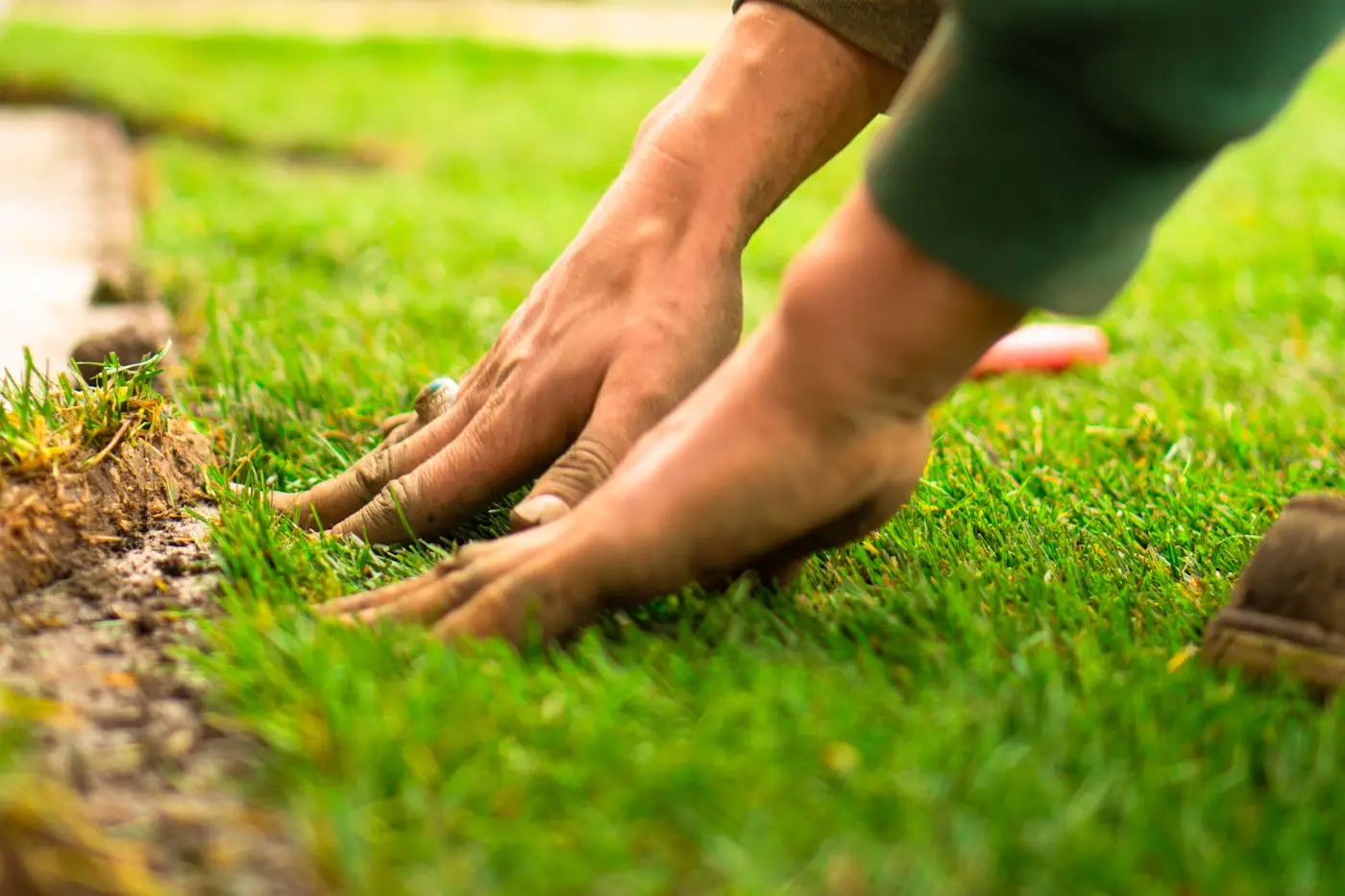
Yorkshire lawns take a lot of punishment. The combination of heavy clay in most of West and South Yorkshire, the Pennine damp, and the fact that most gardens go through at least three or four seriously wet spells each year means that getting your mowing right is about more than just aesthetics. Cut too short or at the wrong time, and you end up fighting moss and compaction for the next three seasons. Cut at the right height and frequency, and the lawn manages itself fairly well.
This guide covers the full Yorkshire lawn mowing year: when to start, when to stop, what height to cut at each time of year, how to avoid the most common mistakes, and when to hand the job to a professional.
The quick answer: start mowing no earlier than late March (wait for 5-6°C soil temperature), keep the height at 3.5-4cm through summer, never go below 3cm on an average Yorkshire lawn, and stop mowing when the grass stops growing in November or early December depending on the year.
When should I mow my Yorkshire lawn each month of the year?
The single biggest difference between how experienced gardeners approach lawn mowing in Yorkshire and how most homeowners do it is the calendar. The instinct is to start mowing when it looks like the grass is growing. The correct approach is to start mowing when the soil is ready - which is a different thing entirely.
January and February: do nothing
In a typical Yorkshire winter, January and February are for leaving the lawn alone. The grass is dormant or near-dormant, the soil is waterlogged or frozen in most parts of the county, and walking on the lawn compacts the surface structure. If you have a prolonged mild spell and the grass is genuinely growing, a high cut (5.5-6cm) on dry ground is acceptable in February in sheltered low-lying gardens - York and the Vale, parts of the East Riding. Everywhere else: leave it.
March: the wait-and-see month
Do not start mowing before mid-March at the earliest. The rule of thumb professional gardeners use is soil temperature: the grass needs consistent soil temperatures of at least 5-6°C before it is worth cutting. In North Yorkshire and upland areas of West Yorkshire, this often does not happen until late March or even early April.
The practical test: press your hand on the lawn for a few seconds. If the ground feels cold, the grass is not actively growing enough to benefit from cutting. If it feels cool but not cold, and the tips of the grass blades look noticeably greener and longer than last week, it is probably ready for the first mow of the year.
The first cut of the year should be high - 5cm minimum. Running the mower over compacted, slightly soggy March grass at 3cm is one of the most reliably damaging things you can do to a Yorkshire lawn. The scalp marks take weeks to recover and are the entry point for moss.
April: build up gradually
Through April, mowing frequency picks up from fortnightly to weekly as the growth accelerates. Drop the cutting height gradually from 5cm to 4cm as the season progresses. April in Yorkshire still brings cold nights and occasional late frosts - do not chase a manicured height before the lawn has properly broken dormancy. In a cold April (the Dales and elevated parts of Leeds and Bradford commonly get cold Aprils), keep the height at 4.5-5cm through the whole month.
May to August: peak season
This is when the lawn grows fastest and looks its best with regular attention. A weekly mow at 3.5-4cm suits most Yorkshire domestic lawns in summer. Do not go below 3cm on a standard amenity lawn mix - Yorkshire's climate does not suit the tight, short-cropped look you see in drier counties. The grass simply does not have the resilience in our conditions to recover quickly from a close cut.
For a fine ornamental lawn (fescue-dominated, well-draining, established with care over many years), 2.5-3cm is achievable with the right management. But these lawns also need more scarification, more aeration, and more overseeding to stay healthy. They are beautiful but high-maintenance in Yorkshire conditions.
Mow weekly in May, June, and July. In a dry August, growth slows and fortnightly may be enough. Never let the lawn get more than 30% longer than your target height before cutting - the "one third rule" means if you are cutting to 4cm, cut before the grass reaches 5.5-6cm. Letting it go longer and then cutting hard in one go is harder on the grass than regular moderate cuts.
September and October: stepping down
September sees growth still strong in most of Yorkshire, especially in the warmer parts of the East Riding and around Harrogate and York. Continue mowing weekly, but start raising the cutting height back up to 4-4.5cm as the month progresses. By October, drop to fortnightly and mow at 4.5-5cm. October is also the prime month for autumn lawn care - scarifying, aerating, and top-dressing - which ties in with the winding-down mowing schedule.
November: tapering off
Most Yorkshire lawns stop needing regular mowing by early to mid November as growth slows significantly. Keep the final cut height high - 5cm. Do not cut if the ground is frozen or if frost is forecast if a gardener takes it on. In a mild November (which do happen, especially in coastal East Yorkshire and sheltered Vale of York gardens), you may need one or two more cuts. In an early cold spell, you are done.
December: stop
December mowing is almost never needed or beneficial in Yorkshire. If you are genuinely seeing active growth in December (common in mild years along the coast near Scarborough or Whitby), a very light tidy at 5.5cm on dry days is acceptable. Otherwise, put the mower away, service it or book it in for a service, and leave the lawn to rest.
What are the most common mowing mistakes on Yorkshire lawns?
Cutting too short (scalping)
This is the number one problem. The instinct to get the lawn looking neat and tight - as short as the mower will go - is deeply counterproductive in Yorkshire's climate. Yorkshire has higher annual rainfall than most of England, regular periods of overcast and damp weather, and clay-heavy soil in most urban areas. These conditions are exactly what moss needs. Moss cannot compete with healthy, dense, reasonably long grass. It can and does compete very effectively with short, stressed, scalped grass.
Scalping - running the mower so low that it removes most of the green leaf and exposes the yellowy-brown base of the grass stems - is most damaging in spring before the lawn has properly established growth, and in late summer when the lawn is under drought stress. The pale, bare patches left behind do not fill in quickly. They fill with moss within a season if not treated.
The fix is simple: raise the cutting height. If you are currently cutting at 2.5cm, go to 3.5-4cm. The lawn will look slightly different but will thicken up, crowd out weeds and moss more effectively, and handle Yorkshire's weather far better. This is the single biggest performance improvement most Yorkshire lawns can get without spending any money.
Mowing wet grass
In theory, wet grass should be avoided because the mower clogs, cuts unevenly, and leaves clumps that mat on the surface. In practice, in Yorkshire, you sometimes have no choice - there are weeks in a wet September or October where every day is damp to some extent.
The real problem with consistently mowing wet ground is soil compaction. The mower wheels sink into saturated clay soil and leave ruts that compact the soil profile, reduce drainage, and create uneven surfaces that then get scalped when you try to mow them flat. If you must mow slightly damp grass, use a light electric or battery mower rather than a heavy petrol one, mow in a different direction to spread the wheel tracks, and never mow standing water.
Not varying the mowing direction
Mowing in exactly the same direction, in exactly the same tracks, every time is one of the less obvious but significant long-term mistakes. The mower wheels create subtle compaction tracks over many mows, and the grass blades adapt to always lying in the same direction, which reduces vigour. Rotate your mowing direction by 90 degrees every two or three mows. This is also how you keep stripes looking good - if you always mow in the same direction, the grass eventually adapts and the stripes become less defined.
Mowing in frost
Walking on frosted grass breaks the individual leaf cells, which are expanded with ice crystals. The footprints show up as brown patches a day or two after a frosty morning and can take weeks to recover in winter. Never mow, walk on, or run the mower over frosted grass. This is an easy rule to follow: if there is visible frost or the grass crunches underfoot, leave it until the afternoon when the frost has lifted.
What height should I cut my Yorkshire lawn at each time of year?
| Month | Recommended height | Frequency |
|---|---|---|
| January-February | Do not mow (frost, dormancy) | - |
| March | 5-5.5cm (first mow only if soil temperature is ready) | Once or twice |
| April | 4.5-5cm | Weekly or fortnightly |
| May-June | 3.5-4cm | Weekly |
| July-August | 3.5-4cm (raise to 4.5cm in drought) | Weekly or fortnightly in dry spells |
| September | 4-4.5cm | Weekly |
| October | 4.5-5cm | Fortnightly |
| November | 5cm (last cut of year, dry ground only) | Once or twice |
| December | Only in exceptional mild conditions, 5.5cm | Rarely if ever |
Note: these are for standard amenity lawns. Fine ornamental lawns (pure fescue, close-cropped) can run 0.5-1cm lower at each setting but require much more active management to stay healthy in Yorkshire conditions.
What should I do with my Yorkshire lawn during a drought?
Raise the cutting height by 0.5-1cm and reduce mowing frequency until growth returns. Yorkshire's summers occasionally include prolonged dry spells - 2018, 2022, and 2023 all brought significant summer droughts to parts of the county, particularly in the East Riding and the Vale of York. When the lawn is under drought stress, raise the cutting height by 0.5-1cm and reduce frequency. Longer grass shades the soil surface, reduces moisture loss, and the deeper root system of longer-cut grass can reach moisture further down.
Never apply lawn treatment products (feeds, fertilisers) to a drought-stressed lawn. Wait for rain or water first, then apply once the lawn is actively growing again.
Getting Stripes on a Yorkshire Lawn
Lawn stripes are created by bending grass blades in alternate directions as you mow. Light reflecting off blades bent towards you appears darker; light reflecting off blades bent away from you appears lighter. That alternating effect is the stripe.
Three ways to create stripes:
- Rear roller mower: the most effective method. A roller on the back of the mower bends the cut grass flat behind the blade. Most quality cylinder mowers and some rotary mowers have a rear roller. If you want stripes, check for a rear roller when buying.
- Lawn lining attachment: a strip of stiff brush or rubber that mounts behind the mower deck and achieves a similar bending effect without a full roller. These can be bought for most standard rotary mowers for around £20-40.
- Direction only: even without a roller, mowing in alternating parallel passes - one pass going left to right, the next going right to left, slightly overlapping - creates a subtle stripe visible in good light. Not as pronounced as a roller, but visible.
Stripes look best on lawns cut at 3.5-4cm. Very short cuts and very long grass both reduce the visible effect. The stripe effect is also more pronounced on fescue-dominated lawns than on the coarser ryegrass-heavy mixes common in most Yorkshire gardens.
What to Do With Grass Clippings
Mulch mowing: when to do it
Mulch mowing - leaving finely chopped clippings on the lawn surface rather than collecting them - returns nitrogen, organic matter, and moisture to the lawn. Done correctly, it can reduce the need for nitrogen fertiliser by 20-30% over the season. The key word is "finely chopped": mulch mowing works when the grass is dry, not too long, and you are mowing frequently enough that the clippings are short (under 2-3cm) and can fall between the standing grass blades to decompose on the soil surface.
Mulch mow in: dry May, June, and July. The grass is growing fast, the clippings are short, and the conditions are right for quick decomposition.
When to collect clippings
Collect clippings when: the grass is wet or damp (wet clippings mat together on the surface and block light, causing yellowing and fungal patches beneath), when the grass has been left too long and the clippings are thick, or in autumn (September-November) when decomposition is slow. Yorkshire's September and October are frequently wet - in most years, collecting clippings in autumn is the right call.
Long, wet clippings left on a Yorkshire lawn over autumn and winter create ideal conditions for thatch buildup and fungal disease. If you collect them and add them to a compost heap, they decompose quickly. If you leave them, they become a mat that needs annual lawn scarification to remove.
Grass Types Common in Yorkshire Gardens
Most Yorkshire domestic lawns are amenity mixtures - a blend of perennial ryegrass with some meadow grass (Poa pratensis) and occasional browntop bent. These are hard-wearing, tolerant of shade and clay, and respond well to the mowing schedule described above. They are not the fine striped lawns of a cricket ground, but they are robust and practical for family gardens.
Perennial ryegrass-heavy mixes (common in newer housing estate lawns and those re-turfed from off-the-shelf turf) are fast-growing, hard-wearing, and slightly less prone to scalping damage than finer grasses. They are the most common lawn type in West Yorkshire, South Yorkshire, and new-build gardens across the county. Their main downside is that they coarsen over time if not managed well, producing a thatchy, coarse texture after several years without scarification.
Fescue-dominated lawns appear most often in older properties, particularly in North Yorkshire and on shaded or north-facing sites in West Yorkshire. Fine fescues (Festuca rubra, Festuca ovina) are slower-growing, tolerant of dry conditions and shade, and produce the finest, most traditional lawn appearance. They also need the most careful management: they are more sensitive to compaction, more prone to moss in wet conditions, and slower to recover from scalping or disease.
If you are unsure what type of lawn you have, look at the leaf blade width: ryegrass blades are wide (3-4mm), fescue blades are fine (1-2mm, sometimes needle-thin). Most gardens have a mix. Knowing which type dominates helps you understand why your lawn behaves the way it does.
Annual Lawn Care Beyond Mowing
Mowing is the foundation, but Yorkshire lawns also benefit from an annual care programme that addresses the underlying issues that mowing alone cannot fix. The main treatments are:
Scarification (September-October): removes the thatch layer that builds up between the grass and soil surface. Thatch blocks water, air, and nutrients. Yorkshire's wet conditions accelerate thatch buildup, particularly in ryegrass-heavy lawns. Lawn scarification done properly in autumn sets the lawn up well for the following spring.
Aeration (September-October, or spring): creates channels in the soil that allow air and water to penetrate. Particularly important in clay soils. Lawn aeration can be done with a hollow-tine aerator (removes plugs of soil), a solid-tine fork, or a powered aerating machine for larger lawns.
Lawn treatment: feeding in spring (April-May), weed and moss control as needed through the season. Professional lawn treatment products are stronger and longer-lasting than retail products and are worth the investment if you are dealing with persistent moss or weed problems.
When should I hire a professional to mow my Yorkshire lawn?
There are clear signs that it is time to stop doing the mowing yourself and book someone:
You are going 4+ weeks between cuts. A domestic rotary mower handles grass that is moderately long (up to about 8-10cm) reasonably well if the ground is dry. Anything longer than that, or longer grass on damp ground, is beyond what most domestic mowers cope with cleanly. The grass wraps around the blade, the machine bogs down, and the result is torn rather than cut grass that turns brown at the tips. A professional gardener arrives with commercial equipment that handles overgrown grass properly.
You have slopes or uneven ground. Yorkshire gardens frequently have sloped sections - particularly in Harrogate, Skipton, Ilkley, and the many hillside suburbs of Leeds and Sheffield. Slopes are both physically demanding and more dangerous with a heavy mower. They are also harder to mow evenly at a consistent height. A professional can mow safely and cut the slopes to match the rest of the lawn.
You are away for several weeks in summer. A lawn that is not mowed through July grows to 15-20cm in Yorkshire's conditions. When you return, it cannot be brought back to 3.5cm in one cut without causing severe stress. A gardener on a fortnightly schedule while you are away keeps the lawn manageable throughout. This is much cheaper than one emergency recovery visit followed by months of remedial work.
You want regular maintenance, not just mowing. A regular lawn mowing service typically includes edge trimming, which keeps the borders between grass and beds or paths sharp and dramatically improves the overall look of the garden without any extra planting or landscaping. If your garden also has hedges to manage, our hedge trimming service can be scheduled alongside regular mowing visits to keep the whole garden consistently tidy.
| Situation | DIY or professional? |
|---|---|
| Flat lawn, cut weekly in season | DIY fine |
| Slopes or awkward shapes | Professional recommended |
| Lawn left 4+ weeks between cuts | Professional for recovery, then reassess |
| Away in summer | Professional fortnightly cover |
| Grass over 20cm and recovering | Professional with commercial equipment |
| Large garden (over 300m²) | Consider professional for time efficiency |
Mower Choice and Maintenance
The mower matters. A blunt or poorly adjusted mower tears grass rather than cutting it, which produces the brown-tipped look that homeowners often misdiagnose as disease or drought. A sharp blade cutting at the right height produces a clean, green finish even on the same lawn.
For a typical Yorkshire suburban garden (under 150m², reasonably flat), a corded or battery rotary mower with a rear collection box and adjustable cutting height does the job well. Look for a model with at least 37-40cm cutting width for efficiency on medium lawns. Blade sharpening once a season (or more often if you hit stones - very common in Yorkshire gardens where last century's rubble has worked its way into the topsoil over decades) makes a substantial difference to cut quality.
For anything over 200m² or with meaningful slopes, a self-propelled petrol mower repays the investment in time and effort. The self-propulsion matters particularly on clay soil, where the going is heavier than on free-draining sandy soils.
Service your mower at the end of the season (or before the first use of spring). Drain old fuel from petrol mowers if they are going to sit unused over winter - stale fuel gums up carburettors and is the most common reason domestic mowers fail to start in March.
Edge Trimming: the Detail That Makes the Difference
Professional gardeners consistently say that edge trimming is what separates a lawn that looks tended from one that just looks mowed. Clean edges - where grass meets paving, path, border, or wall - give the whole garden a sharper, more cared-for look disproportionate to the time it takes.
A half-moon edger or long-handled edging shears achieve clean edges on most garden boundaries. Use a board or cane as a straight guide along paved edges. On curved beds, a garden hose laid along the planned line gives a flowing, consistent curve to cut against.
Professional lawn edging as part of a regular maintenance visit typically adds only a few minutes to the mowing time and makes a large visible difference to the finished result.
Want someone to handle the mowing this season?
60-second assessment. If a local gardener takes your enquiry, they call you with a price.
Start the assessmentFrequently Asked Questions
When should I start mowing my lawn in Yorkshire?
Not before late March, and only when soil temperature is consistently above 5-6°C. In North Yorkshire and elevated West Yorkshire gardens, this is sometimes not until April. The first mow should be at 5cm or higher - never scalp a lawn coming out of winter dormancy.
What height should I cut my grass in summer in Yorkshire?
3.5-4cm for most amenity lawns through May to August. Do not go below 3cm on a standard Yorkshire lawn - the humid climate and clay soil mean scalped grass is very slow to recover and moss fills the gap quickly.
Why does my Yorkshire lawn get so much moss?
Moss loves cool, damp, shaded, compacted conditions - all common in Yorkshire gardens. Cutting too short is the primary trigger. Raise the cutting height, scarify in autumn to remove thatch, aerate to address compaction, and consider a moss treatment followed by overseeding thin areas.
How do I get stripes on my Yorkshire lawn?
Use a rear roller mower for the clearest stripes. A lawn liner attachment on a standard rotary mower works well. Even without either, alternating the mowing direction between passes creates a visible stripe effect. Works best at 3.5-4cm cutting height on fescue or mixed lawns.
Should I leave grass clippings on the lawn in Yorkshire?
Mulch mow (leave clippings) when conditions are dry and clippings are short - typically in dry summer spells. Collect clippings when grass is wet, when it has been left too long and clippings are thick, and throughout autumn. Yorkshire's wet autumns mean collecting in the September-November window is usually the right call.
When should I hire a gardener to mow my lawn?
When the gap between cuts is stretching to four weeks or more, when slopes or awkward shapes make DIY mowing difficult or risky, when you are away in summer, or when the lawn has grown too long for a domestic mower to handle cleanly. A regular fortnightly mowing service is almost always cheaper than one emergency recovery visit plus remedial lawn care. A regular grass cutting service typically includes edge trimming, which makes a large visible difference to the finished result.
How often should I mow my Yorkshire lawn?
In the peak growing season (May to July), once a week is right for most Yorkshire lawns. In June, when growth is fastest, twice a week produces better quality results than once a week. In April and September, fortnightly is usually enough. In August during a dry spell, mow only when growth is actively happening - once a fortnight or less. The key rule is never to remove more than one third of the grass blade length in one cut: if you are cutting to 4cm, mow before the grass reaches 5.5-6cm. Find gardeners covering your area via the Yorkshire towns directory.
What should I do if my lawn has not been mowed for several weeks?
Do not bring an overgrown Yorkshire lawn back to target height in one cut. If the grass has reached 12-15cm, cut it to 8-10cm first, leave it for a week to recover, then drop to 6-7cm, then to your target height over two to three weeks. Removing too much in one cut shocks the grass and leaves it vulnerable to moss and weed invasion. A professional gardener with commercial equipment can handle a badly overgrown lawn more effectively than most domestic mowers, and the cost of a professional recovery visit is usually less than the follow-on remedial work if you cut too hard in one go. For gardens that have been left entirely unmanaged for a full season or more, a garden clearance service may be needed before routine mowing can resume.
Is there a best time of day to mow in Yorkshire?
Mid-morning is best, once any dew has dried off the grass but before the heat of the afternoon. Mowing wet or damp grass leads to uneven cutting, clogs the mower, and leaves clumps on the surface that mat and yellow. In Yorkshire's frequently overcast summers, the grass may not fully dry until mid-morning even on a day that is not raining. Avoid mowing in the evening in autumn and spring when dew falls early - grass mowed in the evening stays damp overnight and increases the risk of fungal disease patches appearing in the following days.