Small Garden Design Ideas for Yorkshire Terraces and Semis
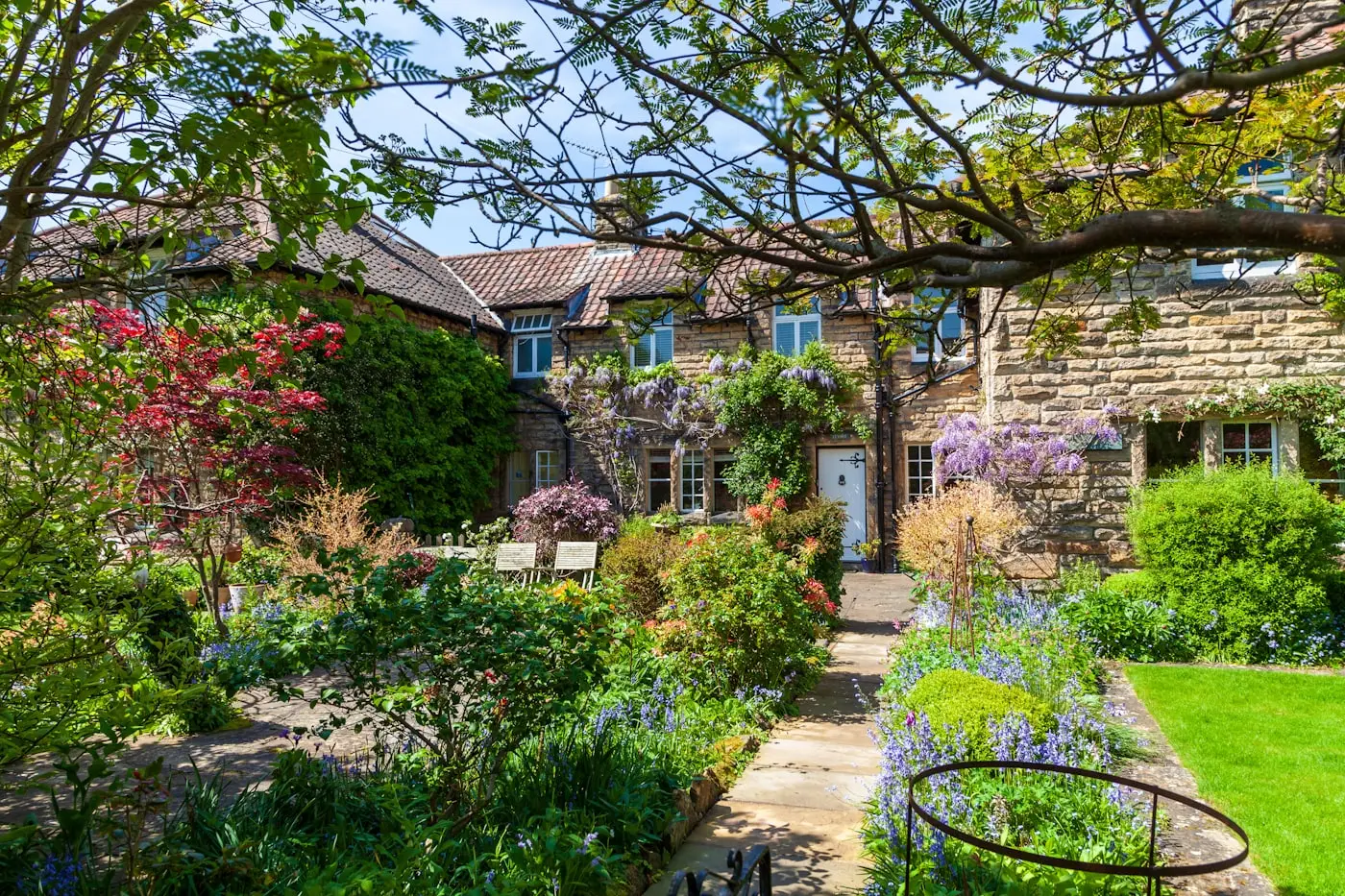
Most Yorkshire homeowners do not have a large garden. They have a terrace back yard, a semi-detached rear lawn that is either clay-heavy or builders-rubble-heavy depending on the era, or a new-build plot that the developer described as a garden but is functionally a square of dying turf. Working well in a small space is one of the most practically useful garden design skills you can apply.
This guide is for Yorkshire homeowners with small gardens: the Victorian and Edwardian terraces that dominate inner Leeds, Bradford, Sheffield, and Halifax; the 1930s semis in Harrogate, Wetherby, Northallerton, and the leafier suburbs; and the new-build estates from Castleford to Catterick where the garden arrived as an afterthought. The advice below is practical, costed, and built around what actually works in Yorkshire's conditions.
The quick answer: the best investment for a small Yorkshire garden is to stop thinking of it as a scaled-down version of a large garden and start thinking of it as an outdoor room. Divide the space, use vertical height, choose the right hard surface for your conditions, and plant for structure first and colour second.
Yorkshire Housing Types and Their Garden Challenges
Victorian and Edwardian terraces (Leeds, Bradford, Sheffield, Halifax, Wakefield)
The standard back garden behind a mid-terrace in inner Leeds or Sheffield is a long, narrow rectangle: typically 4-6 metres wide and 8-15 metres long, often entirely paved or flagged with old Yorkshire stone (which may be uneven, mossy, and sloped towards the house). Many have a back ginnel accessible by a gate. The main challenges are: shade from surrounding properties and the house itself, lack of width, and either cracked Victorian flagging or compacted soil underneath years of hardcore if the flags were ever lifted.
The opportunity in these spaces is the vertical dimension. Walls up to 2 metres high on both sides are a garden asset if you use them - climbers, wall-trained shrubs, and wall-mounted planters can turn blank brick into productive planting space without taking up any ground area at all.
1930s semis (Harrogate, Wetherby, Ilkley, York suburbs, Northallerton)
The rear gardens of interwar semis in the better suburbs tend to be more generous - 8-12 metres wide, 10-20 metres deep - but they often have a grass-dominated layout that feels open but lacks character. The soil in many of these gardens is reasonable loam over sand or light clay, which is more workable than inner-city clay. The main challenge is the garden equivalent of a blank canvas: everything is possible but nothing in particular has been done.
New-build estates (widespread across Yorkshire)
New-build gardens in Yorkshire are typically 30-50m² rear plots. The soil is almost always builders' topsoil spread over compacted subsoil and rubble - variable quality, often stony, and with drainage problems that do not become apparent until after the first wet winter. The grass, if present, grows thinly and patchily because the topsoil layer is thin. Many new-build homeowners discover that their "garden" is essentially a construction site with a thin dressing of turf.
The right approach to a new-build garden is to address the soil before spending money on plants. Rotavating 20-30cm deep and adding organic matter or topsoil before replanting makes a transformative difference to plant performance.
The Outdoor Room Principle
The single most useful design principle for small gardens is to treat the space as a room rather than a diminished version of a larger garden. Rooms have floors (hard surface or lawn), walls (fences, hedges, planting), defined areas for different activities, and detail that rewards close attention.
For most small Yorkshire gardens, this means dividing the space into zones rather than leaving it open. Even a garden 5 metres wide and 10 metres long can accommodate a paved sitting area near the house (the "living" zone), a middle area with raised beds or lawn, and a back boundary with planting or a shed. The transitions between zones - a low wall, a change in surface material, a single tree or large shrub - create a sense of variety and depth that a single flat space cannot.
Zoning also solves a practical problem: a small open garden with a central lawn looks smaller than one with defined areas, because your eye takes it all in at once. A garden with zones and transitions makes you want to explore, which makes it feel larger.
Making the Most of Vertical Space
In any garden under 30m², vertical planting is non-negotiable if you want meaningful plant interest without losing ground area. Yorkshire garden walls and fences - and there are a lot of them, because most Yorkshire gardens are boundaried by stone walls, timber fences, or brick walls - can be the most productive planting space in the garden.
Climbers for Yorkshire walls
Ceanothus is one of the best choices for a south or south-west facing Yorkshire wall. It produces an extraordinary display of blue flowers in May-June and again sometimes in autumn. It needs a sheltered, south-facing position to thrive in Yorkshire's climate - not suitable for north-facing or fully exposed gardens. Grows to 2-3 metres wall-trained.
Climbing hydrangea (Hydrangea anomala petiolaris) is one of the very few climbers that genuinely thrives on a north-facing wall. Slow to establish (two to three seasons before it really gets going), but once established it covers itself in white lacecap flowers in June and has attractive peeling bark in winter. Hardy across all of Yorkshire.
Clematis suits any Yorkshire aspect. The Group 3 (late-flowering) types such as Jackmanii, Viticella varieties, and the texensis group are the most useful for small gardens because they are cut back hard in February-March, which keeps them manageable. Group 1 types (Armandii, alpina) flower early and do not need cutting, but are harder to keep tidy.
Roses: climbing and rambling roses on a sheltered wall give several weeks of flower from June onwards. In a small Yorkshire garden, a wall-trained climbing rose takes up no ground space and gives months of interest. Choose a disease-resistant variety (Graham Thomas, Gertrude Jekyll, Tess of the d'Urbervilles) to avoid the black spot and rust problems that afflict susceptible varieties in Yorkshire's humid conditions.
Trellis and wall-mounted planters
Timber trellis fixed to a fence or wall adds a planting framework for climbers and creates visual texture without adding any bulk at ground level. In very small yards, wall-mounted planters (wrought iron, galvanised steel, or timber) allow herbs, bedding plants, and trailing plants to be grown without any soil access at all - useful for completely paved courtyards where there is no border planting. Small Yorkshire gardens with a south-facing aspect often suit a contemporary or Japanese-influenced approach, where hard landscaping and a carefully edited plant palette replace the conventional border; the contemporary garden ideas guide for Yorkshire covers this in detail.
Maximising Light in Small Yorkshire Gardens
Many small Yorkshire gardens, particularly terrace yards in north-facing or surrounded positions, have limited direct sunlight. There are several practical ways to improve the sense of light without structural changes.
Pale gravel or light-coloured stone chippings as a mulch or surface material reflect light upwards. White or pale grey gravel in a shaded courtyard genuinely brightens the space compared to dark brown bark mulch or bare soil.
Light-coloured paint on walls and fences: a painted fence in white, cream, or pale grey reflects significantly more light than treated brown timber. Yorkshire stone walls are harder to paint but render or lime wash is an option for significant changes. Before painting any fence shared with a neighbour, confirm the boundary ownership.
Mirrors: outdoor mirrors in small gardens create the illusion of extra space and reflect light into shaded areas. The caveats in Yorkshire are: do not use mirrors in positions where frost can be trapped against them (temperature differentials cause cracking), and seal the edges well or use purpose-made outdoor mirror glass to prevent moisture getting behind the reflective coating. A mirror positioned at the end of a small courtyard, behind climbing plants, can convincingly suggest a continuation of the garden beyond. Do not position mirrors where they reflect direct sunlight into a neighbour's window or where birds could fly into them at speed.
Cutting back overhanging trees: many Yorkshire terrace gardens have their light blocked by next-door trees overhanging the boundary. You are legally entitled to cut back branches that overhang from a neighbour's property to the boundary line, without needing permission. The cut branches belong to the neighbour and should be offered back. Do not take fruit from overhanging branches - that is still the neighbour's property. If the tree is protected by a Tree Preservation Order, cutting back still applies to your boundary but check with the local authority before starting any work that affects the structure.
Paving, Decking, and Surface Choices for Small Yorkshire Gardens
The floor of the garden determines the feel of the space more than almost anything else. In a small garden, the hard surface is often the dominant visual element for eight months of the year (everything else is dormant or reduced).
| Surface | Cost installed (30m²) | Yorkshire suitability | Maintenance |
|---|---|---|---|
| Porcelain slabs | £3000-5500 | Excellent. Frost-resistant, non-slip finishes available | Low. Occasional pressure wash |
| Natural sandstone | £2500-4500 | Good. Stains more than porcelain, moss can build up | Moderate. Annual pressure washing recommended |
| Limestone | £2800-5000 | Fair. Can frost-chip in freeze-thaw cycles without sealing | Moderate. Requires sealing every 2-3 years |
| Timber decking | £2000-4000 | Fair. Gets slippery and green in Yorkshire wet | High. Stain/seal every 2 years, anti-slip strips |
| Composite decking | £4500-8000 | Good. Non-slip, low maintenance | Low. Occasional wash |
| Gravel | £800-1800 | Good. Well-draining, good for small courtyard areas | Low but weeds need managing annually |
| Resin-bound gravel | £2500-4500 | Excellent. Permeable, stable, frost-resistant | Low. Occasional pressure wash |
For most small Yorkshire gardens, porcelain or natural sandstone paving gives the best combination of durability, appearance, and low maintenance. The investment in a quality hard surface that lasts 20-30 years is nearly always better value than a cheaper material that needs replacing after 8-10 years.
See the patio laying service page for quotes on supply and installation across Yorkshire.
Low-Maintenance Planting for Small Yorkshire Gardens
The best planting for a small Yorkshire garden does three things: provides structure through the year (not just summer colour), tolerates Yorkshire's variable conditions without constant intervention, and stays within the space allocated for it without needing constant trimming.
Structure plants (evergreen backbone)
Phormium tenax (New Zealand flax): bold, architectural, provides year-round structure. Hardy in most Yorkshire gardens, may need fleece in very severe winters in the Dales or moors. Clump-forming, does not spread. Available in green, purple, and variegated forms.
Pittosporum tenuifolium: a reliable evergreen shrub that tolerates Yorkshire conditions in sheltered positions. Clipped into a lollipop or cone, it provides structure without invasiveness. Slower growing than some alternatives so stays in proportion for longer.
Sarcococca (sweet box): a shade-tolerant, winter-flowering evergreen that smells extraordinary in January and February. Grows slowly to about 1 metre. Ideal for a shaded border in a terrace yard where little else will flower.
Perennials for colour
Agapanthus: bold blue or white flowers in July-August from strap-shaped foliage that is attractive in itself. Hardy in a sheltered, south-facing Yorkshire garden - do not risk it in open, exposed gardens in North Yorkshire without good drainage. Grows well in pots, which allows it to be moved to a frost-free position in severe winters.
Salvia nemorosa (Caradonna, East Friesland): reliable, long-flowering spikes of purple-blue from May through to September if deadheaded. Tolerates clay and wet conditions better than most salvias. Completely hardy across all of Yorkshire.
Sedum spectabile (Hylotelephium): flat-topped pink flowers from August to October that pollinators love, followed by seed heads that remain attractive into winter. Drought-tolerant once established, completely hardy. One of the best plants for extending interest into autumn in a small Yorkshire garden.
Ornamental grasses: Deschampsia cespitosa (tufted hair grass) is the best all-round grass for Yorkshire conditions - tolerates shade, clay, and wet. Hakonechloa macra is a beautiful golden-green grass for partial shade. Stipa tenuissima is stunning in full sun but needs good drainage; not suitable for clay Yorkshire gardens.
Raised Beds in Small Yorkshire Gardens
Raised beds solve the most common small-garden soil problem: the ground is too compacted, too stony, or has too little organic matter to support good plant growth. By building up from the existing level, you create defined growing areas with good, well-draining soil regardless of what is beneath.
In Yorkshire's small gardens, raised beds in brick, rendered block, or railway sleeper construction serve several purposes: they add height variation to an otherwise flat space, they create clear definition between the planting and hard-surface areas, and they mean you never have to dig or improve the underlying clay or rubble.
A standard sleeper raised bed (two sleepers high, about 45cm) costs £300-600 to have built depending on size, plus compost to fill. A brick or rendered masonry raised bed costs more - typically £500-1200 for a similar size - but looks more permanent and formal.
See the raised beds service page for installation prices across Yorkshire.
Container Gardening in Yorkshire: What Works
For completely paved courtyards, containers are the garden. Getting container planting right in Yorkshire requires understanding a few practical points.
Frost and pots
Terracotta pots crack in Yorkshire winters. The mechanism is simple: water in the clay body of the pot expands when it freezes, and the pot fractures. Standard terracotta is not suitable for leaving outdoors over a Yorkshire winter unless it is certified frost-proof. Even frost-proof terracotta benefits from being elevated on pot feet (reduces waterlogging at the base) and moved to a sheltered position in the coldest months.
Plastic pots that mimic terracotta, stone, or lead are the practical solution. They are indistinguishable from 2 metres away, weigh a fraction of the real material, and survive Yorkshire winters without issue. Fibreglass is the best material for large feature containers - expensive, but convincingly heavy-looking and completely frost-proof.
Watering
The biggest challenge with container gardening is water. In a wet Yorkshire spring, pots may not need watering at all. In a dry July, large containers in full sun need watering daily. Drip irrigation on a timer, fed from an outdoor tap, solves this for holiday periods and removes the daily watering chore during dry spells. A basic drip system for 10-20 pots costs £80-200 and installation is straightforward for anyone comfortable with plumbing basics.
Garden Lighting in Small Yorkshire Gardens
Outdoor lighting transforms a small garden's usability from April to October. In a small space, lighting also creates a visual effect at night that bears little relation to how the same garden looks in daylight - beds that are unremarkable in daylight become dramatic lit from below.
The most practical lighting approach for small Yorkshire gardens: low-voltage LED spike lights for borders and beds (long-lasting, efficient, easy to reposition), wall-mounted LED fittings for the main sitting area, and festoon lights (outdoor-rated) across the space for a warm ambient effect in summer evenings.
For a properly installed, weatherproofed outdoor lighting scheme on a small garden, budget £500-1500 depending on the number of fittings and the complexity of cable runs. Solar-powered spike lights are improving rapidly and now give adequate light for borders in most Yorkshire gardens - suitable as a DIY first step, though hardwired systems give more consistent performance.
See the garden lighting service page for installation quotes.
Costs for Small Garden Projects in Yorkshire (2026)
| Project | Typical Yorkshire cost (2026) |
|---|---|
| Patio laying (20-30m², porcelain slabs) | £2500-5000 |
| Raised beds (sleeper, two high) | £300-600 each |
| Garden fencing (panel and post, 10m run) | £600-1200 |
| Garden lighting (low-voltage LED, installed) | £500-1500 |
| Full small garden design consultation | £300-800 (standalone design fee) |
| Full small garden design and build (20-30m²) | £4000-12000 |
| Full garden with landscaping (50m²) | £8000-25000+ |
Most Yorkshire homeowners approach a small garden redesign in stages. Clear, then pave, then plant, then add lighting. This is a sensible strategy: it spreads the cost, allows you to live with each stage before committing to the next, and avoids the mistake of planting into a space before the hard landscaping has been confirmed.
For a complete redesign and build, see the garden makeover service page or the garden design service page for a design-first approach.
Practical Tips for Yorkshire Small Gardens
Drainage first, planting second. Yorkshire clay does not drain naturally. If your garden collects standing water after rain, address drainage before spending money on plants. A basic French drain or land drain connected to a soak-away can transform a waterlogged back yard into a workable garden. Plants put into waterlogged clay without drainage improvement die slowly regardless of how well-chosen they are.
Avoid the lawn if the space is under 20m². A very small lawn is more maintenance than a very small garden deserves. Below about 20 square metres, the time spent mowing, edging, scarifying, and treating a small lawn is disproportionate to the benefit. Hard paving with good planting around the edges is lower effort, looks better through the winter, and creates more usable outdoor space. Below 15m², almost always pave.
One tree, correctly chosen. A small garden with no tree has no canopy, no seasonal change, no vertical height. One correctly chosen tree - small-growing, not casting deep shade, structurally interesting - transforms a small garden. For Yorkshire gardens: Amelanchier lamarckii (spring blossom, summer foliage, autumn colour, manageable size), Betula utilis jacquemontii (white bark, light canopy, stunning in winter), or a compact apple on a dwarfing rootstock (productive as well as ornamental).
Keep the palette simple. In a small space, too many different materials and colours create visual noise that makes the space feel smaller and more chaotic. Two or three surface materials, a limited plant palette repeated rather than varied, and a consistent colour theme give a small garden coherence and calm.
Want help redesigning a small Yorkshire garden?
60-second assessment. If a local gardener takes your enquiry, they call you with a price.
Start the assessmentFrequently Asked Questions
What is the best paving for a small Yorkshire garden?
Porcelain slabs are the best long-term choice. They are frost-resistant, low-maintenance, and available in large formats that make small spaces feel bigger. Natural sandstone is a close second and looks warmer. Limestone can frost-chip without sealing. Timber decking requires more maintenance in Yorkshire's wet climate than paving does.
How do I make a small back garden look bigger in Yorkshire?
Use large-format paving (fewer joints), keep colours light and consistent, use vertical planting on walls to draw the eye up, and divide the space into zones rather than leaving it as one open rectangle. Zones and transitions create a sense of depth that a flat open space does not.
Is decking a good idea in a small Yorkshire garden?
Timber decking needs staining every 2-3 years in Yorkshire's wet climate and gets slippery without anti-slip strips. Composite decking is lower maintenance but costs 2-3 times as much. For a genuinely low-maintenance small garden, porcelain or stone paving is the better choice over a 10-year horizon.
What plants work well in a small shaded Yorkshire garden?
Ferns, Hostas, Astrantia, climbing hydrangea on walls, Epimedium as ground cover, Heuchera for colour, and Sarcococca for winter scent. For south-facing: Ceanothus on walls, Salvia nemorosa, Sedum spectabile, ornamental grasses, Agapanthus in sheltered positions.
How much does a small garden makeover cost in Yorkshire?
A basic clearance, paving, and replanting for a 20m² courtyard runs £2000-5000. A full design-and-build for a 30-50m² garden with paving, raised beds, fencing, planting, and lighting typically costs £5000-15000. Most homeowners do it in stages: paving first, planting second, lighting third.
Can I use terracotta pots in a Yorkshire garden?
Standard terracotta cracks in Yorkshire winters when the pot absorbs water and then freezes. Frost-proof terracotta is safer. Plastic or fibreglass pots that mimic terracotta in appearance are the practical outdoor solution - indistinguishable at a metre's distance and survive Yorkshire winters without issue.