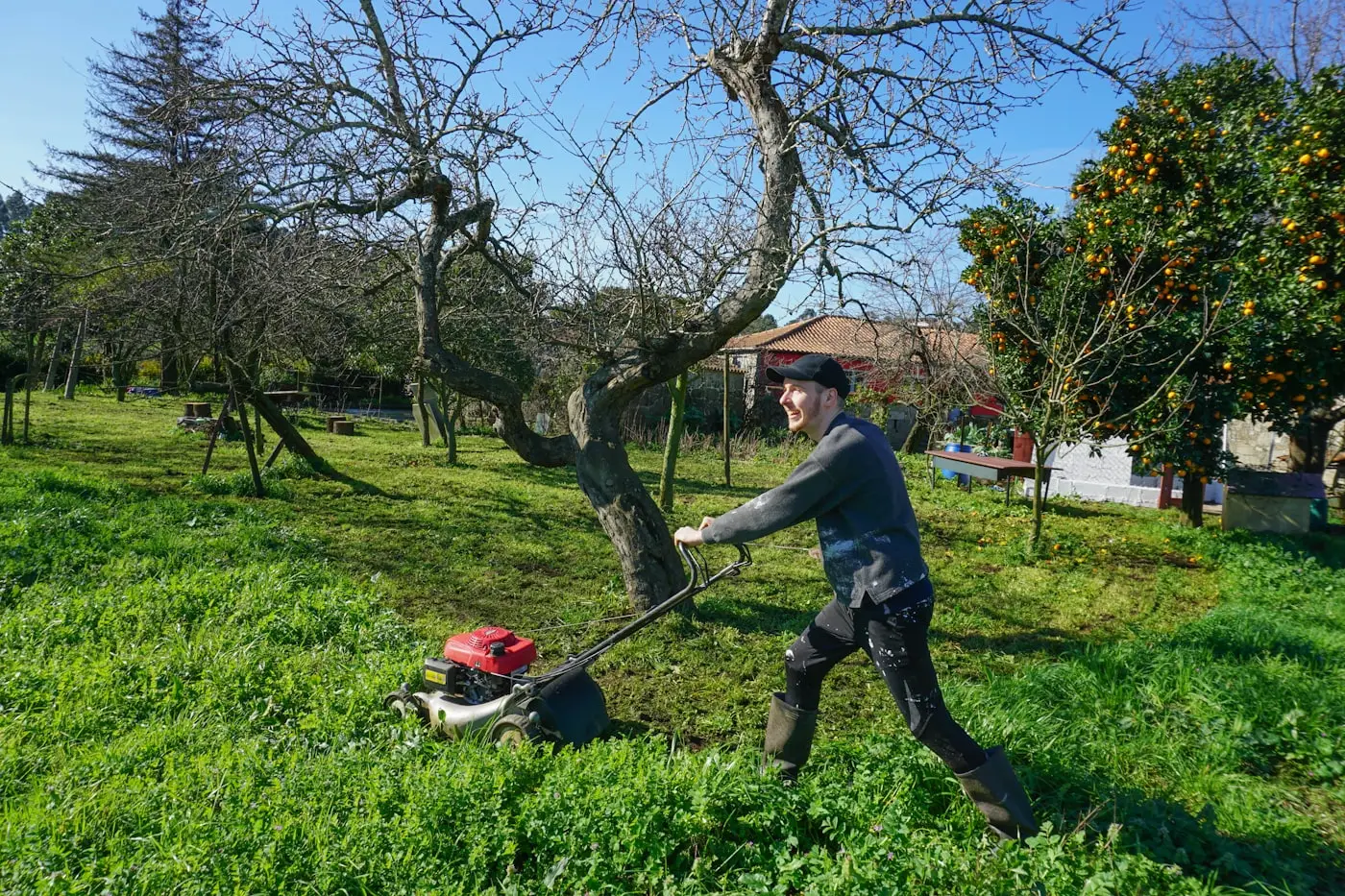
Yorkshire lawns in early June are usually at their best. Good spring rainfall, warming soil, and active growth make June the month when even a lawn that struggled through winter looks respectable. The risk is that summer complacency sets in: you stop paying attention, the mowing height drops, the lawn gets scalped in a dry spell, and by August you have a patchy lawn to manage. This guide runs through what to do month by month and what to avoid.
June: keep the momentum going
June is an active growth month for most Yorkshire lawns. The soil is warm, moisture is usually adequate, and grass responds well to regular mowing. The main tasks in June are:
Mow weekly. In an active June, grass can grow 2-3cm per week. Mowing weekly at the right height keeps the lawn looking neat without stressing it. The right height for Yorkshire lawns on clay soil is 4-5cm. Do not cut below 3.5cm. Short grass on clay has shallower roots and is more vulnerable when drier weather arrives in July.
Do not scalp. The single most common summer lawn mistake is cutting too short because it looks neater and means less frequent mowing. Scalping removes the green leaf tissue and exposes the stem, which browns quickly and creates stress in warm weather. If the lawn looks slightly shaggy the day after you mow, the height is probably right.
Feed if you did not in spring. If a spring fertiliser application was skipped, early June is a reasonable time for a balanced feed. Avoid high-nitrogen products in late June onward; the risk of pushing soft growth that then struggles in summer heat outweighs the benefit. A professional lawn treatment programme handles the timing automatically and adjusts product selection to your soil type.
Watch for dry patches starting. Free-draining sandy or stony pockets within an otherwise clay lawn can start showing stress in June on south-facing slopes. These are the areas that will go most noticeably dormant in a dry July. Note where they are now; that knowledge is useful if you are deciding whether to water in July.
In June, keep an eye out for leatherjacket damage becoming visible. Leatherjackets are crane fly larvae that hatch in autumn and overwinter in the soil. By late May and June, they are larger and starting to cause noticeable root damage, which shows as patches of yellowing grass that lift easily from the surface. The dedicated leatherjackets in Yorkshire lawns guide covers identification, timing, and nematode application in detail. See also the chafer grub and lawn pest guide if you are not certain which pest you are dealing with.
July: adapt to conditions
July is Yorkshire's most variable summer month. Some years it is warm and dry; some years it is cool and wet. The care the lawn needs adjusts accordingly.
If it is dry: mow less often. Growth slows in dry conditions. Forcing a weekly mow when the grass is not actively growing removes green leaf and stresses the lawn. In a dry July, fortnightly mowing is fine. Raise the cutting height to 5-6cm. Taller grass shades the soil surface and retains moisture better than short grass.
If it is wet: maintain the schedule. A wet July in Yorkshire means growth continues at close to June rates. Keep mowing weekly but check conditions - mowing wet grass on clay produces a poor cut and risks compacting the surface. Wait until the grass is dry enough to cut cleanly.
Deep watering beats daily light watering. If you choose to water in a dry spell, water deeply twice a week rather than lightly every day. Deep watering encourages roots to grow deeper into the soil profile, which makes the lawn more drought-resilient. Light daily watering keeps roots at the surface and produces a lawn that wilts fast when you miss a day. Water in the early morning or evening; midday watering loses too much to evaporation.
Yorkshire clay handles drought better than you might expect. A pure clay lawn holds moisture through extended dry periods because clay particles bind water tightly. The lawn may look stressed before clay soil actually runs short of moisture. Do not panic-water at the first sign of slight yellowing. Wait and see whether the grass recovers with cooler overnight temperatures before committing to a watering programme.
Before watering in a dry spell, check Yorkshire Water's website for hosepipe ban status. Temporary use bans can come in quickly during dry summers and apply to garden watering.
August: prepare for autumn
By August, growth typically slows and the lawn enters a consolidation phase. This month is as much about preparation as it is active care.
Do not panic-mow short. If the lawn has become slightly thin or patchy through summer stress, cutting it short does not help. Keep the height at 4-5cm. Thin grass needs length to photosynthesize and recover.
Watch for yellowing and bare patches. Summer stress patches and areas with thin grass are most visible in late August. These are the areas to focus on when the autumn scarification and overseeding window opens in September. Note where they are and have grass seed ready.
Prepare for September scarification if the lawn has gone patchy. If your lawn has developed significant bare patches, thin areas, or visible moss re-establishing after a spring treatment, the September scarification window is coming. Now is the time to book a professional if you want one, or to hire a scarifier before the September rush. A good lawn care specialist can be booked out weeks in advance by mid-September. Do not leave it until October and then struggle to find availability.
August is also when chafer beetle adults are emerging from the soil and laying eggs for the next generation of grubs. If you notice starlings, crows, or foxes digging at the lawn in late July or August, that is often a sign of chafer grub activity beneath the surface.
Watering Yorkshire lawns in summer
Most Yorkshire lawns do not need supplementary watering in summer. This is worth stating plainly because advice from southern England often assumes drier conditions than Yorkshire typically experiences. The county's summer rainfall is usually enough for established clay-based lawns to stay functional through all but the most sustained dry periods.
When watering is genuinely needed:
- After a genuinely exceptional dry period (more than 3-4 weeks without significant rain in a warm summer)
- For newly seeded areas or freshly laid turf that do not yet have an established root system
- For areas on free-draining sandy soil that show clear stress before the broader lawn
For drought recovery advice, see the lawn drought recovery guide for Yorkshire.
What not to do in summer
- Do not scarify in summer. Scarification in June, July, or August leaves the lawn vulnerable to heat and drought during recovery. Wait until September.
- Do not aerate in summer. Same logic as scarification. Autumn is the time.
- Do not apply high-nitrogen fertiliser in a dry spell. Nitrogen on a water-stressed lawn scorches the grass. If conditions are dry, skip the summer feed entirely.
- Do not cut below 3.5cm at any point. Short summer grass on Yorkshire clay is a reliable way to create brown patches and slow recovery.
The one-third rule
Never remove more than a third of the grass height in a single cut. If the lawn has grown to 8cm while you were on holiday, do not cut it straight to 4cm. Bring it down in two cuts a few days apart. Removing too much at once shocks the plant and causes browning.
Pests to watch for in Yorkshire summer
Leatherjackets
Crane fly (daddy longlegs) larvae. They hatch in autumn, spend winter and spring growing in the soil, and by May-June are large enough to cause visible root damage. Signs: irregular yellow patches that lift from the surface because the roots have been eaten. The most visible damage is usually June-July. Control options include nematode biological control (effective in warm, moist soil, best applied September-October for the new generation) and physical bird control in the meantime.
Chafer beetles
Adult chafer beetles emerge from the soil in late May to July and lay eggs that hatch into root-eating grubs by late summer. The grubs cause damage most visibly in late summer and autumn when they are large. Signs in August: turf that rolls up easily from the surface (roots eaten), and bird or fox activity digging at the lawn. Nematode biological control is most effective when applied in August to early September while the grubs are small and soil moisture is adequate.
Should you hire a gardener for summer lawn maintenance?
If the lawn is the thing you genuinely do not want to think about all summer, a fortnightly mowing service is good value. A local Yorkshire gardener will mow at the right height, edge the borders, and keep the lawn looking respectable through the summer without you having to manage it. Expect £25-40 per fortnightly cut for a medium Yorkshire lawn.
For those who enjoy looking after their own lawn, summer is the simplest time of year to manage it: mow regularly, do not scalp, and leave the remedial work for autumn. The main benefit of a professional in summer is consistency of height and frequency, both of which matter more than most people realise for keeping a Yorkshire clay lawn looking good.
See the lawn mowing service page and the grass cutting service page for summer mowing coverage across Yorkshire.
Book a summer lawn mowing service.
60-second assessment. If a local Yorkshire gardener takes your enquiry, they call you with a mowing schedule and price for the summer.
Start the assessmentFrequently asked questions
How often should I mow my lawn in summer in Yorkshire?
Weekly in June when growth is active. In July and August, mow when the grass needs it - weekly in wet summers, fortnightly if growth has slowed in dry conditions. Never remove more than a third of the grass height in a single cut.
Should I water my Yorkshire lawn in summer?
Most Yorkshire lawns do not need regular summer watering. Yorkshire's summer rainfall is usually adequate for established clay lawns. If you do water, deep watering twice a week is better than light daily watering. Check for Yorkshire Water hosepipe bans before watering during dry spells.
Is yellow summer grass dead?
Probably not. Grass goes yellow and dormant in dry conditions as a survival mechanism. It is not dead - it recovers when rainfall returns. Dormant grass resists pulling; dead grass comes away easily. In Yorkshire, most summer yellowing resolves naturally with the first good autumn rainfall.
When does mowing stop for winter in Yorkshire?
Most Yorkshire lawns stop growing enough to mow in October or November. The exact point varies by year and elevation. Stop mowing when growth stops, not based on a calendar date. The last cut should be at normal height, not cut short before winter.
Can I fertilise my lawn in summer?
Avoid high-nitrogen fertilisers in dry conditions - they can scorch the lawn. If you want to feed in summer, use a balanced product at reduced rate. The main feeds should be spring and autumn. In a wet summer with active growth, a light midsummer feed is fine.
What are the brown patches in my Yorkshire lawn in summer?
Most commonly: dormancy on free-draining areas (recovers with rain), leatherjacket root damage (patches lift easily, visible June-July), or chafer grub activity (late July-August, accompanied by bird digging). Dog urine patches are small and circular with a dark green ring. Fungal issues are less common but possible in hot, humid spells.
Related articles
- Lawn care in Yorkshire: year-round guide
- Lawn mowing near me in Yorkshire
- Lawn mowing service
- Lawn drought recovery in Yorkshire
- Chafer grubs and lawn pests in Yorkshire
- Grass cutting service
- Autumn garden care in Yorkshire
Gardeners in your area
We cover the whole of Yorkshire. Click through to your town for local pricing and availability: