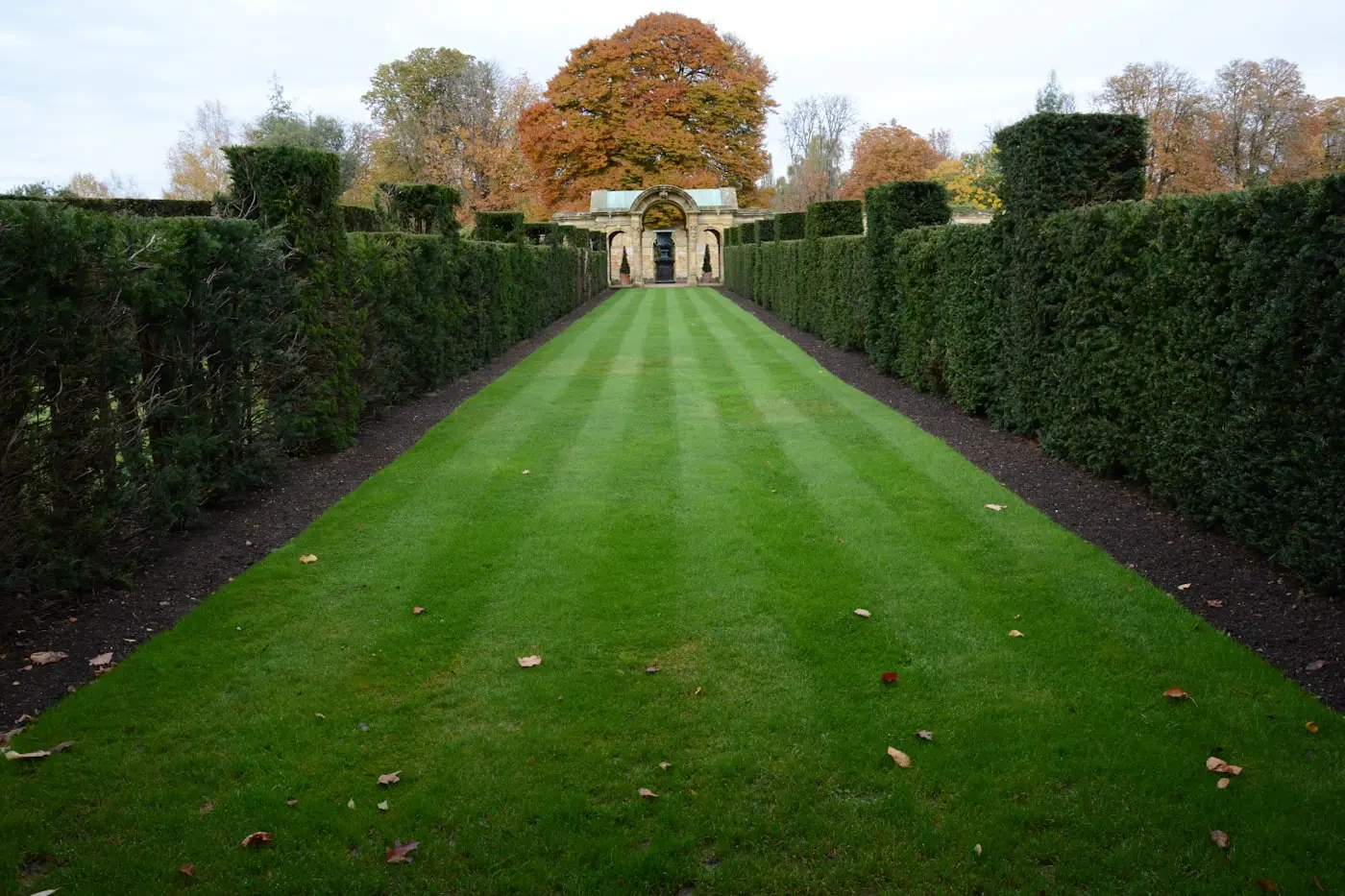
If you're nursing a lawn back from drought damage in Doncaster, Wakefield, or Barnsley, local lawn care specialists can assess recovery potential and apply the right overseeding and feeding programme for your soil type.
Every few years, Yorkshire gets a proper dry spell. Not the sustained drought of southern England, but six or eight weeks without meaningful rain in May and June, or a hot, dry July and August that catches gardeners off guard. The lawn turns yellow, then straw-coloured, then brown. People start pulling up dead-looking tufts and wondering how much it will cost to re-turf.
The answer, in most cases, is nothing. The lawn is not dead. It is dormant. Grass has evolved to survive drought by shutting down the blades and protecting the growing crowns at the base of each plant. The brown appearance is a temporary survival mechanism, not a death sentence. Understanding the difference between dormancy and genuine loss - and knowing when you actually need to do something - saves a lot of unnecessary work and expense.
Dead or Dormant? The Test That Matters
Before you do anything else, establish whether the brown sections are dormant or genuinely dead. This determines whether you need to act at all, or simply wait for rain.
The crown test
Pull a small tuft of brown grass from the affected area and look at the base. If the crown - the dense, pale growth point where the roots meet the blades - is white, pale yellow-green, or cream, the plant is alive and dormant. The blades are dead but the plant will regenerate. If the crown is brown, shrivelled, and the plant comes away easily with no root structure attached, it is genuinely dead. Brown blades alone mean dormancy. Brown crown means loss.
A second indicator is uniformity. Drought dormancy tends to produce uniform browning across the whole lawn, or in the most exposed, free-draining sections first. Irregular patches of complete death interspersed with healthier areas more often indicate a secondary problem - pest damage, fungal disease, or shallow soil over buried rubble - rather than pure drought stress.
In most Yorkshire dry spells, the vast majority of a lawn is dormant rather than dead. Genuine grass death requires sustained drought beyond what Yorkshire typically sees - usually 6-8 weeks without any rain combined with high temperatures. In a normal Yorkshire dry summer, even a lawn that looks completely brown will show significant green recovery within 2-3 weeks of the first steady rainfall in August or September.
Yorkshire Drought Risk - Where It Hits Hardest
Yorkshire is generally wetter than much of England. The westerly weather systems that track across the Pennines deliver rainfall reliably through most of the year, and the county rarely experiences the sustained summer drought that affects the south-east. However, the risk is not equal across the county, and soil type matters enormously.
Free-draining soils - Vale of York and the Wolds
The sandy and sandy-loam soils of the Vale of York lose moisture from the root zone far faster than clay soils. During a dry spell, the top 10-15cm of sandy soil can be critically dry within two to three weeks, even though the lawn looks fine and the ground-level temperature has not been particularly high. By the time visible dormancy begins, the root zone has been dry for long enough that recovery takes longer than on a clay soil that still has deeper moisture reserves.
The Wolds chalk soils present a similar picture. Chalk is free-draining, and the shallow soil overlying chalk bedrock gives grass roots very little depth to exploit. Wolds gardens can suffer drought stress earlier and more severely than the weather data alone would suggest. Hosepipe bans imposed by Yorkshire Water in dry years affect Vale of York and Wolds homeowners particularly hard, because these are the gardens that most benefit from supplementary irrigation.
West Yorkshire clay - a different problem
West Yorkshire clay lawns are not immune to drought stress, but the mechanism is different. Heavy clay holds moisture better than sandy soils, which means the moisture shortage is less acute. The problem is compaction. When clay dries out, it shrinks and hardens. A compacted clay surface has reduced pore space, meaning that when rain eventually arrives, a significant proportion of it runs off rather than penetrating to the root zone. The lawn looks drought-stressed not because there is no moisture in the soil, but because the compacted clay surface is preventing moisture from reaching the roots.
This is why aeration is a more important part of drought recovery on West Yorkshire clay than on free-draining soils. On sandy soil, drought recovery is primarily about moisture restoration and overseeding dead patches. On clay, it is about moisture restoration plus breaking open the compacted surface to allow water penetration. Without aeration, rain and irrigation sit on the surface and run off, and the root zone stays dry even in a wet autumn.
What Not to Do After a Dry Summer
Several instincts that feel helpful actually delay or worsen drought recovery.
- Do not cut the lawn until green growth returns. Brown dormant grass does not need mowing. Cutting it stresses an already stressed plant and removes the minimal green tissue remaining at the blade tips. Wait until the lawn is clearly greening up before resuming the mowing schedule.
- Do not apply high-nitrogen fertiliser to drought-stressed grass. Nitrogen feeds that push rapid leaf growth put additional demand on a plant that is already struggling to maintain basic function. Apply nitrogen only once the lawn has recovered and moisture is reliable. Autumn feeds with a higher potassium-to-nitrogen ratio are the correct choice from September onwards.
- Do not attempt to overseed in summer heat. Grass seed sown into hot, dry soil in July or August will fail. The soil surface temperature is too high, the moisture too unpredictable, and competition from dry-adapted weeds is at its peak. Wait for September.
- Do not assume all brown areas need overseeding. Overseed only what is genuinely dead after the dormant lawn has recovered. Sowing seed into dormant but viable grass wastes money and can introduce competition into areas that will recover naturally.
The Recovery Sequence
Here is the step-by-step process for recovering a Yorkshire lawn after a dry summer. The timing assumes a typical Yorkshire dry spell with recovery beginning in late August or September.
Step 1 - Wait for natural recovery (August-September)
Once rain returns - or once you resume watering if a hosepipe ban has been lifted - wait two to three weeks before making any assessment of what has survived. Yorkshire's autumn rains are reliable, and by early September a dormant lawn in good underlying health will have recovered significantly. Do not make any decisions about re-turfing or large-scale overseeding until you can see the full picture of what is genuinely dead versus what was dormant.
Step 2 - Resume mowing carefully
Once green growth is clearly visible and growing, resume mowing at a higher cut than your summer setting. Set the mower to 40-50mm and keep it there for the first several cuts. This protects recovering grass plants and avoids removing too much leaf area while root systems are still rebuilding. Do not drop to your normal cutting height until the lawn looks fully recovered and dense.
Step 3 - Assess what needs overseeding
By mid-September, you should have a clear picture of the genuinely dead patches - areas where the crown test confirms plant death and where no recovery is evident two to three weeks after rain resumed. Mark these areas. These need overseeding.
Step 4 - Aerate (critical on West Yorkshire clay)
For any lawn that will be overseeded, and especially for clay-soil Yorkshire lawns, aeration should precede overseeding. For light work, push a garden fork 10-15cm deep at 15cm intervals across the area. For a full lawn, hire a hollow-tine aerator or arrange professional aeration. See the aeration guide for the full process on Yorkshire clay.
On West Yorkshire clay, drought recovery without aeration is incomplete. The compaction issue does not resolve itself just because moisture has returned. If you overseed into unbroken compacted clay, the seed sits on a surface that drains poorly and holds moisture unevenly. Germination will be patchy and the new grass less resilient than it should be.
Step 5 - Overseed dead areas in September
September is the optimal overseeding window in Yorkshire. Soil temperature is typically 12-15 degrees Celsius at 5cm depth, which drives germination rates of 10-21 days for most grass mixes. Autumn moisture from westerly weather patterns means less irrigation burden. The growing season ahead - from September through to November, then resuming in March - gives the new grass time to establish properly before competition from summer weeds arrives.
Prepare the surface: rake out dead material thoroughly, break up any surface crust on clay, lightly fork or scarify to expose mineral soil, then apply seed at the manufacturer's recommended rate. Top-dress with a thin layer of horticultural grit-compost mix (70% grit, 30% compost on clay soils) to improve seed-to-soil contact. Water in and keep moist. See the overseeding guide for full technique.
Step 6 - Apply autumn fertiliser
Once the overseeded areas are showing germination - typically 2-3 weeks after seeding - apply an autumn lawn fertiliser with a formulation low in nitrogen and higher in phosphorus and potassium. This builds root depth and disease resistance rather than pushing soft leaf growth. Do not apply any high-nitrogen product to the recovering lawn before winter - it promotes the kind of lush, soft growth that is vulnerable to frost and to the fusarium fungal disease that Yorkshire clay lawns suffer from in wet winters. Our professional lawn treatment service includes seasonal fertiliser application timed to your lawn's recovery stage.
Step 7 - Assess in spring and fill any remaining gaps
By March or April, you will see clearly whether the September overseeding worked and whether any areas still need attention. Gaps that did not germinate well - often shaded areas or heavily compacted spots - can be overseeded again in April once the soil has warmed to 8 degrees Celsius. Keep these spring repairs well-watered through May and June, which is the period when drought stress next season can re-damage a lawn that has not yet fully recovered.
When to Renovate vs Re-Turf
If more than half your lawn is genuinely dead and the remainder is in poor condition with significant weed and moss content, the renovation question becomes whether it is worth overseeding or whether re-turfing produces better long-term value. In either case, a weed control treatment to clear broadleaf weeds before any overseeding or turfing gives the new grass the cleanest possible start.
| Situation | Recommended approach | Approx cost (50m2) |
|---|---|---|
| Mostly dormant, some dead patches | Wait for natural recovery + overseed dead patches in September | £40-100 DIY; £80-150 professional |
| 20-50% dead, rest recovering | Full scarification + aeration + overseeding programme in September | £200-400 professional |
| More than 50% dead, poor base turf | Full renovation or re-turf assessment; re-turf often better value at this point | £400-750 re-turf; £200-400 renovation |
| Compacted clay with surface baking | Hollow-tine aeration essential before any overseeding; may need professional assessment | £60-150 aeration alone |
The renovation vs re-turf decision is covered in more detail in the lawn renovation cost guide. The short version: if the surviving grass is reasonable quality and more than 50% of the lawn is alive, renovation is better value. If you are essentially starting from scratch, new turf gives a quicker, more reliable result.
Frequently Asked Questions
Is my brown Yorkshire lawn dead or just dormant after a dry summer?
Almost certainly dormant. Pull a tuft: white or pale crown = alive. Brown, shrivelled crown = dead. Most Yorkshire lawns recover naturally within 2-3 weeks of rain returning.
When should I overseed after a dry summer in Yorkshire?
September. Soil is still warm for germination, autumn rain reduces watering burden, and the new grass has a full autumn growing season to establish. Spring overseeding (April-May) is possible but less reliable on Yorkshire clay.
Does Yorkshire's climate cause drought stress?
Yes, especially on free-draining Vale of York sandy loam and Wolds chalk soils. Clay lawns suffer more from compaction stress than direct moisture shortage. Both need different approaches to recovery.
How long does full recovery take?
Dormant grass: 2-3 weeks after rain returns. Overseeded patches: 4-8 weeks to visible recovery. Full lawn establishment after renovation: by the following spring.
Should I fertilise a drought-stressed Yorkshire lawn?
Not with high-nitrogen products during or immediately after drought. Wait for recovery then apply an autumn formulation (lower N, higher K and P) to build root strength through winter.
Do I need to aerate a drought-damaged lawn?
On Yorkshire clay - yes. Compacted, baked clay is often as much of a problem as moisture shortage. Hollow-tine aeration before overseeding significantly improves the outcome on heavy clay soils across West Yorkshire.
How much does drought recovery treatment cost in Yorkshire?
Overseeding patches only: £80-150 professional. Full September renovation (scarify, aerate, overseed, top-dress): £200-400 for a 50m2 lawn. DIY materials: £40-80. Re-turf if large areas are dead: £400-750 for 50m2.
When is the best time to overseed a drought-damaged Yorkshire lawn?
September is the best month for overseeding a drought-damaged Yorkshire lawn. Soil is still warm from summer (typically 12-15 degrees Celsius), which drives fast germination. Autumn moisture from Yorkshire's westerly weather patterns reduces the need for constant irrigation. New grass has several months of cooler growing conditions to establish before winter. Spring overseeding (April-May) is possible but less reliable on Yorkshire clay, which warms slowly and produces spring weed competition that autumn-sown grass does not face.
How long does lawn drought recovery take in Yorkshire?
For dormant grass: 2-3 weeks of steady moisture (rain or irrigation) is typically enough to restore significant green cover. For areas that are genuinely dead and need overseeding: 4-8 weeks from overseeding to visible recovery, and a full growing season for the new grass to be fully established. September overseeding will produce a lawn in noticeably better condition by the following April or May. The compaction issue on West Yorkshire clay takes longer - one aeration session helps significantly but annual aeration over 2-3 years produces more durable improvement.
Related reading
- Lawn scarification in Yorkshire - the full renovation programme
- Lawn overseeding in Yorkshire
- Lawn aeration in Yorkshire - essential on clay
- Gardening on clay soil in Yorkshire
- Lawn renovation cost in Yorkshire - 2026 price guide
- Lawn mowing across Yorkshire
Need help with your Yorkshire lawn?
Drought recovery, overseeding, full renovation - tell us your postcode and what you need. Direct contact with a local gardener, no call centres.
Get a free assessmentWhat grass seed works best for Yorkshire lawns recovering from drought?
On free-draining Vale of York or Wolds soils, a mix with a higher proportion of fine-leaved fescues (Festuca rubra, Chewings fescue) performs better in dry conditions than perennial ryegrass-heavy mixes. On West Yorkshire clay, a perennial ryegrass and fescue blend gives wear tolerance while the fescue provides some drought resilience. Avoid mixes with high proportions of annual meadow grass (Poa annua) - it germinates fast, looks promising, then dies out. Hard-wearing domestic mixes labelled for clay or shaded conditions are appropriate for most Yorkshire gardens.