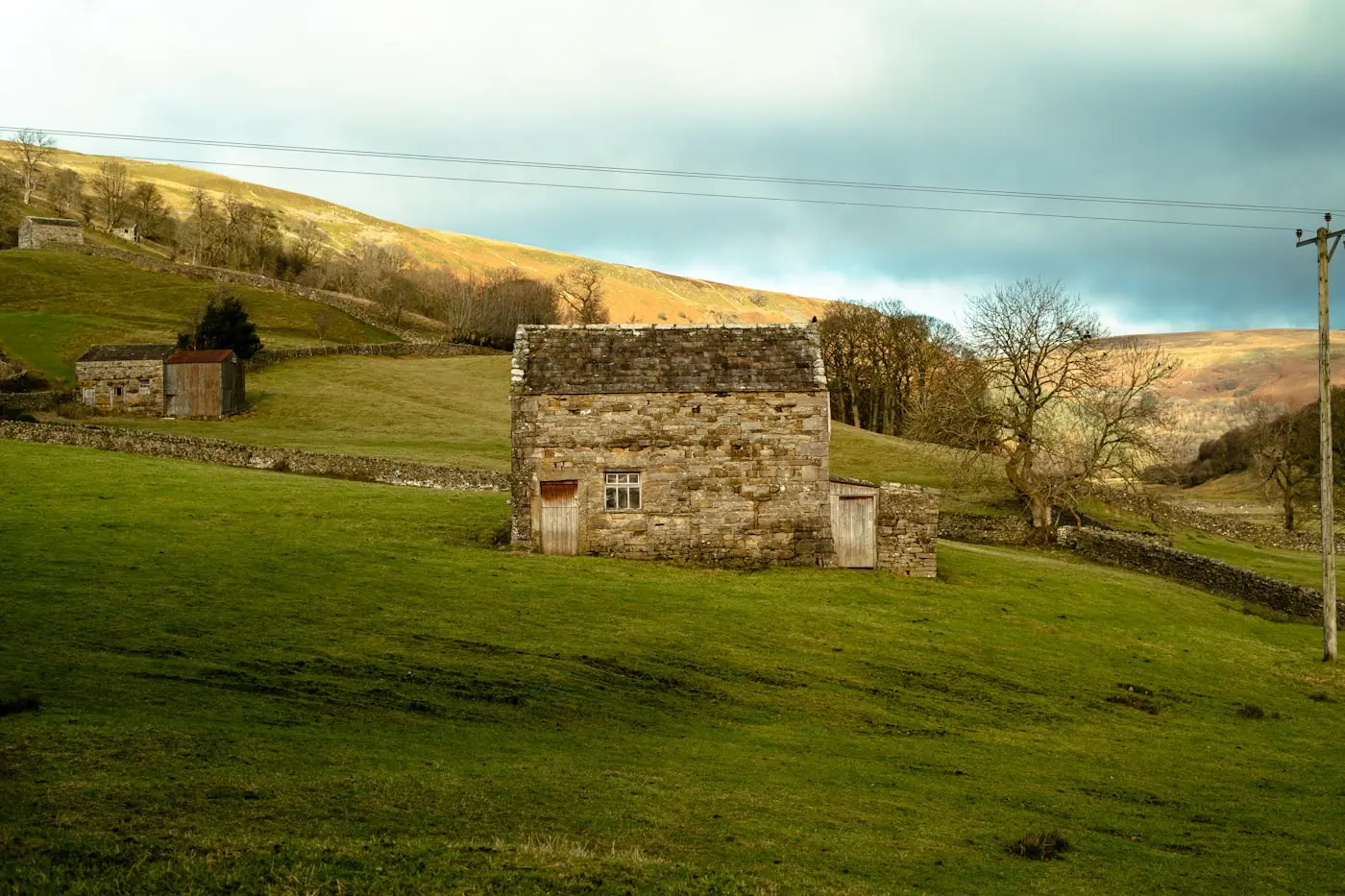
Sustainable garden design is gaining ground across Yorkshire, with practitioners working in Harrogate, York, and Ripon who can help you select native planting and low-impact materials suited to the local climate.
Yorkshire gardens face a specific set of conditions that make some mainstream sustainability advice less useful than it might appear. The advice to mulch with bark to conserve moisture, for example, is genuinely valuable in a Yorkshire garden during June and July - but it needs to be balanced against the fact that Yorkshire clay holds water in winter and autumn, and a thick mulch on a waterlogged clay soil suppresses the soil surface drying and aeration that the soil needs. Sustainability, properly understood, means working with your specific soil, rainfall, and ecology rather than applying generic rules borrowed from drier or lighter-soiled regions.
This guide works through the main pillars of sustainable garden management - soil, water, biodiversity, lawn management, and zero-waste approaches - and translates each into practical actions for the specific conditions of a Yorkshire garden. The goal is a garden that requires progressively less input over time as the soil improves, the wildlife increases, and the planting matures.
Soil Health: The Foundation of a Sustainable Yorkshire Garden
The single most impactful thing you can do for a sustainable Yorkshire garden is improve your soil. Most of the county sits on heavy clay - the coal-measures clay of West and South Yorkshire, the vale clays of the Humber lowlands, the Lias clay of the North Yorkshire Moors fringe. In its natural state, this soil is poorly draining, prone to compaction, and nutrient-rich but structurally challenging. The good news is that Yorkshire clay is inherently fertile - it holds nutrients well and has excellent cation exchange capacity. The challenge is structure, not fertility.
Compost: the most effective soil improver
Annual applications of homemade compost, applied as a 50 to 75mm surface mulch in autumn or spring, transform clay soil over three to five years. The organic matter does not change the mineral composition of the clay, but it binds clay particles into larger aggregates - these aggregates create pore spaces for air and water movement that the fine clay particles alone do not provide. The result is clay that drains better, warms faster in spring, and is far easier to work without compacting. See the garden composting Yorkshire guide for detailed guidance on building a composting system suited to the volume of material your garden produces.
Yorkshire's local tree species provide excellent free compost material. Beech, oak, and sycamore are the dominant trees across most of the county, and their autumn leaves collected and stacked in a wire cage make leaf mould within 12 to 18 months. Leaf mould is particularly valuable as a soil conditioner because it has a lower nutrient content than general compost - it improves structure without stimulating the lush, soft growth that is more susceptible to pest and disease problems. If you have deciduous trees in or near your garden, do not waste the leaves. They are genuinely the best free soil amendment available.
No-dig: why it suits Yorkshire clay
The no-dig approach to growing - where you never turn or cultivate the soil but instead build it up from the surface with organic matter - is particularly well suited to Yorkshire conditions. Here is why: when you dig clay soil while it is wet (and Yorkshire clay is very often wet from October to April), you smear the soil particles together, destroying the pore structure you are trying to create. You break the mycorrhizal fungal networks that connect plant roots. You bring dormant weed seeds up to the surface where they germinate. And you release stored soil carbon as CO2. All of these are the opposite of what you want for a sustainable garden.
No-dig preserves all of these things. You smother weeds with cardboard and compost in autumn, then plant directly into the compost layer in spring. Earthworms do the work of incorporating the organic matter downward. After two or three years on no-dig, Yorkshire clay soils measurably improve in drainage and workability without any cultivation. This is the approach championed by growers like Charles Dowding, whose research over decades on clay soils in the west of England parallels what gardeners see on Yorkshire clay. For a full guide to soil improvement specific to Yorkshire conditions, see the soil improvement Yorkshire guide.
Avoiding peat
Peat-based compost should not feature in a sustainable Yorkshire garden. The UK government has been committed to banning peat in amateur horticulture since 2022, with a retail deadline set at 2026. Beyond the legislation, there is a direct Yorkshire connection: the upland blanket bog of the North York Moors and the South Pennines is one of the Yorkshire Wildlife Trust's Priority Habitats. These bog systems are formed from precisely the same process as commercial peat extraction - centuries of Sphagnum moss accumulation in waterlogged, cool conditions. When you buy peat compost, you are importing material extracted from similar habitats elsewhere in the UK or from Ireland. Peat-free alternatives have improved dramatically in quality in recent years. Coir, wood fibre, composted green waste, and bark-based mixes are all viable for most garden uses.
Water: Using Yorkshire Rain Wisely
Yorkshire receives 600 to 800mm of rainfall per year across most of the county - more than enough to sustain a well-designed garden without supplementary irrigation in most years. The challenge is that rainfall is unevenly distributed: wet winters and springs followed by increasingly dry and hot summers, with intense convective storms that deliver too much too fast followed by multi-week dry periods.
Water butts and rainwater harvesting
A standard 200-litre water butt connected to a single downpipe from a 30 square metre roof section will fill from a single typical Yorkshire shower event. If you have multiple downpipes, connecting each to a butt dramatically increases your stored water volume. A typical semi-detached Yorkshire house with two roof sections can harvest 400 litres from a single 10mm rain event. That is enough to water a vegetable garden for two to three weeks during a dry spell, without touching mains water.
For larger gardens or more ambitious growing, slimline butts allow installation in narrow side passages, and interconnected systems (two or more butts linked by overflow pipes) scale up the storage. A 1,000-litre IBC (intermediate bulk container) connected to a garage or outbuilding roof is a cost-effective way to store significant rainwater - these containers are available second-hand from food and chemical wholesalers for £30 to £80.
What you should not water in a Yorkshire garden
Your established lawn almost never needs watering. Yorkshire lawns brown in July and August dry spells but recover within two to three weeks of the next rain event. Browning is drought dormancy, not death, and watering a browning lawn with drinking-quality mains water is one of the least sustainable things you can do in a garden. Aerate the lawn in autumn instead - this improves the soil structure that allows rain to penetrate rather than run off, which is the underlying cause of slow recovery. Established shrubs and perennials planted for two or more years on Yorkshire clay also rarely need watering. Yorkshire clay holds moisture at depth even when the surface is dry; roots that have reached this deeper moisture are not at risk in a typical dry spell. The plants that genuinely need supplementary water are: newly planted trees and shrubs in their first two summers, vegetables (especially leafy crops and fruiting crops during flowering and fruit set), and container plants.
Greywater for established plants
Water from baths and hand-washing basins (not dishwashers or washing machines with strong detergent) can be used on established shrubs and trees with minimal risk. Greywater should not be used on vegetables you eat raw, on seedlings, or on plants with root diseases. It should not be stored for more than 24 hours as bacteria multiply rapidly. For established woody plants in a dry period, it is a perfectly reasonable alternative to mains water.
Native Plants and Biodiversity in a Yorkshire Garden
Biodiversity in a garden is not simply about planting wildflowers and calling it done. It is about creating the conditions that allow a range of species to complete their life cycles - from the invertebrates that depend on specific host plants to the birds that depend on those invertebrates. A garden full of exotic ornamentals provides very little of this even if it is beautifully maintained. A garden with a core of Yorkshire-native plants and a less intensively managed structure supports measurably more wildlife at every level.
The Yorkshire Wildlife Trust identifies several Priority Habitats in the county, including lowland meadows, farmland bird habitats, upland blanket bog, and limestone pavement. As a garden owner, you will not recreate these habitats directly, but you can create garden conditions that connect to them - specifically by choosing native species that support the same invertebrate communities those habitats depend on.
Trees and shrubs: the most valuable biodiversity investment
Crataegus monogyna (common hawthorn) is the single highest-value wildlife plant for a Yorkshire garden. It supports over 300 invertebrate species (more than almost any other native plant), provides dense nesting cover for birds, flowers profusely in May with nectar accessible to a huge range of pollinators, and produces heavy crops of haws in autumn that sustain fieldfares, redwings, mistle thrushes, and blackbirds through winter. In a Yorkshire garden context, hawthorn can be grown as a single specimen tree, as part of a mixed native hedge, or clipped as a formal topiary shape. It is not a difficult plant - it grows on everything from Wolds chalk to Pennine clay.
Cornus sanguinea (dogwood) is native to the chalk soils of the Yorkshire Wolds, but it grows well across most of the county. Its autumn and winter stem colour - deep red-purple to orange-red depending on exposure - is genuinely dramatic, and its late summer berries are taken by birds. It spreads by suckering to form a thicket, which provides excellent nesting cover. Cut one-third to one-half of the stems back to the base each winter to stimulate the brightest new growth.
Rosa canina (dog rose) scrambles through native hedgerows across all of rural Yorkshire. Its single pink flowers in June and July provide pollen for bees, its hips in autumn and winter feed birds and small mammals, and its thorny stems provide nesting cover. In a garden context, it is best used scrambling through a hedge or trained on a fence where its natural arching habit is an asset rather than a problem.
For a structured guide to creating a wildlife-focused garden, see the garden wildlife Yorkshire guide.
Perennials for pollinators and pest control
Primula veris (cowslip) is one of the most reliably successful wildflowers for a Yorkshire garden. It was common in traditional Yorkshire hay meadows before fertiliser changed farming practice, and it grows well on neutral to alkaline soils. Plant plugs in autumn into a lawn or border area; it will self-seed into surrounding grass if allowed to set seed before the first cut. The flowers in April and May are a very early source of pollen and nectar for bumblebees and early butterflies.
Achillea millefolium (yarrow) is native to Yorkshire roadsides and grassland and is one of the best plants for attracting hoverflies, parasitic wasps, and lacewings - all of which prey on aphids. A garden with established yarrow will have markedly fewer aphid problems on nearby plants because the predator populations are sustained through the season. It also tolerates drought and poor soil, spreads steadily to fill gaps, and flowers from June to September in white to pale pink forms.
The wider case for reducing pesticide use in a Yorkshire garden is pragmatic rather than just ecological. Systemic pesticides (neonicotinoids especially) persist in soil and plant tissue, killing non-target insects including pollinators. Slug pellets (metaldehyde, now banned; ferric phosphate, still legal) kill thrushes and hedgehogs that eat poisoned slugs. A garden that relies on pesticides is perpetually dependent on them because it suppresses the predator populations that would otherwise manage pest populations naturally. Establishing a native plant structure, reducing bare soil (where slugs shelter), and tolerating a certain level of damage supports a genuine predator-prey balance that is more stable and cheaper long-term.
The wildflower meadow approach
Yorkshire's traditional lowland meadows - fields of yellow rattle, cowslip, ox-eye daisy, cranesbills, and fine-leaved grasses - are now genuinely rare. The Yorkshire Wildlife Trust estimates that over 97 percent of traditional meadow habitat has been lost since 1945. You cannot reverse this landscape-scale loss in a domestic garden, but you can create a small meadow area that supports many of the same species and acts as a stepping stone habitat between larger areas. The wildflower meadow Yorkshire guide covers the practical approach to converting a lawn area or bare ground to meadow planting, including the critical role of yellow rattle in suppressing vigorous grasses and allowing wildflowers to establish.
Sustainable Lawn Management
The conventional lawn - closely mown, treated with synthetic fertiliser and selective weedkiller, watered in summer - is one of the least sustainable features of a British garden. It is a monoculture maintained by constant intervention, and it provides almost no wildlife value. The good news is that you do not need to remove it to improve it significantly.
The clover lawn
White clover (Trifolium repens) was a standard component of lawn seed mixes until the 1950s, when selective herbicides that killed broad-leaved plants alongside weeds were developed. It was then classified as a weed and eliminated from most lawns. This was a significant mistake from a sustainability standpoint. Clover fixes atmospheric nitrogen through root-nodule bacteria, meaning a clover-containing lawn fertilises itself. It stays green through dry spells that brown grass (because it has deeper roots and better drought adaptation). It flowers prolifically, providing nectar for bumblebees from May to October. And it is soft and pleasant underfoot.
Overseeding your existing lawn with 5 to 10 percent white clover seed in spring (after scarifying and aeration) is a straightforward way to begin the transition. Within two growing seasons, you will have a lawn that is noticeably more resilient, needs less supplementary fertiliser, and provides genuine bee forage. For a full overview of all the alternatives to a standard grass lawn that work in Yorkshire conditions, see the lawn alternatives Yorkshire guide.
Reducing mowing frequency
The single most impactful change you can make to a conventional lawn for biodiversity purposes is to cut less frequently. A lawn cut fortnightly instead of weekly allows clover and other low-growing wildflowers to flower between cuts. A section left uncut from March to July develops a short meadow flora of speedwells, clovers, daisies, and buttercups that supports ten to twenty times the insect biomass of a closely mown monoculture. You do not need to sacrifice the whole lawn - even a metre-wide strip along a boundary, or a circle around a tree, left uncut through spring and early summer, makes a measurable difference.
Moss in the lawn: reassess before you treat
Moss in a Yorkshire lawn is very often treated as a problem to be solved with moss killers, scarification, and reseeding. Before reaching for the treatment, consider the underlying conditions. Moss establishes where the soil is compacted (poor drainage, low air), shaded (north-facing gardens, trees), or low in fertility. A lawn with significant moss in a shaded, damp Yorkshire back garden is not a failure of maintenance - it is the garden telling you what conditions actually exist. A moss lawn in these conditions is genuinely sustainable: it requires no watering (moss is exceptionally drought-tolerant once established), no mowing (it does not grow tall), and no fertiliser. It provides a green, soft, cool surface with good biodiversity value for ground beetles and other invertebrates. The prejudice against moss in lawns is cultural, not horticultural.
Zero-Waste Garden Management
A sustainable garden produces no waste from the garden boundary - all organic material cycles back into the soil. In practice, most Yorkshire gardens can achieve this for the majority of their green waste with a combination of composting, leaf mould, chipping of woody material, and on-site grass mulching.
Grass clippings as mulch
Grass clippings returned to the lawn surface after mowing decompose within days in warm weather, returning nitrogen and organic matter directly to the soil. A mulching mower (or a mulching blade fitted to an existing rotary mower) chops clippings finely enough that they disappear into the sward without any visible thatch build-up. Over a full growing season, this returns the equivalent of one to two applications of general fertiliser in nutrients - for free, with zero product purchase and zero disposal effort. The only time this does not work well is in wet weather when clippings lie in wet clumps - at these times, box them and add to the compost heap.
Woody material
Pruning and hedge clipping produces woody material that is too slow to break down in a standard compost heap. The options are: chipping with a garden shredder (the resulting chip makes excellent path mulch or composting accelerator when mixed into a brown-material-heavy heap), building a log pile for wildlife habitat (genuinely valuable for stag beetles, slow worms, and dozens of invertebrate and fungal species), or leaving brush piles at the garden edge through winter as cover for hedgehogs and small mammals before clearing in spring. Burning woody garden waste is the least sustainable option - it releases carbon rapidly and destroys the habitat value of the material. If you cannot chip or use the woody material in any of these ways, a garden waste composting site (local authority green waste service or household recycling centre) is the appropriate disposal route.
Avoiding synthetic inputs
Synthetic nitrogen fertilisers are produced through the Haber-Bosch process, which is one of the most energy-intensive industrial processes in existence. Applying synthetic nitrogen to a garden soil also disrupts the soil's own nitrogen cycling, suppressing the mycorrhizal fungi and nitrogen-fixing bacteria that a healthy soil uses to make nutrients available to plants. Over several years of synthetic fertiliser use, a soil becomes increasingly dependent on the external input as its own biological systems atrophy.
The alternative for a Yorkshire garden is the organic nitrogen cycle: compost and leaf mould feed soil organisms, which in turn make nutrients available to plants on a slower and more continuous schedule. This produces less dramatic growth responses than a synthetic fertiliser application, but it builds soil health rather than depleting it. On Yorkshire clay, which is inherently nutrient-rich, the main limiting factor is not nitrogen or potassium but soil structure and biological activity - which is exactly what organic matter additions improve. For a full garden maintenance programme that works with these principles, our Yorkshire network can advise on what suits your specific garden.
Carbon in Your Garden
Soils are the largest terrestrial carbon store on earth. A healthy soil with good organic matter content stores more carbon than a depleted or compacted one. Every application of compost to your garden soil adds organic carbon that the soil organisms partially mineralise and partially incorporate into longer-lived soil organic matter. While the carbon sequestration of a domestic garden is small in absolute terms, the principles scale: the same processes in well-managed agricultural land, parkland, and urban green space represent a very significant carbon sink.
You can also increase the carbon stored in your garden by increasing the proportion of long-lived plants relative to annual bedding. Annual bedding plants are grown from seed, imported from heated glasshouses or grown under heated polytunnels, flower for one season, then go on the compost heap. The carbon footprint per square metre is high and the carbon stored in the plant is essentially zero. A well-established perennial border - growing for decades, developing substantial root systems, storing carbon in woody tissue and root biomass - stores carbon year on year. A mature tree stores carbon in its trunk, branches, roots, and in the associated mycorrhizal network that can extend for metres beyond the canopy edge. If sustainability is a genuine goal rather than a style choice, the ratio of long-lived perennials and woody plants to annual bedding in your garden is one of the most concrete things you can change.
Working With the Yorkshire Wildlife Trust's Priority Habitats
The Yorkshire Wildlife Trust's Priority Habitats for Yorkshire include: upland blanket bog (North York Moors, South Pennines), limestone pavement (Malham, Ingleborough), lowland meadow (rare fragments across the Dales and lowlands), and farmland bird habitat (cereal-growing areas of the Wolds and Vale of York). As a garden owner, the most direct way to support these habitats is to create garden conditions that act as habitat corridors - connecting existing habitat fragments by providing food, shelter, and breeding opportunities for the mobile species that move between them.
In practice this means: leaving sections of grass uncut through summer (for grassland invertebrates), maintaining a native hedge or tree (for woodland edge species), providing water (for all wildlife but especially amphibians and birds), and avoiding pesticides that kill non-target species. None of these requires a large garden or a complete redesign. A single hawthorn bush, a small pond, and a strip of unmown grass represent a genuine contribution to habitat connectivity in an urban or suburban Yorkshire neighbourhood. For details on wildlife-specific features including hedgehog highways, nesting boxes, and pond construction, see the garden wildlife Yorkshire guide.
Frequently Asked Questions
Is no-dig gardening suitable for Yorkshire clay soil?
Yes - it is particularly well suited to clay. No-dig preserves soil structure, earthworm channels, and fungal networks that cultivation destroys. Over three to five years, no-dig on Yorkshire clay produces measurably better drainage and workability compared to a plot that is dug annually. Surface compost applications do the work that annual digging is traditionally supposed to do, without the structural damage.
What are the best native plants for a Yorkshire wildlife garden?
For maximum wildlife value in a Yorkshire garden: Crataegus monogyna (hawthorn - over 300 invertebrate species), Rosa canina (dog rose), Cornus sanguinea (dogwood), Primula veris (cowslip), Achillea millefolium (yarrow), Lychnis flos-cuculi (ragged robin), Digitalis purpurea (foxglove). These are genuinely native to Yorkshire's ecology, not just broadly native to the British Isles.
How much rainfall does Yorkshire get and do I need to water my garden?
Most of Yorkshire receives 600 to 800mm per year. Established plants on Yorkshire clay rarely need watering after their first two years. Lawns never need watering - they recover from drought browning rapidly. The plants that benefit from supplementary water are newly planted trees and shrubs in their first two summers, vegetables during flowering and fruiting, and containers.
Can I have a sustainable garden without giving up my lawn?
Yes. Reduce mowing frequency, overseed with white clover, stop using synthetic fertiliser and weedkiller, and leave a section uncut through spring and summer. These changes dramatically increase the sustainability and biodiversity value of your lawn without removing it.
Related reading
- Garden composting in Yorkshire
- Wildflower meadows in Yorkshire
- Lawn alternatives in Yorkshire
- Wildlife garden in Yorkshire
- Soil improvement in Yorkshire
- Garden maintenance across Yorkshire
Want a more sustainable Yorkshire garden?
We work with local gardeners who understand Yorkshire soils and ecology. Tell us what you need and we put your enquiry in front of someone who can help.
Get a free assessment