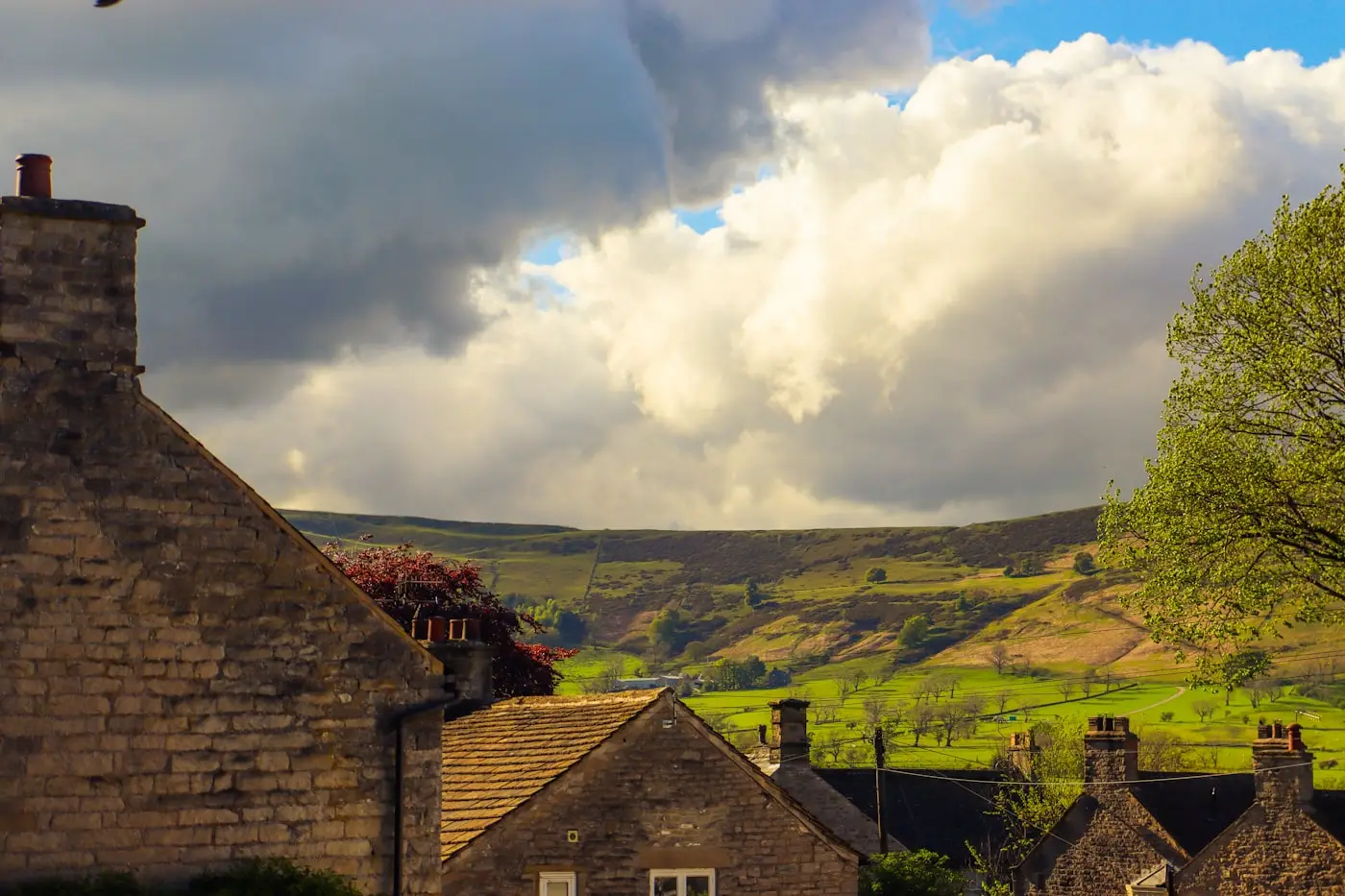
Yorkshire garden shows draw visitors from across the region, with major events accessible from Harrogate, York, and Scarborough, making them a great opportunity to find local nurseries, designers, and suppliers all in one place.
The best garden inspiration you will ever find for a Yorkshire garden is in another Yorkshire garden. Not in a magazine shoot from Surrey, not in a television makeover programme filmed in conditions that bear no resemblance to a West Yorkshire back garden in February, and not in the show gardens at Chelsea, which are constructed in two weeks for effect and then demolished. The gardens of North Yorkshire are on the same soil, the same rainfall, the same frost patterns, the same wind exposures that your garden experiences. A plant that thrives at Harlow Carr in Harrogate will thrive in your garden in Knaresborough. A kitchen garden design that works within the walls at Helmsley will translate - at whatever scale - to your own sheltered beds.
This guide covers the Yorkshire gardens and shows worth visiting for genuine design inspiration, with practical notes on what each garden is particularly good for and how to approach a garden visit in a way that actually generates usable ideas for your own plot. It also covers the National Garden Scheme, which is by far the richest source of private Yorkshire gardens that reflect the conditions and scale that domestic homeowners actually work with. For advice on translating inspiration into a design plan for your own garden, see the Yorkshire garden design ideas guide.
RHS Garden Harlow Carr, Harrogate
RHS Harlow Carr
Harlow Carr is the most important garden to visit if you have a North or West Yorkshire garden and want to understand what actually works in your climate. It is the RHS's northern flagship, and unlike the society's other flagship gardens at Wisley, Rosemoor, and Hyde Hall, it was specifically developed under northern English conditions - alkaline to neutral millstone grit soils, high rainfall (Harrogate receives around 750mm per year), cold winters, and late springs. The trial ground at Harlow Carr tests new plant introductions under these conditions, which means the plants that perform well there are reliably appropriate for the bulk of North and West Yorkshire gardens.
What to look at: the streamside planting alongside the beck is outstanding in spring and early summer, with Primulas, Meconopsis, Rodgersia, and moisture-tolerant shrubs. The kitchen garden is a good reference for productive design in a northern context. The woodland walk demonstrates the range of shade-tolerant plants that will grow under the dense canopy that many Yorkshire gardens have.
How to use what you see: note specifically the aspect and conditions of any planting area that impresses you. Harlow Carr's exposures range from sheltered south-facing beds near the formal areas to exposed north-facing slopes behind the trial ground. A plant doing well in full exposure at Harlow Carr is a more reliable recommendation for your garden than one cossetted in a warm, sheltered microclimate.
Helmsley Walled Garden
Helmsley Walled Garden
Helmsley Walled Garden is a restoration project of a Victorian kitchen garden that was abandoned for decades and is now managed by an independent charity. It is one of the best walled kitchen gardens open to the public in the north of England, and it is worth visiting specifically if you are interested in kitchen garden design, productive growing, or the structure and order that walls and espalier training create.
The garden's Victorian structure is largely intact: the brick walls retain heat and create microclimates dramatically warmer than the surrounding North Yorkshire Moors landscape. The restored Victorian peach house is extraordinary - it demonstrates the kind of productive enclosed growing that is achievable in a Yorkshire climate with the right structure, and which can be referenced even at a very small scale with a simple lean-to glasshouse or a south-facing wall with cordon fruit. For garden design ideas related to kitchen garden creation, see the kitchen garden Yorkshire guide.
What to look at: the espaliered fruit trees on the main walls, the Victorian-era hotbed and cold frame layout, the herb beds, and the cutting garden. The garden's structure - its geometry, its use of paths to divide the space and provide access - is directly transferable to a domestic kitchen garden of any size. The scale is one hectare, but the principles work at four square metres.
Helmsley Walled Garden also demonstrates the value of walls as garden architecture - not just as boundaries but as growing surfaces that fundamentally change the microclimate on their south-facing aspect. For a deeper look at walled garden design and restoration, see the walled garden Yorkshire guide.
Castle Howard
Castle Howard
Castle Howard is the largest designed landscape in this guide, and it is primarily useful as inspiration for homeowners with larger plots who are thinking about formal structure, long axial views, and the use of architectural garden buildings. The grounds were designed in the early 18th century to a plan by John Vanbrugh and Charles Bridgeman, with later contributions from William Kent, and they represent one of the most complete baroque garden landscapes in England.
The Atlas Fountain in the garden front is the most famous feature - a formal circular basin with a central sculptural group that creates axial order across an otherwise naturalistic landscape. The Temple of the Four Winds and the Mausoleum are garden buildings that demonstrate how architecture placed in a landscape creates destination, draws the eye, and gives a garden a sense of journey and arrival. At domestic scale, a well-placed garden building - a summerhouse, a timber shelter, even a simple gate or arch - performs the same function.
What to look at for domestic relevance: the planting at the edges of the formal areas, where the transition from clipped formality to naturalistic planting is handled. These transition zones are one of the most common challenges in domestic garden design - how do you move from a formal patio or lawn edge to a more relaxed planting beyond? Castle Howard's handling of this, though on a grand scale, provides principles that scale down.
Parcevall Hall Gardens, Wharfedale
Parcevall Hall Gardens
Parcevall Hall is the best garden in Yorkshire for homeowners with sloping gardens, particularly those on limestone or mixed limestone-clay soils as found in the Wharfedale and Nidderdale areas. The terraced hillside gardens were created in the 1920s by Sir William Milner, and they demonstrate how a dramatically sloping site can be turned into an asset - each terrace has a distinct character, and the changes of level create the kind of spatial interest that a flat garden requires significant additional design to achieve.
The autumn colour at Parcevall Hall is exceptional - the garden was planted with an unusual range of North American trees and shrubs that provide colour from September to November, supplemented by the natural moorland and limestone valley setting. If you have a sloping garden and want ideas for how to terrace, how to plant the terraces, and how to create transitions between levels, Parcevall Hall is a more directly useful reference than any of the larger, flatter gardens on this list. It is also considerably less well-known, meaning it is rarely crowded.
Parcevall Hall opens through the National Garden Scheme as well as its regular admissions schedule, which means it sometimes appears in the Yellow Book for special opening days. The gardens also demonstrate excellent stonework - dry stone retaining walls and limestone steps - which is native to the Dales and directly relevant to any homeowner in the limestone belt from Grassington to Masham. For design approaches specific to sloping Yorkshire gardens, see the Yorkshire garden design ideas guide.
Shandy Hall Gardens, Coxwold
Shandy Hall Gardens
Shandy Hall is the former home of Laurence Sterne, author of Tristram Shandy, and the cottage garden around it is managed as a productive, literary, and horticultural garden by the Laurence Sterne Trust. It is small by the standards of the other gardens on this list - roughly an acre - but it is one of the most useful references for homeowners in North Yorkshire with cottage or village gardens on limestone or mixed clay-limestone soils.
The garden includes a collection of old rose varieties, a productive area with unusual vegetable and herb varieties, and perennial plantings that demonstrate how depth of planting knowledge can make a small garden extremely rich. The head gardener's approach is openly shared with visitors, and the garden is managed organically. For North Yorkshire homeowners who want ideas for a cottage-style planting on limestone or mixed soils, Shandy Hall is more directly relevant than a large formal garden. It demonstrates what is achievable in a smaller footprint without the resources of an estate.
What to look at: the rose collection, the use of self-seeding perennials and biennials to create apparently effortless planting density, and the productive area where unusual varieties are grown for flavour and heritage interest rather than visual effect. If you are interested in developing a cottage garden style in your own Yorkshire plot, see the cottage garden Yorkshire guide for plant selection advice specific to Yorkshire conditions.
The National Garden Scheme in Yorkshire
The National Garden Scheme (NGS) is, in aggregate, the most valuable gardening resource available to Yorkshire homeowners seeking design inspiration. Over 100 private gardens across the county open each year as NGS openings - from small terraced house gardens in York, Harrogate, and Sheffield to larger country gardens in the Dales and Wolds. They are open for one or two days per year, by arrangement, and entry typically costs £5 to £8, with proceeds going to NGS nursing and healthcare charities.
The reason NGS gardens are so valuable is exactly what makes them overlooked: they are private and ordinary at their scale. They are not designed by professionals to be impressive garden-show set pieces. They are real gardens, made by real homeowners over years, on the same kind of plots that you have. A small NGS garden in Harrogate or Skipton is on the same soils, the same rainfall regime, and exposed to the same frosts as your own garden a few miles away. The plants that perform well there will perform well for you. The structure and layout solutions that the gardener has found will translate to your context in a way that a show garden at Chelsea simply will not.
How to find NGS gardens in Yorkshire
The Yellow Book (the NGS annual publication) lists all openings with descriptions, opening dates, and grid references. It is available from most garden centres and the NGS website from late January each year. The NGS app is more convenient for searching by postcode or area, and it is updated in real time when gardens add or change their opening dates. NGS Yorkshire is one of the largest county groups in the scheme; searching for gardens within 20 miles of your own postcode will typically return 15 to 30 options with a range of opening dates from April to October.
What the Yellow Book tells you that online listings do not
The Yellow Book description for each garden typically includes soil type, aspect, size, and the type of gardening on display (formal, wildlife, kitchen garden, etc.). This information is more useful than photographs when you are trying to find gardens on similar conditions to your own. A garden described as "north-facing, on heavy clay, in an urban setting" is a far more useful reference for the same conditions in your garden than a beautiful photograph taken in the most flattering light of a south-facing border in June.
Beyond Yorkshire: The Tatton Park Show
For homeowners in West and North Yorkshire who want to see contemporary garden design trends, the RHS Tatton Park Flower Show in Cheshire is the most accessible major show. It takes place each July at Tatton Park, Knutsford, approximately 70 to 90 minutes from most of West Yorkshire by car, and it draws many of the same garden designers who show at Chelsea but in a format that is more relaxed and less commercially overwhelming.
Tatton Park is particularly relevant for Yorkshire homeowners because the Cheshire and Macclesfield climate and soils are broadly similar to those of West and North Yorkshire: cool and damp, with significant clay in many areas and a similar growing season. The show gardens at Tatton tend to reflect northern conditions more accurately than those at Chelsea or Hampton Court, and the plant marquee features many nurseries that serve the northern market.
RHS Chelsea and Hampton Court are worth visiting once for the scale and ambition of the show gardens, but their usefulness as a practical reference for Yorkshire conditions is limited. The show gardens are built on fresh topsoil specially imported for the show, in conditions of intensive professional care, for a single week of peak performance. The planting decisions made for a Chelsea show garden are driven by impact under those conditions, not by what will thrive in a North Yorkshire garden over ten years. Go for the spectacle; do not treat the show gardens as a shopping list for your own border.
What to Look for When You Visit: A Framework for Design Inspiration
The most common mistake people make when visiting gardens for inspiration is to look at what the garden has rather than at how it works. The features - the beautiful fountain, the mature specimen tree, the immaculate vegetable beds - are usually irrelevant to your garden because they are specific to that plot's history, budget, and scale. What you can take from a garden visit is how it works: how the spaces are arranged, how different areas connect, how problems are solved.
Soil and drainage: the most directly transferable lesson
Ask or look for evidence of the soil conditions at every garden you visit. Harlow Carr's soil is alkaline millstone grit with high rainfall. Parcevall Hall's is limestone with thin topsoil. Helmsley is a rich walled garden soil decades in the making. Shandy Hall is mixed North Yorkshire clay and limestone. Each of these conditions is similar to a large section of Yorkshire's domestic gardens. When you find a garden on similar conditions to your own, its plant choices are your most reliable guide. For specific soil improvement approaches for Yorkshire gardens, the soil improvement Yorkshire guide covers the practical techniques.
Scale and structure: how proportions work
Pay attention to the ratio of planted area to open space (lawn, path, paving) in any garden that feels comfortable and well-proportioned to you. Many domestic gardens are over-planted at the boundary and under-structured in the centre - a common result of planting sequentially around the edges without thinking about the whole space. Gardens that feel right usually have a clear geometric or structural logic underneath the planting: a rectangle of lawn, a circular paved area, a path that goes somewhere. The planting then hangs off this structure. When you visit Helmsley or Harlow Carr, try to see the underlying bones of the garden before looking at the planting. Ask: what would this garden look like in January, with nothing in leaf? That skeletal structure is what creates the sense of year-round interest.
Planting density and maintenance implications
Every garden visit should prompt the question: how much work does this require? Dense, complex plantings of rare perennials at close spacing look spectacular in peak season but require significant maintenance: staking, dividing, watering, slugging. A planting of three or four robust, compatible species in large groups achieves a similar visual effect but is manageable for a homeowner without professional garden staff. Look specifically at how the gardens you admire handle ground cover - what prevents weeds? Mulch, dense planting, ground-covering perennials? The answer will have direct implications for how much maintenance the approach requires. For help translating what you see into a realistic plan for your own garden, a garden design consultation can help bridge the gap between inspiration and implementation.
Seasonal interest: when to visit and why
Visit the same garden twice in different seasons if you can. A garden that you first visit in June will show you its peak. A visit in late September or October will show you whether it has genuine autumn interest - seed heads, colour, structure - or whether it collapses entirely after the main flush. A garden that performs well across three or four seasons is a different design proposition from one that has a single peak. For a Yorkshire homeowner who wants year-round garden interest, knowing which gardens to reference for each season is valuable. Harlow Carr is worth visiting in March for the early bulb display under the birches. Parcevall Hall is at its best in October. Helmsley is excellent in August. Castle Howard's grounds are most readable in April before the leaves obscure the long views.
Getting from Garden Visit to Garden Design
Garden visits generate ideas; they do not generate plans. The gap between "I loved what I saw at Harlow Carr" and "here is a planting plan for my border" is where most people get stuck. The most practical bridge is to narrow down your inspiration to three or four specific elements you want to try: a particular plant combination you want to replicate, a structural approach to dividing a space, a way of handling a slope or a shady corner.
From there, the question becomes whether those elements are suited to your soil, aspect, and maintenance capacity. The garden design service can help translate specific inspiration into a workable plan for your plot, including plant selection that takes account of Yorkshire soil conditions, your local frost risk, and the maintenance level you can realistically commit to. The starting point is always what you have seen and liked; the job of design is to make that work in your specific context.
Frequently Asked Questions
Is RHS Garden Harlow Carr worth visiting?
Yes - particularly for North and West Yorkshire homeowners. It is the RHS's northern garden, developed specifically under conditions that apply to a large proportion of Yorkshire gardens. What performs well there is reliably appropriate for most of the county's climate and soils.
What are the best National Garden Scheme gardens in Yorkshire?
The best are those closest to your own location and on similar soils. The NGS Yellow Book and app describe each garden's conditions. Yorkshire has over 100 NGS openings per year - look for gardens within 20 miles of your own postcode with similar soil and aspect to your garden.
When is the best time to visit Yorkshire gardens?
May and June for peak perennial displays. September and October for autumn colour and a more honest assessment of year-round interest. March and April for early spring bulbs and structure before leaf cover.
How do I use garden visits to inform my own garden design?
Visit with specific questions rather than a general browse. Note what soil and aspect each impressive planting is in. Ask whether those conditions match your garden. Photograph plants in context, not just close-up. Narrow your inspiration to three or four specific ideas you want to try, then test them against your soil and maintenance capacity.
Related reading
- Yorkshire garden design ideas
- Kitchen garden design in Yorkshire
- Walled garden restoration in Yorkshire
- Cottage garden planting in Yorkshire
- Garden design consultation in Yorkshire
- Garden design service across Yorkshire
Ready to bring your garden inspiration to life?
We work with garden designers and experienced gardeners across Yorkshire who can translate what you have seen into a realistic plan for your own plot.
Get a free assessment