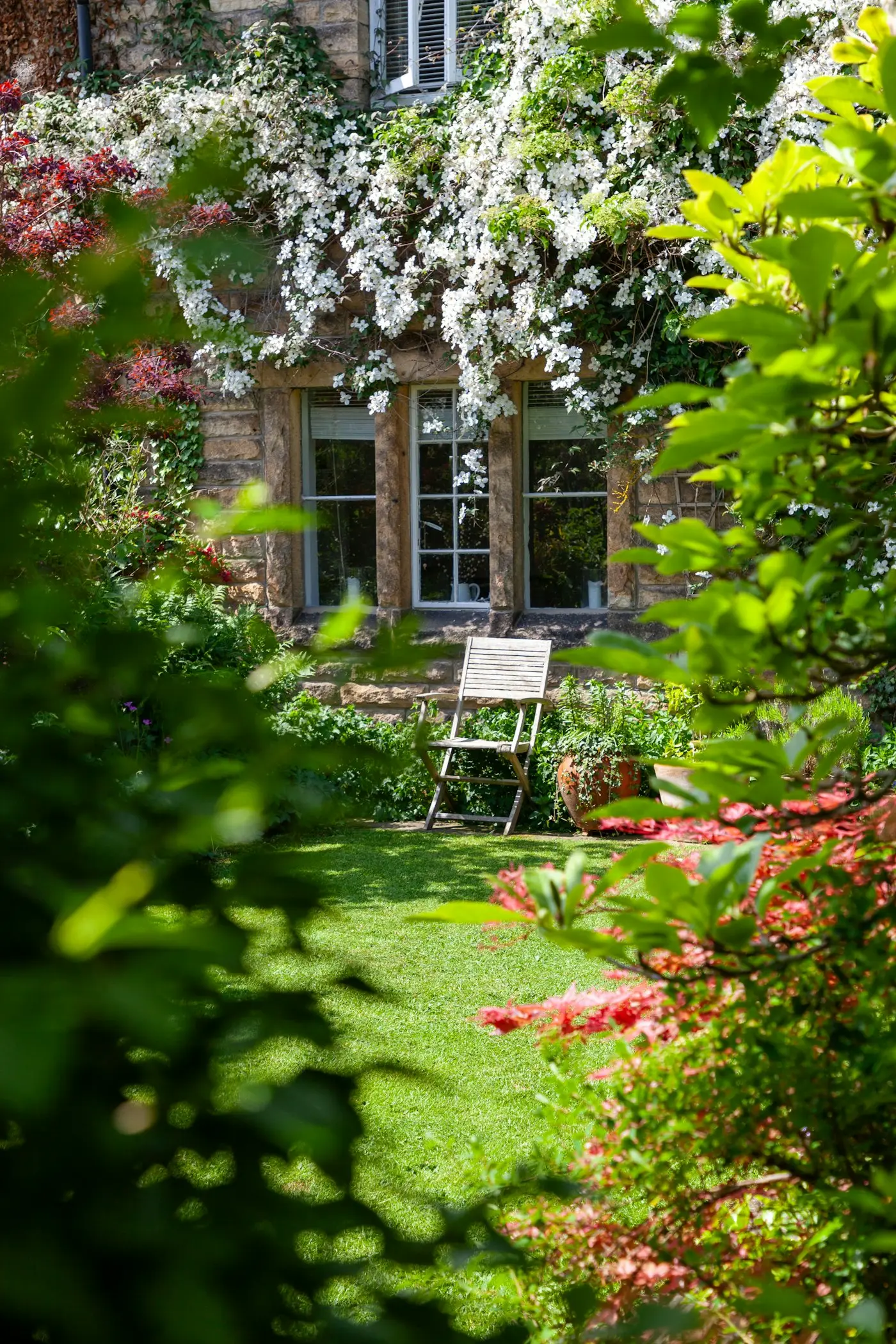
What garden design looks like in Bishopthorpe
Bishopthorpe is a village on the south bank of the Ouse, roughly three miles south of York city centre. It has a character entirely different from the surrounding suburban sprawl: a historic village core with the Archbishop of York's Palace as its defining landmark, attractive period properties, and an affluent residential population that has mostly moved here for the village character and the proximity to York. The gardens in Bishopthorpe reflect this: they are generally well-maintained, often generous in proportion, and the better ones have been designed with care rather than left to default. The soil is alluvial from the Ouse flood plain - heavy, moisture-retentive clay that stays wet into spring. This is the same soil type that affects central and eastern York, but Bishopthorpe's slightly elevated village core means drainage is somewhat better than in the lowest-lying flood plain areas. Gardens immediately adjacent to the river edge need more careful drainage planning.
Village garden character
Bishopthorpe has a strong village identity and garden design here benefits from respecting that character. Period properties suit formal and cottage-garden styles. Brick walling, traditional hedging, climbing roses on house frontages, and productive kitchen garden elements all fit the aesthetic. The presence of the Archbishop's Palace sets a tone of historic formality that many of the better village gardens echo at a domestic scale. A designer who understands the Bishopthorpe character will give you something that feels right for the village rather than an out-of-context showroom garden.
Managing alluvial clay
The Ouse alluvial soil in Bishopthorpe holds moisture well through the growing season, which supports vigorous plant growth, but it also stays wet in winter. Plant selection must account for this: plants with wet-sensitive roots need raised beds or well-drained positions. Regular organic matter input - well-rotted compost or bark mulch applied each spring - gradually improves soil structure over several seasons. For lawns on alluvial clay, annual hollow-tine aeration is the single most effective improvement, gradually improving drainage and grass quality.
Larger village plots
Some of the older village properties in Bishopthorpe have generous gardens with established planting, mature trees, and sometimes walled or hedged enclosures that give the garden a proper structure. These plots suit comprehensive garden design - planting assessment and selective renovation rather than wholesale clearing, maintaining mature trees as the structural framework, and updating border planting to be more manageable and attractive. A designer will assess what the garden already has and build on the existing structure rather than starting from scratch.
Cost ranges for Bishopthorpe garden design
| Service | Cost range |
|---|
| Planting plan only | £300-800 |
| Planting plan with implementation | £600-1,500 |
| Full design and project management | £800-3,000+ |
| Border replant (up to 10 sqm) | £150-400 |
| Patio design and installation | £2,000-8,000 |
| Full garden makeover (50-100 sqm) | £5,000-15,000+ |
Garden design consultations in Yorkshire run £50-120 per hour. A site visit to assess your garden costs around £150-250. See our garden design service page for full detail on what is included at each level.
Get a free Bishopthorpe garden estimate
Tell us what you want from the garden and we will connect you with local designers who quote directly.
Get a design estimate
The full local guide
Plants that perform in Bishopthorpe gardens
Alluvial clay in Bishopthorpe is fertile and moisture-retentive. Plants that thrive include hostas, astilbe, hardy geraniums, viburnum, spiraea, dogwood, ornamental cherries, and miscanthus grasses. For traditional village character, roses (shrub and climbing varieties), philadelphus, lilac, and cottage perennials do well when drainage is adequate. Raised beds improve the range of plants you can grow, particularly for herbs and plants needing sharper drainage. Annual mulching maintains fertility and suppresses weeds.
How the process works
- Initial brief. Tell us what you want from the garden - whether it is a planting refresh, patio design, low-maintenance borders, or a full makeover.
- Site visit and assessment. The designer visits, assesses your soil, drainage, existing planting and constraints. Most designers offer a free or low-cost initial visit.
- Design proposal. A scaled plan with planting list, materials specification, and cost estimate. For design-only commissions this is the deliverable.
- Coordination and installation. For full project management, the designer coordinates contractors for paving, fencing, and planting.
- Establishment. Planting in autumn or early spring with advice on watering and maintenance through the first season.
Frequently asked questions
What soil do Bishopthorpe gardens have?
Bishopthorpe sits on Ouse alluvial clay - heavy, fertile, moisture-retentive soil that stays wet into spring. The elevated village core drains slightly better than the lowest flood plain areas. Good plant selection and regular organic matter input are the keys to working with this soil type effectively.
How much does garden design cost in Bishopthorpe?
A planting plan only costs £300-800. Planting plan with implementation runs £600-1,500. Full design and project management is £800-3,000 or more. Hourly rates for a Yorkshire designer run £50-120. Designers quote directly after a site visit.
What style of garden suits Bishopthorpe?
The village character suits traditional styles - cottage garden planting, formal hedging, climbing roses on frontages, and productive kitchen garden elements. Modern minimal styles work on newer properties but can look out of context on period village buildings.
Can you work with a mature Bishopthorpe garden?
Yes. Many Bishopthorpe properties have established gardens worth building on rather than replacing. A designer will assess what is worth keeping as structural backbone - mature trees, established hedging, period features - and refresh the planting around it.
Do you cover the York south suburbs?
Yes. We connect homeowners with designers across YO23 including Bishopthorpe, Copmanthorpe, and the wider southern York area. Designers quote directly and set their own prices.
The design process for a Bishopthorpe garden
Bishopthorpe gardens that are approached through proper design process typically deliver results that hold up over several years rather than looking good for one season and declining. The key is that a designer visits and assesses before recommending anything - the soil moisture level at your specific position in the village, the aspect and shade pattern through the day, what existing plants are actually performing and which are just taking up space, and how your household uses the outdoor space in practice.
For the period and village-character properties in Bishopthorpe, the design question is often about how to create something contemporary and usable while respecting the character of an older building and garden. A large Victorian rear garden does not want a minimalist rectangular patio with three grasses in gravel - but it also does not need to be frozen in aspic. Good design finds the balance: a planting palette that respects the period character while being practical to maintain, hard landscaping in appropriate materials (natural stone rather than porcelain), and an overall scheme that feels like an evolved village garden rather than a showroom installation.
The village's proximity to York also means some Bishopthorpe properties are used as outdoor entertaining spaces for York-based households who want garden space that the city cannot provide. A well-designed Bishopthorpe garden for this purpose prioritises the outdoor dining and entertaining elements, with planting designed to look good in the evening light and require minimal maintenance between garden uses. A designer will understand this brief and create something that works for the pattern of use rather than optimising for a different kind of household.
For new planting on alluvial clay in Bishopthorpe, the establishment phase is important. Clay soil is unforgiving of plants put in without adequate preparation - a dry spell in the first summer can stress newly planted material on unimproved clay, and a wet winter can kill plants whose roots have not established enough to handle waterlogged conditions. A designer will advise on planting timing, establishment watering, and mulching that gets the planting through the first season on the heavy ground.
Areas around Bishopthorpe we also cover
We match homeowners with designers in Acomb and Copmanthorpe and Dunnington. For general gardening services in Bishopthorpe, visit the local gardeners in Bishopthorpe page. See also our guide to finding a gardener in Bishopthorpe.